
Reviewed · EIFFEL TOWER TOURS
Paris Treasure Hunt – Explore the Seine from Louvre to Eiffel
Paris rewards slow walking, but this version comes with puzzles. This self-guided Seine treasure hunt turns a classic Louvre-to-Eiffel stroll into a game, with clue pages, cultural notes, and a route that lines up some of the city’s biggest monuments along the river. I like that it is designed for real collaboration, not just passive sightseeing.
Two things I especially like: you get playful riddles that keep kids (and adults) focused, and you move at your own tempo with a built-in time structure. One consideration: it covers about 4.5 km and it has a 3-hour end time, so long photo stops or snack breaks can squeeze your puzzle time.
In This Review
- Quick hits before you go
- From the Louvre Steps to the Seine: what this route feels like
- How the treasure hunt works (and why that matters in Paris)
- Your clue route: Louvre to Musée d’Orsay, then bridge views
- Les Invalides and le Grand Palais: solving while you sightsee
- Eiffel Tower payoff: finishing the game without feeling rushed
- Who this treasure hunt suits best (and who should skip it)
- Price and value: is $42.05 a good deal?
- Practical tips to make your hunt go smoothly
- FAQ
- FAQ
- How long is the Paris Treasure Hunt?
- How far do we walk?
- Is it self-guided or do we need a tour guide?
- Do we need an app or phone download?
- Where does the treasure hunt start?
- Where does it end?
- What landmarks are included along the way?
- What ages is it best for?
- What happens if the weather is bad?
- Can I get a full refund if I cancel?
- Should you book this Seine treasure hunt?
Quick hits before you go
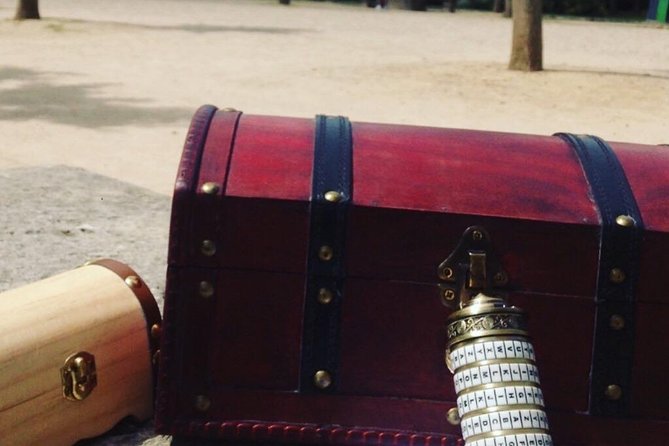
- No app required: you use a game booklet, answer sheets, and a map.
- Self-guided with real help: if you get stuck, the team is physically there to give a hint.
- Iconic riverside lineup: the route is built around the Seine and major landmarks from the Louvre area toward the Eiffel Tower.
- Family-friendly structure: puzzles are engaging for kids about age 8+, with under-5 free.
- Small group size: up to 20 participants, which keeps the start organized.
- Time-aware freedom: you can pause for photos and cafés, but the clock keeps moving.
From the Louvre Steps to the Seine: what this route feels like
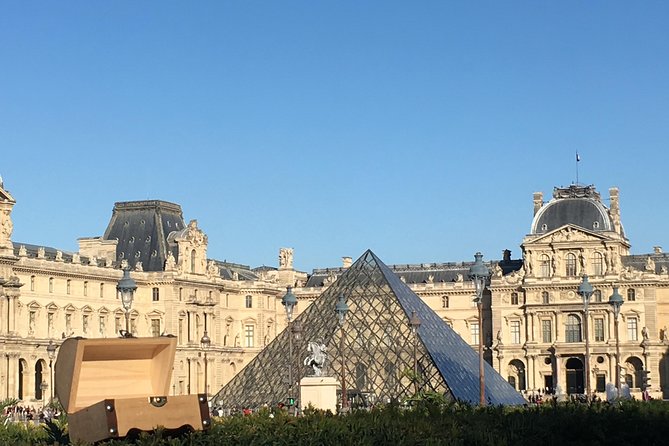
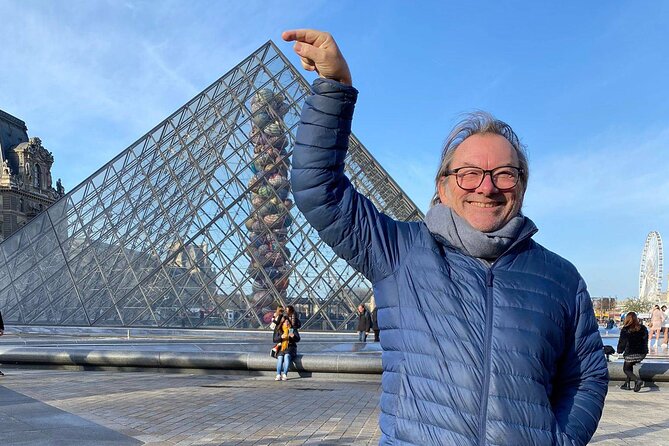
You start at 19 Pl. du Carrousel, 75001 Paris, near the Louvre. From there, the treasure hunt gently pushes you into the most “Paris postcard” kind of walking: riverside views, landmark after landmark, and lots of chances to stop and talk things through.
The big value here is that you are not just looking at famous sights. You are doing something with them. Each clue is tied to what you are seeing in front of you, so your brain stays engaged longer than it usually does on a typical highlights tour.
If you like to travel with kids, this is also a clever way to shift the rhythm. Instead of “Here’s another museum” and “Are we almost done,” the day becomes a series of little missions you can solve together.
More ways up the Iron Lady, side by side
- Paris: 1-Hour Seine Cruise departing from the Eiffel Tower
★ 4.4 · 77,472 reviews - Paris: Eiffel Tower Entry Ticket with Optional Summit Access
★ 4.4 · 20,035 reviews - Eiffel Tower Dedicated Reserved Access Summit or 2nd Floor
★ 4.3 · 18,352 reviews - Paris: Eiffel Tower Summit or Second Floor Access
★ 4.4 · 16,088 reviews
How the treasure hunt works (and why that matters in Paris)
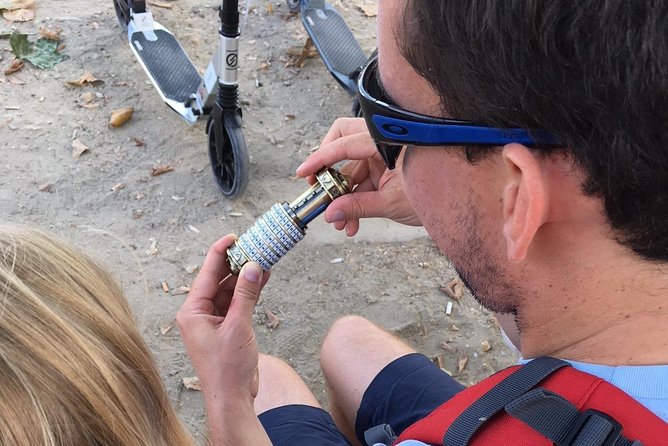
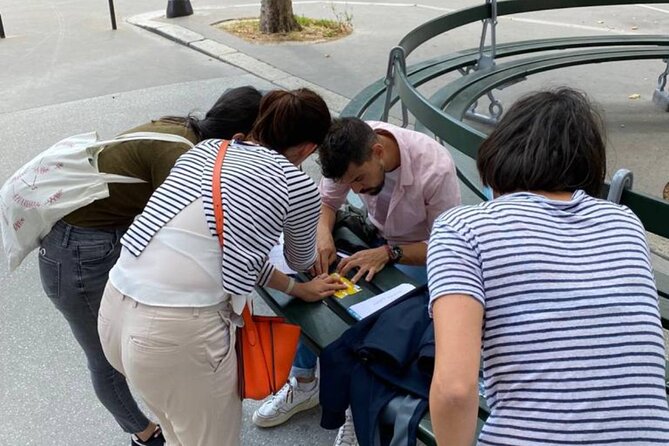
This is a self-guided experience. There is no app, no phone map, and no tour guide marching you from stop to stop. What you get is a game booklet with riddles, a map, and cultural notes, plus answer sheets and materials to complete the activity.
Practically, that means you can:
- read a clue, discuss it, and choose when to move on
- linger for photos without feeling guilty about slowing down a group
- step away briefly for a café pause, then rejoin the game flow
The “physically here” hint support is important. When puzzles stall you, you do not have to solve everything alone. You can ask for help and get back on track while still staying independent.
You should plan around the time design. The activity usually runs about 2.5 hours for the full route length (around 4.5 km), and it automatically ends after 3 hours. If you want a long break with a sit-down snack, treat it like part of the plan, not an afterthought.
Your clue route: Louvre to Musée d’Orsay, then bridge views
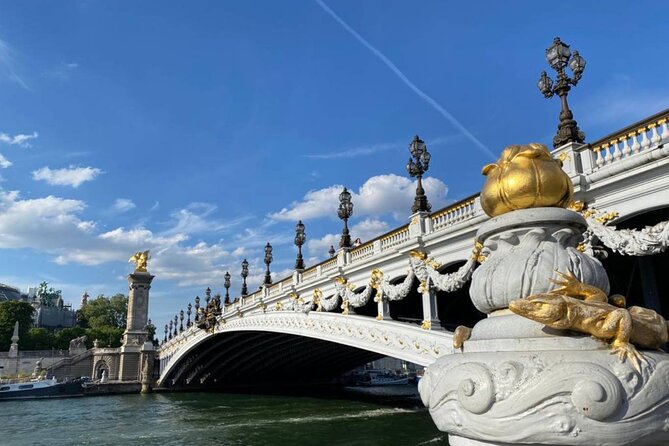
The route is built around famous stops along the Seine, and the game uses those landmarks to shape your walk. It specifically calls out the Musée d’Orsay and Pont Alexandre III as key sights along the way, so you can expect your clues to steer you toward strong views and photo angles.
Here’s why those parts of the route are worth your attention:
- Musée d’Orsay area: even if you are not going inside, the riverfront walking typically gives you strong vantage points to notice how the city frames its cultural buildings.
- Pont Alexandre III: a bridge is a natural “pause point” on any Seine walk. You tend to get a change of scenery, better sight lines up and down the water, and a natural moment to regroup for the next clue.
In a normal sightseeing plan, these are just two names on a list. In this format, they become checkpoints. You arrive, you observe, you answer, and you move forward with a purpose.
One practical note: since you are solving riddles as you walk, your pace might be slower at first, then faster once you get used to the game rhythm. That is a good thing. Paris is made for walking, and this turns the walk into a structured afternoon.
Les Invalides and le Grand Palais: solving while you sightsee
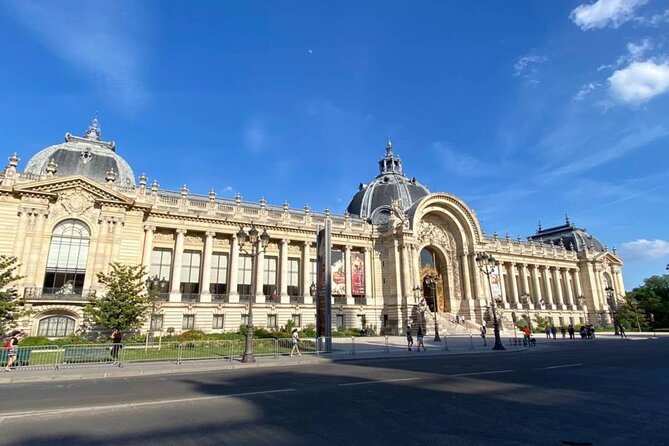
Later in the hunt, the route points you toward Les Invalides and le Grand Palais. This is where the experience shifts from “pretty riverside walk” into “big-city monument day,” with more dramatic skyline moments and plenty of places to stop and compare what you think the clue means.
What I like about this stretch is that it gives you variety. The Seine has its own visual rhythm, but once you are near major landmarks, you get different architectural textures and broader views that make the puzzles feel less repetitive.
If your group includes kids, this is also where the interactive format pays off. Traditional tours can lose kids fast. A clue-based walk keeps the mission going, so kids are not just waiting for the next stop—they are trying to solve the current one.
Potential drawback: because you will be thinking while walking, tired feet can catch up sooner than you expect. That does not mean it is hard, but it does mean you should come with moderate physical fitness and comfortable shoes. The route is only about 4.5 km, but it is 2.5 hours of steady attention plus walking.
Eiffel Tower payoff: finishing the game without feeling rushed
The final stretch is built around the Eiffel Tower area. The experience description says you start in front of the Louvre and end in front of the Eiffel Tower, and it also notes that the activity ends back at the meeting point. Either way, the intent is clear: you get the emotional payoff of reaching the Eiffel area as the game wraps up.
The nice part is that the game is not designed to sprint you toward the final answer. It is meant to feel like an unhurried quest along the river, with collaboration and breaks as part of the experience.
Still, remember the built-in clock. You have up to 3 hours before the activity automatically ends wherever you are on the route. If your group loves to stop for photos, you’ll want to manage the time early rather than trying to “catch up” at the end.
My advice: treat the last 30–45 minutes as your buffer. If you think you will want a longer photo session near the Eiffel Tower, start wrapping up earlier so your puzzle doesn’t run out before your camera roll does.
Who this treasure hunt suits best (and who should skip it)
This is a great fit for:
- Families with kids who need more than “look at that building”
- Couples and small groups who want a structured walk that still feels casual
- Travelers who prefer a no-guide style, but still want an organized experience with materials
The activity is recommended for a minimum age of 8, so children can stay engaged with the riddles. That said, the rules also note that children under 5 join for free, which makes it workable for younger kids if your group manages expectations and keeps the pace gentle.
If you are traveling with someone who dislikes walking or puzzles, this might feel like “homework outdoors.” It is still a sightseeing experience, just with questions layered in. You should be ready to talk, think, and problem-solve.
Also consider the weather. This experience requires good weather, and if it is canceled for poor conditions you will be offered a different date or a full refund.
Still chasing the Mona Lisa? More Louvre visits




Price and value: is $42.05 a good deal?
At $42.05 per person for about 2.5 hours of activity, you are paying for more than just a walk. You get a prepared game booklet, map, riddles, answer sheets, and on-site hint support. You also get a route built around major landmarks, so you are not spending your sightseeing time figuring out your own “what next” plan.
For families, the value often comes down to how much you want kids engaged for the price of one organized activity. Two things make it feel worth it:
- the interactive format replaces the fatigue of passive sightseeing
- the time block gives you a plan that fits neatly into a Paris day
For couples, it becomes a lower-stress alternative to a classic tour where you are mostly listening. You are still seeing top sights, but you are actively interpreting them, which makes the day feel personal instead of generic.
And because there is no app or download, you avoid the most common travel friction: wrong settings, dead phones, complicated logins, and lost time.
Practical tips to make your hunt go smoothly
A few small choices will make this run better.
First, bring practical walking comfort. The experience covers about 4.5 km, and it lasts around 2.5 hours, so comfortable shoes matter more than you might think.
Second, decide how you want to handle breaks. The activity allows time for photos and even snacks, but breaks reduce puzzle time. If you want a café stop, keep it short or plan it earlier so you do not rush the ending.
Third, stay flexible about pace and team talk. The experience is designed for collaboration and thinking together, so if your group gets stuck, ask for a hint rather than spinning your wheels. You will keep momentum and still feel like you solved it yourselves.
Finally, check your transport plan. The meeting point is near public transportation, which helps if you are pairing this with other Louvre or Eiffel plans.
FAQ
FAQ
How long is the Paris Treasure Hunt?
It runs about 2.5 hours on average and includes an automatic end time after 3 hours, wherever you are on the route.
How far do we walk?
The route is about 4.5 km.
Is it self-guided or do we need a tour guide?
It is self-guided. You use the provided materials and you move at your own pace with no guide.
Do we need an app or phone download?
No. It uses a mobile ticket, and there are no downloads or mobile apps required.
Where does the treasure hunt start?
It starts at 19 Pl. du Carrousel, 75001 Paris, France, near the Louvre area.
Where does it end?
The experience is described as ending near the Eiffel Tower area, and it also states it ends back at the meeting point.
What landmarks are included along the way?
The route is designed around iconic spots including the Musée d’Orsay, Pont Alexandre III, Les Invalides, le Grand Palais, and the Eiffel Tower, starting from the Louvre area.
What ages is it best for?
A minimum age of 8 is recommended so children can stay engaged. Children under 5 join for free.
What happens if the weather is bad?
The experience requires good weather. If it is canceled due to poor weather, you’ll be offered a different date or a full refund.
Can I get a full refund if I cancel?
Yes. You can cancel for a full refund if you cancel at least 24 hours before the experience’s start time.
Should you book this Seine treasure hunt?
If you want the Seine highlights without the usual “stand, listen, move” rhythm, this is a smart pick. The mix of scenic landmarks plus clue-driven pacing makes it especially good for families and anyone who gets bored with standard tours.
Book it if you can comfortably handle a 4.5 km walk and you like thinking in small bursts while you travel. Skip it if your top priority is a sit-and-stare museum-style day or if you expect zero puzzle time.
More Cruises on the Seine
- Paris: 1-Hour Seine Cruise departing from the Eiffel Tower
★ 4.4 · 77,472 reviews - Paris: Seine Cruise & Crepe Tasting near the Eiffel Tower
★ 4.4 · 11,231 reviews - Paris: Seine River Panoramic Views Dinner Cruise
★ 4.3 · 10,611 reviews - Paris: Eiffel Tower Access by Elevator & Seine River Cruise
★ 4.6 · 7,329 reviews - Paris: 3-Course-Dinner Cruise on the Seine with live music
★ 4.7 · 7,248 reviews
Back to the Louvre: More Ways In
- Paris: Louvre Museum Timed-Entrance Ticket
★ 4.6 · 71,977 reviews - Paris: Louvre Guided Tour with Reserved Access & Boat Cruise
★ 4.3 · 16,353 reviews - Louvre Museum Masterpieces Guided Tour with Access
★ 4.5 · 12,023 reviews - Paris: Louvre Overview, Exploration tour and Reserved Entry
★ 4.1 · 10,145 reviews - Paris: Louvre Museum Entry Ticket With Host and River Cruise
★ 4.6 · 9,926 reviews
The Eiffel Tower, Ticket by Ticket
- Paris: 1-Hour Seine Cruise departing from the Eiffel Tower
★ 4.4 · 77,472 reviews - Paris: Eiffel Tower Entry Ticket with Optional Summit Access
★ 4.4 · 20,035 reviews - Eiffel Tower Dedicated Reserved Access Summit or 2nd Floor
★ 4.3 · 18,352 reviews - Paris: Eiffel Tower Summit or Second Floor Access
★ 4.4 · 16,088 reviews - Paris: Seine Cruise & Crepe Tasting near the Eiffel Tower
★ 4.4 · 11,231 reviews
Fresh off the review desk in Paris
- Secrets of Paris Bike Tour in English or Dutch★ 5.0 · 5 reviews
- Paris: Mont Saint-Michel Day Tour with Chinese Tour Guide★ 5.0 · 5 reviews
- Private Street Art 2-Hour Guided Tour in Paris★ 4.5 · 5 reviews
- Orsay Museum Tour: 2h Highlights (Private & Small Group)★ 5.0 · 5 reviews
- Discover Paris in electric golf carts★ 4.0 · 5 reviews
- Paris Private Boat Tour with your own Captain Guide★ 5.0 · 5 reviews
Eiffel Tower Tours, compared.
 ★ 4.41-Hour Seine Cruise departing from the Eiffel TowerFrom $2077,472 reviews
 ★ 4.4Eiffel Tower Entry Ticket with Optional Summit AccessFrom $2920,035 reviews
 ★ 4.3Eiffel Tower Dedicated Reserved Access Summit or 2nd FloorFrom $2518,352 reviews
 ★ 4.4Eiffel Tower Summit or Second Floor AccessFrom $4116,088 reviews
 ★ 4.4Seine Cruise & Crepe Tasting near the Eiffel TowerFrom $2311,231 reviews
 ★ 4.1Eiffel Tower Stairs Climb to Level 2 & Summit OptionFrom $428,985 reviews
 ★ 4.6Eiffel Tower Access by Elevator & Seine River CruiseFrom $797,329 reviews
 ★ 4.6Eiffel Tower 2nd Floor or Summit AccessFrom $696,683 reviews
Browse the lists this tour appears in