
Reviewed · WINE TOURS
Paris Wine with Cheese Pairing & Tasting Small Group Class
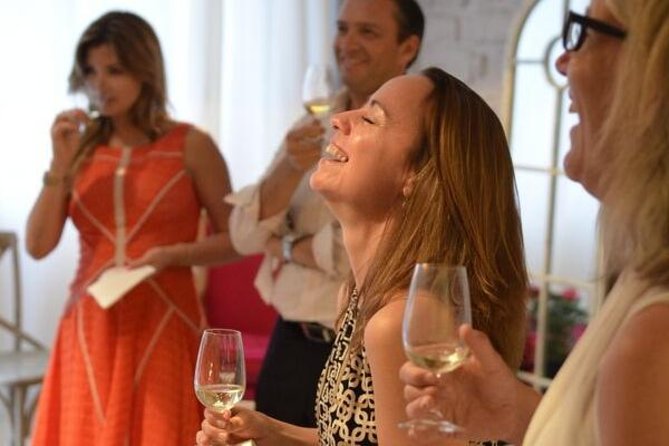
Paris smells amazing when food is the plan. This small-group Paris wine and cheese pairing class turns tasting into a skill you can use the next time you shop or order. I love the way the sommelier-led format stays friendly while still teaching real technique, and I also love that you sample a lot in just two hours: 4 French wines plus Champagne with cheeses from five major families.
One thing to consider: this is a tasting class, not a full dinner. You’ll leave satisfied, but plan to eat later if you’re very hungry.
You’ll meet your instructor at Le Foodist (59 Rue du Cardinal Lemoine, 75005) and spend the morning with guided pours, cheese explanations, and a hands-on Champagne moment that’s way more fun than it sounds on paper.
In This Review
- Key things I’d circle on your itinerary
- Where you start: Le Foodist near the best kind of Paris wandering
- The real flow of the 2-hour class: taste, learn, pair
- First: meet your sommelier and get your tasting framework
- Then: four wines across France plus Champagne
- Next: the five major French cheese families
- Food support: bread, olives, ham, and the palate reset factor
- Why terroir matters (and how you’ll actually use it)
- Cheese families: how to taste like you understand the categories
- Champagne sabering: hands-on fun with a real technique payoff
- The Drop-Stop detail that makes the pours better
- The food pairing strategy: bread, olives, and ham aren’t random
- Small group size: why max 16 is the sweet spot
- Price and value: is $113.49 worth it?
- Who should book this class, and who might skip it
- This fits you if…
- You might skip it if…
- Should you book Paris Wine with Cheese Pairing & Tasting?
- FAQ
- Where do I meet, and where does the class end?
- How long is the Paris wine and cheese pairing class?
- What time does the class start?
- Is alcohol included, and is there an age limit?
- How many people are in the group?
- What exactly do I sample during the class?
- Do you learn how to open Champagne?
- What is Drop-Stop?
- What’s the cancellation policy if my plans change?
Key things I’d circle on your itinerary
- A sommelier-led lesson that explains what you taste and why it works
- Four regional wines and one Champagne included in the price
- Cheeses from the five major French cheese families, not random slices
- Terroir in plain language, tied to flavor and aroma
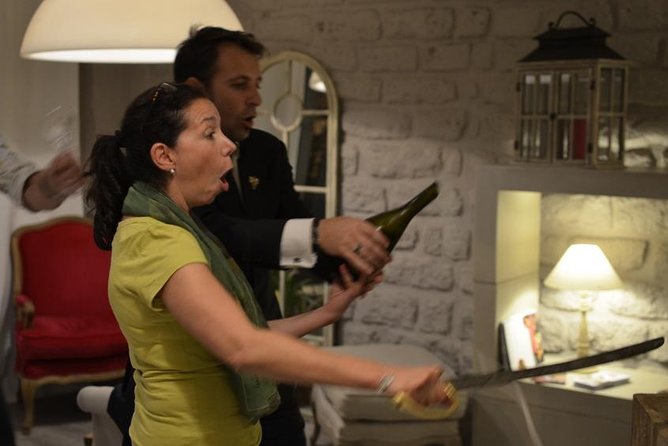
- Champagne sabering as a hands-on party trick with a real technique focus
- Maximum 16 people, so you get time for questions and feedback
Where you start: Le Foodist near the best kind of Paris wandering
You’ll start at Le Foodist, in central Paris at 59 Rue du Cardinal Lemoine, 75005. The location is set up for easy public transport access, and that matters because a two-hour class goes fast. You don’t want to spend your morning in transit anxiety.
Le Foodist is a cookery school feel-good kind of place: you’re not waiting around in a huge hall. Instead, you’re right where you can focus on the glass in front of you and the cheese on the table. It’s also a smart time choice: a 12:00 pm start works well if you want something hands-on before your afternoon sightseeing.
Worth weighing up next to this Paris pick
- Paris: Seine Cruise & Crepe Tasting near the Eiffel Tower
★ 4.4 · 11,231 reviews - Authentic Parisian Gourmet Food Tour with 10 Local Dishes & Wines
★ 5.0 · 4,754 reviews - Normandy D-Day Small-Group Day Trip with Omaha Beach, Cemetery & Cider Tasting
★ 5.0 · 2,786 reviews - Paris: Illuminated Evening River Cruise & Waffle Tasting
★ 4.1 · 2,697 reviews
The real flow of the 2-hour class: taste, learn, pair
This runs for about 2 hours and ends back at the meeting point. Inside that time, the class doesn’t treat wine and cheese like a museum exhibit. It treats it like a conversation between flavors.
Here’s how it typically plays out, and what you should pay attention to as you go.
First: meet your sommelier and get your tasting framework
Your host is an experienced sommelier (in the class I’ve heard about, the instructor name is Stéphane). The teaching style is part serious palate training, part good humor. That combination is useful: if you’re new to French wine and cheese, you’ll need reassurance as much as information.
You’ll begin with the basics of how professional tasters approach wine: what to notice first (smell), then second (taste), and how the same wine can “behave” differently once it meets different cheeses.
Then: four wines across France plus Champagne
You’ll sample four different wines from across France, plus one Champagne. The point isn’t just variety. It’s to compare how region, grapes, and production choices shape flavor.
If you’re the kind of person who likes to figure things out, this format is gold. You can go from glass to glass noticing patterns: acidity, fruit character, tannins, and how each one lands on your palate.
Next: the five major French cheese families
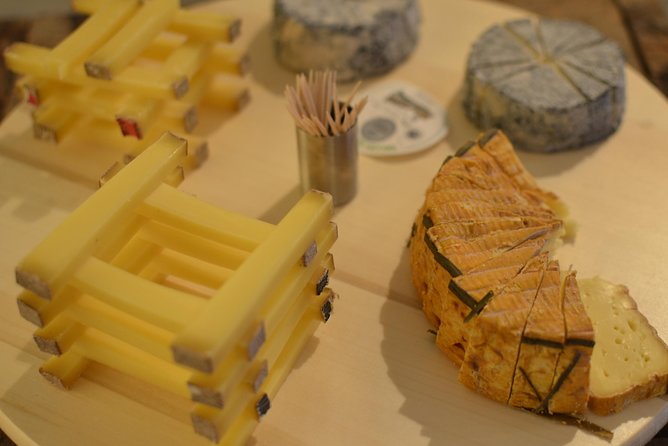
After the wine rounds, you’ll get guided tasting of cheeses tied to the five major French cheese families. That’s a big deal because French cheese isn’t just one thing. It’s structured categories with different textures and milk styles, and the instructor helps you hear the difference.
As you taste, you’ll learn the subtleties that most people miss when they just think in terms of mild vs sharp. You’ll also start to see that pairing is less about rules and more about balance.
Food support: bread, olives, ham, and the palate reset factor
Between pours and cheese, you’ll also have other nibbles: bread, olives, and sliced ham. These aren’t filler. They act like a reset button. Bread helps you reset after stronger flavors. Olives bring a salty, briny counterpoint. Ham adds savory meat notes that can change how a wine reads on your tongue.
Worth weighing up next to this Paris pick
Why terroir matters (and how you’ll actually use it)
The class includes the concept of terroir, and you won’t just hear a definition. You’ll link it to something physical: geography, climate, and tradition shaping what ends up in your glass and on your plate.
In practice, terroir is what helps you predict flavor. Once you understand the idea, you can stop thinking each bottle is a surprise and start thinking it’s a “place story.” The instructor connects wine and cheese origins to taste, so it clicks instead of staying abstract.
I like this approach because it turns a tasting into a takeaway. You’ll walk away with a mental map, not just an evening of good bites.
Cheese families: how to taste like you understand the categories
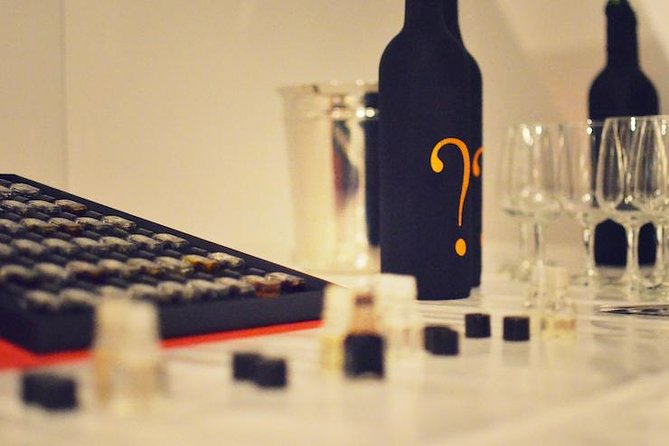
Cheese is where a lot of people go blank. They like it, they know what they like, but they can’t describe why. This class helps you build a simple vocabulary.
You’ll taste cheeses tied to the five major French cheese families and learn their flavor and texture tendencies. Even without being a cheese expert, you’ll start noticing:
- How milk style and aging change aroma
- How texture can make a pairing feel creamier or sharper
- How salt level can highlight wine acidity
The best part is that you’re tasting with a guide who can point out what to look for. This is the kind of lesson where you realize you’ve been eating with your nose half-closed. Once someone teaches you what to notice, it gets easier fast.
Champagne sabering: hands-on fun with a real technique payoff
One of the standout moments is the Champagne lesson. You’ll learn to open a Champagne bottle using sabering. Yes, it sounds theatrical. And yes, it’s fun.
But the class frames it as technique, not just showmanship. The goal is confidence with the tool and the method, so it’s not scary or chaotic. After that, you share a glass with your classmates, which turns the lesson into a mini celebration.
The sabering moment is also a great memory anchor. When you remember the bottle opening, you’re more likely to remember how that Champagne tasted and why it paired with certain cheeses.
The Drop-Stop detail that makes the pours better
At the end, you receive Drop-Stop for a more consistent pour every time. That’s not just a random souvenir. It’s a practical little tool that helps with the last step of serving without wrecking the glass.
If you’ve ever poured and ended up with too much sediment or an uneven flow, you’ll appreciate having a simple fix. It’s one of those tiny things that keeps the class useful after you’re back home.
The food pairing strategy: bread, olives, and ham aren’t random
This class includes more than wine and cheese. You’ll also eat sliced ham, bread, and olives. The practical value is that your palate stops being a single-note detector.
- Bread gives a neutral baseline so you can compare wines and cheeses more clearly.
- Olives add salt and acidity, which can sharpen your awareness of how a wine’s acidity responds.
- Ham brings savory, fatty notes that can make certain cheeses taste rounder and wines feel more balanced.
If you’re picky about pairing (or if you just hate when tasting foods taste like they clash), this extra food support makes the comparisons easier.
Small group size: why max 16 is the sweet spot
The class caps at 16 travelers. In a small setting like this, you’re not stuck watching someone else taste while you wait your turn. You get hands-on attention from the sommelier and enough space to ask questions.
It also makes the pace feel human. You can linger on a wine or a cheese and ask what to notice next without the instructor feeling rushed.
This is the kind of class I recommend when you’re traveling with someone who has different tastes. Even if you don’t both like the exact same wines, you’ll both understand the logic behind the pairing—and that makes it fun for the pairings you don’t love.
Price and value: is $113.49 worth it?
At $113.49 per person, you’re paying for guided instruction plus multiple tasting components in central Paris. If you compare it to the cost of buying a few bottles and a plate of cheese elsewhere, you might think you can DIY it.
But the value here is the structure: tasting four French wines plus Champagne, learning about five cheese families, practicing the logic of pairing, and getting a hands-on Champagne sabering moment with equipment guidance. You also get food support (bread, olives, ham) and a Drop-Stop at the end.
If you like food education that still feels like a fun experience, this price starts to make sense fast. Two hours is short enough to feel like an efficient use of time, but long enough for real comparisons and questions.
If you’re someone who only wants to drink casually and doesn’t care about explanations, you might feel it’s more than you need. But if you want skill and context, this is a good deal for what’s included.
Who should book this class, and who might skip it
This fits you if…
- You love food and want a skill you can reuse after the trip
- You’re new to wine and cheese and want a friendly guide like Stéphane
- You want a small-group experience rather than a crowded tasting
- You enjoy hands-on moments (sabering Champagne is a memorable one)
You might skip it if…
- You’re not interested in wine or cheese at all
- You need a full sit-down meal (this is tasting-focused)
- You don’t want alcohol involved, even though tasting sizes are part of a guided lesson
Should you book Paris Wine with Cheese Pairing & Tasting?
If you’re doing Paris for food, I think this is a smart booking. It’s not just about eating and drinking. It teaches you how to think about pairing, explains terroir in a practical way, and gives you a Champagne moment you can’t easily replicate on your own. Plus, the small group size means you can actually talk.
Book it if you want value in the form of instruction, not just souvenirs. And if you’re even mildly curious about how French wines and cheeses connect to place, you’ll leave with a better palate and clearer instincts for your next order.
FAQ
Where do I meet, and where does the class end?
You meet at Le Foodist, 59 Rue du Cardinal Lemoine, 75005 Paris, France. The activity ends back at the meeting point.
How long is the Paris wine and cheese pairing class?
It lasts about 2 hours.
What time does the class start?
The start time is 12:00 pm.
Is alcohol included, and is there an age limit?
Yes. The class includes 4 wine samples and 1 Champagne sample, and you must be at least 18 years old to participate.
How many people are in the group?
The class has a maximum of 16 travelers, so it’s designed to stay small.
What exactly do I sample during the class?
You’ll taste 4 wines from across France plus Champagne, and you’ll also taste cheeses from the five major French cheese families. Food included includes cheese, bread, olives, and ham.
Do you learn how to open Champagne?
Yes. You’ll take a knife and learn how to saber a Champagne bottle to open it.
What is Drop-Stop?
You’ll receive Drop-Stop at the end of the class, described as for the perfect pour every time.
What’s the cancellation policy if my plans change?
You can cancel up to 6 days in advance for a full refund. Cancel 2–6 days before for a 50% refund, and cancel less than 2 days before for no refund.
More Wine Tours in Paris
- Paris: Moulin Rouge Cabaret Show Ticket with Champagne
★ 4.7 · 16,088 reviews - Authentic Parisian Gourmet Food Tour with 10 Local Dishes & Wines
★ 5.0 · 4,754 reviews - Loire Valley Castles Day Trip from Paris with Complementary Wine
★ 4.5 · 3,907 reviews - Montmartre Hill French Gourmet Food and Wine Tasting Walking Tour
★ 5.0 · 2,588 reviews - Paris: Montmartre Cheese, Wine & Pastry Guided Walking Tour
★ 4.8 · 2,255 reviews
More Food & Drink in Paris
- Paris: Seine Cruise & Crepe Tasting near the Eiffel Tower
★ 4.4 · 11,231 reviews - Authentic Parisian Gourmet Food Tour with 10 Local Dishes & Wines
★ 5.0 · 4,754 reviews - Normandy D-Day Small-Group Day Trip with Omaha Beach, Cemetery & Cider Tasting
★ 5.0 · 2,786 reviews - Paris: Illuminated Evening River Cruise & Waffle Tasting
★ 4.1 · 2,697 reviews - Montmartre Hill French Gourmet Food and Wine Tasting Walking Tour
★ 5.0 · 2,588 reviews
More Tour Reviews in Paris
- Paris: 1-Hour Seine Cruise departing from the Eiffel Tower
★ 4.4 · 77,472 reviews - Paris: Louvre Museum Timed-Entrance Ticket
★ 4.6 · 71,977 reviews - Disneyland® Paris 1-Day Ticket
★ 4.6 · 49,412 reviews - Paris: Versailles Palace and Gardens Full Access Ticket
★ 4.6 · 41,579 reviews - Paris: Arc de Triomphe Rooftop Tickets
★ 4.6 · 34,264 reviews
Fresh off the review desk in Paris
- Secrets of Paris Bike Tour in English or Dutch★ 5.0 · 5 reviews
- Paris: Mont Saint-Michel Day Tour with Chinese Tour Guide★ 5.0 · 5 reviews
- Private Street Art 2-Hour Guided Tour in Paris★ 4.5 · 5 reviews
- Orsay Museum Tour: 2h Highlights (Private & Small Group)★ 5.0 · 5 reviews
- Discover Paris in electric golf carts★ 4.0 · 5 reviews
- Paris Private Boat Tour with your own Captain Guide★ 5.0 · 5 reviews
Wine Tours, compared.
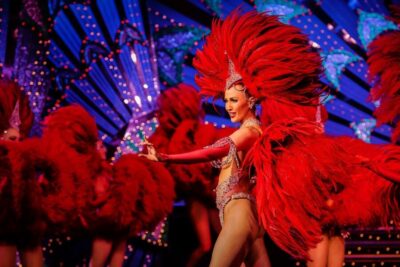 ★ 4.7Moulin Rouge Cabaret Show Ticket with ChampagneFrom $11516,088 reviews
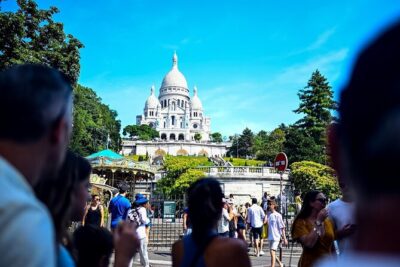 ★ 5.0Authentic Parisian Gourmet Food Tour with 10 Local Dishes & WinesFrom $1024,754 reviews
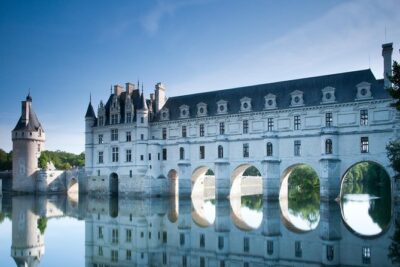 ★ 4.5Loire Valley Castles Day Trip from Paris with Complementary WineFrom $1493,907 reviews
 ★ 5.0Montmartre Hill French Gourmet Food and Wine Tasting Walking TourFrom $1452,588 reviews
 ★ 4.8Montmartre Cheese, Wine & Pastry Guided Walking TourFrom $1272,255 reviews
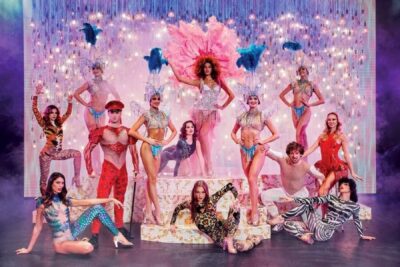 ★ 4.6Paradis Latin Cabaret Show with Optional ChampagneFrom $1062,231 reviews
 ★ 4.6From Paris: Loire Valley Castles Day Trip With Wine TastingFrom $1041,727 reviews
 ★ 4.0Paris 3-Courses Gourmet Dinner Seine River Cruise with ChampagneFrom $1361,659 reviews
Browse the lists this tour appears in