
Reviewed · PRIVATE
Paris WW2 The German Occupation Small group or Private tour
WWII Paris hits different when the streets still look familiar. This small-group walk with Chris Pollard ties together occupation politics, resistance work, and everyday life using real locations you can actually point at. I especially liked the way he explains the why behind people’s choices, and I also loved the human scale—this isn’t a rushed script with a crowd. The main thing to consider is that it’s a fairly serious topic, and it’s also an outdoor walking route, so good layers and stamina matter.
You’ll get a tight, memorable snapshot of the occupation years without turning Paris into a boring checklist. Expect stops across central Paris—linked by story, not strict dates—so you’ll start seeing patterns instead of isolated landmarks. One possible drawback: if your top priority is Holocaust-focused material, this general tour gives context but the deeper, specific Shoah experience is set up for private/higher-focused options rather than this standard route.
In This Review
- Key Takeaways Before You Go
- The Big Idea: WWII Paris, Told by What Happened on the Ground
- Meeting Point at Place Colette: Easy Start, No Chaos
- Stop 1: Palais-Royal Area and the Occupation Context
- Stop 2: Louvre and Palais-Royal Zone as the Tour’s Story Hub
- Stop 3: Rue de Rivoli and the Occupation Map You Can Actually Follow
- Gestapo and Collaboration Power Centers
- German Control of Institutions and Space
- Coco Chanel at the Ritz: Why It’s Mentioned
- Rue Rouget de Lisle: Where Organic Resistance Began
- Jeu de Paume: Looted Jewish Art and the Nazi Art Machine
- Place Vendôme and the Early Frame of the Final Solution
- Place de la Concorde: Scars You Can Still See
- Final Stop: Place de la Concorde and the War’s Visible Geometry
- Shoah vs. General Occupation: Know What You’re Booking
- Price and Value: Is $108.84 Fair for 3–4 Hours?
- Who This Tour Fits Best
- Practical Tips So You Enjoy It More
- Should You Book This WWII Occupation Walk?
- FAQ
- How long is the tour?
- Where does the tour start?
- Where does the tour end?
- What language is the tour offered in?
- How many people are on the tour?
- Is this a group or private tour?
- Is there a minimum number of travelers?
- What topics will I see on the general version?
- Is there a Holocaust memorial or Marais stop on this tour?
- Is the tour outdoors?
Key Takeaways Before You Go
- Small group format (max 10): more conversation, fewer “look-and-move” moments.
- Chris Pollard’s style: prepared, tailored storytelling instead of a rigid script.
- Occupation as people-first history: you connect politics to choices made on the street.
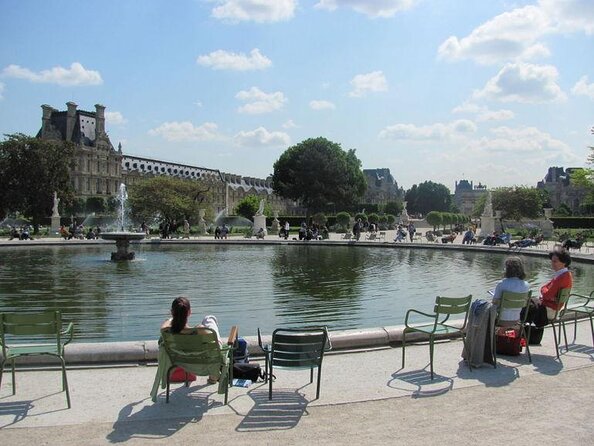
- Central route that feels walkable: from Palais-Royal/Louvre area west to Place de la Concorde.
- Serious but organized: you’ll cover the essentials, while knowing when a deeper Shoah-focused tour is better.
- Flexible pacing: you can ask questions and spend extra time when there’s genuine interest.
The Big Idea: WWII Paris, Told by What Happened on the Ground
This tour works because it refuses to treat Paris as a museum backdrop. You’re walking through places that still carry meaning from the occupation years, and your guide keeps circling back to how the political and social pressure shaped day-to-day behavior. That makes it less like memorizing facts and more like understanding how people adapted, survived, resisted, or collaborated.
I also like that it’s framed as a “snapshot.” You’re not trying to cover every building in Paris. You’re getting a guided, story-driven route that helps you build a working mental map fast—then you can explore the city on your own with much better context.
Worth weighing up next to this Paris pick
- Louvre Museum Paris Essential Guided Tour Semi-Private 6ppl Max
★ 5.0 · 3,807 reviews - SUV Private Transfer: Paris to Charles de Gaulle Airport (CDG)
★ 4.0 · 3,091 reviews - Paris: Private Photoshoot at the Eiffel Tower
★ 4.7 · 2,636 reviews - Top Private Cruises in Paris with French Champagne and surprises
★ 5.0 · 1,553 reviews
Meeting Point at Place Colette: Easy Start, No Chaos
The tour meets at Place Colette, at the Palais Royal Metro Exit 5, directly opposite the Comédie-Française. This is a practical meeting spot because it’s central, easy to find from transit, and it gets you moving quickly into the historic core of Paris.
Because the group stays small (up to 10 people), the start feels organized. You’re not doing the “where do I stand?” scramble you get with big bus tours. You can also ask questions early, which matters here because the route is guided by your interests.
Stop 1: Palais-Royal Area and the Occupation Context
This first chunk sets the tone. Even though Palais-Royal isn’t just a “War site,” it’s a strong starting place because it puts you in the right neighborhood for understanding how quickly Paris life got shaped by occupation policies.
From here, the tour builds outward toward the Louvre and the west end of central Paris. You’re not getting a simple timeline. You’re learning the currents—political fear, collaboration pressures, resistance growth, and how those forces changed over time. That framing makes the later stops land with more impact.
Stop 2: Louvre and Palais-Royal Zone as the Tour’s Story Hub
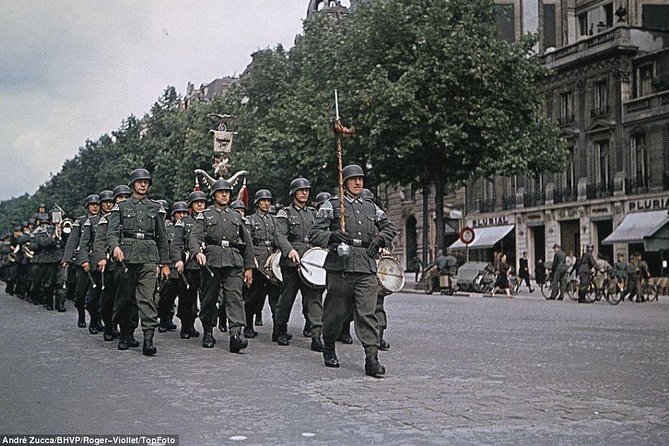
In this area, the tour emphasizes context over chronology. Your guide uses the streets and buildings as stages for the people involved—Germans in power, French institutions under pressure, and resistance networks working in the cracks.
A key reason I’d recommend this segment is that it helps you understand why some sites matter even when they look ordinary today. Paris is full of doors, corners, and facades that don’t shout history. Your guide points out the significance anyway—then explains why it mattered during the occupation.
You should also be prepared for a conversational flow. The tour is described as not having a totally fixed, one-size-fits-all checklist. The guide is prioritizing quality and answering questions, which can shift what you see most in the moment.
Stop 3: Rue de Rivoli and the Occupation Map You Can Actually Follow
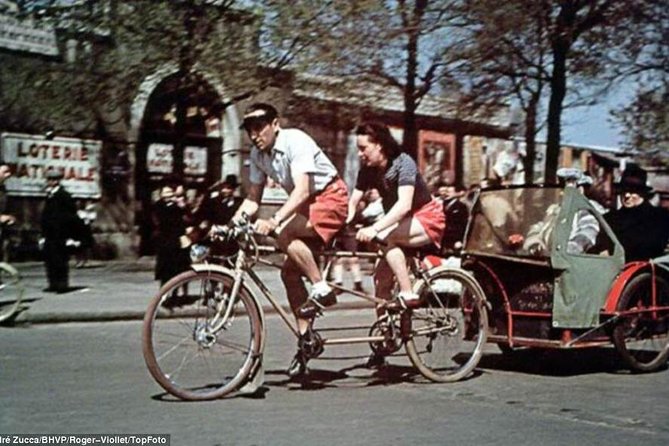
This is the heart of the tour. You spend time around Rue de Rivoli and nearby streets, where the occupation story becomes concrete—Gestapo activity, collaboration networks, German military control, resistance beginnings, and the Nazi handling of stolen culture.
Here are some of the specific places and themes highlighted in the route:
Gestapo and Collaboration Power Centers
You’ll hear about the first secret HQ of the Gestapo in Paris and the presence of major collaboration structures, including the largest collaborationist group (the PPF) and its leader. This isn’t abstract. The guide uses these points to show how occupation control worked beyond just uniforms and checkpoints.




German Control of Institutions and Space
You’ll also cover how German forces took over key hotels and how that control affected both officials and ordinary Parisians. The route mentions German Army HQ use of major hotels, including the Hotel Meurice and the Ritz context.
Coco Chanel at the Ritz: Why It’s Mentioned
One memorable detail tied into the Ritz area is Coco Chanel’s stay at the Ritz. The point isn’t gossip. It’s a way your guide illustrates how prominent French figures moved through the occupation’s social and power structures—and how that world intersected with German dominance.
Rue Rouget de Lisle: Where Organic Resistance Began
You’ll visit Rue Rouget de Lisle, tied to where resistance activity genuinely began in October 1940. This is one of those “you’ll never notice it the same way again” stops: a street name becomes a marker for the shift from occupation intimidation to organized pushback.
Jeu de Paume: Looted Jewish Art and the Nazi Art Machine
You’ll check out the Jeu de Paume Museum area, connected to how Nazis hid, processed, and looted artworks during the Occupation before sending them onward to Germany.
This is an important part of the tour because it links ideology to real-world operations. Art theft wasn’t a side story; it was part of how the occupation reshaped culture and punished targeted communities.
Place Vendôme and the Early Frame of the Final Solution
The tour places emphasis on the Place Vendôme area, including the Ritz hotel location connection and the mention that the anti-Nazi movement in the German forces met there. You’ll also hear that the Final Solution was first introduced to France from this context. It’s heavy material, and your guide’s job is to explain the progression—what changed, and why.
Place de la Concorde: Scars You Can Still See
Toward the end of this segment, you’ll get ready for the final focus at Place de la Concorde, where you can read war damage into the architecture. The tour highlights bullet holes and hidden marks tied to liberation fighting and points to a specific note: the Grand Palais is identified as the only major building in Paris destroyed during the occupation and liberation.
Final Stop: Place de la Concorde and the War’s Visible Geometry
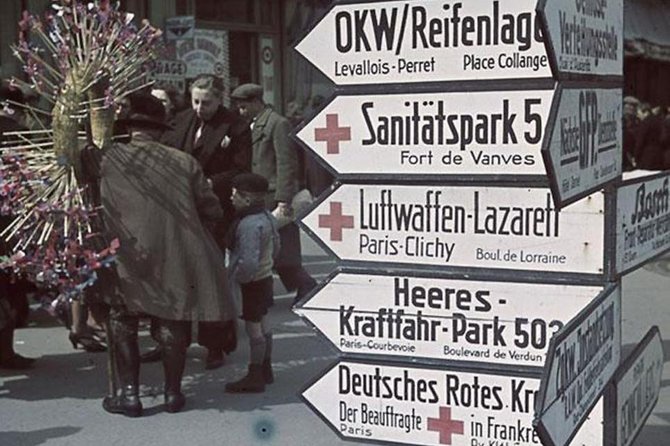
The tour ends around Place de la Concorde, with the timing usually bringing the total to about 3 to 3.5 hours. This final square is a strong wrap because it holds big landmarks and big consequences in one place.
You’ll connect the area’s earlier royal history (since it was originally Place Louis XV) with what happened later during the Revolution—then you’ll pivot back to the occupation era. The point is continuity: Paris keeps reinventing itself, but the war leaves scars that don’t disappear.
The tour highlights key buildings used as German HQs, including the twin Naval Ministry and Hotel Crillon. You’ll also see the Luxor obelisk mentioned as part of the square’s iconic geometry.
And yes: the bullet holes and hidden scars theme matters here. This isn’t just “wow, architecture.” It’s “why this is still here, and what it cost.”
Shoah vs. General Occupation: Know What You’re Booking
This is worth saying clearly.
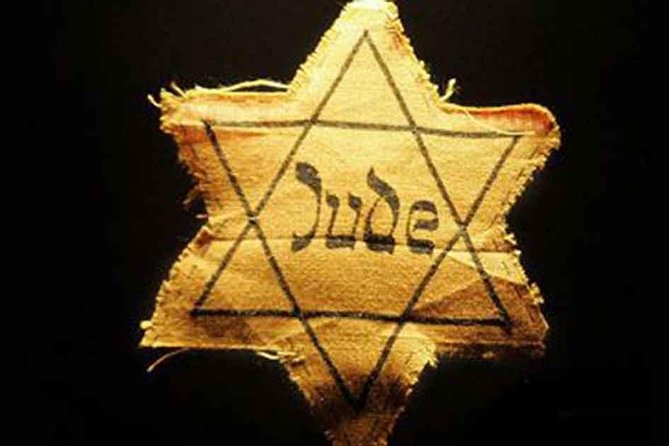
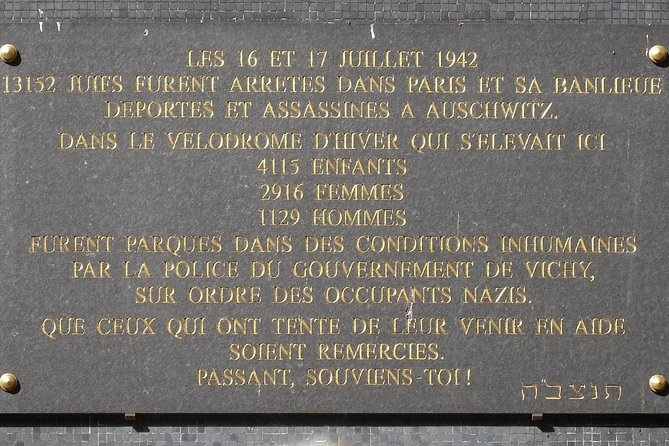
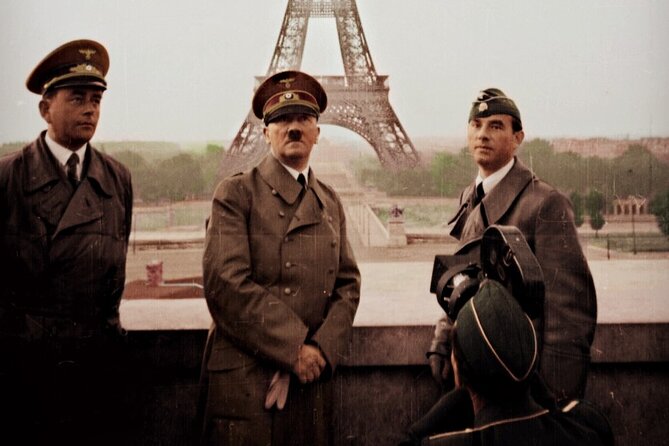
On the general tour, you’ll get discussion of the overall currents that led to implementation in France of the Final Solution, including conditions for Jewish people in Paris and occupied France in the years leading up to it. You’ll also cover the way those pressures intersected with resistance.
But if you want the kind of detailed, Holocaust-centered focus where the Holocaust memorial and Jewish Quarter/Marais ending becomes part of the program, the tour data points you toward Shoah-specific tours, typically set up as private/higher-focus options rather than the standard general group route.
If your interest is very specifically Holocaust history, I’d plan accordingly so you don’t end up with a format mismatch.
Price and Value: Is $108.84 Fair for 3–4 Hours?
At $108.84 per person for roughly 3 to 4 hours, the value comes from what you’re actually buying:
- Small-group attention (max 10; semi-private format limits the number of groups) means questions don’t get pushed aside.
- A prepared, tailored guide like Chris Pollard, with visual support and follow-up book lists in some cases, shifts the tour from facts-on-demand to learning you can keep.
- You’re not just seeing famous spots. You’re seeing how power, collaboration, resistance, and persecution played out in the same neighborhood spaces.
The tradeoff is that it’s not a short, casual “highlights walk.” It’s structured to teach, and you’ll likely do more walking than you expect.
Who This Tour Fits Best
This is ideal if you:
- Like your history explained through people and decisions, not only dates.
- Want WWII context that you can carry into other Paris sights (and even into nearby day trips).
- Appreciate a guide who can adapt the depth based on what you care about.
It’s not the best choice if you want:
- A strict, museum-style chronological route with no deviation.
- A purely light, effortless outing. This is serious history and you should be ready for that tone.
Practical Tips So You Enjoy It More
Based on how these tours are described and how they run, plan for:
- Outdoor time and walking. Dress in layers for Paris weather shifts.
- Bring water. It’s an outdoor route and you’ll be on your feet.
- Wear shoes you trust. The guide can be flexible, but it’s still a walking itinerary through central streets.
- Come with one or two interests. If you care about resistance, art looting, collaboration networks, or the day-to-day situation, say so early so the guide can emphasize the right threads.
Should You Book This WWII Occupation Walk?
If you want WWII Paris with strong context and real locations—told by Chris Pollard in a small-group setting—I think this is a smart booking. The tour’s big strength is that it doesn’t treat the city like a list; it treats it like a living map of choices made under pressure.
Book it if you like asking questions and you want your time in Paris to feel more connected than standard “top sights” walking. Skip it (or book the right variation) if your main goal is a dedicated Shoah-focused tour, since the general format gives context but not the full, Holocaust-specialist depth.
If you’re on the fence, ask yourself one question: do you want to understand how occupation systems shaped behavior? If yes, this will reward you.
FAQ
How long is the tour?
The tour is described as about 3 to 4 hours on average, and the end segment at Place de la Concorde notes a typical finish around 3 to 3.5 hours.
Where does the tour start?
It starts at Place Colette, Rue Saint-Honoré, 75001 Paris, at Palais Royal Metro Exit 5, opposite the Comédie-Française.
Where does the tour end?
The tour ends at a different location, and for the general route it’s around Place de la Concorde.
What language is the tour offered in?
It’s offered in English.
How many people are on the tour?
The maximum size is 10 travelers, kept small for a more personal experience.
Is this a group or private tour?
It runs as a semi-private small group (limited groups per tour) and fully private tours are available with personalized itinerary and flexible start times.
Is there a minimum number of travelers?
Yes. The tour requires a minimum of 4 people to run.
What topics will I see on the general version?
You’ll cover the German occupation of Paris, resistance themes, collaboration context, German use of major institutions/hotels, and Nazi looting/processing of art connected to Jeu de Paume. The general tour also discusses conditions for Jewish people in Paris leading up to the Final Solution.
Is there a Holocaust memorial or Marais stop on this tour?
For the general group tour, Holocaust memorial and ending in the Marais district are not part of the default route unless specifically requested as part of a private Shoah-focused tour.
Is the tour outdoors?
Yes. It’s an outdoor walking tour, and it notes it requires good weather. Dress for walking and changing conditions.
More Private in Paris
- Louvre Museum Paris Essential Guided Tour Semi-Private 6ppl Max
★ 5.0 · 3,807 reviews - SUV Private Transfer: Paris to Charles de Gaulle Airport (CDG)
★ 4.0 · 3,091 reviews - Paris: Private Photoshoot at the Eiffel Tower
★ 4.7 · 2,636 reviews - Top Private Cruises in Paris with French Champagne and surprises
★ 5.0 · 1,553 reviews - Golf Cart in Paris – Private Guided City Tour – Pickup Included
★ 5.0 · 1,164 reviews
More Tours in Paris
- Paris: Louvre Guided Tour with Reserved Access & Boat Cruise
★ 4.3 · 16,353 reviews - Paris: Big Bus Hop-On Hop-Off Tour with Optional Cruise
★ 4.4 · 13,279 reviews - Louvre Museum Masterpieces Guided Tour with Access
★ 4.5 · 12,023 reviews - Versailles: Skip-the-Line Tour of Palace and Gardens Access
★ 4.7 · 10,429 reviews - Paris: Louvre Overview, Exploration tour and Reserved Entry
★ 4.1 · 10,145 reviews
More Tour Reviews in Paris
- Paris: 1-Hour Seine Cruise departing from the Eiffel Tower
★ 4.4 · 77,472 reviews - Paris: Louvre Museum Timed-Entrance Ticket
★ 4.6 · 71,977 reviews - Disneyland® Paris 1-Day Ticket
★ 4.6 · 49,412 reviews - Paris: Versailles Palace and Gardens Full Access Ticket
★ 4.6 · 41,579 reviews - Paris: Arc de Triomphe Rooftop Tickets
★ 4.6 · 34,264 reviews
Fresh off the review desk in Paris
- Secrets of Paris Bike Tour in English or Dutch★ 5.0 · 5 reviews
- Paris: Mont Saint-Michel Day Tour with Chinese Tour Guide★ 5.0 · 5 reviews
- Private Street Art 2-Hour Guided Tour in Paris★ 4.5 · 5 reviews
- Orsay Museum Tour: 2h Highlights (Private & Small Group)★ 5.0 · 5 reviews
- Discover Paris in electric golf carts★ 4.0 · 5 reviews
- Paris Private Boat Tour with your own Captain Guide★ 5.0 · 5 reviews
Private, compared.
 ★ 5.0Louvre Museum Paris Essential Guided Tour Semi-Private 6ppl MaxFrom $1813,807 reviews
 ★ 4.0SUV Private Transfer: Paris to Charles de Gaulle Airport (CDG)From $713,091 reviews
 ★ 4.7Private Photoshoot at the Eiffel TowerFrom $412,636 reviews
 ★ 5.0Top Private Cruises in Paris with French Champagne and surprisesFrom $4821,553 reviews
 ★ 5.0Golf Cart in Paris – Private Guided City Tour – Pickup IncludedFrom $1691,164 reviews
 ★ 4.5Private Paris Airport Arrival Transfer – CDG & ORLY AirportsFrom $571,119 reviews
 ★ 4.0Paris Private Arrival Transfer from Charles de Gaulle (CDG) or Orly (ORY)From $541,084 reviews
 ★ 5.0Private Montmartre Food Tour with Wine, Cheese & PastriesFrom $3021,027 reviews