
Reviewed · MUSEUMS
Rodin Museum Masterpieces – Guided Tour up to 8 guests
Rodin hits different when you meet the maker. This is a small-group tour that helps you connect the sculptures to the person behind them, with guides like Marcel, Valérie, Lucia, and Taylor bringing their own style to the story. Two things I really like: you get straight-to-the-point context for what you’re seeing, and you move through the museum in a way that feels paced, not rushed.
What I love even more is the focus on Rodin’s workshop thinking: hands, studies of the human form, and the life-sized The Walking Man help you understand how he built realism from observation. And then you land on the big stars—The Gates of Hell and The Thinker—with explanations that make the details click instead of just looking impressive.
One consideration: this is a walking tour with a moderate amount of walking, and it’s not listed as suitable for wheelchair users (wheelchair tours are only available on request). If mobility is an issue, it’s smart to ask first and compare alternatives.
In This Review
- Key highlights at a glance
- Rodin Museum tour basics: small-group format that actually works
- Skip-the-line entry and what it buys you
- How you see Rodin’s life through his art
- The indoor highlights: paintings, clay portraits, and the human-form obsession
- Contemporaries in clay: Balzac and the power of character
- The Gates of Hell and The Thinker: where the tour becomes the story
- The Garden of Sculptures: when the museum continues outside
- Route pacing and group dynamics: why up to 8 matters
- Practicalities that affect your experience
- Who this tour suits best
- Guides: what to look for once you’re in the group
- Price and value: what $156 is really paying for
- Should you book the Rodin Museum Masterpieces tour?
- FAQ
- How long is the Rodin Museum Masterpieces guided tour?
- What does the tour include?
- What are the main artworks and areas you’ll see?
- Is there a group size limit?
- What languages are available for the live guide?
- Do I need to bring anything specific?
- Is it wheelchair accessible?
Key highlights at a glance

- Up to 8 guests per guide for a more personal pace and easier Q&A
- Skip-the-line access so you spend your time looking, not waiting
- Rodin’s process on full display: hands, studies, and The Walking Man
- The Gates of Hell + The Thinker explained with practical, scene-by-scene clarity
- A sculpture-filled Garden of Sculptures after the indoor rooms
- Guides with real personality, including art-history focus and even humor (hello, Taylor)
Rodin Museum tour basics: small-group format that actually works

The Rodin Museum can feel like a museum of objects—until a good guide gives you a map for seeing. This tour is built around a tight group size (up to 8 guests), which matters more than you’d think in a place where multiple rooms are packed with sculptures and paintings. With a smaller group, you’re less likely to get stuck behind someone, and questions land before the moment passes.
You also have a hard time slot of about 2 hours, so the tour doesn’t try to cover everything in a marathon. Instead, you focus on Rodin’s main ideas and a handful of anchor works: how he studied the body, who he portrayed, and how The Gates of Hell became the stage for The Thinker and other iconic forms.
Price is $156 per person, which is not cheap. The value comes from three parts you’d otherwise pay separately or struggle to replicate on your own: entrance with skip-the-line access, a professional art historian guide, and a guided route that helps you connect pieces that look unrelated at first glance.
Worth weighing up next to this Paris pick
- Paris: Louvre Guided Tour with Reserved Access & Boat Cruise
★ 4.3 · 16,353 reviews - Louvre Museum Masterpieces Guided Tour with Access
★ 4.5 · 12,023 reviews - Louvre Museum – Exclusive Guided Tour (Entry Included)
★ 5.0 · 6,296 reviews - Versailles: Skip-the-Line Guided Palace Tour and Full Access
★ 4.6 · 5,214 reviews
Skip-the-line entry and what it buys you
Skip-the-line access isn’t just a convenience perk here. The museum is a place where your first 20 minutes set your energy level. If you’re waiting outside or shuffling through entry without context, you arrive with a little frustration—and that makes the art harder to absorb.
With this tour, you’re getting in smoothly and moving into the rooms with a plan. That plan is important because Rodin’s universe doesn’t always “read” the way you expect. One gallery might show human form studies; another might show a famous finished work; another might show clay portraits of contemporaries. A guide helps you treat it as one evolving story.
How you see Rodin’s life through his art
The tour starts by grounding you in Rodin’s life and practice. A strong guide makes this more than biography. It turns Rodin’s choices into something logical: why he kept revisiting the same themes, why the body mattered so much, and why the line between study and masterpiece stayed blurry.
Here are the kinds of things you’ll be pointed to:
- Rodin’s repeated fascination with the human form
- His attention to specific details like hands—not just as anatomy, but as gesture and character
- How he made art that felt modern, even when it was rooted in observation
This is also where the “guide personality” shows up. In the reviews, guides like Marcel and Valérie are praised for making you feel like you can see over their shoulder—Rodin through the eyes of someone who understands the method.
The indoor highlights: paintings, clay portraits, and the human-form obsession
Inside the museum, you’re surrounded by sculpture, but the experience isn’t only about marble. You’ll also see selections of more than 200 paintings that Rodin accumulated over his life. Even if you came for sculptures, this part helps you understand how his eye worked. Paintings in the mix can reveal what he was studying—light, posture, and the visual logic behind form.
Expect a guided look at Rodin’s studies of the human body, including those constant returns to details like hands. That matters because it’s easy to mistake Rodin for a sculptor who just made dramatic figures. The better view is that he built emotion through anatomy and movement.
You’ll also encounter the life-sized The Walking Man. When someone points out how this piece is constructed and why Rodin kept refining human motion, it stops being just “a famous statue” and starts being an example of process. That’s the tour’s payoff: it teaches you how to look, not just what to look at.
Contemporaries in clay: Balzac and the power of character

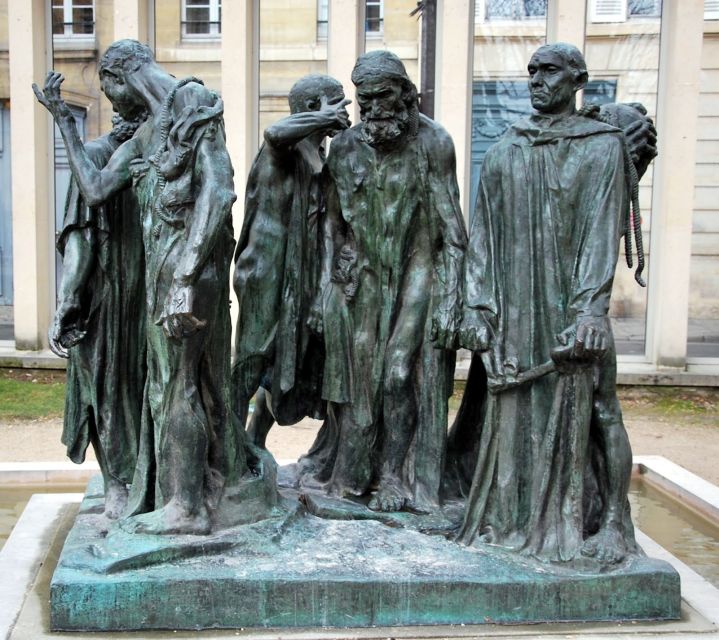
One of the tour’s more interesting angles is how Rodin depicted people around him, not in idealized hero mode, but as living individuals. You’ll learn how he portrayed contemporaries in clay, including the French writer Balzac.
This detail helps you connect dots across the museum. You start seeing that Rodin wasn’t only interested in the body as a shape. He was interested in the body as personality—how someone stands, how they hold themselves, and how expression can be built through texture and volume.
If you like your art with context—social circles, personality, and the world outside the studio—this portion is a strong reason to book.
The Gates of Hell and The Thinker: where the tour becomes the story
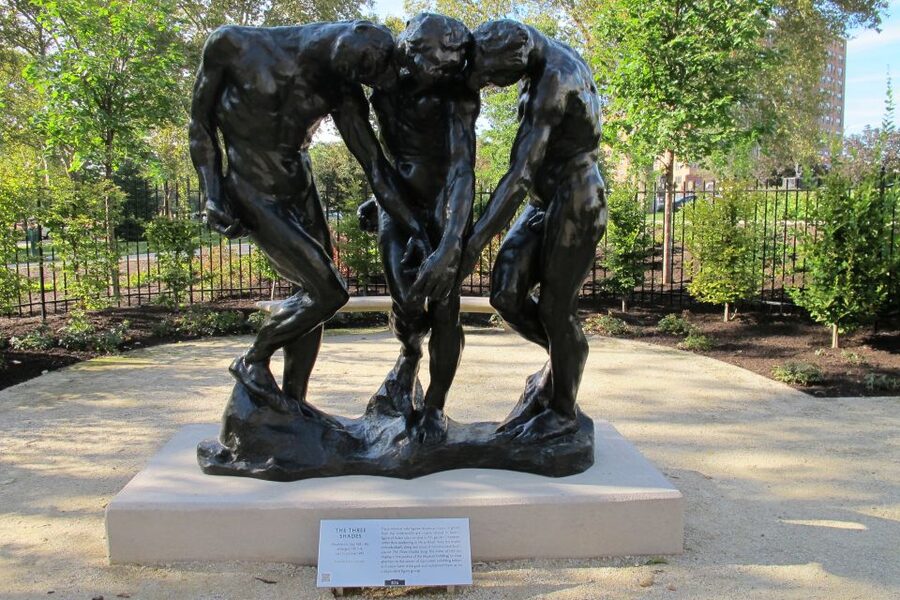
This is the moment most people come for, and the guide approach really matters. The Gates of Hell can look like chaos at first glance. The tour helps you read it as composition: a system of figures, expressions, and gestures that build meaning as you move your gaze across the work.
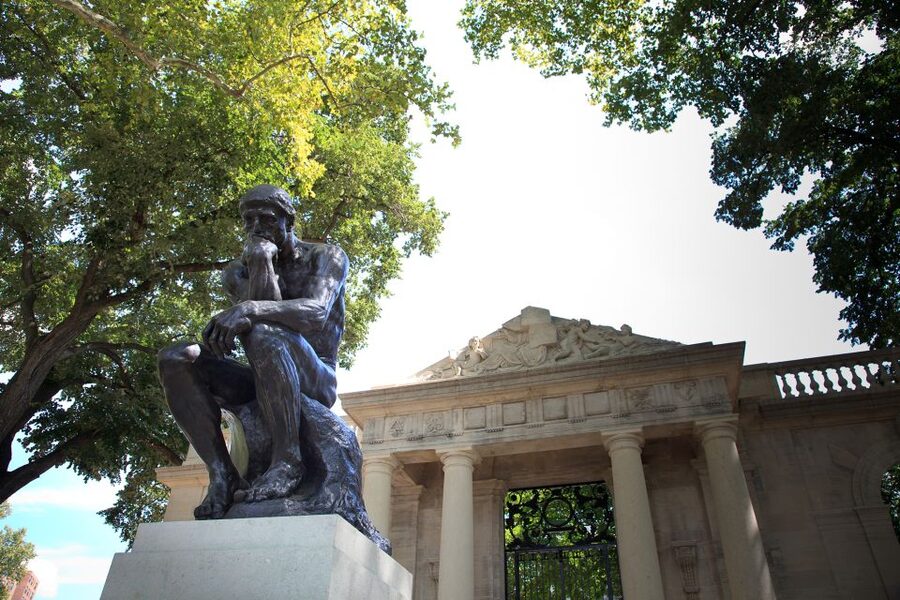
Then comes The Thinker, Rodin’s most recognizable creation. With a guide, you get beyond the famous silhouette and toward what the figure is doing. You’ll hear the connection between the work as a whole and the part that became iconic, and you’ll learn how Rodin’s attention to the body turns into an idea you can feel.
If you tend to “like” famous works without fully understanding them, this is where you’re likely to start saying, okay, I get why people obsessed over this.
Worth weighing up next to this Paris pick
The Garden of Sculptures: when the museum continues outside
After the indoor galleries, you’ll stroll through the Garden of Sculptures. This is one of the best chances to see Rodin’s forms in a different light—literally and emotionally. In a garden setting, sculptures don’t sit behind glass and walls; they interact with space, sightlines, and calm pacing.
The garden is also a practical break from museum intensity. You still get more sculptures to look at, but you can breathe between close-looking moments. If the tour is paced well (and reviews strongly suggest that guides do this), you come out with a sense of Rodin as someone working across environments, not only in studio interiors.
Route pacing and group dynamics: why up to 8 matters
A group of up to 8 guests changes how a museum tour feels. You don’t constantly lose the guide’s voice. You can stop at a sculpture long enough to actually look, not just skim. And the guide can adapt if you care more about hands, paintings, or the big centerpiece works.
The reviews mention guides making time for what visitors want to see. That flexibility is easiest in small groups. It’s also what you should look for when choosing a guided option: not just a list of famous artworks, but a guide who can shift attention without turning the tour into chaos.
Practicalities that affect your experience
A few details can make or break a museum visit, so here’s what to plan for.
Walking time and mobility: The tour involves a moderate amount of walking. It’s not available for people with walking disabilities or wheelchair users. Wheelchair tours are only available on request, so you’d want to confirm fit before you commit.
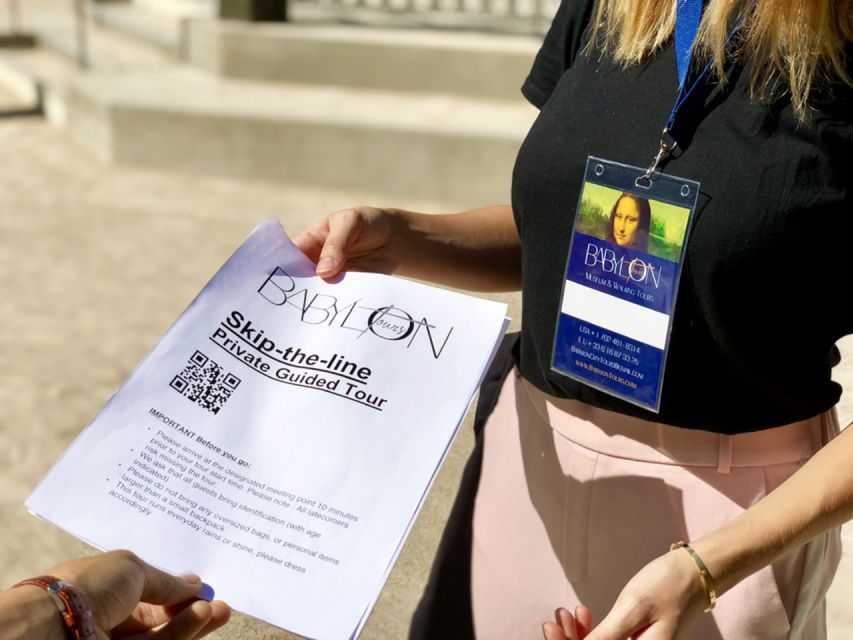
What you can bring: No luggage or large bags. If you’re touring with a backpack, keep it manageable. If you’re traveling with bigger items, plan storage ahead of time.
Quiet and room rules: Some museum rooms have rules that require quiet or restrict speaking. That can affect how freely you’ll talk during certain parts of the tour, so keep your expectations aligned.
Temporary closures: The museum can have occasional closures without warning. If that delays the experience by more than an hour from the start time, the provider says you’ll get an alternative, but no refunds or discounts can be provided in those cases. It’s rare, but it’s worth knowing that art museums are still run by schedules you can’t fully control.
Languages: Tours run in Italian, French, Russian, English, Spanish, and German. That’s a big deal if you want explanations that land naturally in your language.
Who this tour suits best
This experience is best if you want:
- Structure: you’d rather have a route and a guide than wander
- Interpretation: you want meaning behind The Gates of Hell and The Thinker
- Process: studies of the human form, hands, and repeated motifs
- A focused time window: 2 hours is enough to feel satisfied without museum fatigue
It’s also a good pick for people who like art that connects to real people and history. The inclusion of clay portraits of contemporaries such as Balzac gives you social texture, not just anatomy lessons.
If you’re traveling with mobility concerns, this one is harder to fit, since the tour format isn’t listed as wheelchair-friendly. In that case, it’s worth asking about a different option or request-based wheelchair arrangement.
Guides: what to look for once you’re in the group
The biggest recurring praise in the reviews is the guide. People mention the kind of teaching that feels like you’re getting Rodin’s logic, not just facts. Names show up often:
- Marcel is credited with making the museum feel like Rodin was close enough to see past
- Valérie is described as passionate and professional
- Lucia is highlighted for connecting art with politics, social issues, and history—useful if you like your art with context
- Taylor is praised for helping people grasp Rodin in time and place, plus a sense of humor
So when you book, don’t just think about the artwork. Think about the teaching style you want. In a museum full of detail, the guide becomes your tool for seeing.
Price and value: what $156 is really paying for
At $156 per person for a 2-hour guided tour, you’re paying for more than entry. You’re paying for:
- Skip-the-line access
- A professional art historian guide
- A small-group setting (max 8)
- A tour structure that links studies, paintings, major works, and garden pieces
If you tried to do this alone, you could certainly see The Gates of Hell and The Thinker. The hard part is connecting Rodin’s hands-and-studies obsession to why those iconic works matter. This tour is built to help you make that connection quickly and clearly.
Should you book the Rodin Museum Masterpieces tour?
Book it if you want the museum to feel organized and meaningful. The combination of skip-the-line entry, an art historian guide, and the emphasis on The Gates of Hell plus The Thinker is a strong package for a short stay. I’d especially recommend it if you like understanding the process—hands, studies, clay portraits—and not only viewing the final famous pieces.
Skip it or research alternatives if you need wheelchair-friendly accessibility or you’re very sensitive to walking. Also, if you prefer total freedom to wander without a timed route, this format may feel a bit structured for your style.
If you can do the walking and want help turning famous sculptures into something you actually understand, this is the kind of guided visit that makes the museum stick with you.
FAQ
How long is the Rodin Museum Masterpieces guided tour?
The tour duration is 2 hours.
What does the tour include?
It includes entrance fees and skip-the-line access, a professional art historian guide, a walking tour, and private or small group options. Wheelchair tours are available only on request.
What are the main artworks and areas you’ll see?
You’ll see Rodin’s life and art story, including The Gates of Hell and The Thinker, plus a stroll through the Garden of Sculptures. You’ll also cover Rodin’s studies of the human form, including hands and The Walking Man.
Is there a group size limit?
Yes. The tour is limited to a maximum of 8 guests per guide.
What languages are available for the live guide?
The live guide is available in Italian, French, Russian, English, Spanish, and German.
Do I need to bring anything specific?
You should bring a passport or ID card.
Is it wheelchair accessible?
The tour is not suitable for wheelchair users. Wheelchair-friendly tours are available only on request.
More Guided in Paris
- Paris: Louvre Guided Tour with Reserved Access & Boat Cruise
★ 4.3 · 16,353 reviews - Louvre Museum Masterpieces Guided Tour with Access
★ 4.5 · 12,023 reviews - Louvre Museum – Exclusive Guided Tour (Entry Included)
★ 5.0 · 6,296 reviews - Versailles: Skip-the-Line Guided Palace Tour and Full Access
★ 4.6 · 5,214 reviews - Louvre Access with Mona Lisa Escort or Guided Option
★ 4.0 · 4,588 reviews
More Tours in Paris
- Paris: Louvre Guided Tour with Reserved Access & Boat Cruise
★ 4.3 · 16,353 reviews - Paris: Big Bus Hop-On Hop-Off Tour with Optional Cruise
★ 4.4 · 13,279 reviews - Louvre Museum Masterpieces Guided Tour with Access
★ 4.5 · 12,023 reviews - Versailles: Skip-the-Line Tour of Palace and Gardens Access
★ 4.7 · 10,429 reviews - Paris: Louvre Overview, Exploration tour and Reserved Entry
★ 4.1 · 10,145 reviews
More Tour Reviews in Paris
- Paris: 1-Hour Seine Cruise departing from the Eiffel Tower
★ 4.4 · 77,472 reviews - Paris: Louvre Museum Timed-Entrance Ticket
★ 4.6 · 71,977 reviews - Disneyland® Paris 1-Day Ticket
★ 4.6 · 49,412 reviews - Paris: Versailles Palace and Gardens Full Access Ticket
★ 4.6 · 41,579 reviews - Paris: Arc de Triomphe Rooftop Tickets
★ 4.6 · 34,264 reviews
Fresh off the review desk in Paris
- Secrets of Paris Bike Tour in English or Dutch★ 5.0 · 5 reviews
- Paris: Mont Saint-Michel Day Tour with Chinese Tour Guide★ 5.0 · 5 reviews
- Private Street Art 2-Hour Guided Tour in Paris★ 4.5 · 5 reviews
- Orsay Museum Tour: 2h Highlights (Private & Small Group)★ 5.0 · 5 reviews
- Discover Paris in electric golf carts★ 4.0 · 5 reviews
- Paris Private Boat Tour with your own Captain Guide★ 5.0 · 5 reviews
Museums, compared.
 ★ 4.6Louvre Museum Timed-Entrance TicketFrom $2671,977 reviews
 ★ 4.7Orsay Museum Entry TicketFrom $1525,647 reviews
 ★ 4.5Louvre Museum Masterpieces Guided Tour with AccessFrom $8612,023 reviews
 ★ 4.6Louvre Museum Entry Ticket With Host and River CruiseFrom $1009,926 reviews
 ★ 4.6Les Invalides: Napoleon’s Tomb & Army Museum EntryFrom $209,185 reviews
 ★ 5.0Louvre Museum – Exclusive Guided Tour (Entry Included)From $1816,296 reviews
 ★ 4.6Louvre Museum Hosted Entry and Mona Lisa AudioguideFrom $815,235 reviews
 ★ 4.5Grévin Wax Museum TicketFrom $334,654 reviews
Browse the lists this tour appears in