
Reviewed · TOURS
Running Tours in Paris for intermediate to advanced runners
Paris moves at your pace, not by bus. This running tour for intermediate to advanced runners pairs classic sights with a local route plan, often including Seine bridges and riverside views.
Two things I really like: you’re guided by Juan Echeverria, a Paris-born local who speaks English, Spanish, and French, so you get context as you go. And you can pick a fit that matches your effort, from shorter to longer runs with different areas like Canal Saint-Martin and the Île de la Cité/Île Saint-Louis stretch.
One consideration: this isn’t a casual stroll-run. You must be used to running about 8 km (5 miles), and the tour does not provide equipment, so you’ll want proper shoes and gear.
In This Review
- Key takeaways
- A runner’s-eye view of Paris orientation
- Seine bridges, Canal Saint-Martin, and the island sights
- Place de la République: the launch point that actually makes sense
- Juan’s local stories and smart pacing
- How the time choices change the run (45, 60, or 90 minutes)
- Price and what you actually get for $53
- What you need to bring (since equipment isn’t provided)
- Who this tour suits best (and who should skip it)
- Timing: sunrise and sunset runs change the feel
- Practical tips for a smoother, happier run
- Should you book this running tour?
- FAQ
- How long is the running tour?
- Where is the meeting point in Paris?
- What sights will I see during the run?
- Do I need to be able to run a certain distance?
- Is the tour suitable for beginners?
- What’s included in the price?
- Are running shoes or other equipment provided?
- What languages does the guide speak?
- Is the tour refundable if my plans change?
Key takeaways
- Small groups (1 to 5) with a private guide feel more personal than a big sightseeing pack
- Route choices by time and level let you tailor the run to what you want to see
- Seine + bridges + islands puts major landmarks on a runner-friendly line
- Canal Saint-Martin offers a different slice of Paris beyond the postcard lanes
- Juan’s pacing and stories help you keep moving while learning the city’s “why”
A runner’s-eye view of Paris orientation
If you’re in Paris for only a few days, you need fast orientation. This tour is built for that. You’ll cover ground by foot at a serious running pace, so the city doesn’t just look good from a viewpoint. It starts to make sense as a place you can move through.
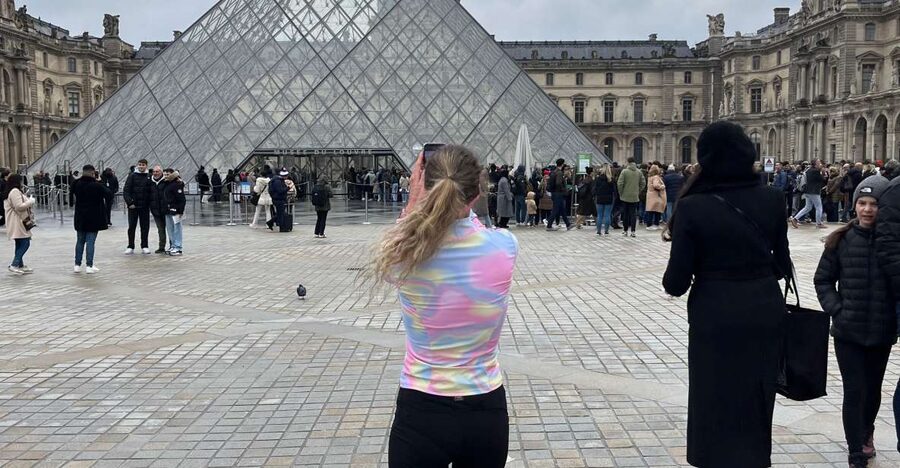
What I like is the mix of familiar icons and real-feeling neighborhoods. You get to pass well-known landmarks like the Louvre/Tuileries area and Musée d’Orsay, but you also run through places that feel like everyday Paris. That combo is the practical value here: you learn what’s where, and you get advice that helps your next day plans.
And because it’s a live guide, the city doesn’t stay abstract. Juan can explain what you’re seeing in English, Spanish, or French, depending on your group.
Still deciding? Here is how it stacks up against a few Paris favourites we have booked and reviewed.
- Paris: 1-Hour Seine Cruise departing from the Eiffel Tower
★ 4.4 · 77,472 reviews - Paris: Louvre Museum Timed-Entrance Ticket
★ 4.6 · 71,977 reviews - Disneyland® Paris 1-Day Ticket
★ 4.6 · 49,412 reviews - Paris: Versailles Palace and Gardens Full Access Ticket
★ 4.6 · 41,579 reviews
Seine bridges, Canal Saint-Martin, and the island sights
The tour is flexible, because Paris is flexible—meaning the best route depends on the time of day and the run length you choose. Still, the core areas are clear.
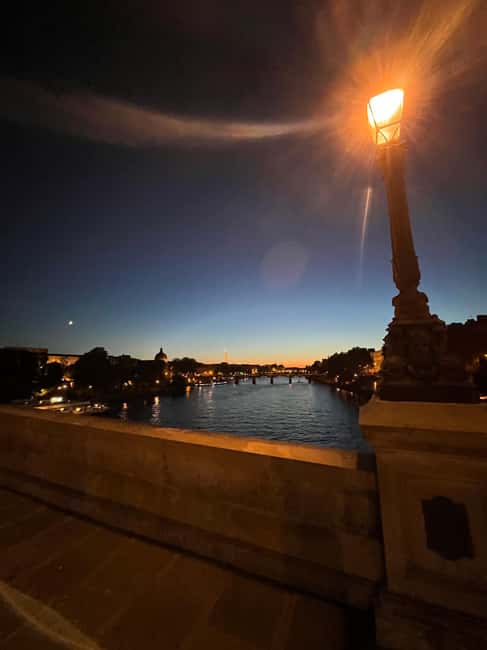
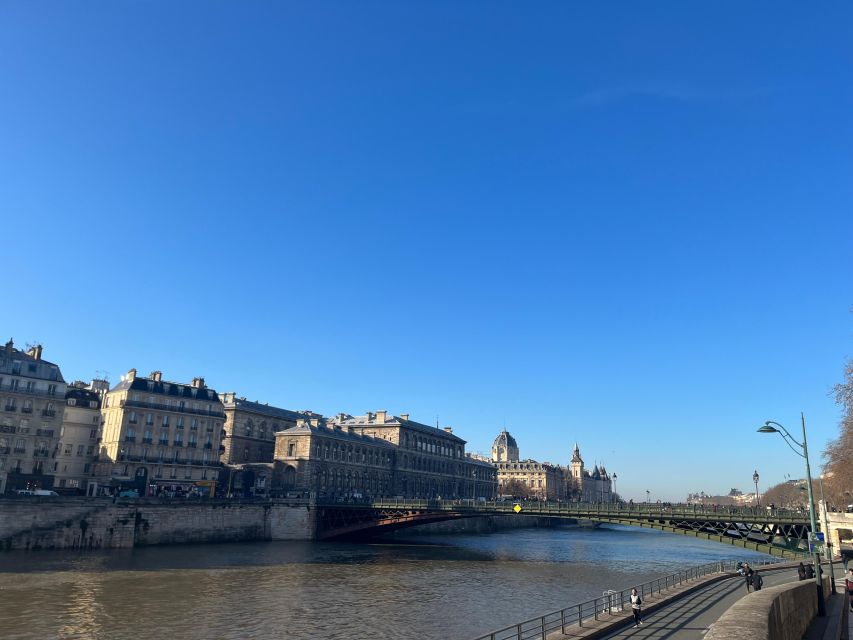
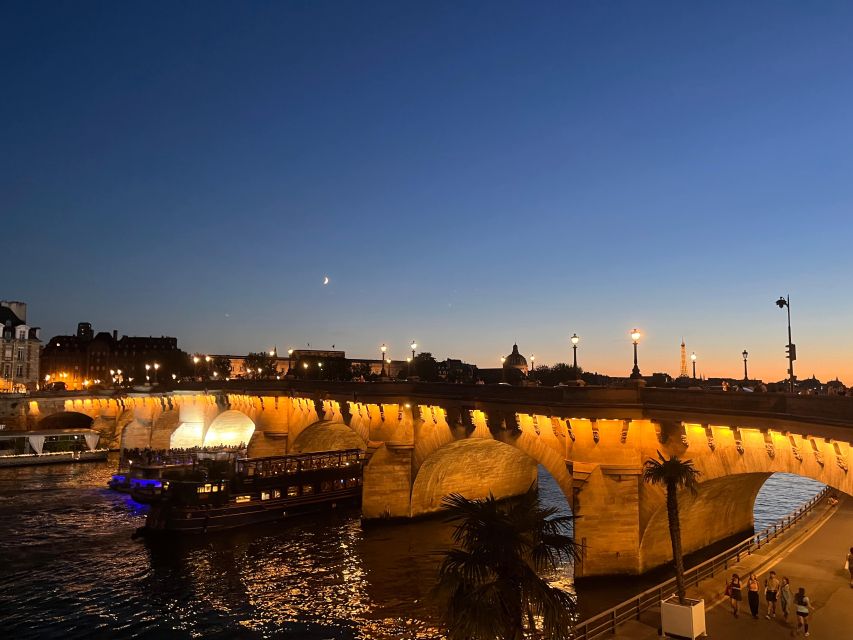
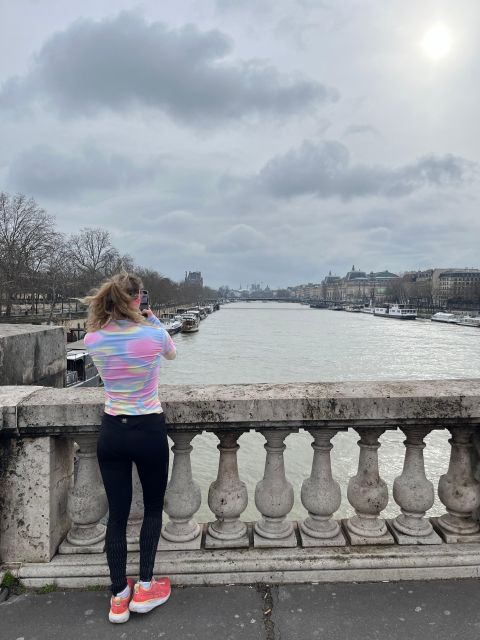
You’ll run along the Seine river and cross its bridges, which is a big deal for runners. It’s not just the monuments. It’s the rhythm of riverside paths, the way bridges connect neighborhoods, and how quickly you feel like you’re traveling across the city.
Along the way, you’ll see major sights such as:
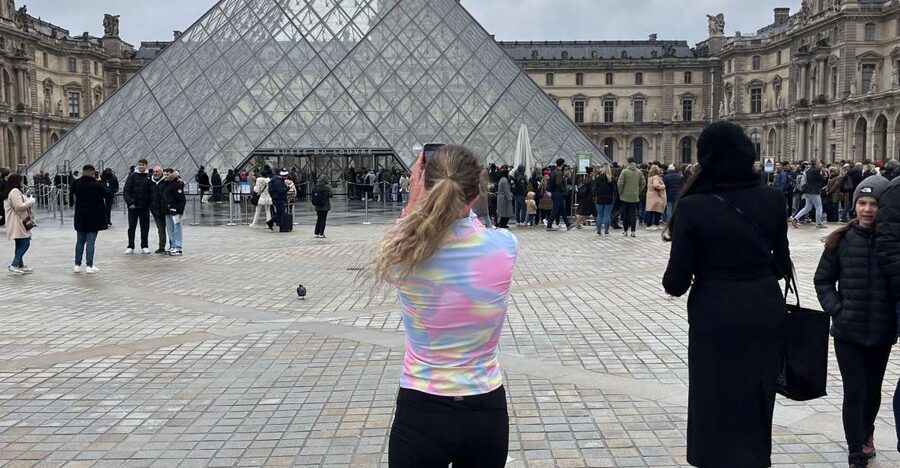
- Louvre and Tuileries: often passed in the more central part of your run, giving you that “I’m really here” feeling without waiting in lines
- Musée d’Orsay: another classic landmark that usually sits right by the Seine corridor, so it fits naturally into a running route
- Les Halles: a central area you’ll likely recognize later when you return for food and wandering
- Île Saint-Louis and Île de la Cité: island Paris, where the Seine bends the streets and the viewpoints change quickly
Then there’s Canal Saint-Martin. This is a different mood than the big postcard center. The canal area tends to feel more local and lived-in. Even if you already know Paris on a map, running it helps you understand the shape of the city—where the open water and the urban blocks create natural routes.
Place de la République: the launch point that actually makes sense
Meet-up matters more than people think, especially for runners who don’t want to waste warm-up time. Your start is Place de la République, meeting next to the statue in the center of the square.
From there, you head into central Paris and build your route based on your selected track and time. The practical win is that you start in a place that’s easy to find and then move out into the parts of the city you came for. Once you’re running, you stop thinking about logistics and start thinking about effort and form.
Because the group stays small, you’re less likely to get stretched out. That helps when the route includes bridges, canal sections, or park segments where pace and spacing can change fast.
Juan’s local stories and smart pacing
This is a guide-led running tour, not a headset tour. Juan Echeverria brings more than directions. Based on past participants’ experiences, the strongest praise is about his ability to mix movement with mini stories.
People highlight his knack for short anecdotes as you pass monuments and neighborhoods. That matters because it turns “I ran past that building” into “I know what I was looking at and why it matters.”
Another standout is pacing. You’re told this tour expects you to handle at least 8 km (5 miles), which means the guide isn’t building the run around a walk-and-talk pace. Still, Juan can adapt to your rhythm, including when the route length stretches out. If you’re intermediate to advanced, that’s what you want: you shouldn’t feel like you’re holding everyone back, or like the guide is dragging you.
How the time choices change the run (45, 60, or 90 minutes)
The tour’s duration depends on what you select, with options including 45 minutes and longer choices up to 90 minutes. In practice, the idea is simple: shorter runs for highlights and orientation, longer runs for more city coverage and better time to settle into your effort.
Here’s how I’d think about it when you’re booking:
- 45 minutes: great if you want a focused introduction to central Paris sights without feeling like you need a full workout day
- 60 minutes: a sweet spot for balance—enough time to feel the rhythm of the Seine or canal sections and still keep your afternoon free
- 90 minutes: best if you’re already comfortable with serious running and you want more variety in quarters, bridges, and river/canal scenery
Also, the tour may include morning or evening vibes depending on the season, with the chance to see sunrise or sunset. That’s not a small detail. Light changes everything on a riverside run, and it makes monuments look less like photos and more like real structures you’re moving alongside.
Price and what you actually get for $53
At $53 per person, you’re not paying for a bus ticket or an all-day museum plan. You’re paying for a guide, a structured route, and the running support that makes the city feel navigable on foot.
What’s included:
- a local guide and running visit plan
- water and a cereal bar
- music during the run
- the guided experience on routes that can include Seine/bridges, parks, and Canal Saint-Martin
- small groups, typically from 1 to 5 people
What’s not included:
- running equipment
For value, the big one is group size. With only a handful of runners, you get more attention and less bottlenecking at turns or photo moments. And because Juan is the guide, you’re not guessing where to run next. You leave with a mental map and practical tips, which saves you time on future days.




What you need to bring (since equipment isn’t provided)
This tour does not provide equipment. That sounds obvious, but it’s worth stating clearly because your comfort affects your whole experience.
Plan on bringing:
- proper running shoes (broken-in, not brand new)
- weather-appropriate layers, because conditions in Paris can shift quickly
- a way to carry essentials if you need them (the tour includes water on the run, but you might still want your own setup)
Also, expect an active run, not a slow sightseeing pace. You’ll be given water and a cereal bar, and you’ll likely have a music soundtrack, but you still need to show up ready to run.
If you don’t meet the physical expectation—especially the minimum comfort with 8 km (5 miles)—you’ll probably feel rushed or under-prepared. This isn’t the tour to “test yourself” for the first time.
Who this tour suits best (and who should skip it)
This running tour is aimed at intermediate to advanced runners. That’s not just marketing; it’s embedded in the requirements and the route style.
You’ll likely enjoy it if:
- you regularly run and can handle at least 8 km (5 miles)
- you like covering distance while learning about a city
- you want to see Paris landmarks with less crowd time and more movement-based context
- you prefer small groups over large walking tours
You should skip it if you fall into the listed categories. It’s not suitable for:
- children under 16
- pregnant women
- people with back problems or heart problems
- wheelchair users
- people with diabetes
- people with a cold
- visually impaired people
- people without running experience
- people with high blood pressure
- people with low fitness
- people over 309 lbs (140 kg)
Even if you’re a strong runner, that list is there for a reason. Safety comes first, and the route involves active running.
Timing: sunrise and sunset runs change the feel
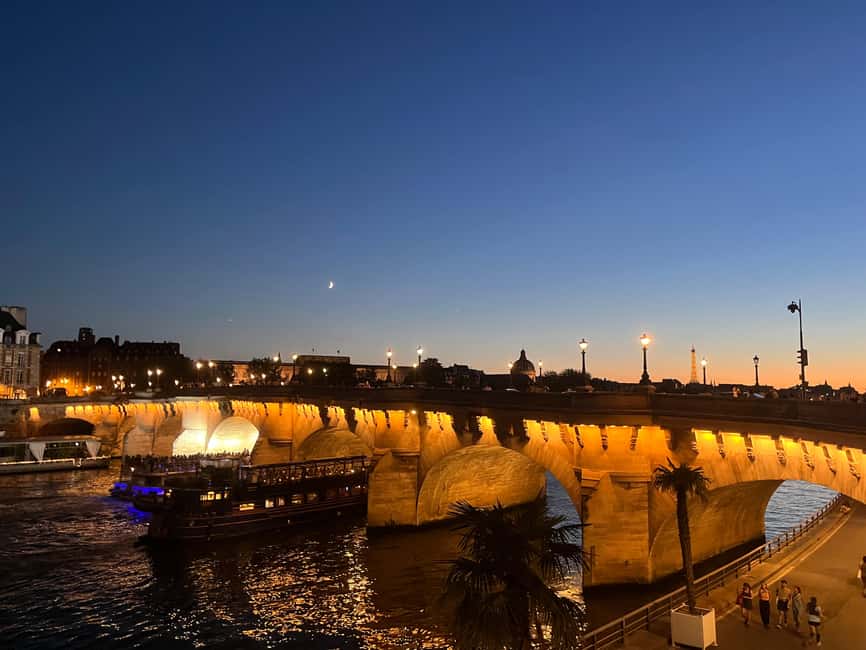
Paris has a different vibe depending on the hour, and this tour is aware of that. Depending on the season, you might run for sunrise or sunset views.
In plain terms, early light can make the Seine area feel calm and wide, while sunset light can turn stone monuments and river reflections into something you can feel while running. Either way, timing helps you see Paris in a mood you don’t get from a daytime-only schedule.
If your travel days are packed, choose the time that lets you arrive warmed up and not stressed. A good run is not the moment to rush across town.
Practical tips for a smoother, happier run
A few small choices will make this much more fun.
- Check the weather first. You’re responsible for wearing suitable outfits for conditions. Paris can go from mild to windy fast, and that affects effort.
- Keep your expectations realistic. You’re meeting at République and running through multiple Paris districts. This is exercise while sightseeing, not sightseeing while barely moving.
- Use the snack break wisely. Water and a cereal bar are included, so you’re not on your own. Still, fuel timing matters—have it when you need it, not at the end of your energy.
- Ask questions. This is a guide-led experience in English, French, or Spanish. If something catches your eye—bridge, canal corner, a specific monument—ask. That’s where the city turns from scenery into understanding.
Should you book this running tour?
I’d book it if you’re the kind of traveler who likes to earn your views. This tour rewards effort. You get a runner-friendly route, big landmarks like Louvre/Tuileries and Musée d’Orsay, plus a different Paris flavor through Canal Saint-Martin, all with a small group and Juan Echeverria’s local guidance.
Skip it if you want a relaxed pace, if you don’t routinely run around 8 km, or if you’re dealing with any of the health and accessibility restrictions listed. And if you don’t have the right shoes and you’re hoping the tour provides gear, look elsewhere.
If you do fit the runner profile, this is one of the smarter ways to see Paris: less waiting, more movement, and a guide who helps you understand what you’re passing as you run.
FAQ
How long is the running tour?
You can choose among different run lengths, including 45 minutes, with longer options available up to 90 minutes depending on your level and what you want to see.
Where is the meeting point in Paris?
Meet next to the statue in the center of Place de la République.
What sights will I see during the run?
You’ll run through areas that can include the Seine and its bridges, Canal Saint-Martin, and you may see landmarks such as the Louvre, Tuileries, Musée d’Orsay, Les Halles, Île Saint-Louis, and Île de la Cité.
Do I need to be able to run a certain distance?
Yes. You must be used to running at least 8 km (5 miles), feel well, and check the weather before choosing your outfit.
Is the tour suitable for beginners?
No. It’s not suitable for people without running experience and people with low fitness. You should be intermediate to advanced and comfortable with the distance requirement.
What’s included in the price?
Included are the running guide, water, a cereal bar, and music. The guided running visit covers routes based on your chosen path, such as along the Seine/bridges or through the Canal Saint-Martin area, with small groups.
Are running shoes or other equipment provided?
No. The tour does not provide running equipment.
What languages does the guide speak?
The guide speaks English, French, and Spanish.
Is the tour refundable if my plans change?
Yes. There is free cancellation up to 24 hours in advance for a full refund, and you can reserve now and pay later.
More Tours in Paris
- Paris: Louvre Guided Tour with Reserved Access & Boat Cruise
★ 4.3 · 16,353 reviews - Paris: Big Bus Hop-On Hop-Off Tour with Optional Cruise
★ 4.4 · 13,279 reviews - Louvre Museum Masterpieces Guided Tour with Access
★ 4.5 · 12,023 reviews - Versailles: Skip-the-Line Tour of Palace and Gardens Access
★ 4.7 · 10,429 reviews - Paris: Louvre Overview, Exploration tour and Reserved Entry
★ 4.1 · 10,145 reviews
More Tour Reviews in Paris
- Paris: 1-Hour Seine Cruise departing from the Eiffel Tower
★ 4.4 · 77,472 reviews - Paris: Louvre Museum Timed-Entrance Ticket
★ 4.6 · 71,977 reviews - Disneyland® Paris 1-Day Ticket
★ 4.6 · 49,412 reviews - Paris: Versailles Palace and Gardens Full Access Ticket
★ 4.6 · 41,579 reviews - Paris: Arc de Triomphe Rooftop Tickets
★ 4.6 · 34,264 reviews
Fresh off the review desk in Paris
- Secrets of Paris Bike Tour in English or Dutch★ 5.0 · 5 reviews
- Paris: Mont Saint-Michel Day Tour with Chinese Tour Guide★ 5.0 · 5 reviews
- Private Street Art 2-Hour Guided Tour in Paris★ 4.5 · 5 reviews
- Orsay Museum Tour: 2h Highlights (Private & Small Group)★ 5.0 · 5 reviews
- Discover Paris in electric golf carts★ 4.0 · 5 reviews
- Paris Private Boat Tour with your own Captain Guide★ 5.0 · 5 reviews
Tours, compared.
 ★ 4.3Louvre Guided Tour with Reserved Access & Boat CruiseFrom $8116,353 reviews
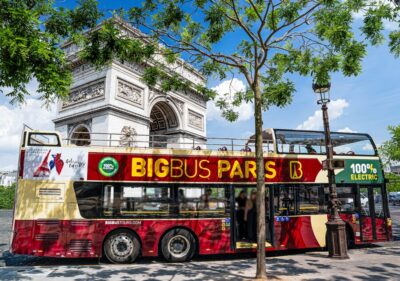 ★ 4.4Big Bus Hop-On Hop-Off Tour with Optional CruiseFrom $4313,279 reviews
 ★ 4.5Louvre Museum Masterpieces Guided Tour with AccessFrom $8612,023 reviews
 ★ 4.7Versailles: Skip-the-Line Tour of Palace and Gardens AccessFrom $7610,429 reviews
 ★ 4.1Louvre Overview, Exploration tour and Reserved EntryFrom $6010,145 reviews
 ★ 4.6Mona Lisa & Louvre Masterpieces Tour with Reserved AccessFrom $806,812 reviews
 ★ 4.0Paris Big Bus Hop-On Hop-Off Tour with Optional River CruiseFrom $466,534 reviews
 ★ 5.0Louvre Museum – Exclusive Guided Tour (Entry Included)From $1816,296 reviews