
Reviewed · SELF-GUIDED TOURS
Scandalous Paris, audioguided smartphone tour
Paris gets a little scandalous here. This smartphone audio walking tour in South Pigalle lets you follow a passionate guide’s stories as the soundtrack starts right on cue at key corners—courtesans, brothels, and the famous nightlife aura that shaped the neighborhood. It’s a fun way to see Paris from the “what really happened here” angle, not just the postcard one.
I especially like the self-guided format: you can pause for a terrace or a quick shop stop, then hit play again exactly where you left off. I also love the on-the-spot navigation help—a map with real-time directions, plus geo-localization if you get turned around.
One consideration: the themes are rather explicit, so if you want something strictly family-friendly or purely polished, you may want to skip this one (it’s also not recommended under 16).
In This Review
- Key highlights you will feel right away
- South Pigalle, told through scandal instead of museum glass
- Starting at Place Saint-Georges: easy to begin, hard to get lost
- Rue Saint-Georges: courtesans who flipped the rules
- Rue Saint-Lazare: the lorettes and light morals
- Rue des Martyrs: when brothels were a wealthy habit
- Rue de Navarin: famous clients and the spotlight effect
- Rue Frochot: painters in the neighborhood, turning scandal into art
- Rue Victor Massé and the cancan thread
- Moulin Rouge: the familiar landmark, with the darker context
- How good is a smartphone guide, really?
- Practical tips so you get the most out of it
- Should you book Scandalous Paris: audio smartphone tour?
- FAQ
- How long is the Scandalous Paris smartphone tour?
- Is this a guided tour with a person, or self-guided?
- Where does the tour start and end?
- What does the tour include?
- Are there any entrance tickets or paid stops?
- What if I go the wrong way?
- What is the price per person?
- What are the opening hours?
- Is it suitable for children?
- What is the cancellation policy?
- Is transport included?
Key highlights you will feel right away
- Auto-triggered audio that plays at the addresses you’re standing in front of
- Pause-and-resume freedom for breaks without losing your place
- Geo-localization support to help you get back on track fast
- A focused South Pigalle storyline from the mid-19th century through the 1950s
- Art and nightlife connections including painters linked to the libertine scene
- Solid value for a 1 to 1.5 hour walk with free entries at the stops
South Pigalle, told through scandal instead of museum glass

South Pigalle is one of those Paris neighborhoods where the streets still feel like they have a pulse. This tour leans into that. You’re not touring a building and calling it “history.” You’re walking the lanes where courtesans, brothel life, and the courtship of scandal actually made reputations, money, and trouble.
The pitch is romance versus reality. Paris sells elegance, but it also ran on secrets—especially for people who didn’t fit the polite script. As you follow the audio, you’ll hear how the neighborhood built its “paradise of pleasure” reputation, and how that story evolved from the mid-1800s into the 20th century.
And yes, it’s not all whispering. Some parts are rather explicit, so think of it as cultural history with edge, not a tame lecture. That tone is part of why it works: the stories feel like they belong to Pigalle, not to a brochure.
Worth weighing up next to this Paris pick
- Paris: Illuminations River Cruise with Audio Commentary
★ 4.3 · 12,340 reviews - Paris: Orsay Museum Entry Ticket and Digital Audio Guide App
★ 4.4 · 3,170 reviews - From Paris: Giverny Day Trip with Audio Guide or Live Guide
★ 4.3 · 2,372 reviews - Giverny and Monet’s House Half Day Trip from Paris Guide or Audio
★ 4.0 · 1,319 reviews
Starting at Place Saint-Georges: easy to begin, hard to get lost
You kick things off at 28 Place St Georges (75009), in the area often described as “New Athens,” just south of Pigalle. Even if you don’t know the neighborhood well, the tour is designed for first-time visitors. You’re guided by smartphone audio that starts when you reach each spot, plus a map that tells you where to go next.
A big practical win here is the pacing. You’re not tied to a group schedule. The tour runs about 1 hour to 1 hour 30 minutes, which is long enough to learn the story arc, but short enough that you can still enjoy the rest of your day in Paris without feeling “stuck on a plan.”
Also, the tour isn’t a constant “keep moving” drill. If you want a quick pause—maybe a terrace break—you can stop and resume on your own time. That matters in Paris, where a good coffee stop can turn a walk into a moment.
One more thing I appreciate: if you take a wrong turn, the tour uses geo-localization to get you back aligned. It doesn’t fight you. It helps you recover.
Rue Saint-Georges: courtesans who flipped the rules
Your first set of stories starts around Place Saint Georges, where the district’s transformation is framed as an 18th-century shift. The idea isn’t just “seedy nightlife existed.” It’s that the neighborhood learned to market itself, turning desire into a recognizable social ecosystem.
Then you move along Rue Saint-Georges, where the focus shifts to courtesans who challenged a puritan society’s comfort level. The audio here leans into the conflict between public morals and private appetite. You’ll get a sense of how some women gained influence by being part of a world the establishment pretended not to notice.
It’s also where you’ll feel the tour’s style. The delivery is meant to be engaging, with humor mixed in, not dry. That balance shows up again in later stops too, and it’s part of why people rate this so highly for “interesting discovery” and the humor dose.
Rue Saint-Lazare: the lorettes and light morals
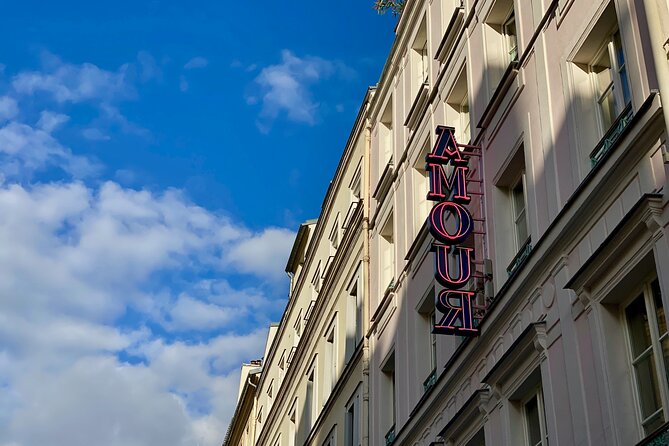
Next comes Rue Saint-Lazare, centered on the idea of the lorettes—courtesans with light morals. That label may sound neat and simple, but the stories you hear are meant to bring texture. These weren’t just background characters; they were part of a social system that operated on reputation, access, and bargaining power.
Why this stop matters is that it shows how the same neighborhood could hold different “types” of people and roles. One lane might symbolize wealth and status; another might represent a different kind of fame or visibility. Pigalle was never one single thing—it was an entire economy of attention.
If you care about how cultural stereotypes are built, this section is useful. The audio makes you think about how society defined people based on behavior, then watched them play those definitions like instruments.
Rue des Martyrs: when brothels were a wealthy habit

Now you hit one of the most direct “wow” moments of the walk: Rue des Martyrs. The tour frames the scale bluntly—Paris once had more than 700 brothels, operating until the 20th century. That’s a shocking number, because modern-day Paris tends to erase or sanitize that side of the story.
The audio also ties economics to power. Because these places were expensive, regular visits were described as a sign of wealth and social importance—almost like showing off a luxury car today. The point isn’t to glamorize it. The point is to explain how the system worked: money bought access, and access bought reputation.
A practical note: this stop is also where you may feel the emotional edge of the subject. The tour doesn’t pretend everything was wholesome. It explains why the brothel scene was seen as status, while letting you recognize how deeply it was tied to social rules.
Rue de Navarin: famous clients and the spotlight effect

From there, you walk past the area connected with historical brothels and stories about their famous clients. This section, on Rue de Navarin, keeps the focus on who showed up—and what that did to the reputation of both the visitors and the women connected to that world.
This is useful if you’re the kind of person who wants more than vague “ladies of the night” storytelling. The tour’s angle is social history. It’s about networks: who could enter these spaces, why certain people did, and how public life absorbed private behavior into its myths.
It also helps you understand something about Paris itself: the city loves legends. Some of its legends came from real patterns, not just imagination.




Rue Frochot: painters in the neighborhood, turning scandal into art
Next is Rue Frochot, and this is where the experience widens beyond nightlife facts into art history. The tour points you to an area where painters like Toulouse-Lautrec, Edgar Degas, and Pissarro were connected to the neighborhood and its energy—artists finding inspiration in the libertine scenes nearby.
I like this pivot because it explains why Pigalle isn’t only “a scandal neighborhood.” It’s also part of the Paris art story. The brothel and cabaret life weren’t floating in a vacuum; artists were watching, drawing, painting, and turning what they saw into lasting cultural output.
This stop is also a reminder that art often documents what society prefers not to talk about. Even when the work becomes “fine art,” the subject matter carries the same old tension: public morality versus private behavior.
You’ll probably notice you’re walking differently here—more slowly, looking at doorways and corners as if they could have been sketching material.
Rue Victor Massé and the cancan thread
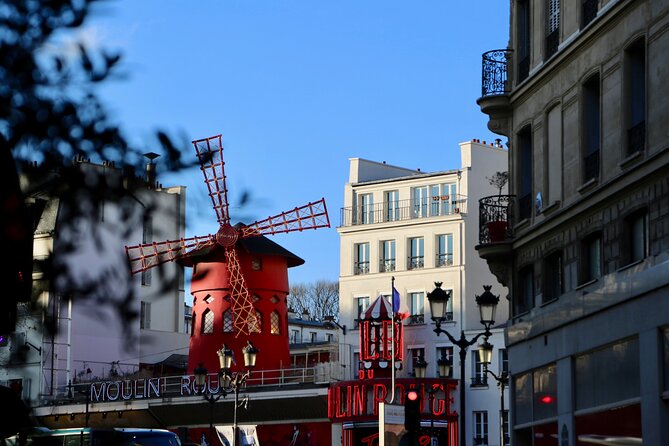
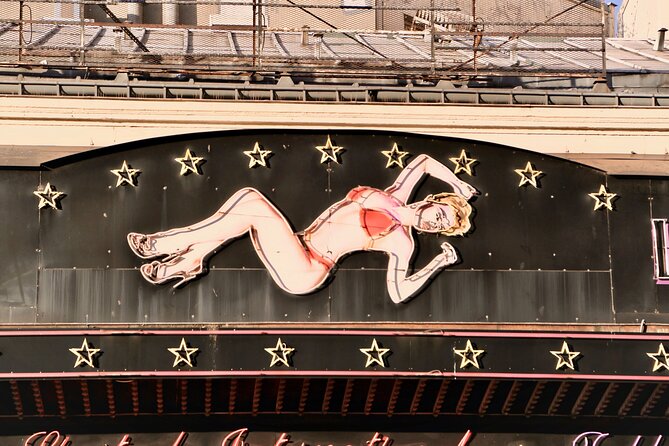
Then you reach Rue Victor Massé, where the audio brings in the French cancan—an erotic dance back in the day. This is a smart inclusion because it connects the social world to performance culture. Cabarets and dances weren’t just entertainment. They were public signals of style, attitude, and freedom.
What makes this stop helpful is the cause-and-effect feeling it gives you. You start to see how Pigalle’s “pleasure economy” wasn’t limited to rooms behind closed doors. It spilled into streets, venues, and the kinds of shows that made the neighborhood famous.
If you know the cancan today as something theatrical and tourist-friendly, this section helps you remember it has older roots—plus a more complicated meaning behind the spectacle.
Moulin Rouge: the familiar landmark, with the darker context
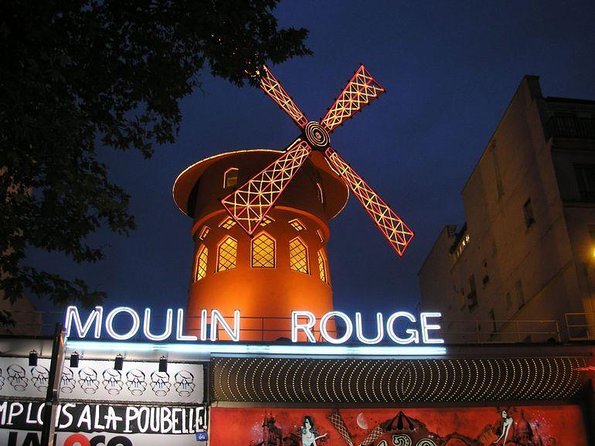
Finally, the tour heads to Moulin Rouge, the world-famous symbol at the heart of Pigalle. You’re not going to get a “quick photo and goodbye” experience here. The audio has already built the context, so the building doesn’t feel random anymore.
By the time you arrive, you’ve heard how the area’s reputation evolved from the 18th century onward, how brothel life tied into money and social importance, and how artists helped turn the neighborhood’s energy into something wider than the street.
This is where the tour ends—near 46 Rue Pierre Fontaine—so you can keep walking afterward, or use Moulin Rouge as your anchor point for the rest of your Paris day.
How good is a smartphone guide, really?
Self-guided tours can be hit or miss. This one works better than most because it’s built around timing and location. The audio triggers automatically right where you are, and the map gives clear direction on what’s next. That combination reduces the usual “where am I?” anxiety.
The geo-localization feature is also a big deal. In real life, you’re stepping around buses, crowds, and detours. Having a built-in way to correct your route keeps the experience smooth, not frustrating.
And because it’s private (only your group participates), you won’t get the awkward “everyone hears different things” problem that happens with group tours. You control the volume and pace. If you want to linger for a better look at a façade or a side street, you can.
The only real drawback is the one you should consider before booking: the subject matter can be explicit, and it’s not a “pure sightseeing” style route. It’s story-forward, with a clearly scandalous theme.
Practical tips so you get the most out of it
A few small moves make a big difference for this kind of audio walk:
- Start with a fully charged phone. This is a walking tour where you’ll want continuous playback.
- Give yourself time near each stop. Auto-triggered audio is great, but if you rush past the marker, you might miss the point.
- If something feels too intense, take a breath and keep walking. The tour lets you pause, and that flexibility is useful with heavier topics.
- Bring comfortable shoes. The route is short, but you’re moving through a real neighborhood, not a park path.
Also, check the hours. The experience runs daily from 7:00 AM to 6:00 PM within the service period listed. Morning or late afternoon can feel easier for walking and listening than peak nightlife hours.
Should you book Scandalous Paris: audio smartphone tour?
I’d book this if you want Paris with attitude—history told through places, not lectures. The price is modest for a focused 1 to 1.5 hour walk with auto-triggered audio, built-in guidance, and no paid entries at the stops. You’re paying for storytelling plus navigation help, not for museum doors.
I would skip it if you need a strictly family-friendly route, or if you strongly prefer live human guiding over listening on your phone. Also, if you don’t like explicit themes, this is not the one to experiment with.
If you do book it, you’ll likely leave with something rare: a sense of how Pigalle became Pigalle—through desire, economics, art, and performance—and a better instinct for what you’re looking at when you stand in front of Moulin Rouge.
FAQ
How long is the Scandalous Paris smartphone tour?
The duration is about 1 hour to 1 hour 30 minutes.
Is this a guided tour with a person, or self-guided?
It’s self-guided. You use your smartphone and follow the audio guide.
Where does the tour start and end?
It starts at 28 Place St Georges, 75009 Paris and ends near 46 Rue Pierre Fontaine, 75009 Paris, close to Moulin Rouge.
What does the tour include?
It includes the smartphone audio experience with a guide in your pocket. After purchase, you get an email with the activation code(s) to use the app.
Are there any entrance tickets or paid stops?
The listed stops are shown as admission ticket free.
What if I go the wrong way?
The tour includes integrated geo-localization and a map with real-time directions to help you get back on track.
What is the price per person?
The price is $11.55 per person.
What are the opening hours?
It is available Monday to Sunday from 7:00 AM to 6:00 PM during the listed service window.
Is it suitable for children?
It is not recommended under 16 years of age.
What is the cancellation policy?
You can cancel for a full refund up to 24 hours in advance. If you cancel less than 24 hours before the start time, there is no refund.
Is transport included?
No. Transport is not included.
More Self-Guided Tours in Paris
- Paris: Illuminations River Cruise with Audio Commentary
★ 4.3 · 12,340 reviews - Paris: Orsay Museum Entry Ticket and Digital Audio Guide App
★ 4.4 · 3,170 reviews - From Paris: Giverny Day Trip with Audio Guide or Live Guide
★ 4.3 · 2,372 reviews - Giverny and Monet’s House Half Day Trip from Paris Guide or Audio
★ 4.0 · 1,319 reviews - Paris: Catacombs Entry & Seine River Cruise with Audio Guide
★ 4.4 · 1,150 reviews
More Tours in Paris
- Paris: Louvre Guided Tour with Reserved Access & Boat Cruise
★ 4.3 · 16,353 reviews - Paris: Big Bus Hop-On Hop-Off Tour with Optional Cruise
★ 4.4 · 13,279 reviews - Louvre Museum Masterpieces Guided Tour with Access
★ 4.5 · 12,023 reviews - Versailles: Skip-the-Line Tour of Palace and Gardens Access
★ 4.7 · 10,429 reviews - Paris: Louvre Overview, Exploration tour and Reserved Entry
★ 4.1 · 10,145 reviews
More Tour Reviews in Paris
- Paris: 1-Hour Seine Cruise departing from the Eiffel Tower
★ 4.4 · 77,472 reviews - Paris: Louvre Museum Timed-Entrance Ticket
★ 4.6 · 71,977 reviews - Disneyland® Paris 1-Day Ticket
★ 4.6 · 49,412 reviews - Paris: Versailles Palace and Gardens Full Access Ticket
★ 4.6 · 41,579 reviews - Paris: Arc de Triomphe Rooftop Tickets
★ 4.6 · 34,264 reviews
Fresh off the review desk in Paris
- Secrets of Paris Bike Tour in English or Dutch★ 5.0 · 5 reviews
- Paris: Mont Saint-Michel Day Tour with Chinese Tour Guide★ 5.0 · 5 reviews
- Private Street Art 2-Hour Guided Tour in Paris★ 4.5 · 5 reviews
- Orsay Museum Tour: 2h Highlights (Private & Small Group)★ 5.0 · 5 reviews
- Discover Paris in electric golf carts★ 4.0 · 5 reviews
- Paris Private Boat Tour with your own Captain Guide★ 5.0 · 5 reviews
Self-Guided Tours, compared.
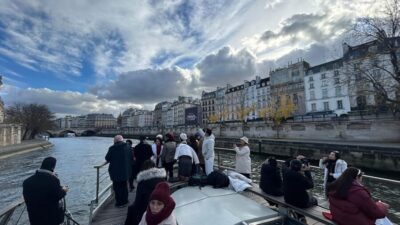 ★ 4.3Illuminations River Cruise with Audio CommentaryFrom $2012,340 reviews
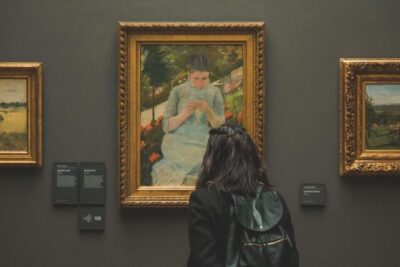 ★ 4.4Orsay Museum Entry Ticket and Digital Audio Guide AppFrom $313,170 reviews
 ★ 4.3From Paris: Giverny Day Trip with Audio Guide or Live GuideFrom $932,372 reviews
 ★ 4.0Giverny and Monet’s House Half Day Trip from Paris Guide or AudioFrom $1021,319 reviews
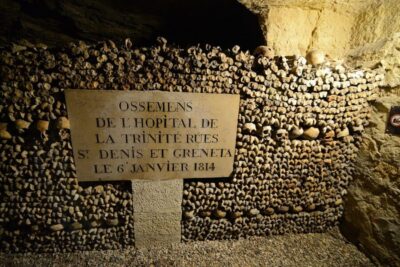 ★ 4.4Catacombs Entry & Seine River Cruise with Audio GuideFrom $1351,150 reviews
 ★ 4.4From Paris: Versailles Palace Self Guided & Gardens ticketsFrom $1121,100 reviews
 ★ 4.6Catacombs, Audio Guide, and River Cruise OptionFrom $94966 reviews
 ★ 3.5Openair Double Decker Bus Audio-Guided City TourFrom $34938 reviews
Browse the lists this tour appears in