
Reviewed · LOUVRE MUSEUM TOURS
Skip the Line Guided Tour of Louvre Museum Highlights
The Louvre can feel like a maze. This guided highlights route makes it feel like a plan, with priority entrance and a certified guide steering you straight to the paintings and sculptures most people come for. You’ll also get the kind of context that helps famous works make sense instead of just looking impressive.
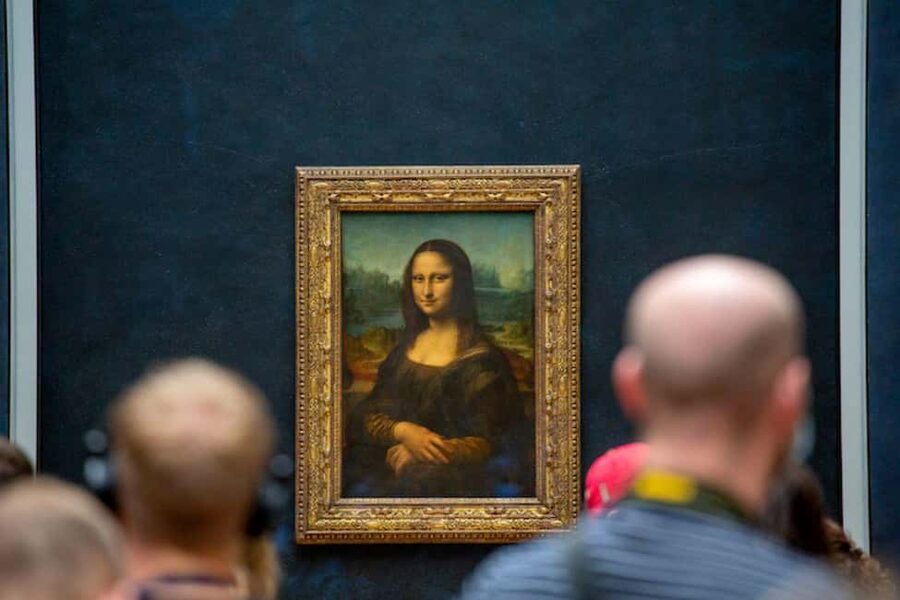
I particularly like the mix of “must-see” icons and the guided explanations that connect the dots. Seeing Mona Lisa up close, then moving on to the Winged Victory of Samothrace and Venus de Milo, turns a crowded museum stop into a story you can follow. One other strong point: the tour is timed to last about 2.5 hours, so you spend less time wandering and more time actually looking.
One possible drawback: even with priority access, the Louvre can get busy. On heavier days (like school vacations), there may still be waiting lines at the priority entrance, so build in a little flexibility.
In This Review
- Key things that make this Louvre tour work
- Why the Louvre highlights tour beats solo wandering
- Meeting at Arc de Triomphe du Carrousel and using the priority entrance
- Your 150-minute highlights route: what pacing feels like
- Mona Lisa, Winged Victory, and Venus de Milo: the three anchors
- Mona Lisa: what you should pay attention to
- Winged Victory of Samothrace: why the story matters
- Venus de Milo: the mystery angle
- Italian and French paintings: getting more from what you already recognize
- Licensed guides in several languages, with small-group energy
- What to bring (and what will get turned away at the entrance)
- Price and value: is $57 a good deal for the Louvre?
- Should you book this Louvre skip-the-line highlights tour?
- FAQ
- Where does the tour start?
- How early should I arrive?
- How long is the guided tour?
- What does skip the line mean for this tour?
- Which artworks are included in the highlights?
- What languages are available?
- What should I bring and wear?
- What items are not allowed during the visit?
Key things that make this Louvre tour work
- Priority entrance through a separate entrance helps you bypass the worst queue time.
- A licensed, experienced guide leads the highlights, not a generic audio script.
- The route is built around recognizable masterpieces, including Mona Lisa.
- You’ll see both Italian and French painting highlights rather than only sculptures.
- The tour length (about 150 minutes / 2 hours) keeps the day from feeling dragged out.
- You can book private or small groups, and the guide supports French, English, Spanish, and Italian.
Why the Louvre highlights tour beats solo wandering
The Louvre is big enough that you can spend hours and still feel like you only grazed the surface. A highlights tour solves that first problem fast: it gives you a short, high-impact route through the museum’s best-known works, with a guide translating the museum’s size into something manageable.
I also like that this isn’t just a checklist. The guide is there to explain what you’re looking at and why it matters, including the stories people associate with famous pieces. That makes a huge difference with works like Mona Lisa, where most visitors already know the name but not always what to notice in the details.
And because the tour runs about 2.5 hours (listed as 2 hours to 150 minutes), it fits nicely into a packed Paris itinerary. You still get the “I saw it” feeling, but without losing half your day to navigation and crowd flow.
Still chasing the Mona Lisa? More Louvre visits
- Paris: Louvre Museum Timed-Entrance Ticket
★ 4.6 · 71,977 reviews - Paris: Louvre Guided Tour with Reserved Access & Boat Cruise
★ 4.3 · 16,353 reviews - Louvre Museum Masterpieces Guided Tour with Access
★ 4.5 · 12,023 reviews - Paris: Louvre Overview, Exploration tour and Reserved Entry
★ 4.1 · 10,145 reviews
Meeting at Arc de Triomphe du Carrousel and using the priority entrance
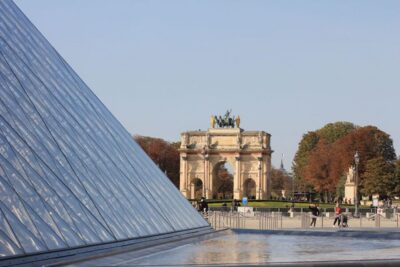
You meet your guide at the Arc de Triomphe du Carrousel, right in front of the Louvre’s Pyramid area. Plan to arrive about 15 minutes early, since that’s when the guide will be there holding a GetYourGuide sign.
From there, the core benefit kicks in: you go in through the Louvre’s priority entrance instead of getting stuck in the main entry queue. In plain terms, this is how you buy back time. At the Louvre, that time saving matters because your best attention is limited. The less time you spend waiting outside, the more energy you have for actually seeing the works once you’re inside.
Do keep one expectation in check. The tour notes that on busier days there can still be waiting lines even at priority entrances. Priority helps, but it’s not a magic force field against crowds.
Your 150-minute highlights route: what pacing feels like
This is not a “see everything” tour. It’s a structured highlights visit that keeps the group moving while giving you enough context to understand why each stop is famous.
The guide’s job is to pick the right sequence so you don’t spend your time backtracking across the museum. You’ll get led from the Louvre entrance area into the highlights, then through a mix of masterpieces across different schools and periods. The tour is designed to stay engaging without burning people out, which comes through clearly in the feedback from guides who made the visit interesting and not exhausting.
In practice, you can think of it like this: each main artwork gets a moment to land, plus a bit of story that helps you look smarter. You’re not just passing by. You’re learning what questions to ask while you’re standing in front of the work.
Mona Lisa, Winged Victory, and Venus de Milo: the three anchors
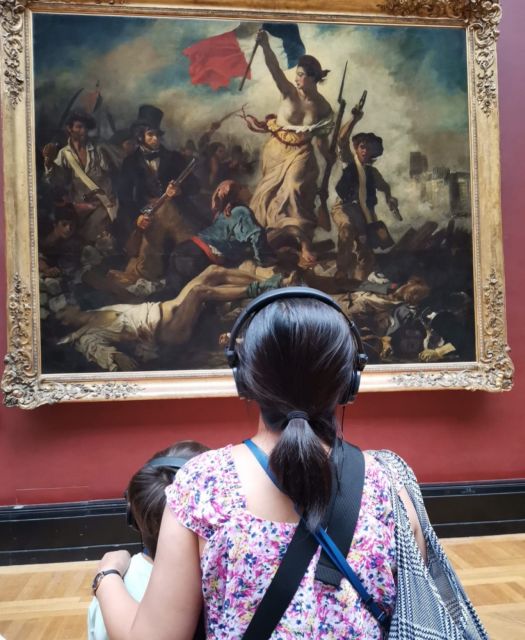
If you want proof that this tour is built around real-world priorities, it shows up in its anchor stops.
Mona Lisa: what you should pay attention to
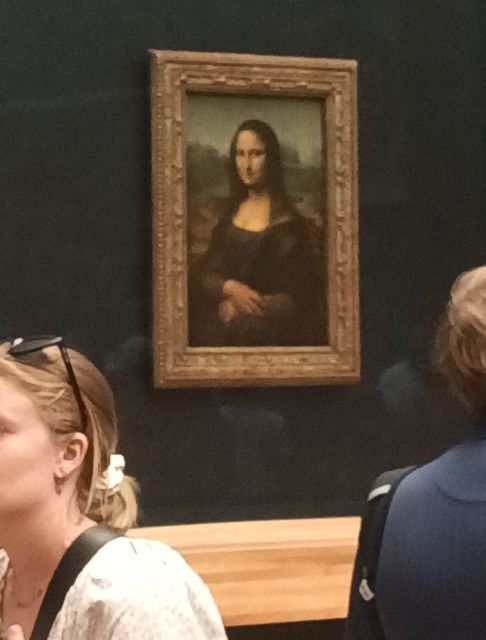
The tour includes Mona Lisa, Leonardo da Vinci’s enigmatic masterpiece, along with stories tied to her world-famous smile. Even if you’ve seen photos before, standing in front of the original is a different experience. The guide helps by pointing you toward what makes it hold people’s attention, so you’re not only reacting to the crowd and the name.
Winged Victory of Samothrace: why the story matters
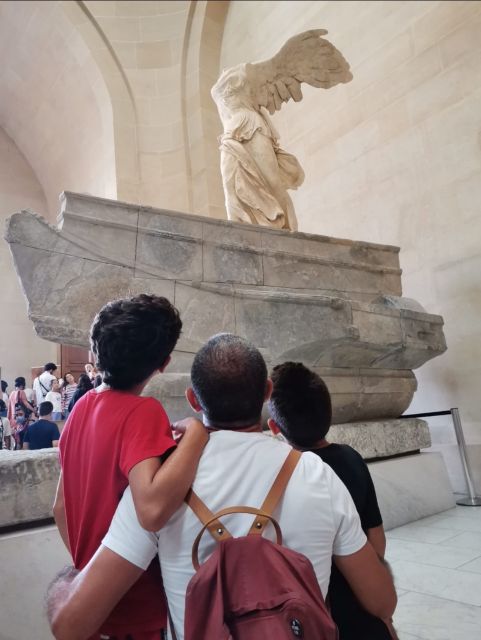
Next up is the Winged Victory of Samothrace, described as an ancient Greek sculpture. The value here isn’t only seeing a famous statue. It’s understanding why it’s celebrated—what people respond to in the artistry and the way the work communicates movement and presence.
This is a great stop to do with a guide because “winged victory” is a label. What you actually need is a framework for what you’re looking at while you’re there, especially in a museum where it’s easy to get distracted.
Worth weighing up next to this Paris pick



Venus de Milo: the mystery angle
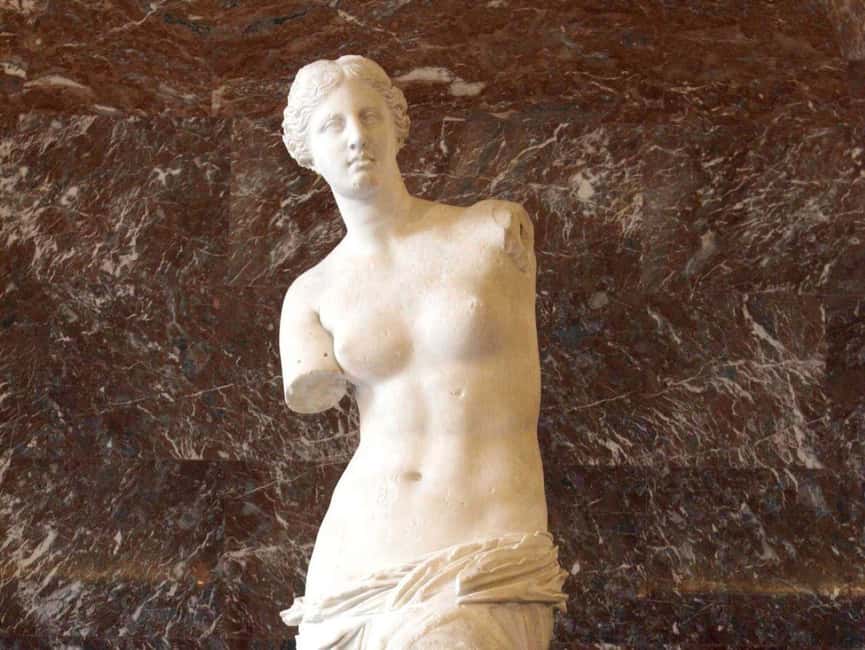
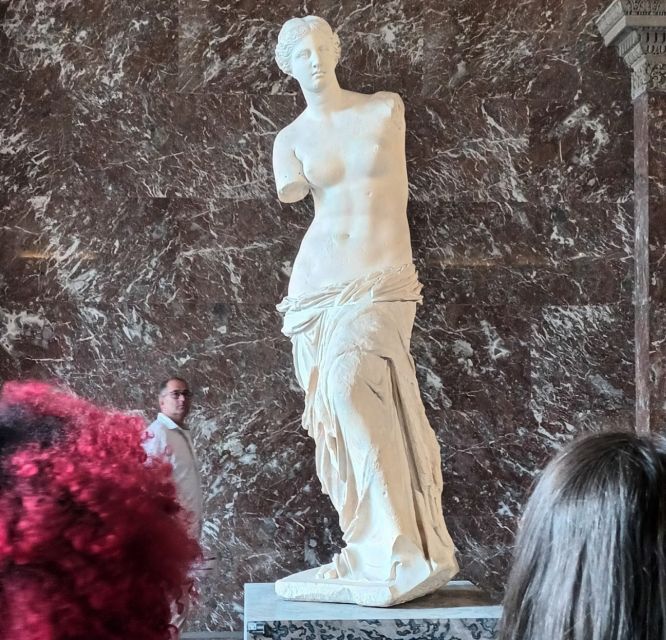
You’ll also see Venus de Milo, and the tour highlights the mystery and legacy around this iconic work. That matters because Venus de Milo is famous partly because of what people discuss about it, not just because it’s pretty.
A guide helps you turn that mystery into something you can look for. Instead of just wondering what’s missing, you get a sense of why the artwork still captures attention long after its first viewers.
Italian and French paintings: getting more from what you already recognize
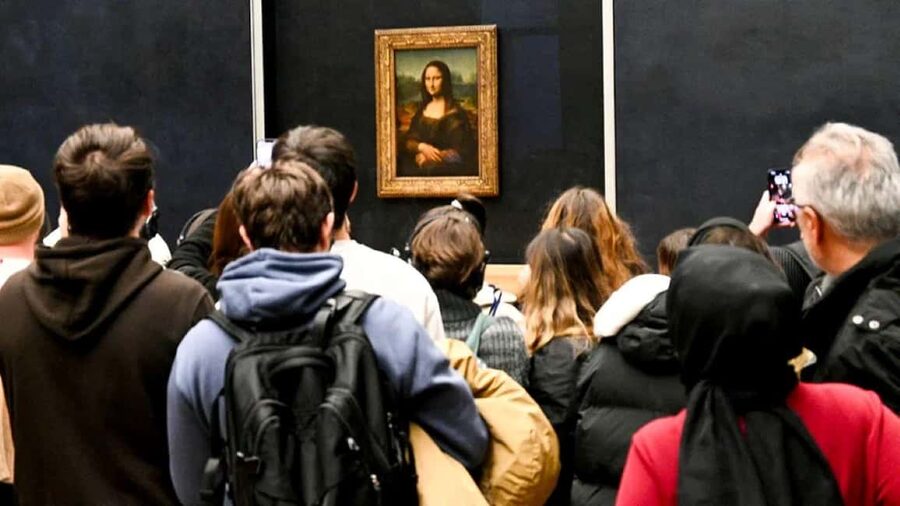
After the headline sculptures, the tour shifts into painting highlights. This is one reason the experience feels more complete than many “highlights-only” tours: it mixes famous artworks from different parts of the Louvre’s collection.
You’ll see Italian paintings, including works by Da Vinci and Veronese. You’ll also get French paintings, featuring artists like David and Delacroix. The guide’s role is to explain what makes these artists and works stand out, and—just as important—how they connect to the bigger story of art in Europe.
Why this matters for you: when you recognize an artist’s name, you’re instantly more interested. But without guidance, you can end up staring at paint without knowing what to notice. With a guide, you learn practical looking habits: where the composition leads your eye, what themes people often focus on, and how the work’s reputation developed.
This is also a nice way to balance the Louvre visit. Sculptures are strong visually, but paintings can feel harder to “read” quickly. Having a guide explain what to look for makes the painting time feel purposeful rather than rushed.
Licensed guides in several languages, with small-group energy
One of the most praised parts of this tour is the guide experience itself. In the feedback, names like François, Silvia, and Romeo show up as memorable guides who made the museum feel less intimidating and more like a guided story through major works.
Here’s what that means for you even if you get a different guide: you’re not just getting someone who points. You’re getting a live licensed guide who can adjust the pace and keep the visit engaging.
Language support is also a big deal. The tour is offered in English, Spanish, Italian, and French. If you’re traveling with mixed language comfort, this helps you keep everyone on the same page without slowing down the whole group.
And since it can be booked as private or small groups, you tend to get a more human experience than you’d get in a giant bus-style group. The tour timing stays tight, but the atmosphere doesn’t feel as chaotic.
What to bring (and what will get turned away at the entrance)
This tour has a pretty clear set of rules, and following them saves time and stress.
Bring:
- A passport or ID card
- Comfortable shoes (you’ll be on your feet in a large museum)
Avoid:
- Oversize luggage and large bags
- Food and drinks
- Alcohol and drugs
- Glass objects
That last category matters more than people think. Glass objects can include things that aren’t obviously “dangerous” until someone decides they count. If you keep it simple—small bag, no drinks, no random items—you’ll move through museum screening more smoothly.
Price and value: is $57 a good deal for the Louvre?
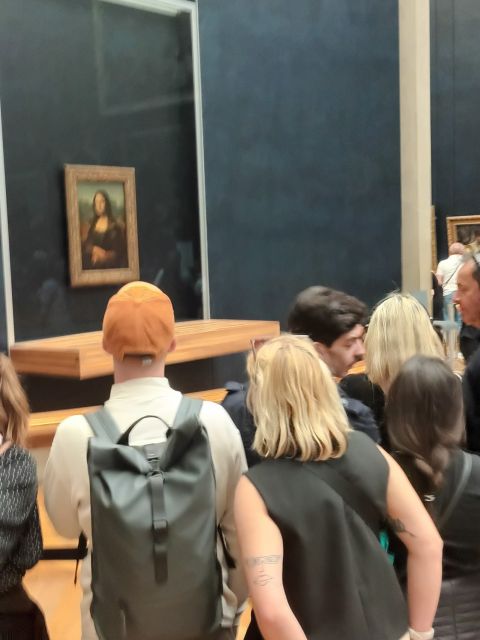
At $57 per person for about 2 hours to 150 minutes, this tour is priced like you’re paying for two things: time and expertise.
Time: the skip-the-line ticket and priority entrance aren’t just perks. They can be the difference between spending your best museum energy standing in a queue versus using that energy in front of artworks.
Expertise: a licensed guide helps you make faster sense of what you’re seeing. Without that, a lot of Louvre highlights can turn into “I recognize the name” rather than “I understand why it’s famous.” With guidance, you’re more likely to leave feeling like you actually learned something—not just collected photos.
The trade-off is that this is a highlights route, not the full museum. If you want to spend the day at your own rhythm, this might feel a bit structured. But if your goal is the Louvre’s biggest hits in a reasonable timeframe, this is strong value.
Also remember the timing note: on very busy days, there can still be lines even at the priority entrance. You’re still likely to save time, but you shouldn’t plan your schedule with the assumption that everything is instantly walk-on.
Should you book this Louvre skip-the-line highlights tour?

I’d book this if you want a Louvre visit that’s focused, time-smart, and easy to navigate. It’s especially worth it when:
- You’re short on time and want the biggest names without the stress of planning inside the museum.
- You prefer learning from a live guide rather than trying to interpret everything on your own.
- You care about hitting both sculpture icons and Italian/French painting highlights.
- You’re traveling with people who get tired easily and want a route that stays engaging.
I’d skip it if your ideal Louvre day is slow and wandering, where you want to pick your own corners and spend extra time in less famous rooms. In that case, you might prefer a self-guided plan with more freedom.
My final take: this tour is a practical way to experience the Louvre’s headline masterpieces with priority entrance and real storytelling, not just a crowd shuffle. If that’s what you want, it’s a good match.
FAQ
Where does the tour start?
The guide meets you at the Arc de Triomphe du Carrousel in front of the Pyramid area, holding a GetYourGuide sign.
How early should I arrive?
Arrive about 15 minutes before the tour start time, since that’s when the guide will be there.
How long is the guided tour?
It runs for about 2 hours, listed also as 150 minutes.
What does skip the line mean for this tour?
You’ll enter through a separate priority entrance rather than the main lines at the Louvre.
Which artworks are included in the highlights?
The tour includes Mona Lisa, the Winged Victory of Samothrace, Venus de Milo, and Italian and French painting highlights including works by Da Vinci, Veronese, David, and Delacroix.
What languages are available?
The guide offers the tour in French, English, Spanish, and Italian.
What should I bring and wear?
Bring a passport or ID card and wear comfortable shoes.
What items are not allowed during the visit?
Oversize luggage, luggage or large bags, food and drinks, alcohol and drugs, and glass objects are not allowed.
More Tours in Paris
- Paris: Louvre Guided Tour with Reserved Access & Boat Cruise
★ 4.3 · 16,353 reviews - Paris: Big Bus Hop-On Hop-Off Tour with Optional Cruise
★ 4.4 · 13,279 reviews - Louvre Museum Masterpieces Guided Tour with Access
★ 4.5 · 12,023 reviews - Versailles: Skip-the-Line Tour of Palace and Gardens Access
★ 4.7 · 10,429 reviews - Paris: Louvre Overview, Exploration tour and Reserved Entry
★ 4.1 · 10,145 reviews
More Tour Reviews in Paris
- Paris: 1-Hour Seine Cruise departing from the Eiffel Tower
★ 4.4 · 77,472 reviews - Paris: Louvre Museum Timed-Entrance Ticket
★ 4.6 · 71,977 reviews - Disneyland® Paris 1-Day Ticket
★ 4.6 · 49,412 reviews - Paris: Versailles Palace and Gardens Full Access Ticket
★ 4.6 · 41,579 reviews - Paris: Arc de Triomphe Rooftop Tickets
★ 4.6 · 34,264 reviews
Back to the Louvre: More Ways In
- Paris: Louvre Museum Timed-Entrance Ticket
★ 4.6 · 71,977 reviews - Paris: Louvre Guided Tour with Reserved Access & Boat Cruise
★ 4.3 · 16,353 reviews - Louvre Museum Masterpieces Guided Tour with Access
★ 4.5 · 12,023 reviews - Paris: Louvre Overview, Exploration tour and Reserved Entry
★ 4.1 · 10,145 reviews - Paris: Louvre Museum Entry Ticket With Host and River Cruise
★ 4.6 · 9,926 reviews
Fresh off the review desk in Paris
- Secrets of Paris Bike Tour in English or Dutch★ 5.0 · 5 reviews
- Paris: Mont Saint-Michel Day Tour with Chinese Tour Guide★ 5.0 · 5 reviews
- Private Street Art 2-Hour Guided Tour in Paris★ 4.5 · 5 reviews
- Orsay Museum Tour: 2h Highlights (Private & Small Group)★ 5.0 · 5 reviews
- Discover Paris in electric golf carts★ 4.0 · 5 reviews
- Paris Private Boat Tour with your own Captain Guide★ 5.0 · 5 reviews
Louvre Museum Tours, compared.
 ★ 4.6Louvre Museum Timed-Entrance TicketFrom $2671,977 reviews
 ★ 4.3Louvre Guided Tour with Reserved Access & Boat CruiseFrom $8116,353 reviews
 ★ 4.5Louvre Museum Masterpieces Guided Tour with AccessFrom $8612,023 reviews
 ★ 4.1Louvre Overview, Exploration tour and Reserved EntryFrom $6010,145 reviews
 ★ 4.6Louvre Museum Entry Ticket With Host and River CruiseFrom $1009,926 reviews
 ★ 4.6Mona Lisa & Louvre Masterpieces Tour with Reserved AccessFrom $806,812 reviews
 ★ 5.0Louvre Museum – Exclusive Guided Tour (Entry Included)From $1816,296 reviews
 ★ 4.0Louvre Reserved Ticket and River Cruise ComboFrom $376,054 reviews
Browse the lists this tour appears in