
Reviewed · LOUVRE MUSEUM TOURS
Skip-the-Line Louvre Museum Tour with Artist
The Louvre can feel like sensory overload. This tour turns it into a focused, art-reading walk with skip-the-line entry and a small group of up to 6.
What I like most is the way the guide explains paintings and sculpture like a working artist, not a museum lecturer. You’ll get hands-on context at Mona Lisa, plus close viewing of Venus de Milo and Nike.
One thing to keep in mind: it’s not suitable for wheelchair users, and the plan is still a 2-hour circuit through crowded galleries. Also, the meeting spot isn’t at the Louvre gates, so you’ll want to show up on time.
Skip-the-line, reserved entry via a separate entrance
Certified artist-guide with painter’s perspective on technique and composition
Tiny group (up to 6) for questions and real back-and-forth
A tight 2-hour hit list including Mona Lisa, Venus de Milo, and Nike
Audio headsets when available so you don’t strain to hear in busy rooms
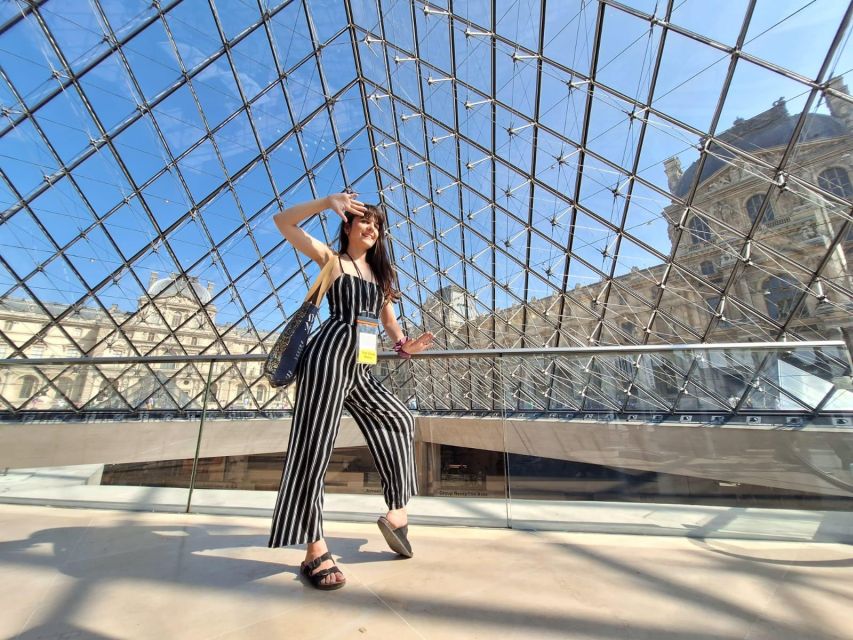
Smart orientation at the Louvre Pyramid so you know where you’re going
In This Review
- Meeting at Le Kiosque des noctambules: your first Louvre win
- Louvre Pyramid orientation: start with the right frame
- Inside the Louvre: how a 2-hour tour actually works
- The highlights that are worth your attention (and what to look for)
- Mona Lisa: stop treating it like a photo
- Venus de Milo: read the sculpture’s body language
- Nike: folds, movement, and why it feels so physical
- Why an artist-guide changes the Louvre (Da Vinci techniques, explained simply)
- Timing and pacing: what you gain from “not too long”
- Skip-the-line value: what you’re really paying for
- Logistics that matter: meeting point, ID, and what to bring
- Languages and group style: who this tour fits best
- Should you book this artist-led skip-the-line Louvre tour?
- FAQ
- How long is the Louvre tour?
- Where do we meet for this tour?
- Does this tour include skip-the-line entry?
- What’s included in the price?
- What languages are offered?
- Is the tour wheelchair accessible?
Meeting at Le Kiosque des noctambules: your first Louvre win
Before you even see the pyramid, you start at Le Kiosque des noctambules, a Murano glass beads sculpture by Jean-Michel Othoniel across from the Comédie Française. It’s a fun marker because it’s unmistakable—and it gives you a real Paris street moment instead of a scramble by the Louvre entrance.
This also affects how smooth your visit feels. You’re not hunting for your group at the biggest tourist bottleneck. You meet at the kiosk, then you walk in together, keeping your energy for the museum, not for navigation.
Practical tip: the closest metro stop listed is Palais Royal – Musée du Louvre, using the Place Colette exit. Wear comfortable shoes. Even though the tour is only 2 hours, getting to and from the galleries adds up fast in central Paris.
Louvre Pyramid orientation: start with the right frame

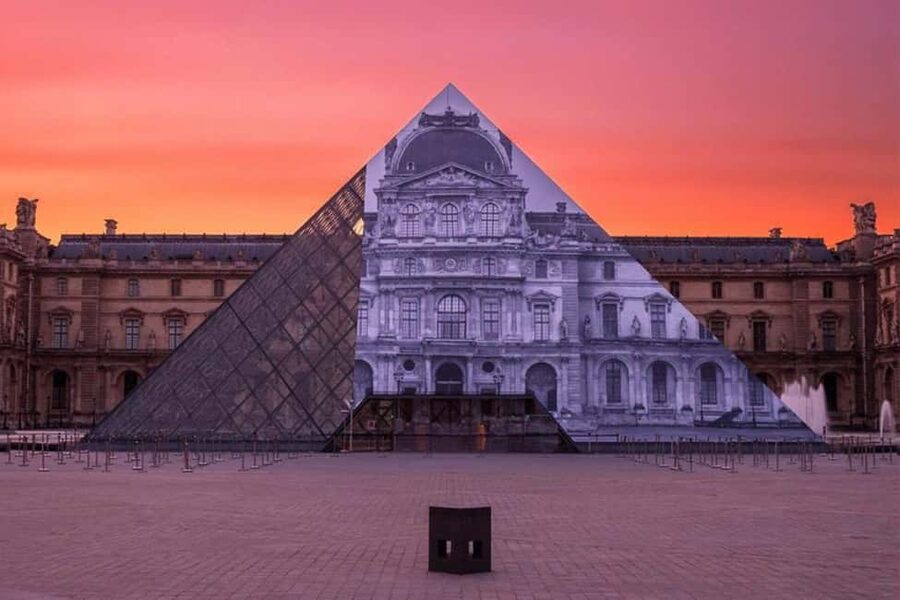
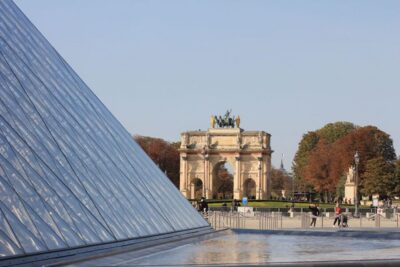
At the Louvre Pyramid, you’ll get a guided setup that matters more than it sounds. The Louvre isn’t just “a lot of art.” It’s a giant maze of rooms, wings, and changing themes, and most first-timers lose time just figuring out what’s where.
Here, the guide helps you establish a mental map. You’ll learn what to notice and why the main pieces matter in the bigger story of Western art. That means when you hit the highlights, you’re not just looking—you’re reading.
One drawback: because your time is limited to 2 hours, the Louvre Pyramid stop is an orientation phase. You’ll still see major works in the museum, but this isn’t a slow, wander-everywhere day. If you want to linger for an hour in one room, you’ll need a separate plan.
Still chasing the Mona Lisa? More Louvre visits
- Paris: Louvre Museum Timed-Entrance Ticket
★ 4.6 · 71,977 reviews - Paris: Louvre Guided Tour with Reserved Access & Boat Cruise
★ 4.3 · 16,353 reviews - Louvre Museum Masterpieces Guided Tour with Access
★ 4.5 · 12,023 reviews - Paris: Louvre Overview, Exploration tour and Reserved Entry
★ 4.1 · 10,145 reviews
Inside the Louvre: how a 2-hour tour actually works
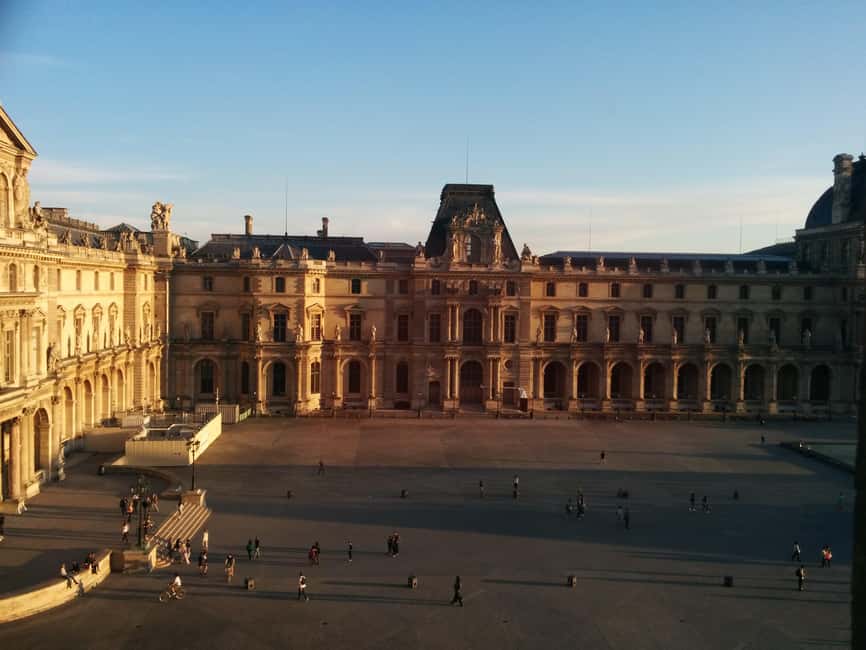
Once you enter, the tour is built around a common problem: the Louvre is overwhelming. With 35,000+ works, you can spend half a day and still miss the pieces you came for.
This is why the focus matters. In this format, you’re moving with purpose through key areas and getting explanations where they count. You’re not trying to cover everything. You’re learning what to look for so the time you do spend becomes useful.
And because the group is capped at no more than 6 visitors, you’re more likely to get answers to follow-up questions. That’s a real advantage in a place where most guides have to sprint and most museum audio apps just repeat facts.
The highlights that are worth your attention (and what to look for)
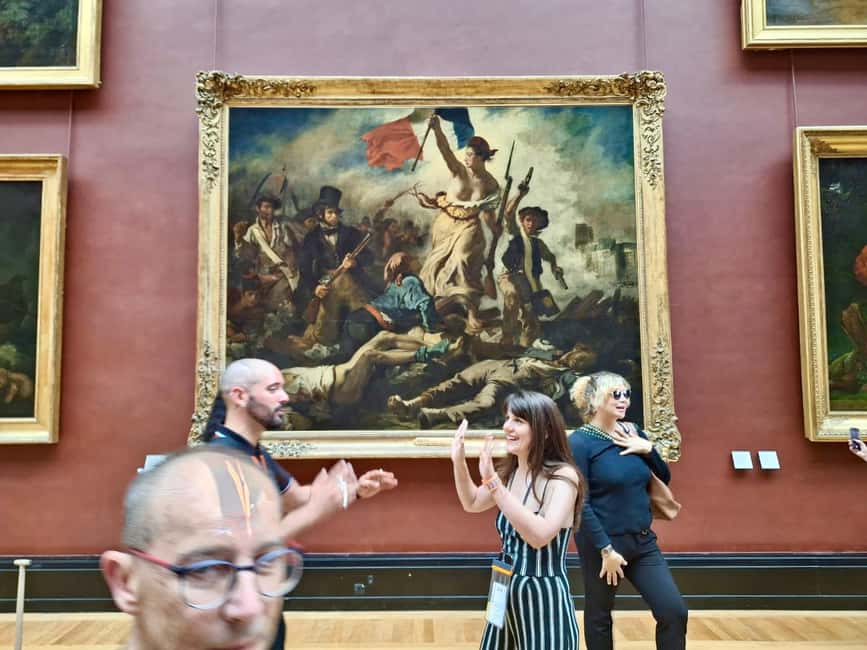
The tour experience centers on a handful of famous works—plus the artistic language behind them. The big names mentioned are Mona Lisa, Venus de Milo, and Nike, and you’ll also trace visual ideas across art eras, from Greek Antiquity to the Italian Renaissance.
Mona Lisa: stop treating it like a photo
Mona Lisa is crowded even when the rest of the museum feels manageable. The value here is not just being near her—it’s learning how to see what makes the painting feel alive.
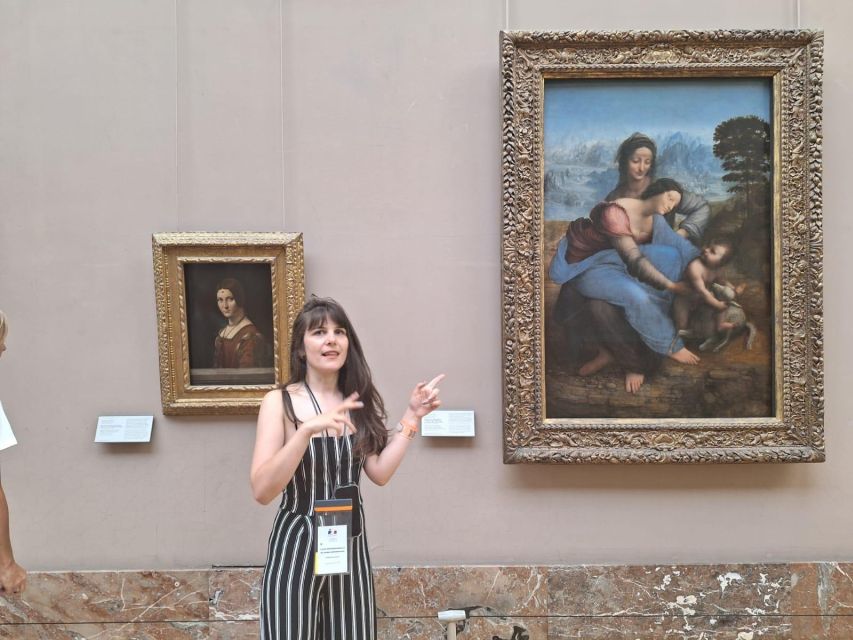
A painter-guide approach helps you pay attention to things you’d miss on your own: subtle transitions, how form is suggested, and why Renaissance techniques created a certain kind of realism. Instead of only hearing the famous backstory, you’re guided to interpret how the effects are made.
Venus de Milo: read the sculpture’s body language
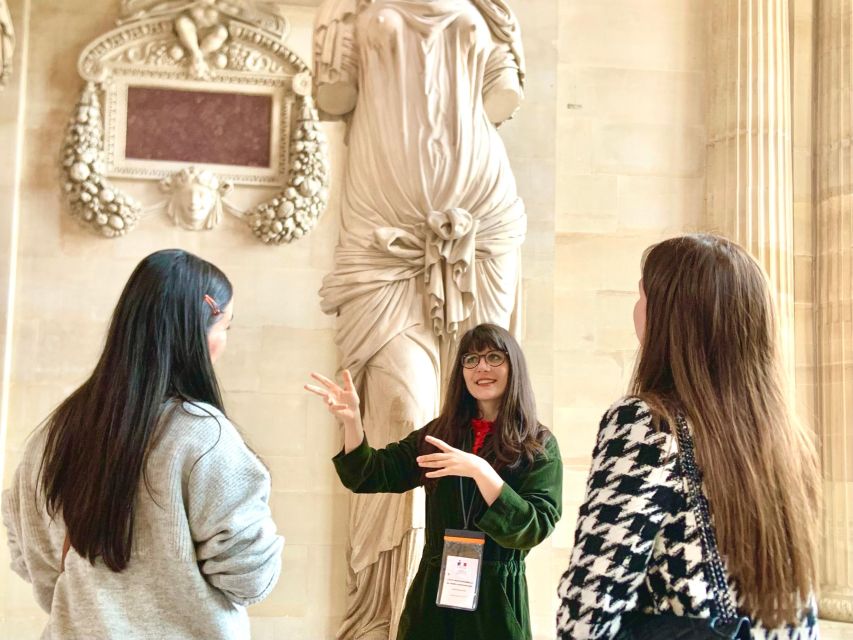
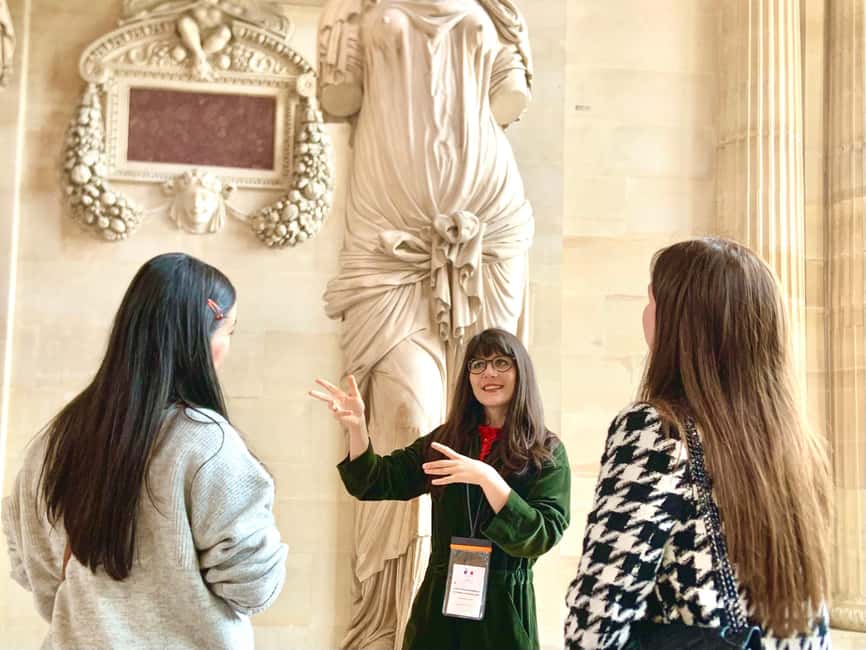
Venus de Milo is one of those works where your brain says, I’ve seen her, but your eyes still need a nudge. The tour helps you view proportions, posture, and how the sculptor’s choices communicate grace even with missing elements.
If you go in expecting a quick glance, you’ll miss the point. Here, you get enough context to understand why this kind of classical form kept inspiring later artists.
Nike: folds, movement, and why it feels so physical
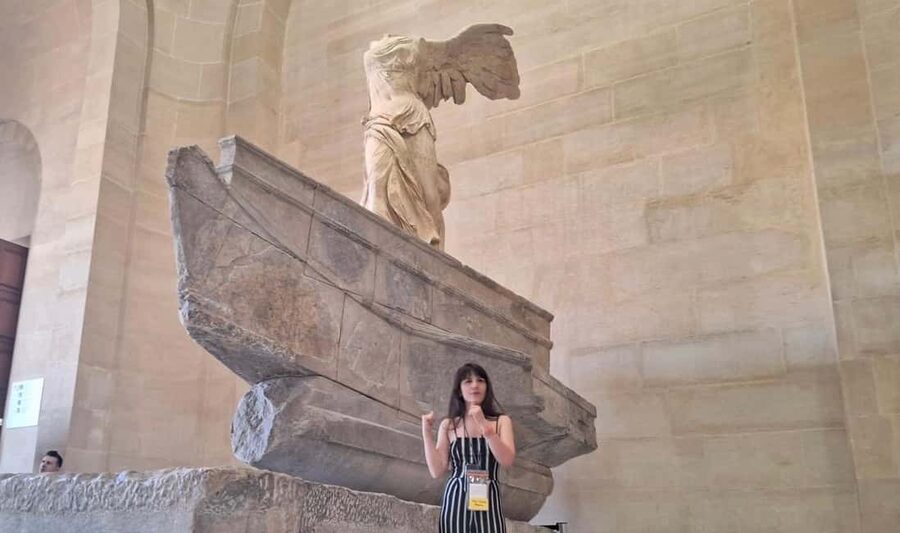
Nike is mentioned specifically, and that’s a good sign because it’s the kind of sculpture where technique turns into motion. When you’re guided to notice the flowing folds and the sense of wind-swept movement, the piece stops being a static “famous statue.”
You also get a clearer sense of how Greek and later artists used line, volume, and surface treatment to create drama.
Worth weighing up next to this Paris pick


Why an artist-guide changes the Louvre (Da Vinci techniques, explained simply)
This is the heart of the tour. Your guide is a certified artist-guide and a painter. That matters because art historians often explain meaning and chronology, while a working artist tends to explain the how—the decisions behind the look.
From the tour description, you can expect guidance on:
- how painting techniques work in visible ways
- how composition guides your attention
- how different eras developed their visual “grammar”
The payoff is that you’ll likely understand the museum faster. Instead of collecting random facts, you learn concepts you can reuse room after room—even after the tour ends.
A small but important detail: the tour can include audio headsets when available. In a crowded museum, it’s easy to lose key moments just because you can’t hear. Better hearing means fewer gaps in the story you’re being told.
Timing and pacing: what you gain from “not too long”
The tour lasts 2 hours. That’s short by Louvre standards, but it’s a smart length for most people—especially first-timers.
Why it works: you’re given a tight route where each stop is explained before you move on. You get to experience the “big moments” without spending the entire day drifting from room to room.
From the feedback you shared, the pacing stands out as a recurring point. Many people describe it as fast enough to feel efficient, but not so fast that you miss the explanations. That balance is hard to get in a museum this large, so it’s a real reason to consider this over a generic highlights tour.
Still, be realistic: this will not replace a full, self-guided Louvre marathon. If you want to study lesser-known works for hours, plan a second visit—or at least book a longer guided option for your next trip.
Skip-the-line value: what you’re really paying for
At $246 per person for a 2-hour tour, you’re paying for three things:
1) Reserved entry tickets that help you avoid the worst waiting
2) An expert who makes the limited time count
3) A small group setting that supports questions and focus
At the Louvre, the cost of time is real. Long lines, shifting security checks, and crowded entry halls can eat your day. When entry is handled through a separate entrance, you can protect the hours you paid for. That’s the practical side of the price.
The artist-guide angle is the other half. If you only want to see the Mona Lisa and walk away, you might find cheaper group tours. But if you want to understand technique, symbolism, and why these masterpieces became reference points for later artists, this tour gives you a lot more than a checklist.
In other words: the price feels less steep when you think in “time plus meaning,” not just in “hours at the Louvre.”
Logistics that matter: meeting point, ID, and what to bring

A few on-the-ground items can make or break the first 10 minutes.
You’ll meet at Le Kiosque des noctambules, not at the Louvre itself. Plan to arrive early so you can meet your group without stress. The meeting location is specifically by Jean-Michel Othoniel’s sculpture across from the Comédie Française.
Bring:
- Passport or ID card
- Comfortable shoes
- A reusable water bottle (you can at least stay hydrated outside rooms)
- An ID card copy is accepted
Not allowed:
- Weapons or sharp objects
- Food and drinks
The “no food and drinks” rule means you should eat before your tour and save water for breaks outside galleries.
Languages and group style: who this tour fits best
The guide can run in Albanian, English, or French, which is helpful if you’re not traveling in the most common language group. Your tour is described as a shared group tour, but it’s intentionally tiny—no more than 6 visitors—so it doesn’t feel like you’re being carried along with a crowd.
It also makes sense for:
- families with teens who like a clear route and question time
- art-curious first-timers who want structure
- visitors who feel lost in museums and want a “what matters” map
One caution: it’s not suitable for wheelchair users. Even if you have mobility concerns, you should treat this as a walking-heavy museum experience.
Should you book this artist-led skip-the-line Louvre tour?
I’d book it if you want a high-impact Louvre visit in a short window, and you care about understanding art-making—not just seeing famous works. The combination of reserved entry, a tiny group, and an artist-guide painter makes the time feel earned.
I would skip it if you’re trying to do the Louvre like a slow bookworm. A 2-hour tour can’t replace hours of wandering, studying, and revisiting rooms at your own speed.
If you’re on the fence, use this simple test: if you’re the type who likes to ask why something looks the way it does, this tour will feel worth it. If you mostly want the photo and the quick tick off, you can probably find cheaper ways to do the highlights.
FAQ
How long is the Louvre tour?
The tour duration is 2 hours.
Where do we meet for this tour?
You meet at Le Kiosque des noctambules by Jean-Michel Othoniel, across from the Comédie Française, near the Place Colette exit from the Palais Royal – Musée du Louvre metro station.
Does this tour include skip-the-line entry?
Yes. You get reserved entry tickets and skip the line through a separate entrance.
What’s included in the price?
Included are the shared Louvre Museum tour, entry tickets, an artist guide, and audio headsets when available.
What languages are offered?
The live guide can run the tour in Albanian, English, and French.
Is the tour wheelchair accessible?
No, it is not suitable for wheelchair users.
More Tours in Paris
- Paris: Louvre Guided Tour with Reserved Access & Boat Cruise
★ 4.3 · 16,353 reviews - Paris: Big Bus Hop-On Hop-Off Tour with Optional Cruise
★ 4.4 · 13,279 reviews - Louvre Museum Masterpieces Guided Tour with Access
★ 4.5 · 12,023 reviews - Versailles: Skip-the-Line Tour of Palace and Gardens Access
★ 4.7 · 10,429 reviews - Paris: Louvre Overview, Exploration tour and Reserved Entry
★ 4.1 · 10,145 reviews
More Tour Reviews in Paris
- Paris: 1-Hour Seine Cruise departing from the Eiffel Tower
★ 4.4 · 77,472 reviews - Paris: Louvre Museum Timed-Entrance Ticket
★ 4.6 · 71,977 reviews - Disneyland® Paris 1-Day Ticket
★ 4.6 · 49,412 reviews - Paris: Versailles Palace and Gardens Full Access Ticket
★ 4.6 · 41,579 reviews - Paris: Arc de Triomphe Rooftop Tickets
★ 4.6 · 34,264 reviews
Back to the Louvre: More Ways In
- Paris: Louvre Museum Timed-Entrance Ticket
★ 4.6 · 71,977 reviews - Paris: Louvre Guided Tour with Reserved Access & Boat Cruise
★ 4.3 · 16,353 reviews - Louvre Museum Masterpieces Guided Tour with Access
★ 4.5 · 12,023 reviews - Paris: Louvre Overview, Exploration tour and Reserved Entry
★ 4.1 · 10,145 reviews - Paris: Louvre Museum Entry Ticket With Host and River Cruise
★ 4.6 · 9,926 reviews
Fresh off the review desk in Paris
- Secrets of Paris Bike Tour in English or Dutch★ 5.0 · 5 reviews
- Paris: Mont Saint-Michel Day Tour with Chinese Tour Guide★ 5.0 · 5 reviews
- Private Street Art 2-Hour Guided Tour in Paris★ 4.5 · 5 reviews
- Orsay Museum Tour: 2h Highlights (Private & Small Group)★ 5.0 · 5 reviews
- Discover Paris in electric golf carts★ 4.0 · 5 reviews
- Paris Private Boat Tour with your own Captain Guide★ 5.0 · 5 reviews
Louvre Museum Tours, compared.
 ★ 4.6Louvre Museum Timed-Entrance TicketFrom $2671,977 reviews
 ★ 4.3Louvre Guided Tour with Reserved Access & Boat CruiseFrom $8116,353 reviews
 ★ 4.5Louvre Museum Masterpieces Guided Tour with AccessFrom $8612,023 reviews
 ★ 4.1Louvre Overview, Exploration tour and Reserved EntryFrom $6010,145 reviews
 ★ 4.6Louvre Museum Entry Ticket With Host and River CruiseFrom $1009,926 reviews
 ★ 4.6Mona Lisa & Louvre Masterpieces Tour with Reserved AccessFrom $806,812 reviews
 ★ 5.0Louvre Museum – Exclusive Guided Tour (Entry Included)From $1816,296 reviews
 ★ 4.0Louvre Reserved Ticket and River Cruise ComboFrom $376,054 reviews
Browse the lists this tour appears in