

Reviewed · NORMANDY DAY TRIPS
Small-Group Canadian Normandy D-Day Juno Beach from Paris
Juno Beach feels personal, not postcard. This small-group Canadian Normandy D-Day tour pairs a comfortable minibus ride with an English-speaking guide who puts events into plain context, then sends you to the sand at Juno Beach. I especially love the Canadian-focused stops like the Juno Beach Center and the Canadian Cemetery, because they make the story feel specific and human. One consideration: it’s a long day, and food isn’t included, so you’ll want to plan for lunch and pack for a cold, windy walk along the coast.
The timing is straightforward. You leave Paris at 7:00 AM every day, travel through the Normandy countryside, and return around 8:00 PM depending on traffic. The group stays small, max 8 people, and that matters: you can ask questions, and your guide can slow down when something feels important.
Practical tip up front: be on time at the meeting point at Café Dada Ternes. Tours start sharp, and latecomers can’t be accommodated. You’ll also get plenty of time on site to see, reflect, and not feel like you’re sprinting through history on a timer.
In This Review
- Key highlights worth getting excited about
- A 7:00 AM Normandy start in a comfortable minibus
- Why the Canadian lens changes how you read D-Day
- Juno Beach Center: getting your bearings before the shore walk
- Walking the sand at Juno Beach
- The Canadian Cemetery at Beny-sur-Mer: a quiet pause that matters
- Hell’s Corner: understanding the cost of pushing inland
- Abbey d’Ardenne: an HQ point and the weight of occupation
- How the day stays organized for a 13-hour trip
- Food not included: how to handle lunch like a pro
- Who this tour is for (and who should think twice)
- Value check: is $283 worth it for this specific day?
- Should you book this Juno Beach Canadian day trip?
- FAQ
- What time does this tour leave Paris?
- Where do I meet the tour in Paris?
- How long is the tour?
- How many people are in the group?
- Is the tour in English?
- What sites are included?
- Are entrance fees included?
- Is food included in the price?
- What happens if it rains?
- When will I be back in Paris?
Key highlights worth getting excited about
- Max 8 people in the group, so the day doesn’t feel like a cattle-car history lesson
- English-speaking guide who ties what you see to what happened on June 6, 1944
- Juno Beach walk on the actual shore, where the Canadian landing story becomes physical
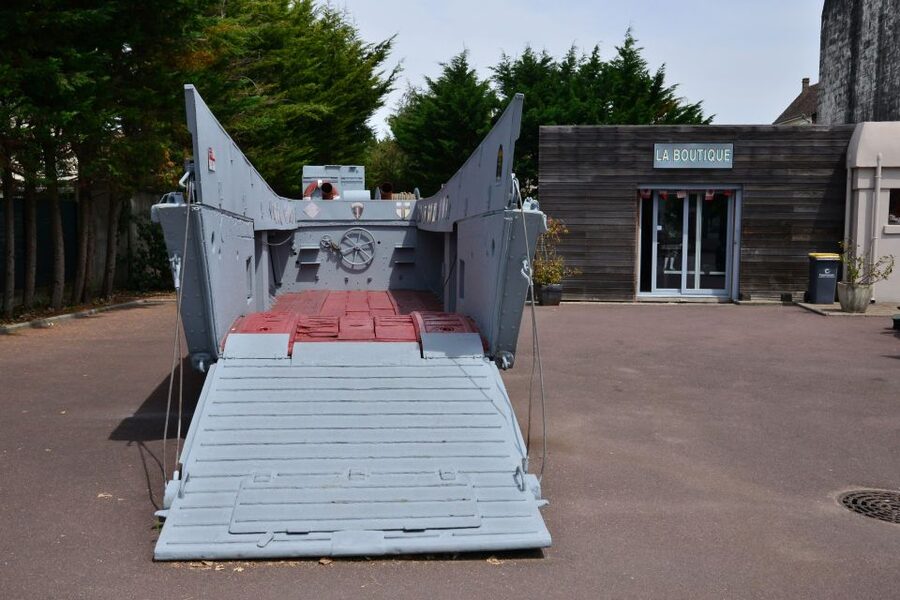
- Juno Beach Center visit with a dedicated focus on the Canadian landings
- Canadian Cemetery at Beny-sur-Mer, a calm, moving place to pay respects
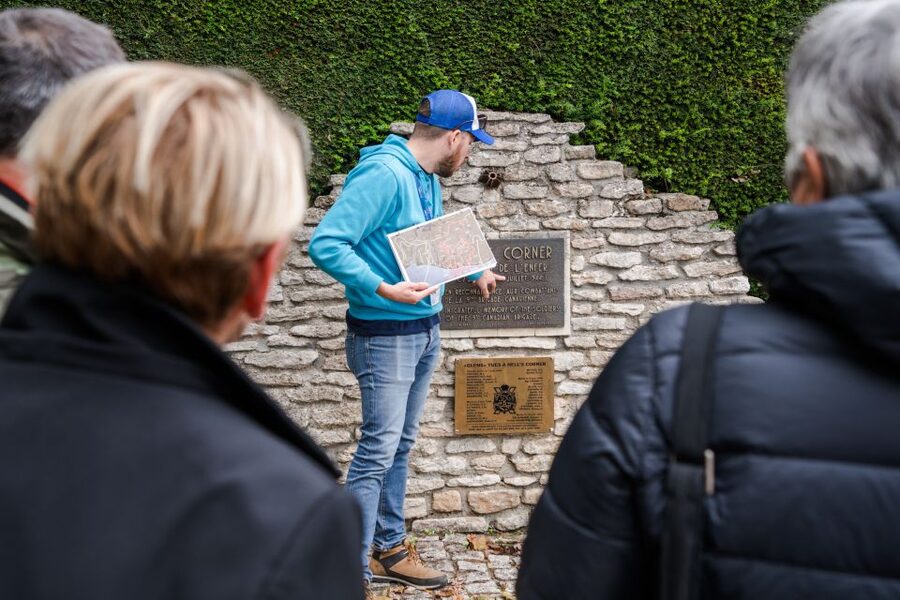
- Hell’s Corner and Abbey d’Ardenne, including the furthest Canadian advance inland on D-Day
A 7:00 AM Normandy start in a comfortable minibus
This is a day trip that begins early on purpose. You depart Paris at 7:00 AM every day of the year, rain or shine, because Normandy needs time. Once you’re on the road, you’re not wrestling with transfers or figuring out schedules. A driver-guide takes care of the driving in a comfortable minibus, and the group size keeps the experience relaxed.
What I like about the setup is that it buys you breathing room. You get time to listen to the guide’s running commentary as you head north, so you arrive already oriented. A lot of D-Day sightseeing can feel confusing if you only show up for a museum and a beach walk. Here, you’re given the map in your head before you’re standing in the real place.
You’ll meet at Café Dada Ternes in Paris. Your driver-guide arrives with a grey minibus about 10 minutes before the 7:00 AM departure. Build in a cushion and show up at least 15 minutes early, because the tour starts sharp and there’s no wait for stragglers.
More of the D-Day coast, compared
- Normandy D-Day Sites & Cemetery Day Trip from Paris with Lunch
★ 5.0 · 6,877 reviews - Normandy D-Day Small-Group Day Trip with Omaha Beach, Cemetery & Cider Tasting
★ 5.0 · 2,786 reviews - Normandy D-Day Beaches and American Cemetery Day Trip from Paris
★ 4.5 · 2,673 reviews - Paris: Normandy D-Day Sites Guided Day Trip with Lunch
★ 4.7 · 1,082 reviews
Why the Canadian lens changes how you read D-Day
D-Day was the largest seaborne invasion ever attempted. On June 6, 1944, Allied forces struck German positions along the Normandy coast, including bunkers built for defense. More than 14,000 Canadian soldiers landed and advanced that day, either from the sea or by parachute, and they did it under brutal odds.
Most D-Day tours show you plenty of geography, but not everyone makes you feel the Canadian specifics. This one does. It’s built around places tied directly to the Canadian landing and advance, so the narrative feels anchored. When you later walk the shore at Juno Beach or stand among names in the Canadian Cemetery, you’re not just looking at sites. You’re connecting them to a timeline of movement and sacrifice.
The English-speaking guides who run these departures often bring their own style. Past groups have had guides like Enzo, HP, Mathieu, and Julian, and the common thread is clear communication plus a respectful tone. That combination matters. You don’t want dry facts, and you also don’t want jokes that undercut the subject.
Juno Beach Center: getting your bearings before the shore walk

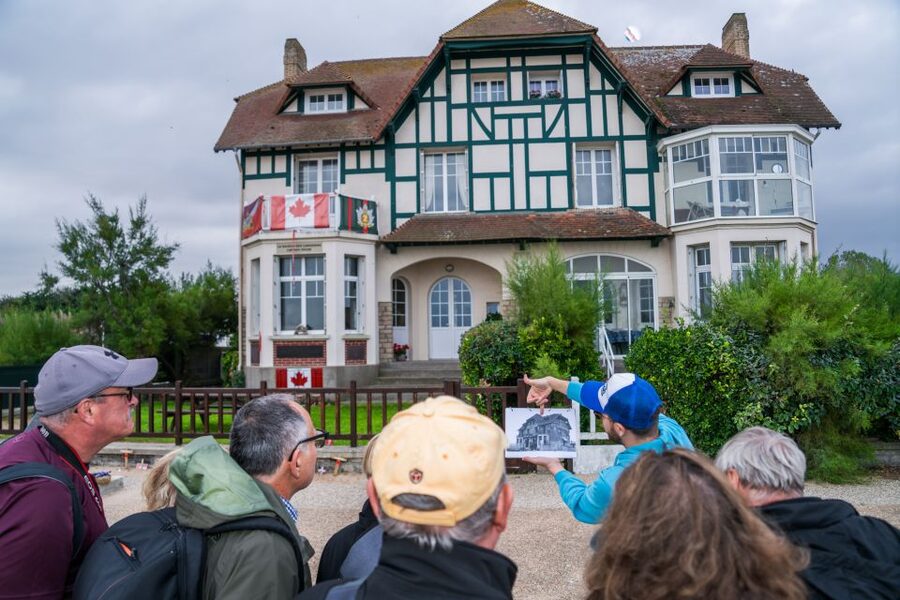
One of the best moves on this tour is the order. You start with the Juno Beach Center, which focuses on the Canadian landings in Normandy. It’s the kind of museum where you can translate what you see outside into something you understand quickly: where forces moved, what the coast looked like from different angles, and why the beaches mattered beyond the moment of impact.
The practical value is huge. After you’ve spent time inside, the Juno Beach walk isn’t random sightseeing. You’re reading the shoreline like a battlefield map. And because entrance fees are included, you’re not scrambling to plan ticket timing while everyone else is lining up.
If you care about audio detail, sit where you can hear clearly and look at what the guide points out. A couple of past departures flagged microphone audibility as a minor issue, so don’t plan to rely only on the back-row volume.
Walking the sand at Juno Beach
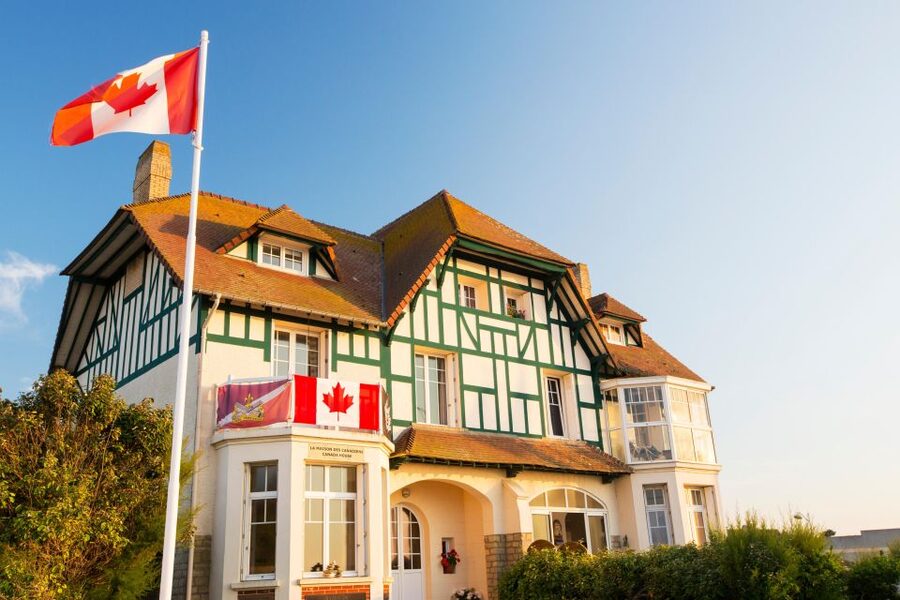
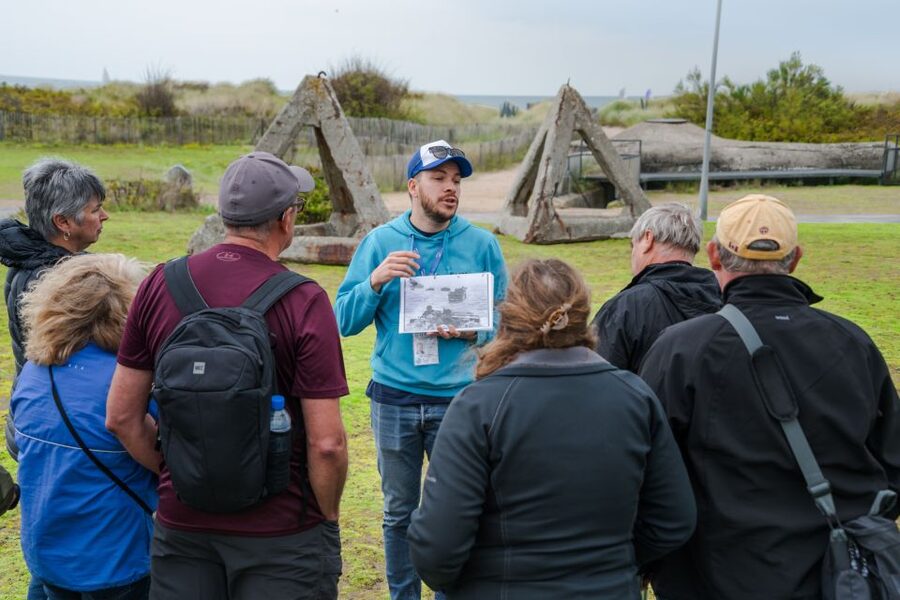
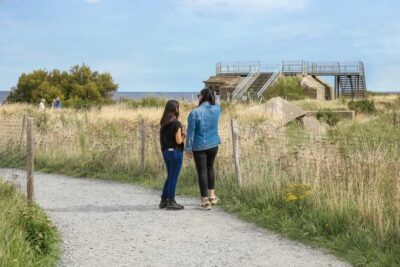
Then comes the part you can’t fake: stepping onto the shore at Juno Beach. This is the moment that makes the history feel real. The tour is designed for a walk along the coast in the same area where Canadian troops advanced in 1944.
Two things make this stop special. First, the horizon gives you scale. Even if you know the story, it helps to see how far the sea stretches and how exposed the landing zone is. Second, the beach itself acts like a timeline. You can connect the museum’s explanations to the actual bends in the shoreline and the direction of movement.
Go prepared. Even in shoulder seasons, the coast can be cold and windy. One helpful tip from past visitors: bring a warm jacket and a hat, because you may feel it more than you expect once the breeze hits you near the water.
The Canadian Cemetery at Beny-sur-Mer: a quiet pause that matters
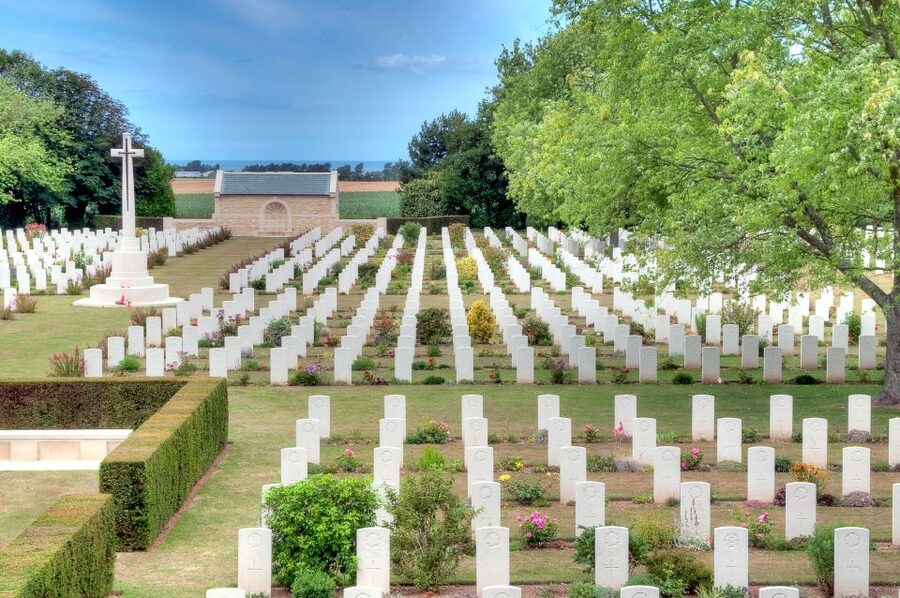
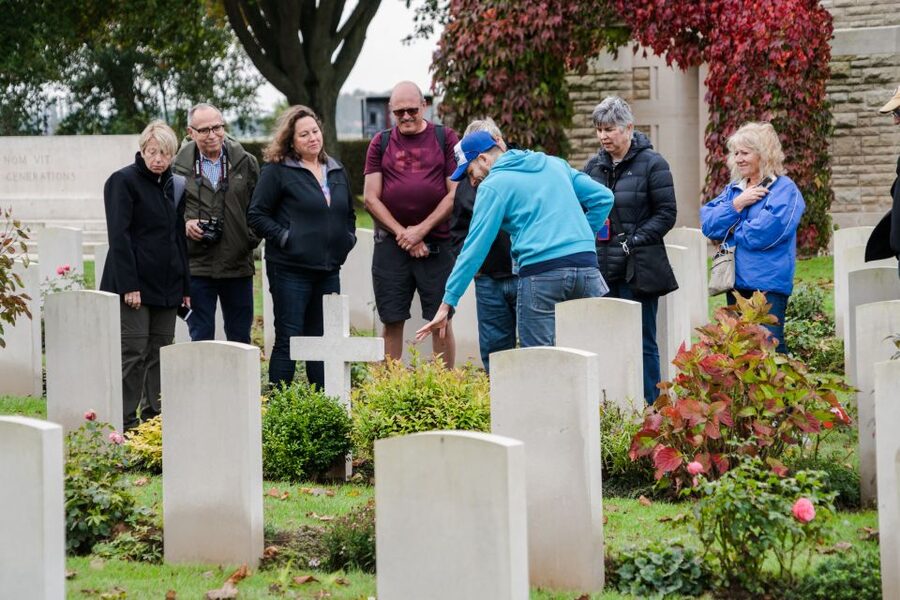
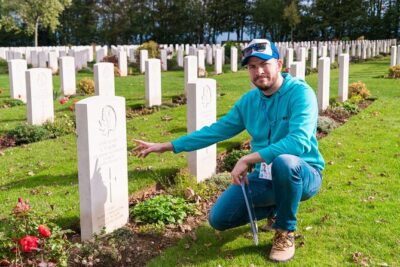
From the beach you move to the Canadian Cemetery in Beny-sur-Mer. This stop isn’t a quick photo op. You stroll through the cemetery and take time to pay respects to the fallen Canadian soldiers.
What I find valuable here is how the day shifts from “events” to “people.” At Juno, you’re thinking about strategy, timing, and terrain. At the cemetery, the story becomes names, dates, and individual loss. It’s sobering in the right way, the kind of pause that makes you slower and more careful with what you’re learning.
This part of the tour is also well matched to the small-group format. When you’re not crowded, you can keep your own pace. You’re less likely to feel rushed through a place that deserves quiet attention.
Hell’s Corner: understanding the cost of pushing inland
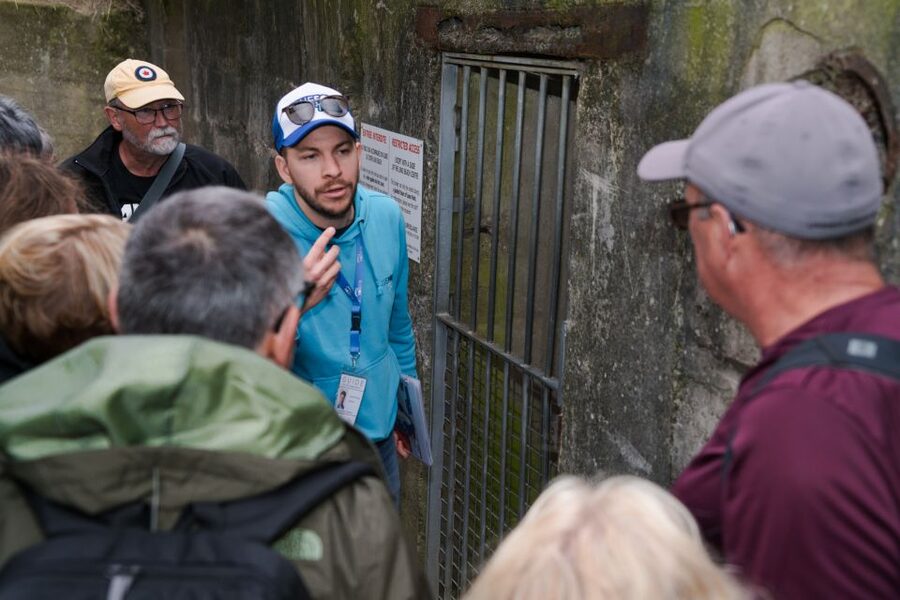
Next is Hell’s Corner, the furthest advance inland taken by Canadian troops on D-Day, about 5 miles from the city of Caen. “Advance” is the key word here. This wasn’t a simple walk forward. It was movement under pressure against entrenched German forces.
Standing in this area helps you grasp what “furthest inland” really implies. The further you go, the harder it becomes to protect supply lines and maintain momentum. You can see how the geography would force difficult decisions. It also helps to hear the guide’s explanation before you arrive, so the stop turns into understanding rather than just a label on a map.




Abbey d’Ardenne: an HQ point and the weight of occupation
The tour also includes a look at Abbey d’Ardenne, described as a Nazi headquarters point. Including this kind of site is important because D-Day wasn’t only about the assault. It was also about the command structure and defensive planning that shaped what Canadians faced once they landed.
Abbey d’Ardenne is the kind of place where your imagination does some work. You’re not walking through a recreated museum set. Instead, you’re seeing a real structure tied to occupation and wartime control. That makes the explanation from your guide count for a lot, especially in how they connect the headquarters role to the local fighting you’ve been learning about all day.
How the day stays organized for a 13-hour trip
At 13 hours total, this isn’t a half-day stretch. The good news is that it’s built as one continuous plan, with transportation handled for you. You leave early, you see the core sites, and you’re back in Paris around 8:00 PM depending on traffic.
The schedule also respects the subject. Sites aren’t all jammed into one museum. You get a blend of learning (Juno Beach Center), walking (Juno Beach shore), quiet reflection (Canadian Cemetery), and tactical context (Hell’s Corner and Abbey d’Ardenne). That combination keeps the day from feeling repetitive.
Still, it is long. If you’re someone who hates early starts or you need frequent breaks, consider that the tour runs rain or shine. Bring a water bottle and plan to be flexible with timing, especially as you move between stops.
Food not included: how to handle lunch like a pro
Food is not included on this tour. In practice, that means you’ll want to bring your own snacks or plan to grab lunch during the day if there’s time. Some past departures included a lunch stop connected to local bakeries or a casual meal near the memorial area, but you shouldn’t count on a specific restaurant or menu.
My advice: pack a simple plan. Bring something you can eat quickly between stops, plus a small treat for the ride back. A long day plus wind off the coast can wear you out, so keeping your energy up makes the history stops feel better, not harder.
Who this tour is for (and who should think twice)
This experience is a strong fit if you want a Canadian-focused D-Day day trip from Paris that goes beyond generic overview. If you’re traveling as a Canadian visitor, it lands especially well because the stops are built around the Canadian landings and the Canadian Cemetery.
It also works if you’re a history fan who likes seeing the physical terrain. You’ll get the “why” behind the beaches, plus inland context at Hell’s Corner and Abbey d’Ardenne. Families with teens can handle it too, as past groups included younger visitors who appreciated the structure and the guide’s ability to explain.
Think twice if you can’t do long days. The combination of an early 7:00 AM departure and a full day of walking and standing may be tough if you’re very mobility-limited or easily exhausted. Also, if you’re sensitive to sound or prefer quiet museums, keep in mind the day involves guide narration and group movement.
Value check: is $283 worth it for this specific day?
$283 per person for a 13-hour small-group trip is not “cheap,” but it also isn’t just paying for a bus ride. You’re paying for a guided experience that includes transportation by minibus, an English-speaking guide, and entrance fees. You’re also buying time: instead of spending your own morning plotting trains, car rentals, and museum lines, you get a structured day with the big Canadian landmarks.
The small-group cap (max 8) pushes the value further in a good way. It often means better questions, more human pacing, and less time waiting while someone in the group finds the right door. When the tour theme is emotionally intense, that added attention matters.
So I’d call it good value if you care about getting it right: the right sites, with context, in a reasonable order, without logistics headaches.
Should you book this Juno Beach Canadian day trip?
If you want one solid Normandy day that centers the Canadian D-Day story, I think this is a very credible choice. The mix of Juno Beach Center, the Juno Beach shore walk, the Canadian Cemetery, and the inland stops gives you context from coast to campaign to aftermath.
Book it if:
- You like the idea of a small-group English guide shaping the day for you
- You want Canadian-specific places like Beny-sur-Mer and the Canadian focus at Juno Beach Center
- You’re okay with an early start and a long day
Skip it (or consider a different format) if:
- You can’t manage 13 hours with early departure and weather variability
- You prefer a flexible plan where you control the pacing entirely
- You really don’t want to think about lunch at all
If you do book, show up early at Café Dada Ternes, dress for wind off the coast, and plan a simple lunch strategy. Then let the day do what it’s designed for: turn a famous date into places you can actually stand in.
FAQ
What time does this tour leave Paris?
It departs daily at 7:00 AM.
Where do I meet the tour in Paris?
You meet at Café Dada Ternes. The driver-guide arrives with a grey minibus about 10 minutes before departure.
How long is the tour?
The duration is 13 hours.
How many people are in the group?
It’s a small-group tour with a maximum of 8 participants.
Is the tour in English?
Yes, the guide is English-speaking.
What sites are included?
You visit the Canadian Cemetery in Beny-sur-Mer, walk at Juno Beach, and also see sites tied to the Canadian D-Day advance, including Hell’s Corner and Abbey d’Ardenne, plus the Juno Beach Center.
Are entrance fees included?
Yes, entrance fees are included.
Is food included in the price?
No, food is not included.
What happens if it rains?
The tour operates rain or shine.
When will I be back in Paris?
The tour returns to Paris around 8:00 PM, depending on traffic.
More Tour Reviews in Paris
- Paris: 1-Hour Seine Cruise departing from the Eiffel Tower
★ 4.4 · 77,472 reviews - Paris: Louvre Museum Timed-Entrance Ticket
★ 4.6 · 71,977 reviews - Disneyland® Paris 1-Day Ticket
★ 4.6 · 49,412 reviews - Paris: Versailles Palace and Gardens Full Access Ticket
★ 4.6 · 41,579 reviews - Paris: Arc de Triomphe Rooftop Tickets
★ 4.6 · 34,264 reviews
The D-Day Beaches, More Day Trips
- Normandy D-Day Sites & Cemetery Day Trip from Paris with Lunch
★ 5.0 · 6,877 reviews - Normandy D-Day Small-Group Day Trip with Omaha Beach, Cemetery & Cider Tasting
★ 5.0 · 2,786 reviews - Normandy D-Day Beaches and American Cemetery Day Trip from Paris
★ 4.5 · 2,673 reviews - Paris: Normandy D-Day Sites Guided Day Trip with Lunch
★ 4.7 · 1,082 reviews - From Paris: Normandy D-Day Landing Beaches Full-Day Tour
★ 4.8 · 698 reviews
Fresh off the review desk in Paris
- Secrets of Paris Bike Tour in English or Dutch★ 5.0 · 5 reviews
- Paris: Mont Saint-Michel Day Tour with Chinese Tour Guide★ 5.0 · 5 reviews
- Private Street Art 2-Hour Guided Tour in Paris★ 4.5 · 5 reviews
- Orsay Museum Tour: 2h Highlights (Private & Small Group)★ 5.0 · 5 reviews
- Discover Paris in electric golf carts★ 4.0 · 5 reviews
- Paris Private Boat Tour with your own Captain Guide★ 5.0 · 5 reviews
Normandy Day Trips, compared.
 ★ 5.0Normandy D-Day Sites & Cemetery Day Trip from Paris with LunchFrom $1206,877 reviews
 ★ 5.0Normandy D-Day Small-Group Day Trip with Omaha Beach, Cemetery & Cider TastingFrom $3202,786 reviews
 ★ 4.5Normandy D-Day Beaches and American Cemetery Day Trip from ParisFrom $2072,673 reviews
 ★ 4.7Normandy D-Day Sites Guided Day Trip with LunchFrom $1171,082 reviews
 ★ 4.8From Paris: Normandy D-Day Landing Beaches Full-Day TourFrom $312698 reviews
 ★ 4.6From Paris: Normandy D-Day Beaches Day TripFrom $199566 reviews
 ★ 5.0Normandy D-Day Beaches with Juno Beach, bunkers & Canadian Cemetery from ParisFrom $290296 reviews
 ★ 5.0Normandy D-Day Landing Beaches Small-Group Day Trip from ParisFrom $344275 reviews
Browse the lists this tour appears in