
Paris turns into a giant puzzle box. This Pantheon-to-Louvre treasure hunt makes you walk the historic heart of the city while solving clue-based riddles. I love how it turns big landmarks into small, answerable questions you can tackle at your own pace.
What I like most is the focus on details you’d normally skip, from architectural quirks to street-level stories in the Latin Quarter. I also really appreciate the balance: you get guidance, but you’re still doing the thinking. The guide that runs the hunt (often Marion, who shows up in multiple reviews) keeps the energy light and the explanations clear.
One drawback to plan for: you won’t enter the monuments. If you’re hoping for museum time inside the Pantheon or the Louvre, this is more about seeing and learning from the outside.
In This Review
- Key highlights worth your time
- Why this Paris “treasure hunt” feels different from a standard tour
- Price and value: $35 for a 2-hour clue walk
- Route overview: Pantheon to the Louvre in one connected story
- Starting at the Pantheon: your clue mission begins fast
- Notre-Dame and Île de la Cité: where the riddles make the views worth it
- The Cluny and Sorbonne area: the underrated brain of the route
- Pont Neuf, Conciergerie, and Pont des Arts: the bridge section that stretches your focus
- Finishing near the Louvre: that satisfying last-riddle feeling
- Who this works best for (and who should choose something else)
- Practical tips so the hunt feels smooth
- Is it worth it? My decision rule
- FAQ
- What is the duration of the Paris treasure hunt from the Pantheon to the Louvre?
- Where does the treasure hunt start?
- Where does the treasure hunt finish?
- What is included in the price?
- Is the tour inside monuments or museums?
- Do you go by the Notre-Dame and Île de la Cité area?
- Is the tour offered in English and French?
- Does the tour run in the rain?
- Is the tour suitable for young children?
- Is the tour wheelchair accessible?
Key highlights worth your time
- A walking treasure hunt on foot between the Pantheon and the Louvre, roughly 2 to 2.5 hours.
- Clues at each stop with a mix of riddle-solving, quick context, and panoramic views.
- Hidden Paris details you’ll notice while looking up—especially along the cathedral and bridge areas.
- Family-friendly challenge for kids 8 and up, with a pace that works for small groups.
- Bilingual hosting in English and French, with a game book and all equipment included.
Why this Paris “treasure hunt” feels different from a standard tour
Most guided walks in Paris try to tell you everything at once. This one works the opposite way. You follow a route, then answer clues that force you to slow down and look closely—at façades, statues, arches, bridges, and the angles that connect buildings to the street.
I like that it’s structured but not rigid. The guide helps when you need a nudge, explains what you’re seeing, then gives you room to keep solving. That mix makes it fun for first-timers, and it still feels rewarding if you’ve visited before.
Also, it’s timed for real-world attention. You’re not trapped in one “lecture moment” after another. The hunt keeps moving, with puzzle stops and short stretches of walking so the experience doesn’t drag.
Still chasing the Mona Lisa? More Louvre visits
- Paris: Louvre Museum Timed-Entrance Ticket
★ 4.6 · 71,977 reviews - Paris: Louvre Guided Tour with Reserved Access & Boat Cruise
★ 4.3 · 16,353 reviews - Louvre Museum Masterpieces Guided Tour with Access
★ 4.5 · 12,023 reviews - Paris: Louvre Overview, Exploration tour and Reserved Entry
★ 4.1 · 10,145 reviews
Price and value: $35 for a 2-hour clue walk
$35 per person sounds simple, but value is really about what’s included. Here, you get a treasure hunt host, a game book with puzzles, and equipment—plus cultural commentary at the key sites. You’re also getting a guided format where you’re actively participating, not just listening.
This price also makes sense because it’s designed as an efficient route. You cover a classic line through central Paris—Pantheon area, the Île de la Cité zone, then across toward the Louvre—without needing separate museum bookings. And since entrance fees aren’t included, you’re not paying for ticket-heavy stops you won’t even go into.
Where it might not fit is if you want indoor time. This is an outside discovery game, so your “wow factor” will come from architecture, viewpoints, and stories tied to what you can see in the streets.
Route overview: Pantheon to the Louvre in one connected story
The hunt takes you through Paris’s historic heart like it’s one unfolding chapter. It starts right where you can orient yourself easily—at the Pantheon area—then carries you through the Latin Quarter side streets and major river landmarks.
You’ll pass by or stop near these key points:
- Pantheon (starting area and first sightseeing clue)
- La Sorbonne (quick pass)
- Musée National du Moyen Age / Cluny (pass-by moments)
- Notre-Dame de Paris (outside viewing clue)
- Île de la Cité (a longer walk section)
- Pont Neuf (bridge pass-by)
- Conciergerie and nearby historic zones (as you continue)
- Institut de France and Pont des Arts (later viewpoints)
- Finish at the Place du Louvre zone
That order matters. You’re not just collecting landmarks—you’re solving clues that connect monuments across time. You’ll notice how the city’s geometry works: streets slope, bridges frame sightlines, and buildings “talk” to each other across the river.
Starting at the Pantheon: your clue mission begins fast
Meeting happens at 12 Pl. du Panthéon, on the bench in front of the Pantheon. You’re told to look for the host on the left side when you face the monument. The first puzzle starts right away, so you’ll want to be there a few minutes early.
The Pantheon stop is more than a dramatic backdrop. It’s your orientation point for the whole game. You start reading the area like a clue map: look up, spot details, and learn how this neighborhood became the kind of place where stories stay visible even centuries later.
This is also a good moment to get into “hunt mode.” If you’re traveling with kids, it helps to set the expectation here: you’re not rushing to the next building—you’re searching for answers.
Notre-Dame and Île de la Cité: where the riddles make the views worth it
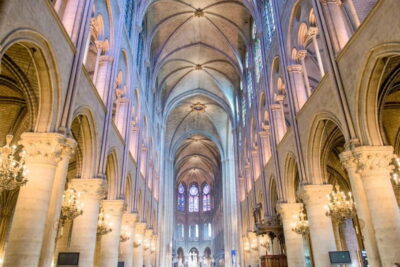
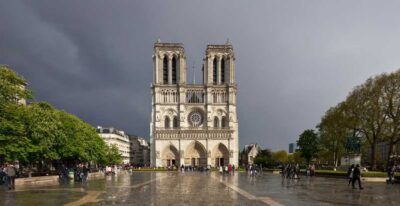
This is one of the best parts of the walk. You spend time near Notre-Dame de Paris and then move into the Île de la Cité area, which gives you a longer stretch of walking rather than constant stop-and-go.
I like this sequence because it forces you to see the cathedral zone from multiple angles. Even without entering the building, you can work out patterns—how stonework, lines, and surrounding streets frame a monument.
The hunt style helps you avoid the common Paris problem: “We saw Notre-Dame. Cool. Next.” Here, you’re actively investigating, so the landmark sticks in your mind longer.
If you’re traveling with kids, this is where you’ll notice the payoff. They get to practice observation and puzzle logic while you get real learning that doesn’t feel like school.
The Cluny and Sorbonne area: the underrated brain of the route
Before the cathedral zone, you pass through the Latin Quarter energy. You’ll go by La Sorbonne and the area connected with Musée National du Moyen Age / Cluny.
These stops are short, but that can be a plus. Instead of spending a whole day waiting in lines or choosing between museums, you get a guided “look at this” moment and then move on. You’ll likely notice details here that you’d miss on a casual walk—like subtle architectural cues and the way older buildings shape the feel of the street.
This is a good section for travelers who like cities that show their age. You get the sense of layers without having to research for hours.
More time around Notre-Dame and the old island

Pont Neuf, Conciergerie, and Pont des Arts: the bridge section that stretches your focus
Bridges are where Paris gets cinematic, and the hunt leans into that. You’ll pass Pont Neuf and later work your way toward Pont des Arts, plus historic river-adjacent zones that include the Conciergerie area.
The pacing works because bridges are naturally slow down points. You get panoramas, and the puzzles give you a reason to stop, look, and answer something before walking again.
I also think this section helps people who feel “landmarked out.” By the time you reach the river crossing views, you’re not only seeing big sights—you’re actively connecting clues between spots. That makes the walk feel like a single experience rather than separate sightseeing photos.
Finishing near the Louvre: that satisfying last-riddle feeling
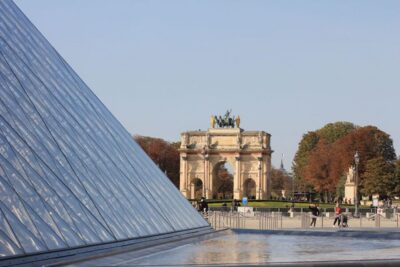
The hunt ends in the Place du Louvre area. You finish with the sense that you didn’t just march through central Paris—you worked through it.
If you’ve ever done a “checklist tour,” this is different. The finale matters because you’ve been solving along the way. The end feels like closure, not just a drop-off.
It’s also a practical way to finish a day. From this area, you can pivot easily into a self-paced Louvre plan later (if you want indoor museum time), or simply continue wandering nearby streets with a sharper eye.
Who this works best for (and who should choose something else)
This is ideal for:
- Curious first-timers who want a structured route but don’t want to be talked at
- Families with kids 8 and up, since it’s designed as an interactive, own-pace activity
- Small groups that like shared problem-solving
- People who enjoy architecture spotting more than souvenir shopping
It may be a weaker fit if:
- You need wheelchair access (this walk is not wheelchair accessible)
- You want monument interiors included (it’s outside discovery only)
- Your group needs lots of frequent long restroom stops (there aren’t public restrooms nearby, so plan ahead)
Also, it runs rain or shine. If your idea of a perfect Paris day includes dry sneakers, pack accordingly.
Practical tips so the hunt feels smooth
A few things can make or break a puzzle-walk like this.
- Use the bathroom before you start. The guidance is clear: there aren’t public restrooms nearby.
- Bring water and a snack plan. Food and drinks aren’t included, so you’ll want to handle that yourself.
- Mind your walking pace. Duration is about 2 hours, sometimes 2.5, depending on group pace. You can take breaks, but there’s no guaranteed extra time.
- Don’t overload your bag. Oversize luggage and large bags aren’t allowed.
- If you’re late, catch up. The first puzzles happen quickly near the Pantheon, with later puzzles spaced through the early portion of the route.
And a small mindset tip: go in expecting to look up and around. If you treat it like a normal sightseeing walk, you’ll miss the point.
Is it worth it? My decision rule
I’d book this hunt if you want Paris in a hands-on format—history filtered through puzzles and short, useful context. It’s a solid choice when you only have a couple hours and want more than a photo stop-and-go plan.
I wouldn’t book it if your main goal is indoor monument time or you hate walking for extended stretches with only short breaks. This isn’t a slow sit-down tour. It’s a walking game that happens to teach you along the way.
If your group includes kids who need something active, this is one of the easier “win-win” options in central Paris. You get learning, they get movement, and the riddles keep the whole thing from becoming repetitive.
FAQ
What is the duration of the Paris treasure hunt from the Pantheon to the Louvre?
The activity lasts about 2 hours, and it can run up to 2.5 hours depending on the group pace.
Where does the treasure hunt start?
Meet at 12 Pl. du Panthéon, on the bench in front of the Pantheon, on the left side when looking at the monument.
Where does the treasure hunt finish?
The experience ends in the Place du Louvre area.
What is included in the price?
You get a treasure hunt host, a game book with puzzles, and the necessary equipment, along with cultural commentary during the walk.
Is the tour inside monuments or museums?
No. Entrance fees are not included, and the discovery game does not go inside monuments.
Do you go by the Notre-Dame and Île de la Cité area?
Yes. The route includes Notre-Dame de Paris and a walk through the Île de la Cité area.
Is the tour offered in English and French?
Yes. The live guide is available in English and French, and some content may appear in its original language.
Does the tour run in the rain?
It runs rain or shine.
Is the tour suitable for young children?
It is suitable for kids 8 and up. It is not suitable for children under 8.
Is the tour wheelchair accessible?
No, it is not wheelchair accessible.
More Tour Reviews in Paris
- Paris: 1-Hour Seine Cruise departing from the Eiffel Tower
★ 4.4 · 77,472 reviews - Paris: Louvre Museum Timed-Entrance Ticket
★ 4.6 · 71,977 reviews - Disneyland® Paris 1-Day Ticket
★ 4.6 · 49,412 reviews - Paris: Versailles Palace and Gardens Full Access Ticket
★ 4.6 · 41,579 reviews - Paris: Arc de Triomphe Rooftop Tickets
★ 4.6 · 34,264 reviews
Around Notre-Dame, More to See
- Paris Île de la Cité and Notre-Dame Walking Tour With Crypt
★ 5.0 · 2,272 reviews - Paris: Notre-Dame Cathedral Exterior Tour
★ 3.9 · 1,722 reviews - Paris: The Notre Dame Experience with Multiple Tour Options
★ 4.7 · 1,612 reviews - Paris: Eternal Notre-Dame VR Experience Ticket
★ 4.4 · 1,150 reviews - Paris:Notre-Dame Cathedral Interior and Exterior Guided Tour
★ 4.7 · 1,128 reviews
Back to the Louvre: More Ways In
- Paris: Louvre Museum Timed-Entrance Ticket
★ 4.6 · 71,977 reviews - Paris: Louvre Guided Tour with Reserved Access & Boat Cruise
★ 4.3 · 16,353 reviews - Louvre Museum Masterpieces Guided Tour with Access
★ 4.5 · 12,023 reviews - Paris: Louvre Overview, Exploration tour and Reserved Entry
★ 4.1 · 10,145 reviews - Paris: Louvre Museum Entry Ticket With Host and River Cruise
★ 4.6 · 9,926 reviews
Fresh off the review desk in Paris
- Secrets of Paris Bike Tour in English or Dutch★ 5.0 · 5 reviews
- Paris: Mont Saint-Michel Day Tour with Chinese Tour Guide★ 5.0 · 5 reviews
- Private Street Art 2-Hour Guided Tour in Paris★ 4.5 · 5 reviews
- Orsay Museum Tour: 2h Highlights (Private & Small Group)★ 5.0 · 5 reviews
- Discover Paris in electric golf carts★ 4.0 · 5 reviews
- Paris Private Boat Tour with your own Captain Guide★ 5.0 · 5 reviews
Louvre Museum Tours, compared.
 ★ 4.6Louvre Museum Timed-Entrance TicketFrom $2671,977 reviews
 ★ 4.3Louvre Guided Tour with Reserved Access & Boat CruiseFrom $8116,353 reviews
 ★ 4.5Louvre Museum Masterpieces Guided Tour with AccessFrom $8612,023 reviews
 ★ 4.1Louvre Overview, Exploration tour and Reserved EntryFrom $6010,145 reviews
 ★ 4.6Louvre Museum Entry Ticket With Host and River CruiseFrom $1009,926 reviews
 ★ 4.6Mona Lisa & Louvre Masterpieces Tour with Reserved AccessFrom $806,812 reviews
 ★ 5.0Louvre Museum – Exclusive Guided Tour (Entry Included)From $1816,296 reviews
 ★ 4.0Louvre Reserved Ticket and River Cruise ComboFrom $376,054 reviews
Browse the lists this tour appears in