
Reviewed · MONTMARTRE TOURS
Clos Montmartre ‘Paris in your Glass’ Wine Tasting
Wine in Montmartre? Surprisingly good. This guided walk strings together Paris wine history with Montmartre landmarks, then ends with a proper tasting in the village center.
What I like most is the combo of scenery + story: you get views from the Renoir Garden at the Musée de Montmartre, plus a clear explanation of how the Clos Montmartre vineyard fits into old Paris. I also love the tasting format, including the rare Clos Montmartre wine and a blind compare with a white and a red, paired with shared cheese and rustic bread.
One thing to consider: you’ll be doing uphill walking and stairs. Montmartre is pretty, but your calves will notice the climb.
In This Review
- Key Points at a Glance
- A Hilltop Wine Walk That Actually Makes Sense
- Starting at Église Saint-Pierre de Montmartre: Roman Columns, Then Vine Country
- La Bonne Franquette and Montmartre Artist Life
- A Commanderie Once Built for Water: Commanderie du Clos-Montmartre
- Le Passe-Muraille: A Sculpture That Keeps the Story Moving
- Le Moulin de la Galette: Windmills, Bread, and a Very Montmartre Connection
- Square Suzanne-Buisson: Grapevines You Can Actually Think About
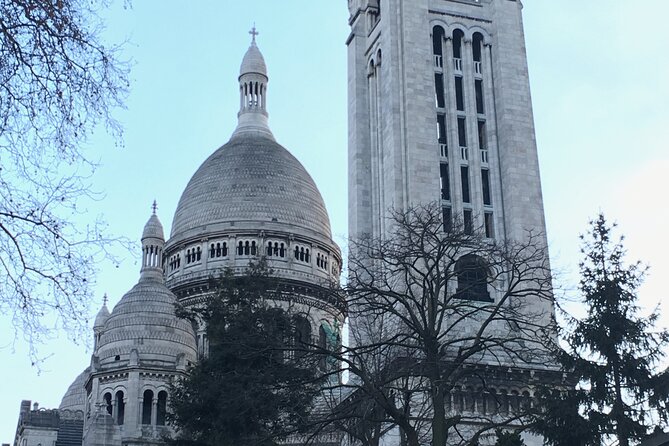
- Place Dalida Views: Sacré-Cœur in Your Line of Sight
- Musée de Montmartre Renoir Garden: Where the Clos Montmartre Story Clicks
- Vigne du Clos Montmartre: The Vineyard Walk and the Montmartre Village Angle
- Place du Tertre Wine Tasting: Clos Montmartre Plus a Blind Compare
- Cheese, Bread, and the Logic of Pairing
- What the Guide Style Feels Like on the Ground
- Price and Value: What You’re Actually Buying
- Getting the Most Out of a 3:30 pm Start
- Who Should Book This Wine Walk?
- Book It or Skip It? My Practical Take
- FAQ
- How long is the Clos Montmartre wine tasting tour?
- What language is the tour offered in?
- What’s included in the wine tasting?
- Do I need to buy separate tickets for stops?
- Is the tour difficult to walk?
- Where does the tour start and end?
- When is the tour scheduled?
- How big is the group?
- Is the tour refundable if plans change?
Key Points at a Glance
- Clos Montmartre in the spotlight, plus a blind tasting with a white and a red
- Renoir Garden viewpoints over the vineyard area
- Montmartre landmarks you can’t easily connect on your own, with context on what you’re seeing
- Cheese and rustic fermented bread served as part of the tasting
- English-guided experience with a mobile ticket
- Up to 110 people max, so pick the spot where you can hear comfortably
A Hilltop Wine Walk That Actually Makes Sense
If you’ve ever wondered why people treat Montmartre like a separate planet, this tour explains it with wine. You start in the Romanesque-and-stone world around Église Saint-Pierre de Montmartre, then you work your way through the village so the wine story feels grounded, not random.
This is the kind of outing that helps you see Paris differently. The streets don’t just look charming; they start to connect to how the Clos Montmartre vineyard survived inside the city. And when you finally sit down for the tasting, the wine has a setting in your head.
Keep climbing: more of the Montmartre hill
- Montmartre Hidden Gems and Scenic Highlights Walking Tour
★ 5.0 · 2,684 reviews - Montmartre Hill French Gourmet Food and Wine Tasting Walking Tour
★ 5.0 · 2,588 reviews - Paris: Montmartre Highlights Walking Tour with a Local Guide
★ 4.9 · 2,318 reviews - Paris: Montmartre Cheese, Wine & Pastry Guided Walking Tour
★ 4.8 · 2,255 reviews
Starting at Église Saint-Pierre de Montmartre: Roman Columns, Then Vine Country
The walk begins at Église Saint-Pierre de Montmartre, a church built on the site of an older Roman temple. The tour points out that inside you can find Roman columns recovered from what once stood there, tied to the temple to Mars.
It’s a smart warm-up stop. You’re basically getting a fast lesson in “layers” before you talk about layers of wine—how old places keep showing up in new forms. Also, the admission is free for this stop, so you don’t lose time or money early in the experience.
Practical note: this is where you start building stamina. Montmartre tops out quickly, and you’ll keep climbing.
La Bonne Franquette and Montmartre Artist Life
A short hop brings you to La Bonne Franquette, a café tied to the community of artists who lived in Montmartre. The inner courtyard has paintwork connected to Van Gogh, and that artistic detail helps explain why Montmartre became a magnet for creative types.
This stop matters for the wine theme because it links culture to place. Wine in a neighborhood like this isn’t only about grapes; it’s about the people who made the area a lifestyle. If you like walking tours that connect art and everyday life, this is a good pivot.
A Commanderie Once Built for Water: Commanderie du Clos-Montmartre
Next is the Commanderie du Clos-Montmartre, once a water tower and now the headquarters of one of the wine fraternities in Paris. It’s a neat change of pace: you’re not just walking past “pretty buildings,” you’re seeing how practical infrastructure can become cultural tradition.
A detail like this helps you notice something. Paris doesn’t keep a vineyard alive by magic—it keeps it alive through institutions, stories, and shared identity. That theme returns later when you’re looking at the Clos Montmartre from above.
Le Passe-Muraille: A Sculpture That Keeps the Story Moving
You’ll also stop at Le Passe-Muraille, the bronze figure of a man walking through (or caught in) a wall. It refers to a book by Marcel Aymé, who lived nearby.
This is one of those stops that feels light, but it works. It reminds you Montmartre has always been about imagination—artists, writers, and dreamers. That makes the final tasting feel less like a “tour add-on” and more like the cultural logic of the neighborhood.
Le Moulin de la Galette: Windmills, Bread, and a Very Montmartre Connection
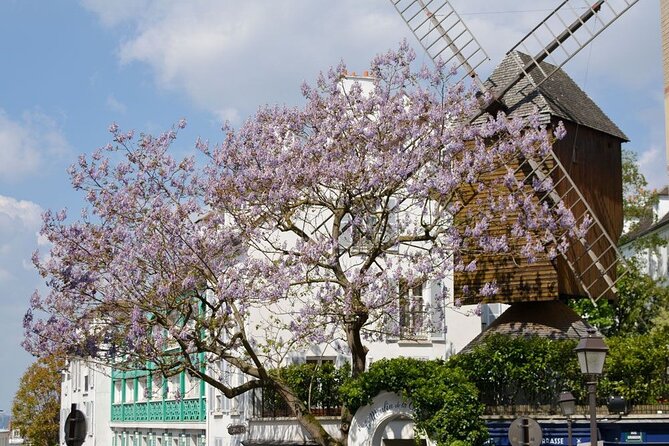
Then comes Le Moulin de la Galette, part of Montmartre’s windmill story. Historically, the windmills milled grains from the surrounding fields, and the Moulin de la Galette became associated with a small brown bread called a galette served by millers with a glass of milk.
Even if you don’t usually care about food history, this stop is worth your attention because it sets up the tour’s later pairing. This whole experience keeps nudging you from wine to bread and back again, so the tasting doesn’t feel like a separate event.
Worth weighing up next to this Paris pick


Square Suzanne-Buisson: Grapevines You Can Actually Think About
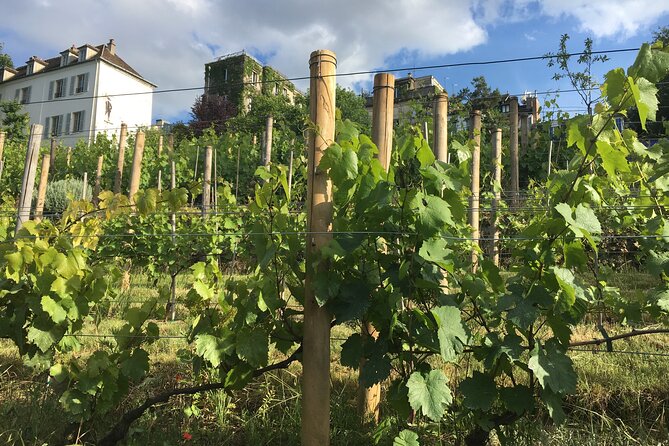
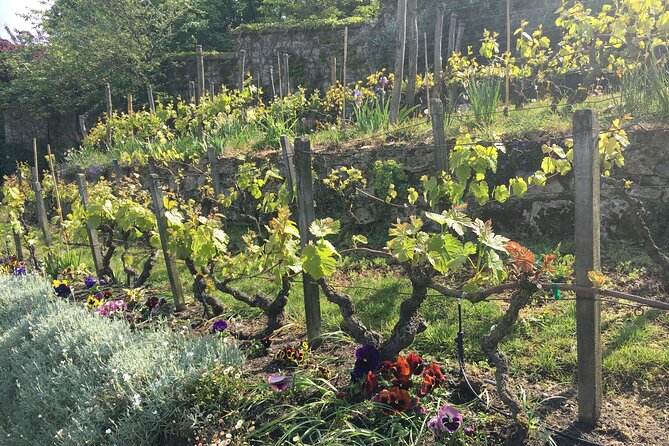
In the little park at Square Suzanne-Buisson, you’ll see a statue of Saint-Denis and an entrance adorned with a grape vine about 30 meters long. This is where the tour shifts into how vines are managed—cultivation, pruning, and the wide range of grape varietals used in wine making.
This stop is practical. It gives you vocabulary for tasting beyond “I like it” or “I don’t.” You start thinking about structure and choices, not just flavor. If you enjoy tasting notes, you’ll appreciate this step.
Place Dalida Views: Sacré-Cœur in Your Line of Sight
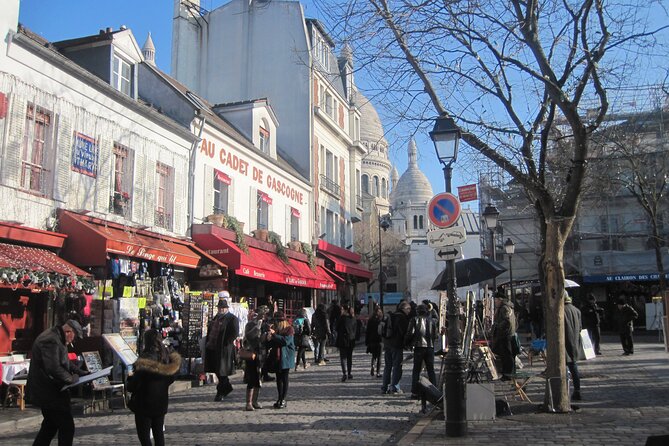
At the Place Dalida statue, you get a spectacular view down the rue de l’Abreuvoir toward the Butte Montmartre and the Sacré-Cœur. The tour also notes the nearby Chateau des Brouillards.
This is your “get your bearings fast” moment. Montmartre can feel like a maze, so a view helps you understand why you’re walking where you’re walking. It also keeps the energy up—because yes, you still have to climb.
Musée de Montmartre Renoir Garden: Where the Clos Montmartre Story Clicks
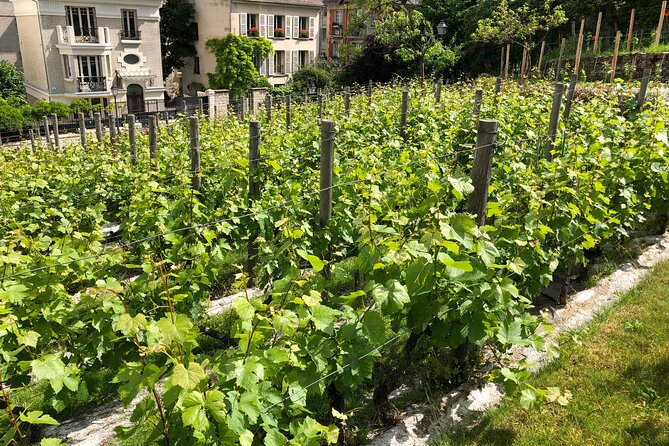
The tour spends real time at the Musée de Montmartre, using the Renoir Garden as a vantage point. From there, you get an overview of the Clos Montmartre and the history of the vineyard.
This is one of the most valuable parts of the experience. Seeing the vineyard from the right angle makes the story more believable. Instead of hearing about a “special vineyard” that happens to exist in the city, you can connect the vineyard to the neighborhood around it.
The garden visit is timed (about 30 minutes) and admission is included for this portion. So you’re paying for guidance plus a meaningful viewpoint, not just time on a sidewalk.
Vigne du Clos Montmartre: The Vineyard Walk and the Montmartre Village Angle
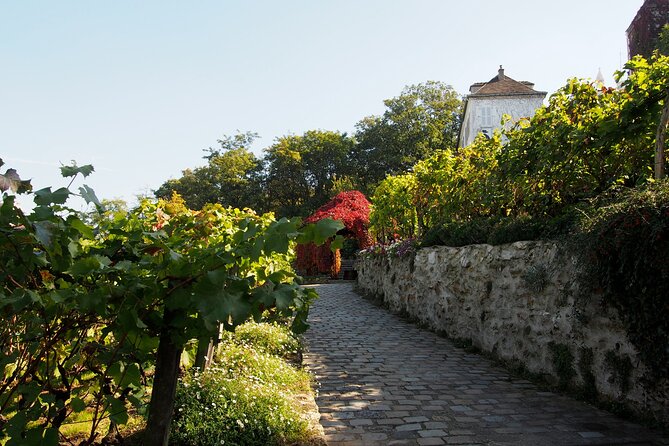
After the garden viewpoint, you continue toward the Vigne du Clos Montmartre area. The tour frames the vineyard as the most celebrated intra-muros vineyard, tying it to the Abbey de Montmartre and the way the village became a cultural hub.
What you’re doing here is learning the vineyard story as a Montmartre story. The walk includes anecdotes that link wine history to artistic, literary, and cultural life. You also get a view from a parapet in the garden of the Musée de Montmartre that sets you up for understanding what you’ll taste next.
One thing to keep in mind: even though this part is tied to wine, it still functions like a guided walk. If you’re sensitive to uphill changes in pace, slow down when you need to and take the moments when the group pauses.
Place du Tertre Wine Tasting: Clos Montmartre Plus a Blind Compare
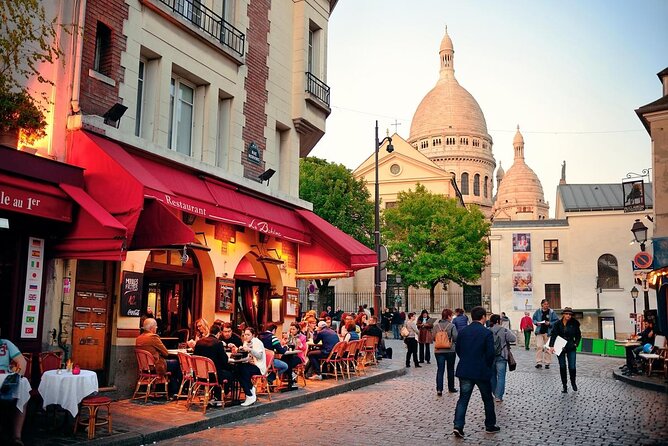
Here’s the payoff. You head to the Place du Tertre, described as the heartbeat of Montmartre’s village, and your tasting happens in one of the square’s well-known wine bistro bars.
You’ll taste three wines. The main one is the rare Clos Montmartre wine, and then you’ll do a blind tasting of two more wines: one white and one red. The blind part is a fun reality check. It pushes you to focus on the glass in front of you instead of what you think you know about the brand.
The session runs about an hour, with the tasting ticket included. This is also where the tour becomes less academic and more enjoyable. The guide talks, you taste, and you learn by doing.
Cheese, Bread, and the Logic of Pairing
As part of the tasting, you get shared plates of cheeses and rustic fermented bread. That pairing matters more than it sounds. Wine in Paris isn’t usually about strict pairings with fancy rules; it’s about balance and shared eating.
The bread also adds a Montmartre-feeling link back to the earlier windmill and galette story. It’s the tour’s way of giving you an echo: you learn the bread history, then you taste something that fits the same “old Paris” vibe.
What the Guide Style Feels Like on the Ground
The experience is led by Paris Wine Walks, and one guide name that shows up in standout feedback is Geoffrey. The vibe you should expect is friendly, conversational, and focused on the connection between what you see and what you taste.
In other words: it’s not just reading a script. You get place-based explanations, and the wine commentary has context. That’s what turns a tasting from a simple drinking break into a real learning moment—without making it stiff.
Also, the tour is offered in English, and you’ll get a mobile ticket, which keeps the day smoother.
Price and Value: What You’re Actually Buying
At $126.17 per person, this isn’t a bargain-basement wine moment. But you’re not just buying three pours and a snack.
You’re also paying for:
- A guided walk that connects multiple Montmartre landmarks
- Museum garden time at the Musée de Montmartre with included access
- The vineyard overview tied to the Clos Montmartre story
- A structured tasting that includes a rare wine plus a blind compare
- Shared plates of cheese and rustic bread
If you like wine but you also like history, views, and walking tours that feel like they have a through-line, the total package makes more sense. If you only want a casual drink with zero walking and zero museum element, this price might feel steep.
Getting the Most Out of a 3:30 pm Start
The tour starts at 3:30 pm and runs about 2 hours 20 minutes to 3 hours. That timing works nicely in summer and shoulder seasons because you’ll be walking while the light is still pleasant, then tasting as the evening vibe kicks in.
But Montmartre hills are real. The tour calls for moderate physical fitness, and getting to the top means uphill walking or stairs. Wear shoes you’d wear for a long city day, not “pretty but fragile” footwear.
If you get winded easily, it’s worth building in your own pauses. The stops are short, and the route includes multiple “brief but meaningful” points, so you don’t want to force it.
Who Should Book This Wine Walk?
This tour is a great fit if:
- You want a Montmartre walk that’s guided and explanatory, not just scenic strolling
- You’re curious about how wine fits inside the city, not only vineyard trips outside Paris
- You like tastings that include a structured element (the blind tasting helps)
I’d think twice if:
- You strongly dislike hills and stairs
- You’d rather do Montmartre at your own pace with fewer scheduled stops
- You want a wine tasting with no walking component
This experience works best when you’re willing to trade a chunk of afternoon time for a focused, wine-forward Montmartre story.
Book It or Skip It? My Practical Take
Book this if you want to come away with more than photos. The combination of the Renoir Garden viewpoint, the Clos Montmartre vineyard context, and the three-wine tasting with cheese is a strong use of time in Paris.
Skip it if your plan is mostly “see Sacré-Cœur, wander, eat.” In that case, you might get more value from a lighter activity that doesn’t require uphill walking and scheduled museum time.
If you do book, show up ready to climb. Then let the wine tasting finish the story you started on the stone streets.
FAQ
How long is the Clos Montmartre wine tasting tour?
It runs about 2 hours 20 minutes to 3 hours.
What language is the tour offered in?
The tour is offered in English.
What’s included in the wine tasting?
The tasting includes the rare Clos Montmartre wine plus a blind tasting of 2 additional wines (a white and a red), along with shared plates of cheeses and rustic fermented bread.
Do I need to buy separate tickets for stops?
Some stops list free admission, while the Musée de Montmartre garden portion and the tasting portion are listed as included. The tour provides the relevant tickets for those included parts.
Is the tour difficult to walk?
Montmartre is hilly, and the tour requires uphill walking. It’s listed as moderate physical fitness and includes stairs.
Where does the tour start and end?
It starts at Église Saint-Pierre de Montmartre, 2 Rue du Mont-Cenis, 75018 Paris, France and ends at 17 Pl. du Tertre, 75018 Paris, France.
When is the tour scheduled?
The start time listed is 3:30 pm.
How big is the group?
The maximum group size is 110 travelers.
Is the tour refundable if plans change?
There is free cancellation if you cancel at least 24 hours before the experience starts for a full refund.
If you want, tell me your travel month and whether you’re doing other Montmartre stops that day, and I’ll help you fit this timing into a realistic walking plan.
More Food & Drink in Paris
- Paris: Seine Cruise & Crepe Tasting near the Eiffel Tower
★ 4.4 · 11,231 reviews - Authentic Parisian Gourmet Food Tour with 10 Local Dishes & Wines
★ 5.0 · 4,754 reviews - Normandy D-Day Small-Group Day Trip with Omaha Beach, Cemetery & Cider Tasting
★ 5.0 · 2,786 reviews - Paris: Illuminated Evening River Cruise & Waffle Tasting
★ 4.1 · 2,697 reviews - Montmartre Hill French Gourmet Food and Wine Tasting Walking Tour
★ 5.0 · 2,588 reviews
More Tour Reviews in Paris
- Paris: 1-Hour Seine Cruise departing from the Eiffel Tower
★ 4.4 · 77,472 reviews - Paris: Louvre Museum Timed-Entrance Ticket
★ 4.6 · 71,977 reviews - Disneyland® Paris 1-Day Ticket
★ 4.6 · 49,412 reviews - Paris: Versailles Palace and Gardens Full Access Ticket
★ 4.6 · 41,579 reviews - Paris: Arc de Triomphe Rooftop Tickets
★ 4.6 · 34,264 reviews
More of the Montmartre Hill
- Montmartre Hidden Gems and Scenic Highlights Walking Tour
★ 5.0 · 2,684 reviews - Montmartre Hill French Gourmet Food and Wine Tasting Walking Tour
★ 5.0 · 2,588 reviews - Paris: Montmartre Highlights Walking Tour with a Local Guide
★ 4.9 · 2,318 reviews - Paris: Montmartre Cheese, Wine & Pastry Guided Walking Tour
★ 4.8 · 2,255 reviews - The Secrets of Montmartre Walking Tour
★ 4.8 · 1,258 reviews
Fresh off the review desk in Paris
- Secrets of Paris Bike Tour in English or Dutch★ 5.0 · 5 reviews
- Paris: Mont Saint-Michel Day Tour with Chinese Tour Guide★ 5.0 · 5 reviews
- Private Street Art 2-Hour Guided Tour in Paris★ 4.5 · 5 reviews
- Orsay Museum Tour: 2h Highlights (Private & Small Group)★ 5.0 · 5 reviews
- Discover Paris in electric golf carts★ 4.0 · 5 reviews
- Paris Private Boat Tour with your own Captain Guide★ 5.0 · 5 reviews
Montmartre Tours, compared.
 ★ 5.0Montmartre Hidden Gems and Scenic Highlights Walking TourFrom $382,684 reviews
 ★ 5.0Montmartre Hill French Gourmet Food and Wine Tasting Walking TourFrom $1452,588 reviews
 ★ 4.9Montmartre Highlights Walking Tour with a Local GuideFrom $232,318 reviews
 ★ 4.8Montmartre Cheese, Wine & Pastry Guided Walking TourFrom $1272,255 reviews
The Secrets of Montmartre Walking TourFrom $331,258 reviews
★ 4.8Montmartre Cheese, Wine & Pastry Guided Walking TourFrom $1272,255 reviews
The Secrets of Montmartre Walking TourFrom $331,258 reviews
 ★ 4.1Sacré-Coeur and Montmartre Tour with Expert GuideFrom $281,027 reviews
 ★ 5.0Private Montmartre Food Tour with Wine, Cheese & PastriesFrom $3021,027 reviews
 ★ 5.0Paris Montmartre Food Tour – A Full French Meal by Do Eat BetterFrom $95877 reviews
Browse the lists this tour appears in