
Montmartre works best with someone to tell it. This Secrets of Montmartre walk pairs story-rich art history with big sights like the Café des Deux Moulins and Sacré-Cœur, so you understand why artists wanted to live and work here. The trade-off: you do a steady uphill climb, and it’s a lot more walking than flat-city strolls.
I like that the tour is designed to keep you moving and focused: it’s a live English guide, and it avoids museums so the stories don’t get interrupted. Meeting is easy too—at Blanche métro station, look for a guide wearing a red t-shirt and holding a red umbrella outside Starbucks across the street from the Moulin Rouge.
In This Review
- Key things to know before you go
- Starting at Blanche: why Moulin Rouge sets the tone
- Moulin Rouge uphill to Place du Tertre: cabaret glam and working artists
- Lapin Agile: the comedy-and-music side of Montmartre
- Sacré-Cœur as the tour’s anchor: views plus legends
- Dalida and the Montmartre pop-culture layer you don’t get on your own
- Vigne du Clos Montmartre: vineyards in the middle of Paris
- Café des Deux Moulins and Amélie: why a movie location still matters
- La Maison Rose, Pigalle, and the artist trade at street level
- The last windmill and the Montmartre you can still sense
- What the tour skips (and why that’s smart)
- Walking pace and your comfort checklist
- The guiding that makes it worth $33
- Should you book this Secrets of Montmartre tour?
- FAQ
- Where do I meet the guide?
- How long is the walking tour?
- Is the tour in English?
- Does the tour include museum entry?
- Is pickup or drop-off included?
- Can kids join for free?
- Is there a lot of walking uphill?
Key things to know before you go
- Moulin Rouge starts the fun on day one, then you walk uphill toward the neighborhood’s artistic high points
- Sacré-Cœur isn’t just a photo—your guide connects it to Montmartre legends and pop culture
- Van Gogh, Toulouse-Lautrec, Monet, Picasso, and Dalí all get tied to places you pass (without museum tickets)
- You’ll spot the last windmill in Paris, explained in context as you move through the area
- Expect animated guiding—the best reviews mention guides who perform the stories with humor and clear delivery
- It’s not a slow wander—the route climbs, so wear shoes you trust on cobblestones
Starting at Blanche: why Moulin Rouge sets the tone
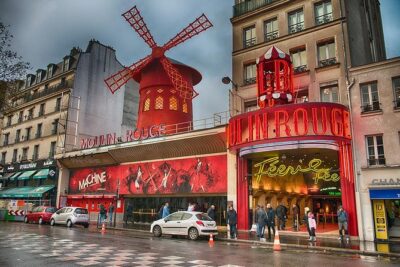
You begin at 5 Pl. Blanche, but practically, you’ll meet your guide at Blanche métro station. The helpful detail: find the guide in a red t-shirt holding a red umbrella just outside Starbucks, across from the Moulin Rouge. It’s a very “walk right in” start, not a scavenger hunt.
From there, the first real stop is Moulin Rouge—a quick photo stop with enough time to orient yourself. This matters more than you might think. If you’ve only seen Moulin Rouge as a neon landmark, the guide puts it into Montmartre’s wider story of performance, artists, and showbiz life. You get the vibe right away: this is a neighborhood where art wasn’t separate from everyday living.
One small drawback: because Montmartre is always busy around the cabaret area, you’ll feel the crowd energy early on. That said, the tour quickly moves you away from just “standing and staring” and into streets with more character.
Keep climbing: more of the Montmartre hill
- Montmartre Hidden Gems and Scenic Highlights Walking Tour
★ 5.0 · 2,684 reviews - Montmartre Hill French Gourmet Food and Wine Tasting Walking Tour
★ 5.0 · 2,588 reviews - Paris: Montmartre Highlights Walking Tour with a Local Guide
★ 4.9 · 2,318 reviews - Paris: Montmartre Cheese, Wine & Pastry Guided Walking Tour
★ 4.8 · 2,255 reviews
Moulin Rouge uphill to Place du Tertre: cabaret glam and working artists
After Moulin Rouge, you head toward Place du Tertre with a walk segment that’s short on time but big on payoff. This is where you start seeing Montmartre as more than scenery. Your guide points out the artist world behind the postcards—where studios, improvisation, and inspiration lived side by side.
Place du Tertre is famously photogenic, but the tour’s value is that you’re not just taking pictures. You’re getting the context for why it became the face of Montmartre’s art culture. You’ll also pass through the emotional atmosphere of the district: street life, art spots, and the sense that people came here to make things happen.
If you’re sensitive to crowds, plan for that here. But if you want a first pass that helps you understand what you’re seeing, this stage is a good start.
Lapin Agile: the comedy-and-music side of Montmartre
Next up is Lapin Agile, again with a photo stop built in. Even if you don’t know the name, you’ll understand the point fast: Montmartre’s creative scene has long ties to performance, music, and story.
What I like about including Lapin Agile isn’t the building itself—it’s how it widens your mental picture of the neighborhood. Paris art history can feel like galleries and dates. This stop reminds you that creative life often ran through taverns and stages, the places where artists met, argued, and traded ideas.
Sacré-Cœur as the tour’s anchor: views plus legends
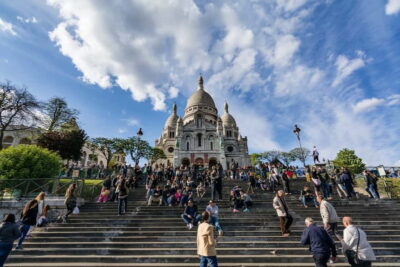
You reach Sacré-Cœur for another photo stop—and this is where the tour starts to feel like it’s really “Montmartre.” The big white dome is the visual payoff. But the deeper payoff is what your guide connects to it: the district’s legends and famous people who helped shape its myth.
Your guide also mentions Montmartre figures tied to the wider artistic world—people like Vincent van Gogh, Henri de Toulouse-Lautrec, and Claude Monet—and how the neighborhood pulled them in. You’ll also hear stories such as the legend of Paris’ first bishop and the tale of the headless Saint Denis. It’s the kind of stuff that makes landmarks feel alive instead of frozen.
Practical note: Sacré-Cœur is at a height advantage, but it comes with uphill walking and stamina trade-offs. One review specifically warns it’s a step, uphill walk—so plan on that effort and wear grippy shoes.
Dalida and the Montmartre pop-culture layer you don’t get on your own
A standout stop is Buste de Dalida with a photo moment. Dalida is one of those names that shows you Montmartre isn’t only about classic painters. It also shaped later performers and icons, including in LGBTQ history. Your guide also brings in La Place Dalida, dedicated to her, and ties that to the broader scene of cabaret and nightlife.
This is where the tour becomes unusually good for modern visitors. You’ll recognize elements of Montmartre from media, but you’re also learning why those cultural references stuck.
Then you move on to a quieter, more unexpected Montmartre stop.
Vigne du Clos Montmartre: vineyards in the middle of Paris
The route includes the Vigne du Clos Montmartre, with a walk segment that’s short but memorable. A vineyard in a major city feels odd until you’re standing there and realizing how Montmartre’s edges have changed over time.
The tour uses this stop to highlight Montmartre’s mix of land and art. It’s not all nightlife and studios. There’s agriculture and local tradition tucked into the slope, and it helps explain why Montmartre developed a different character than the flatter parts of Paris.
If you like your travel with texture—something you can’t simply google into existence—this is one of the spots that delivers.
Worth weighing up next to this Paris pick



Café des Deux Moulins and Amélie: why a movie location still matters
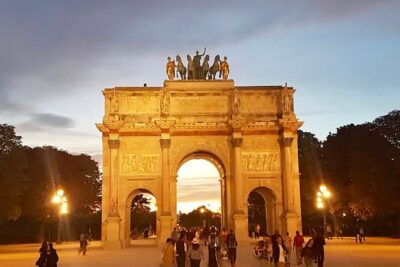
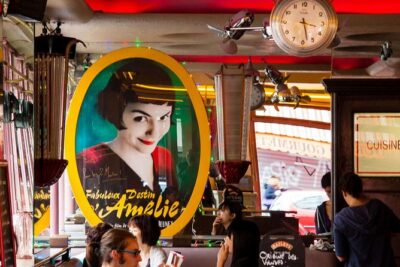
Next comes Café des Deux Moulins, another photo stop. Yes, it’s tied to the film Amélie, and that’s exactly why this stop works. Even if you’ve watched the movie, the tour helps you see the café as part of a real neighborhood rhythm rather than a set.
Your guide also connects the café to Montmartre’s artistic culture, and it doesn’t feel like name-dropping. It feels like a doorway: you understand why a place like this became part of the area’s identity.
Practical value: this is also one of the best moments to pause and regroup. After uphill streets and stairs, a sit-and-look moment (even if it’s just for the photo) helps you keep energy for what’s next.
La Maison Rose, Pigalle, and the artist trade at street level
You’ll pass La Maison Rose during a walk segment. This is one of those Montmartre visual markers people remember, but the tour’s angle is what’s important: you’re linking the street-level look of the neighborhood to the creative lives your guide is describing.
Then the route continues via Place Pigalle with another walk. Pigalle is connected to cabaret life and Montmartre’s adult entertainment reputation, and you’ll hear how the artistic scene overlapped with that world.
In the storytelling, you also get specifics that make the neighborhood feel occupational, not just aesthetic. You’ll learn about Picasso’s former studio as you pass key areas, and you’ll hear the detail that Picasso often exchanged paintings for food in a cabaret bar setting. That’s the kind of human detail that changes the way you see artists on a street. It’s less myth, more daily reality.
The last windmill and the Montmartre you can still sense
One of the highlights is discovering the last windmill left standing in Paris. You won’t just spot it and move on. Your guide frames it as part of the district’s evolution—how Montmartre used to function with industry and open-air life, and how it later became the iconic artist quarter people came to chase.
This stop lands especially well if you’re the kind of visitor who likes connecting “then and now.” A windmill is a symbol, but it’s also a physical leftover. It’s proof that the slope held different work long before it became a walking-route brand.
The tour also includes mentions of the Red Light District through the walk, and it doesn’t sugarcoat the area’s mix of artistic aspiration and adult nightlife. That’s part of what makes Montmartre feel like itself.
What the tour skips (and why that’s smart)
This tour explicitly avoids entering museums or specific sites. That’s not a limitation if you choose it for the right reasons. Museum stops can turn a great guide into a ticket-line manager. Here, the focus stays on walking, seeing, and listening.
You get iconic sights—Moulin Rouge, Sacré-Cœur, and major Montmartre stops—without adding extra time constraints. And because the guide keeps the story moving, you end up with a connected mental map instead of a pile of unrelated photos.
In other words: if you want a guided “Montmartre in one go” overview, this format helps.
Walking pace and your comfort checklist
Expect a steady uphill climb. Even though the advertised duration is 2 hours, some experiences run a bit longer depending on the group and what your guide thinks is best. One review called it an almost 3-hour experience, and another specifically flagged it as a step, uphill walk.
So here’s my practical advice:
- Wear shoes you can handle on cobbled streets and stairs
- Bring water on warm days
- If you’re short on stamina, consider doing Montmartre earlier in your day so you’re not running on empty
That’s also why having an animated guide matters. When the guide is good, the effort feels like part of the story instead of a chore.
The guiding that makes it worth $33
At $33 per person for a 2-hour English walking tour with a local guide, you’re paying for one thing: a human translator between Montmartre’s sights and its meanings.
The best reviews repeat a theme: the guides are performers, not just reciters. People named Dawid, Dawie, Francois, Alberto, Paloma, Thom, Sebastian, Daniel, Panama, and Roberto all stand out in different ways, but the praise points are consistent—clear storytelling, humor, and a strong sense of place.
Some guides even adjust the tour for the group’s interests. That flexibility can turn a generic “see these landmarks” walk into something that feels tailored. If you’re the type who wants a route you can’t easily replicate yourself, that matters.
I also like that many guides add practical add-ons like restaurant and rooftop bar suggestions. Not every guide does this, but when they do, it extends the tour’s value beyond the walk itself.
Should you book this Secrets of Montmartre tour?
Yes, if you want a guided Montmartre that explains why the neighborhood became what it is—without making you buy museum tickets or shuffle through long site visits. It’s especially good for first-timers, art-and-culture visitors, and anyone who prefers a story-led route over a checklist.
Skip it (or consider another option) if you’re not comfortable with uphill walking on cobbles and stairs. This is a climb, and the tour ends around Sacré-Cœur, so you’re finishing higher than you started.
If you’re traveling with limited time and want an honest orientation of Montmartre’s art world, pick this one. It’s a straightforward way to get the district’s connections in a couple hours—then you can explore on your own with your new context in hand.
FAQ
Where do I meet the guide?
Meet at Blanche metro station. Look for the guide wearing a red t-shirt and holding a red umbrella outside Starbucks across the street from the Moulin Rouge.
How long is the walking tour?
The tour is listed as 2 hours. Your guide may vary the route depending on what they think is best for your group.
Is the tour in English?
Yes, the tour is a live English guided walking experience.
Does the tour include museum entry?
No. The tour does not enter museums or specific sites, since that would lengthen the experience and disrupt the flow of information.
Is pickup or drop-off included?
No pickup or drop-off at your accommodation is included. You’ll meet the guide at the scheduled meeting point.
Can kids join for free?
Yes. Children under 13 go free with a valid ID.
Is there a lot of walking uphill?
Yes. It includes an uphill climb, and you should be ready for a step walking route on Montmartre’s slopes and streets.
More Tours in Paris
- Paris: Louvre Guided Tour with Reserved Access & Boat Cruise
★ 4.3 · 16,353 reviews - Paris: Big Bus Hop-On Hop-Off Tour with Optional Cruise
★ 4.4 · 13,279 reviews - Louvre Museum Masterpieces Guided Tour with Access
★ 4.5 · 12,023 reviews - Versailles: Skip-the-Line Tour of Palace and Gardens Access
★ 4.7 · 10,429 reviews - Paris: Louvre Overview, Exploration tour and Reserved Entry
★ 4.1 · 10,145 reviews
More Tour Reviews in Paris
- Paris: 1-Hour Seine Cruise departing from the Eiffel Tower
★ 4.4 · 77,472 reviews - Paris: Louvre Museum Timed-Entrance Ticket
★ 4.6 · 71,977 reviews - Disneyland® Paris 1-Day Ticket
★ 4.6 · 49,412 reviews - Paris: Versailles Palace and Gardens Full Access Ticket
★ 4.6 · 41,579 reviews - Paris: Arc de Triomphe Rooftop Tickets
★ 4.6 · 34,264 reviews
More of the Montmartre Hill
- Montmartre Hidden Gems and Scenic Highlights Walking Tour
★ 5.0 · 2,684 reviews - Montmartre Hill French Gourmet Food and Wine Tasting Walking Tour
★ 5.0 · 2,588 reviews - Paris: Montmartre Highlights Walking Tour with a Local Guide
★ 4.9 · 2,318 reviews - Paris: Montmartre Cheese, Wine & Pastry Guided Walking Tour
★ 4.8 · 2,255 reviews - Private Montmartre Food Tour with Wine, Cheese & Pastries
★ 5.0 · 1,027 reviews
Fresh off the review desk in Paris
- Secrets of Paris Bike Tour in English or Dutch★ 5.0 · 5 reviews
- Paris: Mont Saint-Michel Day Tour with Chinese Tour Guide★ 5.0 · 5 reviews
- Private Street Art 2-Hour Guided Tour in Paris★ 4.5 · 5 reviews
- Orsay Museum Tour: 2h Highlights (Private & Small Group)★ 5.0 · 5 reviews
- Discover Paris in electric golf carts★ 4.0 · 5 reviews
- Paris Private Boat Tour with your own Captain Guide★ 5.0 · 5 reviews
Montmartre Tours, compared.
 ★ 5.0Montmartre Hidden Gems and Scenic Highlights Walking TourFrom $382,684 reviews
 ★ 5.0Montmartre Hill French Gourmet Food and Wine Tasting Walking TourFrom $1452,588 reviews
 ★ 4.9Montmartre Highlights Walking Tour with a Local GuideFrom $232,318 reviews
 ★ 4.8Montmartre Cheese, Wine & Pastry Guided Walking TourFrom $1272,255 reviews
 ★ 4.1Sacré-Coeur and Montmartre Tour with Expert GuideFrom $281,027 reviews
 ★ 5.0Private Montmartre Food Tour with Wine, Cheese & PastriesFrom $3021,027 reviews
 ★ 5.0Paris Montmartre Food Tour – A Full French Meal by Do Eat BetterFrom $95877 reviews
 ★ 5.0Montmartre District Walking Tour in ParisFrom $31810 reviews
Browse the lists this tour appears in