
Reviewed · WALKING TOURS
Paris City Center Free Walking Tour (Tip-Based)
Paris is easier when the story starts early. This tip-based city center walk strings together the places that shaped modern France—then lets you finish with postcard views along the Seine. You’ll also get practical guide advice on where to eat and what to do next.
I love the way this tour balances major landmarks with human-scale moments, like the streets around Île de la Cité and the bridges you cross every day. I also like the strong guide delivery—names you may hear include Alberto, Ezra, Sanna, Bruce, Kiara, and Michael, and many emphasize humor plus clear sound using a mic.
One thing to consider: it’s a lot of standing and walking (even if the pace is often described as manageable). And since it’s tip-based, you’ll want to plan to pay tips by electronic payment, not cash.
In This Review
- Key points before you go
- Why a tip-based center-walk makes sense in Paris
- The “free” part isn’t about low effort
- Meeting at Saint-Michel and walking to the Tuileries
- Group size stays human
- Stop-by-stop: Île de la Cité to the Notre-Dame area
- Stop 1: Île de la Cité (the real center)
- Stop 2: Notre-Dame Cathedral (without going inside)
- Bridges and war marks: Saint-Michel to Pont Saint-Michel
- Stop 3: Fontaine Saint-Michel
- Stop 4: Pont Saint-Michel (bullet holes)
- Place Dauphine and Henri IV: calmer squares and big political vibes
- Stop 5: Place Dauphine
- Stop 6: Equestrian statue of Henri IV
- Pont Neuf and the Louvre zone: the bridge stories that lead you onward
- Stop 7: Pont Neuf (oldest bridge, plus legends)
- Stop 8: Louvre Museum (views and stories, not tickets)
- Napoleon’s signature arc
- Stop 9: Arc de Triomphe du Carrousel
- Tuileries gardens to Eiffel Tower payoff
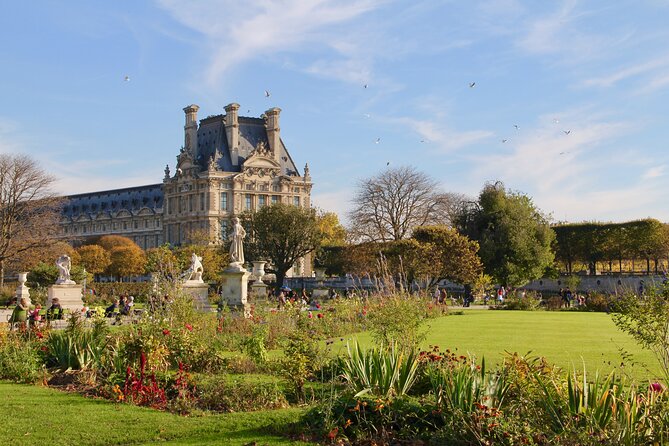
- Stop 10: Jardin des Tuileries
- Stop 11: Eiffel Tower view from the gardens
- What you’ll actually learn (beyond the postcard stuff)
- Guide quality is the real product
- Photo and break strategy (so you don’t feel rushed)
- Price and what $3.62 per group really means
- Weather matters more than you think
- Should you book this tour?
- FAQ
- Where is the meeting point for the tour?
- Where does the tour end?
- How long is the walk?
- Is the tour offered in English?
- Is the tour really free?
- How do I pay tips or contributions?
- Does the tour include admission to Notre-Dame and the Louvre?
- What stops will I see during the walk?
- How big is the group?
- What happens if the weather is bad?
Key points before you go
- Tip-based pricing with clear value: a low group price paired with optional tips, paid electronically
- English-speaking guides with good sound: the tour commonly uses a microphone in busy areas
- You see the icons without ticket hassles: Notre-Dame and the Louvre are viewed from outside
- Revolution and Napoleon stories: the walk connects big political moments to specific locations
- A smooth route through classic Paris: Seine bridges, Place Dauphine, Tuileries, and a final Eiffel Tower viewpoint
Why a tip-based center-walk makes sense in Paris
If you have only a day or two, Paris can feel like a blur of statues and stone. This kind of free walking tour works because it gives you a route first, then explains what you’re actually looking at. You end up with a mental map, not just a camera roll.
You’ll likely notice two things right away: the pacing and the way the guide uses stories to connect landmarks. The route moves from the historical core at Île de la Cité toward the Louvre and finishes with the Tuileries gardens and an Eiffel Tower view. That’s a smart arc for first-time visitors, because it keeps you in central areas without needing extra transit.
Worth weighing up next to this Paris pick
- Paris Top Sights Half Day Walking Tour with a Fun Guide
★ 5.0 · 2,893 reviews - Montmartre Hidden Gems and Scenic Highlights Walking Tour
★ 5.0 · 2,684 reviews - Montmartre Hill French Gourmet Food and Wine Tasting Walking Tour
★ 5.0 · 2,588 reviews - Paris: Montmartre Highlights Walking Tour with a Local Guide
★ 4.9 · 2,318 reviews
The “free” part isn’t about low effort
This isn’t a casual stroll. The tour is run by a guide, uses a structured stop list, and lasts about 2 hours 15 minutes. The small group price covers participation for a group (up to 9 people), and the guide’s compensation comes through tips.
If you like tours that feel flexible—ask questions, pause for photos, and get recommendations—you’ll probably appreciate the tip-based model. Just note that tips are accepted only via credit/debit cards and electronic payments, and VAT is added to contributions.
Meeting at Saint-Michel and walking to the Tuileries
The meeting point is Fontaine Saint-Michel, at Pl. Saint-Michel, 75005 Paris. You’ll end at Tuileries Garden, 75001 Paris, so your day is likely to continue in the Louvre/Tuileries area rather than heading back to the Latin Quarter.
This route isn’t a loop. The point-to-point finish is useful: you’ll land in a prime sightseeing zone where you can keep going without retracing your steps. And if you like the idea of moving through Paris in a single sweep, this one is built for that.
Group size stays human
The tour can run with up to 50 travelers, so you’re not alone. But it’s still small enough for the guide to manage a conversation, especially with the help of a microphone in louder street zones.
If you’re traveling with teens, senior travelers, or anyone who gets tired standing long, this tour is often described as a gentle pace. Still, you should plan for a fair amount of walking and waiting between stops.
Stop-by-stop: Île de la Cité to the Notre-Dame area
Stop 1: Île de la Cité (the real center)
You start on Île de la Cité, the island in the Seine where the Parisii tribe built temples more than 2000 years ago—before Roman rule reshaped the area. This is a strong opening because it frames Paris as something older than the postcard city.
Here’s the payoff for you: you’ll understand why this place keeps showing up in every major era. The guide’s stories give you a reason to look up at facades and around at the river, not just forward at the next landmark.
Worth weighing up next to this Paris pick



Stop 2: Notre-Dame Cathedral (without going inside)
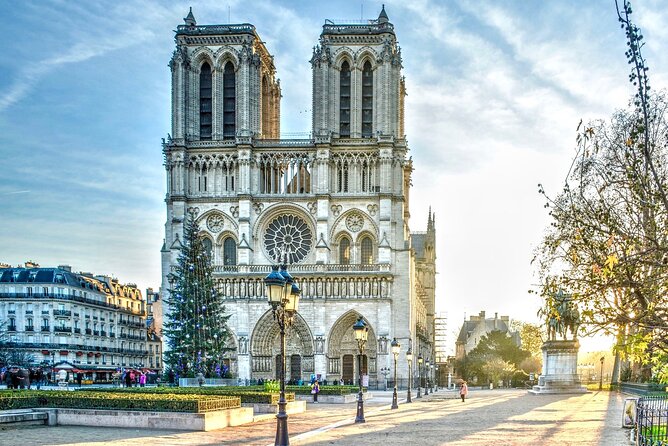
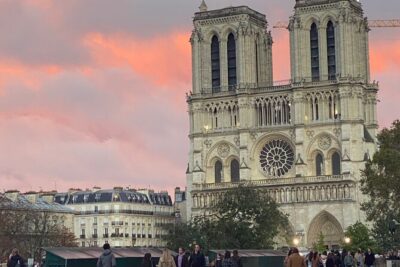
Next is Cathedrale Notre-Dame de Paris. You’ll hear how construction began in 1163, how the cathedral fits into French Revolution-era events, and what it means that Napoleon was crowned there. The conversation also reaches the modern period, including the 2019 fires.
Important practical note: the tour does not enter the cathedral. That can be a plus if you hate time lost to lines. It can also mean you miss out on interior details—so if you want to go inside, treat this tour as the setup and consider a separate visit later.
Bridges and war marks: Saint-Michel to Pont Saint-Michel
Stop 3: Fontaine Saint-Michel
At Fontaine Saint-Michel, the guide connects the fountain to the large-scale rebuilding of Paris. It’s a smaller stop, but it’s the kind that helps you see the city as layers—old faith, new planning, then later renovations.
If you’re the kind of person who likes street-level history, this stop helps you get it right away. You’ll start noticing how Paris keeps updating its public spaces while keeping its story.
Stop 4: Pont Saint-Michel (bullet holes)
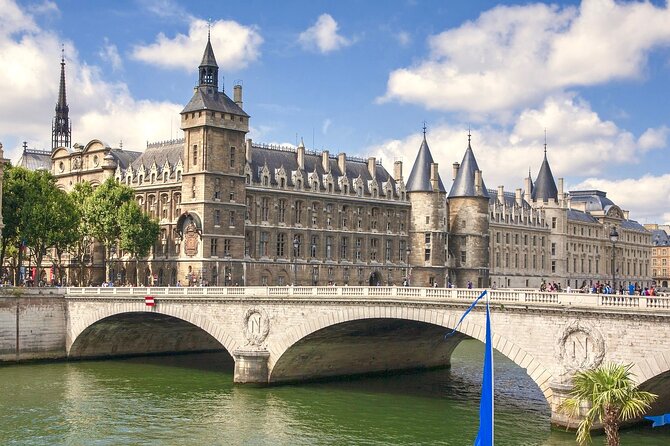
Crossing and looking over Pont Saint-Michel, you’ll learn about the visible marks of World War II—specifically bullet holes—and why Paris wasn’t destroyed the way some cities were. This is one of those moments where a guide’s narrative changes how you see a bridge.
Drawback to keep in mind: outdoor war-story moments can be emotionally heavy. But they’re also what make the walk feel real, not just scenic.
Place Dauphine and Henri IV: calmer squares and big political vibes
Stop 5: Place Dauphine
Place Dauphine is a great mid-tour reset. It’s described as one of the earliest projects built by Henri IV, and it’s known for restaurants—so the guide’s recommendations here are genuinely practical. After a couple of stops and some walking, this is a smart place for you to imagine your lunch.
This is also where you’ll start to feel the tour’s balance: it’s not only about kings and wars. It also points you to places that still function like city rooms—something you can use after the tour ends.
Stop 6: Equestrian statue of Henri IV
Then comes the statue équestre d’Henri IV, with views over the Seine. You’ll hear about the king’s short but meaningful reign—again, using a very specific monument as the anchor.
Tip for you: look around the statue area for how the river lines up with the rest of your day. The best tours help you build a mental geography, and this stop does that.
Pont Neuf and the Louvre zone: the bridge stories that lead you onward
Stop 7: Pont Neuf (oldest bridge, plus legends)
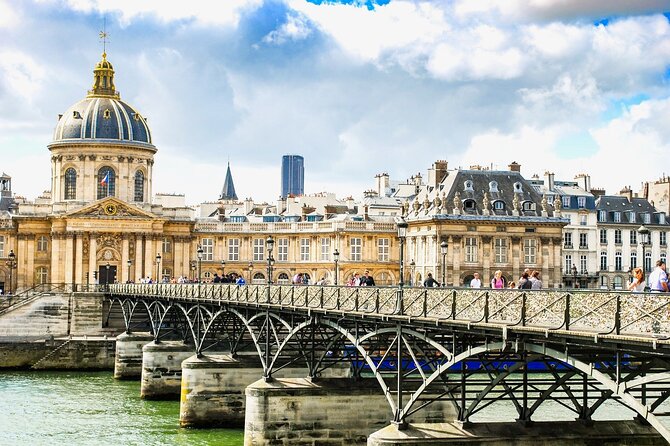
Pont Neuf is next. It’s the oldest bridge in Paris, and the guide ties it to Henri IV, including the fact that he finished the bridge in 1607. You’ll also hear the kind of street lore that makes old Paris feel less like a museum.
One example: the guide talks about the tooth pullers of Paris—small history, big atmosphere. This is exactly the type of detail you’ll remember later when you see a similar street name or old building.
Stop 8: Louvre Museum (views and stories, not tickets)
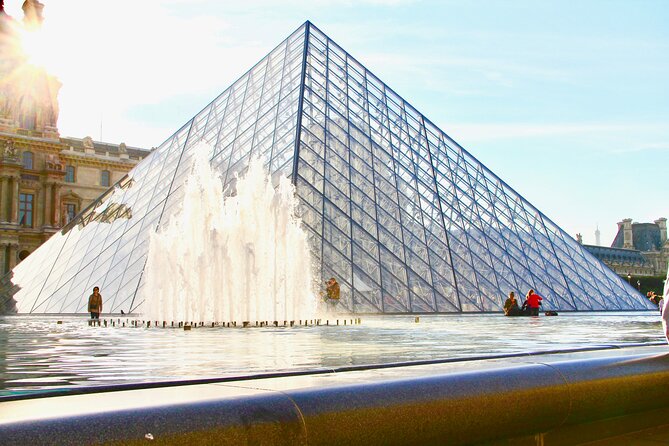
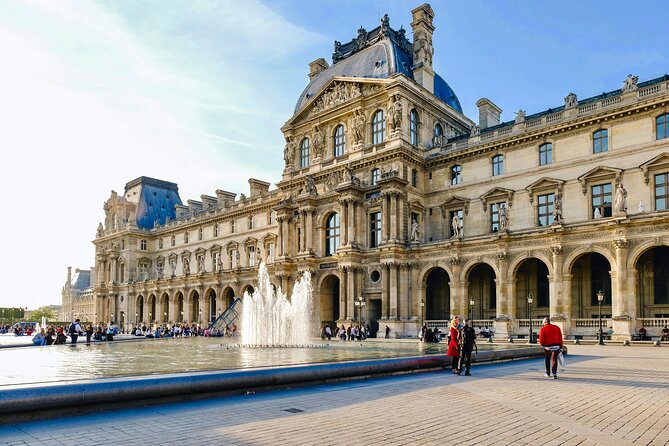
You’ll reach the Louvre Museum area, but the tour does not enter the museum. Instead, you’ll learn stories connected to Leonardo da Vinci and why the Mona Lisa became so famous. You’ll also hear about Francis I, including how he laid foundations for the Louvre as a fortress and a palace. The glass pyramid shows up as a visual highlight from the outside.
If you’re hoping for a museum day, this tour isn’t that. But it’s excellent for you if you want the background before you commit to tickets and time inside. Think of it as turning the Louvre from a building into a storyline.
Napoleon’s signature arc
Stop 9: Arc de Triomphe du Carrousel
The walk continues to the Arc de Triomphe du Carrousel, built by Napoleon. The guide frames it in terms of his rise and his sense of being master of Europe.
Even if you don’t care about Napoleonic history, arcs and monuments are easier to read when someone connects them to purpose. This stop gives you context so it doesn’t just look like another ornate structure.
Tuileries gardens to Eiffel Tower payoff
Stop 10: Jardin des Tuileries
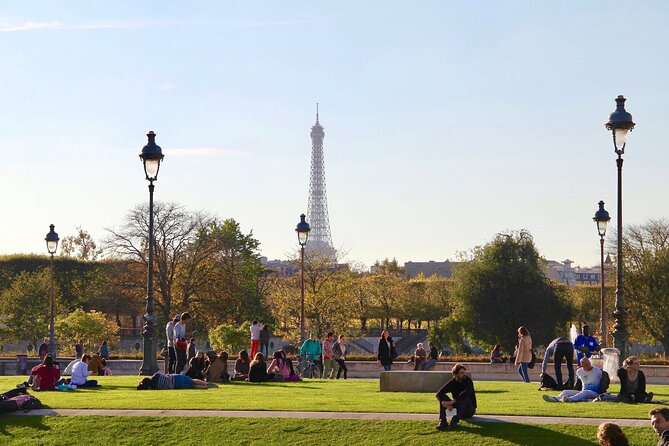
Next is the Jardin des Tuileries, described as evolving from a tile factory into royal gardens. You’ll see sculptures, statues, and fountains, and you’ll get the idea that the garden design was meant to create a sense of mystique—connected to the same garden designer associated with Versailles.
Practical note: this is a good spot to slow down. If you need a breather, do it here, because the end is still ahead.
Stop 11: Eiffel Tower view from the gardens
Finally, you’ll reach one of the best parts of the route: the Eiffel Tower view from the Tuileries gardens area. The guide explains how Gustave Eiffel pulled off the construction in 1889, and you’ll have that satisfying moment where the walk ends and the skyline takes over.
Again, this tour won’t be about going up the Eiffel Tower. It’s about seeing it in context and arriving with better historical framing than you’d get from a quick photo stop.
What you’ll actually learn (beyond the postcard stuff)
This tour’s learning style is location-based. Instead of listing dates and names, it points to objects in space and says, this matters because of X event.
Two themes show up strongly:
- The French Revolution and Napoleon connected to specific sites like Notre-Dame and the arcs/monuments.
- Paris resilience in hard times, including the visible WWII evidence on Pont Saint-Michel and why the city’s fate was different than you might expect.
That mix is why people love this walk as an intro. You don’t just get facts; you get a set of stories you can reuse while exploring Paris on your own after the tour ends.
Guide quality is the real product
With tip-based walking tours, the guide’s craft matters more than the marketing. The common praise here is about delivery: guides like Alberto and Ezra are described as funny, friendly, and willing to answer questions. Sanna and others are noted for making explanations clear and engaging for groups.
A huge practical plus: many guides use a microphone/amplifier so you can hear in crowded areas. If you’ve ever been stuck behind tall people on a tour, you’ll appreciate this design choice.
I’d also expect the guide to read the group and adjust timing. Some reviews point out that the tour can include more or less standing explanation at certain stops, but the overall pacing stays manageable.
Photo and break strategy (so you don’t feel rushed)
This route is packed with stops, and you’ll be out in the open much of the time. I’d treat it like a sightseeing walk, not a sit-down tour.
A small strategy that helps: use the restroom before you start if you can, because your best chance for a clean break later may be near the Louvre/Tuileries finish area. Also, bring water, and wear shoes you’re comfortable standing in for short stretches.
For photos, plan on a few quick stops rather than one long pause. The guide will keep moving so you can keep the storyline intact—and you’ll get better results by working with the stop order rather than sprinting ahead.
Price and what $3.62 per group really means
The stated price is $3.62 per group (up to 9 people), and it’s tip-based. That means you’re not paying for a “ticket fee” that already includes everything.
So how is it value? You’re buying:
- a route through central Paris,
- a guide who connects landmarks to stories,
- and a structured walk that ends in the Tuileries/Eiffel Tower zone.
Then you choose how generous to be through electronic tips. Since tips are paid by credit/debit and VAT applies, set aside a small amount you’re comfortable with. If your budget is tight, remember: you’re not locked into high entry costs for Notre-Dame or the Louvre during this walk.
Weather matters more than you think
This experience requires good weather. If conditions are poor, you’ll be offered a different date or a full refund. That’s worth planning for, especially in Paris when rain can show up fast.
If it looks questionable, bring a light rain layer or umbrella. Most of the route is outside, and the structure only works if people can comfortably keep walking between stops.
Should you book this tour?
Book it if you want a fast, story-driven way to get your bearings in central Paris. This is especially good for first-timers, people with limited time, and anyone who likes history tied to exact places—like the Revolution-era links at Notre-Dame or the WWII marks at Pont Saint-Michel.
Skip (or pair it with another plan) if you’re mainly after indoor masterpieces. Since the tour doesn’t enter Notre-Dame or the Louvre, you’ll need separate tickets for those experiences. Also, if you dislike walking and standing, be ready for a full 2+ hours on your feet.
If you go in expecting a guided route with strong storytelling—and you’re ready to tip via electronic payment—you’ll likely leave with a clearer sense of Paris and a smoother day for everything you do next.
FAQ
Where is the meeting point for the tour?
The tour starts at Fontaine Saint-Michel, Pl. Saint-Michel, 75005 Paris.
Where does the tour end?
The tour ends at Tuileries Garden, 75001 Paris.
How long is the walk?
It runs about 2 hours 15 minutes.
Is the tour offered in English?
Yes, it’s offered in English.
Is the tour really free?
It’s tip-based. The experience has a low per-group price, and tips/contributions are part of how guides are supported.
How do I pay tips or contributions?
Tips are accepted only via credit/debit cards and electronic payments, and VAT is added to contributions.
Does the tour include admission to Notre-Dame and the Louvre?
The tour does not enter Notre-Dame Cathedral or enter the Louvre Museum. You’ll learn from the outside.
What stops will I see during the walk?
You’ll visit Île de la Cité, Notre-Dame area, Fontaine Saint-Michel, Pont Saint-Michel, Place Dauphine, an equestrian statue of Henri IV, Pont Neuf, the Louvre area, Arc de Triomphe du Carrousel, Jardin des Tuileries, and the Eiffel Tower viewpoint.
How big is the group?
The tour has a maximum of 50 travelers.
What happens if the weather is bad?
The tour requires good weather. If it’s canceled due to poor weather, you’ll be offered a different date or a full refund.
More Walking Tours in Paris
- Paris Top Sights Half Day Walking Tour with a Fun Guide
★ 5.0 · 2,893 reviews - Montmartre Hidden Gems and Scenic Highlights Walking Tour
★ 5.0 · 2,684 reviews - Montmartre Hill French Gourmet Food and Wine Tasting Walking Tour
★ 5.0 · 2,588 reviews - Paris: Montmartre Highlights Walking Tour with a Local Guide
★ 4.9 · 2,318 reviews - Paris Île de la Cité and Notre-Dame Walking Tour With Crypt
★ 5.0 · 2,272 reviews
More Tours in Paris
- Paris: Louvre Guided Tour with Reserved Access & Boat Cruise
★ 4.3 · 16,353 reviews - Paris: Big Bus Hop-On Hop-Off Tour with Optional Cruise
★ 4.4 · 13,279 reviews - Louvre Museum Masterpieces Guided Tour with Access
★ 4.5 · 12,023 reviews - Versailles: Skip-the-Line Tour of Palace and Gardens Access
★ 4.7 · 10,429 reviews - Paris: Louvre Overview, Exploration tour and Reserved Entry
★ 4.1 · 10,145 reviews
More Tour Reviews in Paris
- Paris: 1-Hour Seine Cruise departing from the Eiffel Tower
★ 4.4 · 77,472 reviews - Paris: Louvre Museum Timed-Entrance Ticket
★ 4.6 · 71,977 reviews - Disneyland® Paris 1-Day Ticket
★ 4.6 · 49,412 reviews - Paris: Versailles Palace and Gardens Full Access Ticket
★ 4.6 · 41,579 reviews - Paris: Arc de Triomphe Rooftop Tickets
★ 4.6 · 34,264 reviews
Fresh off the review desk in Paris
- Secrets of Paris Bike Tour in English or Dutch★ 5.0 · 5 reviews
- Paris: Mont Saint-Michel Day Tour with Chinese Tour Guide★ 5.0 · 5 reviews
- Private Street Art 2-Hour Guided Tour in Paris★ 4.5 · 5 reviews
- Orsay Museum Tour: 2h Highlights (Private & Small Group)★ 5.0 · 5 reviews
- Discover Paris in electric golf carts★ 4.0 · 5 reviews
- Paris Private Boat Tour with your own Captain Guide★ 5.0 · 5 reviews
Walking Tours, compared.
 ★ 5.0Paris Top Sights Half Day Walking Tour with a Fun GuideFrom $762,893 reviews
 ★ 5.0Montmartre Hidden Gems and Scenic Highlights Walking TourFrom $382,684 reviews
 ★ 5.0Montmartre Hill French Gourmet Food and Wine Tasting Walking TourFrom $1452,588 reviews
 ★ 4.9Montmartre Highlights Walking Tour with a Local GuideFrom $232,318 reviews
 ★ 5.0Paris Île de la Cité and Notre-Dame Walking Tour With CryptFrom $482,272 reviews
 ★ 4.8Montmartre Cheese, Wine & Pastry Guided Walking TourFrom $1272,255 reviews
 ★ 5.0Paris in a Day: Louvre or Orsay, Eiffel Tower, City Walk & CruiseFrom $1571,956 reviews
The Secrets of Montmartre Walking TourFrom $331,258 reviews
★ 5.0Paris in a Day: Louvre or Orsay, Eiffel Tower, City Walk & CruiseFrom $1571,956 reviews
The Secrets of Montmartre Walking TourFrom $331,258 reviews
Browse the lists this tour appears in