
Reviewed · MONTMARTRE TOURS
Montmartre District Walking Tour in Paris
Montmartre is famous for art myths, and this tour gives you the real street-level version. You start at the Moulin Rouge area and work your way uphill through the places tied to big names like Van Gogh and Picasso, plus a few movie-friendly stops along the way.
What I like most is how much context you get without it turning into a museum lecture. Two big wins for me: you’ll see Sacré-Cœur from a guide’s point of view (not just a postcard), and you’ll walk past the working artist corner at Place du Tertre where the district’s character still shows up in real life. One thing to plan for: it’s a walk-heavy route with serious hills, so you’ll want good shoes and a little stamina.
In This Review
- Key highlights before you go
- Entering Montmartre the practical way: timing, pace, and what to expect
- Price and value: what $31.44 buys you in the real world
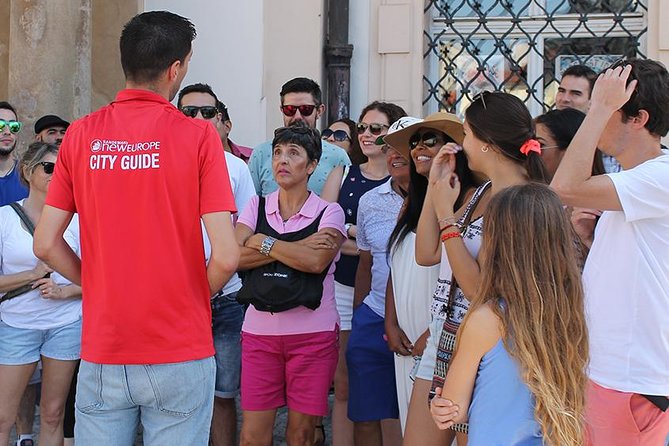
- Your guide is the main event: how these tours feel when it clicks
- Stop-by-stop: how the route tells Montmartre’s story
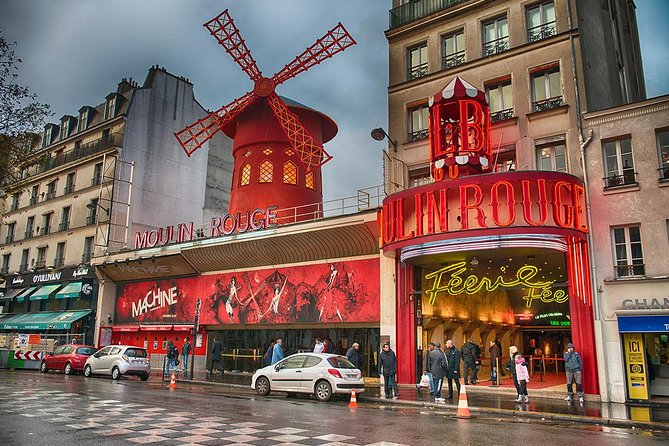
- Moulin Rouge: the cabaret edge of Montmartre
- Place du Tertre: artists’ square, Picasso and Van Gogh in the same breath
- Au Lapin Agile: the cabaret bar where art met hunger
- Sacré-Cœur: the view, the architecture, and why it was built
- Buste de Dalida at Place Dalida: a modern layer on the hill
- Vigne du Clos Montmartre: Paris’s last authentic vineyard
- Café des Deux Moulins: the Amélie connection you can actually see
- La Maison Rose: Picasso’s circle, behind the basilica
- Place Pigalle: the red-light district context
- What to watch for during the walk (so it stays fun)
- Who this tour is best for
- Should you book this Montmartre district walking tour?
- FAQ
- How long is the Montmartre District Walking Tour?
- Where does the tour start and end?
- What time does the tour begin?
- What’s included in the price?
- Is food or drinks included?
- Is it suitable for children?
Key highlights before you go
- Moulin Rouge start: the cabaret origin story at the edge of Montmartre
- Place du Tertre + artist lore: portraitists, painters, and links to Picasso and Van Gogh
- Au Lapin Agile: the cabaret bar tied to Picasso swapping art for food
- Sacré-Cœur viewpoints: Roman Catholic history plus sky-high city views
- Amélie stop: Café des Deux Moulins on the route
- Limited group size: up to 35 people, with guides keeping the pace lively
Entering Montmartre the practical way: timing, pace, and what to expect

This is a 2-hour-ish walking tour that starts at 5:00 pm. That timing matters. Late afternoon in Montmartre helps you dodge some of the harshest light and makes the evening stroll feel more like a neighborhood wander than a rushed checklist.
The route is built on the idea that Montmartre is best read by walking. You’ll move between landmarks, squares, and viewpoints, and you’ll get little “why this place matters” explanations at each stop. Expect short stops (around 15 minutes each) rather than long photo marathons. It also means you get momentum—less waiting around, more seeing.
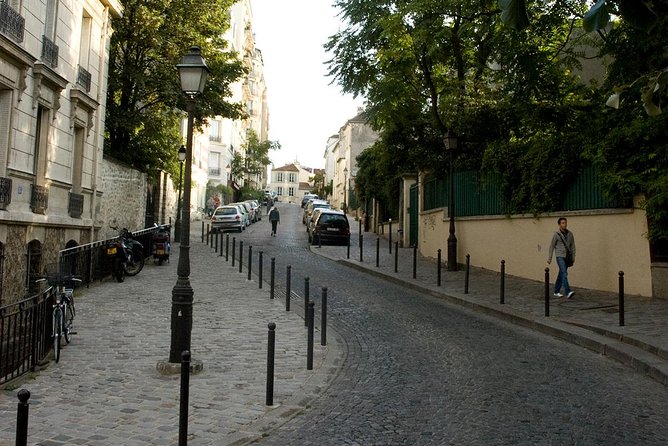
And yes, there are hills. The route climbs toward Sacré-Cœur, then you work your way through the upper neighborhood. From the feedback I’ve read, the uphill walking is the main physical consideration, even with occasional breaks built into the tour rhythm. Comfortable walking shoes are not optional here.
Keep climbing: more of the Montmartre hill
- Montmartre Hidden Gems and Scenic Highlights Walking Tour
★ 5.0 · 2,684 reviews - Montmartre Hill French Gourmet Food and Wine Tasting Walking Tour
★ 5.0 · 2,588 reviews - Paris: Montmartre Highlights Walking Tour with a Local Guide
★ 4.9 · 2,318 reviews - Paris: Montmartre Cheese, Wine & Pastry Guided Walking Tour
★ 4.8 · 2,255 reviews
Price and value: what $31.44 buys you in the real world
At $31.44 per person, this tour is priced like a “smart orientation” experience. You’re not paying for museums or big attractions with separate tickets. The stops listed include places where admission is effectively free during the tour stops, and what you’re really buying is a local guide who connects the dots.
That’s the value. Montmartre can feel like a themed park of famous names, unless someone explains how the district actually evolved and why artists kept showing up. The guide’s job is to turn scattered sights—cabaret corners, artist squares, and viewpoints—into a single story you can remember.
A couple practical perks help the experience feel easy too. You’ll get a mobile ticket, and the tour is offered in English. Also, it caps at 35 travelers, which is big enough for variety but small enough that a good guide can still manage the group.
Your guide is the main event: how these tours feel when it clicks
This is the kind of tour where the guide makes or breaks the day. I’ve seen lots of praise for specific guides—Alberto, Dawie, Harry, Thom, Daiwa, Javi, and Sebastian all came up with the same common theme: they keep the walk moving and make the stories feel tied to real places.
What “good” looks like in practice:
- The guide explains what you’re looking at, not just what it is on a map.
- They add humor and quick anecdotes without drowning you in facts.
- They keep everyone engaged even with a larger group.
One thing to watch for: you’re in busy streets and a busy viewpoint area. If the group is loud or the street noise rises, it can be harder to hear. If you want the best odds, arrive early at the start so you’re closer to the guide and start in the right position.
Stop-by-stop: how the route tells Montmartre’s story

Moulin Rouge: the cabaret edge of Montmartre
You begin near Moulin Rouge, the instantly recognizable cabaret that sits right at Montmartre’s boundary. The guide focuses on how it was created and how it hit early success, then zooms in on the moments that made it famous.
Why this first stop works: it anchors the tour in the district’s performance side. Montmartre isn’t just painters and studios. It’s also entertainment history, and Moulin Rouge is the shorthand that everyone knows—so hearing the origin story first helps the later art connections land.
This stop is short (about 15 minutes), so you’ll want to use it for orientation. Look around the area and get a feel for the slope and street layout before the climb begins.
Place du Tertre: artists’ square, Picasso and Van Gogh in the same breath
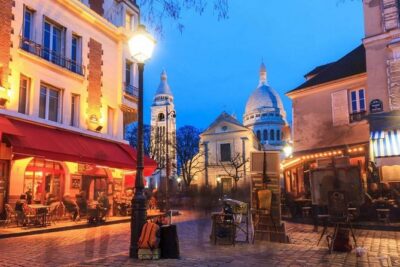
Next comes Place du Tertre, a famous square known for portraitists, painters, and caricaturists. It’s one of those spots where you can still sense the old Montmartre “make art in public” energy.
From here, the guide connects the square to bigger artist stories. You’ll also be pointed toward Picasso’s studio and Van Gogh’s House as part of the broader explanation of why artists like Toulouse-Lautrec, Monet, and Picasso (and others) pulled to Montmartre.
What you’re really doing at this stop: learning how Montmartre became an artist magnet. You’re not just hearing name-drops—you’re getting the reasons those artists were attracted to the area: the atmosphere, the creative community, and the mix of everyday life with a bohemian edge.
One practical note: Place du Tertre can get crowded. If you’re sensitive to noise, position yourself early, and don’t count on this being a quiet moment. Treat it like a working square.
Worth weighing up next to this Paris pick


Au Lapin Agile: the cabaret bar where art met hunger
Then you’ll see Au Lapin Agile, a cabaret bar tied to a story about Picasso exchanging paintings for food. It’s the kind of tale that sounds like legend, but it helps explain why Montmartre attracted artists beyond glamour.
This stop adds the human angle. It’s not only about masterpieces. It’s about how creative people survived, traded, and lived day to day in the district’s bohemian ecosystem.
Again, it’s brief. Use the time to look at the setting and let the guide connect it back to the wider Montmartre identity: cabaret energy + art networks + neighborhood grit.
Sacré-Cœur: the view, the architecture, and why it was built
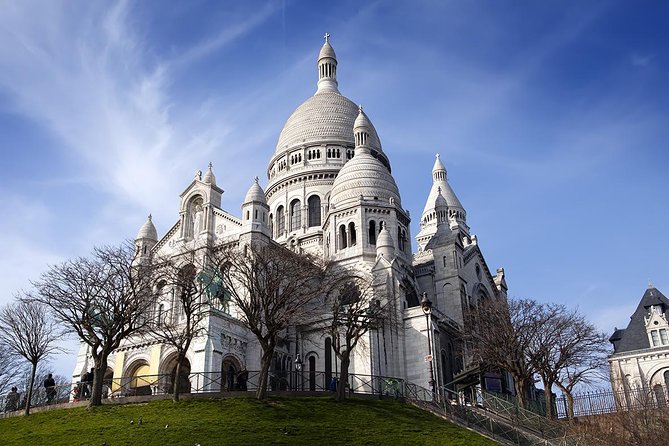
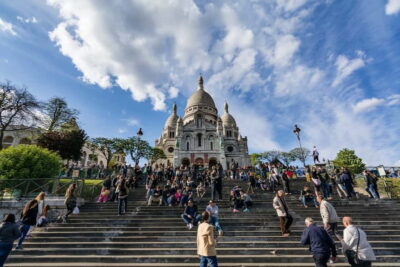
Now the tour shifts into its big payoff. You head toward the Basilique du Sacré-Cœur de Montmartre, and the guide shares history and architecture along the climb. You’ll also get some of the best views of Paris from up here.
Why this stop matters for your whole trip: Montmartre’s streets are charming, but the view is what makes it unforgettable. From Sacré-Cœur’s area, you can understand Paris’s scale—and how this hill became a stage for both religion and spectacle.
It’s also a great place to slow down just a touch and take photos. Don’t expect a long break, but you’ll have enough time to enjoy the perspective without feeling like you’re running.
Buste de Dalida at Place Dalida: a modern layer on the hill
You’ll pass La Place Dalida, which includes the Buste de Dalida, dedicated to a major gay icon. This stop is short, but it’s important because it adds a later cultural layer.
Montmartre changes over time. Dalida’s presence is a reminder that the district’s identity isn’t frozen in the painter era. It’s a neighborhood that keeps inventing new icons—sometimes in ways that surprised even people who think they only came for the old art.
Vigne du Clos Montmartre: Paris’s last authentic vineyard
Next is Vigne du Clos Montmartre, described as Paris’s last authentic vineyard. This is a sharp contrast to the cabaret-and-studio image you might start with.
Here’s what I find valuable: it breaks the stereotype. You’re not only walking through an artist museum. You’re walking through a place that still has agriculture roots right inside the city.
This stop helps you understand Montmartre as a hill with lived geography, not just a famous name.
Café des Deux Moulins: the Amélie connection you can actually see
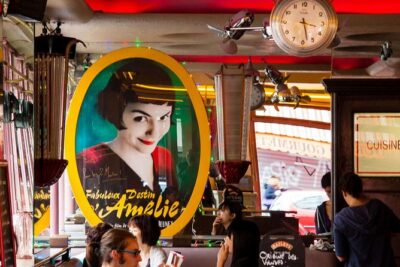
Then you’ll stop at Café des Deux Moulins, made famous by the film Amélie. This is one of the easiest ways to feel the “movie Paris” effect, because the café is real, in the same neighborhood, on the same walking route.
Use this stop in a smart way. Even if you’re not going to sit and order something (food and drinks aren’t included), you can still enjoy it as a scene you recognize—then immediately turn the recognition into context by using what the guide told you about the district’s bohemian evolution.
La Maison Rose: Picasso’s circle, behind the basilica
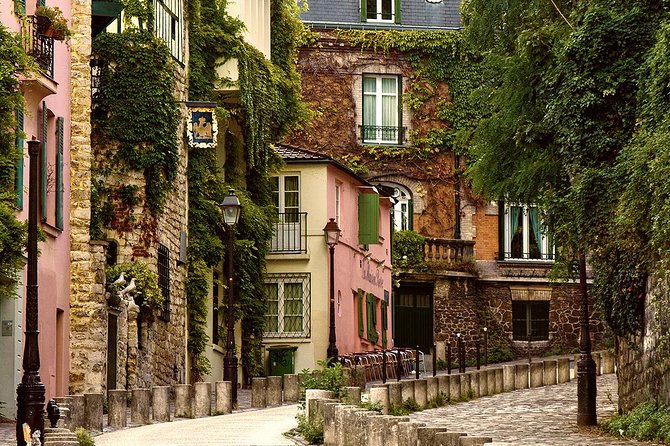
You’ll see La Maison Rose—the pink house behind Sacré-Cœur. It’s described as a famous spot once frequented by Picasso and many other artists.
This stop gives you a visual anchor. It’s the kind of place that makes you understand why artists felt inspired: it’s not just grand monuments. It’s quirky buildings, winding streets, and neighborhoods where people actually meet.
Since it’s short, focus on spotting it from the route and letting the guide’s story explain why it mattered to the artist community.
Place Pigalle: the red-light district context
Finally, you’ll reach Place Pigalle, where the tour points out Paris’s red-light district. This is the tour’s last layer: Montmartre’s adult entertainment history and how it shaped the vibe of the area.
It’s also a useful “finish line” because Pigalle sits close to what many visitors associate with nightlife, while Montmartre itself carries the art and view side. You’ll leave understanding how those worlds overlap in this part of Paris.
What to watch for during the walk (so it stays fun)
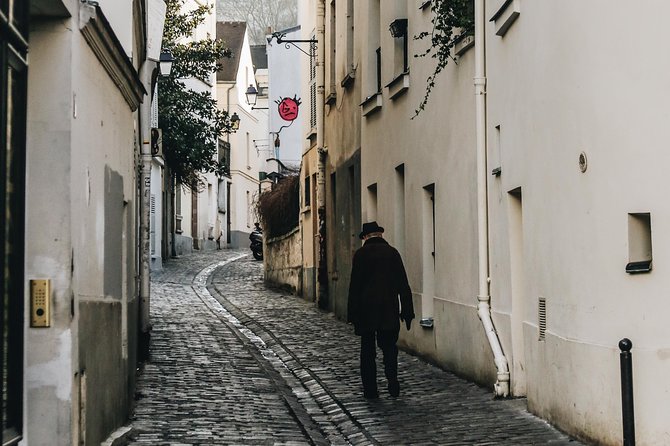
A tour like this is simple on paper, but the hill work is the reality. If you keep these points in mind, you’ll likely have a much smoother time:
- Plan for steep streets. Reviews mention uphill walking, even though guides often manage breaks.
- Go with the right pace mindset. This is not a slow café-hopping tour. The route is designed for short stops and steady movement.
- Position yourself early. When you want to hear the guide well, being closer helps, especially near busy corners.
- Bring a tip budget. The tour isn’t bundled with tipping, and many guides rely on it. Cash is often easiest (and I’ve seen this tip advice show up in the feedback).
Who this tour is best for
I’d point you toward this Montmartre walk if you want:
- An overview of the district that connects art history with street life
- A guided route that helps you not wander aimlessly in steep neighborhoods
- Stops tied to famous names and a couple pop-culture landmarks like Café des Deux Moulins
You’ll especially enjoy it if you like stories you can picture—cabaret origins, artists’ meeting places, and why a hill in Paris became a magnet for creatives.
If you hate walking hills or want long free time at each landmark, this may feel too fast. In that case, you might prefer a slower self-guided plan with fewer stops.
Should you book this Montmartre district walking tour?
I think it’s a strong value choice if you want a clear, guided way into Montmartre. At $31.44, you’re getting a structured path through the most important artistic and entertainment landmarks, plus city-view payoff at Sacré-Cœur—all with a guide who can make the places feel linked.
Book it if you’re okay with a walk-intensive evening and you’ll benefit from context. I’d skip it only if you need very low walking effort or you’re looking for long sitting time at cafes.
If you do book, pick good shoes, show up with time to spare at the start near Pl. Blanche, and treat it like a guided street story. That’s when this tour shines.
FAQ
How long is the Montmartre District Walking Tour?
It runs for about 2 hours (approx.).
Where does the tour start and end?
The tour starts at Sandemans New Paris Tour Montmartre, 5 Pl. Blanche, 75009 Paris, and finishes at Basilique du Sacré-Cœur de Montmartre, 35 Rue du Chevalier de la Barre, 75018 Paris.
What time does the tour begin?
The start time is 5:00 pm.
What’s included in the price?
The tour includes a local guide.
Is food or drinks included?
No, food and drinks are not included.
Is it suitable for children?
Children up to 13 years old can join for free.
More Tours in Paris
- Paris: Louvre Guided Tour with Reserved Access & Boat Cruise
★ 4.3 · 16,353 reviews - Paris: Big Bus Hop-On Hop-Off Tour with Optional Cruise
★ 4.4 · 13,279 reviews - Louvre Museum Masterpieces Guided Tour with Access
★ 4.5 · 12,023 reviews - Versailles: Skip-the-Line Tour of Palace and Gardens Access
★ 4.7 · 10,429 reviews - Paris: Louvre Overview, Exploration tour and Reserved Entry
★ 4.1 · 10,145 reviews
More Tour Reviews in Paris
- Paris: 1-Hour Seine Cruise departing from the Eiffel Tower
★ 4.4 · 77,472 reviews - Paris: Louvre Museum Timed-Entrance Ticket
★ 4.6 · 71,977 reviews - Disneyland® Paris 1-Day Ticket
★ 4.6 · 49,412 reviews - Paris: Versailles Palace and Gardens Full Access Ticket
★ 4.6 · 41,579 reviews - Paris: Arc de Triomphe Rooftop Tickets
★ 4.6 · 34,264 reviews
More of the Montmartre Hill
- Montmartre Hidden Gems and Scenic Highlights Walking Tour
★ 5.0 · 2,684 reviews - Montmartre Hill French Gourmet Food and Wine Tasting Walking Tour
★ 5.0 · 2,588 reviews - Paris: Montmartre Highlights Walking Tour with a Local Guide
★ 4.9 · 2,318 reviews - Paris: Montmartre Cheese, Wine & Pastry Guided Walking Tour
★ 4.8 · 2,255 reviews - The Secrets of Montmartre Walking Tour
★ 4.8 · 1,258 reviews
Fresh off the review desk in Paris
- Secrets of Paris Bike Tour in English or Dutch★ 5.0 · 5 reviews
- Paris: Mont Saint-Michel Day Tour with Chinese Tour Guide★ 5.0 · 5 reviews
- Private Street Art 2-Hour Guided Tour in Paris★ 4.5 · 5 reviews
- Orsay Museum Tour: 2h Highlights (Private & Small Group)★ 5.0 · 5 reviews
- Discover Paris in electric golf carts★ 4.0 · 5 reviews
- Paris Private Boat Tour with your own Captain Guide★ 5.0 · 5 reviews
Montmartre Tours, compared.
 ★ 5.0Montmartre Hidden Gems and Scenic Highlights Walking TourFrom $382,684 reviews
 ★ 5.0Montmartre Hill French Gourmet Food and Wine Tasting Walking TourFrom $1452,588 reviews
 ★ 4.9Montmartre Highlights Walking Tour with a Local GuideFrom $232,318 reviews
 ★ 4.8Montmartre Cheese, Wine & Pastry Guided Walking TourFrom $1272,255 reviews
The Secrets of Montmartre Walking TourFrom $331,258 reviews
★ 4.8Montmartre Cheese, Wine & Pastry Guided Walking TourFrom $1272,255 reviews
The Secrets of Montmartre Walking TourFrom $331,258 reviews
 ★ 4.1Sacré-Coeur and Montmartre Tour with Expert GuideFrom $281,027 reviews
 ★ 5.0Private Montmartre Food Tour with Wine, Cheese & PastriesFrom $3021,027 reviews
 ★ 5.0Paris Montmartre Food Tour – A Full French Meal by Do Eat BetterFrom $95877 reviews
Browse the lists this tour appears in