
Reviewed · NOTRE-DAME TOURS
Early Access Paris Notre Dame Cathedral Walking Tour
Notre-Dame with the crowds managed. This 2-hour guided walk on Île de la Cité mixes early-entry-style timing with big architecture views from the Seine, so you start understanding what you’re seeing before you step inside. I also liked how the route keeps moving, instead of milling around the same spot.
I love the Notre-Dame interior time—you get a focused introduction first, then you explore on your own with clear things to look for: cream limestone, soaring vaults, painted side chapels, and the new liturgical furniture. The most memorable details for me were the sculpted Christ scenes and the painted chapel ceiling with gold-leaf stars.
One thing to consider: even with early access, Notre-Dame is extremely popular after its reopening, and wait times can still happen. So this isn’t a magic wand that guarantees zero lines—what you’re paying for is expert guidance plus the best shot at smoother entry.
In This Review
- Key highlights worth planning around
- The real payoff: learning Notre-Dame before you enter
- Start at Place Louis Aragon, end by Pont Neuf
- Stop-by-stop: what each place adds to your Notre-Dame understanding
- Square Jean XXIII: Roman roots and a propaganda pillar angle
- Along the Seine: UNESCO river-bank views
- Île de la Cité: the island where Paris “stacks” its eras
- Notre-Dame Cathedral interior: restoration you can actually see
- The stone marker and execution-era context
- Parvis Notre-Dame (Place Jean-Paul II): Charlemagne and a redesigned plaza
- Prefecture de Police: an old building with WWII bullet impacts
- Marche aux fleurs: the flower market between cathedral and chapel
- Courthouse of Paris (Palais de Justice area): Roman roots of government
- Sainte-Chapelle upgrade: if you want the royal-kidney punch of Gothic
- Old prison and the Reign of Terror: Marie Antoinette’s confinement and guillotine counts
- Tour de l’Horloge: a medieval watchtower on a royal timeline
- An old square for pétanque: Henri IV’s first son’s setting
- Pont Neuf: the classic finish with views in every direction
- What you’re paying for at $71.20 (and why it can be worth it)
- Who this tour suits best (and who should choose differently)
- Practical tips so you don’t get annoyed mid-tour
- Should you book this Early Access Paris Notre-Dame tour?
- FAQ
- How long is the tour?
- Is Sainte-Chapelle included?
- Does the tour include food or hotel pickup?
- What does the tour cost?
- Do I need photo ID?
- Is Notre-Dame admission included?
Key highlights worth planning around
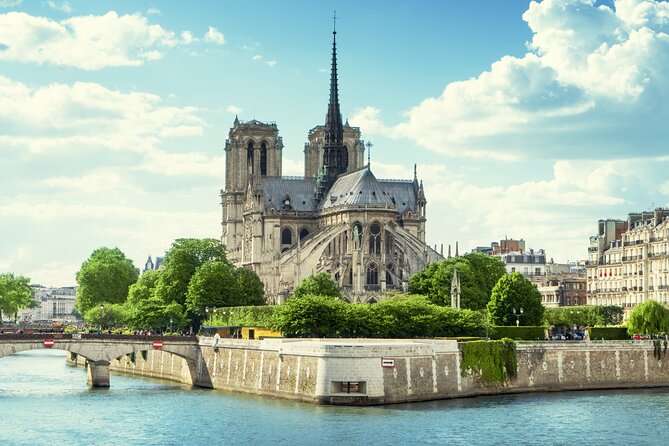
- Early-entry-style pacing at Notre-Dame even though waits can still vary
- A tight story loop on Île de la Cité with stops that explain what you’re looking at
- Notre-Dame time to explore independently after an orientation outside
- Optional Sainte-Chapelle upgrade with a dedicated interior visit
- Small group size (max 25) that generally keeps things from getting chaotic
- A Seine-to-Pont Neuf finish with classic views and an easy mental map of central Paris
The real payoff: learning Notre-Dame before you enter
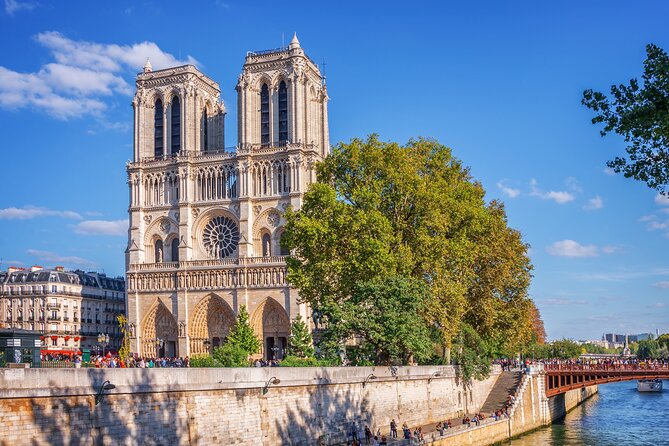
Notre-Dame feels like a landmark you already know—until you’re standing in front of it and realize how much of the building’s power comes from specific design choices. This tour gets you there with an approach that’s practical, not academic.
The guide sets you up outside with what to notice. Then, when you enter, you’re not just hunting for big “wow” moments. You’re looking for the details that make Gothic architecture feel almost engineered into light—vault lines, column thickness, and the way restored surfaces read differently than you expect.
I also like that the guides mentioned in past groups—people like Maja, Maya, Nina, Abbie, and Ife—are consistently described as warm and engaging. That matters at Notre-Dame, because you’ll spend a lot of time looking up. A good guide helps you do it with purpose.
More time around Notre-Dame and the old island
- Paris Île de la Cité and Notre-Dame Walking Tour With Crypt
★ 5.0 · 2,272 reviews - Paris: Notre-Dame Cathedral Exterior Tour
★ 3.9 · 1,722 reviews - Paris: The Notre Dame Experience with Multiple Tour Options
★ 4.7 · 1,612 reviews - Paris: Eternal Notre-Dame VR Experience Ticket
★ 4.4 · 1,150 reviews
Start at Place Louis Aragon, end by Pont Neuf
You start at Place Louis Aragon (75004) and finish at Pont Neuf (75001). No hotel pickup, so plan to arrive using public transport and a little walking. The tour runs about 2 hours and stays in the central “core” where you can keep exploring afterward.
Group size is capped at 25 travelers. In a place like Notre-Dame—where every minute is swallowed by queues—that cap makes a real difference. Smaller groups are easier to manage, and you spend less time waiting for everyone to catch up.
One logistics note that can affect your experience: the route includes cobblestones and some stairs/uneven ground. If your feet don’t love that, bring comfortable shoes and take your time.
Stop-by-stop: what each place adds to your Notre-Dame understanding
Here’s how the walk builds your mental picture of Paris—starting with ancient layers, then shifting to medieval power, and ending with the island’s finest “architectural runway” along the water.
Square Jean XXIII: Roman roots and a propaganda pillar angle
The tour begins at Square Jean XXIII, where archaeological excavations uncovered a pillar tied to propaganda. That Roman-era thread is a smart opener. It reminds you that this area wasn’t always “cathedral time.” It was always a stage for power—first political and economic, later religious and royal.
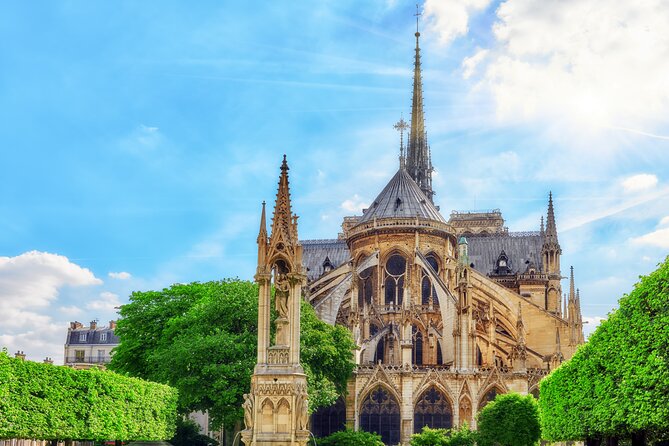
You’ll also get guidance on photo angles, especially for views that highlight Notre-Dame’s flying buttress from a distance. If you’re the type who likes collecting exterior landmarks for your future selfies, this is a good place to start.
Along the Seine: UNESCO river-bank views
Next comes a walk along the Seine, with a quick context stop about how the Seine and its central banks are part of a UNESCO World Heritage Site area. This is more than trivia. When you understand that the riverfront is protected for its urban and historical value, the bridges and façades stop feeling random.
Also, a river walk in between cathedral crowds is a relief. You get breathing space and horizon lines, not just stone walls.
Île de la Cité: the island where Paris “stacks” its eras
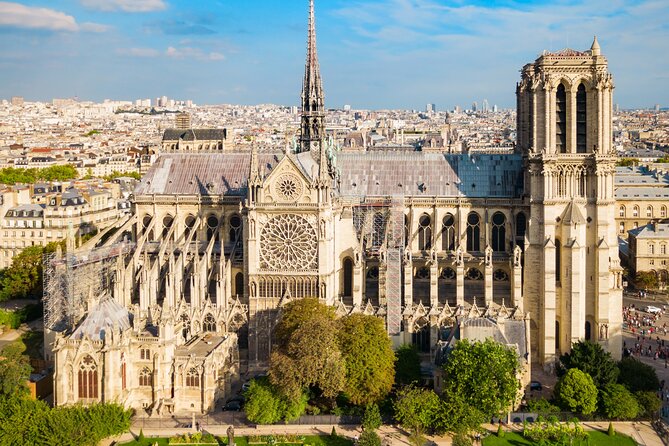
Then you’re into Île de la Cité—the island where the biggest monuments gather. The guide frames it as a concentrated “history hub,” with Notre-Dame and Sainte-Chapelle as the headline sites.
This stop is about orienting you. Even if you don’t memorize everything, you’ll start placing landmarks relative to each other: where the cathedral sits, where the royal chapel is, and how the island’s edges shape what you see from street level.
Worth weighing up next to this Paris pick

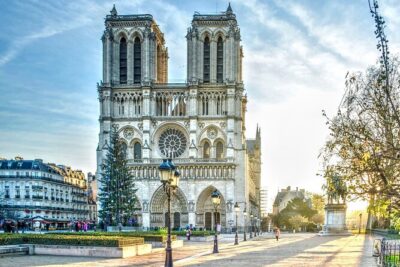
Notre-Dame Cathedral interior: restoration you can actually see
This is the centerpiece: you enter Notre-Dame de Paris for a guided orientation and an interior visit time.
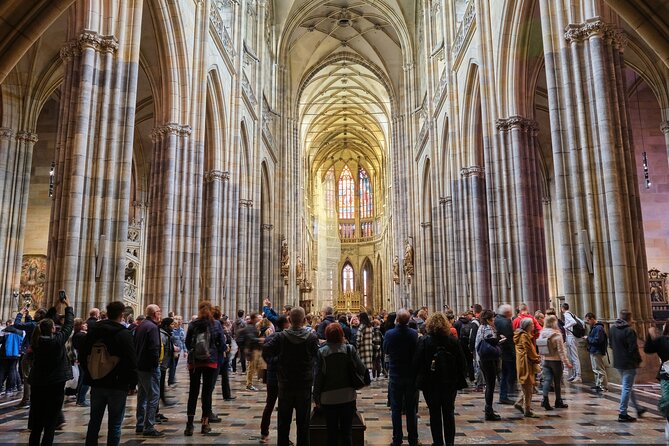
What makes this experience different right now is the visible effect of restoration. You’re not just entering a famous shell—you’re entering a cathedral where cream-colored limestone surfaces have been carefully cleaned, stripping away centuries of grime. The result can feel almost startling in how bright the vaults and walls read.
Inside, you’ll focus on:
- tall columns, thick structural elements, and soaring vaults
- sculpted scenes from the life of Christ in side chapels
- new liturgical furniture, including the altar
- painted chapel details, including a deep-blue ceiling with gold-leaf stars
- the circular stone feature at the crossing (described as an oculus-like element where the four vaults meet)
You’ll also spend time understanding the craftsmanship and scale of the restoration effort—over 2,000 workers and craftsmen are referenced in the tour context.
Important nuance (from how this tour is structured): the guide gives you a strong introduction and helps you know what to spot, but you may explore much of the interior on your own rather than having the guide physically stay beside you in every section. That can be good. It means you’re not trying to listen while also trying to squeeze around other groups.
The stone marker and execution-era context
After Notre-Dame, there’s a quick stop at the kind of stone marker used to measure distances in Paris, tied to the idea of coming back to the city, and also connected to a darker theme: where criminals used to repent before execution.
It’s a strange pivot—but in a useful way. Notre-Dame isn’t just art and architecture. This neighborhood is also where civic life, justice, fear, and spectacle used to collide.
Parvis Notre-Dame (Place Jean-Paul II): Charlemagne and a redesigned plaza
You then step onto Parvis Notre-Dame – Place Jean-Paul II, the plaza in front of the cathedral.
The tour explains that the plaza is being redesigned to open up toward the Seine and improve visitor flow. In plain terms: you’re seeing a space that’s actively adjusting to modern crowds, not just standing still as a museum piece.
You’ll also see the statue of Charlemagne and his guards, and the guide uses it as a springboard into medieval power—how rulers wanted to present legitimacy in stone.
Prefecture de Police: an old building with WWII bullet impacts
Next is a stop by the Préfecture de Police. You learn how the Paris Police Prefecture fits into emergency services and administrative functions, plus you get a visual reminder of WWII history: bullet impact on the building from the liberation period.
This stop works if you like your Paris with context. The island around Notre-Dame isn’t only about the Middle Ages—it’s also about modern state power and war.
Marche aux fleurs: the flower market between cathedral and chapel
Then comes Marche aux fleurs at Place Louis Lépine, between Notre-Dame and Sainte-Chapelle.
This flower market has attracted gardeners and curious passersby since 1830, and the tour notes that it includes both covered and open-air pavilions from around the 1900s. One practical caveat: it’s not always open, but the group still walks through the area.
If you’re traveling in a season where it’s closed, don’t worry—you’re still getting the “this is what used to happen here” feel of an ongoing street market culture.
Courthouse of Paris (Palais de Justice area): Roman roots of government
You also pass by the Palais de Justice law courts area. The tour ties it back to how the site was used for government as far back as Roman times, then carried forward through Merovingian and Capetian eras.
It’s another “power layers” moment, reinforcing that this island has always been the administrative center—first civic rule, later royal and judicial influence.
Sainte-Chapelle upgrade: if you want the royal-kidney punch of Gothic
If you upgrade, you add Sainte-Chapelle—a Gothic royal chapel built under King Louis IX. Construction began after 1238, and it was consecrated on 26 April 1248.
In the upgraded option, you get a later entry portion and time for photos plus a brief introduction of the exterior. Then you spend about 60 minutes on an interior visit.
This upgrade is a big deal for architecture lovers because Sainte-Chapelle is basically Gothic devotion turned into light-filled design. If you’re the kind of traveler who wants one more “wow” monument after Notre-Dame, this is the most logical add-on on the island.
Old prison and the Reign of Terror: Marie Antoinette’s confinement and guillotine counts
There’s also a stop connected to the old prison of Paris, tied to Marie Antoinette staying there for nine months. The tour places it in the French Revolution’s darkest chapter too: the Revolutionary Tribunal sentenced 2,639 people to execution by guillotine during the Reign of Terror.
This is heavy material, but the tour handles it as a history-anchoring stop, not a sensational one. If you want the medieval-to-Revolution story line of Île de la Cité, this fits.
Tour de l’Horloge: a medieval watchtower on a royal timeline
Next: Tour de l’Horloge, a 650-year-old clock tower. You learn it started as a watchtower for the security of the Royal Palace context.
The tour description emphasizes:
- rectangular shape
- about 47 meters high
- very thick walls (nearly a meter, per the tour notes)
- restorations across multiple periods (with mention of consolidating and later returning upper parts toward medieval appearance)
- the restored vaulted room on the fourth floor and upper levels
If you care about how buildings survive centuries, this is the kind of stop that makes the city feel less like scenery and more like a preserved machine.
An old square for pétanque: Henri IV’s first son’s setting
Then you reach an old square in Paris built by Henri IV for his first son, and it’s linked to a very French pastime: pétanque.
This is a nice change of pace. After Notre-Dame, prisons, and towers, you get a street-level “life in the city” moment where locals play a game right where power once arranged itself.
Pont Neuf: the classic finish with views in every direction
The tour ends on Pont Neuf, described as the oldest bridge in Paris. It’s a smart ending: you get wide views, and your eyes can finally reset.
You’ll get landmark sightlines to the Louvre, the Seine, the Eiffel Tower, the French Academy, and the Monnaie de Paris. Even if you don’t stop for more sightseeing, this view helps you connect the dots for the rest of your trip.
What you’re paying for at $71.20 (and why it can be worth it)
Notre-Dame’s entrance is free. That’s important. So the cost isn’t for the ticket—it’s for the experience design.
At $71.20 per person, you’re paying for:
- a first-class local expert guide who gives you the “what to notice” layer before you enter
- a structured walk so you don’t waste time figuring out where things are and why they matter
- a timed indoor visit at Notre-Dame with orientation so you see more than random tourists pointing upward
- the option to add Sainte-Chapelle (with a dedicated interior block) if you want extra cathedral-lovers content
If you’re a person who likes architecture details, this can be good value even without skip-the-line certainty. If you mainly want to see the exterior and take photos fast, you can DIY Notre-Dame. But you’ll likely spend more time wandering—and less time understanding what you’re looking at.
Who this tour suits best (and who should choose differently)
This works best for:
- first-timers who want a guided orientation to Île de la Cité
- architecture and history lovers who appreciate restoration details
- travelers who like a plan but still want time to look around inside Notre-Dame
- people who want an optional “bonus” monument in Sainte-Chapelle
It’s less ideal if:
- you expect guaranteed skip-the-line entry at Notre-Dame. Wait times can still be influenced by crowds.
- you have limited mobility. The tour notes it’s not recommended due to uneven surfaces, cobblestones, hills, stairs, and inclines.
Practical tips so you don’t get annoyed mid-tour
A few things to do before you leave the apartment:
- Wear comfortable shoes. This walk includes uneven cobblestones and stairs.
- Bring water. The tour explicitly warns you’ll be waiting in the sun.
- For Sainte-Chapelle upgrades, bring photo ID.
- Follow the church dress code: bring a scarf or jumper to cover your shoulders.
- Expect church rules like restricted areas and a quiet-in-spots vibe once inside Notre-Dame.
Also, check your meeting location carefully. Some people arrive late when they assume a meeting point is closer to the cathedral than it actually is.
Should you book this Early Access Paris Notre-Dame tour?
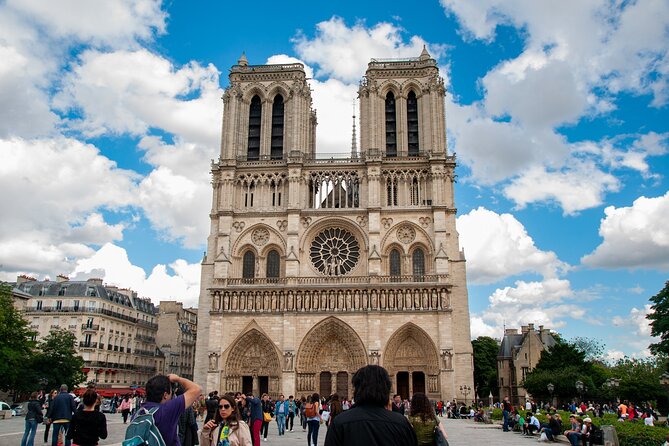
Yes—book it if you want a guided walk that turns Notre-Dame from a famous photo into a building you can actually read. The strongest reason to choose it is the way the tour gives you an outside orientation, then hands you clear interior targets. That’s why so many guides get repeat praise for making time fly without turning it into a lecture.
Skip it or consider a different option if:
- you mainly want “enter whenever” without any guide orientation
- you’re counting on zero waiting at Notre-Dame after reopening
If you’re on the fence, go for the upgrade to Sainte-Chapelle. It’s the best follow-up monument on this route, and it adds a genuinely different kind of Gothic experience.
FAQ
How long is the tour?
The walking tour is approximately 2 hours.
Is Sainte-Chapelle included?
Sainte-Chapelle entry is an optional upgrade. If you upgrade, you get a later entry portion and a 60-minute interior visit.
Does the tour include food or hotel pickup?
No. Hotel pickup/drop-off and transportation aren’t included, and food and drink aren’t included either.
What does the tour cost?
It costs $71.20 per person.
Do I need photo ID?
Photo ID is required if you upgrade to enter Sainte-Chapelle.
Is Notre-Dame admission included?
Notre-Dame Cathedral interior time is included in the experience. Note that Notre-Dame entrance is free, but the tour’s services (guided orientation and timed visit structure) are what you’re paying for. Wait times can still be affected by crowds after reopening.
##
More Tours in Paris
- Paris: Louvre Guided Tour with Reserved Access & Boat Cruise
★ 4.3 · 16,353 reviews - Paris: Big Bus Hop-On Hop-Off Tour with Optional Cruise
★ 4.4 · 13,279 reviews - Louvre Museum Masterpieces Guided Tour with Access
★ 4.5 · 12,023 reviews - Versailles: Skip-the-Line Tour of Palace and Gardens Access
★ 4.7 · 10,429 reviews - Paris: Louvre Overview, Exploration tour and Reserved Entry
★ 4.1 · 10,145 reviews
More Tour Reviews in Paris
- Paris: 1-Hour Seine Cruise departing from the Eiffel Tower
★ 4.4 · 77,472 reviews - Paris: Louvre Museum Timed-Entrance Ticket
★ 4.6 · 71,977 reviews - Disneyland® Paris 1-Day Ticket
★ 4.6 · 49,412 reviews - Paris: Versailles Palace and Gardens Full Access Ticket
★ 4.6 · 41,579 reviews - Paris: Arc de Triomphe Rooftop Tickets
★ 4.6 · 34,264 reviews
Around Notre-Dame, More to See
- Paris Île de la Cité and Notre-Dame Walking Tour With Crypt
★ 5.0 · 2,272 reviews - Paris: Notre-Dame Cathedral Exterior Tour
★ 3.9 · 1,722 reviews - Paris: The Notre Dame Experience with Multiple Tour Options
★ 4.7 · 1,612 reviews - Paris: Eternal Notre-Dame VR Experience Ticket
★ 4.4 · 1,150 reviews - Paris:Notre-Dame Cathedral Interior and Exterior Guided Tour
★ 4.7 · 1,128 reviews
Fresh off the review desk in Paris
- Secrets of Paris Bike Tour in English or Dutch★ 5.0 · 5 reviews
- Paris: Mont Saint-Michel Day Tour with Chinese Tour Guide★ 5.0 · 5 reviews
- Private Street Art 2-Hour Guided Tour in Paris★ 4.5 · 5 reviews
- Orsay Museum Tour: 2h Highlights (Private & Small Group)★ 5.0 · 5 reviews
- Discover Paris in electric golf carts★ 4.0 · 5 reviews
- Paris Private Boat Tour with your own Captain Guide★ 5.0 · 5 reviews
Notre-Dame Tours, compared.
 ★ 5.0Paris Île de la Cité and Notre-Dame Walking Tour With CryptFrom $482,272 reviews
 ★ 3.9Notre-Dame Cathedral Exterior TourFrom $291,722 reviews
 ★ 4.7The Notre Dame Experience with Multiple Tour OptionsFrom $61,612 reviews
 ★ 4.4Eternal Notre-Dame VR Experience TicketFrom $361,150 reviews
 ★ 4.7Notre-Dame Cathedral Interior and Exterior Guided TourFrom $151,128 reviews
 ★ 4.1Notre-Dame Guided Tour with Multiple Entry OptionsFrom $221,107 reviews
 ★ 5.0Paris Highlights Bike Tour: Eiffel Tower, Louvre and Notre-DameFrom $54853 reviews
 ★ 4.6Notre-Dame The Restored Masterpiece Guided TourFrom $5812 reviews
Browse the lists this tour appears in