
Reviewed · MONTMARTRE TOURS
Fat Cat gets the Early Bird: Montmartre
Waking up early can pay off fast in Montmartre. This 2-hour, small-group Early Bird walk is built for one goal: see the creative streets before the crush. You’ll follow your guide through winding lanes, hear how the neighborhood evolved, and end with time inside Sacré Coeur while the day is still fresh.
I especially like the small-group feel (max 15). It keeps the pace human, helps you ask questions, and means you’re not just marching through sights. I also like the itinerary structure: it doesn’t only hit the big-name views; it connects places like Picasso’s early Paris home, artist meeting points, and a love-themed wall into one logical story.
One consideration: this is a walking tour with a moderate fitness level expectation. Montmartre’s slopes and steps add up, so if you’re sensitive to hills or crowds, go in with sensible shoes and a calm mindset.
In This Review
- Key things that make this tour worth it
- Montmartre at 8:00 am: why this start time matters
- Small-group walking (max 15): the difference you’ll feel
- The route, in plain human terms: what each stop gives you
- One of Paris’ most beautiful churches: your first big anchor
- A quaint square full of art: where the neighborhood’s creative pulse lives
- A square dedicated to a beautiful woman: a quick lesson in who gets remembered
- A 19th-century artists meeting point: why this hill pulled creative people in
- Picasso’s first home in Paris: seeing an origin point, not just a name
- A wall dedicated to love: the modern layer on an old hill
- The most famous cabaret in the world: seeing the legend from the street
- Sacré Coeur free time: how to use it well
- Price and value: $170.81 for 2 hours, and what you’re paying for
- Where you start and where you end (and why it matters)
- Practical tips that will keep your morning smooth
- Dress code for churches: avoid the most common headache
- Walking pace and fitness
- Weather-proof planning
- Tickets and what to expect
- Guides: what the best ones do differently here
- Should you book the Early Bird Montmartre walk?
- FAQ
- What time does the tour start?
- How long is the Early Bird Montmartre tour?
- How many people are in the group?
- Is there free time at Sacré Coeur?
- What’s the dress code for churches?
- Do I need to bring food or transportation?
Key things that make this tour worth it
- Early start time (8:00 am) to beat lines and get space for photos
- Small group up to 15 for a more personal, question-friendly walk
- Free time inside Sacré Coeur instead of only viewing it from outside
- Stop-by-stop storytelling that ties art, artists, and entertainment together
- Hidden-landmark hunting through side streets and lesser-known corners
- Weather-proof planning: it runs in all weather, so dress accordingly
Montmartre at 8:00 am: why this start time matters
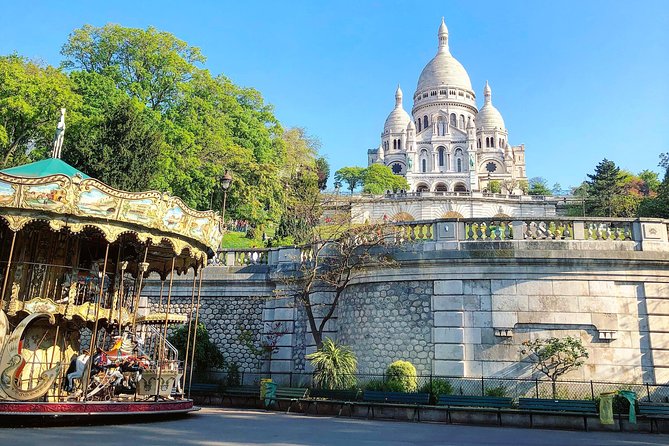
Montmartre rewards an early start. By the time many tours begin later in the morning, the streets are already busy, viewpoints are harder to enjoy, and photos turn into shoulder-to-shoulder choreography. Starting at 8:00 am is how you get breathing room on steep lanes and around major landmarks like Sacré Coeur.
It also changes the vibe of the neighborhood. In the early hours, you’re more likely to see Montmartre the way locals experience it—life happening on the street, not just staged for sightseeing. And because your tour includes free time inside Sacré Coeur, you’ll feel the benefit of earlier timing most at that stop.
Keep climbing: more of the Montmartre hill
- Montmartre Hidden Gems and Scenic Highlights Walking Tour
★ 5.0 · 2,684 reviews - Montmartre Hill French Gourmet Food and Wine Tasting Walking Tour
★ 5.0 · 2,588 reviews - Paris: Montmartre Highlights Walking Tour with a Local Guide
★ 4.9 · 2,318 reviews - Paris: Montmartre Cheese, Wine & Pastry Guided Walking Tour
★ 4.8 · 2,255 reviews
Small-group walking (max 15): the difference you’ll feel
With a maximum of 15 travelers, this doesn’t feel like a group parade. Your guide can adjust the pace, slow down at the spots worth watching, and steer you toward details you’d probably miss alone—like the little artistic references tucked into squares and street corners.
This size also matters for a walking tour. If you’ve ever done a large walking group in Paris, you know the problem: someone always gets left behind, or the leader can’t stop when a question pops up. Here, the “guide in the lead” setup works because the group isn’t too big to manage quickly.
The route, in plain human terms: what each stop gives you
This tour is about connections. It strings together Montmartre’s religious grandeur, bohemian art scenes, and entertainment legacy so you understand why the neighborhood looks the way it does today.
One of Paris’ most beautiful churches: your first big anchor
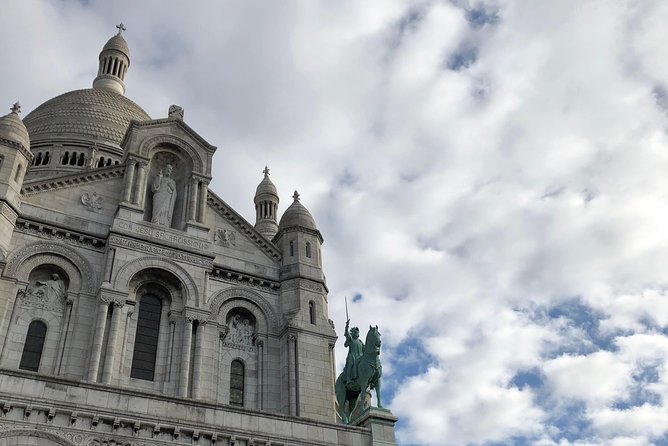
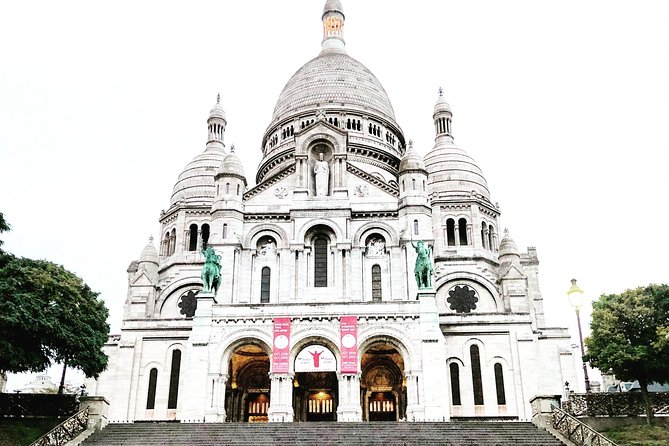
The tour starts with a major church stop—one of those Paris landmarks that immediately changes your perspective. Even if you’re not the religious-stuff person, you’ll probably appreciate the building as art and architecture. This is also a good “orientation” moment: once you see how the hilltop shapes views, the rest of Montmartre makes more sense.
A quaint square full of art: where the neighborhood’s creative pulse lives
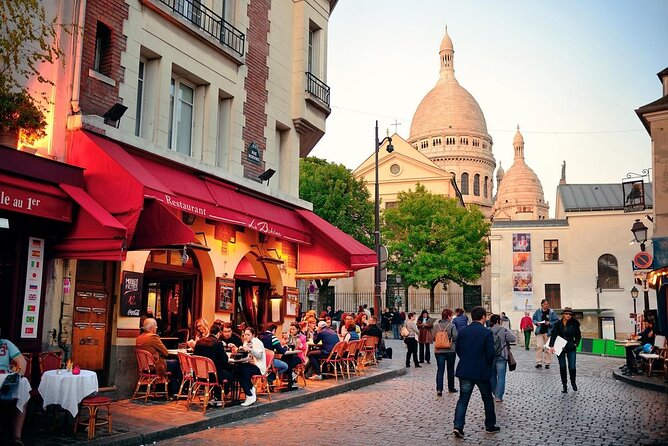
Then you move into a smaller, human-scale square known for art. This kind of stop is valuable because it shifts you from “looking at Montmartre” to understanding how art and street culture mix here. The guide can point out what’s functional versus what’s purely decorative, and you’ll start noticing how Montmartre tells stories through street-level details.
A square dedicated to a beautiful woman: a quick lesson in who gets remembered
Next comes a square dedicated to a beautiful woman. Montmartre has a long memory—who’s honored in public spaces tells you what the neighborhood wanted to celebrate. Even without turning it into a museum lesson, this stop helps you read the symbolism around you.




A 19th-century artists meeting point: why this hill pulled creative people in
After that, you reach a place that served as a meeting point for artists in the 19th century. This matters because it explains Montmartre’s reputation. The neighborhood didn’t become an artist magnet by accident; it offered a creative atmosphere where people could experiment and share ideas.
If you like art history but hate long lectures, this is the sweet spot. You’re walking, moving between locations, and the guide’s commentary can keep the story tight. It’s also the part of the tour that gives context to the neighborhood you’ll keep seeing later on your own.
Picasso’s first home in Paris: seeing an origin point, not just a name
Then you hit Picasso’s first home in Paris—a stop that’s usually a highlight. Knowing that this address connects to Picasso gives Montmartre a specific creative lineage, not just a general “artists lived here” feeling.
The payoff for you: you’ll stop thinking of Picasso as a distant museum artist and start seeing him as part of an actual neighborhood. That makes subsequent art-related Paris stops more meaningful, because you’re already practicing that way of seeing.
A wall dedicated to love: the modern layer on an old hill
Next is the wall dedicated to love. This is a different tone from the 19th-century artist story. It shows that Montmartre’s creativity didn’t end with painters and poets. Instead, the neighborhood keeps remixing itself with new public art and modern messages.
It’s also a practical stop for photos. You’ll likely have a bit of time to look closely and take pictures without rushing, which is exactly what you want on a morning walk.
The most famous cabaret in the world: seeing the legend from the street
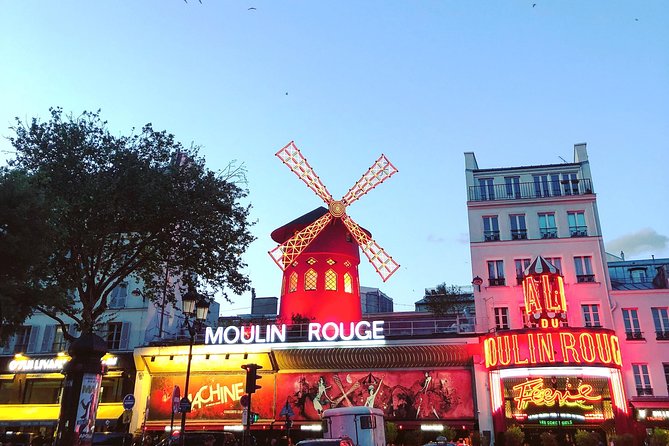
Finally, you finish near the world’s most famous cabaret. You’re not going inside here—this is about the neighborhood setting and what the venue represents culturally. You’ll get a sense of how Montmartre sells its mythology, even while the surrounding streets remain grounded in everyday life.
This stop also helps you understand the contrast that makes Montmartre fun: sacred spaces up on the hill, art squares in the middle, and showbiz energy at the edge.
Sacré Coeur free time: how to use it well
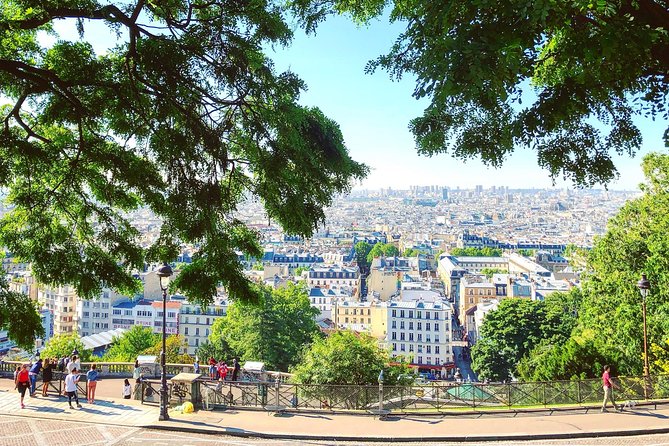
One of the smartest parts of this tour is that it includes free time inside Sacré Coeur (not just an exterior photo stop). Early in the day, you’re more likely to get a calmer visit, with less pressure to hurry.
During your time inside, I recommend two things:
- Take a slow look first, then go back for the details you missed.
- If you’re short on time elsewhere in Paris, treat this as your “sit and absorb” stop rather than a quick glance.
Because you’re on a walking schedule, it’s tempting to run through everything. Don’t. Sacré Coeur is one of those places where a slower pace actually helps you feel the space.
Price and value: $170.81 for 2 hours, and what you’re paying for
At $170.81 per person for about 2 hours, this isn’t a budget item. But it also isn’t trying to be one. You’re paying for a guide, a small-group limit, a smart early start, and targeted stops that stitch together the neighborhood’s story.
Here’s how to think about the value:
- If you’d otherwise visit Montmartre solo, you’d likely spend extra time just figuring out where to go and what order makes sense.
- If you’re short on days, the early timing can save you the frustration of lines and crowds—especially around Sacré Coeur.
- If you care about context, not only sightseeing, the guided commentary is where the money shows up.
If you’re the kind of traveler who prefers to wander with no plan, you might be better off using that time and money to explore Montmartre at your own pace. But if you want your morning to be efficient and meaningful, this price starts to look more reasonable.
Where you start and where you end (and why it matters)
The tour starts at 72 Blvd Marguerite de Rochechouart, 75018 Paris at 8:00 am, and it ends at 82 Bd de Clichy, 75018 Paris. That end point is useful: it puts you closer to transit links and makes it easier to continue your day without backtracking up and down the hill.
Also, because this is near public transportation, you’re not stuck committing to a long walk just to reach the meeting point. Still, give yourself a little buffer—Montmartre mornings can be tight when you’re matching a meeting location with real-world walking time.
Practical tips that will keep your morning smooth
Dress code for churches: avoid the most common headache
This tour includes a place of worship, and the dress code is specific. You’ll need shoulders and knees covered. That means no shorts and no sleeveless tops for both men and women.
If you’re traveling light, pack a thin layer you can throw over your outfit. It’s not just for comfort—it’s for avoiding refused entry and losing time.
Walking pace and fitness
You should plan for moderate physical fitness. Montmartre includes climbs and steps. Good shoes matter more than you think, especially if the weather is slick.
Weather-proof planning
The tour operates in all weather conditions. If rain, wind, or cold is in the forecast, dress for it. You’ll still get the walking tour experience—just with more “Paris-style” weather coping.
Tickets and what to expect
You’ll receive a mobile ticket, and you’ll get confirmation at booking time. This is helpful when you’re juggling multiple reservations in a single trip.
Guides: what the best ones do differently here
The tone of the tour is strongly shaped by the guide. In the standout Montmartre experiences associated with Fat Cat Tours, names like Adam and Hugo come up for being especially engaging—both for their storytelling and for how they make history feel like part of the walk, not something separate.
One detail I appreciate from those descriptions: the guides don’t just talk at you. They ask questions and keep you actively noticing things. That makes the difference between a tour that feels like a lecture and one that feels like you’re walking with a smart friend who knows where to look.
Should you book the Early Bird Montmartre walk?
Book it if:
- You want Montmartre before it gets crowded.
- You’d rather have a plan that makes sense than random wandering.
- You care about art and culture context, not just postcard photos.
- You’re comfortable with a moderate walking route and you can handle early morning.
Skip it (or consider another option) if:
- You want zero structure and prefer to roam freely.
- You have trouble with hills and stairs, even with good shoes.
- You don’t want to deal with the dress code for places of worship.
My call: this is a strong choice for a first or second morning in Paris when you want Montmartre to feel cohesive. The early start, small group size, and the Sacré Coeur time combine into a morning that’s efficient without feeling rushed.
FAQ
What time does the tour start?
It starts at 8:00 am.
How long is the Early Bird Montmartre tour?
The duration is about 2 hours.
How many people are in the group?
This experience has a maximum of 15 travelers.
Is there free time at Sacré Coeur?
Yes. Free time inside Sacré Coeur is included.
What’s the dress code for churches?
You need shoulders and knees covered. That means no shorts or sleeveless tops. If you don’t meet the dress requirements, you may be refused entry.
Do I need to bring food or transportation?
Food and drinks aren’t included, and there’s no hotel pickup/drop-off or transportation to/from attractions included. The tour is near public transportation, though.
More Tour Reviews in Paris
- Paris: 1-Hour Seine Cruise departing from the Eiffel Tower
★ 4.4 · 77,472 reviews - Paris: Louvre Museum Timed-Entrance Ticket
★ 4.6 · 71,977 reviews - Disneyland® Paris 1-Day Ticket
★ 4.6 · 49,412 reviews - Paris: Versailles Palace and Gardens Full Access Ticket
★ 4.6 · 41,579 reviews - Paris: Arc de Triomphe Rooftop Tickets
★ 4.6 · 34,264 reviews
More of the Montmartre Hill
- Montmartre Hidden Gems and Scenic Highlights Walking Tour
★ 5.0 · 2,684 reviews - Montmartre Hill French Gourmet Food and Wine Tasting Walking Tour
★ 5.0 · 2,588 reviews - Paris: Montmartre Highlights Walking Tour with a Local Guide
★ 4.9 · 2,318 reviews - Paris: Montmartre Cheese, Wine & Pastry Guided Walking Tour
★ 4.8 · 2,255 reviews - The Secrets of Montmartre Walking Tour
★ 4.8 · 1,258 reviews
Fresh off the review desk in Paris
- Secrets of Paris Bike Tour in English or Dutch★ 5.0 · 5 reviews
- Paris: Mont Saint-Michel Day Tour with Chinese Tour Guide★ 5.0 · 5 reviews
- Private Street Art 2-Hour Guided Tour in Paris★ 4.5 · 5 reviews
- Orsay Museum Tour: 2h Highlights (Private & Small Group)★ 5.0 · 5 reviews
- Discover Paris in electric golf carts★ 4.0 · 5 reviews
- Paris Private Boat Tour with your own Captain Guide★ 5.0 · 5 reviews
Montmartre Tours, compared.
 ★ 5.0Montmartre Hidden Gems and Scenic Highlights Walking TourFrom $382,684 reviews
 ★ 5.0Montmartre Hill French Gourmet Food and Wine Tasting Walking TourFrom $1452,588 reviews
 ★ 4.9Montmartre Highlights Walking Tour with a Local GuideFrom $232,318 reviews
 ★ 4.8Montmartre Cheese, Wine & Pastry Guided Walking TourFrom $1272,255 reviews
The Secrets of Montmartre Walking TourFrom $331,258 reviews
★ 4.8Montmartre Cheese, Wine & Pastry Guided Walking TourFrom $1272,255 reviews
The Secrets of Montmartre Walking TourFrom $331,258 reviews
 ★ 4.1Sacré-Coeur and Montmartre Tour with Expert GuideFrom $281,027 reviews
 ★ 5.0Private Montmartre Food Tour with Wine, Cheese & PastriesFrom $3021,027 reviews
 ★ 5.0Paris Montmartre Food Tour – A Full French Meal by Do Eat BetterFrom $95877 reviews
Browse the lists this tour appears in