
Reviewed · MONTMARTRE TOURS
Learn the art of street photography in the heart of Montmartre!
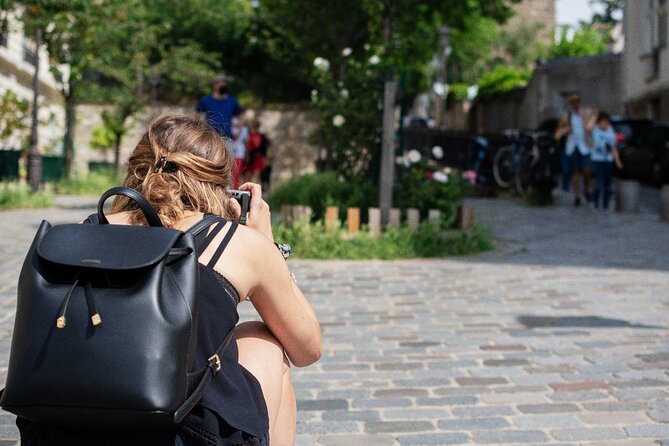
Montmartre teaches your eye to slow down. This 2-hour street photography walking session in Paris centers on learning how to see scenes the way a photographer does, not just taking pictures. You’ll move through classic Montmartre streets and viewpoints with guidance from Clara, who helps you turn everyday moments into photos with storytelling and composition.
Two things I love about this experience are the hands-on coaching and the chance to work at the pace of a real neighborhood. It’s not a lecture; you practice while you walk, and you get to explore Montmartre’s rooftops, cemetery area, and landmarks as you learn what to frame and why. A second win is the flexible tech angle: you can bring whatever camera you have, including a smartphone.
One consideration: it’s a true walking experience for about 2 hours, so comfortable shoes really matter. If you’re planning to bring heavier gear like a tripod, you’ll want to think about how you’ll carry it over cobblestones.
In This Review
- Key things you’ll notice right away
- Paris street photography training, but with a neighborhood heartbeat
- Meet at Place des Abbesses, then start walking like a photographer
- What Clara actually teaches: composition, choices, and photo storytelling
- Montmartre streets: where you learn to find the shot without forcing it
- Rooftop views and landmarks: turning big scenery into confident frames
- The cemetery segment: learning mood and detail in a quieter pocket
- Smartphone-friendly coaching (yes, iPhone tricks included)
- Gear and comfort: what to bring for an easy two-hour shoot
- Price and value: what $165.49 buys you in real skill
- Weather, timing, and the day vs night choice
- Who this tour is best for (and who might feel bored)
- Should you book this Montmartre street photo lesson?
- FAQ
- How long is the Montmartre street photography session?
- Is the tour daytime or can I request a night session?
- Where do I meet, and where does the tour end?
- Do I need to bring a camera?
- Is smartphone photography welcome?
- What should I wear or bring for the walk?
- Is this tour private?
- What happens if the weather is bad, or I need to cancel?
Key things you’ll notice right away
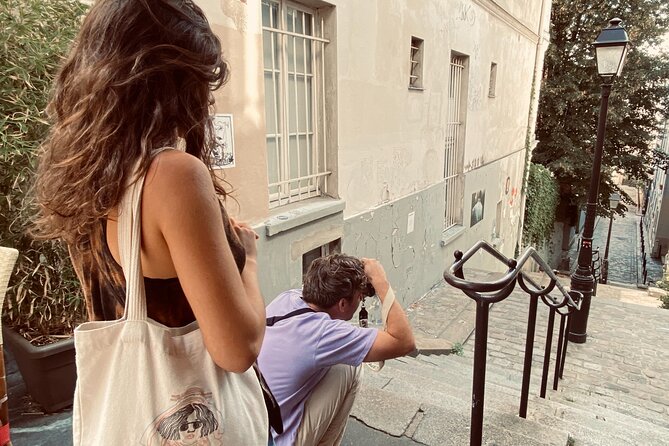
- Clara’s street-level guidance: you learn what to look for while you’re actually shooting
- Real Montmartre variety: streets, rooftop views, and landmark stops keep your photos from feeling repetitive
- Composition + storytelling, not just settings: you practice choices that make images feel intentional
- Any camera is welcome: bring a DSLR, mirrorless, point-and-shoot, or smartphone and talk it through beforehand
- A personal walking pace: the session is led as a group walk tailored to your shooting questions
- A parting gift: a small keepsake to remind you of your Paris creative time
Paris street photography training, but with a neighborhood heartbeat
Street photography sounds simple until you’re standing there wondering what’s worth photographing. This tour focuses on the basics that make photos stronger: how to frame a scene, how to guide the viewer’s eye, and how to think about a sequence (even when you only have one shot). In Montmartre, that matters because the streets are visually busy in the best way.
You’re walking through an area that feels lived-in rather than staged. That’s a big part of why a dedicated guide helps: it’s easier to spot photo opportunities when someone points you toward angles and details you might otherwise miss. You’re also learning to slow down long enough to notice gestures, lines, and layers—things that often get erased when you sprint from landmark to landmark.
The session runs about 2 hours in daytime unless you request a night session. Even if you’re only visiting Paris for a short time, you’ll get a creative framework you can use the next day, too.
Keep climbing: more of the Montmartre hill
- Montmartre Hidden Gems and Scenic Highlights Walking Tour
★ 5.0 · 2,684 reviews - Montmartre Hill French Gourmet Food and Wine Tasting Walking Tour
★ 5.0 · 2,588 reviews - Paris: Montmartre Highlights Walking Tour with a Local Guide
★ 4.9 · 2,318 reviews - Paris: Montmartre Cheese, Wine & Pastry Guided Walking Tour
★ 4.8 · 2,255 reviews
Meet at Place des Abbesses, then start walking like a photographer
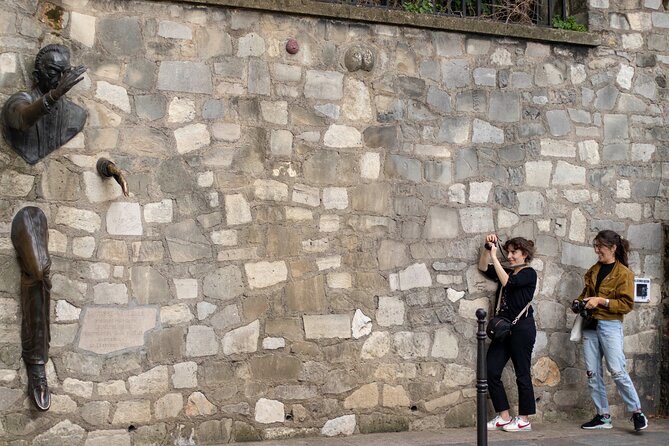
Your tour starts at Place des Abbesses (Pl. des Abbesses, 75018 Paris). It ends back at the meeting point, so you don’t have to worry about navigating across town after the shoot.
From a practical standpoint, that “start and finish in one place” setup is great for planning your day. You can pair it with other Montmartre time, or keep it standalone without needing extra transport.
Because this is a walking session, what you do before you start makes a difference. I’d show up wearing shoes you’d happily use for a long stroll on uneven ground. A light jacket helps, even in daytime, because weather can shift quickly in open areas and on hills.
What Clara actually teaches: composition, choices, and photo storytelling
The core promise here is learning street photography basics—composition and storytelling—with coaching as you go. That means you’re not just collecting images; you’re learning how to make decisions.
Here’s what that looks like in practice:
- You’ll get direction on what to include in the frame and what to leave out.
- You’ll learn to think about the mood created by light, spacing, and perspective.
- You’ll be encouraged to take your time and make deliberate choices instead of snapping nonstop.
One of the strongest themes from the guide’s approach is patience. If you’ve ever felt stuck because you kept photographing the same kind of scene, this structure helps you break out of autopilot. It also works well if you’re using a smartphone, since the lesson is about seeing and composing—not about having the “right” camera.
Montmartre streets: where you learn to find the shot without forcing it
Montmartre is famous, but street photography isn’t about chasing the postcard angle. This walking segment is where the lesson becomes real: you practice noticing patterns—curves, shadows, doorway shapes, and the way people move through tight spaces.
When you’re shooting streets, two traps are common:
1) Photographing too much of everything.
2) Photographing only the big tourist moments.
The guidance you get helps you aim your camera toward small visual stories that feel natural. Instead of hunting for one perfect frame, you build a set of photos that share a theme: texture, movement, street life, and the layered look of the neighborhood.
You’ll also walk long enough that your eye starts adjusting. After a while, you stop asking what to shoot and start asking what to emphasize. That’s a real skill you can take home.
Rooftop views and landmarks: turning big scenery into confident frames
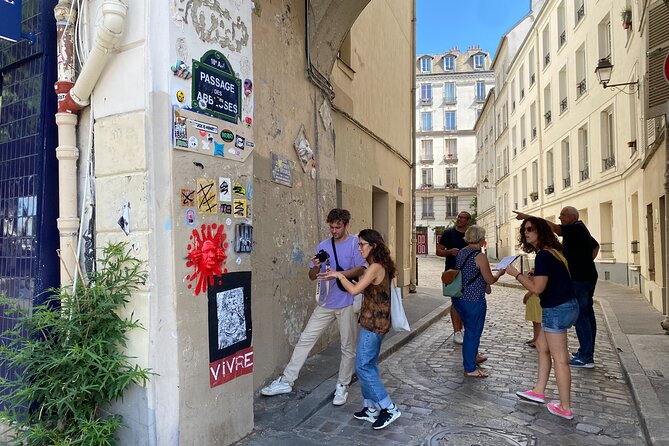
Montmartre has viewpoints, rooftops, and recognizable landmarks. The benefit for street photography is that these places let you change your approach—wide context plus people-scale detail.
When you reach rooftop and landmark areas, you get a chance to practice:
- Framing from above (how the geometry of rooftops guides the eye)
- Using scale (making people feel part of the scene, not pasted in)
- Choosing vantage points that create depth, not flat compositions
A drawback here is simple: these areas can be busy. But a good street photographer’s job is to work around that. The guide’s help helps you shift your aim from crowd coverage to clean visual storytelling—finding lines and moments even when the view is crowded.
The cemetery segment: learning mood and detail in a quieter pocket
One of the listed ways the tour explores Montmartre is through the cemetery area. That kind of stop is valuable for street photography because the tone changes. You’re not only dealing with motion and crowds; you’re dealing with stillness, textures, and quieter details.
Even if you’re not sure what to photograph in a cemetery space, the lesson matters: it teaches you how to see subtle subjects—shapes, light on stone, and composition that respects the mood. It’s also a good break from constant hill-walking, even though you’re still moving as part of the session.
This is also where you’ll learn something practical: storytelling isn’t only dramatic. Sometimes it’s gentle, spare, and focused. That’s a helpful reminder if your photos always feel like they’re trying too hard.
Worth weighing up next to this Paris pick
Smartphone-friendly coaching (yes, iPhone tricks included)
Not everyone travels with a dedicated camera. The tour explicitly welcomes whatever camera or lens you have, and you can discuss equipment before meeting. That matters because the lesson can adapt.
One review highlighted that the guide helped with smartphone photography, including learning tricks for an iPhone. The takeaway for you is that the coaching isn’t limited to people who own expensive gear. The lesson centers on what to do with the image you can capture right now.
If you plan to shoot on your phone, bring a charged device and consider how you’ll manage power if you’re shooting throughout the session. Also, be ready to adjust your approach: street photography on a smartphone is often about quick framing and fast decision-making rather than lens swaps.
Gear and comfort: what to bring for an easy two-hour shoot
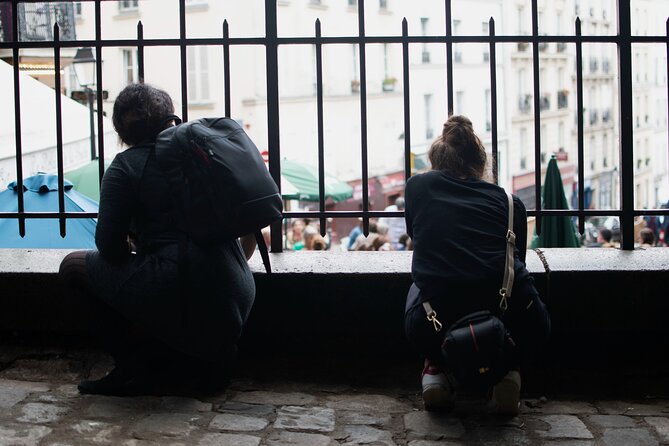
This is a daytime walking session of about 2 hours, and comfortable shoes are non-negotiable. You’ll also want a water bottle, and a jacket for cooler conditions.
As for camera gear, bring whatever you already have. If you’re thinking about a tripod, you might find it useful for certain shots, but remember you’ll be carrying it during a hill-and-cobblestone walk. If you do bring one, keep it lightweight and plan for short stops rather than extended setups.
Quick list of what I’d pack for this kind of session:
- Comfortable shoes for uneven ground
- A jacket and water bottle
- Your camera (or phone) plus any simple accessories you already use comfortably
- If you’re using a tripod, something you can carry without ruining your mood
Price and value: what $165.49 buys you in real skill
At $165.49 per person for roughly 2 hours, this isn’t a “cheap and cheerful” activity. But it also isn’t priced like a full-day workshop with equipment rentals. So the real question is: what do you leave with?
You’re paying for one-on-one style attention within a private group (only your group participates). You’re also paying for on-the-street practice of composition and storytelling, plus a parting gift. That combination can be good value because it changes how you shoot immediately, not after you’ve returned home and forgotten what you were trying to remember.
If you’re the type who loves photography but struggles to turn inspiration into actual images, this kind of guided practice is often worth it. If you already know your way around street composition and just want free roaming time, you might feel it’s more than you need.
The best value tends to come when you show up curious and ready to ask questions about your camera and your style.
Weather, timing, and the day vs night choice
This experience is planned for daytime unless you request a night session. Night street photography can be fun, but it also changes the challenge: light levels are lower, and you’ll often shoot differently (settings and patience both matter). If you’re unsure, daytime is the easiest way to get the core skills.
The tour also requires good weather. If conditions aren’t right, you’ll be offered a different date or a full refund. That’s important because street photography lessons depend on walking and seeing, not waiting under cover for long periods.
Who this tour is best for (and who might feel bored)
This works especially well if you:
- Want to improve your photos quickly by learning composition choices
- Like walking and can handle cobblestones and hills for about 2 hours
- Prefer practical, on-the-street teaching over sitting through a slideshow
- Want smartphone-friendly guidance, not just DSLR tips
- Enjoy Montmartre but want to see it with a photographer’s eye
You might not love it as much if you:
- Only want a long sightseeing tour with minimal guidance
- Hate walking or aren’t comfortable with uneven ground
- Don’t want to pause, think, and make photo choices
Should you book this Montmartre street photo lesson?
I’d book it if you want a focused skill-builder in a place that’s naturally good for street photography. The strengths here are the practical guidance, the way Clara helps you slow down and choose shots, and the variety you get across streets, rooftops, and quieter corners.
If you go with comfortable shoes, a charged phone or camera, and a willingness to pause, you’ll likely leave with better images and a clearer way to think about your next shoot in Paris.
FAQ
How long is the Montmartre street photography session?
It’s about 2 hours, with a walking format.
Is the tour daytime or can I request a night session?
It’s scheduled for daytime unless you request a night time session.
Where do I meet, and where does the tour end?
The tour starts at Place des Abbesses (Pl. des Abbesses, 75018 Paris) and ends back at the meeting point.
Do I need to bring a camera?
A camera isn’t included, but you can bring whatever you have. The guide can discuss equipment before meeting.
Is smartphone photography welcome?
Yes. You can bring your smartphone, and you can discuss your phone setup with the guide before the tour.
What should I wear or bring for the walk?
Wear comfortable shoes. It’s also smart to bring a good jacket for cooler times and a water bottle.
Is this tour private?
Yes. It’s a private tour/activity, so only your group participates.
What happens if the weather is bad, or I need to cancel?
The experience requires good weather. If it’s canceled due to poor weather, you’ll be offered a different date or a full refund. You can cancel up to 24 hours in advance for a full refund.
More Photography Sessions in Paris
- Paris: Private Photoshoot at the Eiffel Tower
★ 4.7 · 2,636 reviews - Paris: Eiffel Tower Photoshoot
★ 4.7 · 2,351 reviews - Paris: Photoshoot Around Eiffel Tower with 55 Edited Photos
★ 4.8 · 702 reviews - Paris: Professional Photoshoot with the Eiffel Tower
★ 4.9 · 565 reviews - Paris: Eiffel Tower Premium Photoshoot
★ 4.9 · 425 reviews
More Tour Reviews in Paris
- Paris: 1-Hour Seine Cruise departing from the Eiffel Tower
★ 4.4 · 77,472 reviews - Paris: Louvre Museum Timed-Entrance Ticket
★ 4.6 · 71,977 reviews - Disneyland® Paris 1-Day Ticket
★ 4.6 · 49,412 reviews - Paris: Versailles Palace and Gardens Full Access Ticket
★ 4.6 · 41,579 reviews - Paris: Arc de Triomphe Rooftop Tickets
★ 4.6 · 34,264 reviews
More of the Montmartre Hill
- Montmartre Hidden Gems and Scenic Highlights Walking Tour
★ 5.0 · 2,684 reviews - Montmartre Hill French Gourmet Food and Wine Tasting Walking Tour
★ 5.0 · 2,588 reviews - Paris: Montmartre Highlights Walking Tour with a Local Guide
★ 4.9 · 2,318 reviews - Paris: Montmartre Cheese, Wine & Pastry Guided Walking Tour
★ 4.8 · 2,255 reviews - The Secrets of Montmartre Walking Tour
★ 4.8 · 1,258 reviews
Fresh off the review desk in Paris
- Secrets of Paris Bike Tour in English or Dutch★ 5.0 · 5 reviews
- Paris: Mont Saint-Michel Day Tour with Chinese Tour Guide★ 5.0 · 5 reviews
- Private Street Art 2-Hour Guided Tour in Paris★ 4.5 · 5 reviews
- Orsay Museum Tour: 2h Highlights (Private & Small Group)★ 5.0 · 5 reviews
- Discover Paris in electric golf carts★ 4.0 · 5 reviews
- Paris Private Boat Tour with your own Captain Guide★ 5.0 · 5 reviews
Montmartre Tours, compared.
 ★ 5.0Montmartre Hidden Gems and Scenic Highlights Walking TourFrom $382,684 reviews
 ★ 5.0Montmartre Hill French Gourmet Food and Wine Tasting Walking TourFrom $1452,588 reviews
 ★ 4.9Montmartre Highlights Walking Tour with a Local GuideFrom $232,318 reviews
 ★ 4.8Montmartre Cheese, Wine & Pastry Guided Walking TourFrom $1272,255 reviews
The Secrets of Montmartre Walking TourFrom $331,258 reviews
★ 4.8Montmartre Cheese, Wine & Pastry Guided Walking TourFrom $1272,255 reviews
The Secrets of Montmartre Walking TourFrom $331,258 reviews
 ★ 5.0Private Montmartre Food Tour with Wine, Cheese & PastriesFrom $3021,027 reviews
 ★ 4.1Sacré-Coeur and Montmartre Tour with Expert GuideFrom $281,027 reviews
 ★ 5.0Paris Montmartre Food Tour – A Full French Meal by Do Eat BetterFrom $95877 reviews
Browse the lists this tour appears in