
Reviewed · DESSERT TOURS
Molded Bonbons Chocolate making class in Paris (collective)
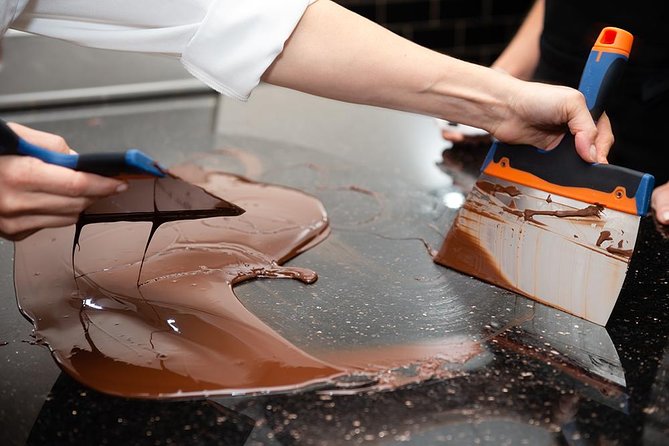
Chocolate lessons in Paris feel like magic. In this small-group class at Edwart Chocolatier, you’ll learn to make elegant molded demi-sphère bonbons with ganache and hazelnut praline, then taste signature chocolate upstairs while yours set. I like that it’s genuinely hands-on, not a sit-and-watch demo.
Second, I like the people factor. Guides can bring the process in English, and I’ve seen how well that matters when the workshop itself is mostly in French, with clear translation that keeps you on track. Depending on your guide, names like Krishna and Elise show up, and both are described as patient and upbeat.
One possible drawback: if you’re hunting for very technical chocolate work (especially heavy tempering), the class can feel more “friendly and guided” than “lab-level.” Also, the room can feel tight in a group of six to eight, so bring your patience if you’re sensitive to cramped quarters.
In This Review
- Key Things to Know Before You Go
- Entering Edwart Chocolatier on Rue de Rivoli
- What You’ll Make: Sparkling Demi-Sphère Bonbons (Two-Layer)
- The Hands-On Steps: Molds, Filling, and Patient Coaching
- Upstairs Tasting: Your Break While Bonbons Set
- English Support and the French Reality
- Small-Group Logistics: Time, Space, and How Crowded It Gets
- Price and Value: When $118.82 Actually Makes Sense
- Who This Class Is Best For (And Who Might Want Another Option)
- Timing Your Day: Arrival, Transport, and Getting Set Fast
- Should You Book This Edwart Bonbons Class?
- FAQ
- How long is the molded bonbons chocolate-making class?
- Where does the class start?
- Is the class taught in English?
- How many people are in the group?
- What ingredients are involved?
- Can children participate?
Key Things to Know Before You Go
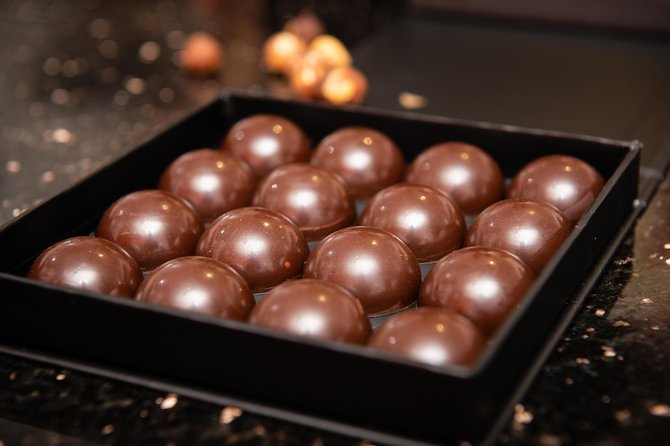
Small group (max 8) means you get real hands-on time instead of waiting your turn.
Demi-sphère molded bonbons are the star: two-layer chocolate, filled with ganache and hazelnut praline.
Upstairs tasting happens while your bonbons set, so you don’t just wait around.
English support is available, even if the class runs in French.
Allergy note: hazelnuts and dairy are part of the recipe.
Not all classes aim for “advanced technical”, so set expectations if you want tempering drills.
Entering Edwart Chocolatier on Rue de Rivoli
Edwart Chocolatier puts you in the middle of central Paris—right at the start point on 244 Rue de Rivoli (near public transportation). For a 1.5-hour experience, that location matters. You can slot it into a day of sightseeing without burning half the afternoon crossing town.
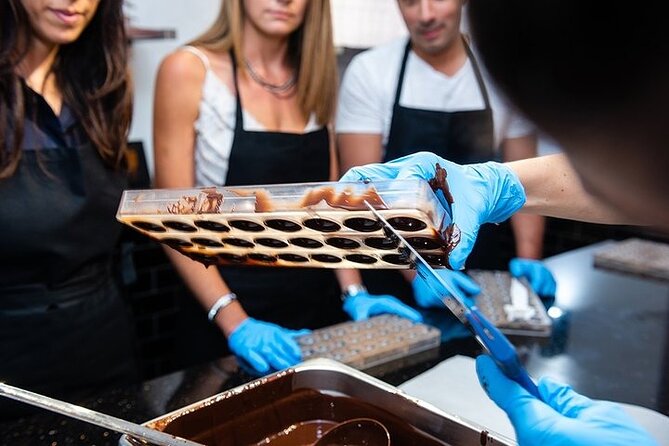
Inside, the workshop setup is simple and practical: chocolate production happens in one area (downstairs), and you spend your active making time upstairs. That split keeps the experience moving. It also means your hands-on work isn’t competing with a loud crowd milling around the storefront.
The class runs with a small group—maximum of 8 travelers—so you’ll likely be close to your chocolatier and your station. If you like learning by doing, this setup is perfect. If you prefer lots of elbow room, you should know the room may feel busy during the workshop.
Worth weighing up next to this Paris pick
- Paris: Day or Sunset Cruise with Drink, Ice Cream or Dessert
★ 4.4 · 4,225 reviews - Paris: Entrance Ticket to the Chocolate Museum
★ 4.1 · 1,105 reviews - Private Montmartre Food Tour with Wine, Cheese & Pastries
★ 5.0 · 1,027 reviews - Paris French Sweets Tasting Tour with Pastries and Chocolates
★ 4.5 · 947 reviews
What You’ll Make: Sparkling Demi-Sphère Bonbons (Two-Layer)
This isn’t about a generic “chocolate craft.” It’s a specific product: demi-sphère bonbons—half-dome shapes—with a clean, elegant finish. You make a two-layer chocolate shell, then fill it.
Here’s the process you should expect to focus on:
- Create the shell using molded forms.
- Make or prepare the filling components from scratch with your team’s guidance: dark chocolate ganache and hazelnut praline.
- Assemble and complete your bonbon so it’s ready to set before tasting.
The goal is not just making chocolate—it’s making a finished candy you’d feel proud to box up and take home. That “take-home souvenir” part is a big deal in Paris, because you’re leaving with something you created, not just something you bought.
Also, note the “recipe involves hazelnuts and dairy.” If you have any intolerance or allergy concerns, don’t gloss over this. Plan based on what you can safely eat.
The Hands-On Steps: Molds, Filling, and Patient Coaching
The structure of the class is built for real learning: you aren’t just watching a chocolatier do the work. You’re guided through steps—often with plenty of reminders on timing, consistency, and how to handle the molds.
One thing that comes through strongly is the teacher style. Krishna, for example, is described as exceptionally skilled with patient, clear explanations, plus a welcoming atmosphere that reduces the awkwardness of first-timers. Elise is also described as engaging and encouraging, especially with families, making the process feel playful rather than intimidating.
A practical takeaway for you: even if you’re new to chocolate, this class is designed to be beginner-friendly. You’ll still do real work—molding, filling, assembling—but the coaching is meant to keep you from getting lost.
Still, a couple of caution flags:
- Some classes may use chocolate that’s already tempered, which changes how “technical” the experience feels if tempering is what you expected to master.
- With small groups, instruction can get fast. If you’re the type who wants to slow everything down and redo steps, you might need to speak up politely.
Upstairs Tasting: Your Break While Bonbons Set
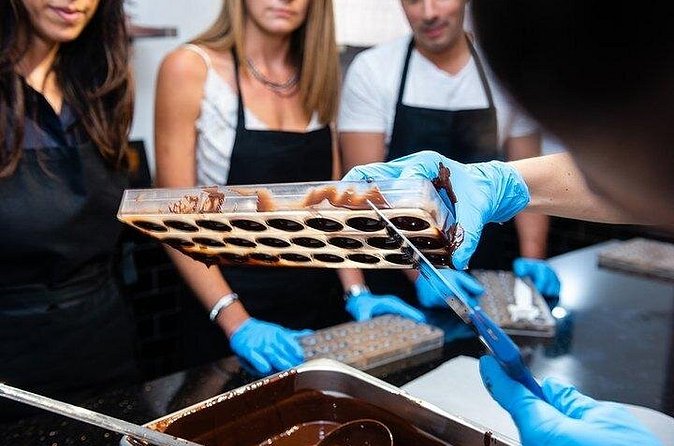
A smart design choice here is the timing. While your bonbons set, you’re upstairs for a tasting of Edwart’s signature products. That keeps the workshop from feeling like you’re waiting in silence for candy to harden.
The tasting is also where you get context. Instead of leaving with only what you made, you taste what the chocolatier does at a higher level—different textures, flavor styles, and how the company’s chocolates behave.
One highlight mentioned is a Japanese buckwheat chocolate that people describe as incredible. Whether or not that exact item is part of your specific tasting, the point is the same: this is your chance to explore beyond your single bonbon mold.
And there’s an added emotional benefit. The workshop format tends to feel pressure-light: you can enjoy the chocolate without feeling herded into a purchase at the end. In a city full of sweet-shop sales tactics, that vibe matters.
English Support and the French Reality
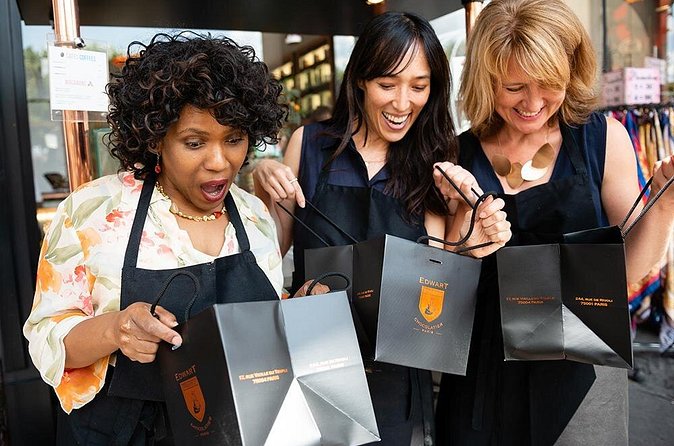
Paris workshops often run in French, even when they’re aimed at visitors. This one offers English, but it’s still helpful to assume there may be moments where the main explanation is in French.
The key detail is translation quality. In the experience, English translation has been described as incredibly helpful, especially for steps you need to follow closely (timing, technique, and what to do next). So if you’re not fluent, you’re not automatically left behind.
A practical tip: during your instructions, watch the hands first, then follow the translated explanation. With chocolate, technique is half the language.
Small-Group Logistics: Time, Space, and How Crowded It Gets
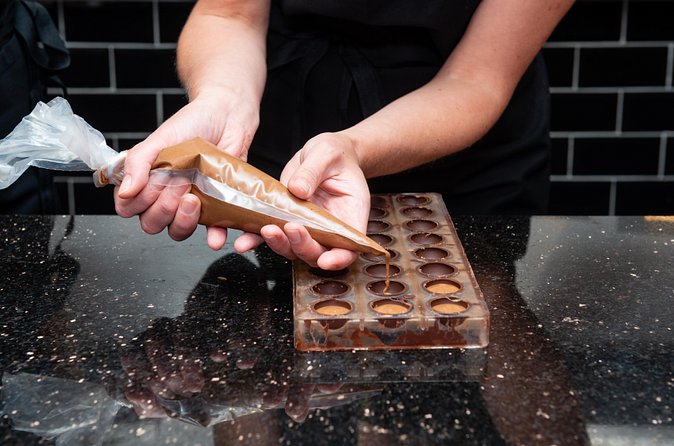
The class duration is about 1 hour 30 minutes, starting at 1:30 pm. For that time window, you get a solid amount of hands-on work plus the tasting break. It’s short enough to feel doable on a full travel day, not short enough to feel pointless.
The group size is capped at 8 travelers, which is a good compromise between getting personal attention and still creating enough energy in the room. But a realistic heads-up: space can get tight, and some participants felt it was crowded for a group of six. If you’re sensitive to close quarters, consider arriving a couple minutes early and keeping your bags tidy so you don’t create extra clutter.
Worth weighing up next to this Paris pick

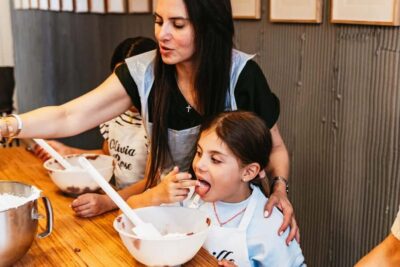
Price and Value: When $118.82 Actually Makes Sense
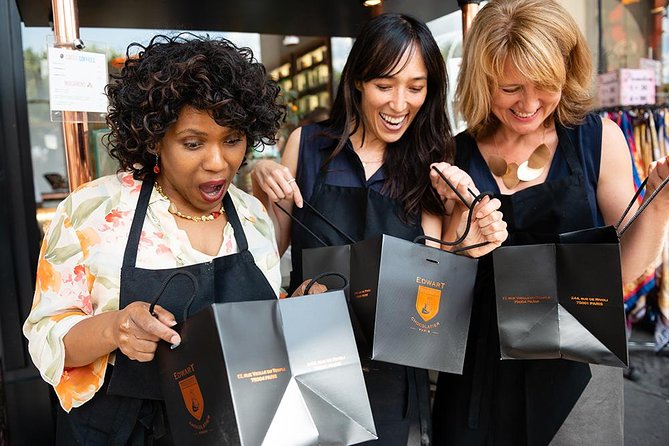
At $118.82 per person, this isn’t a bargain workshop. So let’s judge it on value, not just cost.
What you get for the price:
- A small-group class with hands-on instruction
- You make a finished, molded product: two-layer demi-sphère bonbons
- The filling components include ganache and hazelnut praline, created from scratch with your team’s guidance
- An upstairs tasting of signature chocolates while you wait for your bonbons to set
- A take-home souvenir that’s more personal than buying a box at the counter
If you compare it to general chocolate tastings, this costs more because you’re paying for labor, time, and training. If you compare it to higher-end food classes, it’s often in the reasonable middle—especially because you leave with something you made, not just something you sampled.
Where the value may wobble:
- If you came expecting an in-depth technical tempering masterclass, and you end up doing more “assembly with guidance,” you may feel it’s not specialized enough for your goals.
- If you’re prone to frustration with tight space, the experience may feel less relaxing than the price suggests.
The best “value match” is someone who wants a guided, satisfying chocolate-making session—and doesn’t require a heavy tempering lab curriculum.
Who This Class Is Best For (And Who Might Want Another Option)
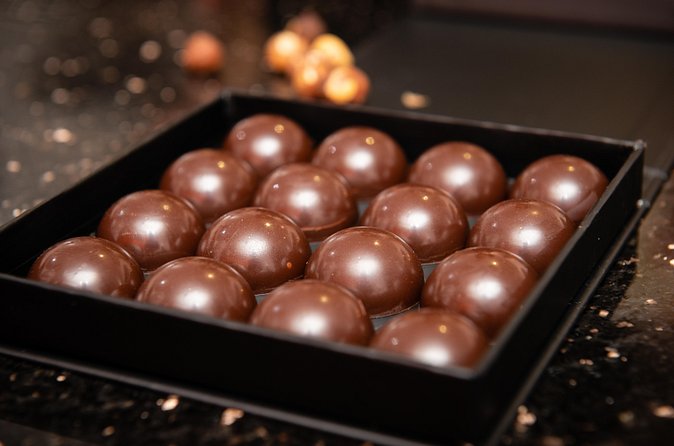
This is a great pick for:
- Beginners who want real technique but don’t want to feel overwhelmed
- People who want a Paris souvenir they made themselves
- Families with older kids (the workshop has a rule: children under 14 can’t participate)
- Anyone with hazelnut-and-dairy comfort who wants a hands-on chocolate story to bring home
It may be less ideal if:
- You’re strictly chasing “technical chocolate” training where you do full tempering steps, troubleshooting, and repeated trials.
- You’re uncomfortable in close quarters or hate working shoulder-to-shoulder.
One more practical note: the schedule can change frequently, and bookings may be routed through different outlets. Before you rely on anything, double-check that your booking request is actually accepted.
Timing Your Day: Arrival, Transport, and Getting Set Fast
Start time is 1:30 pm, and the meeting point is at Edwart Chocolatier, 244 Rue de Rivoli. Since it’s near public transportation, you can plan to arrive a few minutes early and avoid stress.
Also, because you’ll be working with ingredients that set, you’ll want to be fully present—no rushing through the step with cold hands or being distracted mid-mold.
If you’re touring Paris the same day, aim to keep this as a priority appointment. Treat it like a food workshop, not like a casual window stop.
Should You Book This Edwart Bonbons Class?
Book it if you want a hands-on Paris food experience that ends with elegant, take-home candy you made yourself. The small group, the molded demi-sphère bonbon focus, and the upstairs tasting while things set are exactly the kind of structure that makes a short class feel worth it.
Pass or consider an alternative if you’re specifically hunting for advanced, technical tempering drills. Based on how the experience can be described, you might find it more guided and approachable than lab-level.
If you fall in the middle—curious, excited, and open to learning technique with plenty of support—this is one of those Paris workshops that makes your sweet tooth feel productive.
FAQ
How long is the molded bonbons chocolate-making class?
It runs for about 1 hour 30 minutes.
Where does the class start?
The class starts at Edwart Chocolatier, 244 Rue de Rivoli, 75001 Paris, France. The activity ends back at the meeting point.
Is the class taught in English?
It’s offered in English, and the guide may be multilingual. Some parts may still be delivered in French, with English support.
How many people are in the group?
The class has a maximum of 8 travelers.
What ingredients are involved?
The recipe involves hazelnuts and dairy.
Can children participate?
Children under 14 years old cannot participate in the workshop.
More Workshops in Paris
- Fragonard Paris: Mini Perfume Workshop
★ 4.5 · 1,924 reviews - Paris: Macaron Class at Galeries Lafayette
★ 4.2 · 1,196 reviews - Paris Cooking Class and Lunch with Wine plus Market Visit Option
★ 5.0 · 1,024 reviews - Paris Croissant Small-Group Baking Class with a Chef
★ 5.0 · 910 reviews - Paris: 2-Hour Perfume Creation Workshop
★ 4.8 · 731 reviews
More Dessert Tours in Paris
- Paris: Day or Sunset Cruise with Drink, Ice Cream or Dessert
★ 4.4 · 4,225 reviews - Paris: Entrance Ticket to the Chocolate Museum
★ 4.1 · 1,105 reviews - Private Montmartre Food Tour with Wine, Cheese & Pastries
★ 5.0 · 1,027 reviews - Paris French Sweets Tasting Tour with Pastries and Chocolates
★ 4.5 · 947 reviews - Paris: Brussels and Bruges Tour & Optional Chocolate Tasting
★ 4.6 · 643 reviews
More Tour Reviews in Paris
- Paris: 1-Hour Seine Cruise departing from the Eiffel Tower
★ 4.4 · 77,472 reviews - Paris: Louvre Museum Timed-Entrance Ticket
★ 4.6 · 71,977 reviews - Disneyland® Paris 1-Day Ticket
★ 4.6 · 49,412 reviews - Paris: Versailles Palace and Gardens Full Access Ticket
★ 4.6 · 41,579 reviews - Paris: Arc de Triomphe Rooftop Tickets
★ 4.6 · 34,264 reviews
Fresh off the review desk in Paris
- Secrets of Paris Bike Tour in English or Dutch★ 5.0 · 5 reviews
- Paris: Mont Saint-Michel Day Tour with Chinese Tour Guide★ 5.0 · 5 reviews
- Private Street Art 2-Hour Guided Tour in Paris★ 4.5 · 5 reviews
- Orsay Museum Tour: 2h Highlights (Private & Small Group)★ 5.0 · 5 reviews
- Discover Paris in electric golf carts★ 4.0 · 5 reviews
- Paris Private Boat Tour with your own Captain Guide★ 5.0 · 5 reviews
Dessert Tours, compared.
 ★ 4.4Day or Sunset Cruise with Drink, Ice Cream or DessertFrom $224,225 reviews
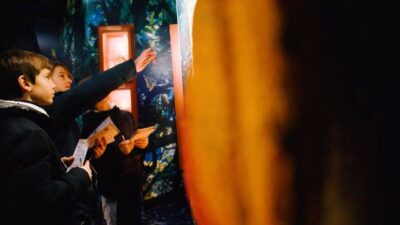 ★ 4.1Entrance Ticket to the Chocolate MuseumFrom $211,105 reviews
 ★ 5.0Private Montmartre Food Tour with Wine, Cheese & PastriesFrom $3021,027 reviews
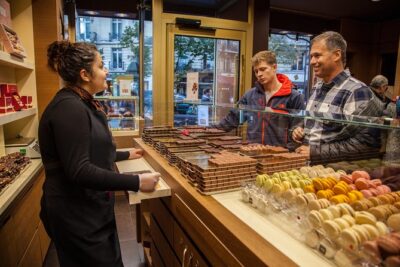 ★ 4.5Paris French Sweets Tasting Tour with Pastries and ChocolatesFrom $168947 reviews
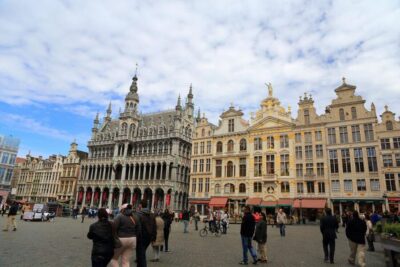 ★ 4.6Brussels and Bruges Tour & Optional Chocolate TastingFrom $234643 reviews
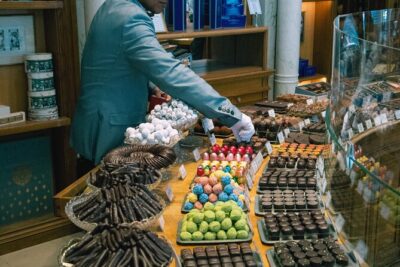 ★ 5.0A Morning in Paris Food Tour: Croissants, Baguettes & ChocolateFrom $125556 reviews
 ★ 4.8Saint-Germain: Gourmet Chocolate & Pastry Walking Food TourFrom $105495 reviews
 ★ 4.445-minute Chocolate Making Workshop at Choco-StoryFrom $58444 reviews
Browse the lists this tour appears in