
Reviewed · MONTMARTRE TOURS
Montmartre/Sacre-Coeur/Paris- Artistic & Bohemian Epicenter
Montmartre changes how you see Paris. In about two hours, you’ll walk from Place des Abbesses into artist territory, with Sacre-Cœur’s big city views and stop-at-work creativity at Place du Tertre. I like that the group stays small (max 15) so the guide can actually answer questions, and I like how the stories stay tied to real street corners instead of turning into a lecture. One thing to plan for: Sacré-Cœur area crowds can be intense, so if you want to go inside, expect lines to be outside the tour’s control.
What makes this feel worth the money is the mix of art-world history and day-to-day neighborhood life. You get a local Paris guide (names like Jill and Matt show up often in feedback), plus film and art connections you can keep using long after you finish the walk. At $48.37 per person for roughly 2 hours, it’s a solid value when you factor in the guide time and the fact that the main stops here don’t require paid entries.
Comfort-wise, wear grippy shoes and be ready for wind and stairs. The route includes steep, cobbled streets uphill, and it’s easy to underestimate how much you’ll walk in Montmartre if you’re arriving straight from museum-flat city streets.
In This Review
- Key moments you will actually remember
- Why this Montmartre walk works (even if you hate long tours)
- Meeting at Place des Abbesses and getting your bearings fast
- Rue Lepic: where art history and the Amélie vibe meet
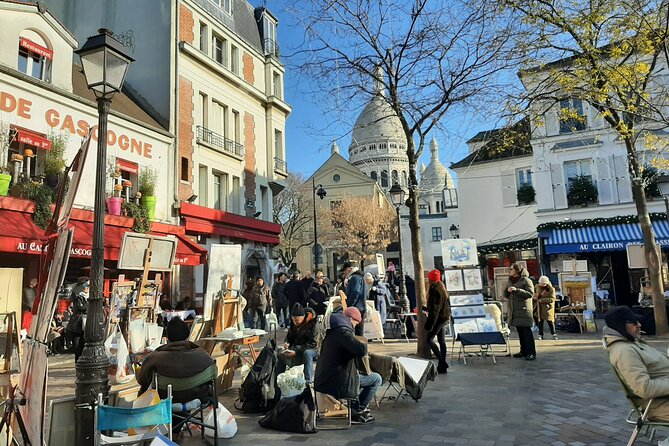
- Place du Tertre: artists at work, not just artists on postcards
- Dalida’s Montmartre home: pop culture meets the art crowd
- Le Bateau-Lavoir and the Picasso-era pulse
- Windmills of Montmartre: the working-class past under the art now
- Sacré-Cœur and the uphill reality: where the view makes the climb worth it
- What you get beyond the stops: guide style and small-group energy
- Price and value: is $48.37 fair for 2 hours in Montmartre?
- Who should book this tour (and who might want something else)
- Should you book it?
- FAQ
- Is the tour offered in English?
- How long is the tour?
- How much does the tour cost?
- What’s the group size limit?
- Where do we meet and where does the tour end?
- Is a mobile ticket used?
- Is coffee or tea included?
- Can I cancel for a full refund?
Key moments you will actually remember
- Artists at work in Place du Tertre: watch sketches get made on demand.
- Amélie-style film locations along Rue Lepic: streets that look like movie sets.
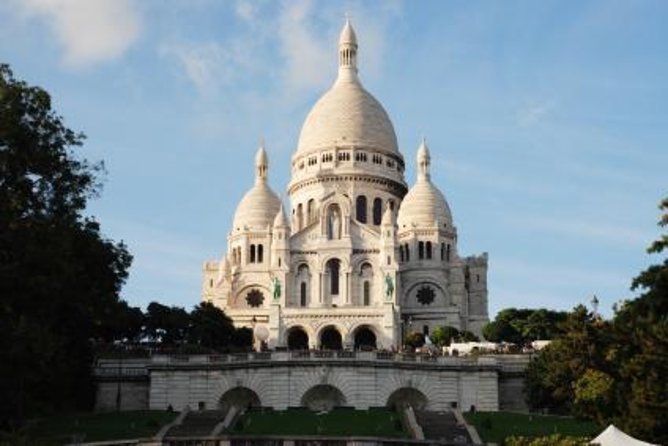
- Sacre-Cœur panorama payoff: the climb leads to wide Paris views.
- Le Bateau-Lavoir and Picasso-era connections: the early-20th-century art scene in real neighborhood form.
- Dalida’s Montmartre residence stop: a pop-culture layer on top of the art history.
- Small group pacing: more back-and-forth, less rush, more personal feel.
Why this Montmartre walk works (even if you hate long tours)
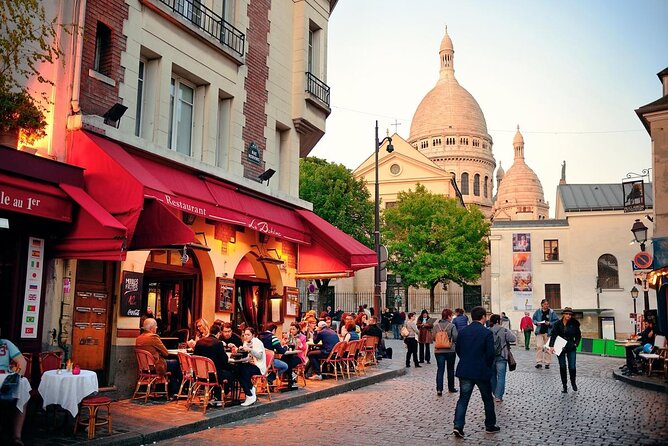
This is not a checklist tour that drops you at postcard points and sprints away. It’s a walking experience that treats Montmartre like a living arts district, where you can still spot creativity in motion—people drawing, studios and art history references, and streets tied to famous names.
The small size matters. With a maximum of 15 people, I find you’re less likely to get stuck behind the group all the time. You can ask short questions, get context on what you’re seeing, and adjust pace if the street turns extra steep.
Also, the timing is realistic. At about 2 hours, it’s long enough to feel like you learned the neighborhood, but short enough that you won’t spend your whole Paris day crawling up hills.
Keep climbing: more of the Montmartre hill
- Montmartre Hidden Gems and Scenic Highlights Walking Tour
★ 5.0 · 2,684 reviews - Montmartre Hill French Gourmet Food and Wine Tasting Walking Tour
★ 5.0 · 2,588 reviews - Paris: Montmartre Highlights Walking Tour with a Local Guide
★ 4.9 · 2,318 reviews - Paris: Montmartre Cheese, Wine & Pastry Guided Walking Tour
★ 4.8 · 2,255 reviews
Meeting at Place des Abbesses and getting your bearings fast
The walk starts at 22 Rue des Abbesses in the Montmartre village area. If you arrive a few minutes early, you’ll give yourself room for the one common snag people report: a little confusion at first meeting up with the guide.
From the start, you’re set up for an efficient route. Place des Abbesses is already full of personality, and your guide uses that energy to orient you—what this neighborhood used to be like, and why it became such a magnet for artists.
One practical tip: this tour is offered in English and uses a mobile ticket, so you can keep your phone out and focus on the streets. And since it’s near public transportation, you can build it into a day that already includes other parts of Paris.
Rue Lepic: where art history and the Amélie vibe meet
One of the most fun parts is walking through the footsteps of impressionist-era inspiration. Rue Lepic is where the neighborhood starts to feel like it has a soundtrack—quiet street corners, viewpoints that open up, and the sense that artists were drawn here for more than just scenery.
Here’s where the movie connection comes in. Your guide points out spots used in the French film Amélie of Montmartre, plus additional sites tied to famous people and the neighborhood’s reputation for creativity. Even if you’ve only seen parts of the film, the streets start to make sense as film-friendly locations: interesting angles, charming facades, and a constant flow of street life.
A small warning that can save you from frustration: Rue Lepic and the surrounding lanes can feel like they’re both uphill and narrow at the same time. Go slow, trust your shoes, and let your guide set the rhythm.
Place du Tertre: artists at work, not just artists on postcards
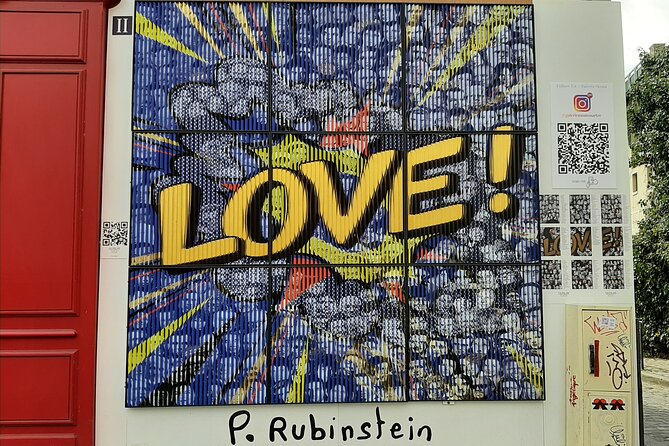
Then you hit Place du Tertre, the famous square where the art is not just historical—it’s happening right now. This is where you can admire local artists at work and even get an instant sketch made for you on demand.
I like this stop because it’s not only about who painted what 100 years ago. It’s about how the neighborhood keeps turning creativity into a daily language: drawing, conversation, and show-and-tell happening in the open air.
Keep your expectations grounded. You may see a line of activity and people calling out, and it can feel touristy in the way iconic places do. But the upside is that you’ll get a sense for how artists actually operate here—how they set up, what styles show up, and why this square remains such a draw.
Dalida’s Montmartre home: pop culture meets the art crowd
Next up is a stop tied to La Maison de Dalida. Dalida was a major French/Italian star, born in Egypt, and she was Miss Egypt in the mid-1950s. That mix of international identity and celebrity history adds a different flavor to Montmartre.
What I found valuable is how your guide uses this to show Montmartre wasn’t only a painter’s playground. It also became a stage for performers and a magnet for people who wanted their name to travel.
This is also a good reminder for you if you think Montmartre is only about museums and old paintings. The neighborhood’s creative pull spans art forms.
Le Bateau-Lavoir and the Picasso-era pulse
One of the most story-rich stops is Le Bateau-Lavoir, known as an early-20th-century meeting place for artists. The walking tour connects you to the broader arc of that era, including how Picasso first came to Paris in 1900 and was drawn in by the city’s energy.
Your route also passes by a Picasso studio area in Montmartre, which makes the history feel closer and more specific. It’s one thing to read about an artist; it’s another to stand in the neighborhood lanes where their Paris story actually happened.
This is the kind of stop where your guide’s style affects the whole experience. In feedback, guides like Jill and Matt get praised for staying entertaining and not bogging the group down in minutia. That matters here, because you’re dealing with art names and timelines. You want clarity, not homework.




Windmills of Montmartre: the working-class past under the art now
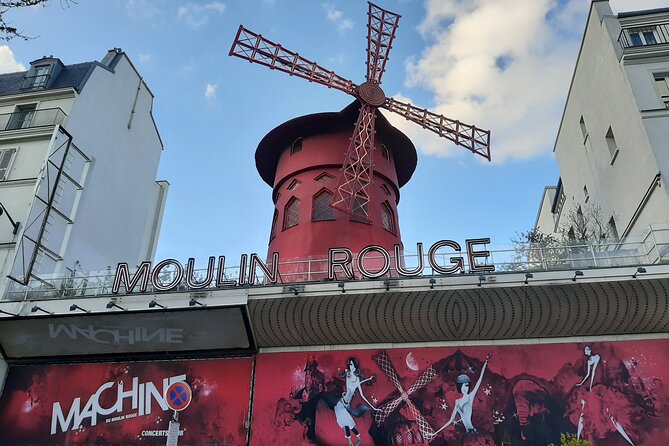
As you continue, you reach the area connected to the first windmill dating from the 17th century. Your guide frames this with an important context point: before Montmartre became the artist magnet you see today, it was more of a working-class village north of Paris.
That change-over helps you understand why Montmartre’s streets look the way they do. You’re not just seeing decorative views. You’re seeing layers—old village life, industrial edges, and then the artistic wave that transformed the neighborhood’s reputation.
If you’re the type who loves history but doesn’t want a heavy timeline, this stop hits the sweet spot: a few strong facts, tied to what you can see and walk through.
Sacré-Cœur and the uphill reality: where the view makes the climb worth it
Finally, you end at Basilique du Sacré-Cœur de Montmartre. Even if you’ve seen photos, the experience lands differently when you’ve worked your way uphill through cobbled lanes to reach the basilica.
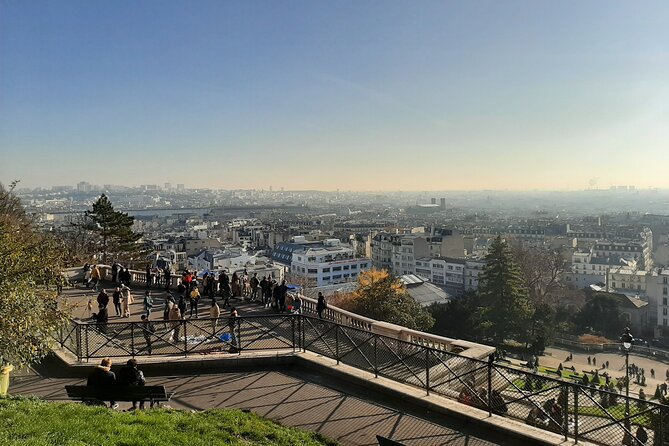
The payoff is the breathtaking panorama view over Paris. This is where the tour does its practical job for you: you get an instant sense of where things are in the city, which makes your later sightseeing easier.
One consideration: the Sacré-Cœur area can be crowded, and at least one guide experience mentioned big lines for entry. Your tour can’t erase that. If you want to go inside, treat it as a plan-for-it moment rather than an automatic quick stop.
Also, dress for weather. Montmartre can be windy, and the route is outdoors. Bring a layer you can tolerate without turning your tour into a shivering contest.
What you get beyond the stops: guide style and small-group energy
This tour’s strength is not just where you go. It’s how the guide keeps things moving and makes the neighborhood feel personal.
In the feedback, Jill gets highlighted for weaving stories so you feel like you’re walking with residents and understanding both past and present. Matt gets praised for history without drowning you in too many details—more like a guided conversation than a lecture.
You’ll also get practical life in the neighborhood, not just art theory. People mention recommendations for food spots along the way and even quick stops for snacks and drinks. Coffee and tea are not included, but the guide often points you toward places that match what you want, whether that’s a pastry break, a casual lunch, or a quick bite to keep you moving.
And if you’re traveling with a specific interest, there’s a good chance the guide will adjust stories. One example from feedback: a walk customized around composers, including Satie, after learning about an emerging opera singer in the group. That’s a big deal if you want more than a one-size-fits-all script.
Price and value: is $48.37 fair for 2 hours in Montmartre?
At $48.37 per person for about 2 hours, this tour sits in the “pay for a local guide, get a coherent route” category. In practical terms, you’re paying for three things:
- Local direction: someone who knows where to point and what to explain, so you don’t wander and guess.
- Time efficiency: Montmartre is easy to mess up on a self-walk unless you already know the layout.
- Story value at key sites: Place du Tertre, Le Bateau-Lavoir, and Sacré-Cœur make more sense when connected to artists and the neighborhood’s shifts.
It also helps that admission for the major listed stops is marked ticket free in the tour details you were given. That doesn’t remove crowds or walking time, but it reduces the “surprise fees” feeling.
So, who is it best for? If you want Montmartre to feel like more than a photo stop—and you prefer a tight route with real guidance—this is a good match.
Who should book this tour (and who might want something else)
I’d steer you toward this if:
- you love art history but want it in plain street-level terms
- you want to see Montmartre with a local resident guiding the day
- you care about small group pacing and conversation
- you’re into film connections like Amélie, not just famous landmarks
I might suggest a different approach if:
- you dislike hills and long outdoor walking, even with a short duration
- you’re only after the Sacré-Cœur view and nothing else
- you want a completely self-paced schedule with zero guide influence
The best part is that you can still use the tour as your springboard. Once you finish near Sacré-Cœur, you’ll have the orientation you need to keep exploring nearby lanes at your own pace.
Should you book it?
Yes, if you want a Montmartre walk that feels like you’re getting the neighborhood’s story in human-sized chunks. The combination of Place du Tertre artists at work, Amélie-related street spots, and the ending at Sacre-Cœur gives you both the creative present and the historical thread that explains why Montmartre became what it is.
Book it especially if you value small-group attention and a guide who keeps things lively without losing clarity. Just do one thing for yourself: plan comfortable shoes, expect stairs, and if Sacré-Cœur entry is on your must-do list, be ready for crowd lines.
FAQ
Is the tour offered in English?
Yes. This experience is offered in English.
How long is the tour?
It’s listed as approximately 2 hours.
How much does the tour cost?
The price is $48.37 per person.
What’s the group size limit?
The tour has a maximum of 15 travelers.
Where do we meet and where does the tour end?
The meeting point is 22 Rue des Abbesses, 75018 Paris, and the tour ends at Basilique du Sacré-Cœur de Montmartre, 35 Rue du Chevalier de la Barre, 75018 Paris.
Is a mobile ticket used?
Yes, it includes a mobile ticket.
Is coffee or tea included?
No. Coffee and/or tea are not included.
Can I cancel for a full refund?
Free cancellation is available up to 24 hours in advance for a full refund.
More Tour Reviews in Paris
- Paris: 1-Hour Seine Cruise departing from the Eiffel Tower
★ 4.4 · 77,472 reviews - Paris: Louvre Museum Timed-Entrance Ticket
★ 4.6 · 71,977 reviews - Disneyland® Paris 1-Day Ticket
★ 4.6 · 49,412 reviews - Paris: Versailles Palace and Gardens Full Access Ticket
★ 4.6 · 41,579 reviews - Paris: Arc de Triomphe Rooftop Tickets
★ 4.6 · 34,264 reviews
More of the Montmartre Hill
- Montmartre Hidden Gems and Scenic Highlights Walking Tour
★ 5.0 · 2,684 reviews - Montmartre Hill French Gourmet Food and Wine Tasting Walking Tour
★ 5.0 · 2,588 reviews - Paris: Montmartre Highlights Walking Tour with a Local Guide
★ 4.9 · 2,318 reviews - Paris: Montmartre Cheese, Wine & Pastry Guided Walking Tour
★ 4.8 · 2,255 reviews - The Secrets of Montmartre Walking Tour
★ 4.8 · 1,258 reviews
Fresh off the review desk in Paris
- Secrets of Paris Bike Tour in English or Dutch★ 5.0 · 5 reviews
- Paris: Mont Saint-Michel Day Tour with Chinese Tour Guide★ 5.0 · 5 reviews
- Private Street Art 2-Hour Guided Tour in Paris★ 4.5 · 5 reviews
- Orsay Museum Tour: 2h Highlights (Private & Small Group)★ 5.0 · 5 reviews
- Discover Paris in electric golf carts★ 4.0 · 5 reviews
- Paris Private Boat Tour with your own Captain Guide★ 5.0 · 5 reviews
Montmartre Tours, compared.
 ★ 5.0Montmartre Hidden Gems and Scenic Highlights Walking TourFrom $382,684 reviews
 ★ 5.0Montmartre Hill French Gourmet Food and Wine Tasting Walking TourFrom $1452,588 reviews
 ★ 4.9Montmartre Highlights Walking Tour with a Local GuideFrom $232,318 reviews
 ★ 4.8Montmartre Cheese, Wine & Pastry Guided Walking TourFrom $1272,255 reviews
The Secrets of Montmartre Walking TourFrom $331,258 reviews
★ 4.8Montmartre Cheese, Wine & Pastry Guided Walking TourFrom $1272,255 reviews
The Secrets of Montmartre Walking TourFrom $331,258 reviews
 ★ 4.1Sacré-Coeur and Montmartre Tour with Expert GuideFrom $281,027 reviews
 ★ 5.0Private Montmartre Food Tour with Wine, Cheese & PastriesFrom $3021,027 reviews
 ★ 5.0Paris Montmartre Food Tour – A Full French Meal by Do Eat BetterFrom $95877 reviews
Browse the lists this tour appears in