
Reviewed · MONTMARTRE TOURS
Montmartre Treasure Hunt — Fun and Cultural Investigation
Solve Montmartre’s clues on cobblestones.
This Montmartre Treasure Hunt turns Paris’ steep, artsy backstreets into a walk you actually remember, with a game booklet that mixes riddles, map help, and cultural anecdotes as you make your way past Sacré-Cœur, Place du Tertre, Moulin Rouge, and the Montmartre vineyards. I like that it’s self-guided (no app, no tour guide walking you around), so you can pause for photos or thoughts without feeling rushed. I also like that the puzzles vary—some are observation-based, others rely on logic or curiosity—so adults and kids can both stay interested. The only real drawback is the time limit, especially if you plan a long coffee break on the hill.
Because there’s no app, you’re not fighting with Wi-Fi or battery mid-clue. You’re also not stuck with a rigid group pace; the hunt is designed to be played at your own speed, and it ends automatically after about 3 hours and 30 minutes wherever you are.
If you want Montmartre without the pressure of a guided lecture, this is a fun way to learn. Just keep in mind the walk requires moderate physical fitness, and the experience works best when weather is decent.
In This Review
- Key things to know before you start
- Why a treasure hunt works so well in Montmartre
- The exact format: what you get (and what you don’t)
- Getting started at Anvers: your first move
- Stop-by-stop: how the route tells the Montmartre story
- St. Jean de Montmartre and the art nouveau intro
- Sacré-Cœur: when the view becomes part of the puzzle
- Place du Tertre: artists, street energy, and logic clues
- Montmartre vineyards: the calm contrast
- Moulin Rouge: the investigation ends here
- Timing and pacing: how to avoid running out of game time
- Who this fits best (and who might want something else)
- Value: what you’re really paying for at about $41.70
- Tips to make your hunt smoother (no stress required)
- Should you book this Montmartre treasure hunt?
- FAQ
- How long does the Montmartre treasure hunt take?
- Do I need a mobile app or my phone for this?
- What’s included with the booking?
- Where does the treasure hunt start and end?
- Is there a guide walking with the group?
- Is it suitable for children?
- Is it offered in English?
- What if I get stuck on a clue?
- What happens if the weather is bad?
Key things to know before you start
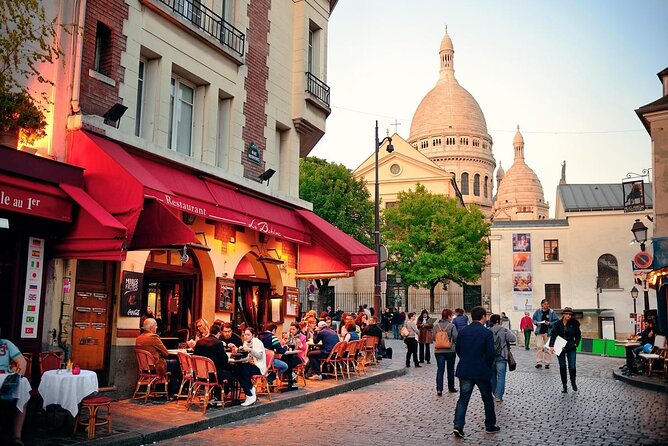
- Self-guided, no app: You use a game booklet with riddles, a map, and cultural notes.
- Landmarks built into the route: Sacré-Cœur, Place du Tertre, the Moulin Rouge, plus the Montmartre vineyards.
- Puzzle style fits mixed ages: Clues include observation, logic, and curiosity so kids can contribute.
- You can get help mid-game: Assistance is available if a clue feels tricky (so you’re not left stuck forever).
- A real time cap: Around 3 hours total; plan breaks fast, because the clock keeps moving.
- Small group limit: Maximum of 20 travelers, which usually means a calmer experience overall.
Why a treasure hunt works so well in Montmartre
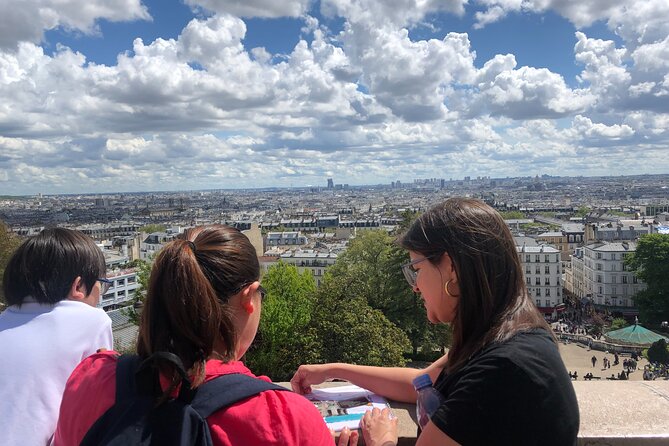
Montmartre is one of those neighborhoods where it’s easy to wander and still feel like you saw “the main sights,” but missed the story. This treasure hunt fixes that problem by giving you a reason to look closely—at doors, corners, views, and the little details that make the area feel theatrical and lived-in.
The game is built around a simple idea: each stop adds a new clue, and each clue is tied to a bit of Montmartre’s identity. You’re not just reading signs. You’re solving. That changes your pace and your attention. Even if you’ve been to Montmartre before, the route can help you connect places you’d otherwise treat as separate postcards.
And because it’s self-guided, it works for your style. Want to sprint through? You can. Want to linger and think? Also fine. You’re still within the structure of the hunt, but you control the rhythm.
Keep climbing: more of the Montmartre hill
- Montmartre Hidden Gems and Scenic Highlights Walking Tour
★ 5.0 · 2,684 reviews - Montmartre Hill French Gourmet Food and Wine Tasting Walking Tour
★ 5.0 · 2,588 reviews - Paris: Montmartre Highlights Walking Tour with a Local Guide
★ 4.9 · 2,318 reviews - Paris: Montmartre Cheese, Wine & Pastry Guided Walking Tour
★ 4.8 · 2,255 reviews
The exact format: what you get (and what you don’t)
At booking, you receive confirmation, and you’ll have access to the materials you need on the spot: a game booklet with riddles, a map, and cultural anecdotes, plus answer sheets and the materials to write. No phone app or downloads are required.
What you don’t get is a traditional tour guide who stands beside you explaining everything in real time. Instead, you play the game and learn through the prompts. If you hit a wall, assistance is available throughout the game, and the team behind it has been described as friendly and welcoming in participant feedback (including a person named Marion, who replies personally and shows up as the face of the experience).
If you’re the kind of traveler who likes to control your own pace but still wants a bit of human backup if needed, this format is a nice middle ground.
Getting started at Anvers: your first move
Your hunt starts at Anvers 75018 Paris, France. That’s a useful detail because it places you in the real Montmartre grid of small streets rather than starting too far up or too far down the hill. It also matters because you’ll end back at the meeting point, so you’re not left figuring out how to get home after you finish.
When you begin, your priority is simple: get oriented. Open the booklet, check the map, and read the first riddle carefully before you start walking. These games usually reward calm focus. If you skip that first step, you can waste time later re-reading clues while you’re already moving.
Also, since the route includes some slopes, plan to walk steadily. The activity is listed as requiring moderate physical fitness, so comfortable shoes help more than you’d expect. You don’t need to be an athlete, but Montmartre’s hills do add up.
Stop-by-stop: how the route tells the Montmartre story
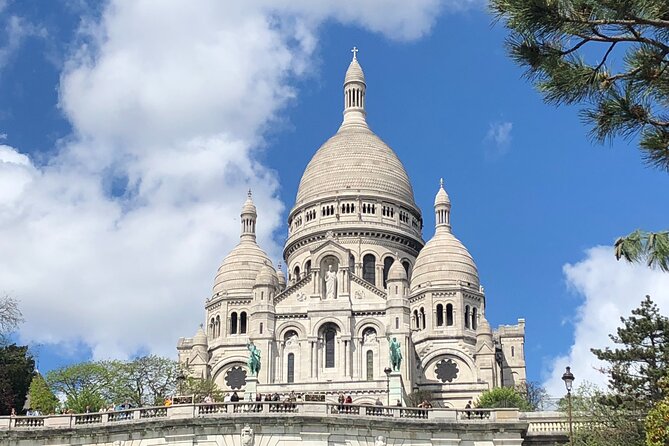
The treasure hunt takes you through several iconic points, with riddles that encourage you to observe and connect what you see to what you’re learning. Here’s what that feels like in practice.
St. Jean de Montmartre and the art nouveau intro
One of the route elements includes passing the art nouveau church of St. Jean de Montmartre. In feedback, the advice was clear: take a few minutes to actually visit it instead of just walking by.
Why it matters: early in the hunt, you’re training your eye. Art nouveau details are exactly the kind of thing riddles love—patterns, design elements, and visual cues that you can’t fully “get” without slowing down.
If you want your hunt to feel smooth, don’t rush the first stretch. Give yourself a quick reset there, then continue with the next clue.
Sacré-Cœur: when the view becomes part of the puzzle
The hunt includes Sacré-Cœur, which is a natural anchor point for Montmartre. In a self-guided game, this kind of landmark is helpful because it gives you a clear sense of where you are and helps you understand the neighborhood’s geography as you solve.
How to use it well: when you reach the Sacré-Cœur area, don’t treat it like a quick photo stop. Look around, scan for the kinds of visual hints the booklet is asking for, and spend a minute or two confirming you’re answering the right question—not just picking the first thing that looks plausible.
Even if you’ve visited Sacré-Cœur before, the treasure hunt framework can turn a familiar place into a “where am I in the story” moment.




Place du Tertre: artists, street energy, and logic clues
The game also includes Place du Tertre, a spot that feels like Montmartre at full volume—art, performance energy, and street life. Here, clues often connect to the neighborhood’s creative identity, including the kind of details that make you think, oh, this is how the artists shaped the area.
This stop tends to work well for families and mixed groups because puzzles can be shared. One person reads; another person spots; another person tries logic. That teamwork dynamic is a big reason the hunt doesn’t feel like a “sit and do schoolwork” activity.
If you’re traveling with kids, this is where you can turn the hunt into a game inside the game: take turns finding clues, then compare answers.
Montmartre vineyards: the calm contrast
The route includes Montmartre vineyards, and that’s a smart choice. Montmartre can feel like it’s all crowds and views, but the vineyards bring a quieter, more surprising side of the neighborhood.
Why vineyards help the experience: riddles tied to less obvious spaces reward attention and curiosity. It’s also a breather. If you’ve been climbing and walking for a while, vineyards give you a visual payoff that isn’t just more stairs and more crowds.
If you’re short on time, don’t skip this section. Even a quick scan can give you the “aha” you need to finish later puzzles confidently.
Moulin Rouge: the investigation ends here
Your treasure hunt ends at the Moulin Rouge, where you discover the resolution of the investigation and the hidden stories behind the neighborhood.
This matters for how the experience lands emotionally. You’re not finishing somewhere random. You’re closing the loop at one of Montmartre’s most recognizable icons, which gives your walk a clear end point and helps you feel like you actually completed something.
Practical tip: save a little energy for the final stretch. Because the ending is at a major landmark, it can be tempting to slow down for photos. Try to be organized so you’re not trying to solve the last clue while you’re also fighting for a photo angle.
Timing and pacing: how to avoid running out of game time
The treasure hunt lasts about 3 hours, and it automatically ends after 3 hours and 30 minutes, wherever you are.
That time rule is the one thing you should actively plan around. In Montmartre, it’s easy to lose 20 minutes just by stepping into a café, stopping for a photo, or getting distracted by the streets.
The good news: you can play at your own pace. The caution: coffee breaks count against the clock. If you want a café stop, treat it as a short one, not a long sit-down.
A simple strategy:
- Start on time.
- When you feel a clue is taking too long, ask for help rather than spinning your wheels.
- Build in a small cushion for the last landmark, so you finish without stress.
Who this fits best (and who might want something else)
This experience is suitable for children aged 8 and up, couples, and families. It’s also well-suited for small groups who like a mix of walking and problem-solving.
It’s a strong match if you:
- want to explore Montmartre beyond the usual photo checklist
- like learning through clues and observation, not lectures
- prefer self-guided travel with easy backup if you get stuck
It might be less ideal if you:
- don’t like any time pressure at all
- want a full guided explanation at each landmark
- struggle with steady walking up and down hills (the activity lists moderate physical fitness)
Value: what you’re really paying for at about $41.70
At $41.70 per person for roughly 3 hours, you’re buying a few things at once:
- A structured route across major Montmartre sights
- A game booklet that includes riddles, a map, and cultural anecdotes
- Materials for completing the game
- Access to assistance if you need a hint
Because there’s no traditional guide included, part of the cost is saved by shifting the learning into the booklet and self-guided format. For many travelers, that makes the price feel fair: you’re not paying for someone’s hourly narration; you’re paying for a designed experience that keeps you moving and thinking.
If you’re traveling with kids, that value can be even clearer. It’s a way to spend time together without everyone being bored or waiting their turn.
Tips to make your hunt smoother (no stress required)
You’ll get the best results if you treat this as a walking game first, sightseeing second. That means small practical choices:
- Wear comfortable shoes. Montmartre’s slopes add up.
- Keep a steady pace early so you have flexibility later.
- Use help quickly if a clue feels stuck. Assistance is available.
- Plan for weather. The activity can be played at your own pace, but it also has a requirement for good weather—if conditions are too poor, you should expect a different date or a refund.
- Don’t over-schedule coffee. Even you know you’ll want one. Just make it short.
Should you book this Montmartre treasure hunt?
If you want a fun, cultural way to see Montmartre that’s more active than a standard walk, I’d book it. The combination of major landmarks, a map-and-riddle booklet, and the chance to finish at Moulin Rouge gives you a clear route and a satisfying ending. The puzzle mix also makes it a good choice for families, with kids able to contribute without feeling like the game is only for adults.
I’d skip it only if you hate time limits or you’d rather have someone narrate every stop like a traditional guided tour. Otherwise, this is a smart “do Montmartre differently” option that helps you look closer and walk with purpose.
FAQ
How long does the Montmartre treasure hunt take?
It lasts around 3 hours, and it automatically ends after 3 hours and 30 minutes wherever you are.
Do I need a mobile app or my phone for this?
No. It’s self-guided and uses a game booklet. There’s no app download required.
What’s included with the booking?
You get a game booklet with riddles, a map, and cultural anecdotes, plus answer sheets and materials needed for the activity. Assistance is available if you need help.
Where does the treasure hunt start and end?
It starts at Anvers 75018 Paris, France, and ends back at the same meeting point.
Is there a guide walking with the group?
No. It’s self-guided, so there’s no tour guide included during the game.
Is it suitable for children?
Yes. It’s suitable for children aged 8 and up.
Is it offered in English?
Yes, the experience is offered in English.
What if I get stuck on a clue?
Assistance is available throughout the game if needed, so you don’t have to stay stuck forever.
What happens if the weather is bad?
The experience requires good weather. If it’s canceled due to poor weather, you’ll be offered a different date or a full refund.
More Tour Reviews in Paris
- Paris: 1-Hour Seine Cruise departing from the Eiffel Tower
★ 4.4 · 77,472 reviews - Paris: Louvre Museum Timed-Entrance Ticket
★ 4.6 · 71,977 reviews - Disneyland® Paris 1-Day Ticket
★ 4.6 · 49,412 reviews - Paris: Versailles Palace and Gardens Full Access Ticket
★ 4.6 · 41,579 reviews - Paris: Arc de Triomphe Rooftop Tickets
★ 4.6 · 34,264 reviews
More of the Montmartre Hill
- Montmartre Hidden Gems and Scenic Highlights Walking Tour
★ 5.0 · 2,684 reviews - Montmartre Hill French Gourmet Food and Wine Tasting Walking Tour
★ 5.0 · 2,588 reviews - Paris: Montmartre Highlights Walking Tour with a Local Guide
★ 4.9 · 2,318 reviews - Paris: Montmartre Cheese, Wine & Pastry Guided Walking Tour
★ 4.8 · 2,255 reviews - The Secrets of Montmartre Walking Tour
★ 4.8 · 1,258 reviews
Fresh off the review desk in Paris
- Secrets of Paris Bike Tour in English or Dutch★ 5.0 · 5 reviews
- Paris: Mont Saint-Michel Day Tour with Chinese Tour Guide★ 5.0 · 5 reviews
- Private Street Art 2-Hour Guided Tour in Paris★ 4.5 · 5 reviews
- Orsay Museum Tour: 2h Highlights (Private & Small Group)★ 5.0 · 5 reviews
- Discover Paris in electric golf carts★ 4.0 · 5 reviews
- Paris Private Boat Tour with your own Captain Guide★ 5.0 · 5 reviews
Montmartre Tours, compared.
 ★ 5.0Montmartre Hidden Gems and Scenic Highlights Walking TourFrom $382,684 reviews
 ★ 5.0Montmartre Hill French Gourmet Food and Wine Tasting Walking TourFrom $1452,588 reviews
 ★ 4.9Montmartre Highlights Walking Tour with a Local GuideFrom $232,318 reviews
 ★ 4.8Montmartre Cheese, Wine & Pastry Guided Walking TourFrom $1272,255 reviews
The Secrets of Montmartre Walking TourFrom $331,258 reviews
★ 4.8Montmartre Cheese, Wine & Pastry Guided Walking TourFrom $1272,255 reviews
The Secrets of Montmartre Walking TourFrom $331,258 reviews
 ★ 4.1Sacré-Coeur and Montmartre Tour with Expert GuideFrom $281,027 reviews
 ★ 5.0Private Montmartre Food Tour with Wine, Cheese & PastriesFrom $3021,027 reviews
 ★ 5.0Paris Montmartre Food Tour – A Full French Meal by Do Eat BetterFrom $95877 reviews
Browse the lists this tour appears in