
Reviewed · PARIS PASTRY & MACARON CLASSES
Ohlala Croissants in Paris!
Croissants taste better when your hands make the layers. In this small Paris class near Nation, you’ll learn the laminated dough bakers use for pâte feuilletée levée in a private apartment setting.
I like that the lesson starts with real context (the difference between viennoiseries and French pastry), then moves straight into doing the work, not just watching. I also like the practical flow: ingredients, tools, and an apron are provided, plus coffee or tea to keep you going.
One consideration: it’s a tight 1 hour 30 minutes, so it’s best viewed as a skill-building session you can repeat later, not a long leisurely bake day. And alcohol isn’t included.
In This Review
- Key points you’ll care about
- Croissant class in Paris 12: a real kitchen feeling, not a studio show
- Getting there: meeting point details that make you feel set up fast
- The lesson’s smart start: viennoiseries vs French pastry
- From scratch to laminated layers: pâte feuilletée levée the hands-on way
- Why laminated dough is the real prize
- Tools, apron, and ingredients keep you focused
- Coffee and tea while the dough does its thing
- How the small group changes everything (and how you should take advantage)
- What to wear and how to prepare (without overthinking it)
- Timing reality: 1 hour 30 minutes means you’ll learn the method, not just the result
- Value checklist: what you’re getting for your time
- Who should book this croissant class?
- Should you book Ohlala Croissants in Paris?
- FAQ
- How long is the croissant baking class?
- What language is the class offered in?
- Where does the class meet in Paris?
- What’s included in the class?
- Is alcohol included?
- Is it good for beginners?
- What is the cancellation policy?
Key points you’ll care about
- Small group (max six) means you get individual attention instead of being shuffled through.
- Private apartment setting in Paris 12, near Nation, feels local and calm compared with big tour spaces.
- Hands-on laminated dough focused on pâte feuilletée levée—the core technique behind classic croissants.
- Coffee and/or tea included, so you’ll have a warm pause during the class.
- Beginners are welcome, with instructors known for patient, step-by-step teaching.
- Photos and videos are welcome, so you can capture your process and results.
Croissant class in Paris 12: a real kitchen feeling, not a studio show
Paris pastry can be confusing at first. People say “croissant,” “viennoiserie,” and “French pastry” like they’re interchangeable. Here, you get a clearer mental map fast. You’re taught croissants specifically, but the class also explains how croissants fit into the broader world of viennoiseries—those pastry categories with a distinct, shared lineage and technique.
The setting is the other big hook: you’re not standing in a commercial classroom with rows of people. The class takes place in a private Parisian apartment in the district 12 near Nation station. It’s the kind of place where you can hear what your instructor is doing, ask questions easily, and actually feel like you’re participating in someone’s kitchen rhythm.
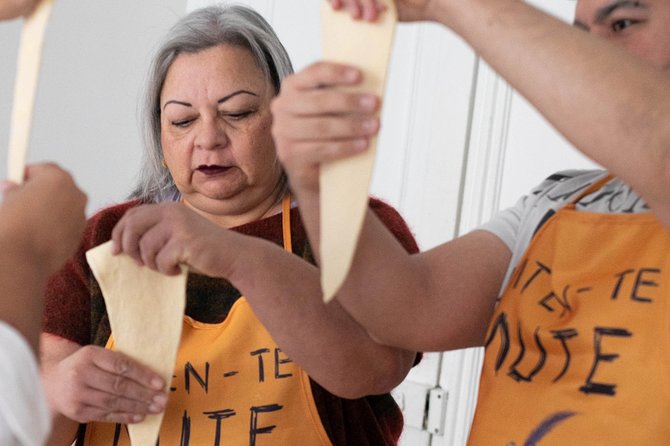
And because the class is capped at six participants, the instructor can correct your technique while it still matters. That’s the difference between learning a recipe and learning a method.
More aprons-on macaron and pastry classes
- Paris: Macaron Class at Galeries Lafayette
★ 4.2 · 1,196 reviews - Paris Croissant Small-Group Baking Class with a Chef
★ 5.0 · 910 reviews - Paris: French Croissant Baking Class with a Chef
★ 4.9 · 712 reviews - Paris Cooking Class: Learn How to Make Macarons
★ 5.0 · 634 reviews
Getting there: meeting point details that make you feel set up fast
The class meets at 22 Pass. du Génie, 75012 Paris. It ends back at the same place, so you don’t have to plan extra walking or transit after you’re done.
This area is practical because it’s near public transport, and the district 12 location is a good launching point for the rest of your day. One more small but helpful note: the apartment is accessed via a house down an alley. That sounds vague, but the takeaway for you is simple—expect a tucked-away entrance, not a front-door “tour bus” setup. Give yourself a few extra minutes the first time you find it, and you’ll have zero stress.
The lesson’s smart start: viennoiseries vs French pastry
Before the dough gets serious, you’ll learn about the difference between viennoiseries and French pastry. This isn’t trivia for trivia’s sake. It changes how you understand what you’re making.
Viennoiseries are often associated with breakfast pastries and with specific techniques (especially dough handling and layering). Croissants sit right in that world. Once you connect croissants to that technique-based identity, laminated dough stops being a mysterious “fancy bread” trick and becomes a skill with a logical reason behind every step.
You’ll also hear the class’s “hidden history” framing—meaning you don’t just get instructions. You get a short, guided explanation of why these pastries became the symbols they are today. It’s the kind of context that makes the rest of the lesson stick.
From scratch to laminated layers: pâte feuilletée levée the hands-on way
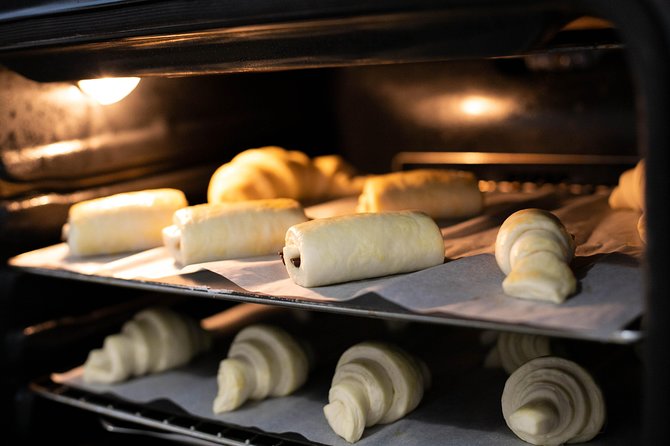
The core of the experience is learning how to make laminated dough—pâte feuilletée levée—the dough bakers use for France’s famous breakfast pastries.
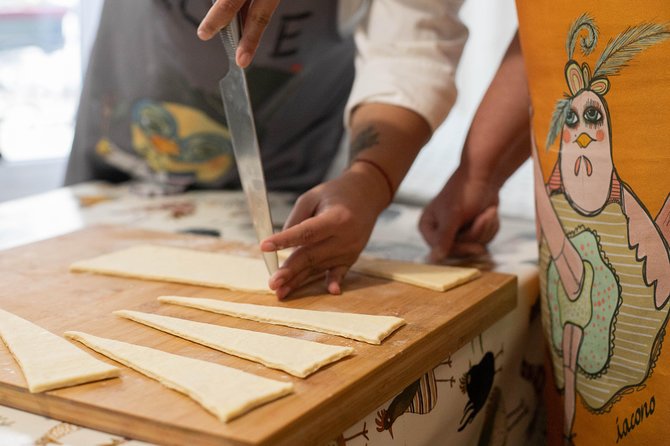
What you should expect here is active participation, not passive watching. The class is based on croissants, and you work through the steps from scratch with your instructor’s guidance. Since it’s only up to six people, it’s realistic to get corrections while you’re still at the stage where they help (and when you can still fix the dough rather than just hoping for the best).
Why laminated dough is the real prize
If you’ve ever tried making croissants at home, you already know the hard part is the layering. Laminated dough is all about controlled thickness, clean folds, and dough that stays workable. This class focuses on the process you’ll need to understand if you want repeat results.
Even if you don’t perfectly nail every single fold on your first try, the value is that you leave knowing what to look for. You’ll learn how the dough should feel and how the layers behave as you work—information that’s hard to get from a cookbook alone.
Tools, apron, and ingredients keep you focused
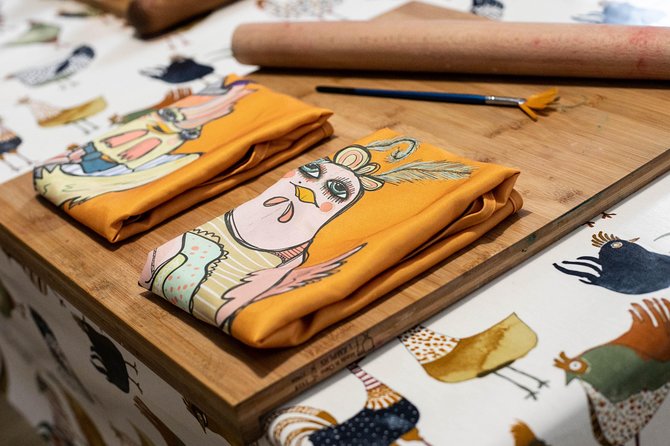
The class provides all ingredients and related tools, and you borrow an apron during the experience. That matters. Croissants are ingredient-sensitive and technique-sensitive. When you show up without worrying about whether you bought the right flour or the right rolling setup, your attention goes exactly where it should: your dough.
And yes, the class is designed for comfort. It’s taught for beginners as well as people who want to level up, so you’re not expected to have pastry “cred” before you walk in.




Coffee and tea while the dough does its thing
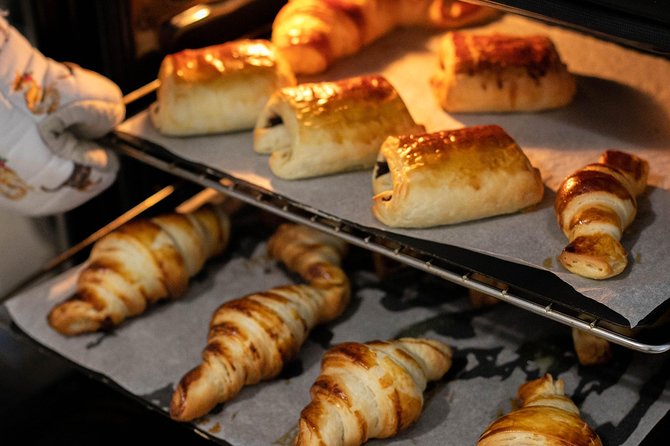
You’ll be served coffee and/or tea during the class. This isn’t just a courtesy. It helps you keep pace during a process that can feel slow and physical. Croissant work asks for patience, and a warm drink is a small but real morale boost.
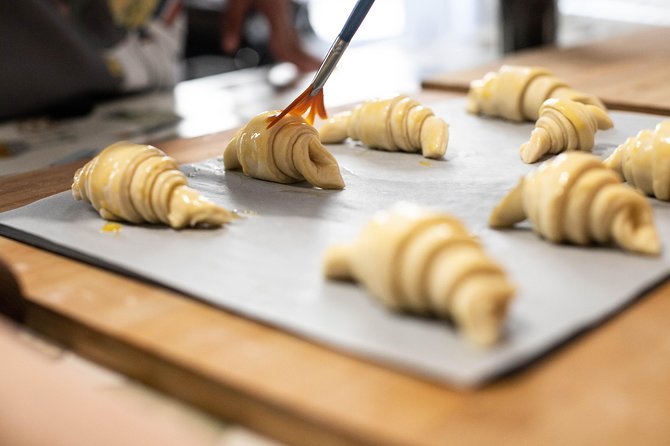
You’ll also get to eat the result. The class includes the dessert: croissant. Since you’re making it yourself, you get that instant satisfaction moment that can be hard to replicate with bakery-only eating. It’s one thing to buy a croissant. It’s another to understand why yours turned out the way it did.
How the small group changes everything (and how you should take advantage)
A class capped at six can be life-changing for technique learning. In a bigger group, you wait your turn for help. Here, you’re more likely to get quick fixes. If you’re rolling too thick or your folding timing is off, it’s much easier for the instructor to notice and redirect you.
The teaching quality is also a standout theme. Names you may see referenced include Carlos and Maria, and Nuby has been praised for being fantastic—especially when the class is small enough to feel like a VIP session. Even without knowing who you’ll get, that general reputation matters: the instruction is built around being supportive, not intimidating.
So for you, the smart move is simple:
- Ask questions early, before the dough teaches you the hard way.
- Pay attention to the instructor’s hand position and pace, not just the words.
- If you’re unsure about a step, stop and ask. Croissants reward clarity.
What to wear and how to prepare (without overthinking it)
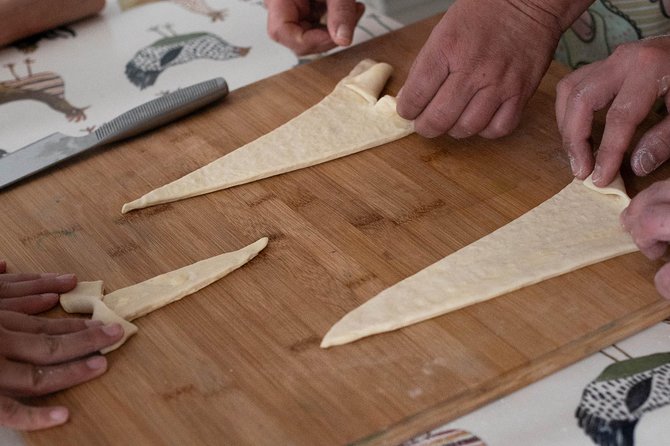
Because this is in an apartment, treat it like a kitchen class. Wear comfortable clothes you don’t mind getting flour on. You’ll have an apron, but it’s not a full-body suit. Also plan to bring a little extra patience—croissant dough doesn’t move on your schedule, and lamination especially rewards steady hands.
If you’re taking photos and videos, you can. The experience explicitly allows as many pictures or videos as you want. That’s perfect for capturing what the layers look like at different stages. Just keep your phone low during messy moments.
Timing reality: 1 hour 30 minutes means you’ll learn the method, not just the result
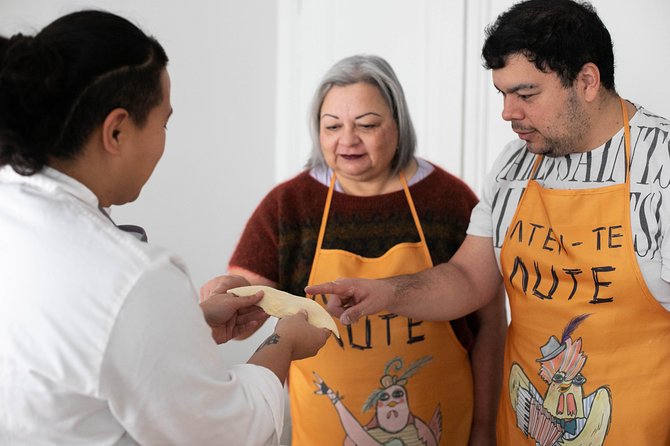
The class runs about 1 hour 30 minutes. That time window is a sweet spot: long enough to make progress and understand laminated dough, but short enough to fit into a normal sightseeing day.
Because the class is compact, it’s best to treat it like a workshop. You’re building a repeatable workflow you can practice later, not producing a full “all-day artisan pastry marathon.” If you’re the type who likes to linger, this might feel quick. If you want focused instruction and then freedom to explore Paris, it’s perfect.
Also, remember the class doesn’t include alcohol. If you’re hoping for a wine pairing or a celebratory drink while you bake, you’ll need to handle that outside the class.
Value checklist: what you’re getting for your time
When I judge a short food experience, I ask two questions: Are you actually learning something usable, and does the setup reduce friction?
Here, the answer is yes. You get:
- Hands-on croissant-making with step-by-step guidance
- Technique focus on pâte feuilletée levée
- Ingredients, tools, and an apron provided
- Coffee and/or tea included
- A small group size (max six) for better attention
- Photos and videos welcome
If you’re traveling and want a meaningful food memory, this kind of class beats a “stand in line, buy pastry, walk away” approach. You’re taking home technique—not just taste.
One more practical thing: the experience is non-refundable and can’t be changed. If you’re booking, do it with a clear plan. If the minimum number of travelers isn’t met, you’ll be offered another date/experience or a full refund—so you’re not left totally stuck. Still, double-check your schedule so you don’t have to fight the clock later.
Who should book this croissant class?
This is a great fit if:
- You want a more hands-on Paris food experience than a typical tasting
- You’re curious about pastry techniques and want a clearer explanation of laminated dough
- You like small classes where instructors can correct you
- You’re a beginner and want to learn from scratch
It might be less ideal if:
- You want a long, slow cooking day
- You’re only interested in eating and not learning technique
- You want alcohol included as part of the experience
Should you book Ohlala Croissants in Paris?
If your goal is to understand croissants beyond the bakery display case, I’d book this. The combination of a private apartment in Paris 12, max-six coaching, and a focused lesson on laminated dough gives you real skill-building value. Add coffee/tea, an apron and tools on hand, and permission to film your process, and you get a class that feels both practical and memorable.
I’d especially recommend it if you’re early in your trip and want a confidence boost for pastry shopping afterward. You’ll start recognizing technique when you taste, which makes the rest of your Paris pastry adventures more fun.
FAQ
How long is the croissant baking class?
It lasts about 1 hour 30 minutes.
What language is the class offered in?
The experience is offered in English.
Where does the class meet in Paris?
The meeting point is 22 Pass. du Génie, 75012 Paris, France, and the activity ends back at the same location.
What’s included in the class?
Coffee and/or tea are included, along with ingredients, tools, and an apron you borrow during the experience. You’ll also make croissants as the included dessert, and you’re welcome to take photos or videos.
Is alcohol included?
No, alcoholic beverages are not included.
Is it good for beginners?
Yes. The class teaches you how to make croissants from scratch, including the laminated dough technique.
What is the cancellation policy?
The experience is non-refundable and can’t be changed for any reason. If it’s canceled because the minimum number of travelers isn’t met, you’ll be offered a different date/experience or a full refund.
More Tour Reviews in Paris
- Paris: 1-Hour Seine Cruise departing from the Eiffel Tower
★ 4.4 · 77,472 reviews - Paris: Louvre Museum Timed-Entrance Ticket
★ 4.6 · 71,977 reviews - Disneyland® Paris 1-Day Ticket
★ 4.6 · 49,412 reviews - Paris: Versailles Palace and Gardens Full Access Ticket
★ 4.6 · 41,579 reviews - Paris: Arc de Triomphe Rooftop Tickets
★ 4.6 · 34,264 reviews
More Macaron and Pastry Classes
- Paris: Macaron Class at Galeries Lafayette
★ 4.2 · 1,196 reviews - Paris Croissant Small-Group Baking Class with a Chef
★ 5.0 · 910 reviews - Paris: French Croissant Baking Class with a Chef
★ 4.9 · 712 reviews - Paris Cooking Class: Learn How to Make Macarons
★ 5.0 · 634 reviews - Paris: French Macaron Culinary Class with a Chef
★ 4.9 · 591 reviews
Fresh off the review desk in Paris
- Secrets of Paris Bike Tour in English or Dutch★ 5.0 · 5 reviews
- Paris: Mont Saint-Michel Day Tour with Chinese Tour Guide★ 5.0 · 5 reviews
- Private Street Art 2-Hour Guided Tour in Paris★ 4.5 · 5 reviews
- Orsay Museum Tour: 2h Highlights (Private & Small Group)★ 5.0 · 5 reviews
- Discover Paris in electric golf carts★ 4.0 · 5 reviews
- Paris Private Boat Tour with your own Captain Guide★ 5.0 · 5 reviews
Paris Pastry & Macaron Classes, compared.
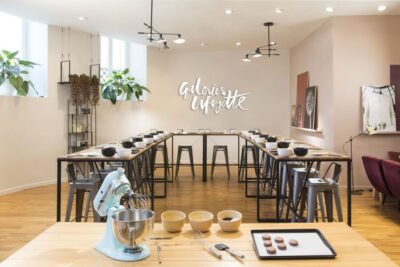 ★ 4.2Macaron Class at Galeries LafayetteFrom $691,196 reviews
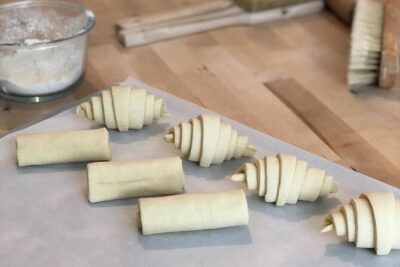 ★ 5.0Paris Croissant Small-Group Baking Class with a ChefFrom $157910 reviews
 ★ 4.9French Croissant Baking Class with a ChefFrom $159712 reviews
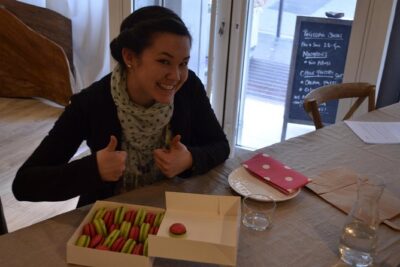 ★ 5.0Paris Cooking Class: Learn How to Make MacaronsFrom $156634 reviews
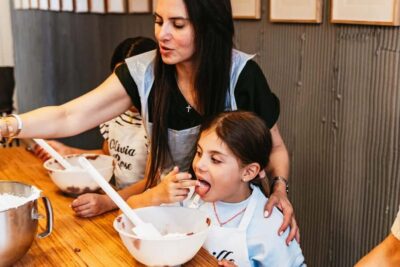 ★ 4.9French Macaron Culinary Class with a Chef591 reviews
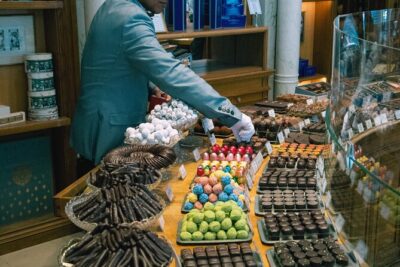 ★ 5.0A Morning in Paris Food Tour: Croissants, Baguettes & ChocolateFrom $125556 reviews
 ★ 5.0Paris Chocolate, Macaron & Pastry Food Tour: 10 Gourmet TastingsFrom $118339 reviews
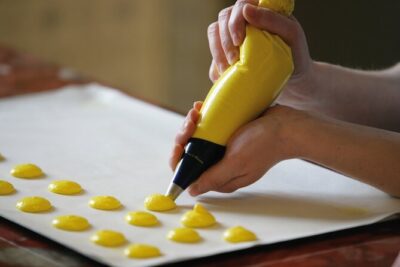 ★ 5.0Paris Macarons Small-Group Baking Class with a ChefFrom $157316 reviews
Browse the lists this tour appears in