
Reviewed · PARIS PASTRY & MACARON CLASSES
Paris: French Croissant Baking Class with a Chef
Croissants are all about technique, not luck. At Maison Fleuret on the Paris Left Bank, a chef-led workshop teaches the steps behind classic French croissants during a 150-minute, small-group session capped at 8. Expect hands-on shaping, lots of tasting, and an atmosphere that feels like a real pastry school rather than a show-and-tell.
I especially love that the class goes beyond one shape: you learn chocolate croissants and chocolate snails using the same laminated-dough logic, so you understand the structure, not just the recipe. Instructors such as Chef Felix and Guillaume are known for step-by-step instruction and making the process feel doable, even on a rainy morning.
At $159 per person, it’s a premium splurge for 2.5 hours, and you’ll need to handle getting yourself to 3 Rue des 3 Portes since there’s no hotel pickup.
In This Review
- Key things that make this class worth your time
- Maison Fleuret at 3 Rue des 3 Portes: a real pastry school, not a performance
- What you actually learn: laminated pastry technique, plus chocolate shapes
- The 150 minutes: how a croissant class stays fun instead of stressful
- Small group dynamics: why 8 people changes your results
- English instruction: a big value add in a technical cooking class
- Price and value: is $159 worth it?
- What you’ll take home: the best part starts right after baking
- Paris pairing ideas: how to schedule it with sightseeing
- Practical considerations before you go
- Should you book this French croissant class?
- FAQ
- Where is the class located?
- How long is the French croissant baking class?
- What language is the instructor?
- How many people are in the group?
- What is included in the price?
- Is hotel pickup or drop-off included?
- Can I cancel for a full refund?
- Can I reserve now and pay later?
- Is the class wheelchair accessible?
- What will I learn to make?
Key things that make this class worth your time
- Small group (max 8) so you’re not lost in the back row while dough decisions happen
- English instruction with a chef guide who can slow down when technique gets tricky
- More than plain croissants: chocolate croissants and chocolate snails are part of the learning
- You take your results home, often in bags enough to turn the next day into breakfast planning
- Paris Left Bank location at Maison Fleuret, handy if you’re pairing this with Notre-Dame area sightseeing
Maison Fleuret at 3 Rue des 3 Portes: a real pastry school, not a performance
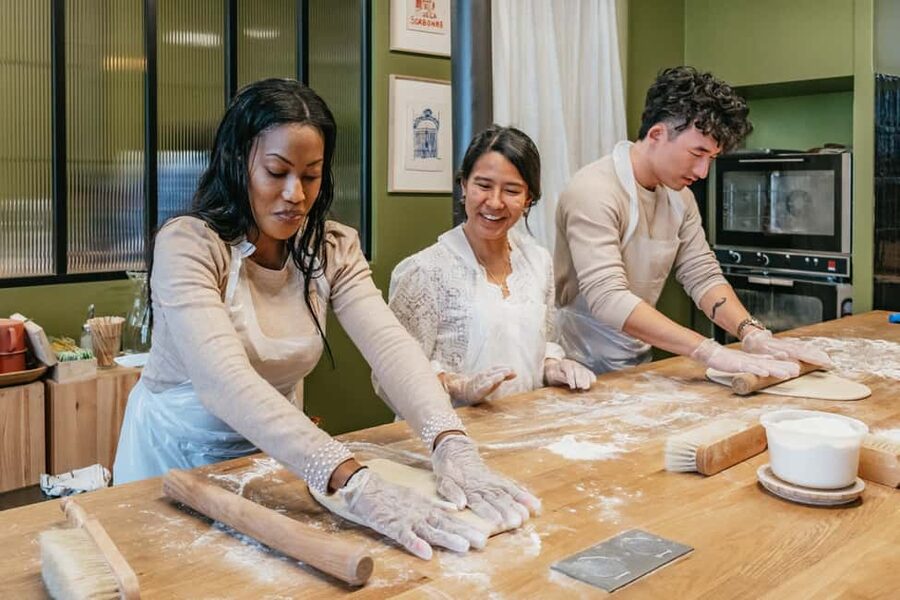
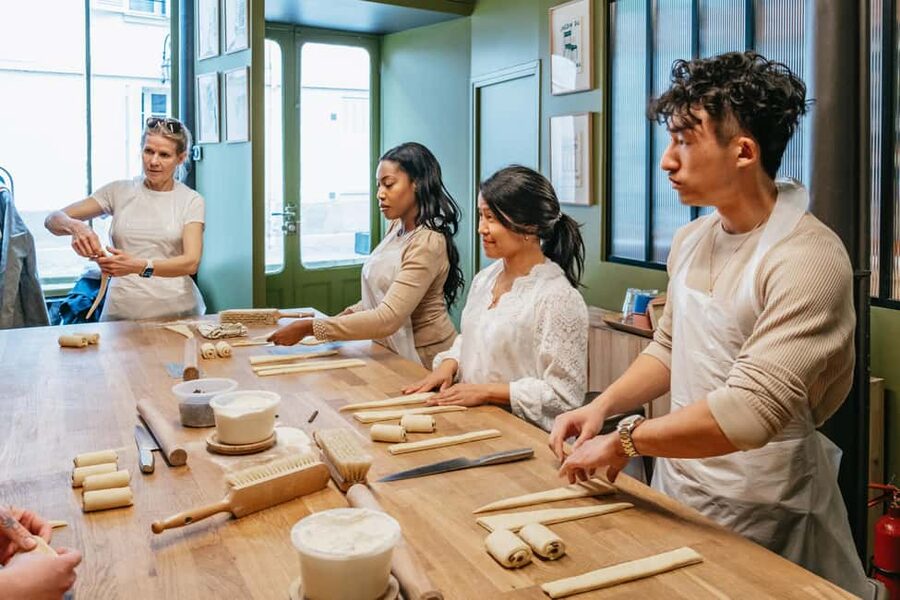
This is the kind of Paris food experience that works even if you’re not a “class person.” The setting is Maison Fleuret’s studio space (on the Left Bank) at 3 Rue des 3 Portes, and the vibe is practical: workstations, tools out, and a chef instructor running the room like a working kitchen.
That matters. Croissant-making is technical. You need a place where you can hear directions clearly, see what the dough should look like, and move at the pace of laminated dough, not the pace of tourists. A small group size (limited to 8) helps a lot here, because the chef can actually check your folds, your roll thickness, and your confidence.
More aprons-on macaron and pastry classes
- Paris: Macaron Class at Galeries Lafayette
★ 4.2 · 1,196 reviews - Paris Croissant Small-Group Baking Class with a Chef
★ 5.0 · 910 reviews - Paris: French Croissant Baking Class with a Chef
★ 4.9 · 712 reviews - Paris Cooking Class: Learn How to Make Macarons
★ 5.0 · 634 reviews
What you actually learn: laminated pastry technique, plus chocolate shapes
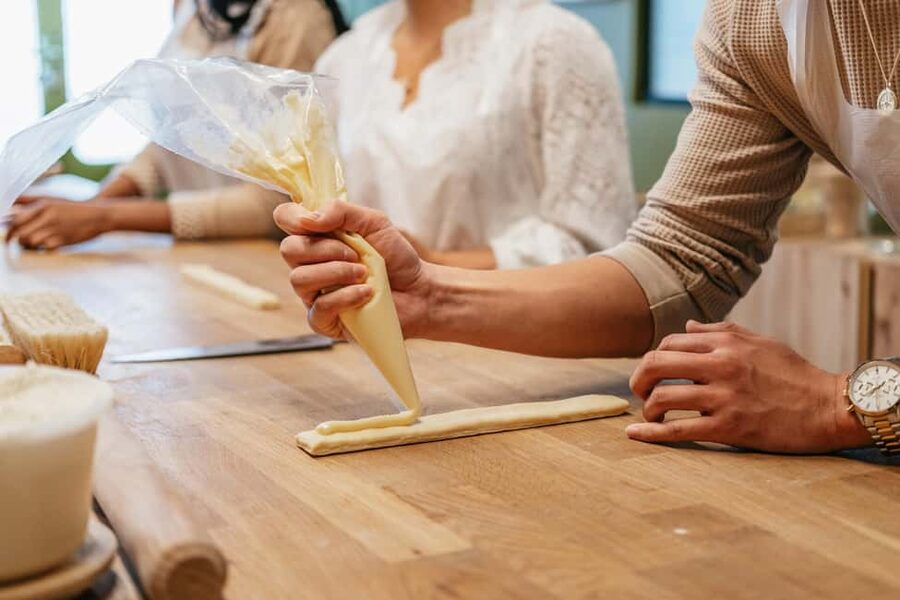
The core focus is unmistakable: you learn how to make authentic French croissants by practicing the technique behind buttery puff pastry. The class is designed around getting you to understand texture—how the layers behave, how the dough should look as you work it, and what makes the final bake crisp and flaky instead of dense.
You also don’t get stuck with only one variation. The program includes tips and practice for chocolate croissants and chocolate snails, which are built on the same laminated-dough foundation. That’s a smart use of class time, because it’s one thing to follow a single recipe; it’s another to understand how the same method supports multiple shapes.
There’s also a history piece woven in: you’ll learn how croissants gained popularity with Parisians and the French in the early 20th century. It’s not presented as trivia. It’s a quick context shot that helps you see croissants as part of French daily life, not just a pastry you buy in a paper bag.
The 150 minutes: how a croissant class stays fun instead of stressful
A 150-minute format is long enough to learn something real, but short enough that you’re not watching dough do its own slow motion for hours. In a class like this, the flow usually follows the same rhythm:
- get oriented and organized with tools and ingredients
- learn the method and shaping steps with close guidance
- spend most of the time actively working the dough (not just watching)
- bake and taste the results, with a take-home portion after
What you’ll likely appreciate is the step-by-step teaching style. Many participants specifically praised instructors for going slowly, explaining clearly, and checking for understanding. Names that came up often in the class experience include Chef Felix, Chef Guillaume, and Chef Ines, along with other instructors such as Erika, Alice, Ke, and Selma. Even when the tone differed, the common theme was patient instruction that made the process feel achievable.
Also, croissant classes can be a bit intense because laminated dough demands attention. Here, the environment is set up so the work feels social instead of silent. You’ll meet other culinary enthusiasts and share tips while you work.
Small group dynamics: why 8 people changes your results
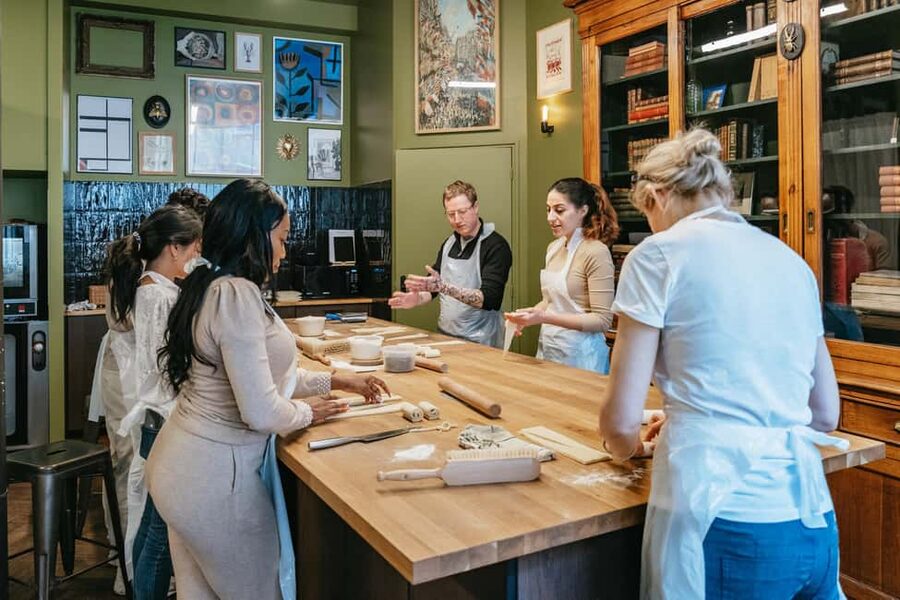
With a class capped at 8 participants, your chef can actually watch what you’re doing. That’s the difference between learning a technique and just collecting a recipe card.
This kind of class often assigns hands-on roles in pairs, and at least one participant noted working in pairs during prep. Practically, that means you’ll still get direct guidance, but you won’t have the pressure of every single step happening in total isolation. It’s a nice balance for adults, teens, and families.
It also helps with questions. If something looks off, you can ask immediately instead of guessing until the dough is too far along to fix. Several instructors were praised for friendliness and clarity in English, which is especially valuable if you don’t speak French pastry terminology.
English instruction: a big value add in a technical cooking class
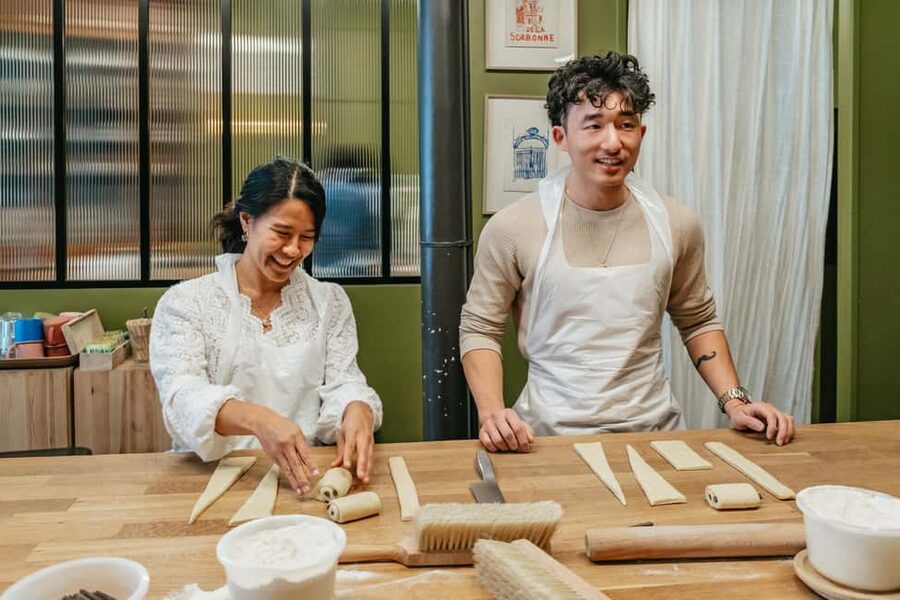
The instructor language is English, which might sound like a small detail, but it’s not. Croissant-making has a lot of small cues: texture, timing, and visual targets. When your chef can explain those cues clearly in English, the technique “clicks” faster, and you’re less likely to lose confidence mid-process.
This is where the best instructors really shine. People described some chefs as warm, professional, and fun without turning the class into a joke. The result is that you learn without feeling rushed, and you’re more likely to take the method home and actually use it again.
Price and value: is $159 worth it?
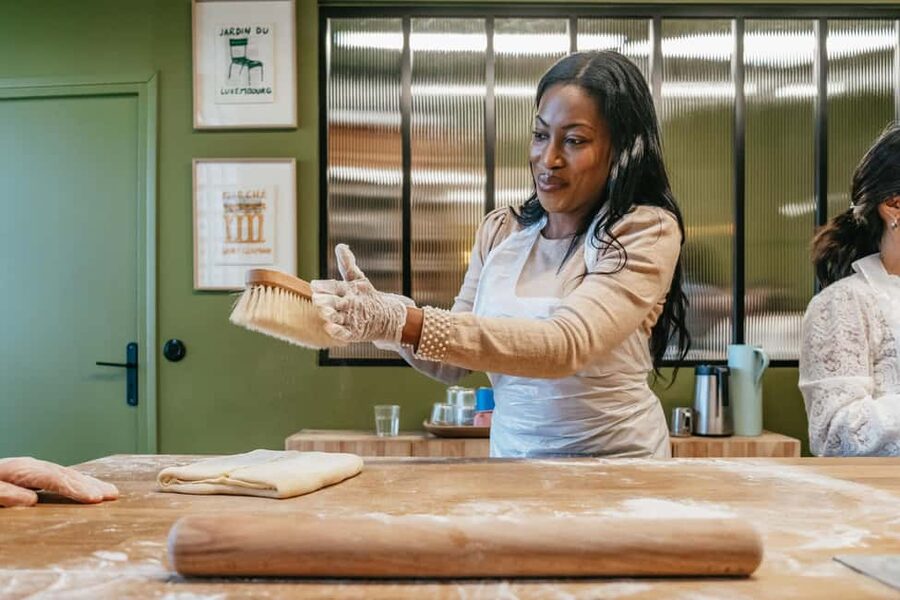
At $159 per person, this isn’t a bargain. It’s priced like an intimate, chef-led workshop in central Paris, which is exactly what it is. So the real question isn’t just the cost. It’s what you get for that money.
Here’s the value picture:
- A 150-minute class led by an instructor, with cooking equipment provided
- Hands-on practice focused on real technique, not only tasting
- Multiple products: croissants plus chocolate variations like chocolate croissants and chocolate snails
- Take-home pastries you make during the session
If you’ve ever bought a single pastry in Paris for a not-so-small price, this class starts to look different. You’re paying to learn a method you can repeat, and you’re getting pastries out of the experience along the way. If you’re the type who hates repeating mistakes in your own kitchen, a structured class is often worth it because you’re learning what to watch for.
The class is best suited for people who enjoy food learning and want a memorable activity that doubles as breakfast planning later.
Worth weighing up next to this Paris pick
What you’ll take home: the best part starts right after baking
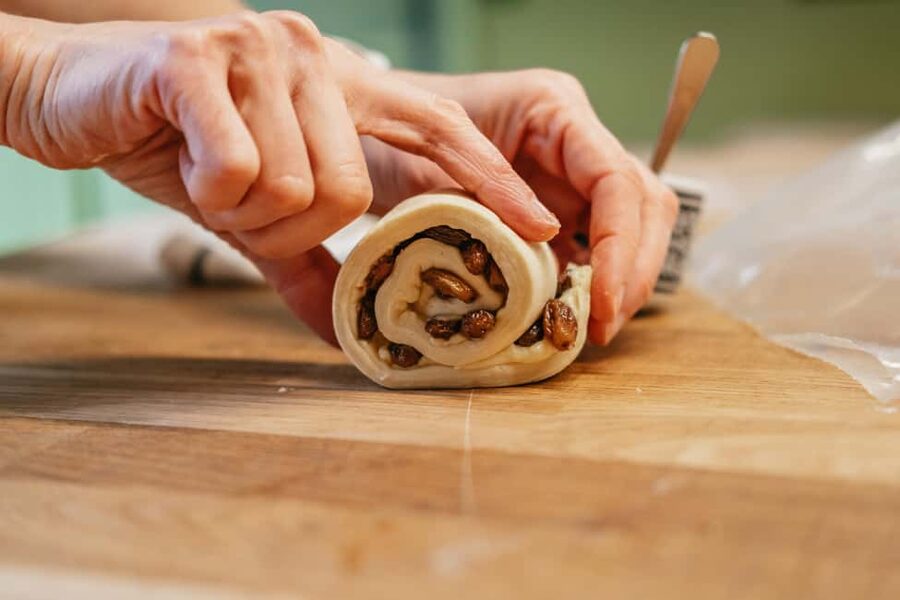
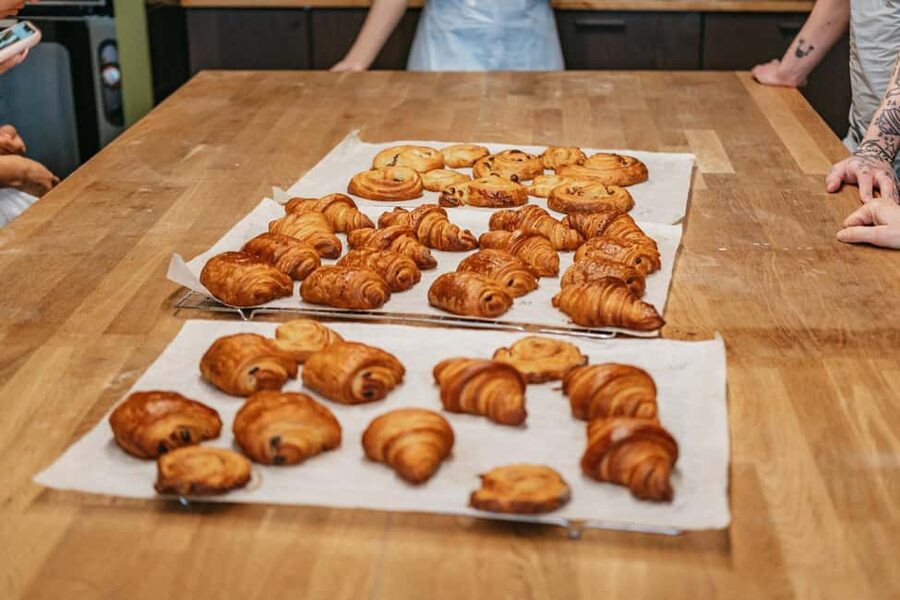
A croissant class is supposed to be about more than technique. The payoff is the smell, the crisp layers, and the butter flavor right out of the oven.
People described leaving with multiple items they made, with enough to eat right away and enough to carry forward into the next days. Several accounts highlighted taking croissants and pain au chocolat home, and others mentioned carrying away bags filled with the pastries they produced.
If you plan your timing well, this can become a practical win. Do the class earlier in your trip and you can treat your next morning like a mini victory lap, using what you learned to guide your own choices at bakeries—or just enjoying the results immediately.
Paris pairing ideas: how to schedule it with sightseeing
The class is on the Left Bank, and the address puts you in an area that’s convenient for classic sightseeing plans, including the Notre-Dame area. That makes this a good “first-week” activity, because it fits naturally into a day where you’re already wandering.
If you’re planning museums, bridges, and long walks, this is a smart way to anchor a day with something active and flavorful. It also works especially well on rainy days, when the city gets gray and you want something warm, indoor, and focused.
My practical advice: schedule this when you’re not rushing. Croissants reward calm attention. You don’t want to be sprinting to the metro right when the class expects you ready.
Practical considerations before you go
A few things to consider so your day goes smoothly:
- No hotel pickup or drop-off: you’ll need to get to the meeting point on your own (3 Rue des 3 Portes).
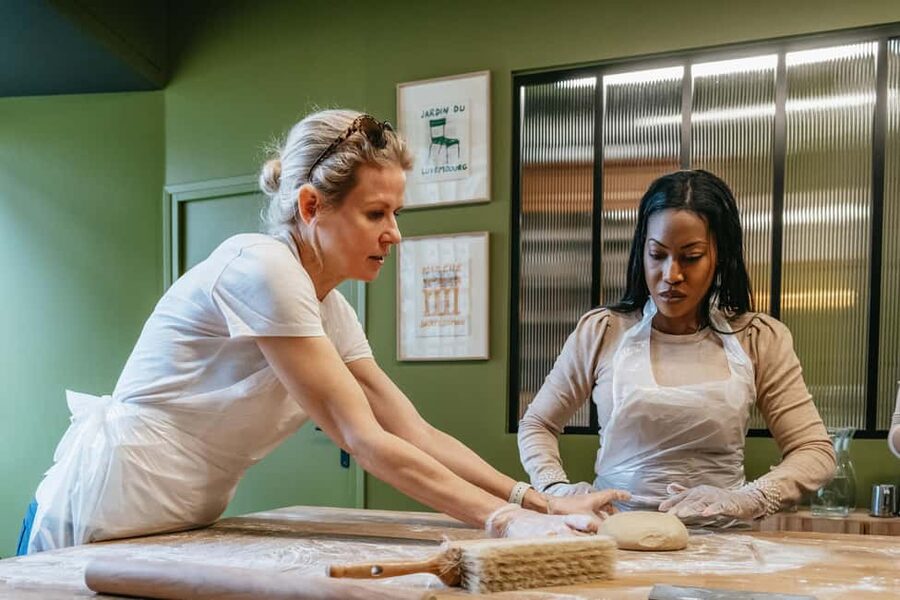
- It’s a hands-on baking experience: expect real work, not passive watching. Multiple people noted the process can feel complicated before the class, then manageable after the chef breaks it down.
- Not every small extra is guaranteed: one participant mentioned not getting offered water or coffee like in other classes, so don’t assume extras beyond what’s stated. If you like having a drink with you, it’s reasonable to plan accordingly.
- You may receive a recipe later: at least one person noted a recipe was sent afterward, though they noticed ingredient differences. Treat any follow-up recipe as helpful guidance, not a substitute for the visual technique you learn in the room.
Should you book this French croissant class?
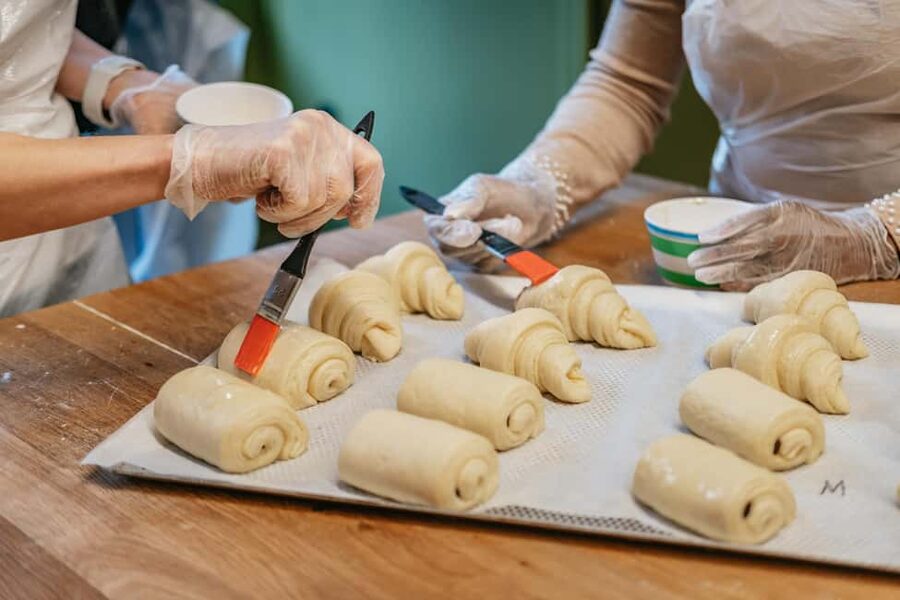
Book it if you want a Paris food experience that actually teaches you how to make something difficult and iconic. The small group size, English-speaking chef instruction, and focus on laminated dough technique make it a strong choice if you like to learn by doing. I’d also recommend it if you’re traveling with teens who enjoy hands-on projects, since many participants described families and younger cooks taking real pride in what they produced.
Skip it if you’re mainly looking for a casual tasting tour. This is technical, structured, and built around baking work. And at $159, it’s best treated as a planned splurge rather than an impulse purchase.
If you want to walk away with croissants you can be proud of—and a method you can attempt again at home—this class is a very solid match.
FAQ
Where is the class located?
The class takes place at Maison Fleuret on the Left Bank. The meeting point address is 3 Rue des 3 Portes.
How long is the French croissant baking class?
The class lasts 150 minutes (about 2.5 hours).
What language is the instructor?
The instructor teaches in English.
How many people are in the group?
The group is small, limited to 8 participants.
What is included in the price?
Included items are the cooking class, cooking equipment, and a chef instructor.
Is hotel pickup or drop-off included?
No. Hotel pickup and drop-off are not included.
Can I cancel for a full refund?
Yes. Free cancellation is available up to 24 hours in advance for a full refund.
Can I reserve now and pay later?
Yes. You can reserve your spot and pay nothing today.
Is the class wheelchair accessible?
Yes, the activity is wheelchair accessible.
What will I learn to make?
You’ll learn how to make French croissants and also practice chocolate variations like chocolate croissants and chocolate snails.
More Cooking Classes in Paris
- Paris Cooking Class and Lunch with Wine plus Market Visit Option
★ 5.0 · 1,024 reviews - Paris Croissant Small-Group Baking Class with a Chef
★ 5.0 · 910 reviews - Paris Cooking Class: Learn How to Make Macarons
★ 5.0 · 634 reviews - Paris Evening Cooking Class French Dinner and Market Visit Option
★ 5.0 · 430 reviews - Paris French Cuisine Small Group Cooking Class with Lunch
★ 4.5 · 418 reviews
More Tour Reviews in Paris
- Paris: 1-Hour Seine Cruise departing from the Eiffel Tower
★ 4.4 · 77,472 reviews - Paris: Louvre Museum Timed-Entrance Ticket
★ 4.6 · 71,977 reviews - Disneyland® Paris 1-Day Ticket
★ 4.6 · 49,412 reviews - Paris: Versailles Palace and Gardens Full Access Ticket
★ 4.6 · 41,579 reviews - Paris: Arc de Triomphe Rooftop Tickets
★ 4.6 · 34,264 reviews
More Macaron and Pastry Classes
- Paris: Macaron Class at Galeries Lafayette
★ 4.2 · 1,196 reviews - Paris Croissant Small-Group Baking Class with a Chef
★ 5.0 · 910 reviews - Paris Cooking Class: Learn How to Make Macarons
★ 5.0 · 634 reviews - Paris: French Macaron Culinary Class with a Chef
★ 4.9 · 591 reviews - A Morning in Paris Food Tour: Croissants, Baguettes & Chocolate
★ 5.0 · 556 reviews
Fresh off the review desk in Paris
- Secrets of Paris Bike Tour in English or Dutch★ 5.0 · 5 reviews
- Paris: Mont Saint-Michel Day Tour with Chinese Tour Guide★ 5.0 · 5 reviews
- Private Street Art 2-Hour Guided Tour in Paris★ 4.5 · 5 reviews
- Orsay Museum Tour: 2h Highlights (Private & Small Group)★ 5.0 · 5 reviews
- Discover Paris in electric golf carts★ 4.0 · 5 reviews
- Paris Private Boat Tour with your own Captain Guide★ 5.0 · 5 reviews
Paris Pastry & Macaron Classes, compared.
 ★ 4.2Macaron Class at Galeries LafayetteFrom $691,196 reviews
 ★ 5.0Paris Croissant Small-Group Baking Class with a ChefFrom $157910 reviews
 ★ 5.0Paris Cooking Class: Learn How to Make MacaronsFrom $156634 reviews
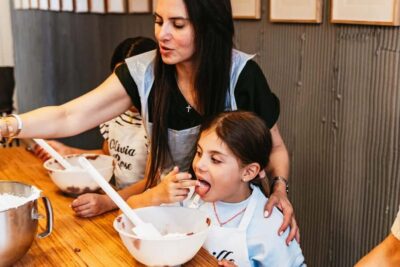 ★ 4.9French Macaron Culinary Class with a Chef591 reviews
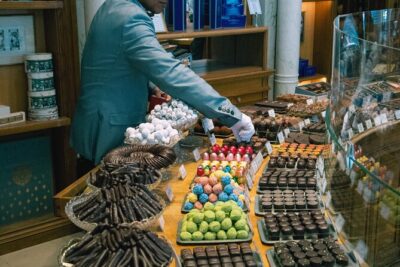 ★ 5.0A Morning in Paris Food Tour: Croissants, Baguettes & ChocolateFrom $125556 reviews
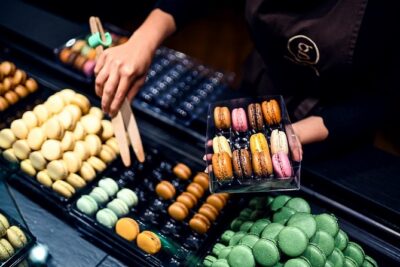 ★ 5.0Paris Chocolate, Macaron & Pastry Food Tour: 10 Gourmet TastingsFrom $118339 reviews
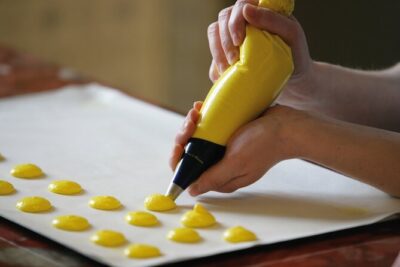 ★ 5.0Paris Macarons Small-Group Baking Class with a ChefFrom $157316 reviews
 ★ 4.0Macaron Bakery Class at Galeries Lafayette ParisFrom $71280 reviews
Browse the lists this tour appears in