
Reviewed · PARIS PASTRY & MACARON CLASSES
Paris Cooking Class: Learn How to Make Macarons
Macarons look fancy, but the process becomes clear fast. This Paris cooking class at Le Foodist turns tricky French techniques into step-by-step, hands-on baking, and you’ll get to choose the shell colors and pipe your own buttercream filling. I really like the small-group feel (max four people) and the fact that you leave with a box of 20 to 30 macarons plus a tea or coffee tasting at the end. The one thing to weigh is that macarons are sweet, and you’ll want to plan how you’ll carry the box home so they don’t get crushed.
You’ll meet your instructor over a welcome drink in central Paris, then spend about three hours learning to make meringue macaron shells from scratch. When your macarons are ready, the class wraps with a short talk about macarons in French culture, followed by tea or coffee. If you’re expecting a casual walk-through with zero pressure, this still is a cooking class—meaning you’ll be actively piping and assembling.
In This Review
- Key Highlights to Know Before You Go
- A Real Skill Lesson, Not a Demo
- A quick note on sweetness
- Le Foodist in Central Paris: Where You Start and What to Expect
- The welcome drink sets the tone
- Making Macaron Shells: Meringue From Scratch (Yes, Really)
- Choose your shell colors
- Instructor styles you might encounter
- Piping Buttercream Filling: The Part You’ll Actually Practice
- Advanced option, if you want the extra challenge
- The Tea and Coffee Tasting Plus the French Macaron Story
- Why this ending works
- What You Take Home: 20 to 30 Macarons in a Box
- Storage and travel sanity check
- How to use your macarons when you get home
- Price and Value: Why $156 Can Make Sense in Paris
- Who This Class Fits Best (and Who Might Skip It)
- This is a great fit if you:
- Family and allergy notes
- A possible mismatch
- Practical Tips for Your 3-Hour Macaron Afternoon
- Should You Book This Paris Macaron Class at Le Foodist?
- FAQ
- How long is the Paris macaron cooking class?
- What time does the class start?
- Where does the class meet?
- Is the class offered in English?
- How many people are in the group?
- What’s included in the price?
- Are macarons included in the menu?
- Is it suitable for gluten allergies?
- What are the age rules?
- What is the cancellation policy?
Key Highlights to Know Before You Go
- Small group size (up to four) keeps the pace comfortable and makes it easier to get help when your shell batter looks off.
- You learn meringue macaron shells from scratch, not just assembly.
- You get to choose the colors for your shells, so your final box looks personal.
- You practice piping buttercream filling, the part that most people find intimidating before they start.
- The finish includes tea or coffee and a short cultural chat about the macaron.
A Real Skill Lesson, Not a Demo
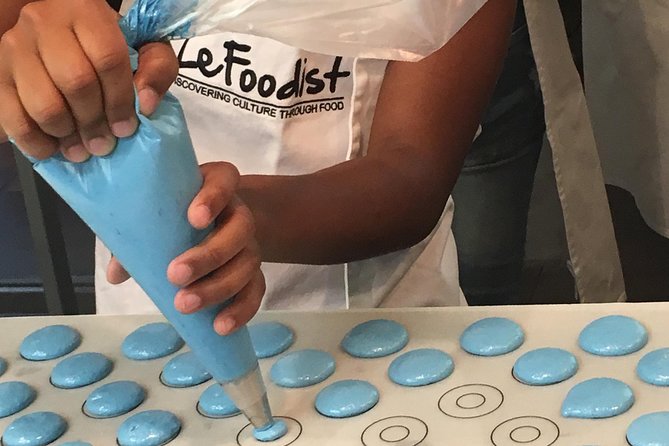
If you’ve ever watched macaron videos and thought, That looks impossible, this class is designed to knock that feeling down quickly. The format is hands-on: you start making the shells yourself, you pipe the filling yourself, and you learn how to correct problems while you’re in the middle of the process.
I also like that this isn’t just about producing dessert. You’ll get instruction that walks you through what to do step by step, with enough personal attention that you’re not just following a timer and hoping for the best. The small group limit is the big reason why this feels doable.
More aprons-on macaron and pastry classes
- Paris: Macaron Class at Galeries Lafayette
★ 4.2 · 1,196 reviews - Paris Croissant Small-Group Baking Class with a Chef
★ 5.0 · 910 reviews - Paris: French Croissant Baking Class with a Chef
★ 4.9 · 712 reviews - Paris Cooking Class: Learn How to Make Macarons
★ 5.0 · 634 reviews
A quick note on sweetness
Macarons are dessert—sweet by nature. One review called them very sweet, and that’s consistent with what you should expect from buttercream-centered macarons. If you prefer not-too-sweet treats, it’s worth planning how you’ll pace the box over a day or two.
Le Foodist in Central Paris: Where You Start and What to Expect
Your afternoon begins at Le Foodist, 59 Rue du Cardinal Lemoine, 75005 Paris. This is a practical address for touring: it’s in the 5th arrondissement area and is described as being near public transportation, which matters because you’re going to want an easy trip both ways.
The class starts at 3:00 pm and runs for about three hours. You’ll receive a mobile ticket, so you won’t need to hunt for printing at the last minute.
The welcome drink sets the tone
Before you start baking, you’ll meet your macaron-making instructor with a refreshing drink. That small pre-class moment does a couple of useful things:
- It helps you settle into the rhythm of class without rushing.
- It gives you a chance to hear what you’re making and how the workshop will flow.
Making Macaron Shells: Meringue From Scratch (Yes, Really)
The core of the experience is learning how to make meringue macaron shells from scratch. This is the stage that intimidates most people, because the batter needs attention and consistency.
What you’ll actually be doing during the class:
- Making the meringue-based shells
- Mixing and working through the batter process with step-by-step guidance
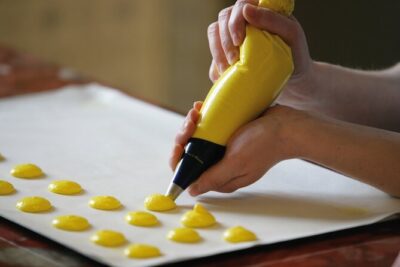
- Learning how to pipe the shell shapes so they bake into the classic macaron look
Choose your shell colors
One of the fun parts is that you can make the shells in colors you choose. That turns the class from a standard recipe into something more personal. It also means you’ll be thinking visually as you pipe—helpful for beginners because it gives you a clear target.
Worth weighing up next to this Paris pick
Instructor styles you might encounter
The class can be taught by different pastry chefs, including instructors named in class feedback such as Chef Stéphane, Chef Luc, Paulo, Fanny, Ann, and Florence. In at least one account, Chef Stéphane is described as a Michelin-star pastry chef, which lines up with the way people talk about the instruction: patient, structured, and practical.
Piping Buttercream Filling: The Part You’ll Actually Practice
Once your shells are ready, the class moves into assembling macarons the way French pastry shops do: by pairing shells with filling and making the piping part look clean and controlled.
You’ll learn how to:
- Pipe the buttercream filling
- Assemble macarons with your own batches
- Keep the work moving at a pace that still lets you ask questions
This matters because piping is where many people get stuck at home. Even if your shell technique is okay, messy filling can make the final result look less like a macaron and more like a cookie sandwich. The class teaches you the piping mechanics so you don’t have to guess.
Advanced option, if you want the extra challenge
There’s an advanced macarons class option available. If you pick it, the session is designed to cover macarons subtleties (so you’re not just repeating the basics). The listing says the advanced option is included if selected, which is ideal if you already have some kitchen confidence and want more than the starter version.
The Tea and Coffee Tasting Plus the French Macaron Story
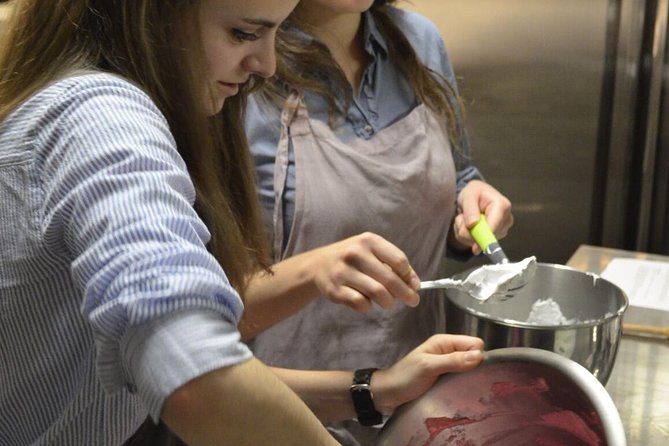
After the baking and assembly time, you’ll sample your creations. The experience includes coffee or tea, and you’ll get to taste what you made while you’re still in the class setting.
There’s also a short talk from your host about the macaron’s place in French culture and tradition. This part is more than trivia. It helps you understand why macarons have such a devoted following in France, and it gives context to the effort you just put in.
Why this ending works
A lot of cooking classes stop once the food is finished. This one gives you a small tasting moment, so you can:
- Judge what you made while it’s fresh
- Ask quick follow-up questions while the instructor is still there
- Make sure you know what you’d adjust if you bake again at home
Then the class ends back at the meeting point area.
What You Take Home: 20 to 30 Macarons in a Box
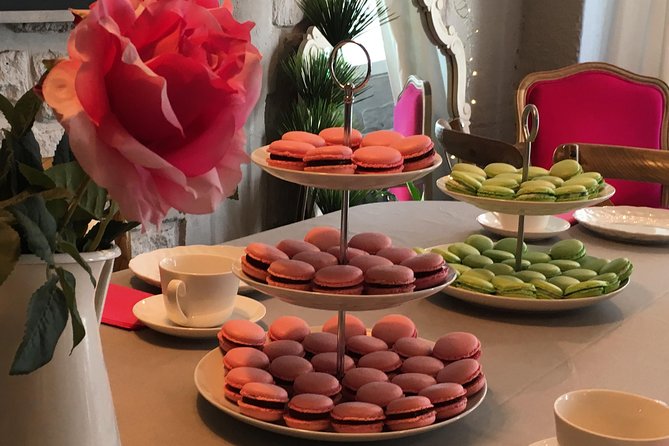
One of the strongest value points is what’s included for take-home: a box of 20 to 30 macarons. That’s a lot for a single afternoon, and it means you aren’t just paying for instruction—you’re bringing home something tangible.
Storage and travel sanity check
One review noted that macarons didn’t survive the trip home well in a flimsy box, which is a useful reminder: macarons are delicate. If you’re flying or taking a long transit ride, plan to keep the box in a carry-on or secure it so it doesn’t get squished.
How to use your macarons when you get home
A practical move is to serve them the same day if possible, or store them carefully and eat over the next day or two. If you’re hosting, you can also split flavors across guests to make it feel like a tasting box rather than a single big dessert session.
Price and Value: Why $156 Can Make Sense in Paris
At $156 per person, this class isn’t cheap compared with a pastry counter stop. But it can still feel like good value because you’re paying for:
- A 3-hour guided lesson (not a short demo)
- Small-group attention (max four people)
- Equipment and required attire included
- A welcome drink plus tea or coffee
- A big take-home payoff: 20 to 30 macarons
The hidden value is the “fixing errors while you’re learning” part. Macarons fail for lots of reasons—timing, batter consistency, technique, piping. A class like this shortens your trial-and-error time and helps you walk away with a method you can try again.
One more thing: the booking trend shows it’s in demand. The average booking window is about 57 days in advance, which usually means people who wait too long can lose their preferred time slot.
Who This Class Fits Best (and Who Might Skip It)
This is a great fit if you:
- Love French pastries and want an actual hands-on Paris baking experience
- Want a class with personal attention instead of a large group workflow
- Are willing to spend three hours working actively in the kitchen
- Want a take-home dessert box you didn’t buy off a shelf
Family and allergy notes
- Minimum age is 12 years
- No unaccompanied children are accepted
- The class is listed as suitable for those with gluten allergies
If you’re traveling with teens, it’s a fun way to do something that feels like “real life in France,” not just sightseeing. And if gluten is an issue, it’s a point in the class’s favor.
A possible mismatch
If you dislike sweet desserts or you only want “light tasting” without much participation, this might feel like a lot of sugar and technique. You’ll be making and assembling macarons, not just tasting them.
Practical Tips for Your 3-Hour Macaron Afternoon
A few small moves can make the experience smoother:
- Arrive a few minutes early. You’ll want time for the welcome drink and settling in.
- Wear comfortable clothes. This is a baking room situation with required equipment and attire.
- Ask questions early. The class structure works best when you flag issues during the step-by-step process.
- Plan your carry-out. Macarons are fragile. Bring a realistic plan for keeping the box intact until you eat them.
- If you pick the advanced option, bring a little confidence. The listing suggests there are more subtleties, so it’s better with at least some basic comfort in the kitchen.
Should You Book This Paris Macaron Class at Le Foodist?
I’d book this class if you want a genuine French pastry skill in a short afternoon, with a small group and a big take-home reward. The biggest reasons are simple: you make the shells from scratch, you get help with the tricky parts, and you leave with 20 to 30 macarons plus a tea or coffee tasting.
I might skip it if your trip is too packed for a focused three-hour baking block, or if you hate sweet desserts and don’t want to deal with a delicate box on transit.
If you’re traveling to Paris and want something more hands-on than a museum visit, this is a strong choice.
FAQ
How long is the Paris macaron cooking class?
The class runs for about 3 hours.
What time does the class start?
The start time is 3:00 pm.
Where does the class meet?
It meets at Le Foodist, 59 Rue du Cardinal Lemoine, 75005 Paris, France.
Is the class offered in English?
Yes, it is offered in English.
How many people are in the group?
The activity is limited to a maximum of 4 travelers.
What’s included in the price?
You get a welcome drink, use of required equipment and attire, coffee or tea, and a box of 20 to 30 macarons to take home. An advanced macarons class is included if you select that option.
Are macarons included in the menu?
Yes. The sample menu is simply macarons.
Is it suitable for gluten allergies?
The tour/activity is listed as suitable for those with gluten allergies.
What are the age rules?
The minimum age is 12 years, and no unaccompanied children are accepted.
What is the cancellation policy?
You can cancel up to 6 days in advance for a full refund. Cancel 2–6 days before for a 50% refund, and less than 2 days before is not refundable.
More Cooking Classes in Paris
- Paris Cooking Class and Lunch with Wine plus Market Visit Option
★ 5.0 · 1,024 reviews - Paris Croissant Small-Group Baking Class with a Chef
★ 5.0 · 910 reviews - Paris: French Croissant Baking Class with a Chef
★ 4.9 · 712 reviews - Paris Evening Cooking Class French Dinner and Market Visit Option
★ 5.0 · 430 reviews - Paris French Cuisine Small Group Cooking Class with Lunch
★ 4.5 · 418 reviews
More Tour Reviews in Paris
- Paris: 1-Hour Seine Cruise departing from the Eiffel Tower
★ 4.4 · 77,472 reviews - Paris: Louvre Museum Timed-Entrance Ticket
★ 4.6 · 71,977 reviews - Disneyland® Paris 1-Day Ticket
★ 4.6 · 49,412 reviews - Paris: Versailles Palace and Gardens Full Access Ticket
★ 4.6 · 41,579 reviews - Paris: Arc de Triomphe Rooftop Tickets
★ 4.6 · 34,264 reviews
More Macaron and Pastry Classes
- Paris: Macaron Class at Galeries Lafayette
★ 4.2 · 1,196 reviews - Paris Croissant Small-Group Baking Class with a Chef
★ 5.0 · 910 reviews - Paris: French Croissant Baking Class with a Chef
★ 4.9 · 712 reviews - Paris: French Macaron Culinary Class with a Chef
★ 4.9 · 591 reviews - A Morning in Paris Food Tour: Croissants, Baguettes & Chocolate
★ 5.0 · 556 reviews
Fresh off the review desk in Paris
- Secrets of Paris Bike Tour in English or Dutch★ 5.0 · 5 reviews
- Paris: Mont Saint-Michel Day Tour with Chinese Tour Guide★ 5.0 · 5 reviews
- Private Street Art 2-Hour Guided Tour in Paris★ 4.5 · 5 reviews
- Orsay Museum Tour: 2h Highlights (Private & Small Group)★ 5.0 · 5 reviews
- Discover Paris in electric golf carts★ 4.0 · 5 reviews
- Paris Private Boat Tour with your own Captain Guide★ 5.0 · 5 reviews
Paris Pastry & Macaron Classes, compared.
 ★ 4.2Macaron Class at Galeries LafayetteFrom $691,196 reviews
 ★ 5.0Paris Croissant Small-Group Baking Class with a ChefFrom $157910 reviews
 ★ 4.9French Croissant Baking Class with a ChefFrom $159712 reviews
 ★ 4.9French Macaron Culinary Class with a Chef591 reviews
 ★ 5.0A Morning in Paris Food Tour: Croissants, Baguettes & ChocolateFrom $125556 reviews
 ★ 5.0Paris Chocolate, Macaron & Pastry Food Tour: 10 Gourmet TastingsFrom $118339 reviews
 ★ 5.0Paris Macarons Small-Group Baking Class with a ChefFrom $157316 reviews
 ★ 4.0Macaron Bakery Class at Galeries Lafayette ParisFrom $71280 reviews
Browse the lists this tour appears in