
Reviewed · PARIS AQUARIUM & ZOO
Paris: Ménagerie Zoo of Jardin des Plantes Entrance Ticket
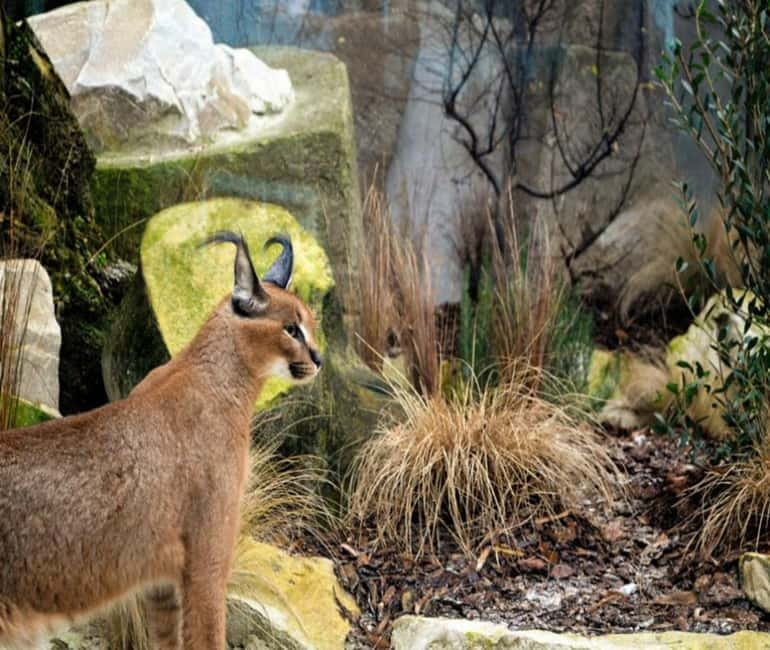
Births at a centuries-old zoo hit different. The Ménagerie Zoo at Jardin des Plantes turns a simple animal walk into a conservation-minded day, especially when spring brings newborns. I like the way the place mixes close viewing with big-picture lessons about endangered species.
I also love the focus on conservation work you can actually see in action, from breeding programs to reintroduction efforts. One caution: some older enclosures can feel tight or worn, and one visitor raised sharp concerns about enclosure conditions for specific species. If that’s a trigger for you, plan to look closely and move on if you’re uncomfortable.
This visit is a single-day ticket for about $15 per person, and it’s wheelchair accessible. For a full experience, you’ll want to slow down. Give yourself enough time to read, watch, and repeat the parts you like.
In This Review
- Key things I think you’ll notice right away
- Ménagerie Zoo at Jardin des Plantes: a Paris zoo that’s been doing this a long time
- What your $15 admission is really buying you
- Getting there: Jardin des Plantes by metro, RER, bus, and Batobus
- How to plan your 1-day walk without turning it into a sprint
- Arc 1: Start with landmarks so you don’t lose your bearings
- Arc 2: Use the biodiversity trail as your backbone
- Arc 3: Save your emotional favorites for the second half
- Newborn animal energy: what spring births can change about your visit
- Iconic species you might actually remember on the walk home
- Conservation at the heart: breeding and reintroduction, explained by what you see
- Workshops, keepers, and the people behind the animals
- Historic architecture: Rotonde and Grande Volière in your walking route
- Winter caution: quiet cages versus full-energy viewing
- Animal welfare questions: what to do with the concerns you might hear
- Who this visit suits best (and who should think twice)
- Should you book the Ménagerie Zoo ticket?
- FAQ
- How much is the Ménagerie Zoo entrance ticket?
- How long is the ticket valid?
- What’s included with the ticket?
- Are meals included?
- Is there a personal tour guide included?
- Where can I go by public transport?
- What time is the last admission?
- Is the zoo wheelchair accessible?
- Are there free admission options?
- Can my ticket be used at other places?
- What’s the cancellation policy?
Key things I think you’ll notice right away
- A zoo with roots back to 1794, right in the Jardin des Plantes campus
- Springtime newborns can be the emotional highlight of the whole day
- Conservation on site, including breeding and reintroduction stories
- Historic architecture you’ll pass as you walk (including the Rotonde and Grande Volière)
- A 12-step biodiversity trail plus chances to meet keepers and caretakers
Ménagerie Zoo at Jardin des Plantes: a Paris zoo that’s been doing this a long time

The Ménagerie Zoo is one of the oldest zoos in the world, founded in 1794. That age matters, because it shapes both what you see and how you experience the place. The animals are the main event, but the setting feels like a living museum too.
I like that you don’t just look at cages. You notice the design choices behind the habitats, and you start connecting those designs to welfare and education. This isn’t a themed park. It’s a functioning zoo within a historic botanical-science environment.
You’ll see around 150 species, and nearly 40% of them are facing extinction. That number pushes the visit beyond simple curiosity. It gives you a reason to pay attention to what you’re seeing, not just how cute it looks in the moment.
Aquarium and zoo days for younger travellers
- Paris: Paris Zoological Park Entrance Ticket
★ 4.6 · 1,547 reviews - Paris: Ménagerie Zoo of Jardin des Plantes Entrance Ticket
★ 4.5 · 55 reviews - Private Return Transfer Thoiry Zoo Safari from Paris
★ 3.5 · 10 reviews - Zoo Of Beauval – Private Trip
★ 4.5 · 9 reviews
What your $15 admission is really buying you
At about $15 per person for the entrance ticket, you’re paying for access to the zoo itself—no meal bundle, and no personal guide included. That sounds basic, but it’s actually a good value for a place like this because the site offers multiple “layers” of attention:
- Animal viewing across a lot of different species
- Conservation themes tied to breeding and reintroduction
- Walking routes that include historic buildings
- Interactive-style elements like workshops/keeper moments and the 12-step biodiversity trail
If you’re the type who enjoys reading signs and watching behavior, you’ll get more out of the ticket. If you want a guided “talk you through everything” experience, you’ll need to supply your own curiosity—there’s no personal guide included.
Plan for a full day at a calm pace. The zoo is designed so you can linger, not rush.
Getting there: Jardin des Plantes by metro, RER, bus, and Batobus

You can keep this day simple with public transport. The Jardin des Plantes area is well served, which matters in Paris when you’re pairing sights.
Here are practical options that match the zoo area:
- Metro / RER (common routes):
- Metro Line 5 to Gare d’Austerlitz
- Metro Line 7 to Censier Daubenton
- Metro Line 10 to Jussieu or Gare d’Austerlitz
- RER C to Gare d’Austerlitz
- Bus lines: 24, 57, 61, 63, 67, 89, 91
- Batobus: Jardin des Plantes stop
- Train stations nearby: Gare d’Austerlitz and Gare de Lyon
My tip: pick the route that lands you closest to Jardin des Plantes first, then let the walking take over. You’re going to be on your feet for the zoo anyway, and it’s nicer to arrive already oriented.
How to plan your 1-day walk without turning it into a sprint
You don’t get a timed itinerary for this experience, so your job is pacing. The good news: the zoo’s layout naturally encourages you to choose your flow. I’d treat it like three arcs you can mix and match.
Arc 1: Start with landmarks so you don’t lose your bearings
Two buildings are especially worth targeting early: the Rotonde and the Grande Volière. They’re part of the zoo’s architectural heritage going back to the early 19th century. Even if you don’t read every panel, noticing these structures helps you understand that this place has been shaped over time.
Arc 2: Use the biodiversity trail as your backbone
The zoo includes a 12-step biodiversity trail that focuses on local wildlife and conservation practices. This is one of the best ways to turn the experience into something more than an animal checklist. You’re not only watching creatures—you’re learning how biodiversity connects to conservation work.
If you only do one “learning” loop, make it this one. It gives structure to the day.
Worth weighing up next to this Paris pick




Arc 3: Save your emotional favorites for the second half
You’ll likely have a few species that pull you in—maybe birds, maybe primates, maybe antelope-like animals. Try to do your most exciting enclosures after you’ve already gotten the rhythm of walking and watching.
That way, you’re not standing around bored early, then rushing later.
Newborn animal energy: what spring births can change about your visit
If your timing lines up with the season, this zoo can feel extra special. The experience highlights springtime births and young animals, with examples like:
- Short-tailed pademelon
- Kirk’s dik-dik
When births are happening, it changes the whole tone of the zoo. People slow down. Signs feel more urgent. You start noticing smaller movements and family behavior instead of just trying to spot the animal.
Even if you’re not visiting during peak birth season, keep an eye on what’s mentioned on-site. The zoo’s animal education approach is built around those moments of wonder turning into conservation awareness.
Iconic species you might actually remember on the walk home
Some species are singled out for a reason: they’re recognizable, visually striking, or tied to the zoo’s conservation effort.
A few you can look for include:
- Rothschild’s mynahs, known for striking plumage
- Golden lion tamarins, a headline species in conservation conversations
- Arabian oryx, a strong example of reintroduction work
You’ll also see animals like the Arabian oryx and the golden lion tamarin referenced as part of successful programs. This matters because it turns the zoo into a place where you can learn what conservation success looks like, not just that it’s needed.
Conservation at the heart: breeding and reintroduction, explained by what you see
One of the biggest reasons to go is the zoo’s conservation focus. The experience highlights that the caretaking team includes veterinarians and ethologists, and that the zoo has breeding programs and reintroduction efforts.
In plain terms, here’s why this is valuable for you:
- Breeding programs help sustain species that are threatened
- Reintroduction efforts aim to restore populations in appropriate habitats
- Education makes it easier to understand conservation beyond headlines
The zoo specifically points to reintroduction examples like the Arabian oryx and golden lion tamarin. If you’re the type who wants to know what “conservation” means on the ground, you’ll like this angle. It’s not abstract.
Also, the zoo’s approach is described as prioritizing small to medium-sized species, with designed enclosures meant to support their needs. That doesn’t automatically guarantee you’ll like every viewing experience, but it does show the zoo has intent in how it houses animals.
Workshops, keepers, and the people behind the animals
This kind of zoo visit often works best when you feel connected to the humans doing the work. The experience includes opportunities to:
- Participate in workshops
- Meet keepers
- Interact with caretakers and learn through the zoo’s education trail
Even if you only catch a short keeper moment, it can change how you watch. Instead of only asking What is it? you start asking How do they care for it? That mental shift is what makes the conservation message stick.
Historic architecture: Rotonde and Grande Volière in your walking route
The Ménagerie Zoo has architectural heritage that dates to the early 19th century. The Rotonde and the Grande Volière are called out as key structures.
Why you should care: older zoos weren’t built with today’s best-practice design standards. But they also hold a unique kind of place-meaning. You’ll feel that tension as you walk—between old stone and modern conservation goals.
If you like travel that mixes culture and nature, this part is a bonus. It’s not just “cute animals in a park.” It’s a historic institution still doing real work.
Winter caution: quiet cages versus full-energy viewing
One booking experience specifically suggested avoiding the zoo in winter unless you’re okay with mostly empty-looking enclosures. That’s a fair consideration if you hate slow viewing.
Animals may be less active when it’s cold, and the zoo’s enclosed spaces can feel extra still. My practical take: if you’re visiting in winter, adjust your expectations. Bring patience. Also, expect the day to be more about reading, conservation signage, and architectural walking, not just nonstop animal sightings.
If you can choose, spring and milder seasons generally give you better odds for lively behavior and newborn sightings.
Animal welfare questions: what to do with the concerns you might hear
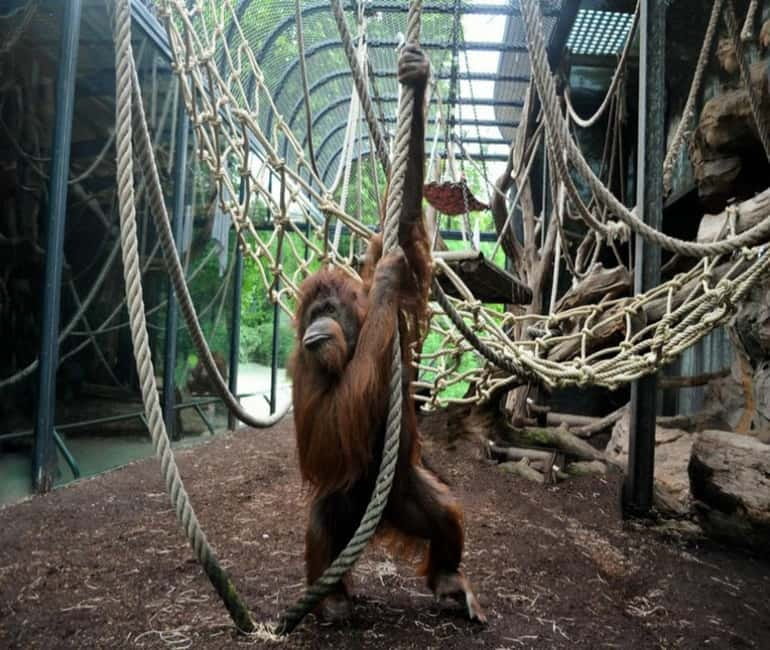
I want to be honest here. One strongly negative booking raised concerns about mistreatment, describing worn or too-small cages and calling out specific enclosures for a leopard and an orangutan.
I can’t verify conditions from a single comment. But you can take the concern seriously in a practical way:
- Watch the animal’s behavior and access to movement where you can
- Pay attention to whether animals appear unsettled or are showing normal patterns
- If an enclosure doesn’t sit right with you, move on quickly rather than forcing yourself to stay
This zoo is also framed as caring for animals with veterinarians and ethologists involved. That combination—real-world care plus older infrastructure—means your comfort level will vary by your priorities and sensitivities.
If animal welfare concerns are a deal-breaker, treat this as a “go with eyes open” day. Don’t rely on photos alone.
Who this visit suits best (and who should think twice)
This is a strong fit if you:
- Want conservation education tied to real species
- Like historic places and don’t mind reading your way through a site
- Enjoy the special energy that newborn animal sightings can bring
- Are happy doing a self-paced walk for one day
Think twice if you:
- Are uncomfortable with older enclosures and the way they can look
- Want constant high activity levels from animals, especially in colder months
- Need a guided explanation with no self-directed effort
Should you book the Ménagerie Zoo ticket?
If you want a one-day Paris activity that’s more than sightseeing and more than a simple animal stop, this is a solid choice. The conservation focus, the chance to see species like Rothschild’s mynahs, and the historic walking route around buildings like the Rotonde and Grande Volière are the main wins. I also like that you’re not just paying for entry; you’re stepping into an educational setting with structured tools like the 12-step biodiversity trail.
Book it if you’re curious, patient, and ready to slow down. Don’t book it if enclosure appearance and animal-welfare concerns would ruin your day. In that case, do more pre-trip checking and pick your timing carefully.
FAQ
How much is the Ménagerie Zoo entrance ticket?
The price is listed as $15 per person.
How long is the ticket valid?
The ticket is valid for 1 day.
What’s included with the ticket?
The ticket includes entrance to the Ménagerie Zoo at Jardin des Plantes.
Are meals included?
No. Meals and beverages are not included.
Is there a personal tour guide included?
No. A personal tour guide is not included.
Where can I go by public transport?
You can reach Jardin des Plantes by bus lines 24, 57, 61, 63, 67, 89, and 91, by Batobus at the Jardin des Plantes stop, and by Metro/RER using lines including Metro Line 5 (Gare d’Austerlitz), Metro Line 7 (Censier Daubenton), Metro Line 10 (Jussieu or Gare d’Austerlitz), and RER C (Gare d’Austerlitz).
What time is the last admission?
Last admission is 1 hour before closing.
Is the zoo wheelchair accessible?
Yes, it is listed as wheelchair accessible.
Are there free admission options?
Yes. Free admission is available for children under 3 years old (tickets collected at the ticket desk) and for disabled visitors and their attendant with justification issued by les Maisons Départementales des Personnes Handicapées (MDPH).
Can my ticket be used at other places?
Full-price ticket holders can use their ticket for up to three months at Jardin des Plantes, Musée de l’Homme, or Parc Zoologique de Paris.
What’s the cancellation policy?
Free cancellation is available up to 24 hours in advance for a full refund.
More Tickets in Paris
- Paris: Louvre Museum Timed-Entrance Ticket
★ 4.6 · 71,977 reviews - Disneyland® Paris 1-Day Ticket
★ 4.6 · 49,412 reviews - Paris: Versailles Palace and Gardens Full Access Ticket
★ 4.6 · 41,579 reviews - Paris: Arc de Triomphe Rooftop Tickets
★ 4.6 · 34,264 reviews - Paris: Orsay Museum Entry Ticket
★ 4.7 · 25,647 reviews
More Tour Reviews in Paris
- Paris: 1-Hour Seine Cruise departing from the Eiffel Tower
★ 4.4 · 77,472 reviews - Paris: Louvre Museum Timed-Entrance Ticket
★ 4.6 · 71,977 reviews - Disneyland® Paris 1-Day Ticket
★ 4.6 · 49,412 reviews - Paris: Versailles Palace and Gardens Full Access Ticket
★ 4.6 · 41,579 reviews - Paris: Arc de Triomphe Rooftop Tickets
★ 4.6 · 34,264 reviews
Aquarium and Zoo Days in Paris
- Paris: Aquarium de Paris Entrance Ticket
★ 4.4 · 2,522 reviews - Paris: Paris Zoological Park Entrance Ticket
★ 4.6 · 1,547 reviews - Private Return Transfer Thoiry Zoo Safari from Paris
★ 3.5 · 10 reviews - Zoo Of Beauval – Private Trip
★ 4.5 · 9 reviews
Fresh off the review desk in Paris
- Secrets of Paris Bike Tour in English or Dutch★ 5.0 · 5 reviews
- Paris: Mont Saint-Michel Day Tour with Chinese Tour Guide★ 5.0 · 5 reviews
- Private Street Art 2-Hour Guided Tour in Paris★ 4.5 · 5 reviews
- Orsay Museum Tour: 2h Highlights (Private & Small Group)★ 5.0 · 5 reviews
- Discover Paris in electric golf carts★ 4.0 · 5 reviews
- Paris Private Boat Tour with your own Captain Guide★ 5.0 · 5 reviews
Paris Aquarium & Zoo, compared.
 ★ 4.4Aquarium de Paris Entrance TicketFrom $252,522 reviews
 ★ 4.6Paris Zoological Park Entrance TicketFrom $251,547 reviews
 ★ 3.5Private Return Transfer Thoiry Zoo Safari from ParisFrom $18010 reviews
 ★ 4.5Zoo Of Beauval – Private TripFrom $1,5419 reviews
Browse the lists this tour appears in