
Reviewed · ORSAY MUSEUM TOURS
Paris: Musée d’Orsay Ticket and Guided Tour
Paris starts with a line. This one is the kind you can skip, then spend your time on paintings. The Musée d’Orsay tour pairs skip-the-line entry with a local expert guide who steers you through the most important works without turning it into a race.
I also like how the guide keeps the focus tight: you get context for the big names like Van Gogh and Monet, plus less-obvious stories that help the whole collection click. The one real drawback to plan around is that this is a walking tour (no wheelchairs, no strollers, no luggage), and the museum can also shift due to closures from strikes.
In This Review
- Key highlights you will feel right away
- Skip-the-Ticket Line, Walk Into the Orsay’s Main Hall
- Why the Old Train Station Feeling Changes How You See the Art
- The 2-Hour Game Plan: How the Tour Keeps the Orsay From Overwhelming You
- What this looks like during the tour
- Van Gogh, Monet, Manet, Gauguin: Big Names, Clear Connections
- How guides tend to teach on this route
- Beaux-Arts Building Secrets You Can Actually Use
- After the Tour: Free Time Without Wasting It
- Price and Value: Is $69 Worth It in Real Life?
- Practical Notes: Where to Meet and What to Bring
- What about crowds and sound?
- Who This Tour Fits Best (and Who Should Reconsider)
- Should You Book This Musée d’Orsay Skip-the-Line Guided Tour?
- FAQ
- Where is the meeting point for the tour?
- How early should I arrive?
- How long is the guided portion?
- Is the tour in English?
- Is skip-the-line entry included?
- What can I expect to see during the guided tour?
- Is there time to explore on my own?
- What should I bring?
- Is the tour suitable for wheelchairs or strollers?
- Is free cancellation available?
Key highlights you will feel right away
- Skip-the-line access that saves real time at a museum that can get packed fast
- A guide-led route that targets key Impressionist and Post-Impressionist masterpieces, not every gallery
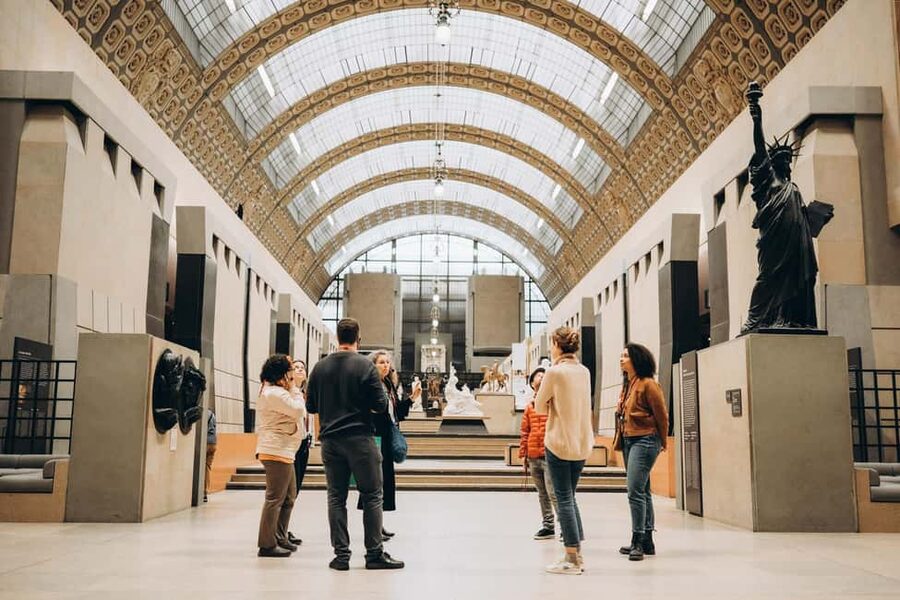
- Orsay’s Main Hall magic as you learn how the building’s train-station past shapes your visit
- Headsets in busy rooms so you can actually hear the stories while you look at the art
- Free self-guided time after the tour so you can slow down where your eye lingers
Skip-the-Ticket Line, Walk Into the Orsay’s Main Hall
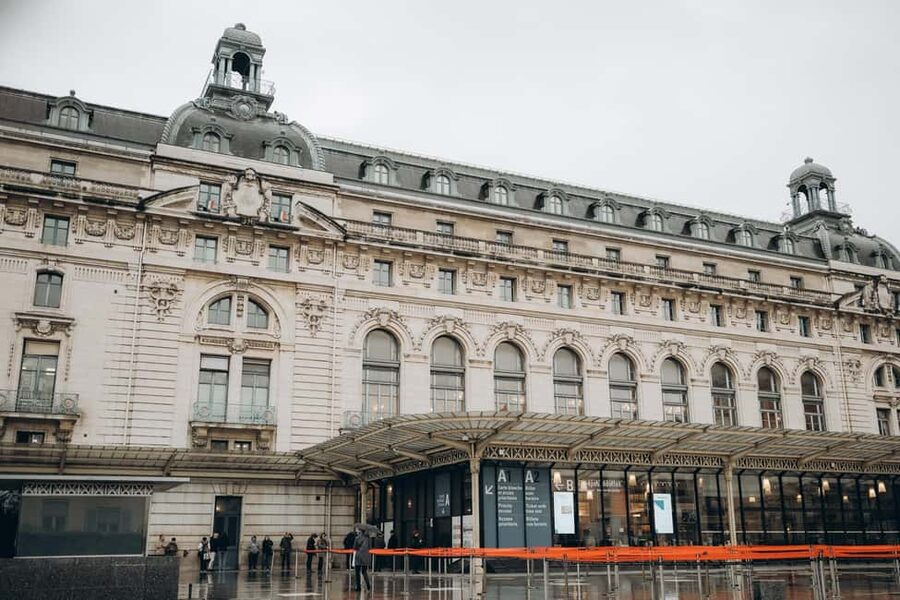
Your experience starts in a very practical way: you meet your guide at 2 Rue de la Légion d’Honneur, and you arrive about 15 minutes early so you can find them holding a green Walks sign. From there, the big win is getting in faster than the general crowd. At the Orsay, the wait can be long enough that it turns your museum plan into guesswork, so this matters.
Once inside, you’re brought straight to the Main Hall, the spectacular heart of the building. The Orsay is famous for its soaring ceiling and grand scale, and your guide uses that space to set the scene. You quickly learn why the museum feels different from other Paris art stops: this building used to be a train station, and you can still feel that rhythm and architecture under your feet.
More hours with the Impressionists at the Orsay
- Paris: Orsay Museum Entry Ticket
★ 4.7 · 25,647 reviews - Paris: Orsay Museum Entry Ticket and Digital Audio Guide App
★ 4.4 · 3,170 reviews - Paris in a Day: Louvre or Orsay, Eiffel Tower, City Walk & Cruise
★ 5.0 · 1,956 reviews - Paris: Musée d’Orsay Skip-the-Line Tour with Expert Guide
★ 4.5 · 1,145 reviews
Why the Old Train Station Feeling Changes How You See the Art
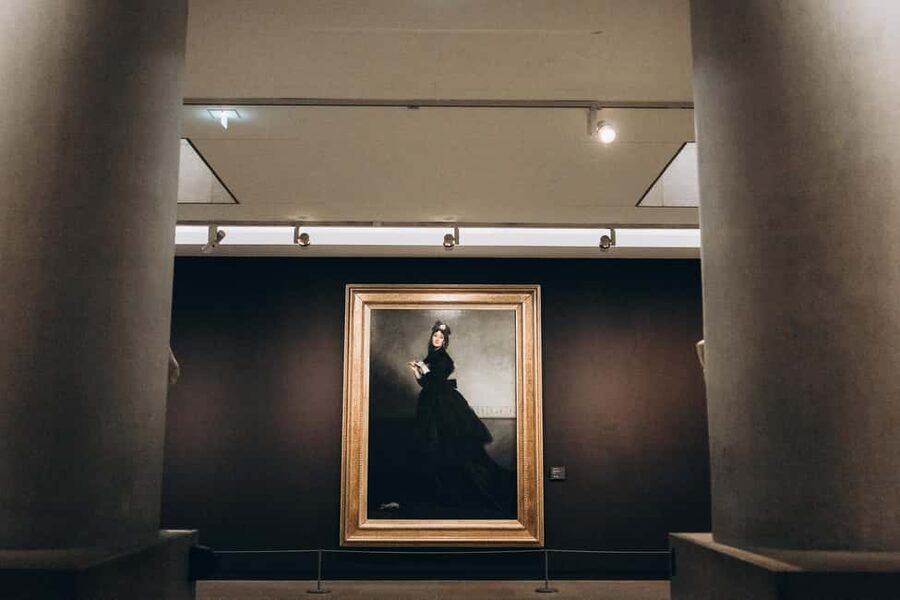
The Orsay interior isn’t just pretty framing. It changes your pace and attention. When you hear the story of how the station became a museum for late 19th-century art, you start noticing details the first-time visitor usually overlooks.
Here’s what you’re really getting from this opening: a mental model. Instead of walking into a sea of paintings and thinking, I should just pick a few, you start understanding how the collection is arranged and why it centers on Impressionism and the surrounding movements. That makes your guide’s route easier to follow, and your free time afterward more useful.
The 2-Hour Game Plan: How the Tour Keeps the Orsay From Overwhelming You
The Orsay can overwhelm even strong art fans. The museum is large, and it’s packed with works that compete for your attention. That’s where a guided route earns its keep.
In this 2-hour experience, your guide focuses on selected key pieces rather than trying to rush everything. That approach is why you’ll likely enjoy it more even if you only know a handful of names. You get a chronological and thematic feel for how styles change, what artists were responding to, and how the stories behind the paintings connect.
What this looks like during the tour
You start outside the museum, then move inside without wasting time at the ticket line. You’ll spend the guided part navigating multiple floors, using your time to hit the famous anchors and a handful of memorable supporting works. Then, once the guided portion ends, you get free time to continue on your own.
A subtle bonus shows up in how the guide communicates. In busy rooms, many participants mention headsets working well, which is a big deal in large museums. You can hear the explanations while still looking closely, instead of staring at your guide’s mouth or guessing what you missed.
Van Gogh, Monet, Manet, Gauguin: Big Names, Clear Connections
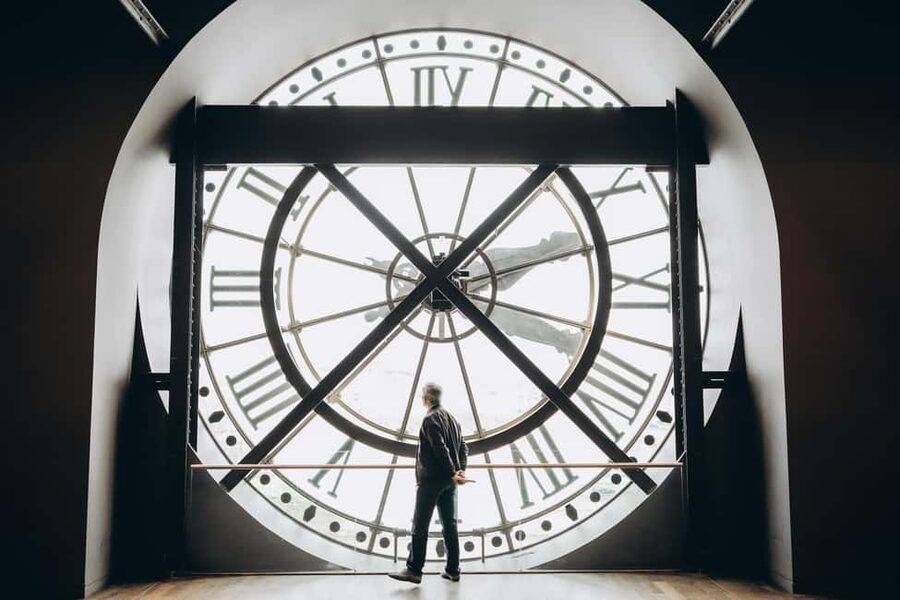
This tour is built around the works that people come to the Orsay for, and the guide does the important part: connecting the paintings to each other. You are not just seeing famous titles. You’re learning how the styles relate and how artists developed their ideas.
Expect to encounter major highlights such as:
- Van Gogh, including Self Portrait and Starry Night Over the Rhone
- Manet, including Olympia and Luncheon on the Grass
- Monet, including Houses of Parliament
- Gauguin, including Tahitian Women on the Beach
The practical value here is that you stop treating each painting like a separate quiz question. Instead, you start looking for patterns: brushwork choices, composition habits, and how each artist’s world view shows up on the canvas. That’s also why this works for first-timers and for people who have visited before. Even if you’ve seen one or two Orsay masterpieces in the past, the guided route can change what you notice next.
How guides tend to teach on this route
From the guide styles shared by participants, the strongest pattern is storytelling with structure. Some guides are praised for walking a chronological path through the collection, while others use interactive prompts, like asking you to look closely and talk through what you notice in a painting. There are also mentions of guides using short visuals, like clips and photographs, to make context stick.
If you want a tour that feels like a conversation with the art instead of a lecture, this format is a good match. It’s also why families often rate it highly: it’s focused, paced, and not just a parade of rooms.
Worth weighing up next to this Paris pick


Beaux-Arts Building Secrets You Can Actually Use

Orsay’s Main Hall is the obvious headline, but the “secrets” you hear about help you navigate the museum with better instincts. Your guide uses the building’s design to explain how spaces were built for movement and crowd flow. Once you get that, you naturally walk with more confidence.
This matters because the Orsay layout can feel confusing if you’re wandering alone. A guided start gives you orientation fast. You learn where the major collections sit, how to think about what comes next, and how to avoid spending your energy chasing everything at once.
And since your tour time is limited to about 2 hours, you want that orientation to happen early. The earlier you understand how the museum “thinks,” the more satisfying your final self-guided time becomes.
After the Tour: Free Time Without Wasting It

When the guided segment ends, you get time to explore on your own. This is where you should plan to do two things:
1) return to any painting your guide pointed out and look for the details you were told to watch
2) follow your own curiosity for 30 to 60 minutes, instead of trying to cover the whole museum
A useful tip: don’t treat the guided route like a checklist. The guide is there to help you read the collection, not to replace your eye. If something grabs you, spend longer with it. If something doesn’t, you now know where to go next.
Also, budget mentally for the fact that the museum is large. Even if the tour is only 2 hours, your day at the Orsay can still feel like a longer commitment. Comfortable shoes help here more than you might expect.
Price and Value: Is $69 Worth It in Real Life?

At $69 per person for a 2-hour guided experience with skip-the-line entry, you’re paying for three things: time saved, interpretation, and a smarter route through a big museum.
Skip-the-line isn’t a fancy perk when the alternative is waiting while your ticket window ticks away. One participant calls out that the line can be hours long, and that matches what you should plan for in a major Paris museum. If you’ve got limited days, saving that time is often the difference between a great day and a rushed one.
Then you’re paying for the guide’s selection. The Orsay can overwhelm you with world-class work. A good guide makes the experience feel curated without trying to cover everything. Based on how participants describe the tours, the best guides pick key pieces and explain what to notice, so you leave with a better sense of what you actually saw.
So is it worth it? For me, it’s a yes if you want a high-signal introduction to Impressionism and Post-Impressionism, plus a practical route that doesn’t require art-school background.
Practical Notes: Where to Meet and What to Bring

Meeting point is clear and specific: 2 Rue de la Légion d’Honneur in front of the museum entrance area. Arrive 15 minutes early and look for the guide holding a green Walks sign. The tour runs in English, and it’s a walking tour, so comfortable shoes are non-negotiable.
Bring a passport or ID card. Leave the bulky stuff at home: the tour states that luggage or large bags aren’t allowed, and baby strollers aren’t allowed either. If you’re traveling light, this is easy. If you’re carrying a lot, you’ll want to adjust your packing.
What about crowds and sound?
Expect busy rooms. The good news is that participants report headsets working well, which helps you hear the guide even when the museum is packed. If you’re sensitive to noise, headsets can make the whole experience feel calmer.
Who This Tour Fits Best (and Who Should Reconsider)
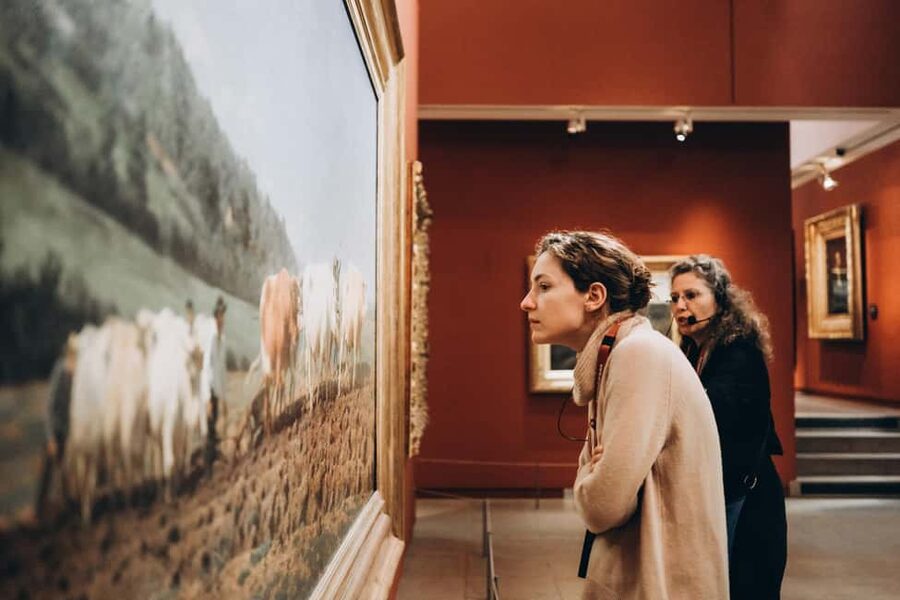
This tour is ideal if you:
- want a focused introduction to the Orsay’s Impressionist core
- enjoy learning how to read paintings through context and visual cues
- prefer a planned route over wandering a huge museum alone
- want a format that works for teens and families, based on repeated positive feedback
It’s not a great fit if you need wheelchair access or rely on a stroller. The tour explicitly notes it is not suitable for guests with mobility impairments, wheelchairs, or strollers. Also, it’s not built for heavy luggage situations.
If you’re a serious art marathoner and you love to roam, you might feel that 2 hours is a short window. Still, the route can function as a strong primer, and your self-guided time afterward lets you go deeper on what you liked most.
Should You Book This Musée d’Orsay Skip-the-Line Guided Tour?

Book it if you want the Orsay to feel understandable, not just impressive. The combination of skip-the-line entry, a guide-led selection of major works, and the option to explore afterward is exactly what makes this good value.
Skip it if you’re traveling with limited walking ability, need stroller access, or prefer to go fully independent with no structured route. If that’s your style, you can still have a great day at the museum, but you’ll need a plan so you don’t get lost in the scale.
FAQ
Where is the meeting point for the tour?
The tour meets in front of the Musée d’Orsay at 2 Rue de la Légion d’Honneur. Your guide will be holding a green Walks sign.
How early should I arrive?
Please arrive 15 minutes prior to the start of your tour.
How long is the guided portion?
The experience is 2 hours total.
Is the tour in English?
Yes, the live tour guide is English.
Is skip-the-line entry included?
Yes. The experience includes a skip-the-line ticket for the Musée d’Orsay.
What can I expect to see during the guided tour?
You’ll focus on key masterpieces and get close looks at major works, including pieces by Van Gogh, Monet, Cezanne, Gauguin, and Manet, along with context about the museum building and the art.
Is there time to explore on my own?
Yes. After the guided portion, you’ll have free time for self-guided touring.
What should I bring?
Bring a passport or ID card and comfortable shoes.
Is the tour suitable for wheelchairs or strollers?
No. The tour is not suitable for wheelchair users or baby strollers. It is also noted as not suitable for guests with mobility impairments or with wheelchairs.
Is free cancellation available?
Yes. You can cancel up to 24 hours in advance for a full refund.
More Tours in Paris
- Paris: Louvre Guided Tour with Reserved Access & Boat Cruise
★ 4.3 · 16,353 reviews - Paris: Big Bus Hop-On Hop-Off Tour with Optional Cruise
★ 4.4 · 13,279 reviews - Louvre Museum Masterpieces Guided Tour with Access
★ 4.5 · 12,023 reviews - Versailles: Skip-the-Line Tour of Palace and Gardens Access
★ 4.7 · 10,429 reviews - Paris: Louvre Overview, Exploration tour and Reserved Entry
★ 4.1 · 10,145 reviews
More Tour Reviews in Paris
- Paris: 1-Hour Seine Cruise departing from the Eiffel Tower
★ 4.4 · 77,472 reviews - Paris: Louvre Museum Timed-Entrance Ticket
★ 4.6 · 71,977 reviews - Disneyland® Paris 1-Day Ticket
★ 4.6 · 49,412 reviews - Paris: Versailles Palace and Gardens Full Access Ticket
★ 4.6 · 41,579 reviews - Paris: Arc de Triomphe Rooftop Tickets
★ 4.6 · 34,264 reviews
More at the Musee d'Orsay
- Paris: Orsay Museum Entry Ticket
★ 4.7 · 25,647 reviews - Paris: Orsay Museum Entry Ticket and Digital Audio Guide App
★ 4.4 · 3,170 reviews - Paris in a Day: Louvre or Orsay, Eiffel Tower, City Walk & Cruise
★ 5.0 · 1,956 reviews - Paris: Musée d’Orsay Skip-the-Line Tour with Expert Guide
★ 4.5 · 1,145 reviews - Musée d’Orsay Skip-the-Line Tour with Expert Guide
★ 4.8 · 1,088 reviews
Fresh off the review desk in Paris
- Secrets of Paris Bike Tour in English or Dutch★ 5.0 · 5 reviews
- Paris: Mont Saint-Michel Day Tour with Chinese Tour Guide★ 5.0 · 5 reviews
- Private Street Art 2-Hour Guided Tour in Paris★ 4.5 · 5 reviews
- Orsay Museum Tour: 2h Highlights (Private & Small Group)★ 5.0 · 5 reviews
- Discover Paris in electric golf carts★ 4.0 · 5 reviews
- Paris Private Boat Tour with your own Captain Guide★ 5.0 · 5 reviews
Orsay Museum Tours, compared.
 ★ 4.7Orsay Museum Entry TicketFrom $1525,647 reviews
 ★ 4.4Orsay Museum Entry Ticket and Digital Audio Guide AppFrom $313,170 reviews
 ★ 5.0Paris in a Day: Louvre or Orsay, Eiffel Tower, City Walk & CruiseFrom $1571,956 reviews
 ★ 4.5Musée d’Orsay Skip-the-Line Tour with Expert GuideFrom $671,145 reviews
 ★ 4.8Musée d’Orsay Skip-the-Line Tour with Expert GuideFrom $821,088 reviews
 ★ 5.0The Musée d’Orsay Guided Tour Orsay Museum Semi-Private 6ppl MaxFrom $144904 reviews
 ★ 5.0Louvre & Musée d’Orsay Guided Museum Tour Semi-Private 6ppl MaxFrom $288619 reviews
 ★ 4.5Paris Musée d’Orsay Fully Guided TourFrom $71556 reviews
Browse the lists this tour appears in