
Reviewed · CITY TOURS
Paris: Private or Shared City Highlights Tour
Paris can feel like a blur. This tour turns it into a plan. You ride in a minibus with a driver-guide, hit the big-name sights fast, and still get a real walking beat in Montmartre. I especially like the photo-stop pacing—you see more than a pure walking tour without feeling rushed on every corner—and the mix of neighborhoods (Latin Quarter to Marais to Sacré Coeur). The main thing to consider is that it’s a highlights tour, not a museum-deep dive, so you won’t get to fully go inside the major landmarks, and some viewpoints/areas can depend on on-the-day conditions.
You start at Opéra Garnier, then roll through classic boulevards and historic districts with plenty of opportunities to get your bearings. The tour runs as a small group (up to 15) or private option, with guide languages available beyond just English. One bonus from the experience reports: guides like Fred get called out as warm and flexible, and Hannelore also earned praise.
In This Review
- Key Highlights Worth Your Time
- From Opéra Garnier to the Latin Quarter: a smart way to get oriented
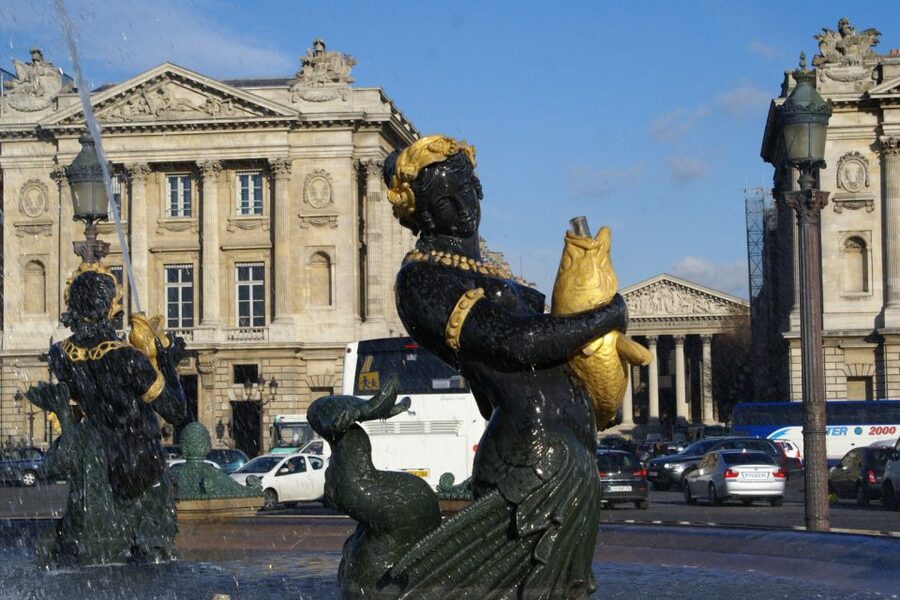
- Champs-Élysées to Place de la Concorde: classic boulevards and photo-stop timing
- Les Invalides and St. Germain-des-Prés: monuments plus café culture
- Latin Quarter, Notre-Dame area, and the Marais: old streets, key squares, and real constraints
- Montmartre walking in Place du Tertre and Sacré Coeur views
- Le Marais to the Eiffel Tower: ending with a photogenic drop-off
- Price, group size, and what $224 really buys you
- Who should book this tour (and who might skip it)
- Final verdict: should you book this Paris highlights tour?
- FAQ
- Where do we meet for the tour?
- How long is the tour?
- Is the tour private, or is it shared?
- What group size should I expect?
- Is hotel pickup available?
- What language options are available for the guide?
- What’s included in the price?
- What is not included?
- Are stops near Notre-Dame and Place des Vosges guaranteed?
Key Highlights Worth Your Time
- Minibus comfort, guide smarts: You cover a lot of Paris without the legwork.
- Opéra Garnier start point: Easy to find and a great way to begin.
- Photo stops that actually help: You get time to frame shots, not just pass by.
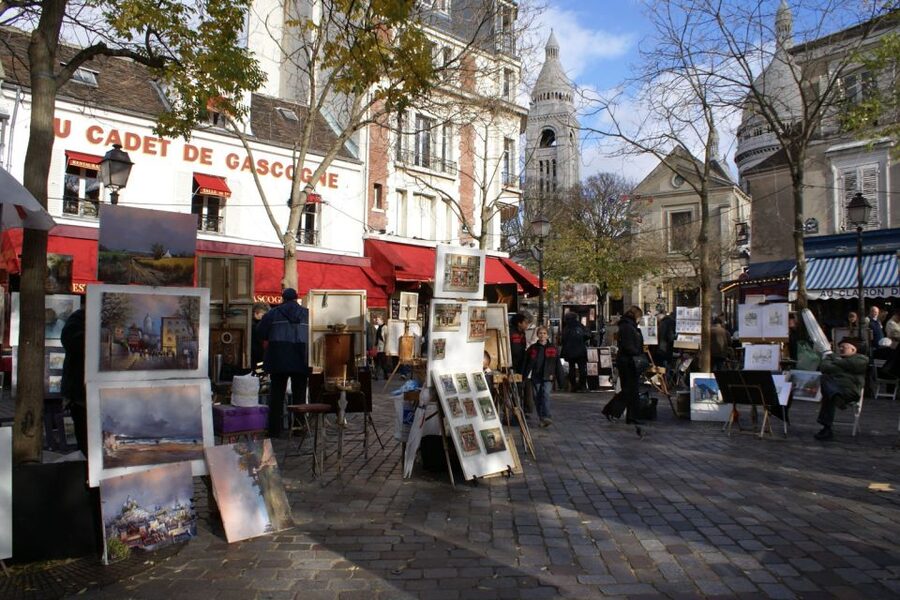
- Montmartre on foot in Place du Tertre: Street artists and real atmosphere.
- Marais + Place des Vosges: A classic, photogenic pause in the old city vibe.
- Eiffel Tower at the end: Drop-off near the base so you can continue on your own.
From Opéra Garnier to the Latin Quarter: a smart way to get oriented
Meeting at Opéra Garnier puts you right in the middle of central Paris, and it’s a pleasant starting point. From there, you head out by minibus, which matters if you’re traveling with anyone who doesn’t love long walks or if your feet are already tired from previous days.
Early on, you get those first “oh, that’s where we are” views. The goal isn’t to win a sprint—it’s to help you understand how Paris connects: grand avenues, older quarters, and the way hills and landmarks guide the eye. You also pass the kind of streets you’ll want to revisit later, when you’re doing your own wandering.
Then comes the Latin Quarter area, tied to the Sorbonne university campus and its bohemian energy. This is the part of Paris where you’ll feel the city’s student-and-artist pulse from the street level. You’re not just seeing famous buildings; you’re getting a sense of why this neighborhood has such a distinct character.
If you want Paris to make sense quickly—especially on a first or second day—this opening stretch does the job.
Worth weighing up next to this Paris pick
- Eiffel Tower Summit Option with Seine River Cruise and City Tour
★ 3.5 · 2,176 reviews - Paris in a Day: Louvre or Orsay, Eiffel Tower, City Walk & Cruise
★ 5.0 · 1,956 reviews - Paris: City Highlights Bike Tour
★ 4.7 · 1,835 reviews - Paris: Eiffel Tower Hosted Tour, Seine Cruise and City Tour
★ 4.0 · 1,507 reviews
Champs-Élysées to Place de la Concorde: classic boulevards and photo-stop timing
The Paris highlights you’re expecting are here, but the pacing is what makes the difference. You’ll make a photo stop on the Champs-Élysées, then continue through the broader skyline views that frame the city’s most famous corridors.
This is where the minibus shines. You can keep the sightseeing rhythm without constantly stepping on and off crowded sidewalks. You also get to see how the architecture shifts as you move across the Haussmann-designed streetscape—those long sightlines are a big part of why Paris looks like a postcard.
As you roll along, you pass the area near Place Vendôme and the expansive Place de la Concorde at the end of the Champs-Élysées. Even if you’ve seen photos before, seeing these spaces from the road helps you understand scale. The geometry hits differently in person.
You’ll also notice the Eglise de la Madeleine area and the nearby Elysées-Madeleine stretch while traveling. The guide’s commentary (in your chosen language) is useful here because it helps you connect what you’re looking at to the bigger story of city design and power centers.
Net effect: you get the “must-see” Paris look without the hour-long effort of trying to line up all these stops on your own.
Les Invalides and St. Germain-des-Prés: monuments plus café culture
This tour doesn’t treat Paris like a checklist. It adds a bit of street life. You’ll do Les Invalides sightseeing, a key landmark zone that’s tied to France’s military history and monumental architecture.
Then you move into the St. Germain-des-Prés vibe—specifically, the kind of sidewalk café culture that defines the area. The point here isn’t that you’ll eat at every café you pass. It’s that you’ll see the rhythm: terraces, people-watching, and the way the neighborhood feels like a meeting place.
This matters because so many visitors focus only on big monuments. Here, you get a smoother transition from grandeur to everyday Paris. It also makes your later self-guided time easier. When you know what neighborhood you’re in and how it feels, you choose where to linger with more confidence.
Also, using a guide means you’re not guessing what’s important. Even when you’re just passing a building, you’ll understand why it’s there and what to notice next time you’re walking.
If you want your Paris day to feel both scenic and livable, this section delivers.
Latin Quarter, Notre-Dame area, and the Marais: old streets, key squares, and real constraints
After the major boulevard stretch, you spend time around the Latin Quarter’s story-rich lanes and the bohemian energy around the Sorbonne area. This isn’t just a background setting—it’s one of those Paris neighborhoods where you can picture conversation, bookstores, and long study nights just by looking at street life.
Then you get toward the Notre-Dame area and into the Marais district, with a stop connected to Place des Vosges. That square is one of those “stop and reset” places. The symmetry and enclosed garden feel give you a break from the long avenues and busy streets.
One important consideration: access around Notre-Dame and some parts of the Marais can be subject to police authorization. That’s not rare in central Paris, and it means you should be flexible in what you expect to see up close. You can still get strong views and photos, but the exact level of access may shift.
This part of the day is where you’ll start feeling the tour’s structure click: minibus covers the distance; stops let you actually look; walking time appears where it adds value.
If you’re the type who likes to photograph façades, squares, and street corners, the Latin Quarter-to-Marais route is a great use of your limited time.
Montmartre walking in Place du Tertre and Sacré Coeur views
Montmartre is where Paris stops being formal and starts being theatrical. You’ll head into Montmartre and get a walking moment in Place du Tertre, a square known for artists working right on the pavement.
That’s the key word: working. You’re not just looking at a souvenir scene. You watch street artists at work and get a feel for why this area became a creative magnet. It’s the kind of place where your photos look more alive because there’s motion happening around you.
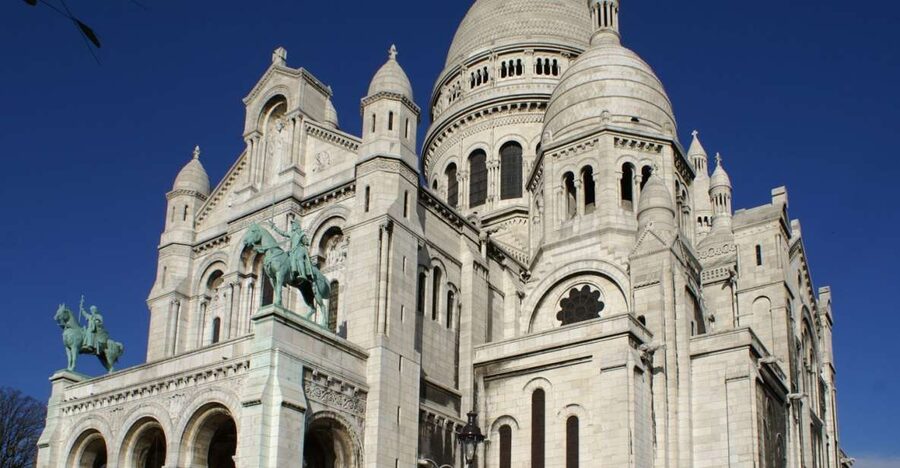
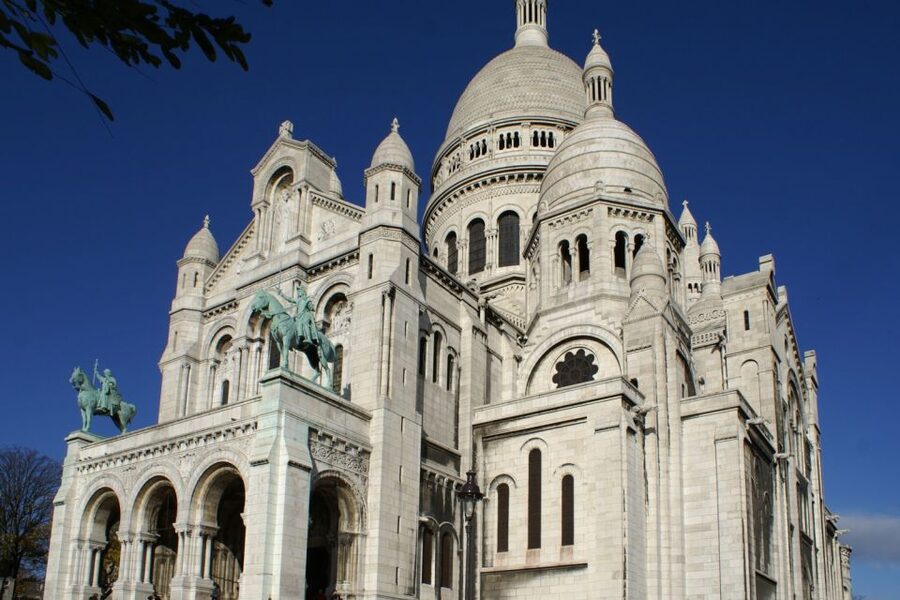
Afterward, you’ll focus on views toward Sacré Coeur, often described as a white, wedding-cake style basilica. Even when you don’t have time for a full climb, seeing it as a focal point from the square and surrounding streets gives you the classic Montmartre silhouette.
Also, the tour mixes a quick photo stop with a real walking beat, which is a smart compromise. You get atmosphere without needing hours of stair climbing.
For many people, this is the most memorable section of the day. It’s also the best reminder that Paris isn’t only monuments—it’s street culture, art, and the small moments you can’t replicate from inside a car.
Le Marais to the Eiffel Tower: ending with a photogenic drop-off
By the time you reach the later part of the tour, you’ve already seen a wide spread of Paris. That’s why the final stretch works: the city feels connected, not random.
You’ll make another photo stop in the Marais, so you can capture that old-city look again from a slightly different angle. Then you’ll finish with Eiffel Tower photo time and a drop-off near the base at Tour Eiffel (with an additional drop-off location back in the city center depending on the option).
A useful heads-up: the Eiffel Tower ticket is not included, so if you plan to go up, you’ll need to arrange that separately. The trade-off is that this tour keeps you moving and still gives you the iconic skyline moment.
Why this ending is good value: you’re not stuck far from where you want to go next. After the tour, you’re positioned to continue at your own pace—walk nearby, grab a snack, or jump to whatever you planned for the rest of the day.
If your dream is to get a classic Eiffel photo without losing your whole afternoon to lines and logistics, the format here is practical.
Worth weighing up next to this Paris pick




Price, group size, and what $224 really buys you
At $224 per person for 4 hours, you’re paying for three big things: transportation by minibus, a live guide, and a curated route that links neighborhoods efficiently.
The tour runs with a maximum of 15 participants, which helps keep the experience from turning into a chaotic cattle call. You also have the private option, which is great if you want more control over timing or you’re traveling as a family with kids or grandparents. One experience report specifically praised a guide (Fred) for thoughtful help with a small stool for a handicapped mother to get into the car—proof that a good guide isn’t just about facts.
Another point: if there are fewer than 4 bookings, the driver may also be the guide. That can still work well; it just means you may have a more flexible, smaller-team feel rather than a dedicated two-person setup.
Language options are wide, including English, Spanish, French, German, Italian, and more. That matters because a highlights tour lives or dies by the guide’s ability to connect what you’re seeing to context you can actually use.
What’s not included is also important. You won’t get Eiffel Tower admission, and a Seine cruise ticket isn’t included either. So think of the $224 as the guided city experience and the logistics around it—then add tickets only for what you truly want to do up close.
Who should book this tour (and who might skip it)
This is a great fit if you want Paris highlights with low walking effort and high visual payoff. It’s especially good when you have limited time, you’re traveling with mixed mobility, or you want a route that covers big neighborhoods like the Latin Quarter, Montmartre, and the Marais without you having to map everything.
It’s also a good match for families. One report praised a guide for handling a group of six with kids and grandparents and keeping things flexible.
You might consider a different approach if you’re a “one museum all day” traveler. This tour won’t replace slow visits inside major attractions. It’s built to show you the city’s major beats, plus some neighborhood texture, not to satisfy a deep collector’s mindset.
Final verdict: should you book this Paris highlights tour?
If you want to see the famous Paris lineup—Champs-Élysées, Latin Quarter, Marais/Place des Vosges, Montmartre, and the Eiffel Tower—without burning your day on navigation and long walks, this is a strong choice. The minibus format keeps energy up. The walking in Montmartre adds the kind of street-level charm you can’t get from driving past alone.
Book it if you value planning, photo stops, and a guide who can keep the story moving. Skip it if you already have a tight list of timed tickets and want to spend 4 hours mostly inside one or two sites.
FAQ
Where do we meet for the tour?
You meet your guide in front of the Opéra Garnier at Place de l’Opéra.
How long is the tour?
The tour lasts 4 hours.
Is the tour private, or is it shared?
You can choose either a private option or a small group option.
What group size should I expect?
The tour has a maximum of 15 participants.
Is hotel pickup available?
Pickup is optional, and you can choose pickup from your hotel in Paris.
What language options are available for the guide?
The live guide is available in several languages, including English, Spanish, and many others such as French, German, Italian, Japanese, Russian, Dutch, Polish, Portuguese, and Chinese.
What’s included in the price?
Transportation by minibus is included, along with a live guide.
What is not included?
Eiffel Tower tickets and Seine River cruise tickets are not included.
Are stops near Notre-Dame and Place des Vosges guaranteed?
Access can be subject to police authorization, so the exact access may vary on the day.
More City Tours in Paris
- Eiffel Tower Summit Option with Seine River Cruise and City Tour
★ 3.5 · 2,176 reviews - Paris in a Day: Louvre or Orsay, Eiffel Tower, City Walk & Cruise
★ 5.0 · 1,956 reviews - Paris: City Highlights Bike Tour
★ 4.7 · 1,835 reviews - Paris: Eiffel Tower Hosted Tour, Seine Cruise and City Tour
★ 4.0 · 1,507 reviews - Paris City Center Free Walking Tour (Tip-Based)
★ 5.0 · 1,340 reviews
More Tours in Paris
- Paris: Louvre Guided Tour with Reserved Access & Boat Cruise
★ 4.3 · 16,353 reviews - Paris: Big Bus Hop-On Hop-Off Tour with Optional Cruise
★ 4.4 · 13,279 reviews - Louvre Museum Masterpieces Guided Tour with Access
★ 4.5 · 12,023 reviews - Versailles: Skip-the-Line Tour of Palace and Gardens Access
★ 4.7 · 10,429 reviews - Paris: Louvre Overview, Exploration tour and Reserved Entry
★ 4.1 · 10,145 reviews
More Tour Reviews in Paris
- Paris: 1-Hour Seine Cruise departing from the Eiffel Tower
★ 4.4 · 77,472 reviews - Paris: Louvre Museum Timed-Entrance Ticket
★ 4.6 · 71,977 reviews - Disneyland® Paris 1-Day Ticket
★ 4.6 · 49,412 reviews - Paris: Versailles Palace and Gardens Full Access Ticket
★ 4.6 · 41,579 reviews - Paris: Arc de Triomphe Rooftop Tickets
★ 4.6 · 34,264 reviews
Fresh off the review desk in Paris
- Secrets of Paris Bike Tour in English or Dutch★ 5.0 · 5 reviews
- Paris: Mont Saint-Michel Day Tour with Chinese Tour Guide★ 5.0 · 5 reviews
- Private Street Art 2-Hour Guided Tour in Paris★ 4.5 · 5 reviews
- Orsay Museum Tour: 2h Highlights (Private & Small Group)★ 5.0 · 5 reviews
- Discover Paris in electric golf carts★ 4.0 · 5 reviews
- Paris Private Boat Tour with your own Captain Guide★ 5.0 · 5 reviews
City Tours, compared.
 ★ 3.5Eiffel Tower Summit Option with Seine River Cruise and City TourFrom $1202,176 reviews
 ★ 5.0Paris in a Day: Louvre or Orsay, Eiffel Tower, City Walk & CruiseFrom $1571,956 reviews
 ★ 4.7City Highlights Bike TourFrom $501,835 reviews
 ★ 4.0Eiffel Tower Hosted Tour, Seine Cruise and City TourFrom $1161,507 reviews
 ★ 5.0Paris City Center Free Walking Tour (Tip-Based)From $31,340 reviews
 ★ 5.0Golf Cart in Paris – Private Guided City Tour – Pickup IncludedFrom $1691,164 reviews
 ★ 4.6City and River Seine Tour on an Amphibious BusFrom $461,052 reviews
 ★ 3.5Eiffel Tower and City Tour by Bus with Seine River Cruise OptionFrom $1001,013 reviews
Browse the lists this tour appears in