
Reviewed · MONTMARTRE TOURS
Paris: Small Group Moulin Rouge &Sacré Cœur Montmartre Tour
Montmartre in two hours feels just right. I like that this walk strings together Moulin Rouge and Sacré-Cœur with a guide who helps you connect what you see to the stories behind it. I also love the small-group feel, capped at about 15 people, so the pace stays friendly and you can actually hear the explanations.
The main thing to plan for is the effort: this route involves a lot of walking on hilly streets and stairs, and when Montmartre gets crowded, it can be harder to listen in the busier moments.
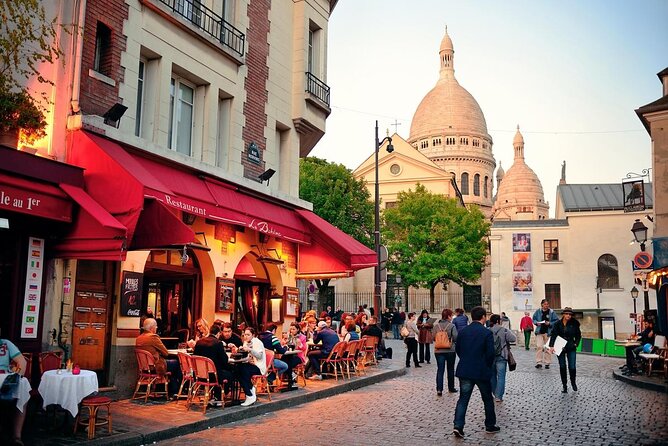
You’ll move through classic stops like Café des Deux Moulins (Amélie filming), Le Bateau-Lavoir (Picasso and Modigliani-era art), and Dalida’s sites before finishing with sweeping views from Sacré-Cœur. It’s a compact way to understand why this neighborhood has long pulled artists, musicians, and dreamers to the hill.
In This Review
- Key highlights
- Where This Tour Fits in Your Paris Plan
- Price and What You’re Really Paying For
- Meeting Point to Ending Point: Plan Your Way Back
- Moulin Rouge: Getting Oriented Without Buying a Show
- Café des Deux Moulins and Le Moulin de la Galette: Art and Film on One Hill
- Café des Deux Moulins (Amélie connection)
- Le Moulin de la Galette (the painterly windmill)
- Place des Abbesses, the Wall of Love, and the Stories in Plain Sight
- Place des Abbesses and Saint Denis
- The Wall of Love
- Le Bateau-Lavoir and the Dalida Stops: From Modern Art to French Pop
- Le Bateau-Lavoir: a springboard for early-1900s art
- Dalida’s home and statue
- Pink Houses, a Montmartre Vineyard, and La Bonne Franquette
- La Maison Rose: photos that actually look like Montmartre
- Vigne du Clos Montmartre: wine where you’d least expect it
- La Bonne Franquette: a historic café feel
- Sacré-Cœur Hilltop: Panoramas, Architecture, and Your Stair Choice
- How the Guide Changes the Whole Experience
- Who This Tour Is Best For (and Who Should Skip It)
- Should You Book This Moulin Rouge and Montmartre Tour?
- FAQ
- What’s included in the Paris Small Group Moulin Rouge and Sacré-Cœur Montmartre Tour?
- Is the Moulin Rouge show ticket included?
- How long is the tour?
- How many people are in the group?
- Is the tour offered in English?
- Where do I meet, and where does the tour end?
- Do I get a mobile ticket?
- Is the tour mostly walking, and are there stairs?
- What happens if weather is bad?
- Can I cancel for a refund?
Key highlights
- Small group (up to 15) keeps the walk personal and question-friendly
- Moulin Rouge starter stop lets you orient yourself fast in the area
- Café des Deux Moulins and Amélie film spots tie pop culture to place
- Le Bateau-Lavoir connects Montmartre to the early-1900s art scene
- Dalida’s former home and statue add a French music legend to the mix
- Sacré-Cœur hilltop views cap the tour with wide city panoramas
Where This Tour Fits in Your Paris Plan
If you want Montmartre without spending a whole day getting turned around, this is a smart fit. It’s short (about 2 hours) and designed as a guided walk between very recognizable landmarks, with plenty of quick context so the neighborhood doesn’t feel like random postcard scenery.
You’ll start near the Moulin Rouge area, then work your way through Montmartre’s famous lanes and meeting spots. The itinerary also mixes well-known icons with a few stops that feel like you’re in on a private conversation—like the old artist hangouts and the neighborhood’s musical legacy.
This is also offered in English, and it uses a mobile ticket, which is practical if you like to travel light and keep your schedule moving.
Keep climbing: more of the Montmartre hill
- Montmartre Hidden Gems and Scenic Highlights Walking Tour
★ 5.0 · 2,684 reviews - Montmartre Hill French Gourmet Food and Wine Tasting Walking Tour
★ 5.0 · 2,588 reviews - Paris: Montmartre Highlights Walking Tour with a Local Guide
★ 4.9 · 2,318 reviews - Paris: Montmartre Cheese, Wine & Pastry Guided Walking Tour
★ 4.8 · 2,255 reviews
Price and What You’re Really Paying For

At $59.28 per person, you’re paying mostly for the guide time and the route design. Only the guide is included. That means you’re not paying to enter attractions all day—you’re paying to understand the places as you walk.
Here’s the good part for value: the route covers a stack of high-demand Montmartre stops, and many of the stops are free to view once you’re there. The one notable exception is the Moulin Rouge show side of things—the Moulin Rouge stop doesn’t include tickets for a show—so you’re not stuck buying anything you don’t want.
In practice, the value comes from having someone point out what matters while you’re already standing there. When you don’t have that, Montmartre can feel like hills, stairs, and crowds. With a guide, it becomes a story you can follow in real time.
Meeting Point to Ending Point: Plan Your Way Back
You’ll meet at 5 Pl. Blanche, 75009 Paris and finish at 35 Rue du Chevalier de la Barre, 75018 Paris. Those addresses are close enough to each other for you to keep your bearings, but they’re not the same spot.
So don’t plan on walking back to where you started. Decide ahead of time how you’ll get home after the tour. If you’re using the Metro, it helps to check the stations around your finish point before you head out.
The tour is small (max 15), so you can usually find your guide and group without a big scramble. Still, on cold or busy days, show up a few minutes early and get settled.
Moulin Rouge: Getting Oriented Without Buying a Show
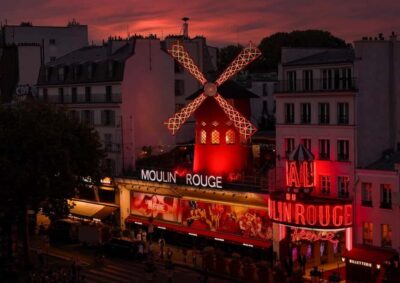
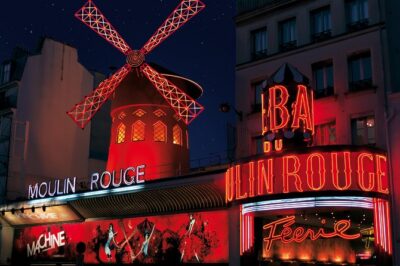
The walk begins with a stop at Moulin Rouge. Even if you’re not going inside for a show, this is still a useful start. It sets the theme: entertainment, spectacle, and the kind of Paris nightlife that became a symbol far beyond its neighborhood.
The tour notes that the Moulin Rouge admission/show ticket is not included. That’s a good thing. It means you can treat Moulin Rouge as context and photos first, then decide later if you want the full performance experience. If you do want a show, you’ll need separate tickets.
One practical tip: this area is often busy, so use the first minutes here to get your bearings. You’re going to be walking uphill and weaving through Montmartre after this, so knowing which direction you’ll be moving helps.
Café des Deux Moulins and Le Moulin de la Galette: Art and Film on One Hill
From the Moulin Rouge area, you step into a part of Montmartre that blends French cinema with the classic artist-world vibe.
Café des Deux Moulins (Amélie connection)
You’ll stop at Café des Deux Moulins, known for its connection to the film Amélie. The tour points out filming context and the spot linked with where Amélie worked. Even if you’ve seen the movie only once, this stop tends to click fast because it’s so specific in what it evokes.
Also, this stop is free. That matters because you’re not paying to access a setting. You’re paying for someone to tell you what you’re looking at and why it became famous.
More nights out at the Moulin Rouge


Le Moulin de la Galette (the painterly windmill)
Next comes Le Moulin de la Galette, a historic windmill tied to the artistic Montmartre tradition, including works by artists like Renoir. The windmill is an anchor image for the neighborhood, and seeing it in person helps you understand why Montmartre got mythologized by painters in the first place.
This stop is short, and that’s fine. It keeps the momentum. You’re not meant to turn this into a museum day—you’re meant to walk and learn quickly.
Place des Abbesses, the Wall of Love, and the Stories in Plain Sight
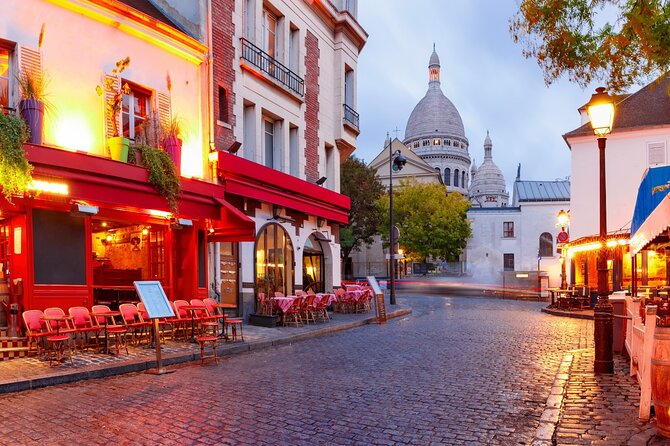
Montmartre can look like it’s all charm and angles until you start hearing the names and backstories. This section helps you connect the dots.
Place des Abbesses and Saint Denis
You’ll visit Place des Abbesses, where the tour covers Saint Denis, the first bishop of Paris, including his martyrdom story. You’ll also hear about the Red Abbess, which is part of why this church area feels different from other Parisian churches.
It’s an interesting contrast: Montmartre is famous for artists and nightlife, but it also has deep religious and historical layers. A guide here keeps it from turning into a quick photo stop with no meaning.
The Wall of Love
Then there’s Le Mur des Je t’aime, the Wall of Love with the message I love you in multiple languages. This is one of those places that can feel corny until you’re standing there and realize it’s more like a public human statement than a tourist gimmick.
The tour gives it time to breathe—enough for photos and a quick explanation of why it symbolizes unity.
Le Bateau-Lavoir and the Dalida Stops: From Modern Art to French Pop
This is where the tour gets extra fun, because it shifts from street scenery into the people who shaped Montmartre’s cultural identity.
Le Bateau-Lavoir: a springboard for early-1900s art
You’ll visit Le Bateau-Lavoir, described as an artists’ residence. The tour links it to famous names like Pablo Picasso and Amedeo Modigliani, and it shares stories about the early 20th-century art scene on the hill.
What I like about this part is that it helps you see Montmartre as more than a backdrop. Even in a short stop, you get a sense of how artists lived, worked, and collided with one another in a neighborhood that became a magnet for creative types.
Dalida’s home and statue
Then you move to La Maison de Dalida and the Dalida statue. This is a very different angle than the painterly Montmartre stops, bringing in a French music legend whose presence is still part of the neighborhood’s identity.
If you like pop culture as much as fine art, these two stops are a nice reminder that Montmartre never fully stopped evolving. It kept generating stars, stories, and symbols.
Pink Houses, a Montmartre Vineyard, and La Bonne Franquette
Montmartre’s charm isn’t only in the famous landmarks. Some of the best moments come from small details and everyday Paris life.
La Maison Rose: photos that actually look like Montmartre
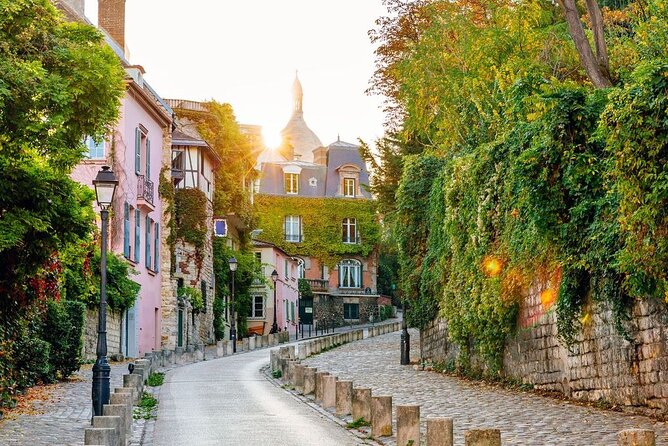
You’ll have a stop at La Maison Rose, the well-known pink house that draws artists and photographers. You’ll get time for photos, but the value is also in learning how the neighborhood’s visual character keeps inspiring people to create.
Vigne du Clos Montmartre: wine where you’d least expect it
Next is Vigne du Clos Montmartre, a vineyard in the city. The tour explains the history of winemaking in the area and why it matters to the local community.
This is one of those stops that changes how you think about the neighborhood. Paris isn’t only boulevards and museums; sometimes it’s a patch of vines sitting inside the city fabric. It’s also a quick reminder to look up and around, not just straight ahead.
La Bonne Franquette: a historic café feel
Finally, you’ll visit La Bonne Franquette, described as a historic café where artists such as Van Gogh and Toulouse-Lautrec once gathered. The tour includes time for you to take in the atmosphere.
This stop is great if you want a breather before the hilltop finale. Even just sitting for a moment helps you reset, especially if you’ve been climbing stairs.
Sacré-Cœur Hilltop: Panoramas, Architecture, and Your Stair Choice
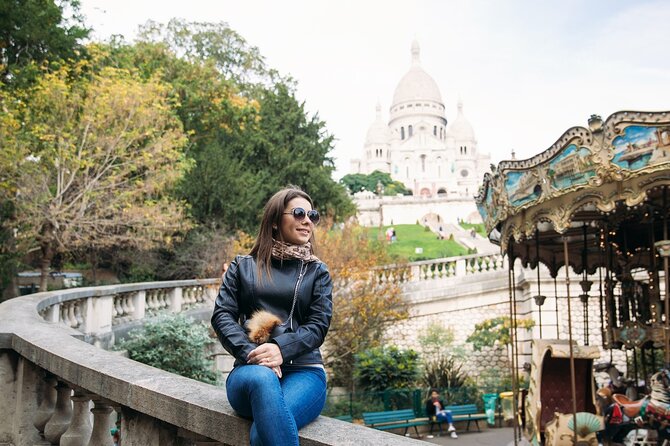
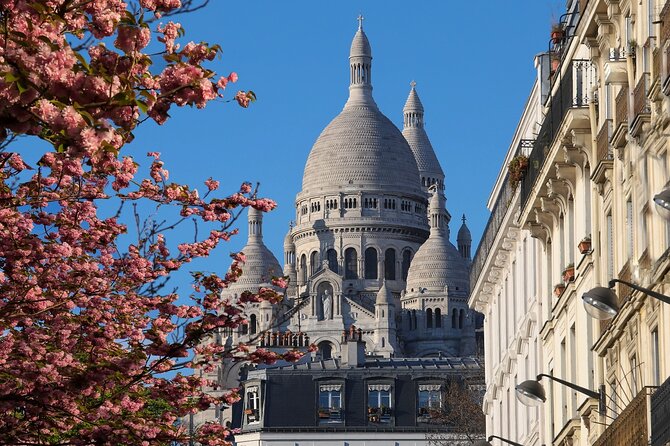
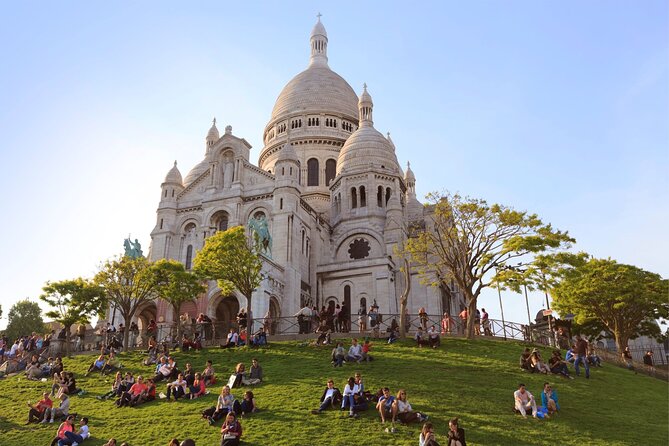
The tour ends at Basilique du Sacré-Cœur. You’ll have about 15 minutes to admire the architecture and enjoy panoramic views from the hilltop.
This is the payoff part. Sacré-Cœur isn’t only a church—it’s a viewpoint that changes how the whole city feels. On clear days, the view is the reason people put Montmartre on the map.
One fun detail that shows up with guides: you can choose to chase the famous 300-stair challenge for the dome view. Not everyone wants the effort, and you don’t have to do it. But it’s a known option if you’re feeling energetic.
How the Guide Changes the Whole Experience
The biggest pattern in the guides’ approach is pacing and storytelling. Names that have led this tour include Selda, Zelda, Danyl, Alice, and Daniel. Across those guides, the common thread is a warm style that keeps people engaged, even when it’s cold or when the neighborhood is crowded.
You’ll also notice photo help: several guides are good at showing you where to stand for pictures at the right angles. If you don’t want your camera to become a chore, this matters.
And if you’re traveling with kids or multi-age groups, the small group size is key. Guides can adjust pace and make sure everyone gets something from the walk, not just the most energetic adults.
Who This Tour Is Best For (and Who Should Skip It)
This tour is a good match if you want:
- A fast, guided introduction to Montmartre without planning a long self-walk
- A mix of landmarks and cultural stories (film, art, music)
- Small-group attention and an easy route that hits major points in about 2 hours
You might want to think twice if:
- You’re sensitive to hills and stairs. The route involves lots of uphill walking.
- You hate busy crowds. Some spots can be loud, and you’ll want to focus on hearing the guide in busier areas.
For first-time visitors who want the Montmartre flavor, it’s a strong choice. For repeat visitors, it can still work because the route connects famous references like Amélie and Dalida to the places you’re already seeing.
Should You Book This Moulin Rouge and Montmartre Tour?
I’d book it if your goal is a short, guide-led Montmartre experience that covers the big cultural anchors: Moulin Rouge, film at Café des Deux Moulins, art at Le Bateau-Lavoir, music at the Dalida stops, and the finishing panorama at Sacré-Cœur.
I wouldn’t book it if you’re looking for a slow, sit-down museum-style day or if you can’t handle stairs and hill walking. In that case, you’d be happier with a flatter, more flexible plan.
If you’re choosing between this and a DIY walk, the decision is simple: this route earns its keep by giving meaning fast. In a neighborhood like Montmartre, that’s the difference between seeing sights and actually understanding the place.
FAQ
What’s included in the Paris Small Group Moulin Rouge and Sacré-Cœur Montmartre Tour?
The tour includes a guide. Tips are not included.
Is the Moulin Rouge show ticket included?
No. The Moulin Rouge show admission is not included.
How long is the tour?
The tour lasts about 2 hours.
How many people are in the group?
The group has a maximum of 15 travelers.
Is the tour offered in English?
Yes, it is offered in English.
Where do I meet, and where does the tour end?
You meet at 5 Pl. Blanche, 75009 Paris, and the tour ends at 35 Rue du Chevalier de la Barre, 75018 Paris.
Do I get a mobile ticket?
Yes. The tour includes a mobile ticket.
Is the tour mostly walking, and are there stairs?
It is a walking tour with uphill streets and stairs. The route is broken into stops, but you should still expect a fair amount of climbing.
What happens if weather is bad?
This experience requires good weather. If it’s canceled due to poor weather, you’ll be offered a different date or a full refund.
Can I cancel for a refund?
Yes. You can cancel up to 24 hours in advance for a full refund. Canceling less than 24 hours before the experience start time doesn’t get refunded.
More Tour Reviews in Paris
- Paris: 1-Hour Seine Cruise departing from the Eiffel Tower
★ 4.4 · 77,472 reviews - Paris: Louvre Museum Timed-Entrance Ticket
★ 4.6 · 71,977 reviews - Disneyland® Paris 1-Day Ticket
★ 4.6 · 49,412 reviews - Paris: Versailles Palace and Gardens Full Access Ticket
★ 4.6 · 41,579 reviews - Paris: Arc de Triomphe Rooftop Tickets
★ 4.6 · 34,264 reviews
One More Night at the Moulin Rouge
- Paris: Moulin Rouge Cabaret Show Ticket with Champagne
★ 4.7 · 16,088 reviews - Paris: Dinner Show at the Moulin Rouge
★ 4.8 · 3,333 reviews - Seine Dinner Cruise, Eiffel Tower Access and Moulin Rouge Show
★ 4.0 · 2,310 reviews - Paris Moulin Rouge Cabaret Show and Dinner
★ 4.5 · 1,772 reviews - Paris: Evening Sightseeing Tour and Moulin Rouge Show
★ 4.0 · 1,394 reviews
More of the Montmartre Hill
- Montmartre Hidden Gems and Scenic Highlights Walking Tour
★ 5.0 · 2,684 reviews - Montmartre Hill French Gourmet Food and Wine Tasting Walking Tour
★ 5.0 · 2,588 reviews - Paris: Montmartre Highlights Walking Tour with a Local Guide
★ 4.9 · 2,318 reviews - Paris: Montmartre Cheese, Wine & Pastry Guided Walking Tour
★ 4.8 · 2,255 reviews - The Secrets of Montmartre Walking Tour
★ 4.8 · 1,258 reviews
Fresh off the review desk in Paris
- Secrets of Paris Bike Tour in English or Dutch★ 5.0 · 5 reviews
- Paris: Mont Saint-Michel Day Tour with Chinese Tour Guide★ 5.0 · 5 reviews
- Private Street Art 2-Hour Guided Tour in Paris★ 4.5 · 5 reviews
- Orsay Museum Tour: 2h Highlights (Private & Small Group)★ 5.0 · 5 reviews
- Discover Paris in electric golf carts★ 4.0 · 5 reviews
- Paris Private Boat Tour with your own Captain Guide★ 5.0 · 5 reviews
Montmartre Tours, compared.
 ★ 5.0Montmartre Hidden Gems and Scenic Highlights Walking TourFrom $382,684 reviews
 ★ 5.0Montmartre Hill French Gourmet Food and Wine Tasting Walking TourFrom $1452,588 reviews
 ★ 4.9Montmartre Highlights Walking Tour with a Local GuideFrom $232,318 reviews
 ★ 4.8Montmartre Cheese, Wine & Pastry Guided Walking TourFrom $1272,255 reviews
The Secrets of Montmartre Walking TourFrom $331,258 reviews
★ 4.8Montmartre Cheese, Wine & Pastry Guided Walking TourFrom $1272,255 reviews
The Secrets of Montmartre Walking TourFrom $331,258 reviews
 ★ 4.1Sacré-Coeur and Montmartre Tour with Expert GuideFrom $281,027 reviews
 ★ 5.0Private Montmartre Food Tour with Wine, Cheese & PastriesFrom $3021,027 reviews
 ★ 5.0Paris Montmartre Food Tour – A Full French Meal by Do Eat BetterFrom $95877 reviews
Browse the lists this tour appears in