
Reviewed · SEINE RIVER CRUISES
Paris World Fairs Walking Tour Top Sights Along the Seine River
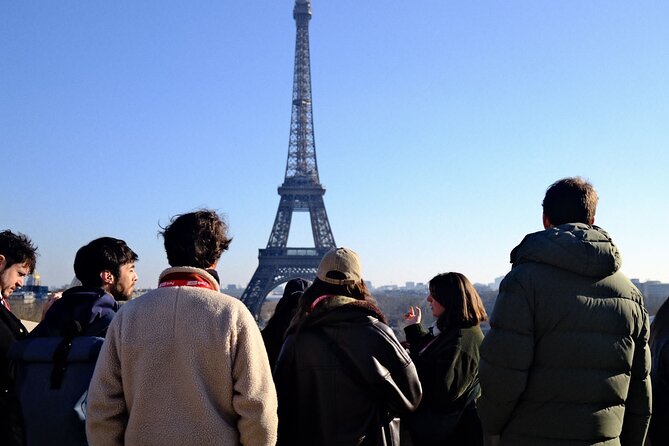
World Fairs leave fingerprints all along the Seine. This walk connects the big Paris landmarks you already know with the lesser-known 19th and early-20th century ideas that helped shape the city, from exhibition architecture to engineering-minded bridges.
I especially love the certified local guide style—clear, funny, and never too much at once—and the small group size (max 15), which makes questions feel normal instead of rushed. The one drawback to consider is that it’s still a moderate walking pace for about 2 hours, so comfy shoes matter, even if the stops are short.
In This Review
- Key highlights worth your time
- Why this Seine walk feels different from a regular sightseeing loop
- Starting at Place Clemenceau: getting oriented fast before you hit the icons
- Grand Palais: 1900 ambition in a glass-domed, show-ready building
- Petit Palais and Musée des Beaux-Arts: art + architecture, and a calmer courtyard moment
- Pont Alexandre III: ornate bridge design with Franco-Russian meaning
- The Seine as the exhibition highway: transport, shows, and the city’s modern image
- The Flamme de la Liberté and Princess Diana’s unlikely Paris footnote
- Palais de Tokyo and Palais de Chaillot: the 1937 fair’s long-lasting plan
- Trocadéro Fountain, Pont d’Iéna, and the Eiffel Tower: the view arc that ends on purpose
- How much walking time you should plan (and who this suits best)
- Is the $43.26 price a good deal for what you get?
- Should you book this Seine World Fairs walk?
- FAQ
- How long is the Paris World Fairs walking tour?
- What is the price per person?
- What language is the tour offered in?
- How big is the group?
- Do I need tickets to visit the stops?
- Do I get a mobile ticket?
- Where does the tour start and end?
- What is the cancellation policy?
- What fitness level do I need?
Key highlights worth your time
- World Fair stories tied to real street corners so you stop seeing landmarks as just postcards
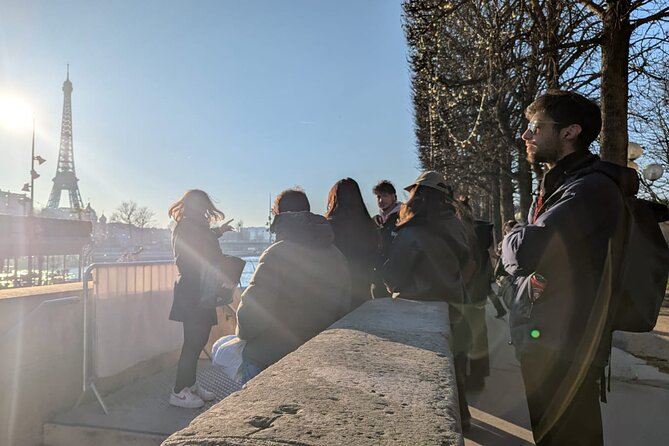
- Photo-friendly Seine viewpoints built into the route, not bolted on at the end
- Grand Palais, Petit Palais, Pont Alexandre III, and Eiffel Tower—iconic sights with context you’ll remember
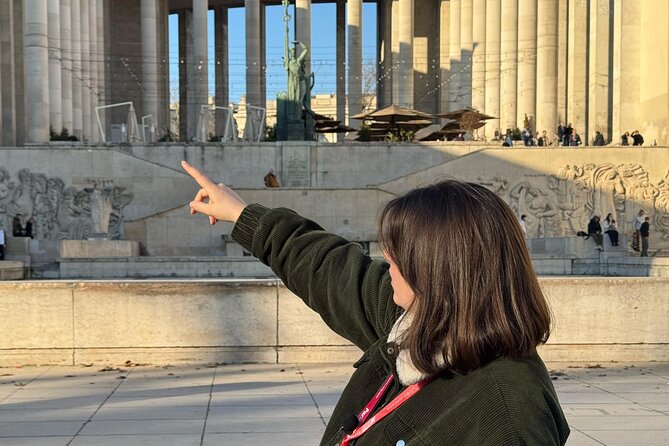
- Olivia-style guiding (when assigned) that mixes enthusiasm with practical explanations
- Mostly outside sights and free-entry stops, so you’re not paying to “see” Paris
Why this Seine walk feels different from a regular sightseeing loop
Paris looks timeless. But these sights didn’t fall from the sky. They were shaped by world fairs—big, political, inventive events where countries competed using buildings, machines, and bold public displays.
That’s the point of this tour. You walk the Seine corridor and get a running explanation of how the river became the stage. The Champs-Élysées end of the story starts with the 1900 Exposition Universelle and keeps pointing you back to the theme: transport, industry, and art all got redesigned for the future. The rest of the walk stretches that same thread across bridges, museums, and viewpoints, so you leave with an instinct for how Paris grew into a global showpiece.
I also like that the guide doesn’t treat this like a lecture. You get short stops and move on. It’s a paced walk where you can still enjoy the city around you—sun, river air, and the steady rhythm of photo angles.
The practical win: many stops are free to see, and you’re not stuck indoors trying to read everything at once. You’re out in the city, where these details actually make sense.
More time out on the Seine, compared
- Paris: 1-Hour Seine Cruise departing from the Eiffel Tower
★ 4.4 · 77,472 reviews - Paris: Seine Cruise & Crepe Tasting near the Eiffel Tower
★ 4.4 · 11,231 reviews - Paris: Seine River Panoramic Views Dinner Cruise
★ 4.3 · 10,611 reviews - Paris: Eiffel Tower Access by Elevator & Seine River Cruise
★ 4.6 · 7,329 reviews
Starting at Place Clemenceau: getting oriented fast before you hit the icons
You begin at the Statue du Général Charles de Gaulle, Place Clemenceau (Pl. Clemenceau), 75008. From the start, the route is built to help you get your bearings.
This matters because Paris World Fair history is scattered. Without a thread, you’d bounce from Grand Palais to Pont Alexandre III and wonder what connects them. With this walk, the guide keeps tying stops to specific expositions and the “why” behind design choices.
Even the first stop near Champs-Élysées – Clemenceau metro station (Line 1) is a clue. That station is linked to the 1900 Exposition Universelle and acts like a quiet reminder that modern transport has always been part of Paris’s public image. It’s not just about grand buildings. It’s also about how people move toward them.
If you arrive early, take a moment to look at the direction of the avenues and the big view lines heading toward the river. By the time you’re ready to hit the glass-domed spectacle, you’ll understand what you’re seeing instead of just recognizing it.
Grand Palais: 1900 ambition in a glass-domed, show-ready building
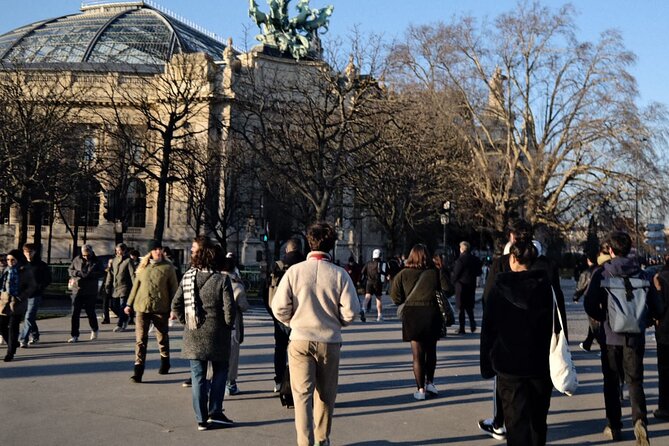
The Grand Palais is the kind of place that makes you slow down even when you’re not trying. Built for the 1900 Exposition Universelle, it’s famous for its iconic glass-domed roof and the way it mixes industrial and classical design energy.
On this tour, you don’t just glance at the dome. You learn why this building became a symbol of innovation and creativity—exactly what world fairs were trying to prove to the world. It’s also one of those landmarks where the architecture feels “made for events.” That’s why it still hosts major art exhibitions and cultural happenings today.
What I like for practical travelers: the time here is short, so you get the essentials without losing your whole afternoon. If you’re the type who wants to stand inside and read every plaque, you might want to return later. But as part of a 2-hour themed walk, it works well: brief look, key context, then you’re moving toward the next step in the Seine story.
Also, since this is a free stop on the walk, it’s a good way to enjoy a famous landmark without committing to any museum tickets.
Petit Palais and Musée des Beaux-Arts: art + architecture, and a calmer courtyard moment
Right after the Grand Palais, you’ll see the Petit Palais, also built for the 1900 Exposition Universelle. Today it houses the Musée des Beaux-Arts de la Ville de Paris.
This stop is a nice balance. Grand Palais is dramatic from the outside. Petit Palais feels more intimate, with its architecture, frescoes, and a serene courtyard vibe. The tour framing helps you notice details that you might miss if you were only trying to take quick pictures.
Even better, it’s presented as free to visit on the experience. So if the group timing allows, you have a chance to step into the art space rather than treating this as only an exterior photo stop. That’s a value boost: you get architecture, then you can connect it to the art it’s built to hold.
The only caution I’d give: if you’re the type who hates any indoor time during a walking tour, you may prefer to stick to what’s outside. The good news is that you’re not forced into long museum wandering here. The tour’s structure keeps you moving.
Pont Alexandre III: ornate bridge design with Franco-Russian meaning
Crossing to Pont Alexandre III, you enter the part of the walk that Paris does best: turning infrastructure into decoration.
This bridge, built for the 1900 Exposition Universelle, is one of the most ornate on the Seine. You’ll see gilded sculptures, intricate ironwork, and Art Nouveau lamps. The tour connects all that ornament to its role as a symbol of Franco-Russian ties—world fairs weren’t only about art and technology. They were also about diplomacy and international symbolism.
What I like here for photography: the bridge gives you an elevated sense of place. You get city views with enough detail (sculptures, lines, lighting style) that photos don’t look flat. And because the tour keeps this as a short stop, you get the main composition ideas without overthinking it.
If you’re sensitive to crowds, you might want to be ready for busy public spaces. This area can attract pedestrians and photographers. The fix is simple: pause for the best angles, then move on with the group so you don’t get stuck waiting around.
The Seine as the exhibition highway: transport, shows, and the city’s modern image
A big theme on this walk is that the Seine wasn’t just scenic. It was a communication tool.
You’ll hear how the river played a central role in Paris world fairs by acting as a backdrop for grand exhibitions and by linking landmark sites. In other cities, fairs might feel like a temporary district. In Paris, the river helped make the city’s new structures part of everyday life afterward.
That story makes sense when you start noticing the “visitor flow” through the stops:
- Bateaux Mouches started as visitor transport for the 1867 Exposition Universelle, then turned into a classic way to see Paris from the water.
- Pont de l’Alma points to the 1855 Exposition Universelle and keeps the Zouave statue, once used as a flood gauge.
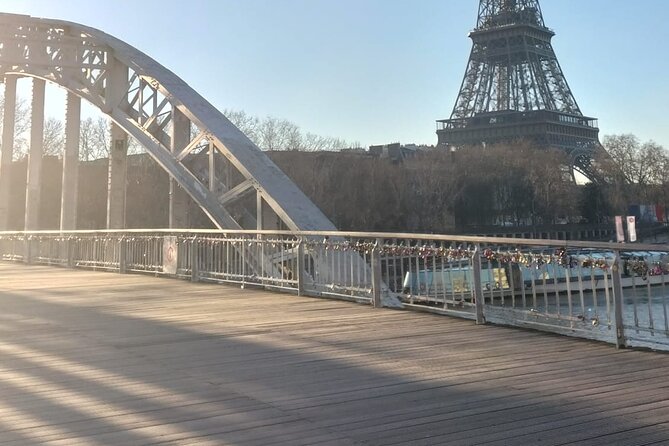
- Passerelle Debilly (the footbridge over 120m) ties the idea of new crossings to the 1900 Exposition Universelle, linking the Quai Branly to Avenue de New York.
When you put those together, the Seine becomes more than a backdrop. It turns into the network that helped visitors move between “future displays,” then later into a permanent Paris experience.
That’s also why the tour is strong for first-timers and return visitors alike. Even if you know the big landmarks, you don’t always notice how the city’s movement systems carry world-fair DNA.
Worth weighing up next to this Paris pick




The Flamme de la Liberté and Princess Diana’s unlikely Paris footnote
Near Pont de l’Alma, you’ll stop at Flamme de la Liberté, a full-scale replica of the Statue of Liberty’s flame.
Here’s the key detail: its origin traces back to the 1878 Exposition Universelle, when the Statue of Liberty was first showcased before it traveled to New York. The tour connects this replica to Franco-American friendship and frames it as part of the same “progress and cultural exchange” energy that powered the fairs.
The fun twist—also part of why this stop sticks in your memory—is that the flame is now an unofficial memorial connected to Princess Diana. That may not be what you’d guess when you first hear about a Liberty-flame replica, but it’s exactly the kind of human layer that makes historical landmarks feel alive.
Practical note: this is the kind of stop where photos work well even if you only spend a minute or two. The flame shape is bold, and it gives you a clear subject against the river-area setting.
Palais de Tokyo and Palais de Chaillot: the 1937 fair’s long-lasting plan
Once you move toward the Trocadéro side, the story shifts. It’s no longer only about the earliest world fairs and engineering showpieces. It’s also about what happens when a fair site becomes cultural infrastructure.
You’ll see Palais de Tokyo, inaugurated in 1937 for the Exposition Universelle. Today it’s Europe’s largest center for contemporary art. The tour helps you connect the “modern art palace” idea to the fair’s bigger message: Paris wanted to prove it could lead the future of culture, not just architecture.
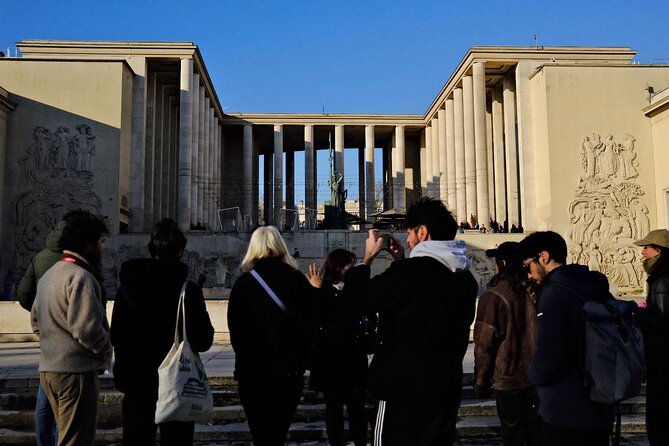
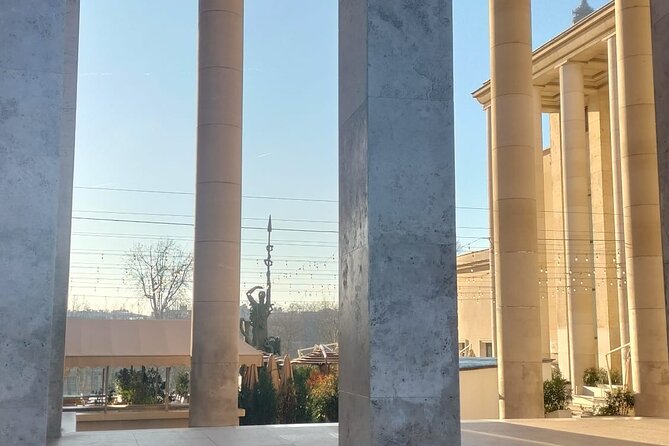
Then you’ll reach Palais de Chaillot, built for the 1937 International Exposition as one of three structures designed to outlast the event, alongside Palais de Tokyo and Palais d’Iéna. The tour points to the architects: Léon Azéma, Jacques Carlu, and Louis-Hippolyte Boileau.
What I like about these stops is that they make you understand how fairs can leave usable buildings behind. You’re not just looking at old expo grounds. You’re seeing Paris continuing to run those spaces as galleries and public culture.
If you’re an art person, you’ll likely want more time than the tour allows. If you’re not, don’t worry. The key is the connection: why these buildings exist, how they were planned to endure, and how that planning changed Paris’s everyday options.
Trocadéro Fountain, Pont d’Iéna, and the Eiffel Tower: the view arc that ends on purpose
From Palais de Chaillot, you’ll hear about the Trocadéro Fountain, built in 1937 in the Trocadéro Gardens as a replacement for the 1878 Exposition Universelle fountain.
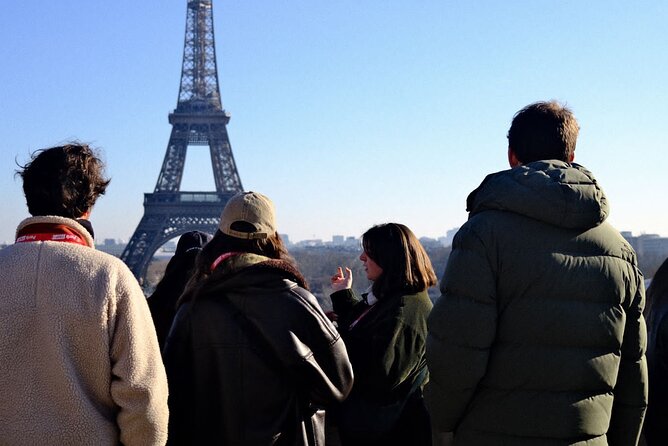
This stop is a classic “look toward the Eiffel Tower” moment. The fountains add drama, and the views are the payoff. The tour uses it to keep the world-fair thread going: the same area kept reinventing public displays and view staging for different eras.
Then you’ll walk along Pont d’Iéna, a bridge tied to multiple Universelles. It connects the Eiffel Tower to Trocadéro and became a symbolic entryway for millions during fairs from 1867 to 1900. You’ll also hear how it’s back in the spotlight for the Paris 2024 Olympics, serving as a location for ceremonies and events. That’s a useful reminder: international gatherings repeat. Paris keeps offering itself as the stage.
Finally, you land at the Eiffel Tower. Built for the 1889 Exposition Universelle, it was first met with criticism, then became the icon of Paris and a symbol of engineering progress. The tour links it to modern Olympics momentum too—another international moment where the city leans into what it does best: global attention, big ideas, and a single unforgettable silhouette.
This ending works because the route builds to it. You don’t reach the Eiffel Tower as a random destination. You reach it as the last page of the same story you started with on the Champs-Élysées side.
How much walking time you should plan (and who this suits best)
This experience runs about 2 hours and is designed as a smooth, themed walk with short stops. That’s friendly if you don’t want to spend half a day in museums. It’s also realistic if you can keep a steady walking pace.
You should be fine if you have moderate physical fitness and you’re comfortable standing and walking in an active city area. The route is mostly outdoors, but you’ll still do enough movement that uncomfortable shoes will annoy you by the end.
This tour is especially good if:
- You love history you can see, not history trapped behind glass
- You want a Seine-focused photo route with meaning behind the angles
- You’ve been to Paris before, but you want a fresh way to view familiar monuments
- You like small-group conversations (when there’s room to ask questions)
It’s less ideal if you want long museum time at every stop. Even though some sites are free to visit, the tour is built for walking and context, not lingering.
Is the $43.26 price a good deal for what you get?
At $43.26 per person for about 2 hours, this tour sits in the category of “small-group storytelling” rather than “transport plus everything included.”
So what makes it feel worth it:
- You get a certified local guide and a tight theme that ties multiple landmarks together
- The group cap of 15 keeps the tour from feeling like a moving lecture hall
- Many stops are free to see, including major exterior landmarks and key culture spaces like Petit Palais
- You finish at the Eiffel Tower, which can save you the headache of planning that last leg on your own
You also don’t pay extra for food here. That can be a plus: you keep control of your own schedule. Just plan to grab a drink or snack after the tour if you need one.
If you’re price sensitive, the best test is this: compare what you’d spend on a guided walk plus entry costs plus your own time piecing it together. This tour does the connecting work for you, and that’s often the part that feels hardest on a first visit.
Should you book this Seine World Fairs walk?
If you like Paris landmarks but want the “why” behind them, yes, I’d book it. The combination of small group energy, guides who explain clearly, and a route built around how world fairs shaped Paris makes this feel like a smart use of time.
Skip it only if you strongly dislike walking, want long museum sessions at each stop, or you’re only chasing the Eiffel Tower photo and nothing else. This tour is about the story web around that view—not just the view itself.
If you can do one themed walk in Paris that goes beyond the usual checklist, this is a solid choice.
FAQ
How long is the Paris World Fairs walking tour?
It lasts about 2 hours.
What is the price per person?
The price is listed as $43.26 per person.
What language is the tour offered in?
The tour is offered in English.
How big is the group?
The tour has a maximum size of 15 travelers.
Do I need tickets to visit the stops?
The tour highlights indicate free admission for the listed stops, including Petit Palais.
Do I get a mobile ticket?
Yes, it includes a mobile ticket.
Where does the tour start and end?
It starts at Statue du Général Charles de Gaulle, Pl. Clemenceau, 75008 Paris, and ends at the Eiffel Tower, 5 Av. Anatole France, 75007 Paris.
What is the cancellation policy?
Free cancellation is available up to 24 hours in advance for a full refund. If you cancel less than 24 hours before the start time, the amount paid is not refunded.
What fitness level do I need?
You should have a moderate physical fitness level.
If you want, tell me your travel dates and whether you’ll be doing any museum entries the same day. I can suggest how to pair this walk with a smart, low-stress plan around it.
More Tours in Paris
- Paris: Louvre Guided Tour with Reserved Access & Boat Cruise
★ 4.3 · 16,353 reviews - Paris: Big Bus Hop-On Hop-Off Tour with Optional Cruise
★ 4.4 · 13,279 reviews - Louvre Museum Masterpieces Guided Tour with Access
★ 4.5 · 12,023 reviews - Versailles: Skip-the-Line Tour of Palace and Gardens Access
★ 4.7 · 10,429 reviews - Paris: Louvre Overview, Exploration tour and Reserved Entry
★ 4.1 · 10,145 reviews
More Tour Reviews in Paris
- Paris: 1-Hour Seine Cruise departing from the Eiffel Tower
★ 4.4 · 77,472 reviews - Paris: Louvre Museum Timed-Entrance Ticket
★ 4.6 · 71,977 reviews - Disneyland® Paris 1-Day Ticket
★ 4.6 · 49,412 reviews - Paris: Versailles Palace and Gardens Full Access Ticket
★ 4.6 · 41,579 reviews - Paris: Arc de Triomphe Rooftop Tickets
★ 4.6 · 34,264 reviews
More Cruises on the Seine
- Paris: 1-Hour Seine Cruise departing from the Eiffel Tower
★ 4.4 · 77,472 reviews - Paris: Seine Cruise & Crepe Tasting near the Eiffel Tower
★ 4.4 · 11,231 reviews - Paris: Seine River Panoramic Views Dinner Cruise
★ 4.3 · 10,611 reviews - Paris: Eiffel Tower Access by Elevator & Seine River Cruise
★ 4.6 · 7,329 reviews - Paris: 3-Course-Dinner Cruise on the Seine with live music
★ 4.7 · 7,248 reviews
Fresh off the review desk in Paris
- Secrets of Paris Bike Tour in English or Dutch★ 5.0 · 5 reviews
- Paris: Mont Saint-Michel Day Tour with Chinese Tour Guide★ 5.0 · 5 reviews
- Private Street Art 2-Hour Guided Tour in Paris★ 4.5 · 5 reviews
- Orsay Museum Tour: 2h Highlights (Private & Small Group)★ 5.0 · 5 reviews
- Discover Paris in electric golf carts★ 4.0 · 5 reviews
- Paris Private Boat Tour with your own Captain Guide★ 5.0 · 5 reviews
Seine River Cruises, compared.
 ★ 4.41-Hour Seine Cruise departing from the Eiffel TowerFrom $2077,472 reviews
 ★ 4.4Seine Cruise & Crepe Tasting near the Eiffel TowerFrom $2311,231 reviews
 ★ 4.3Seine River Panoramic Views Dinner CruiseFrom $6410,611 reviews
 ★ 4.6Eiffel Tower Access by Elevator & Seine River CruiseFrom $797,329 reviews
 ★ 4.73-Course-Dinner Cruise on the Seine with live musicFrom $1357,248 reviews
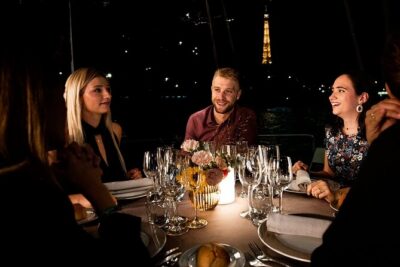 ★ 4.5Bateaux Parisiens Seine River Gourmet Dinner & Sightseeing CruiseFrom $1506,930 reviews
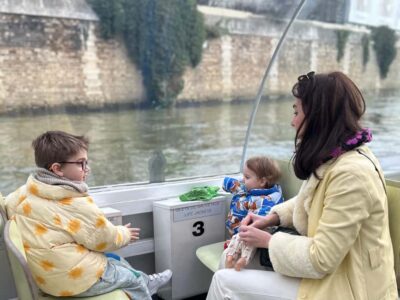 ★ 4.4Hop-On Hop-Off Seine Cruise Pass with 9 StopsFrom $275,645 reviews
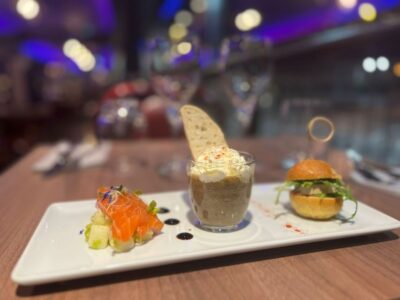 ★ 4.2Seine River Bistronomic Dinner CruiseFrom $695,272 reviews
Browse the lists this tour appears in