
Reviewed · SAINTE-CHAPELLE & CONCIERGERIE
Semi-Private French Revolution and Conciergerie tour
Revolution is written on Paris walls. This small-group walk strings together major landmarks and lesser-seen corners, using your guide’s stories to make the French Revolution feel current, not dusty. You’ll cover plenty of ground without feeling rushed, because the focus is on what you can actually see and notice along the way.
I love how much you get from walking. You slow down, look up at details like Gothic stonework, and pick up the kind of Paris clues you’d miss from a bus window. I also like the personal guide experience, with names like Benoit, William, and Adam mentioned by past guests for turning history into something you can talk about after the tour.
The only real drawback is practical: it runs outdoors and you’ll do a full 2 hours 30 minutes on your feet, in all weather. If rain or cold makes you miserable, plan to dress for it and bring shoes you trust.
In This Review
- Key Points You’ll Care About
- Opera Bastille Start: modern Paris at the Bastille doorstep
- Le Marais on Foot: swamp roots, Revolution scars, and a comeback
- Hotel de Ville: government power and French history displays
- Tour Saint-Jacques: the Gothic survivor of St Jacques de la Boucherie
- Finishing near the Conciergerie: tying the theme together
- Small-group guiding: why 15 people changes everything
- Price and value: what $179.03 buys you in real terms
- Weather, fitness, and the shoes you bring
- Should you book this French Revolution and Conciergerie tour?
- FAQ
- How long is the Semi-Private French Revolution and Conciergerie tour?
- Is the tour offered in English?
- What’s the maximum group size?
- What’s included in the price?
- Are tickets included for the stops?
- Where do I meet and where does the tour end?
- Does it run in bad weather, and can I cancel for free?
Key Points You’ll Care About
- Small-group feel (max 15): you get room for questions and real conversation.
- Major sights plus side streets: big Paris markers with quieter moments in between.
- Guides bring the Revolution to life: expect story-led history, not a lecture.
- Free entry at every stop listed: you pay for guiding, not tickets.
- A walk that ends at the Conciergerie area: the theme clicks into place as you finish.
Opera Bastille Start: modern Paris at the Bastille doorstep
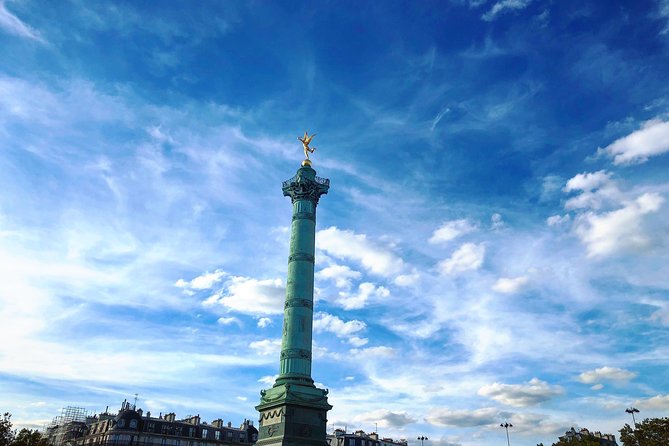
You begin near the Bastille area, at the Banque de France meeting point on Place de la Bastille. The first stop is Opera Bastille, the sleek auditorium opened in 1989. Even if you’re not into opera, it’s a strong opening because it reminds you that Paris layers time: new cultural buildings rise right where older upheaval still echoes.
This start point also does something smart for your brain. By beginning in the modern era, your guide can later contrast what changed in Paris—politically, socially, and in the way the city’s spaces get used. You get a sense of how the Revolution shaped the story of the city, even when the architecture around you is from much later.
One practical bonus: Opera Bastille is the kind of landmark that makes orientation easy. You can get your bearings fast, and the rest of the walk feels like a guided route through Paris rather than a vague wander.
The medieval island, a few more ways
- Paris: Sainte-Chapelle, Conciergerie, Notre Dame Guided Tour
★ 4.8 · 727 reviews - Paris: Notre Dame Outdoor Tour with Sainte-Chapelle / Crypt.
★ 4.7 · 723 reviews - Notre Dame Outdoor Walking Tour and Entrance to Sainte Chapelle
★ 5.0 · 625 reviews - Paris: Conciergerie Ticket with Histopad
★ 4.4 · 479 reviews
Le Marais on Foot: swamp roots, Revolution scars, and a comeback
Next up is Le Marais, a neighborhood with a very specific origin story: it was built on land filled in from a swamp. Long before it became a place for shopping and wandering, it was known for high culture. Then the French Revolution era hit, and the area fell into disrepair. What I like here is that the tour doesn’t treat the Revolution like something that happened in one room. It shows how it played out across neighborhoods and the quality of city life.
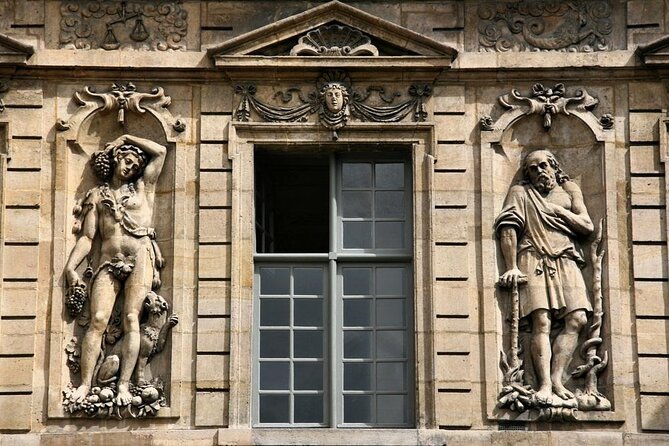
In a walking format, this stop matters because you can see the patchwork feeling of Paris. You’re not just learning that the area declined and later regained prominence—you’re watching the city’s recovery process, block by block. Even when buildings look old or romantic, Le Marais teaches you to ask what changed, and when.
The drawback? Le Marais is one of those Paris areas where you might want to stop and explore on your own once you’re there. That’s great, but it can fight the tour’s timeline. If you’re the type who loves side streets, keep your eyes on your guide’s route and save the extra wandering for after the tour.
Hotel de Ville: government power and French history displays
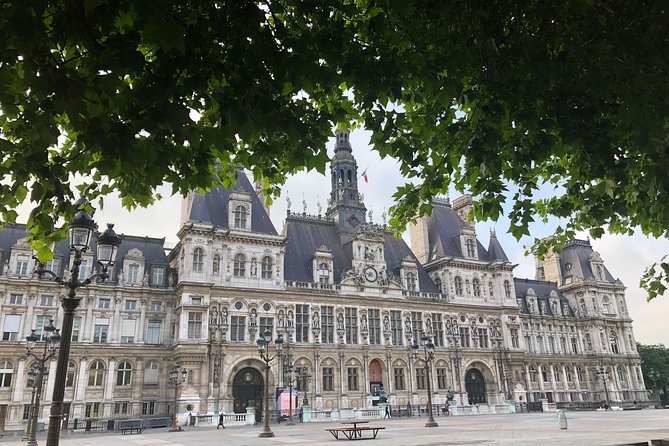
Your walk continues to Hotel de Ville, the beautiful 19th-century building that’s now the seat of the French government. This stop gives you a helpful anchor. You’ve been thinking about upheaval, and suddenly you’re looking at an institution that still runs the country today. That contrast is exactly what makes the Revolution theme click.
The building also includes displays on French history. That means the guide can connect the stories you’re hearing to what you can see in front of you, without you needing to guess or fill in gaps yourself. For many people, this is where the tour becomes more than a route—it becomes a way to understand how political change gets built into public space.
One thing to keep in mind: government-area landmarks can be busy and sometimes slow to read depending on crowds and security flow. So stay patient, listen closely, and treat it like a story stop first. If you try to rush to take selfies and read everything at once, you’ll miss the best part—how your guide ties the Revolution theme to the building’s role.
Tour Saint-Jacques: the Gothic survivor of St Jacques de la Boucherie
Then comes one of the most visually satisfying stops on the route: Tour Saint-Jacques, a flamboyant Gothic tower from the 16th century. Your guide points out that it’s the only remaining part of the church of St Jacques de la Boucherie, which was demolished during the French Revolution.
This is the stop where on-foot really pays off. It’s easy to pass over a tower if you’re not meant to look at it. But when you’re standing close, you can take in the tower’s shape and stone details, and the story becomes more than trivia. The Revolution isn’t only about dates and famous figures. It’s also about what gets removed, what survives, and what replacement culture looks like later.
A possible downside: towers and historic remnants are great for photos, but angles can be tricky in tight streets or at busy times. If you care about photography, be ready to take pictures quickly when your guide pauses, and then focus on listening again. Your time will be more rewarding if you treat photos as a bonus, not the mission.
Finishing near the Conciergerie: tying the theme together
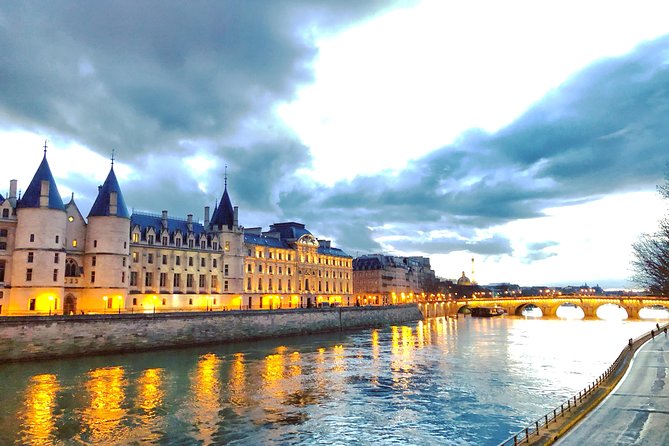
The tour ends at Conciergerie, at 2 Bd du Palais. Even without stepping inside during this walk, finishing here helps you feel the route’s logic. You started near the Bastille area, moved through key Paris landmarks, and arrived at a place associated with the tour’s Revolution theme.
What I like about ending this way is closure. The Revolution story often feels scattered when you read it alone. A walking route creates a rhythm: each stop adds a new piece, and the final location helps your brain connect them into one timeline.
If you plan your next move after the tour, give yourself a little buffer. When you finish near a major historic area, you’ll likely want time to wander nearby streets or grab a bite without rushing.
Small-group guiding: why 15 people changes everything
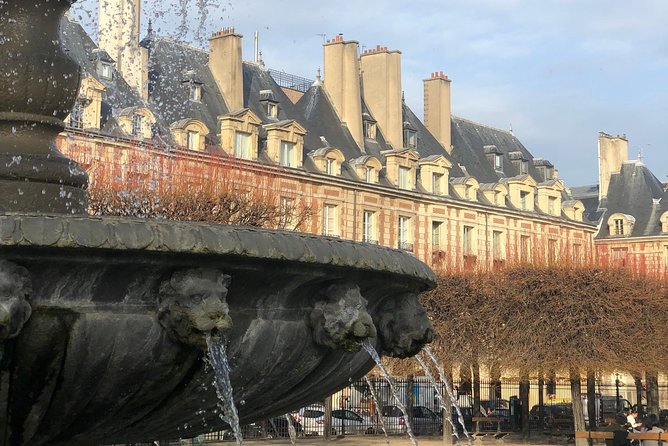
This tour is capped at 15 travelers, which is a big deal for how the experience feels. With a larger group, history becomes a performance you watch. With a smaller one, it becomes a conversation you can join.
That also explains why guests highlight guide personality so strongly. People mention Benoit and William for making the tour feel like Paris interpreted by someone who lives there. Other mentions include Adam for keeping teenagers interested from the beginning. What you can take from that: this isn’t history delivered from a podium. It’s story-led walking, with space to ask questions and react to what you’re seeing.
From a practical point of view, smaller groups also make timing easier. Your guide can slow down when the group needs it, and speed up when everyone’s ready. That matters on a walking tour where street layout and weather can change how long things take.
Worth weighing up next to this Paris pick




Price and value: what $179.03 buys you in real terms
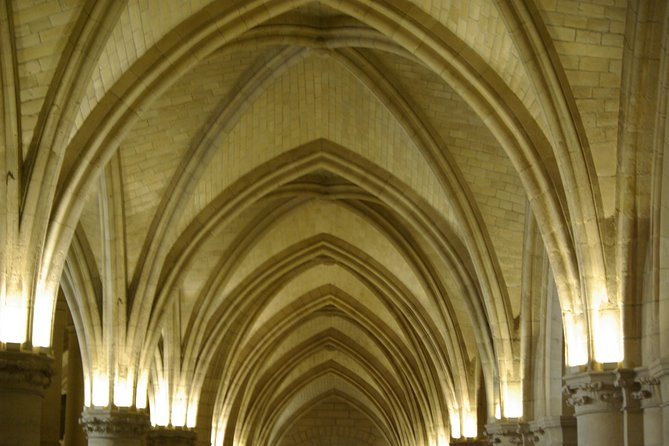
At $179.03 per person for about 2 hours 30 minutes, you’re paying for three main things: a professional English-speaking guide, small-group time, and access to multiple major Paris landmarks in one coherent route.
Here’s where the math gets friendlier than it looks at first. The tour’s listed stops all have free admission tickets. So you’re not stacking costs on top of the guide fee. You’re mainly buying interpretation—how someone connects Opera Bastille, Le Marais, Hotel de Ville, and Tour Saint-Jacques into a single Revolution-focused story you can walk through.
What’s not included is also clear, which helps you plan: food and drinks are on you, and there’s no hotel pickup or drop-off. Transportation to and from the sights is also not included. That means the best value comes if you treat this like the central activity of your half-day and budget a snack or two before or after.
If you like structured walking tours but hate wasting time on ticket lines, this is the kind of pricing that can feel fair. You get guidance and route logic, without paying separate entry fees for each stop.
Weather, fitness, and the shoes you bring
The tour operates in all weather conditions, so dressing right matters. If it’s raining, assume you’ll still be outside for most of the experience, because the core format is walking and looking. Bring a light rain layer, not just a flimsy umbrella you have to babysit.
The tour also asks for moderate physical fitness. That usually means steady walking for a couple hours, plus standing and pausing at stops. If you know your limits—knee pain, long-distance stamina, or sensitivity to cold—plan accordingly. You’ll enjoy it more if you arrive ready to keep moving at a comfortable pace.
One other practical note: the tour is near public transportation, and service animals are allowed. So if you’re juggling mobility needs or you’re coming from another part of Paris, you can generally fit this into a day without complicated transfers.
Should you book this French Revolution and Conciergerie tour?
Book it if you want a story-driven walking tour that connects Paris landmarks to the French Revolution in a way you can see with your own eyes. I especially think it’s a good fit if you like small-group experiences, and if you enjoy guides who make history feel like a living city problem—what gets built, what gets torn down, and what remains.
Skip it (or reconsider) if you strongly prefer indoor attractions, or if weather and long outdoor walking are deal-breakers for you. The route is designed to be outdoors and on foot, and it lasts long enough that the comfort part is non-negotiable.
If you decide to go, do one simple thing: plan your timing so you’re not rushing afterward. This kind of tour rewards calm follow-up—one extra street, one more viewpoint, and a chance to talk through what you learned before you move on.
FAQ
How long is the Semi-Private French Revolution and Conciergerie tour?
It’s listed at about 2 hours 30 minutes.
Is the tour offered in English?
Yes, the tour is offered in English.
What’s the maximum group size?
The tour has a maximum of 15 travelers.
What’s included in the price?
The included item is a professional English-speaking guide.
Are tickets included for the stops?
The admission ticket is free for each of the listed stops: Opera Bastille, Le Marais, Hotel de Ville, and Tour Saint-Jacques.
Where do I meet and where does the tour end?
You start at Banque de France, 3 bis Pl. de la Bastille, 75183 Paris, France, and the tour ends at Conciergerie, 2 Bd du Palais, 75001 Paris, France.
Does it run in bad weather, and can I cancel for free?
It operates in all weather conditions, so dress appropriately. Free cancellation is available if you cancel up to 24 hours in advance for a full refund.
More Tours in Paris
- Paris: Louvre Guided Tour with Reserved Access & Boat Cruise
★ 4.3 · 16,353 reviews - Paris: Big Bus Hop-On Hop-Off Tour with Optional Cruise
★ 4.4 · 13,279 reviews - Louvre Museum Masterpieces Guided Tour with Access
★ 4.5 · 12,023 reviews - Versailles: Skip-the-Line Tour of Palace and Gardens Access
★ 4.7 · 10,429 reviews - Paris: Louvre Overview, Exploration tour and Reserved Entry
★ 4.1 · 10,145 reviews
More Tour Reviews in Paris
- Paris: 1-Hour Seine Cruise departing from the Eiffel Tower
★ 4.4 · 77,472 reviews - Paris: Louvre Museum Timed-Entrance Ticket
★ 4.6 · 71,977 reviews - Disneyland® Paris 1-Day Ticket
★ 4.6 · 49,412 reviews - Paris: Versailles Palace and Gardens Full Access Ticket
★ 4.6 · 41,579 reviews - Paris: Arc de Triomphe Rooftop Tickets
★ 4.6 · 34,264 reviews
Sainte-Chapelle and the Conciergerie
- Paris: Sainte-Chapelle, Conciergerie, Notre Dame Guided Tour
★ 4.8 · 727 reviews - Paris: Notre Dame Outdoor Tour with Sainte-Chapelle / Crypt.
★ 4.7 · 723 reviews - Notre Dame Outdoor Walking Tour and Entrance to Sainte Chapelle
★ 5.0 · 625 reviews - Paris: Conciergerie Ticket with Histopad
★ 4.4 · 479 reviews - Paris: Sainte-Chapelle Entry with Notre Dame Outdoor Tour
★ 4.8 · 478 reviews
Fresh off the review desk in Paris
- Secrets of Paris Bike Tour in English or Dutch★ 5.0 · 5 reviews
- Paris: Mont Saint-Michel Day Tour with Chinese Tour Guide★ 5.0 · 5 reviews
- Private Street Art 2-Hour Guided Tour in Paris★ 4.5 · 5 reviews
- Orsay Museum Tour: 2h Highlights (Private & Small Group)★ 5.0 · 5 reviews
- Discover Paris in electric golf carts★ 4.0 · 5 reviews
- Paris Private Boat Tour with your own Captain Guide★ 5.0 · 5 reviews
Sainte-Chapelle & Conciergerie, compared.
 ★ 4.8Sainte-Chapelle, Conciergerie, Notre Dame Guided TourFrom $88727 reviews
 ★ 4.7Notre Dame Outdoor Tour with Sainte-Chapelle / Crypt.From $63723 reviews
 ★ 5.0Notre Dame Outdoor Walking Tour and Entrance to Sainte ChapelleFrom $79625 reviews
 ★ 4.4Conciergerie Ticket with HistopadFrom $15479 reviews
 ★ 4.8Sainte-Chapelle Entry with Notre Dame Outdoor TourFrom $75478 reviews
 ★ 4.5Sainte-Chapelle, Conciergerie & Notre Dame Exterior Guided TourFrom $86409 reviews
 ★ 4.5Outdoor Notre-Dame walking Tour with Sainte-Chapelle EntryFrom $80374 reviews
 ★ 4.9Notre Dame Exterior Walking Tour with Sainte ChapelleFrom $81290 reviews
Browse the lists this tour appears in