
Reviewed · MONTMARTRE TOURS
Food, wine & tragedies – The tour of Montmartre
Montmartre gets serious when you eat here. I love the food tastings—six generous bites (sweet and savory) plus wine—paired with Montmartre stories that mix famous artists with the neighborhood’s darker turns. One possible drawback: the route climbs, so you’ll want a moderate fitness level and comfy shoes.
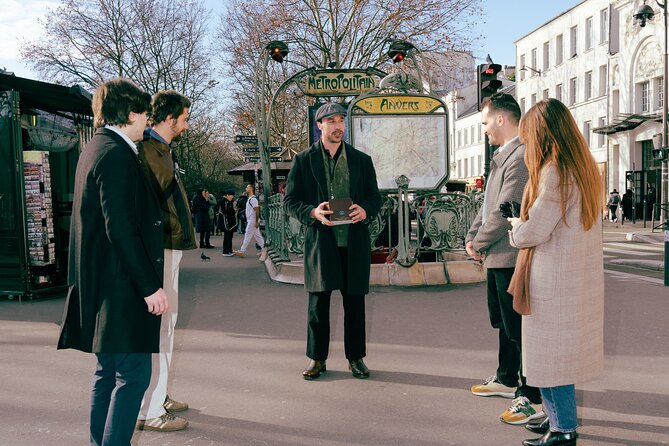
What makes this walk feel special is the guide style of Loïc: you get a friendly neighborhood pace, not a rushed script. With a maximum of 10 people, it stays intimate, and the focus stays on getting your bearings fast while still learning how Montmartre became an artist magnet. You’ll also finish at the top near Sacré-Cœur, so plan your timing if you’re crossing town right after.
A quick heads-up for comfort: bottled water is not included. Bring your own if you tend to drink while walking, especially in warmer months.
In This Review
- Key highlights I’d plan around
- Montmartre, Food, and Tragedy: a walk that feels like a storybook
- Starting at Anvers and finishing at Sacré-Cœur: route logic that saves time
- Six tastings across Montmartre: what you’re really paying for
- Stop-by-stop: what each moment adds to your Montmartre map
- 1) Montmartre first: artists’ streets before the big landmarks
- 2) Le Mur des Je t’aime: romance in a short stop
- 3) Rue de l’Abreuvoir: the iconic Paris street feel
- 4) La Petite Maison Rose (since 1920): the pink-house landmark
- 5) Place du Tertre: artist square energy
- 6) Sacré-Cœur: history at the viewpoint level
- The guide factor: why Loïc’s style keeps it fun
- Price and value: is $95.12 worth it?
- Logistics that matter on a hill: what to bring and how to pace yourself
- Who should book this Montmartre walk?
- Should you book this tour?
- FAQ
- How long is the tour?
- What’s the price per person?
- Where do you start and where does it end?
- Is the tour in English?
- Are there tastings included, or do I pay extra for food?
- How big is the group?
- Do I need to buy admission tickets for the stops?
- Is the tour okay if I have moderate fitness?
Key highlights I’d plan around
- 6 tastings: a mix of pastries and savory bites, plus wine, so you actually eat your way through the neighborhood
- Montmartre with meaning: art legends and dramatic tragedies, not just photo stops
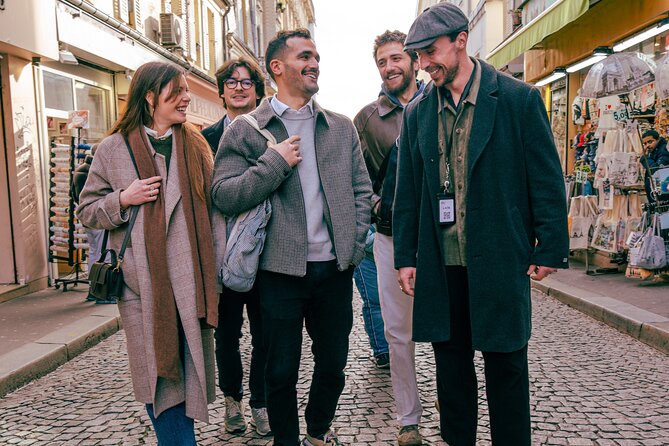
- Small group vibe: up to 10 people, so questions feel normal and the pace stays human
- Iconic spots plus local corners: you hit well-known landmarks and the side-street feeling in between
- Ends at Sacré-Cœur: you can roll right into the basilica area if you want to linger
Montmartre, Food, and Tragedy: a walk that feels like a storybook
Paris can be all postcards if you’re not careful. This experience keeps Montmartre grounded in everyday street life—then layers in the art scene that grew out of it. You’re not just moving from one famous wall to another. You’re learning why these places mattered to the people who lived and worked here.
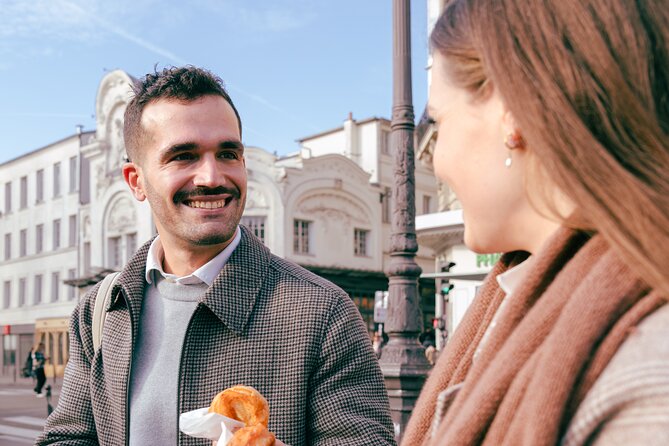
The big win is the blend of food and narrative. Six tastings are the reason your brain stays awake and your hands stay busy. Meanwhile, the guide weaves in the stories—artists associated with the neighborhood, plus the dramatic, tragic events that shaped the area’s reputation. It makes the streets feel less like scenery and more like lived-in history.
If you care about both taste and context, this format works well. If you only want a strict “food crawl” with no story time, you may find the history angle takes up more time than expected. Luckily, the walking pace is designed to keep it flowing.
Keep climbing: more of the Montmartre hill
- Montmartre Hidden Gems and Scenic Highlights Walking Tour
★ 5.0 · 2,684 reviews - Montmartre Hill French Gourmet Food and Wine Tasting Walking Tour
★ 5.0 · 2,588 reviews - Paris: Montmartre Highlights Walking Tour with a Local Guide
★ 4.9 · 2,318 reviews - Paris: Montmartre Cheese, Wine & Pastry Guided Walking Tour
★ 4.8 · 2,255 reviews
Starting at Anvers and finishing at Sacré-Cœur: route logic that saves time
You start near Anvers (75018) and end at Sacré-Cœur on the hill. That matters because Montmartre is steep, and the wrong order can turn a short walk into a sweat-fest.
The good part: ending up in front of the basilica means you’re not climbing twice. If Sacré-Cœur is on your must-see list, you’re effectively combining a guided lesson with the payoff view area. The tour time is around 2 hours 40 minutes to 3 hours 10 minutes, which fits nicely into a morning or late afternoon plan.
Wear shoes you trust. This is a walking tour with moderate fitness expectations, and Montmartre’s slopes do not negotiate. If you get tired easily on hills, you might want to skip extra climbs after the tour unless you’re still feeling fresh.
Six tastings across Montmartre: what you’re really paying for
The listed price is $95.12 per person, and the value comes from what’s actually included: snacks 6 tastings. That’s the core of the experience. You’re paying not only for food, but for the way the food anchors the story—so you remember the neighborhood, not just the flavors.
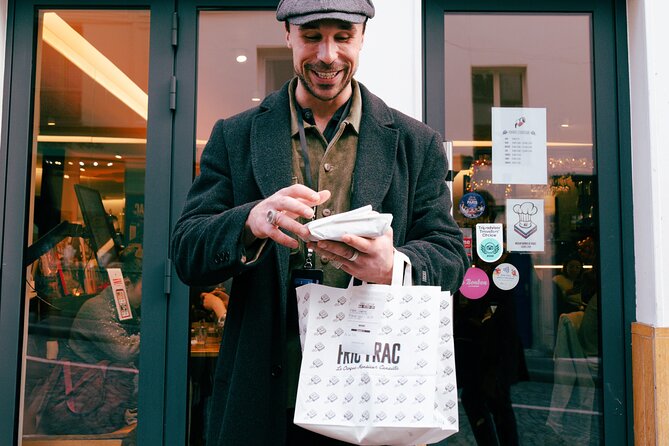
The tastings are set up as a mix of sweet and savory bites, and wine is part of the mix. One review specifically praised a range that included pastries, cheeses, breads, and wine—so you’re not just getting one pastry repeated in different shapes. Another common thread: portions feel generous for the route length.
What’s not included is bottled water. That’s easy to plan around. If you’re the type who drinks while you walk, buy a bottle nearby at the start, or carry a refillable option if that works for you.
Stop-by-stop: what each moment adds to your Montmartre map
1) Montmartre first: artists’ streets before the big landmarks
Early on, the guide walks you around the neighborhood and explains how artists used to live and work here. This is the “get your bearings” part, and I like it for two reasons.
First, it gives you a framework before you hit the big-name sights. Second, it helps you see why certain corners feel artistic—because you learn the human reasons behind the look. Reviews repeatedly mention that the stories made the streets feel intimate and authentic, and this initial pass sets that tone.
If you’re worried you’ll only get mainstream viewpoints, this start helps. You’re guided through the neighborhood’s smaller texture, not just the loudest photo spots.
2) Le Mur des Je t’aime: romance in a short stop
Next you reach Le Mur des Je t’aime, the Wall of Love. It’s compact, so the trick is using the stop as a reset—pause, take a few photos, then move on with the story in mind.
This is a good moment if you’re traveling with someone who wants romance without a long detour. The wall itself is the headline, and the guide’s job is to keep you connected to why it sits in this part of Montmartre rather than treating it as a generic attraction.
Worth weighing up next to this Paris pick


3) Rue de l’Abreuvoir: the iconic Paris street feel
Rue de l’Abreuvoir is often the kind of street you can walk past without noticing until someone points out what makes it memorable. Here, you get the context and the visual payoff within a short window.
This stop is useful because it breaks the rhythm. You’re not always looking up at landmarks. You’re looking down at street-level Paris—facades, street patterns, and the kind of narrow passage Montmartre is known for.
A practical note: narrow streets mean less space. Keep your phone handy but don’t block the flow. This is a small-group walk, so staying polite keeps things moving.
4) La Petite Maison Rose (since 1920): the pink-house landmark
Then comes the pink house moment: La Petite Maison Rose de Montmartre. It’s brief, but it’s one of those places your brain stores quickly. You see it, you remember it, and you move on.
The value here is less about the building as an object and more about how the guide frames what it represents in Montmartre’s identity. It’s the kind of detail that makes your walk feel like a personal route, not a generic sightseeing checklist.
If you’re picky about photo timing, aim to capture it quickly because this stop is short by design. You’ll get the story, not a prolonged break.
5) Place du Tertre: artist square energy
Place du Tertre is where the neighborhood’s artist reputation becomes visible at street level. This stop works best when you treat it like a theater set—look around, notice the atmosphere, then let the guide explain what’s behind the scene.
Some people love this part for its lively vibe. Others might find it touristy. I think the key is your attitude: if you’re here for art culture and you can handle a bit of hustle, it’s a fun payoff.
The guide keeps the time tight so you don’t get stuck here too long. That’s a plus, especially since the tour ends at the top.
6) Sacré-Cœur: history at the viewpoint level
Finally, you stand in front of Sacré-Cœur and get an explanation of the monument’s history. You’re not just seeing it from the curb; you’re hearing why it became what it is.
This stop is also where your planning matters. Since the end point is in front of the basilica area, you can continue with self-guided exploring right away if you want. If you’re sensitive to crowds, try to finish with enough time to control your next move.
The guide factor: why Loïc’s style keeps it fun
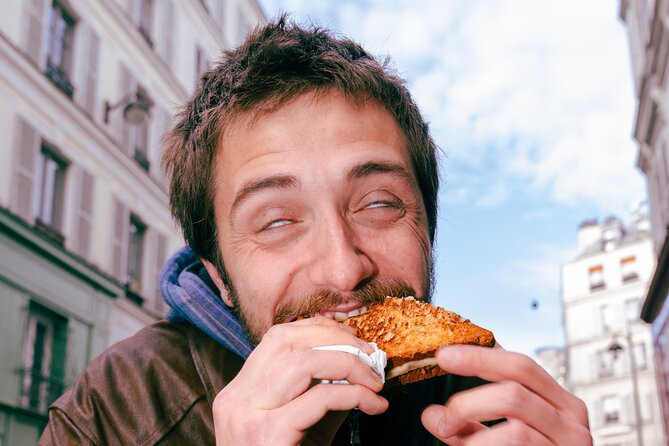
One theme shows up again and again: Loïc brings the stories to life and keeps the mood friendly. Reviews praised the feeling of walking with a friend who truly loves the neighborhood, and that’s exactly what I’d look for in a tour like this.
This matters because Montmartre stories can go two ways. They can become dry dates and names, or they can connect to real street corners. In this tour format, the guide leans into art history and tragedies in a way that feels human, not like a textbook.
Also, the pacing helps. Each tasting stop is built into the walk so your attention doesn’t drain. You’re constantly switching between tasting, looking, and listening—harder to lose focus.
Price and value: is $95.12 worth it?
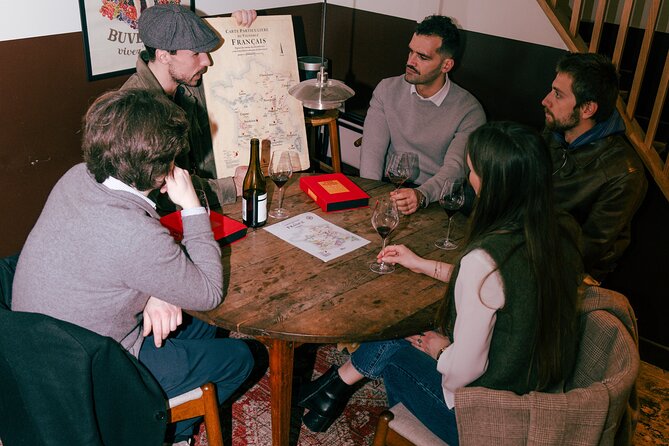
At $95.12 per person, this is not a bargain walk. But you’re not just buying a stroll. You’re paying for:
- a small group (max 10)
- around 2h40 to 3h10 of guided storytelling
- 6 tastings with a mix of sweet, savory, and wine
- a route that ends right at Sacré-Cœur
In practical terms, it can work out well if you were already planning to do a food-and-wine experience in Paris. The story component is what you’d be hard-pressed to replicate on your own without spending time researching. If you’re the type who remembers places better after learning the why, this value equation makes even more sense.
If you only want food and don’t care about art history or dramatic neighborhood events, you may feel the price is high compared to a simple snack tour. But for a first-time Montmartre experience, it’s strong value.
Logistics that matter on a hill: what to bring and how to pace yourself
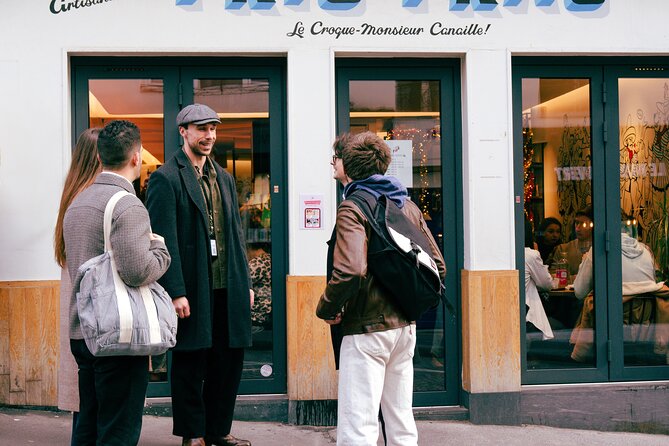
This walk is in English and uses a mobile ticket. It also runs with near public transportation, so it’s easier to reach than some out-of-the-way experiences.
Bring:
- Comfy walking shoes (Montmartre hills are real)
- a light layer for wind and changing weather
- your own water, since bottled water isn’t included
Group size is small, and the route is designed to keep you moving. Still, build in your own pace. If you need a slower moment, take it. You’ll still make it to Sacré-Cœur at the end without racing.
Who should book this Montmartre walk?
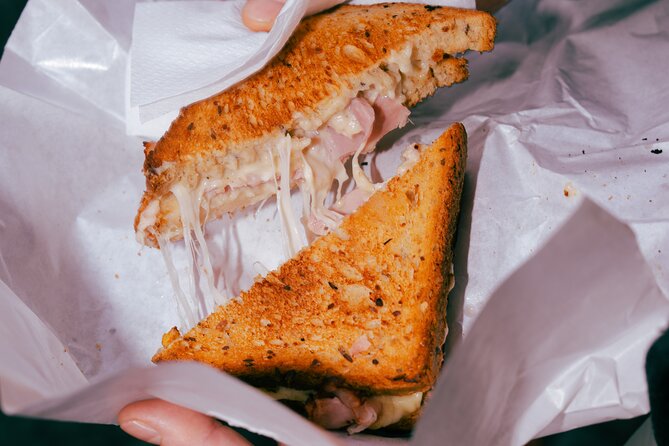
This is a good match if you:
- want food tastings in France with an art-and-street story focus
- like walking tours that teach you something beyond postcard sights
- care about Montmartre as an artistic neighborhood, including its dramatic side
- enjoy small group settings with room for questions
It’s less ideal if you:
- hate hills or have trouble with moderate walking
- want only food and prefer minimal history
- need a fully accessible route (the tour expects moderate fitness)
Should you book this tour?
If you’re planning one Montmartre experience that combines six tastings with meaningful neighborhood storytelling, I’d say yes. The best reason to book is the balance: you get iconic stops, but the guide’s stories make the streets feel personal and real. Add the fact that the ending lands you at Sacré-Cœur, and it turns into a smart use of time.
If your priority is purely to eat and you’re not in the mood for art history or tragedy, you might prefer a strictly food-focused tour. But if you want Montmartre with flavor and a deeper sense of why it became famous, this walk is worth your evening—or your morning—of planning.
FAQ
How long is the tour?
It runs about 2 hours 40 minutes to 3 hours 10 minutes.
What’s the price per person?
The tour costs $95.12 per person.
Where do you start and where does it end?
You start at Anvers (75018 Paris) and end at Sacré-Cœur (Basilique du Sacré-Cœur de Montmartre, 35 Rue du Chevalier de la Barre, 75018 Paris). The end is at the top of the hill by the basilica.
Is the tour in English?
Yes, it’s offered in English.
Are there tastings included, or do I pay extra for food?
Snacks and 6 tastings are included. Bottled water is not included.
How big is the group?
The tour has a maximum of 10 travelers.
Do I need to buy admission tickets for the stops?
The listed stops are marked as free (Admission Ticket Free).
Is the tour okay if I have moderate fitness?
It’s intended for people with a moderate physical fitness level.
More Tours in Paris
- Paris: Louvre Guided Tour with Reserved Access & Boat Cruise
★ 4.3 · 16,353 reviews - Paris: Big Bus Hop-On Hop-Off Tour with Optional Cruise
★ 4.4 · 13,279 reviews - Louvre Museum Masterpieces Guided Tour with Access
★ 4.5 · 12,023 reviews - Versailles: Skip-the-Line Tour of Palace and Gardens Access
★ 4.7 · 10,429 reviews - Paris: Louvre Overview, Exploration tour and Reserved Entry
★ 4.1 · 10,145 reviews
More Tour Reviews in Paris
- Paris: 1-Hour Seine Cruise departing from the Eiffel Tower
★ 4.4 · 77,472 reviews - Paris: Louvre Museum Timed-Entrance Ticket
★ 4.6 · 71,977 reviews - Disneyland® Paris 1-Day Ticket
★ 4.6 · 49,412 reviews - Paris: Versailles Palace and Gardens Full Access Ticket
★ 4.6 · 41,579 reviews - Paris: Arc de Triomphe Rooftop Tickets
★ 4.6 · 34,264 reviews
More of the Montmartre Hill
- Montmartre Hidden Gems and Scenic Highlights Walking Tour
★ 5.0 · 2,684 reviews - Montmartre Hill French Gourmet Food and Wine Tasting Walking Tour
★ 5.0 · 2,588 reviews - Paris: Montmartre Highlights Walking Tour with a Local Guide
★ 4.9 · 2,318 reviews - Paris: Montmartre Cheese, Wine & Pastry Guided Walking Tour
★ 4.8 · 2,255 reviews - The Secrets of Montmartre Walking Tour
★ 4.8 · 1,258 reviews
Fresh off the review desk in Paris
- Secrets of Paris Bike Tour in English or Dutch★ 5.0 · 5 reviews
- Paris: Mont Saint-Michel Day Tour with Chinese Tour Guide★ 5.0 · 5 reviews
- Private Street Art 2-Hour Guided Tour in Paris★ 4.5 · 5 reviews
- Orsay Museum Tour: 2h Highlights (Private & Small Group)★ 5.0 · 5 reviews
- Discover Paris in electric golf carts★ 4.0 · 5 reviews
- Paris Private Boat Tour with your own Captain Guide★ 5.0 · 5 reviews
Montmartre Tours, compared.
 ★ 5.0Montmartre Hidden Gems and Scenic Highlights Walking TourFrom $382,684 reviews
 ★ 5.0Montmartre Hill French Gourmet Food and Wine Tasting Walking TourFrom $1452,588 reviews
 ★ 4.9Montmartre Highlights Walking Tour with a Local GuideFrom $232,318 reviews
 ★ 4.8Montmartre Cheese, Wine & Pastry Guided Walking TourFrom $1272,255 reviews
The Secrets of Montmartre Walking TourFrom $331,258 reviews
★ 4.8Montmartre Cheese, Wine & Pastry Guided Walking TourFrom $1272,255 reviews
The Secrets of Montmartre Walking TourFrom $331,258 reviews
 ★ 4.1Sacré-Coeur and Montmartre Tour with Expert GuideFrom $281,027 reviews
 ★ 5.0Private Montmartre Food Tour with Wine, Cheese & PastriesFrom $3021,027 reviews
 ★ 5.0Paris Montmartre Food Tour – A Full French Meal by Do Eat BetterFrom $95877 reviews
Browse the lists this tour appears in