
Reviewed · PARIS PASTRY & MACARON CLASSES
Hands-on Eclair and Choux Making with a Pastry Chef
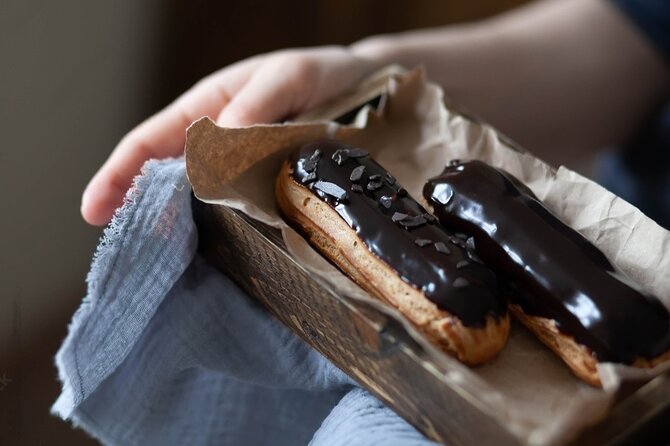
Piping eclairs is oddly calming. In this Paris hands-on class, I love that you start with plain ingredients and end with crisp, chocolate-glazed results you actually made yourself. Two things I really like: it’s beginner-friendly even if you’ve never baked pastry before, and the class is small enough (max 8) for close coaching from instructors like Clara, Mathieu, Millie, and Matteo. One consideration: if your group doesn’t split evenly, you might be paired up and take turns at the same station.
You’ll work through the whole chain—choux dough, piping, baking, pastry cream, filling, and a dark-chocolate glaze—so you’re not just watching. The pace is geared toward learning technique (including how eggs change the dough), and many people point out that instructors slow down and explain step by step. Still, the atmosphere isn’t always everyone’s favorite, since the room can feel a bit plain and compact.
Logistics are refreshingly simple: you meet at 7 Rue de Béarn in the 3rd arrondissement, the class runs about 2 hours 30 minutes, and it’s offered in English with a mobile ticket. You’ll also get coffee and/or tea included, and the site is walkable from public transportation—handy when your Paris day is already stuffed.
In This Review
- Key takeaways
- Why this Paris eclair-making class works for beginners
- Arriving at 7 Rue de Béarn: easy access, calm start
- Step 1: making pâte à choux without guesswork
- Step 2: piping sticks of choux for crisp shells
- Step 3: baking at 200°C for golden, crisp shells
- Step 4: pastry cream that actually thickens
- Step 5: filling the éclairs (with chocolate, vanilla, or coffee)
- Step 6: the dark chocolate glaze finish
- What you’ll take home (and why it’s worth the time)
- Price and value: what $132.75 buys in real terms
- Small-group dynamics: personalized help, but shareable setup
- Room and atmosphere: what to expect from the space
- Who this class is best for (and who might want another option)
- Should you book this Paris eclair and choux class?
- FAQ
- What do I make in this class?
- How long is the experience?
- How much does it cost?
- Is the class offered in English?
- What size is the group?
- Where does the class start and end?
- Is coffee or tea included?
- Do I need previous baking experience?
- What if I need to cancel?
Key takeaways
- Small group (max 8) means more hands-on time and better feedback as you pipe and bake
- Full eclair + choux workflow: pâte à choux, pastry cream, filling choices, then chocolate glaze
- Beginner-friendly teaching even if you’ve never done pastry—technique comes first
- Premeasured ingredients help you focus on the dough consistency and piping instead of math
- You may need to share a station if participants are paired off
- Chocolate or coffee/vanilla filling options often make the class feel personal
Why this Paris eclair-making class works for beginners
Paris is famous for pastry. The catch is that eclairs and choux often feel like a test you didn’t study for. This experience reduces that fear by teaching the process in a logical order and by keeping the class small.
When you make pâte à choux from scratch, the technique is the real skill. You heat water, butter, and salt until melted, stir in flour to form a dough that pulls away from the sides, then add eggs one at a time. That last part matters: the dough’s texture changes with each egg, and that’s where good instruction pays off. If you’ve ever tried choux at home and wondered why yours stayed lumpy or never puffed, this is the section you’ll want to watch closely.
Two other things make it approachable. First, the ingredients are typically handled in a way that keeps you from getting buried in preparation—many participants note that items can be premeasured, which lets you focus on what matters. Second, you don’t just learn one part. You go from dough to finished eclairs, which makes the learning stick.
A small note on expectations: this is hands-on, but it isn’t necessarily a private workshop. Some people report being paired up and taking turns, especially if the class size is odd. That can be totally fine if you’re social, but if you want full solo control of every step, plan on sharing.
More aprons-on macaron and pastry classes
- Paris: Macaron Class at Galeries Lafayette
★ 4.2 · 1,196 reviews - Paris Croissant Small-Group Baking Class with a Chef
★ 5.0 · 910 reviews - Paris: French Croissant Baking Class with a Chef
★ 4.9 · 712 reviews - Paris Cooking Class: Learn How to Make Macarons
★ 5.0 · 634 reviews
Arriving at 7 Rue de Béarn: easy access, calm start
Meeting at 7 Rue de Béarn means you’re in the heart of the 3rd arrondissement—an area that’s easy to navigate on foot and by metro. The class is offered in English, and you’ll use a mobile ticket to check in.
What I like about this setup is that it doesn’t waste your time. You’re not looking for a hard-to-find address on your first day in Paris. It’s also the kind of activity that fits between bigger sights: you get a focused 2 hours 30 minutes, then you can carry on with the rest of your itinerary.
One practical tip: bring something you can use comfortably while piping and handling hot items (sturdy sleeves, an apron if they provide them, and closed-toe shoes). The dough work is hands-on, and your hands will be busy.
Step 1: making pâte à choux without guesswork
The class begins with the choux dough, often described as the “must-do” base for eclairs and other choux pastries. Here’s what you’ll actually do, in plain terms.
- Heat water, butter, and salt in a saucepan until the butter melts.
- Add flour and mix well until the dough comes together and pulls away from the sides.
- Move the dough to a bowl, then add eggs one at a time, mixing thoroughly between additions.
This is where you learn the heart of choux. That moment when dough pulls away is your signal that the flour has cooked enough to create a paste. Then the eggs turn it into a batter-like dough that can be piped cleanly and bake into crisp shells with hollow centers.
I also appreciate that this method reduces “mystery baking.” At home, choux can fail because of timing, heat, or egg addition. Here, you’re guided through each checkpoint so you can learn what the dough should look and feel like as you go.
Step 2: piping sticks of choux for crisp shells
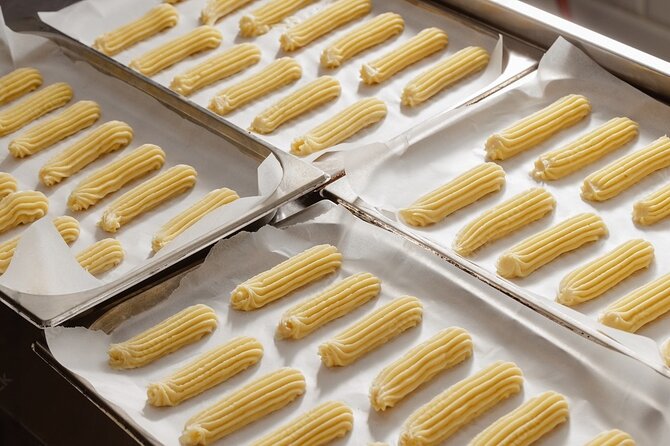
Once your dough is ready, you transfer it to a piping bag fitted with a plain tip. Then it’s straight to the baking sheet lined with parchment paper.
This part is more forgiving than many people expect, which is great news if you’re nervous. Even when piping isn’t perfectly smooth, you still have a shot at excellent results—thanks to baking chemistry and instructor guidance. Several participants specifically mention that even imperfect, shaky piping still produced pastries that looked great and tasted great.
Why piping matters: the shape affects how the pastry puffs. Too thin can lead to lack of structure; too thick can mean uneven baking. But with a plain tip and hands-on coaching, you can learn the basic rhythm fast.
Quick tip: keep your pressure steady and focus on consistent spacing. The dough is sticky; having a workflow helps you avoid chaos on parchment.
Step 3: baking at 200°C for golden, crisp shells
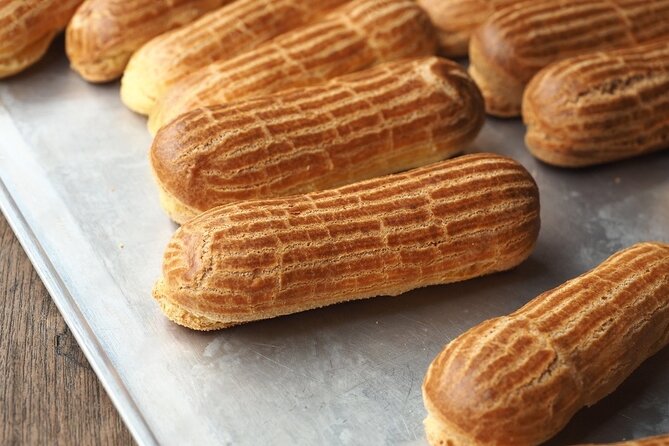
Your piped choux goes into a preheated oven at 200°C for about 20 to 25 minutes, until golden and crispy.
This timing is important because choux shells need to dry out enough to stay crisp. If you pull them early, you can end up with soft shells. If you overbake, they may become too dry. That window is where baking instruction matters.
Also, don’t skip the cooling step later. Eclairs and fillings behave differently depending on temperature, and you want your shell sturdy before you cut and fill.
Step 4: pastry cream that actually thickens
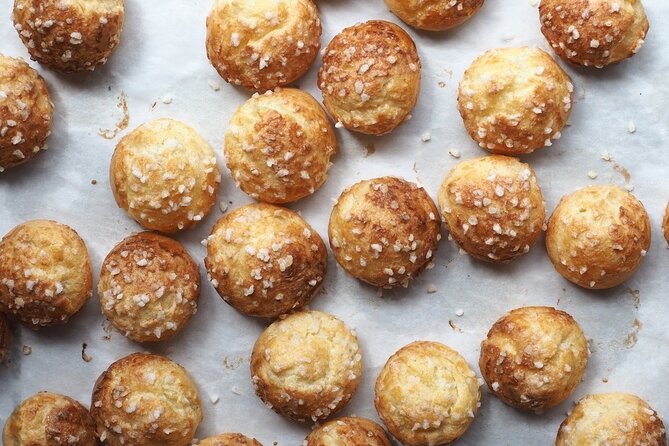
Next up is pastry cream—often the part that scares home bakers most. In this class, you’ll heat milk in a saucepan, then whisk egg yolks, sugar, flour, and cornstarch in a bowl. You pour hot milk into the egg mixture while stirring constantly, then return it to the saucepan and cook over low heat until thick.
This is classic technique, and I love that it teaches control. Low heat is the key to thickening without scrambling the eggs. Stirring prevents lumps. And thickness is the payoff: you’re aiming for a smooth cream that holds its shape when you pipe it.
If you’ve ever had pastry cream turn grainy, this is the step you’ll want to repeat at home with confidence. You’ll walk away understanding what the texture should be as it thickens, not just following a vague timer.
Worth weighing up next to this Paris pick

Step 5: filling the éclairs (with chocolate, vanilla, or coffee)
After the éclairs cool, you cut them in half. Then you use a piping bag to fill with one of the options—often chocolate, vanilla, or coffee (exact choices can vary by class).
This is a nice moment because you finally get to assemble the thing you came for. Also, filling your own pastries is where you notice how pipeable the cream should be. If the cream is too loose, it won’t fill cleanly. If it’s too thick, it can block the tip. The class flow helps you land at the right consistency.
A small detail that people seem to enjoy: some classes use a darker chocolate approach for the finished flavor. That’s a plus if you find overly sweet versions of eclairs a bit much.
Step 6: the dark chocolate glaze finish
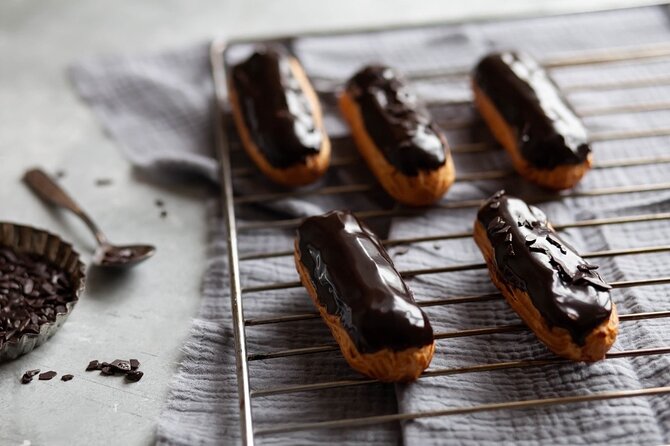
For the glaze, you melt dark chocolate and add melted butter, mixing until smooth. Then you dip the top of the éclairs into the chocolate glaze.
This step is where your work stops being purely technical and starts being fun. Chocolate-glazed eclairs look like they came from a shop, but they’re built on technique you just learned: crisp shells, smooth filling, and a clean dip.
If you want to recreate this at home, this is the part you’ll remember. It’s straightforward and forgiving compared to pastry cream consistency. Plus, dark chocolate tends to hold flavor well and won’t taste flat.
What you’ll take home (and why it’s worth the time)
One of the best parts of cooking classes is the proof: you eat what you make. Here, you generally leave with multiple finished pastries, and some participants report taking home three regular-size éclairs. Others mention they had plenty of treats to bring back.
That matters for value. You’re paying for time, instruction, and access to the equipment and setup that make baking easier. If you can’t or don’t want to bake this from scratch right away, taking them home gives you a chance to enjoy your work immediately—then decide what you’d like to practice later.
One note: a few people felt the experience didn’t include a full sit-down tasting at the end. In those cases, pastries were packed up and taken away, even though coffee/tea was included. That doesn’t make the class less fun, but it can affect your expectations about lingering and chatting.
Price and value: what $132.75 buys in real terms
At $132.75 per person for about 2 hours 30 minutes, you’re paying for more than ingredients. You’re paying for:
- Expert coaching while you’re actively cooking
- A small-group format (max 8), which reduces “waiting your turn”
- A full learning arc—from choux dough to glazed eclairs
- The chance to take home what you make, not just a lesson
This price makes sense if you want a skill, not just a snack. If you’re already comfortable baking, it can still be fun because you’ll learn the specific method behind crisp shells and properly thick pastry cream. If you’re brand-new, it’s even better: you can build confidence quickly, then try again at home with a clearer mental picture.
Booking timing also helps. The class is commonly reserved around 45 days in advance on average, so if you have fixed plans during your Paris trip, grab your time slot early.
Small-group dynamics: personalized help, but shareable setup
The class prides itself on small groups, and the results show in the kind of feedback you’ll find: instructors are patient, go slowly, and correct technique in real time. Names that come up in the experience include Clara, Mathieu, Millie, Matteo, Alyssa, Julie, Amelia, and Manel—each praised for clear communication and encouragement.
Still, there’s a trade-off with small groups: sometimes people get paired off. One critique was that participants had to take turns rather than working each with their own setup. If that would frustrate you, plan to go with a flexible mindset.
In general, the class seems to work best for people who enjoy a light social vibe—hands busy, conversation flowing, and questions answered as they come up.
Room and atmosphere: what to expect from the space
A few people describe the room as compact and not especially lively. In one case, the setting was described as small in a building that didn’t feel polished.
Here’s how I’d frame it: you’re there to cook, not to tour a five-star interior. If you’re the kind of traveler who needs a dramatic ambiance to feel satisfied, you might find the room underwhelming. If you care more about technique and delicious outcomes, you’ll likely be happy with the focus.
The silver lining is that smaller rooms can reduce distractions. You can see what the pastry chef is doing, and you can get your hands on the dough faster.
Who this class is best for (and who might want another option)
This is a great fit if you want a real French baking skill you can repeat at home. It’s also a solid choice for families and mixed groups. One person described it as enjoyable with a 9-year-old, noting clear steps and good results.
It’s especially good if you don’t love most eclairs and want to learn a version that tastes better to your palate—like darker chocolate glaze or a flavor choice such as coffee.
If you’re extremely sensitive to sweetness, piping work, or shared stations, you may prefer a private or more individualized class format—but those weren’t described as part of this offering. In this experience, the format is shared and hands-on in a way that can involve turn-taking.
Should you book this Paris eclair and choux class?
Yes, you should book it if you want a hands-on Paris food experience that teaches real pastry technique and ends with something you’ll remember on day one and repeat later at home.
Book it especially if:
- you’re new to pastry and want a step-by-step start
- you love chocolate and want a proper dark-glaze finish
- you’d rather learn by doing than by reading a recipe back in your hotel
Consider it less if:
- you need a quiet solo workspace (some participants report pairing and turn-taking)
- you’re hoping for a long sit-down tasting at the end (some people packed pastries to go)
- you might be thrown by last-minute changes (there are reports of cancellations and rescheduling in rare cases, so keep your phone available)
If you go in with a simple goal—learn pâte à choux, master pastry cream basics, and pipe something that puffs—you’ll leave happy. You’ll also leave with skills, not just photos.
FAQ
What do I make in this class?
You’ll learn to make pâte à choux (the base dough for eclairs), pipe and bake it, prepare pastry cream, fill the éclairs, and finish with a dark chocolate glaze.
How long is the experience?
It runs about 2 hours 30 minutes.
How much does it cost?
The price is $132.75 per person.
Is the class offered in English?
Yes, it’s offered in English.
What size is the group?
The class has a maximum of 8 travelers.
Where does the class start and end?
It starts at 7 Rue de Béarn, 75003 Paris and ends back at the same meeting point.
Is coffee or tea included?
Yes. Coffee and/or tea are included.
Do I need previous baking experience?
No. The class is described as beginner-friendly and does not require previous pastry experience.
What if I need to cancel?
You can cancel for a full refund up to 24 hours before the experience’s start time.
More Workshops in Paris
- Fragonard Paris: Mini Perfume Workshop
★ 4.5 · 1,924 reviews - Paris: Macaron Class at Galeries Lafayette
★ 4.2 · 1,196 reviews - Paris Cooking Class and Lunch with Wine plus Market Visit Option
★ 5.0 · 1,024 reviews - Paris Croissant Small-Group Baking Class with a Chef
★ 5.0 · 910 reviews - Paris: 2-Hour Perfume Creation Workshop
★ 4.8 · 731 reviews
More Tour Reviews in Paris
- Paris: 1-Hour Seine Cruise departing from the Eiffel Tower
★ 4.4 · 77,472 reviews - Paris: Louvre Museum Timed-Entrance Ticket
★ 4.6 · 71,977 reviews - Disneyland® Paris 1-Day Ticket
★ 4.6 · 49,412 reviews - Paris: Versailles Palace and Gardens Full Access Ticket
★ 4.6 · 41,579 reviews - Paris: Arc de Triomphe Rooftop Tickets
★ 4.6 · 34,264 reviews
More Macaron and Pastry Classes
- Paris: Macaron Class at Galeries Lafayette
★ 4.2 · 1,196 reviews - Paris Croissant Small-Group Baking Class with a Chef
★ 5.0 · 910 reviews - Paris: French Croissant Baking Class with a Chef
★ 4.9 · 712 reviews - Paris Cooking Class: Learn How to Make Macarons
★ 5.0 · 634 reviews - Paris: French Macaron Culinary Class with a Chef
★ 4.9 · 591 reviews
Fresh off the review desk in Paris
- Secrets of Paris Bike Tour in English or Dutch★ 5.0 · 5 reviews
- Paris: Mont Saint-Michel Day Tour with Chinese Tour Guide★ 5.0 · 5 reviews
- Private Street Art 2-Hour Guided Tour in Paris★ 4.5 · 5 reviews
- Orsay Museum Tour: 2h Highlights (Private & Small Group)★ 5.0 · 5 reviews
- Discover Paris in electric golf carts★ 4.0 · 5 reviews
- Paris Private Boat Tour with your own Captain Guide★ 5.0 · 5 reviews
Paris Pastry & Macaron Classes, compared.
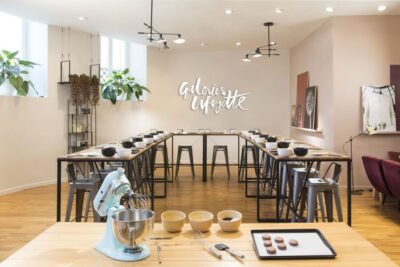 ★ 4.2Macaron Class at Galeries LafayetteFrom $691,196 reviews
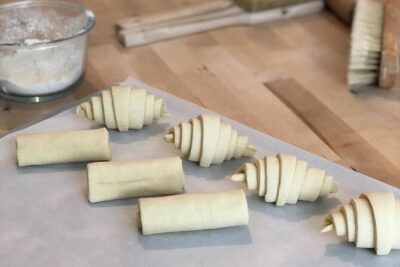 ★ 5.0Paris Croissant Small-Group Baking Class with a ChefFrom $157910 reviews
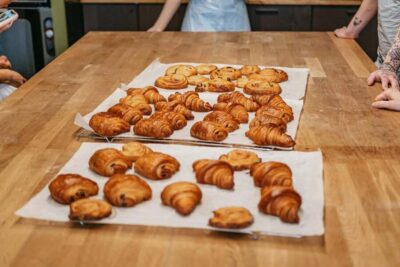 ★ 4.9French Croissant Baking Class with a ChefFrom $159712 reviews
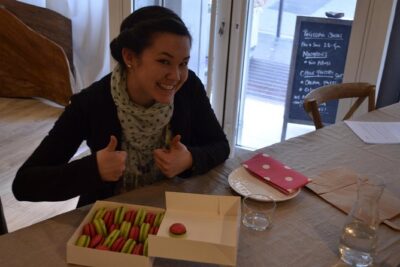 ★ 5.0Paris Cooking Class: Learn How to Make MacaronsFrom $156634 reviews
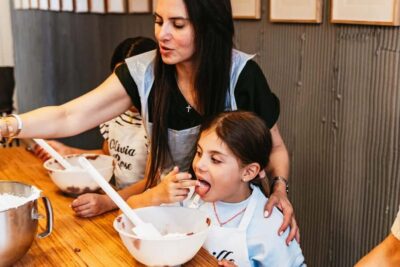 ★ 4.9French Macaron Culinary Class with a Chef591 reviews
 ★ 5.0A Morning in Paris Food Tour: Croissants, Baguettes & ChocolateFrom $125556 reviews
 ★ 5.0Paris Chocolate, Macaron & Pastry Food Tour: 10 Gourmet TastingsFrom $118339 reviews
 ★ 5.0Paris Macarons Small-Group Baking Class with a ChefFrom $157316 reviews
Browse the lists this tour appears in