
Reviewed · WALKING TOURS
Hidden Paris: Explore Medieval Marais on a Walking Tour
One walk, and suddenly the Marais makes sense. This 2-hour Hidden Paris-style tour threads together medieval leftovers, lively neighborhood life, and a classic late-afternoon goûter, starting right near Centre Pompidou with guides like Celine, Benoit, and Paloma. I love the way it balances big-city context with quiet side streets, and I really like the small-group feel (max 12) that makes it easier to ask questions. One caution: it is not a full food tour, so if you’re expecting multiple big tastings or lots of chances to stop for snacks on demand, you may feel a little rushed or underfed.
You’ll start at 123 Rue Saint-Martin at 3:00 pm and finish around Place des Vosges / the Bastille area. It’s about 2 km of walking, mostly at an easy city pace, and it’s a good option if you want a head-first orientation to the Marais without committing to a whole day.
If you like your Paris with fewer photo lines and more “wait, I would never have found this,” this tour fits nicely.
In This Review
- Key highlights worth planning around
- Price and value: why 55.87 can work
- The afternoon timing: why a 3:00 pm start is smart
- Stop-by-stop: what you actually do and why each part matters
- 1) Centre Pompidou as your orientation anchor
- 2) Le Marais: best-preserved medieval texture, on foot
- 3) Stravinsky Fountain: a photo moment with a story
- 4) Hôtel de Ville: when civic power meets dark history
- 5) Church of Saint-Gervais and the goûter transition
- 6) Rue des Rosiers: the Jewish Quarter through its food street energy
- 7) Place des Vosges: beauty, oldest square, and a famous writer
- 8) Place de la Bastille: revolution history at your doorstep
- Guides make the difference: what the best ones do
- Food expectations: goûter included, but not a full feast
- Who this tour is best for
- Logistics you’ll actually care about
- Should you book Hidden Paris: Medieval Marais?
- FAQ
- FAQ
- How long is the walking tour?
- Where does the tour start and end?
- What time does the tour run?
- How much walking is involved?
- Is it in English?
- What is included in the price?
- Can vegetarians join?
Key highlights worth planning around
- Medieval Marais, not just postcard Marais: You get the best-preserved medieval feel in the area, with time for hidden corners and churches.
- A real French goûter stop: You’ll taste a sweet local pastry at the late-afternoon sweet-treat moment Parisians actually recognize.
- Small group energy: Max 12 people, and the guides (for example, Benoit or Linda) are praised for pacing and easy explanations.
- You connect landmarks to history: Hôtel de Ville and Place des Vosges aren’t just “pretty”—they’re tied to what happened there.
- Jewish Quarter flavor on Rue des Rosiers: You pass the street that pulses with falafel stands and Jewish-influenced delis.
- A natural landing spot for dinner: Finishing near Bastille means you can keep going without hunting for a new meeting point.
Price and value: why 55.87 can work
At $55.87 per person for about 2 hours, you’re paying for three things that add up fast in Paris: a licensed, English-speaking guide, access to context that you won’t get from wandering, and a scheduled sweet-treat moment included in the price.
Most of the stops along the way are marked as free for admission, and the route is designed around walking distance rather than “buy a ticket here, book a reservation there.” That matters because Paris day-plans can turn into a pile of small fees. Here, the cost stays pretty clean.
Also, the pacing and group size matter. A max of 12 travelers is usually enough to feel like a guided stroll instead of a lecture march. And the guide feedback you’ll see is consistent: people credit their guide for making the neighborhood feel alive and for pointing out details they would’ve missed.
Worth weighing up next to this Paris pick
- Paris Top Sights Half Day Walking Tour with a Fun Guide
★ 5.0 · 2,893 reviews - Montmartre Hidden Gems and Scenic Highlights Walking Tour
★ 5.0 · 2,684 reviews - Montmartre Hill French Gourmet Food and Wine Tasting Walking Tour
★ 5.0 · 2,588 reviews - Paris: Montmartre Highlights Walking Tour with a Local Guide
★ 4.9 · 2,318 reviews
The afternoon timing: why a 3:00 pm start is smart
A late-afternoon start is not random. It’s timed for that in-between Paris rhythm: not lunch anymore, not evening yet. That’s exactly when a goûter makes sense, and you’re walking through neighborhoods that are still active.
You’ll be moving through central sights like Centre Pompidou and then shifting into the Marais, which means you’re not stuck only in one “tour zone.” You also finish near Bastille, where you’ll find plenty of places to grab dinner or a drink without backtracking across town.
One more practical note: the tour covers about 2 km. That is not a huge distance, but with Paris streets—curbs, cobbles in places, and stop-and-start photo moments—you’ll want comfy shoes more than anything fancy.
Stop-by-stop: what you actually do and why each part matters
1) Centre Pompidou as your orientation anchor
You begin in front of Centre Pompidou, the large modern-art museum in a striking contemporary building. It can seem like an odd start for a Medieval Marais tour, but it works as a “welcome to Paris” orientation.
Why it helps: it forces the tour to do a real comparison. Paris isn’t just medieval streets; it’s layers—modern culture on top of older power, industry, and city planning. Starting here also gives you a mental map before you step into the older lanes.
2) Le Marais: best-preserved medieval texture, on foot
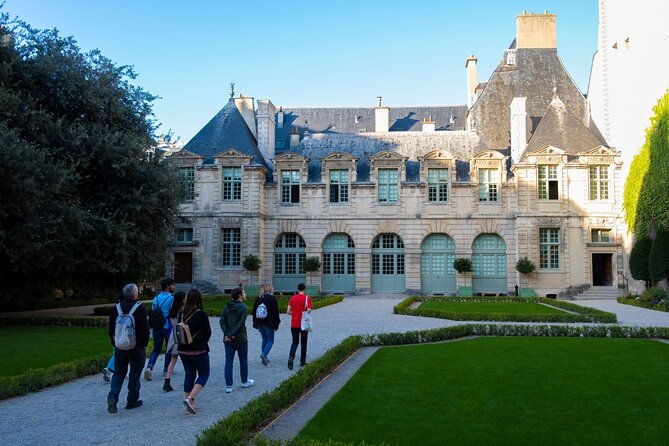
From there, you shift into Le Marais, described as the best-preserved medieval area in the Marais. This is the heart of what you came for: older street patterns, distinctive architecture, and that sense of walking through history without it being all museum-ticket stuff.
What I like about this portion is that it’s not treated like a checklist. The tour is built to help you understand why the Marais feels the way it does—its long evolution, its change in social life over time, and how some corners stayed more intact than others.
A potential drawback: because the area is popular, you’ll still see crowds. The advantage is that you’re guided toward the less obvious angles and the “how did they build this?” details that are easy to miss when you’re only there to sightsee.
3) Stravinsky Fountain: a photo moment with a story
You’ll pass by the Stravinsky Fountain, one of the most photographed fountains in the area. It’s a quick stop, but it’s useful because it gives you a modern contrast in a medieval neighborhood.
Don’t treat it as just a picture. Take the moment to look at how the design fits into the surrounding streets and courtyard feel around it. Those micro-contrasts are exactly what makes the Marais interesting to walk with a guide.




4) Hôtel de Ville: when civic power meets dark history
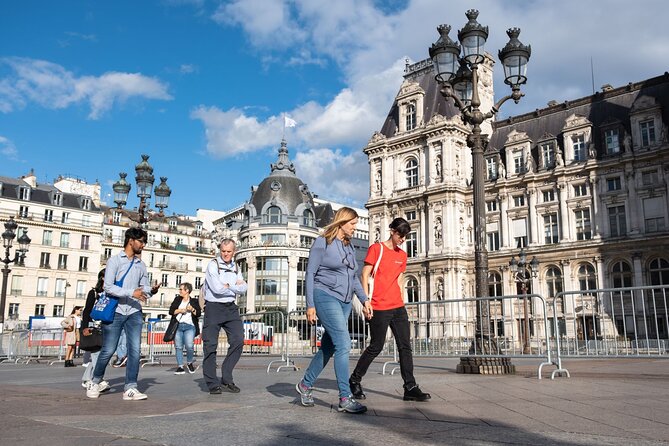
Then it’s over to Hôtel de Ville, Paris’s town hall. The building is remarkable, but the tour also points out the historical weight of this esplanade.
You’ll hear how medieval executions were carried out here and that the guillotine’s first beheading is tied to this area. That’s heavy material, so if you’re traveling with kids, just be ready for the guide to mention grim aspects of history as part of the context.
5) Church of Saint-Gervais and the goûter transition
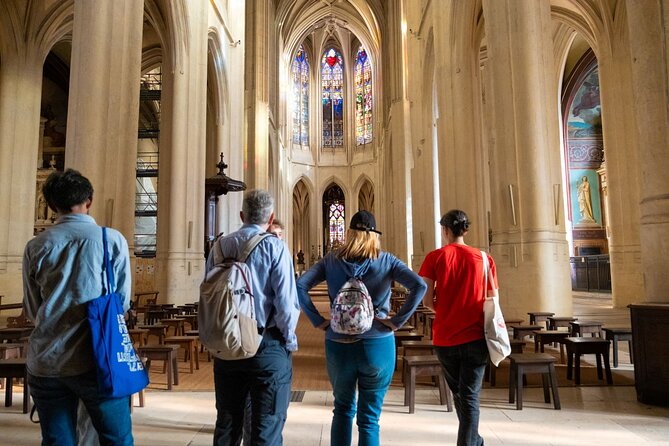
Next you pass by Church of Saint-Gervais and get a look at the interior. Churches can easily become “quick look, move on” stops. In this tour format, the church moment acts like a reset button: a pause in a neighborhood that can feel busy, and a chance to notice details you might otherwise walk right past.
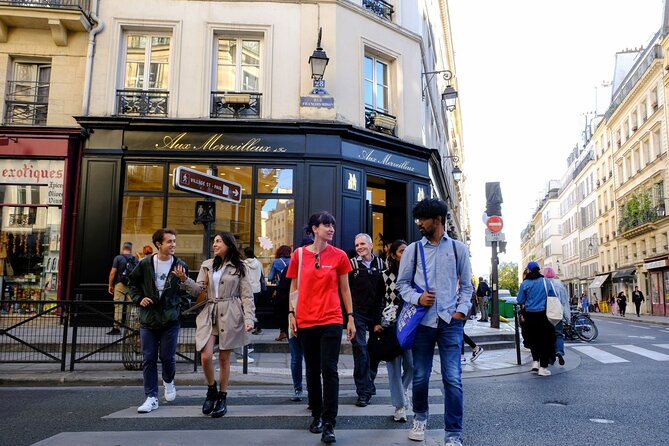
Then you fuel up with the included sweet treat. You’ll try a delicious meringue called merveilleux, which is exactly the kind of Parisian late-afternoon snack that feels more authentic than random kiosk sweets. This is where you’ll notice that the tour isn’t aiming to feed you a full meal—it’s aiming to hit the Paris cultural rhythm.
6) Rue des Rosiers: the Jewish Quarter through its food street energy
A short walk brings you to Rue des Rosiers, the core street of the Jewish community. This is one of those Paris streets where the “what to eat” is part of the sidewalk story.
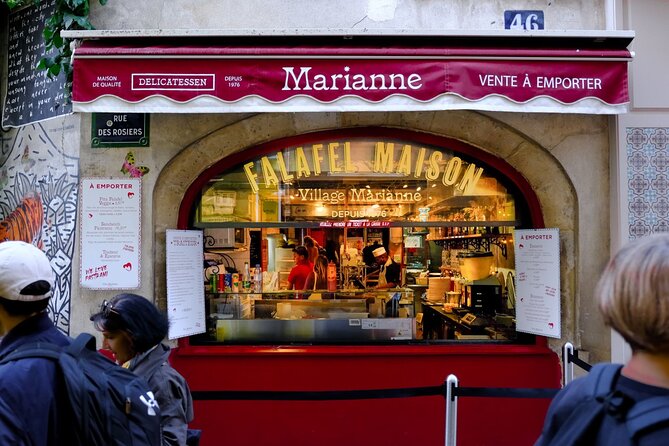
You’ll see falafel stands and Jewish-influenced delis. The practical point: you don’t just hear about it—you walk past it long enough to feel the neighborhood’s daily life.
If you’re expecting a dedicated falafel stop with extra time to choose and eat, temper expectations. The tour is structured around history and a pastry goûter, not a shopping-and-snacking spree at every corner.
7) Place des Vosges: beauty, oldest square, and a famous writer
You move on to Place des Vosges, commonly described as Paris’s oldest and beautiful square. It’s also connected with national writer Victor Hugo, which helps anchor why the square isn’t just a pretty backdrop.
The value here is that you’re given context for what you’re looking at: the square’s role, how it sits within the Marais, and why it became such an important civic and cultural space.
8) Place de la Bastille: revolution history at your doorstep
The final stop is Place de la Bastille, tied to the prison captured on July 14, 1789—an event that helped trigger the French Revolution.
After the tour, this is a smart location to continue your evening because the area is full of bars and restaurants. In other words: you end in a place where you can follow your appetite right away instead of commuting back into the same tourist zone.
Guides make the difference: what the best ones do
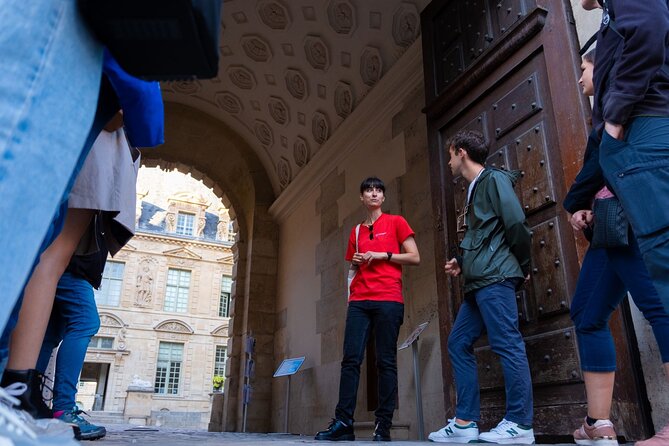
One of the strongest themes from the experience is guide quality. People specifically named guides such as Celine, Benoit, Paloma, Linda, and Cecilia, and the praise is consistent:
- They explain architecture and street history in plain language.
- They keep a good pace so you don’t feel lost or stuck.
- They offer local recommendations that help you extend the day after the walking portion.
What that means for you: if you choose this tour, you’re not just buying a route. You’re buying someone’s ability to connect the dots between medieval structures, political history, and today’s neighborhood life.
And when cancellations or small group situations happen, the tour can feel even more personal—which is one reason the small max group size matters.
Food expectations: goûter included, but not a full feast
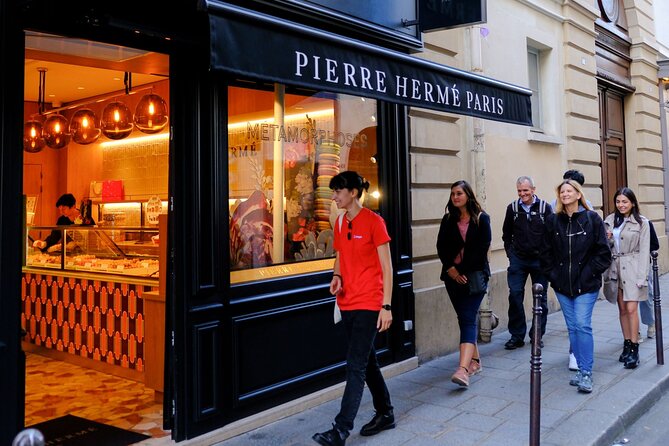
Here’s the honest part. The tour clearly includes a sweet local pastry as part of a late-afternoon goûter. That’s built into the design.
In some experiences, you may also notice extra tasting moments like cheese or wine from local shops. But the only guaranteed, clearly stated inclusion is the pastry.
One lesson from the way people talk about the experience: don’t treat it as a classic eat-until-you-pop food tour. It’s primarily a history-and-neighborhood walk with tastings woven in at key points.
So if your goal is:
- to learn the Marais and get insider context: this tour fits.
- to graze on multiple savory dishes nonstop: you’ll want to plan extra food stops on your own.
Who this tour is best for
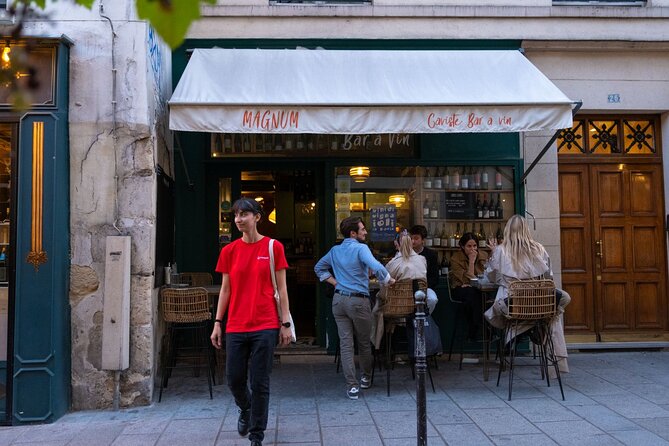
This is a great fit if you:
- want to see the Marais beyond the biggest tourist magnets
- like walking tours that explain what you’re looking at (not just where to take photos)
- want an afternoon plan that ends near a lively dinner area
It’s also a solid choice for families. The tour data notes it’s child-friendly, and children under 6 can join free of charge. If you’re bringing kids, expect history topics to be part of the stop at Hôtel de Ville and plan accordingly.
The tour also notes dietary requirements can be catered for vegetarians, which is helpful for a pastry-focused inclusion.
Logistics you’ll actually care about
You’re walking about 2 km. That’s manageable for most people, and the tour is described as something most travelers can participate in.
You’ll also benefit from the afternoon timing: starting at 3:00 pm means you’re not fighting the densest morning crowds and you’re positioned to finish with options for dinner nearby.
Group size is capped at 12, and it’s available in English. The tour uses a mobile ticket, which keeps things simple once you’re in Paris.
Should you book Hidden Paris: Medieval Marais?
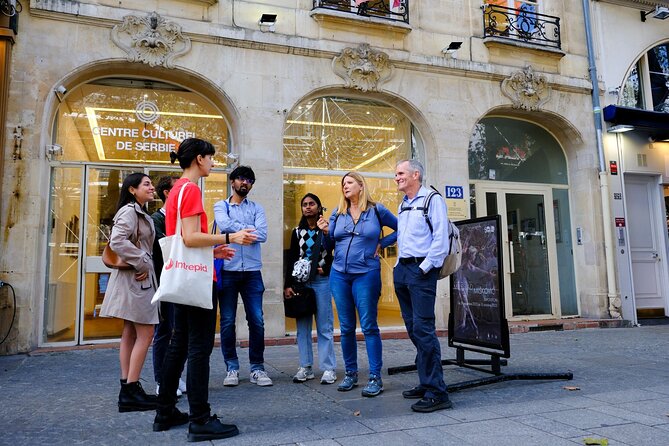
I’d book it if you want a guided way to understand the Marais’s medieval side without spending the whole day in museums. The mix of stops—Marais streets, Saint-Gervais, Place des Vosges, and the revolution-linked Bastille area—turns the neighborhood into a story you can walk through.
Skip it or adjust expectations if you’re hunting for a heavy food tour. The included treat is a goûter pastry, and while some tours may add extra tasting moments, the core of the experience is history and neighborhood context.
If you enjoy learning as you go and you want an ending point near dinner, this is a strong value use of a Paris afternoon.
FAQ
FAQ
How long is the walking tour?
It lasts about 2 hours.
Where does the tour start and end?
It starts at 123 Rue Saint-Martin, 75004 Paris, and ends at Place des Vosges / the Bastille area.
What time does the tour run?
The start time is 3:00 pm.
How much walking is involved?
The tour covers about 2 km (about 1.2 miles).
Is it in English?
Yes, the tour is offered in English.
What is included in the price?
You get a local English-speaking guide, tips on what else to see and eat, and a sweet local pastry as part of the late-afternoon goûter. You’ll also discover medieval and neighborhood sights along the route.
Can vegetarians join?
Yes. The tour can cater to vegetarians.
More Walking Tours in Paris
- Paris Top Sights Half Day Walking Tour with a Fun Guide
★ 5.0 · 2,893 reviews - Montmartre Hidden Gems and Scenic Highlights Walking Tour
★ 5.0 · 2,684 reviews - Montmartre Hill French Gourmet Food and Wine Tasting Walking Tour
★ 5.0 · 2,588 reviews - Paris: Montmartre Highlights Walking Tour with a Local Guide
★ 4.9 · 2,318 reviews - Paris Île de la Cité and Notre-Dame Walking Tour With Crypt
★ 5.0 · 2,272 reviews
More Tours in Paris
- Paris: Louvre Guided Tour with Reserved Access & Boat Cruise
★ 4.3 · 16,353 reviews - Paris: Big Bus Hop-On Hop-Off Tour with Optional Cruise
★ 4.4 · 13,279 reviews - Louvre Museum Masterpieces Guided Tour with Access
★ 4.5 · 12,023 reviews - Versailles: Skip-the-Line Tour of Palace and Gardens Access
★ 4.7 · 10,429 reviews - Paris: Louvre Overview, Exploration tour and Reserved Entry
★ 4.1 · 10,145 reviews
More Tour Reviews in Paris
- Paris: 1-Hour Seine Cruise departing from the Eiffel Tower
★ 4.4 · 77,472 reviews - Paris: Louvre Museum Timed-Entrance Ticket
★ 4.6 · 71,977 reviews - Disneyland® Paris 1-Day Ticket
★ 4.6 · 49,412 reviews - Paris: Versailles Palace and Gardens Full Access Ticket
★ 4.6 · 41,579 reviews - Paris: Arc de Triomphe Rooftop Tickets
★ 4.6 · 34,264 reviews
Fresh off the review desk in Paris
- Secrets of Paris Bike Tour in English or Dutch★ 5.0 · 5 reviews
- Paris: Mont Saint-Michel Day Tour with Chinese Tour Guide★ 5.0 · 5 reviews
- Private Street Art 2-Hour Guided Tour in Paris★ 4.5 · 5 reviews
- Orsay Museum Tour: 2h Highlights (Private & Small Group)★ 5.0 · 5 reviews
- Discover Paris in electric golf carts★ 4.0 · 5 reviews
- Paris Private Boat Tour with your own Captain Guide★ 5.0 · 5 reviews
Walking Tours, compared.
 ★ 5.0Paris Top Sights Half Day Walking Tour with a Fun GuideFrom $762,893 reviews
 ★ 5.0Montmartre Hidden Gems and Scenic Highlights Walking TourFrom $382,684 reviews
 ★ 5.0Montmartre Hill French Gourmet Food and Wine Tasting Walking TourFrom $1452,588 reviews
 ★ 4.9Montmartre Highlights Walking Tour with a Local GuideFrom $232,318 reviews
 ★ 5.0Paris Île de la Cité and Notre-Dame Walking Tour With CryptFrom $482,272 reviews
 ★ 4.8Montmartre Cheese, Wine & Pastry Guided Walking TourFrom $1272,255 reviews
 ★ 5.0Paris in a Day: Louvre or Orsay, Eiffel Tower, City Walk & CruiseFrom $1571,956 reviews
 ★ 5.0Paris City Center Free Walking Tour (Tip-Based)From $31,340 reviews