
Reviewed · WALKING TOURS
Historic Jewish Quarter Walk in Paris
A few streets in Paris carry 2,000 years of stories. This guided Historic Jewish Quarter Walk in Paris strings them together in Le Marais, from discreet synagogues to memorial sites.
I especially like the way the route is planned so you’re not hunting down doorways on your own. I also like the payoff at the end, with the walk finishing by the Museum of Jewish Art and History.
My favorite part is the synagogue stop: Paris’s oldest working synagogue is tucked away on the second floor of an 18th-century building. If you get a guide like M. Levy, you’ll see how a small, well-led group can turn a normal alley walk into something memorable. The pace also tends to feel human, not rushed.
One thing to consider: access details can matter. Entry can depend on local conditions, and English clarity can vary by guide, so if you rely on precise explanations, plan to ask questions and speak up.
In This Review
- Key points before you go
- Le Marais’s Jewish quarter: why this walk makes sense
- The exact “shape” of the tour: time, group size, and pace
- Where you start (and why that meeting point is a clue)
- Stop 1 in Le Marais: synagogues, oratories, streets, and memorials
- The oldest working synagogue: what to expect and donation etiquette
- Rue des Rosiers food breaks: falafel, pastries, and how to plan your time
- The end of the tour: Museum of Jewish Art and History (MAHJ) next step
- Price and value: is $168.71 worth it?
- Who this tour fits best (and who might skip it)
- Should you book this Historic Jewish Quarter Walk in Paris?
- FAQ
- How long is the Historic Jewish Quarter Walk in Paris?
- Where is the meeting point, and where does the tour end?
- What’s the group size?
- Is the tour ticket digital?
- Do I need to pay anything at the synagogue?
- Is public transportation nearby?
- Can I cancel for free?
Key points before you go
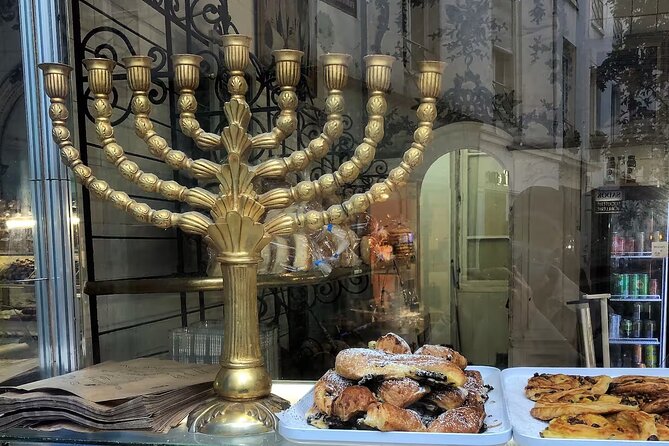
- Le Marais + Rue des Rosiers route: Jewish streets, bakeries, and community landmarks in one continuous loop
- Paris’s oldest working synagogue: the stop is discreet (second floor, 18th-century building) and donation-based
- Small-group format: marketed as an intimate cap, with the activity also listing up to 20 people
- Ends at MAHJ: you finish near the Museum of Jewish Art and History for a logical next step
- Mobile ticket and near public transport: straightforward to use on the day
Le Marais’s Jewish quarter: why this walk makes sense
Le Marais is where you go to see how Paris grows layers over time. For Jewish visitors, and for anyone curious about how communities live through change, it’s also one of the most meaningful neighborhoods to read on foot.
This tour helps because it’s not just dates and names. The guide connects Jewish life in France across centuries—periods of hardship, periods of cultural influence, and the modern presence you can still spot in streets like Rue des Rosiers. That context is hard to piece together alone if you’re trying to read signs, locate side doors, and track the story in your head.
Worth weighing up next to this Paris pick
- Paris Top Sights Half Day Walking Tour with a Fun Guide
★ 5.0 · 2,893 reviews - Montmartre Hidden Gems and Scenic Highlights Walking Tour
★ 5.0 · 2,684 reviews - Montmartre Hill French Gourmet Food and Wine Tasting Walking Tour
★ 5.0 · 2,588 reviews - Paris: Montmartre Highlights Walking Tour with a Local Guide
★ 4.9 · 2,318 reviews
The exact “shape” of the tour: time, group size, and pace
Expect about 1 to 3 hours on foot, with the listing showing a 10:30 am start and an end back at the same meeting point. It’s designed as a walking route that balances history with stopping points—so you get more than a quick photo-and-go.
Group size is the big quality lever here. The highlights describe an intimate cap of 10 travelers, while the activity information also lists a maximum of 20. Either way, it’s not the giant coach-tour vibe, and that matters when you’re trying to hear explanations outside in the street and then follow a guide into discreet locations.
Pace tends to work well for mixed travelers because the focus is on short, guided visits rather than long lectures. If you’re sensitive to hearing accents, bring a “repeat if needed” mindset. One guest flagged that English can be harder to follow depending on the guide’s accent, even when the information is strong.
Where you start (and why that meeting point is a clue)
You meet at 133 Rue Saint-Antoine, 75004 Paris. That’s in the area where Le Marais transitions into its more residential, lane-y streets, which is useful because the walk is built around local access. In other words, you’re not starting far away and then sprinting to the real neighborhood.
If you plan to arrive a little early, you’ll have an easier time getting oriented and settling in before the first historical stop. This is especially helpful if you’re also planning to grab snacks along Rue des Rosiers afterward.
Stop 1 in Le Marais: synagogues, oratories, streets, and memorials
The tour’s main focus is Le Marais, centered on Rue des Rosiers, the street many people associate with Jewish bakeries and delicatessens. But the walk is more than commerce. You’re guided through historic streets and memorial sites meant to anchor the community story in place.
You can expect stops that include:
- synagogues and oratories you might miss without a local guide
- memorial sites that add weight to the story beyond architecture
- a timeline feel that highlights key periods, including the 19th century when Jewish presence in the area became especially visible
A practical point: many of these sites are not screaming from the sidewalk. The value of a guide isn’t only interpretation—it’s also knowing which buildings are reachable and worth stopping for.
The oldest working synagogue: what to expect and donation etiquette
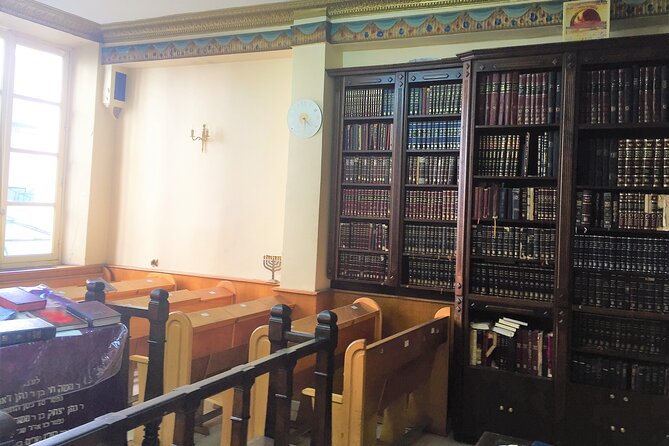
The standout religious-heritage stop is Paris’s oldest functioning synagogue, in an 18th-century building. It’s described as discreetly located on the second floor—so yes, you may not notice it just looking up at the street.
Also, this visit includes a detail that you should treat as normal etiquette: the synagogue requires donations. That means the “cost” isn’t only the tour price; you should keep a little extra cash or a way to donate if asked. Think of it as part of respecting a living place of worship, not a random add-on.
If you want to get the most from this stop, go in with curiosity about why access can be specific. Some doorways and rooms aren’t always open on demand, and a tour that coordinates visits will usually do a better job than a self-guided plan.
Rue des Rosiers food breaks: falafel, pastries, and how to plan your time
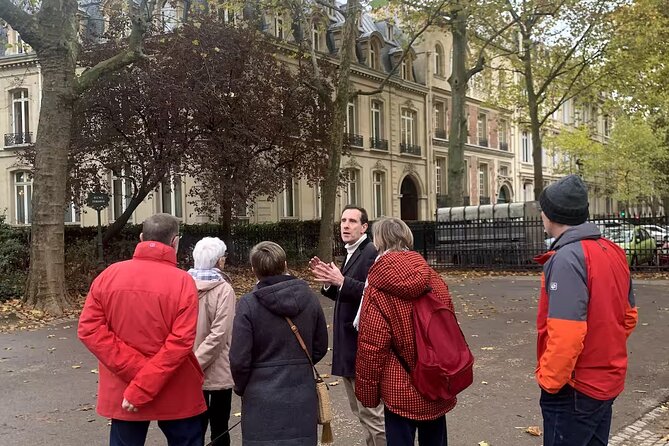
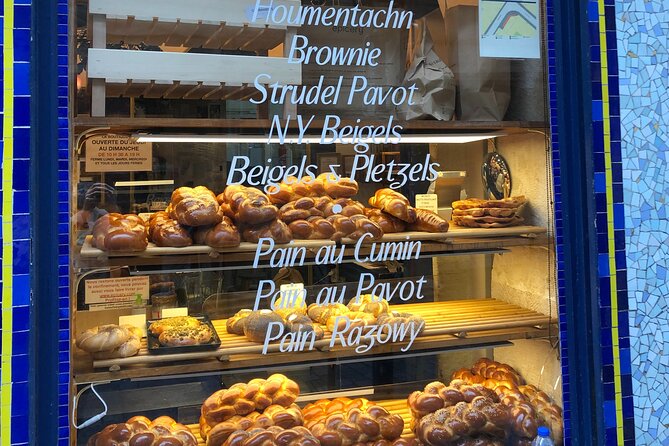
One reason this walk feels pleasurable is that it’s timed for real neighborhood life. The route points out known food options along the way—falafel spots, Mediterranean eateries, and Eastern European pastry shops.
You don’t need to schedule a separate meal. Instead, use the walk as a map to decide what you want to eat either before or after the tour. If you’re traveling with kids or you’re simply hungry mid-walk, having these food cues can save time later.
Tip: if you plan to buy snacks during the tour, keep it simple—grab-and-go. You’ll still want to hear the guide’s explanations at the stops, and lingering too long in storefronts can break the flow.
Worth weighing up next to this Paris pick




The end of the tour: Museum of Jewish Art and History (MAHJ) next step

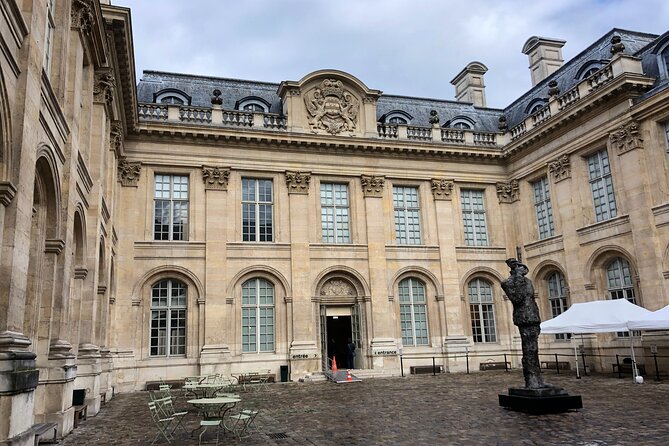
The walk finishes at the entrance of the Museum of Jewish Art and History (MAHJ). You don’t need to have museum tickets to appreciate the logic of that ending. The tour sets you up to look at exhibits with better context, especially around objects, symbols, and community life.
This is also a smart strategy if you’re the type who likes to “travel in layers.” A guided walk gives you the story and street-level bearings; the museum gives you the deeper artifacts. The tour listing also notes admission ticket free as part of the experience information, so it’s worth double-checking what that applies to on your booking.
If you’re short on time, you can still treat the museum entrance as a cue: do what you can today, then decide later if you want to go in.
Price and value: is $168.71 worth it?
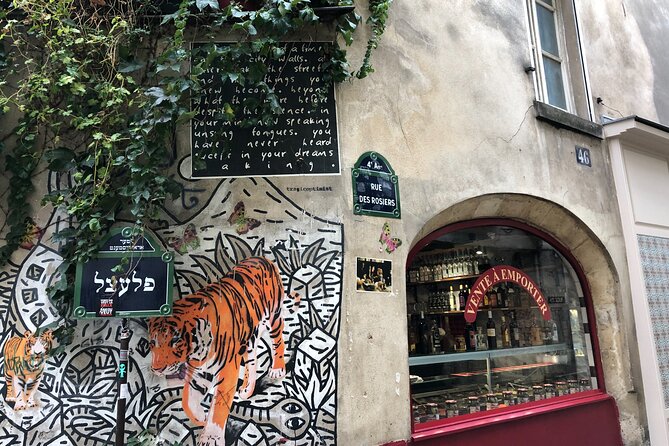
At $168.71 per person, this isn’t a budget sidewalk stroll. So the value question is fair.
Here’s what you’re paying for, in practical terms:
- a guided route that’s hard to replicate on your own because the best stops are discreet
- a small-group format (marketed as intimate, and listed with a modest maximum)
- a major anchor visit: the oldest working synagogue
- guided interpretation of Jewish life in France tied to the streets you’re walking
If you like history but hate guessing, this pricing can make sense. If you’re comfortable building your own route and you mainly want architecture photos, you might find the cost steep.
My take: the price is easiest to justify if you’ll actually use the guide’s explanations, ask questions at stops, and stay for that synagogue visit and the MAHJ-adjacent finish.
Who this tour fits best (and who might skip it)
This is a strong fit if you want:
- a guided Le Marais route with interpretation you can’t easily DIY
- a synagogue visit that’s part history, part living culture
- a small-group experience with enough time to hear details outside
It’s less ideal if:
- you struggle with spoken English in general, since accent clarity can vary by guide
- you’re expecting a long museum visit, since the tour ends at the museum entrance rather than turning into a museum afternoon
- you hate donation-based site visits, because the synagogue stop includes required donations
If you’re traveling with a parent/child, it can be a great way to make the neighborhood story tangible, because the route is short enough to manage and the stops are concrete.
Should you book this Historic Jewish Quarter Walk in Paris?
Yes, I’d book it if your goal is to understand the Jewish story in Le Marais in a street-level way. The combination of Rue des Rosiers, memorial sites, and the oldest working synagogue adds up to more than a walking tour—it’s a guided route through places that are still meaningful today.
I’d think twice if you’re price-sensitive or if you need a museum-heavy afternoon, because this is a walking experience that ends by MAHJ rather than inside it for a long stretch.
And one smart move: if the synagogue entry is a top priority for you, go into the day knowing access can be situation-dependent and that a good guide’s coordination is the difference between a plan and a disappointment. If you care about that stop, arriving on time and being flexible is your best insurance.
FAQ
How long is the Historic Jewish Quarter Walk in Paris?
It runs about 1 to 3 hours, and the schedule shown includes a 10:30 am start.
Where is the meeting point, and where does the tour end?
You meet at 133 Rue Saint-Antoine, 75004 Paris. The tour ends back at the same meeting point.
What’s the group size?
The experience is capped for an intimate feel. The highlights mention up to 10 travelers, and the activity information lists a maximum of 20 travelers.
Is the tour ticket digital?
Yes. You receive a mobile ticket.
Do I need to pay anything at the synagogue?
The synagogue visit requires donations, so plan for that extra step during the walk.
Is public transportation nearby?
Yes, the meeting area is near public transportation.
Can I cancel for free?
Yes. Free cancellation is available up to 24 hours before the experience start time for a full refund.
More Historical Tours in Paris
- Paris: Dark History and Ghostly Guided Walking Tour
★ 4.7 · 1,000 reviews - Le Marais/Paris – The Historic, Trendy, Jewish, LGBT district
★ 5.0 · 341 reviews - Paris City of Fashion History Private Guided Walking Tour
★ 5.0 · 221 reviews - History of Paris City Center w/ Notre Dame Semi-Private 12ppl Max
★ 5.0 · 194 reviews - Paris: Le Marais & Montmartre Jewish History Walking Tour
★ 4.8 · 170 reviews
More Walking Tours in Paris
- Paris Top Sights Half Day Walking Tour with a Fun Guide
★ 5.0 · 2,893 reviews - Montmartre Hidden Gems and Scenic Highlights Walking Tour
★ 5.0 · 2,684 reviews - Montmartre Hill French Gourmet Food and Wine Tasting Walking Tour
★ 5.0 · 2,588 reviews - Paris: Montmartre Highlights Walking Tour with a Local Guide
★ 4.9 · 2,318 reviews - Paris Île de la Cité and Notre-Dame Walking Tour With Crypt
★ 5.0 · 2,272 reviews
More Tour Reviews in Paris
- Paris: 1-Hour Seine Cruise departing from the Eiffel Tower
★ 4.4 · 77,472 reviews - Paris: Louvre Museum Timed-Entrance Ticket
★ 4.6 · 71,977 reviews - Disneyland® Paris 1-Day Ticket
★ 4.6 · 49,412 reviews - Paris: Versailles Palace and Gardens Full Access Ticket
★ 4.6 · 41,579 reviews - Paris: Arc de Triomphe Rooftop Tickets
★ 4.6 · 34,264 reviews
Fresh off the review desk in Paris
- Secrets of Paris Bike Tour in English or Dutch★ 5.0 · 5 reviews
- Paris: Mont Saint-Michel Day Tour with Chinese Tour Guide★ 5.0 · 5 reviews
- Private Street Art 2-Hour Guided Tour in Paris★ 4.5 · 5 reviews
- Orsay Museum Tour: 2h Highlights (Private & Small Group)★ 5.0 · 5 reviews
- Discover Paris in electric golf carts★ 4.0 · 5 reviews
- Paris Private Boat Tour with your own Captain Guide★ 5.0 · 5 reviews
Walking Tours, compared.
 ★ 5.0Paris Top Sights Half Day Walking Tour with a Fun GuideFrom $762,893 reviews
 ★ 5.0Montmartre Hidden Gems and Scenic Highlights Walking TourFrom $382,684 reviews
 ★ 5.0Montmartre Hill French Gourmet Food and Wine Tasting Walking TourFrom $1452,588 reviews
 ★ 4.9Montmartre Highlights Walking Tour with a Local GuideFrom $232,318 reviews
 ★ 5.0Paris Île de la Cité and Notre-Dame Walking Tour With CryptFrom $482,272 reviews
 ★ 4.8Montmartre Cheese, Wine & Pastry Guided Walking TourFrom $1272,255 reviews
 ★ 5.0Paris in a Day: Louvre or Orsay, Eiffel Tower, City Walk & CruiseFrom $1571,956 reviews
 ★ 5.0Paris City Center Free Walking Tour (Tip-Based)From $31,340 reviews
Browse the lists this tour appears in