
Reviewed · MONTMARTRE TOURS
Paris: Le Marais & Montmartre Jewish History Walking Tour
Jewish Paris feels like two cities stitched together. This small-group walk links Le Marais with Montmartre, using landmarks and street-level stories to explain how Jewish life shaped Paris over centuries. I love that the tour pairs major memorial sites with everyday neighborhood texture, and I also like the visual payoff at the end with Sacré-Cœur over wide-open views.
One thing to consider: most of what you see is exterior-facing, since this tour does not include indoor visits to synagogues or timed entry into major sites. It’s also not built for wheelchair users, and it’s a fair amount of steady walking across cobbled streets.
In This Review
- Quick hits you’ll actually use
- Le Marais and Montmartre are the perfect pairing for Jewish Paris
- Meeting point reality check: BHV Marais or L’Elephant Du Nil
- The Marais segment: Jewish Paris on a human scale
- Village Saint-Paul: the neighborhood fabric matters
- Agoudas Hakehilos: Hector Guimard’s Art Nouveau synagogue exterior
- The Holocaust Memorial (Mémorial de la Shoah): solemn, direct, and carefully handled
- Ending the Marais portion near Hôtel de Ville
- The transit break: why the 30 minutes of public transport help
- Montmartre segment: Jewish creativity in an artist’s neighborhood
- 7 Rue Ravignan: street-level history you can picture
- Le Bateau-Lavoir: art space with strong symbolism
- Musée de Montmartre: pass by, still worth your attention
- 16 Rue du Mont-Cenis: the second-to-last guided beat
- Sacré-Cœur and the final reflection at Square Louise-Michel
- Price and logistics: is $80 worth your time?
- Who this tour fits best (and who might want to adjust expectations)
- Should you book this Jewish history walking tour?
- FAQ
- How long is the Paris Le Marais & Montmartre Jewish History Walking Tour?
- What neighborhoods does the tour cover?
- Is the tour in English?
- Is this a small-group tour?
- Does the tour include synagogue interiors?
- Are public transport tickets included?
- Where do I meet the guide?
- Do I need to arrive early?
- Is the tour wheelchair accessible?
- (Optional) Quick note
Quick hits you’ll actually use
- Art Nouveau on display: Exterior view of Hector Guimard’s synagogue, Agoudas Hakehilos.
- A serious turning point: Stops around the Mémorial de la Shoah and its context.
- Two neighborhoods, one story: Le Marais to Montmartre via public transport (about 30 minutes).
- Montmartre’s Jewish creative thread: You’ll walk streets tied to artists, writers, and thinkers.
- End with views: The tour finishes at Sacré-Cœur and includes a reflective stop at Square Louise-Michel.
Le Marais and Montmartre are the perfect pairing for Jewish Paris

If you only pick one neighborhood, you only get half the story. Le Marais covers the long arc of Jewish community life in central Paris, trade, community institutions, and the physical imprint of memory. Then Montmartre shows how Jewish artists and intellectuals helped shape a Paris that felt modern, ambitious, and artistic.
What makes this tour work is the pacing: it starts in the older, denser street grid of the Marais, then transitions you to Montmartre by transit so the neighborhoods don’t blur together. You also get a tonal shift: from neighborhood heritage and institutions, to a solemn Holocaust-focused stop, then to creativity and creative communities.
Keep climbing: more of the Montmartre hill
- Montmartre Hidden Gems and Scenic Highlights Walking Tour
★ 5.0 · 2,684 reviews - Montmartre Hill French Gourmet Food and Wine Tasting Walking Tour
★ 5.0 · 2,588 reviews - Paris: Montmartre Highlights Walking Tour with a Local Guide
★ 4.9 · 2,318 reviews - Paris: Montmartre Cheese, Wine & Pastry Guided Walking Tour
★ 4.8 · 2,255 reviews
Meeting point reality check: BHV Marais or L’Elephant Du Nil
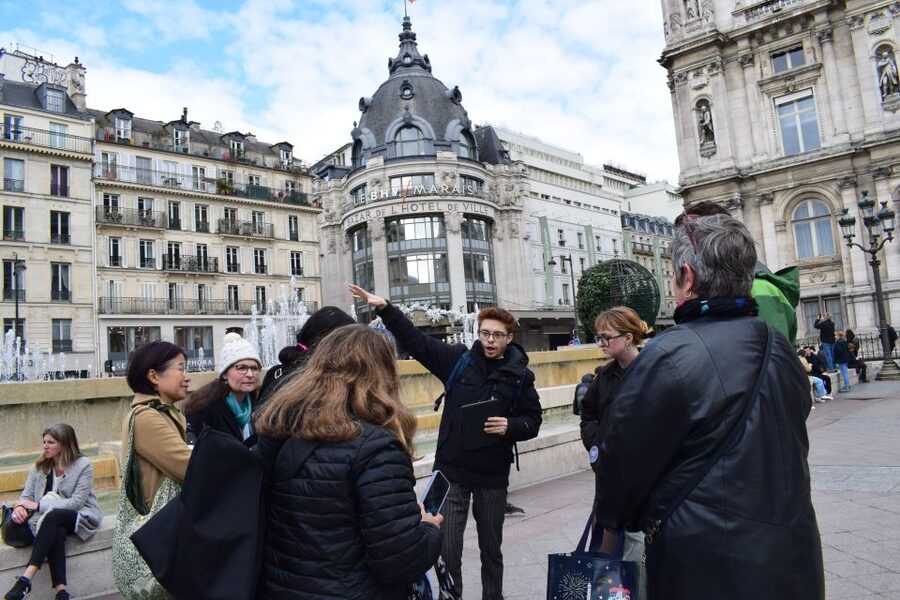
You’ll meet at one of two starting points depending on the option you book: BHV Marais (the L’Elephant Du Nil side) or L’Elephant Du Nil itself. This matters because BHV is a large department store with multiple entrances, and it can be easy to second-guess where the guide is gathering a small group.
Practical move: arrive early—15 minutes before the start time—so you’re not scanning streets with a tense smile. Also, the experience is not designed for late arrivals; if you’re not there when it starts, you won’t be able to join after it commences.
The Marais segment: Jewish Paris on a human scale
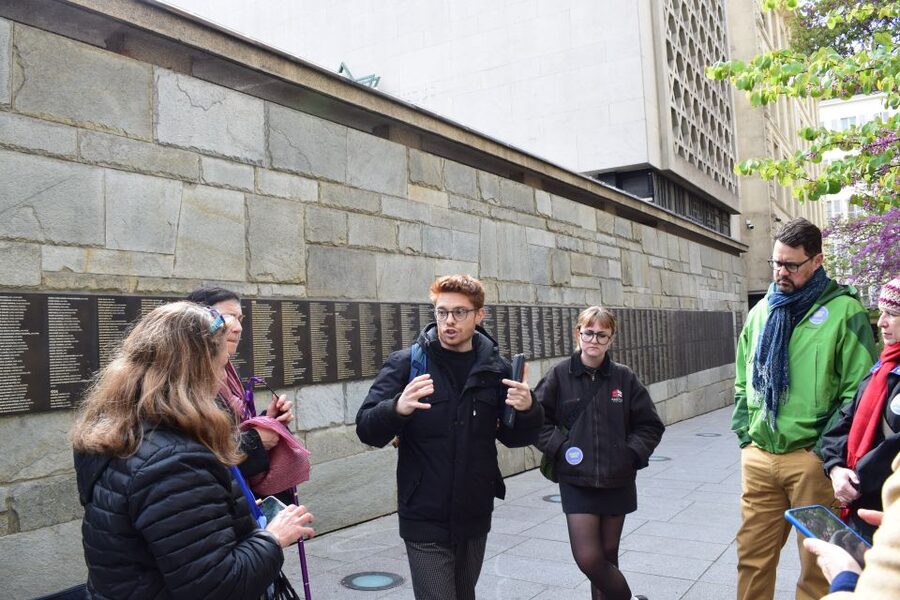
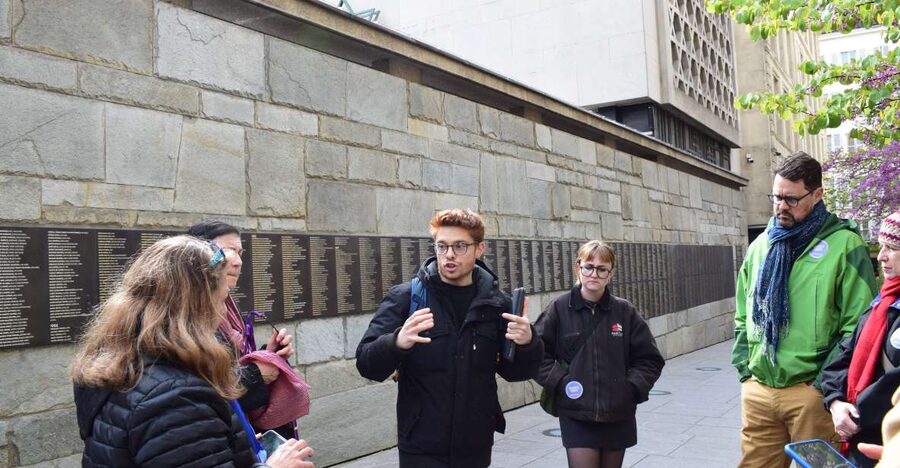
This portion runs about 1.5 hours and sets the tone for the entire day. You walk through the older streets of Le Marais, which historically functioned as a hub for Jewish life and neighborhood institutions. The streets here aren’t just scenic; they’re used as cues, so the guide can connect what you’re seeing with what shaped the community.
A big plus: you get both context and contemporary atmosphere. Guides on this route are known for making the history feel relevant to what’s happening in the neighborhood today, not stuck in a museum frame.
Village Saint-Paul: the neighborhood fabric matters
You’ll pass through the Le Village Saint-Paul area, guided as part of the Marais flow. Think of this as the “feel the place” block: small streets, old-world Paris vibes, and the kind of area where community life could play out in ordinary routines.
It’s not a stop that works as a single monument. It works because it teaches you how to read the neighborhood.
Agoudas Hakehilos: Hector Guimard’s Art Nouveau synagogue exterior
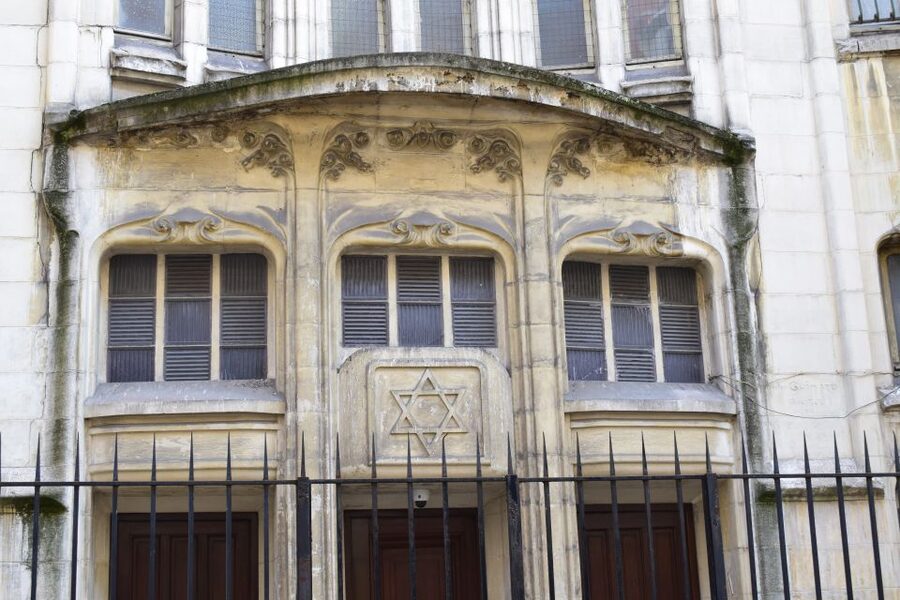
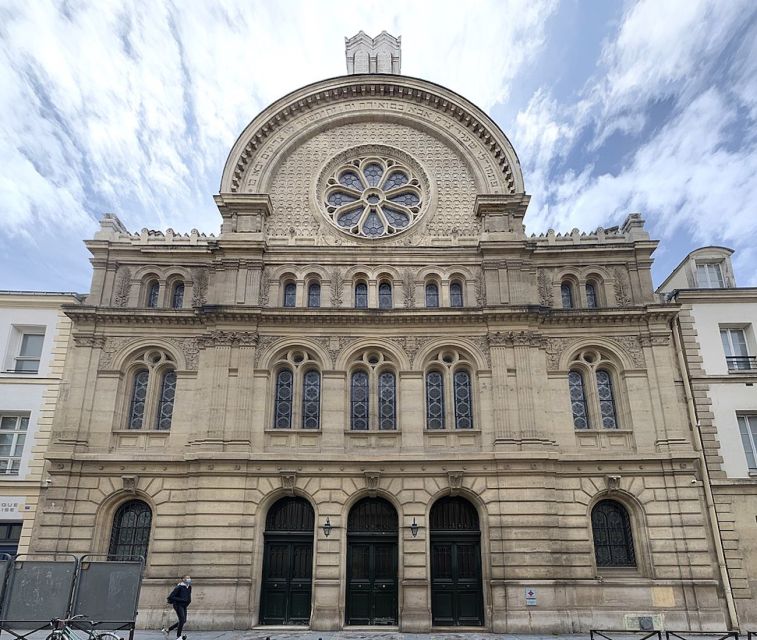
One of the visual highlights is the exterior of Agoudas Hakehilos, designed by Hector Guimard. This is a smart stop because it gives you a clear reminder that Jewish institutions in Paris weren’t only historic; they were also artistic and architecturally intentional.
Even without an indoor visit, the exterior is worth your attention. Art Nouveau details change your eye: you stop looking at a plain facade and start spotting the design choices that reveal the era’s ambitions.
The Holocaust Memorial (Mémorial de la Shoah): solemn, direct, and carefully handled
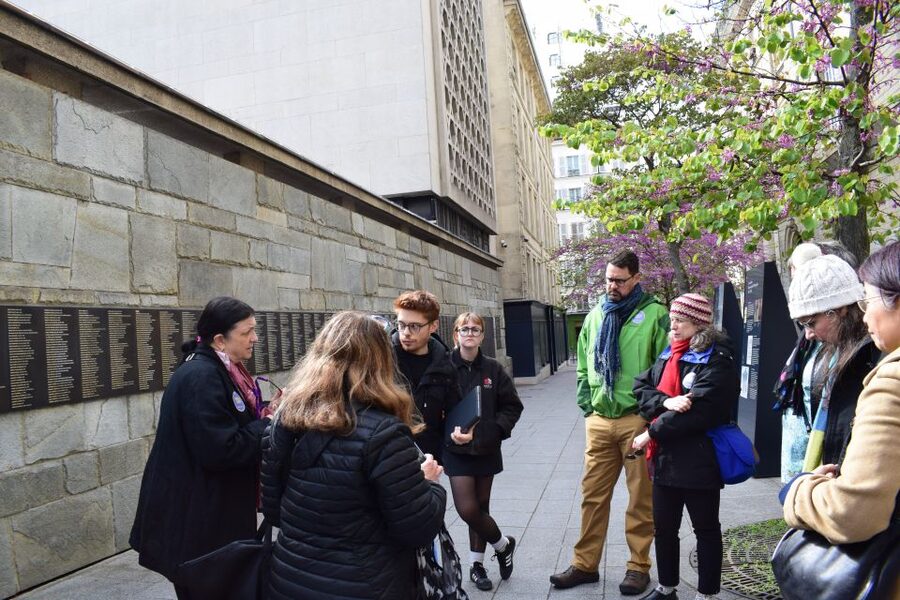
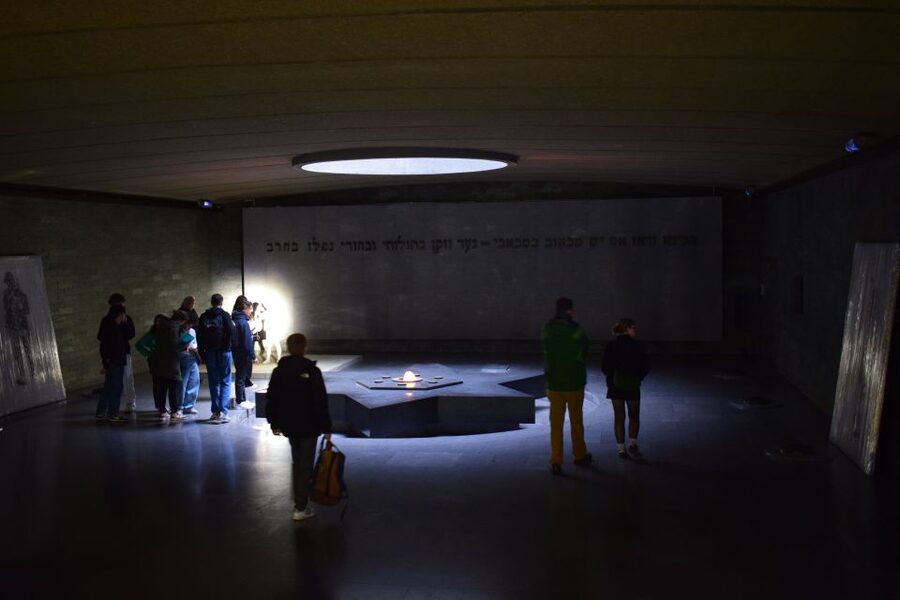
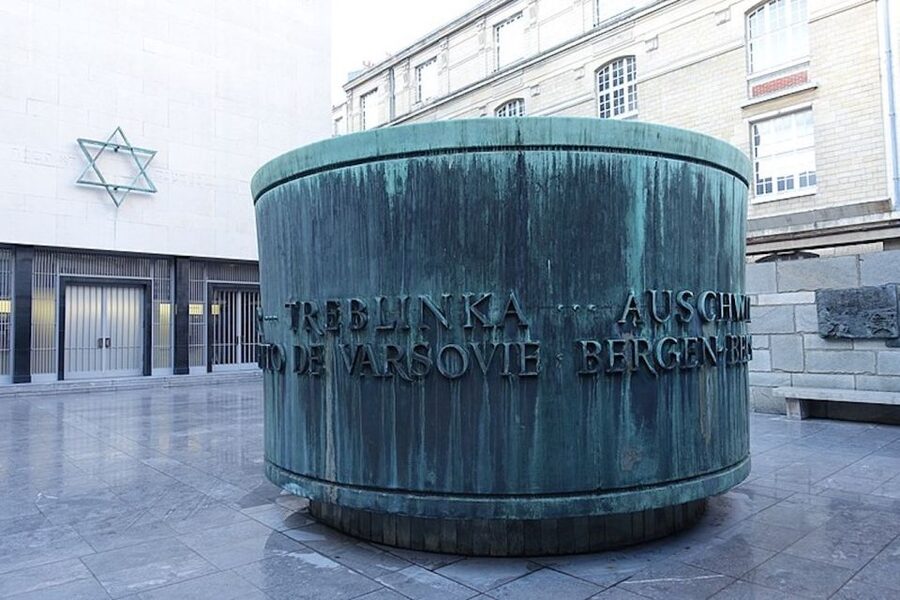
A key part of the route is the Mémorial de la Shoah. The tour includes a guided visit, but you should think of it as a moment of remembrance rather than sightseeing. The emphasis is on historical meaning, not quick photo ops.
Guides on this tour are noted for handling sensitive material with care. That tone is important, especially when current events make empathy harder to sustain. You’ll feel the weight of the stop, and you’ll also leave with a clearer sense of what the memorial is meant to communicate.
Worth weighing up next to this Paris pick




Ending the Marais portion near Hôtel de Ville
The Marais walk winds down near Hôtel de Ville (Paris City Hall). That location is practical: it sets you up for the next leg using public transport rather than another long stretch of walking.
The transit break: why the 30 minutes of public transport help
There’s about 30 minutes allocated for transit. It might not sound like much, but it’s the difference between a tour that feels like one continuous slog and a tour where your brain resets.
It also helps with navigation. Montmartre can feel chaotic even when you know where you’re going, and this route avoids forcing you to self-navigate uphill and across busy streets while processing heavy content from the memorial segment.
Montmartre segment: Jewish creativity in an artist’s neighborhood
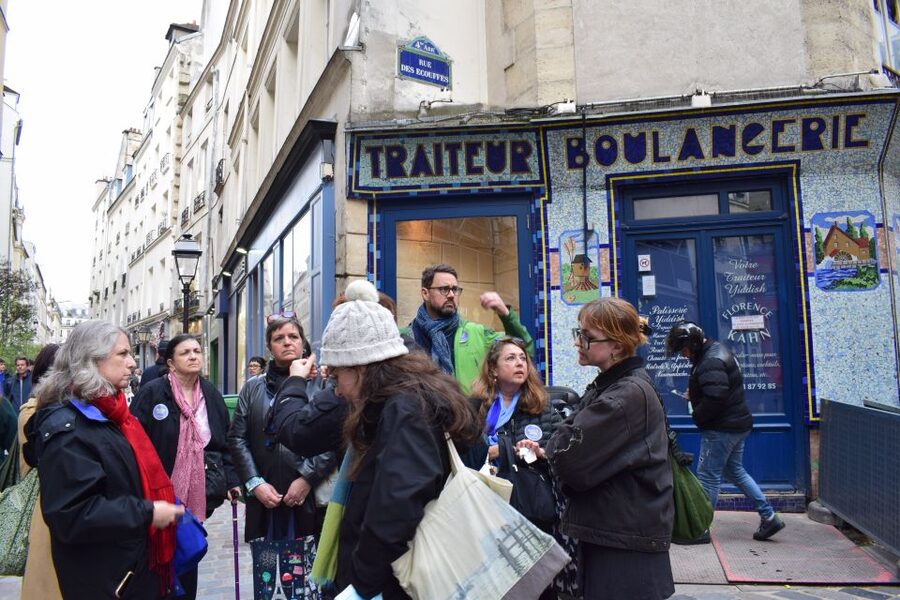
Montmartre lasts about 1.5 hours and shifts the emotional color of the day. Instead of institutions and memory, you’re walking streets tied to artists, writers, and thinkers—and how Jewish voices became part of the area’s cultural heartbeat.
This portion works best if you’re open to stories that connect people to place. It’s less about one big monument and more about how neighborhoods generate ideas. You also get a sense of the artistic momentum of late 19th and early 20th century Paris.
7 Rue Ravignan: street-level history you can picture
One of the guided stops is at 7 Rue Ravignan. Stops like this are valuable because they shrink the distance between you and the past. The guide can point out what the street meant in that creative ecosystem, making it easier to imagine life there rather than just reading about it.
Le Bateau-Lavoir: art space with strong symbolism
You’ll visit Le Bateau-Lavoir, a name that already sounds like an invitation to imagination. The guide uses it to connect place to creativity—how studios and artistic circles helped shape what Paris became in modern art and writing.
Even if you’re not a hardcore art historian, this is a stop that teaches you how to look at Montmartre differently: not just as a view and a crowd, but as a working environment for ideas.
Musée de Montmartre: pass by, still worth your attention
You’ll pass by Musée de Montmartre. “Pass by” sounds casual, but it’s still useful because it keeps your walk efficient while keeping the cultural setting in view. Use this moment to observe the surrounding streets and uphill geometry—Montmartre’s layout is part of the story.
16 Rue du Mont-Cenis: the second-to-last guided beat
Another guided stop is 16 Rue du Mont-Cenis. By this point, the tour has built an understanding of Montmartre as an engine of creativity, and the guide can tie that back into Jewish identity and participation in the artistic world.
If you’re someone who likes narrative continuity, this is a good moment: it feels like the tour is building toward the final panoramic payoff.
Sacré-Cœur and the final reflection at Square Louise-Michel
The tour ends at Sacré-Cœur Basilica, with time for sightseeing and wide panoramic views over Paris. This is one of those classic Montmartre moments, but in this context it lands differently. You’re not just looking at rooftops; you’re connecting the view to stories of identity, community, and creative expression.
After Sacré-Cœur, the experience concludes at Square Louise-Michel for a thoughtful final reflection. That stop matters because it slows you down at the end instead of letting you rush into souvenir shopping mode.
Price and logistics: is $80 worth your time?
At $80 per person for about 210 minutes, the value depends on what you want from Paris. If you’re the type who can wander and read plaques on your own, you might spend less. But if you want a guide to connect architecture, neighborhood history, and the human stories behind Jewish Paris, $80 starts to look fair.
Why it feels like good value here:
- You get small-group attention (interactive format, up to 9 persons).
- You cover two neighborhoods—Marais and Montmartre—plus transit.
- You include a major educational site stop around the Shoah Memorial, and you do it with guided framing rather than self-guided wandering.
Also note what you’re not paying for. Indoor synagogue visits and entry into monuments are not included, so the cost is mostly for guided storytelling, walking time, and transport tickets—not for attraction admissions.
Who this tour fits best (and who might want to adjust expectations)
This is a strong fit if you:
- want Jewish Paris history told through real streets, not only buildings with tickets
- prefer a small-group pace with time for questions
- appreciate guides who handle sensitive topics with care and seriousness
You might want to adjust expectations if you:
- want only indoor access or only synagogue interiors (this tour keeps those off the table)
- feel strongly that every minute must be solely about Jewish sites; some segments focus on place and architectural context to help you understand the setting
- need wheelchair-friendly routing (it is not suitable for mobility impairments)
Should you book this Jewish history walking tour?
I’d book it if you want a structured way to understand Jewish Paris without missing the emotional and historical turning points. The combo of Marais institutions plus Montmartre creativity, finished with Sacré-Cœur views, gives you both context and perspective.
Book it especially if you like guides who can explain hard topics with sensitivity. The route’s biggest strength is tone: the tour doesn’t treat the Shoah memorial like just another stop on a checklist, and that matters.
Final check before you commit: plan for steady walking on uneven streets, and choose comfortable shoes. If that sounds doable, this tour is a high-value way to leave Paris with more than photos—you’ll have a clearer story in your head.
FAQ
How long is the Paris Le Marais & Montmartre Jewish History Walking Tour?
The tour duration is 210 minutes (about 3.5 hours).
What neighborhoods does the tour cover?
It covers Le Marais and Montmartre.
Is the tour in English?
Yes, the live tour guide speaks English.
Is this a small-group tour?
Yes. It’s a small-group walking tour, with more interactive experience for groups up to 9 persons. Private or small groups are also available.
Does the tour include synagogue interiors?
No. Indoor visits to the synagogues are not included.
Are public transport tickets included?
Yes. Public transport tickets are included, with about 30 minutes for transit.
Where do I meet the guide?
The meeting point may vary depending on the option booked, with starting points at BHV Marais or L’Elephant Du Nil.
Do I need to arrive early?
Yes. You must arrive at the meeting point 15 minutes before the tour starts.
Is the tour wheelchair accessible?
No. It is not suitable for people with mobility impairments and wheelchair users.
(Optional) Quick note
If you’re comparing options, look for tours that prioritize guided context, small-group pacing, and clear route planning. This one is built around exactly that, and it ends with a view that’s hard to beat.
More Tours in Paris
- Paris: Louvre Guided Tour with Reserved Access & Boat Cruise
★ 4.3 · 16,353 reviews - Paris: Big Bus Hop-On Hop-Off Tour with Optional Cruise
★ 4.4 · 13,279 reviews - Louvre Museum Masterpieces Guided Tour with Access
★ 4.5 · 12,023 reviews - Versailles: Skip-the-Line Tour of Palace and Gardens Access
★ 4.7 · 10,429 reviews - Paris: Louvre Overview, Exploration tour and Reserved Entry
★ 4.1 · 10,145 reviews
More Tour Reviews in Paris
- Paris: 1-Hour Seine Cruise departing from the Eiffel Tower
★ 4.4 · 77,472 reviews - Paris: Louvre Museum Timed-Entrance Ticket
★ 4.6 · 71,977 reviews - Disneyland® Paris 1-Day Ticket
★ 4.6 · 49,412 reviews - Paris: Versailles Palace and Gardens Full Access Ticket
★ 4.6 · 41,579 reviews - Paris: Arc de Triomphe Rooftop Tickets
★ 4.6 · 34,264 reviews
More of the Montmartre Hill
- Montmartre Hidden Gems and Scenic Highlights Walking Tour
★ 5.0 · 2,684 reviews - Montmartre Hill French Gourmet Food and Wine Tasting Walking Tour
★ 5.0 · 2,588 reviews - Paris: Montmartre Highlights Walking Tour with a Local Guide
★ 4.9 · 2,318 reviews - Paris: Montmartre Cheese, Wine & Pastry Guided Walking Tour
★ 4.8 · 2,255 reviews - The Secrets of Montmartre Walking Tour
★ 4.8 · 1,258 reviews
Fresh off the review desk in Paris
- Secrets of Paris Bike Tour in English or Dutch★ 5.0 · 5 reviews
- Paris: Mont Saint-Michel Day Tour with Chinese Tour Guide★ 5.0 · 5 reviews
- Private Street Art 2-Hour Guided Tour in Paris★ 4.5 · 5 reviews
- Orsay Museum Tour: 2h Highlights (Private & Small Group)★ 5.0 · 5 reviews
- Discover Paris in electric golf carts★ 4.0 · 5 reviews
- Paris Private Boat Tour with your own Captain Guide★ 5.0 · 5 reviews
Montmartre Tours, compared.
 ★ 5.0Montmartre Hidden Gems and Scenic Highlights Walking TourFrom $382,684 reviews
 ★ 5.0Montmartre Hill French Gourmet Food and Wine Tasting Walking TourFrom $1452,588 reviews
 ★ 4.9Montmartre Highlights Walking Tour with a Local GuideFrom $232,318 reviews
 ★ 4.8Montmartre Cheese, Wine & Pastry Guided Walking TourFrom $1272,255 reviews
The Secrets of Montmartre Walking TourFrom $331,258 reviews
★ 4.8Montmartre Cheese, Wine & Pastry Guided Walking TourFrom $1272,255 reviews
The Secrets of Montmartre Walking TourFrom $331,258 reviews
 ★ 4.1Sacré-Coeur and Montmartre Tour with Expert GuideFrom $281,027 reviews
 ★ 5.0Private Montmartre Food Tour with Wine, Cheese & PastriesFrom $3021,027 reviews
 ★ 5.0Paris Montmartre Food Tour – A Full French Meal by Do Eat BetterFrom $95877 reviews
Browse the lists this tour appears in