
Reviewed · WALKING TOURS
Historic Left Bank Walking Tour in Paris
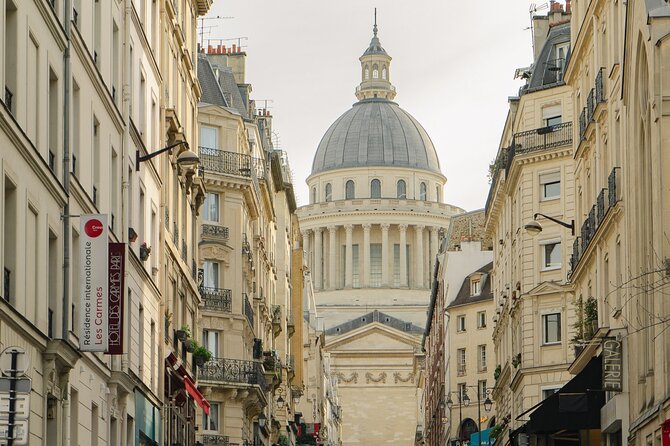
The Left Bank gets explained fast. This historic 2.5-hour walk lines up major sights from Saint-Germain-des-Prés to a Louvre-area finish, with your guide stitching the story together as you go. You’ll spend enough time at each stop to notice details, but not so much that you lose the thread.
I love two things right away: the small group size (up to 18) and the fact that many stops are free to see, so your money goes mostly toward the guide. I also like that you can pick a morning, afternoon, or evening departure depending on your schedule.
One possible drawback: you’re on foot for a long stretch, and the stops are timed fairly tightly. If you want lots of inside time at any one place, plan to add that after the tour.
In This Review
- Key highlights worth your attention
- Why this Left Bank walk fits Paris in 2 hours 30
- Starting at Saint-Germain-des-Prés: the “oldest church” opener
- Cour du Commerce Saint-André: where everyday Paris smells like history
- Roman ruins beside Cluny: Les Thermes de Lutece
- Square René Viviani and the Notre-Dame viewpoint effect
- Conciergerie and Pont Neuf: clocks, justice, and the oldest bridge
- Louvre Museum finish: stopping outside so you can keep going
- Is $53.23 worth it? Price, timing, and what you actually pay for
- Should you book this Historic Left Bank walking tour?
Key highlights worth your attention
- Blockbuster landmarks with real context at Notre-Dame and the Louvre finish
- Old-Paris layers in one route: a medieval church, roman baths, oldest bridge, oldest tree
- Free entry at most stops, which makes the pricing feel fair
- English guiding in a group capped at 18, so questions stay manageable
- A courtyard break that’s not fully covered, since the oldest restaurant stop isn’t included
- A mobile ticket and a clear start at Saint-Germain-des-Prés
Why this Left Bank walk fits Paris in 2 hours 30
This tour is built for people who want to understand Paris more than just collect photos. In about 2 hours 30 minutes, you’ll cover a smart slice of the Left Bank that connects religious Paris, old street life, Roman leftovers, and the grand institutions that still dominate the skyline.
That short time budget matters. You won’t get stuck in one spot. Instead, you’ll get a sequence of scenes—church, courtyard, roman ruins, a tiny park viewpoint, Notre-Dame, the Conciergerie, Pont Neuf, and finally the Louvre area. The pacing is the point: it helps you see how the city changed while still feeling like the same streets.
Price-wise, it’s also easier to swallow than tours that depend on paid admissions. At several stops, you’re told to enjoy what’s free on-site, while the guide does the heavy lifting: tying each place to a timeline and pointing out what most first-time visitors miss.
If you’re traveling solo, the group format can be a plus. You’ll mingle with up to 18 people, and that’s big enough to keep energy up without turning into a slow-moving pack.
Worth weighing up next to this Paris pick
- Paris Top Sights Half Day Walking Tour with a Fun Guide
★ 5.0 · 2,893 reviews - Montmartre Hidden Gems and Scenic Highlights Walking Tour
★ 5.0 · 2,684 reviews - Montmartre Hill French Gourmet Food and Wine Tasting Walking Tour
★ 5.0 · 2,588 reviews - Paris: Montmartre Highlights Walking Tour with a Local Guide
★ 4.9 · 2,318 reviews
Starting at Saint-Germain-des-Prés: the “oldest church” opener
You begin at Church of Saint-Germain-des-Prés, 3 Pl. Saint-Germain des Prés, 75006. This is a strong opening move, because it grounds the Left Bank in the kind of “early Paris” that later landmarks still echo.
At Eglise Saint Germain Des Pres, you get a first look at Paris’ oldest church on the Left Bank. Even if you only spend about 15 minutes here, it’s enough time to catch why this area became so important. Your guide’s job is to help you see the building as more than a stop on a map—something that shaped the neighborhood’s identity as the centuries rolled on.
Practical tip: since the meeting point is a working church area, be ready to show basic respect if you see services or calm moments. Also, wear comfortable shoes. The tour rhythm is walk, stop, learn, walk again.
This first segment also sets the tone for the rest of the route. After you start with something “oldest,” every next stop feels like another layer added to the same story.
Cour du Commerce Saint-André: where everyday Paris smells like history
From the church, the tour swings into Cour du Commerce Saint Andre. This is one of those places where you don’t just see a building—you see the idea of a Paris courtyard life.
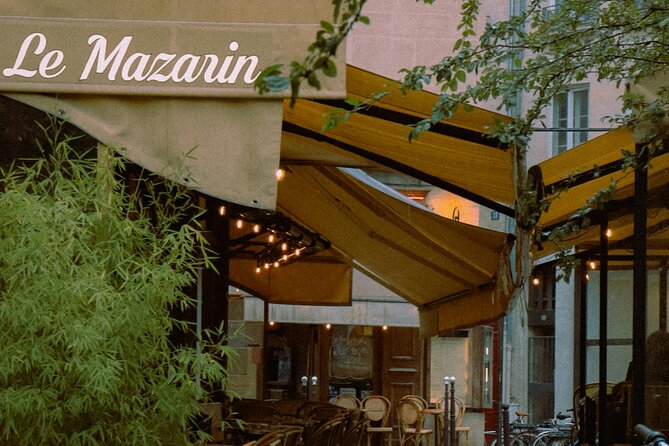
You’ll hear about it as a picturesque court yard that holds Paris’ oldest restaurant. The time is short—around 10 minutes—so the value here is in how your guide frames it. It’s not just about eating or sightseeing. It’s about understanding that Paris wasn’t only palaces and cathedrals. It also ran on small-scale commerce and daily rituals.
One caution: admission ticket isn’t included for this stop. That means you should expect any on-site costs related to entry or dining aren’t part of what you paid. If your goal is purely exterior viewing and storytelling, you can still get the point, but don’t count on everything being free in the same way as other stops.
If you’re a foodie, this stop can also help you decide later where you want to eat on your own. You’ll walk away with a clearer sense of what “old Paris” tastes like in atmosphere, even before you pick a restaurant.
Roman ruins beside Cluny: Les Thermes de Lutece
Next comes a surprise for many first-timers: Les Thermes de Lutece, roman baths next to the Cluny museum. You’ll have about 10 minutes here, and yes, they’re ruins—but that’s exactly why the stop works.
Roman bath ruins are a great reality check. Paris can feel like it grew from medieval towers and later grand monuments, but this spot reminds you it had earlier foundations. Your guide can help you “read” what you’re looking at: not just broken stone, but evidence of how the city’s early life was organized around communal spaces.
This is one of the free-entry moments, so it’s a solid value stop. And it pairs well with the broader route. After you’ve seen a medieval church and a long-ago restaurant courtyard, the roman baths give you a sense of time depth—how layers stack when a city keeps living instead of starting over.
Tip: take your photos fast, then listen. Ruins don’t reward frantic clicking; they reward attention. If you miss something, you can always come back later, but the guided context won’t be repeated for you during the walk.
Square René Viviani and the Notre-Dame viewpoint effect
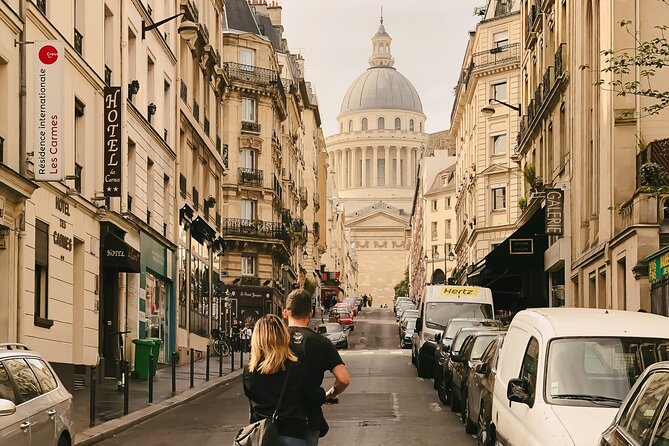
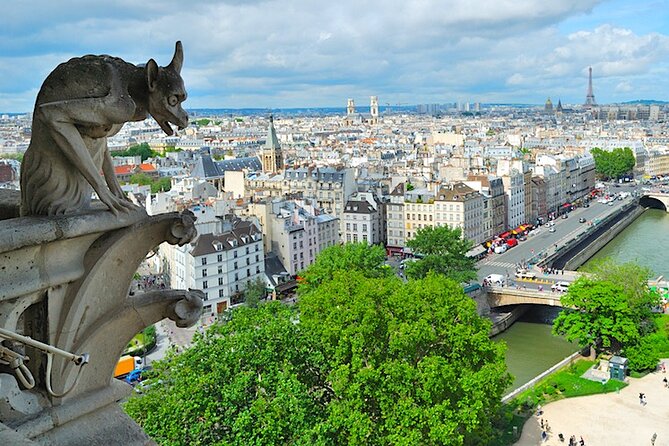
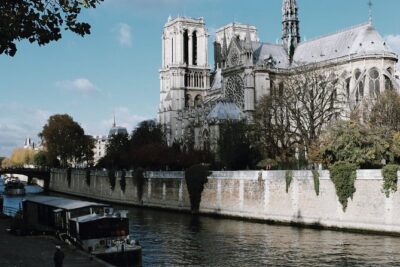
Then you move into Square Rene Viviani, a small park that delivers a big payoff: a beautiful view of Notre Dame along with the claim that it contains Paris’ oldest tree.
You’ll have about 10 minutes here. This stop is short, but it matters because it gives you a breather before the bigger landmark. It also changes how you experience Notre-Dame. Instead of seeing it as a single grand facade, you start to see it as part of a skyline framed by older street life and small public spaces.
The “oldest tree” detail is more than trivia. It’s the kind of marker your guide uses to teach you how long the Left Bank has been shaping public space. Parks like this are often where you can feel the city’s slower pace—especially when you step out of the noise and into a pocket of quiet.
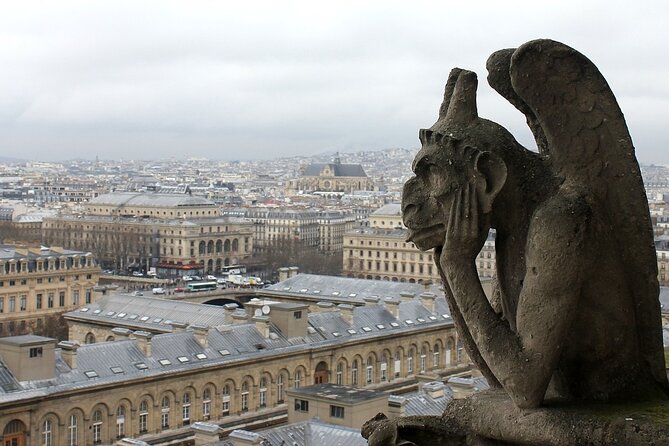
After the park, you reach Notre-Dame Cathedral. The stop is about 15 minutes, and it’s free to see. In that window, your guide’s focus usually turns to what you can realistically take in: the facade, the setting, and the reasons this place is a magnet for visitors even when you’ve been seeing Paris pictures your whole life.
Practical note: in any famous cathedral area, expect crowds. Use this time to orient yourself—notice where streets funnel toward the cathedral and how the surrounding architecture amplifies it.
Conciergerie and Pont Neuf: clocks, justice, and the oldest bridge
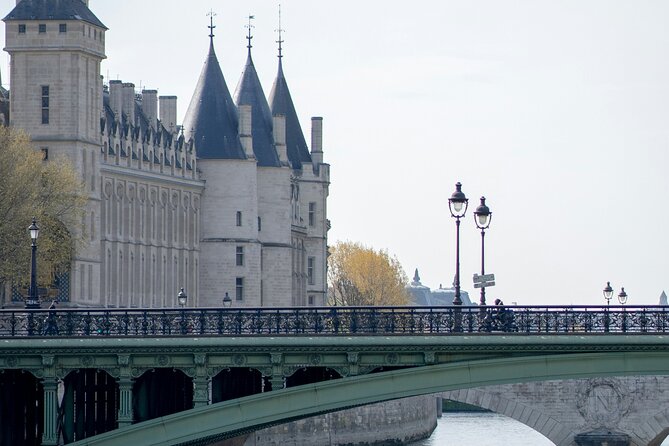
After Notre-Dame, the route shifts to the Conciergerie. You’ll spend around 10 minutes here, and it’s described as a former palace and then a courthouse. That shift—from power to law—helps explain why the building is remembered the way it is.
A standout detail is the mention of the oldest clock in Paris, spotted at the corner of the street. Even if you don’t stop and stare for long, hearing that clue changes your walk. You start scanning for what’s “still old” in the present moment, not only what looks old.
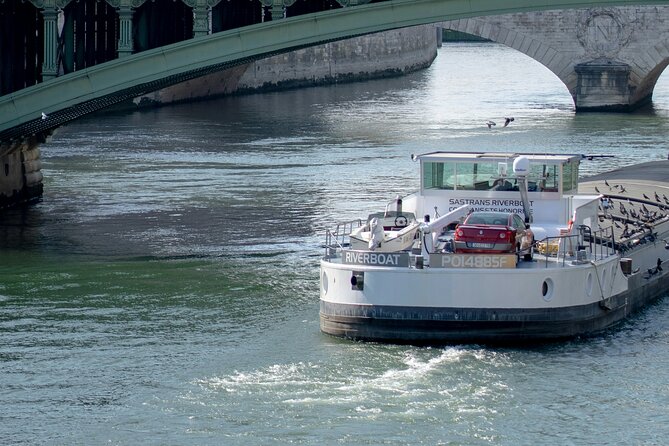
Then you head to Pont Neuf, about 10 minutes. This bridge is a fun one because it sounds contradictory: Pont Neuf means New Bridge, but it’s actually Paris’ oldest bridge. Your guide’s storytelling here is usually about naming and survival—how something can be called new in its day, then outlive the future it was meant to replace.
Pont Neuf also works as a pacing reset. It’s open-air, it’s photo-friendly, and it gives you a chance to regroup before the final big stop.
These two stops together do something valuable: they connect everyday movement (a bridge) to the machinery of older institutions (palace and courthouse). It’s the Left Bank’s mix of civic gravity and street reality.
Worth weighing up next to this Paris pick

Louvre Museum finish: stopping outside so you can keep going
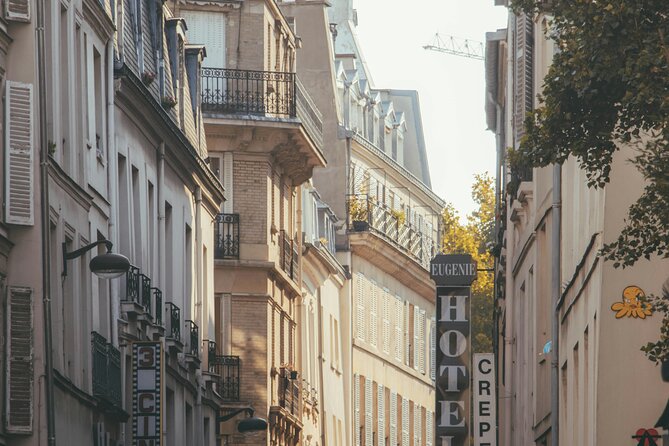
The last landmark on the route is the Louvre Museum. Your time here is about 15 minutes, and the tour ends outside the Louvre (finish outside the museum at 75001).
This ending style is smart. If your plan includes entering the museum afterward, stopping outside helps you avoid the all-at-once overload. You get one final dose of “blockbuster Paris,” then you can decide how you want to continue: enter on your own, switch to a different museum plan, or just keep walking nearby.
Because admissions inside the Louvre aren’t listed as included in the tour details you have, treat this as a guided orientation moment. You’ll leave with a sense of where things are and why this area is such a gravitational pull.
If you’re museum-focused, I’d use the tour’s last stop to plot your next move quickly—choose one wing or one storyline—so your Louvre time doesn’t turn into wandering with a tired brain.
Is $53.23 worth it? Price, timing, and what you actually pay for
At $53.23 per person for about 2 hours 30 minutes, this tour is priced like a guide-led experience rather than a ticket-driven one. That matters, because many of the stops are free-entry points, including Notre-Dame, Les Thermes de Lutece, Square René Viviani, and sights around the Conciergerie and Pont Neuf.
So the value is in the guide: walking you through what you see, giving you the “why,” and helping you avoid the common first-time mistake of treating everything as equally important. The guide’s job here is selection and explanation, not just walking you past famous names.
A small group helps with that. With a max of 18 people, you’re less likely to lose your place in the story. It’s also easier to hear instructions and questions without shouting.
One thing to plan for: bottled water and snacks aren’t included. Don’t show up relying on the tour to keep you comfortable. Bring water if it’s a warm day, and plan a snack break later.
Timing options are also flexible. Since you can choose morning, afternoon, or evening, you can match it to your energy level and the rest of your day. If you’re doing the Louvre later, finishing near it works well.
Should you book this Historic Left Bank walking tour?
Book it if you want a guided path through Paris’ biggest Left Bank landmarks without spending your whole day in lines. It’s especially a good fit if you like learning “how Paris became Paris,” from ancient ruins to bridges and cathedrals, in one focused walk.
Skip it or plan carefully if you need deep inside time. The stop durations are short, and the experience is designed to move. You’ll get great orientation and context, then you’ll want to add time on your own at the places that grab you most.
If your timing works and you’re comfortable walking, this is a solid value way to see the Left Bank in a single, story-driven route.
More Walking Tours in Paris
- Paris Top Sights Half Day Walking Tour with a Fun Guide
★ 5.0 · 2,893 reviews - Montmartre Hidden Gems and Scenic Highlights Walking Tour
★ 5.0 · 2,684 reviews - Montmartre Hill French Gourmet Food and Wine Tasting Walking Tour
★ 5.0 · 2,588 reviews - Paris: Montmartre Highlights Walking Tour with a Local Guide
★ 4.9 · 2,318 reviews - Paris Île de la Cité and Notre-Dame Walking Tour With Crypt
★ 5.0 · 2,272 reviews
More Tours in Paris
- Paris: Louvre Guided Tour with Reserved Access & Boat Cruise
★ 4.3 · 16,353 reviews - Paris: Big Bus Hop-On Hop-Off Tour with Optional Cruise
★ 4.4 · 13,279 reviews - Louvre Museum Masterpieces Guided Tour with Access
★ 4.5 · 12,023 reviews - Versailles: Skip-the-Line Tour of Palace and Gardens Access
★ 4.7 · 10,429 reviews - Paris: Louvre Overview, Exploration tour and Reserved Entry
★ 4.1 · 10,145 reviews
More Tour Reviews in Paris
- Paris: 1-Hour Seine Cruise departing from the Eiffel Tower
★ 4.4 · 77,472 reviews - Paris: Louvre Museum Timed-Entrance Ticket
★ 4.6 · 71,977 reviews - Disneyland® Paris 1-Day Ticket
★ 4.6 · 49,412 reviews - Paris: Versailles Palace and Gardens Full Access Ticket
★ 4.6 · 41,579 reviews - Paris: Arc de Triomphe Rooftop Tickets
★ 4.6 · 34,264 reviews
Fresh off the review desk in Paris
- Secrets of Paris Bike Tour in English or Dutch★ 5.0 · 5 reviews
- Paris: Mont Saint-Michel Day Tour with Chinese Tour Guide★ 5.0 · 5 reviews
- Private Street Art 2-Hour Guided Tour in Paris★ 4.5 · 5 reviews
- Orsay Museum Tour: 2h Highlights (Private & Small Group)★ 5.0 · 5 reviews
- Discover Paris in electric golf carts★ 4.0 · 5 reviews
- Paris Private Boat Tour with your own Captain Guide★ 5.0 · 5 reviews
Walking Tours, compared.
 ★ 5.0Paris Top Sights Half Day Walking Tour with a Fun GuideFrom $762,893 reviews
 ★ 5.0Montmartre Hidden Gems and Scenic Highlights Walking TourFrom $382,684 reviews
 ★ 5.0Montmartre Hill French Gourmet Food and Wine Tasting Walking TourFrom $1452,588 reviews
 ★ 4.9Montmartre Highlights Walking Tour with a Local GuideFrom $232,318 reviews
 ★ 5.0Paris Île de la Cité and Notre-Dame Walking Tour With CryptFrom $482,272 reviews
 ★ 4.8Montmartre Cheese, Wine & Pastry Guided Walking TourFrom $1272,255 reviews
 ★ 5.0Paris in a Day: Louvre or Orsay, Eiffel Tower, City Walk & CruiseFrom $1571,956 reviews
 ★ 5.0Paris City Center Free Walking Tour (Tip-Based)From $31,340 reviews
Browse the lists this tour appears in