
Reviewed · HISTORICAL TOURS
Jewish History Private Tour
Paris has a way of hiding major stories in plain sight. This private walk pulls the Jewish thread through the city’s landmarks, from medieval community life to the darkest chapters of the 20th century. You’ll also get the kind of clear English that makes heavy topics easier to follow, whether your guide is Sonja, Tina, or Barbara.
I especially love how the tour connects famous places to Jewish life, not just with names on a map. The Notre-Dame stop includes visible connections and on-site explanations from the nearest possible distance while the cathedral is unavailable. That approach turns Paris from postcard scenes into a timeline you can actually walk.
One consideration: Notre-Dame’s site is currently unavailable, so you’ll be hearing the story from the closest possible vantage rather than going inside. If you were hoping for a full cathedral visit as part of the experience, plan around that.
In This Review
- Key points before you go
- Why this Jewish history walk works so well in Paris
- A guide makes the difference: art historian skill, strong English, real clarity
- Route, timing, and the meet-up you should double-check
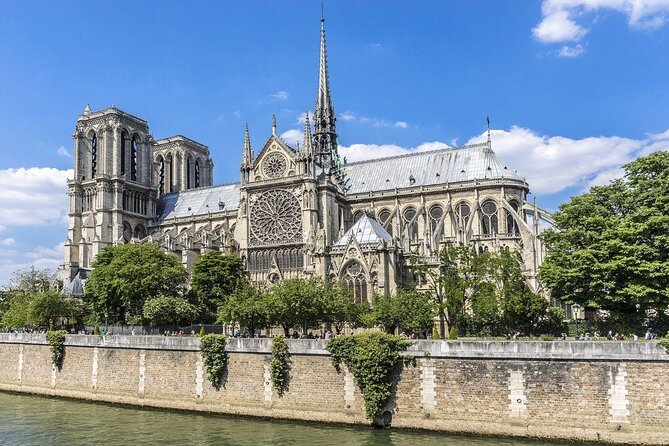
- Stop 1: Notre-Dame de Paris from the closest possible distance
- Stop 2: Memorial des Martyrs de la Deportation
- Stop 3: Memorial de la Shoah and why it reaches beyond one community
- Stop 4: Rue François Miron and medieval life during plague years
- Stop 5: La Rue des Rosiers in the Marais
- The big story you walk through: from early communities to Dreyfus, Vichy, and the occupation
- Price and value: $361.23 per group up to 6
- What to bring, how to dress, and small choices that improve the day
- Who should book this tour?
- Should you book the Jewish History Private Tour?
- FAQ
- How long is the Jewish History Private Tour in Paris?
- How much does it cost, and how many people can join?
- Is the tour private?
- Where does the tour start and end?
- What language is the tour offered in?
- Are there any admission fees for the stops?
- Is food included?
- Is there free cancellation?
Key points before you go
- Private group of up to 6 means you get real conversation, not a lecture line.
- Professional art historian guide brings detail to what you see on the street.
- Memorial stops include both the Deportation memorial and the Memorial de la Shoah.
- Marais streets like Rue des Rosiers are treated as lived neighborhoods, not just photos.
- Medieval to WWII to today gets tied together so the story feels chronological.
- Mobile ticket + free entry for stops keep things simple on the day.
Why this Jewish history walk works so well in Paris
Paris is the kind of city where history is everywhere, but it isn’t always obvious. A normal sightseeing day often sticks to what’s famous and quick. This tour slows down and points you toward the parts of Jewish life that don’t show up in most one-day itineraries—especially the medieval Jewish presence that predates modern France as we think of it.
What I like about this format is that it’s not just dates and names. You’re walking past places that still shape how the city feels now. And because it’s private, you can ask questions as you go. That matters when the subject is Dreyfus-era antisemitism, the Vichy government, and the Nazi occupation during World War II—moments where context changes how you read the present.
Worth weighing up next to this Paris pick
- Louvre Museum Paris Essential Guided Tour Semi-Private 6ppl Max
★ 5.0 · 3,807 reviews - SUV Private Transfer: Paris to Charles de Gaulle Airport (CDG)
★ 4.0 · 3,091 reviews - Paris: Private Photoshoot at the Eiffel Tower
★ 4.7 · 2,636 reviews - Top Private Cruises in Paris with French Champagne and surprises
★ 5.0 · 1,553 reviews
A guide makes the difference: art historian skill, strong English, real clarity
This experience is led by a professional art historian guide. That’s a big deal for two reasons. First, you’re learning to notice what’s in front of you—building features, site meanings, and the logic behind why certain places were important. Second, you get help turning complex European history into something you can follow without feeling lost.
The best sign is how the guides handle language and pacing. English clarity came up again and again, with guides like Sonja described as easy to understand and Tina as careful not to rush. Another guide, Anja, was noted for bringing personal family stories into the wider events of war and its aftermath. Even if your guide is multilingual, you should expect explanations designed to stay clear and structured.
And yes, weather can be brutal in Paris. One guide story that stuck: even in heavy rain, Sonja kept things moving and handled it practically by stopping for rain ponchos before continuing. That’s exactly the kind of real-world flexibility you want for a walking tour.
Route, timing, and the meet-up you should double-check
The tour runs about 2 hours and is designed for moderate physical fitness. The pacing is walking-focused, and the stops are short and meaningful rather than long museum marathons.
You start at Shakespeare and Company, 37 Rue de la Bûcherie (75005), then you finish at Place de la Bastille. Because the ending is in a different area, this isn’t something you tack onto the middle of your day without thinking. I recommend keeping a little slack in your schedule at the end so you don’t feel rushed looking for your next reservation.
Two practical notes:
- The experience uses a mobile ticket.
- Meet-up directions can go wrong. One group had trouble because an app pointed them to a spot about a half-hour walk from the real meet-up. So, use the provided map pin right before you leave, and give yourself a buffer.
Stop 1: Notre-Dame de Paris from the closest possible distance
Notre-Dame is the opening anchor of the tour, scheduled for about 30 minutes. Here’s the current reality: the cathedral is unavailable due to recent events, so you get commentary from the nearest possible distance rather than an inside visit.
Still, this is a smart first stop. It sets the tone: you start with one of Paris’s most iconic Christian landmarks and then learn how it connects to the Jewish community and to daily life patterns. Rather than treating Jewish history as something separate, the guide links it to the same civic and religious spaces that shaped medieval Paris.
One more reason this stop works: the guide may point out markings on different buildings and explain why they matter. That visual habit changes how you walk through the city afterward. You stop seeing buildings as background and start seeing them as evidence.
Practical tip: if you’re the type who hates standing still, don’t worry. You’re not stuck at one spot for ages—you’re set up to hear the story, then you move on.
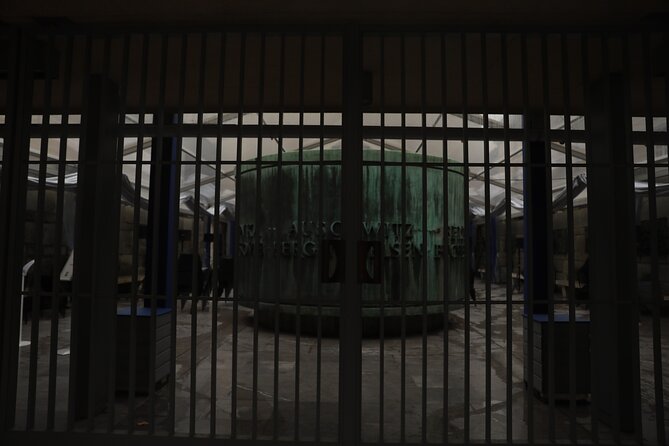
Stop 2: Memorial des Martyrs de la Deportation
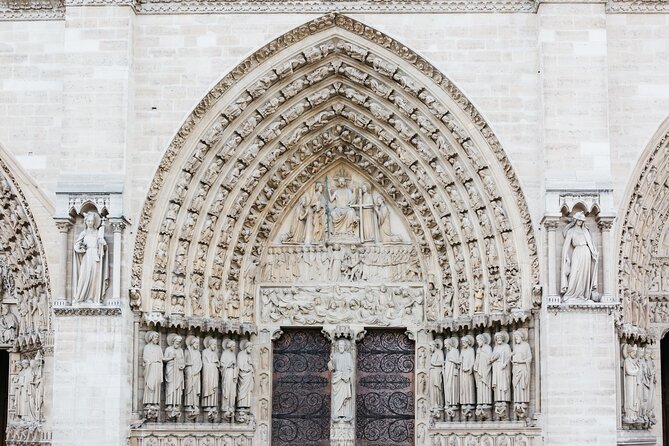
Next comes the Memorial des Martyrs de la Deportation for about 15 minutes. This stop is brief on purpose. It’s meant to put a hard emotional frame on what comes next—deportation, forced removal, and the fate that awaited so many people.
What makes it valuable in a walking-history format is that you don’t get the topic separated into a different day or a different building. The memorial lands right in the flow of the neighborhood story, making it harder to mentally file the war era as distant or abstract.
Since admission is listed as free, you can focus on the meaning without feeling like you’re rushing through a ticketed attraction.
Stop 3: Memorial de la Shoah and why it reaches beyond one community
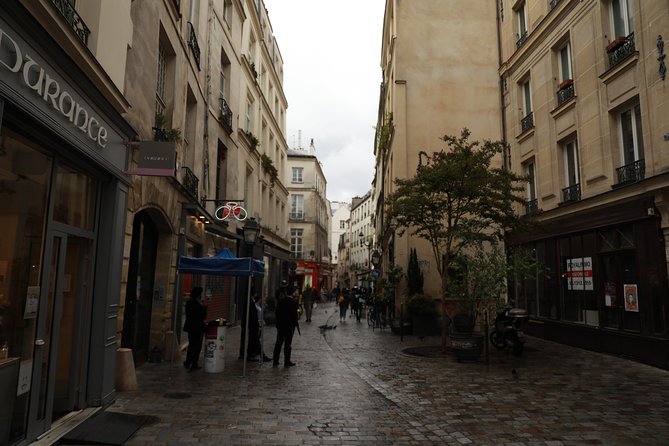
The Memorial de la Shoah is one of the most important stops on the tour, with about 20 minutes dedicated to it. You’ll learn how it connects to the wider influence and unique cultural importance of the site—explicitly not only as a place that matters to Jewish community history.
This is a powerful moment because the tour’s earlier framing (medieval life, shifting conditions, antisemitism patterns) helps you understand why genocide memory isn’t just memorializing the past. It’s a warning system. The way the guide ties the memorial into the broader city story helps you see it as part of Paris’s moral landscape.
If you’re someone who gets emotional quickly, plan for it here. This isn’t a casual photo stop. You’re being asked to think.
Worth weighing up next to this Paris pick
Stop 4: Rue François Miron and medieval life during plague years
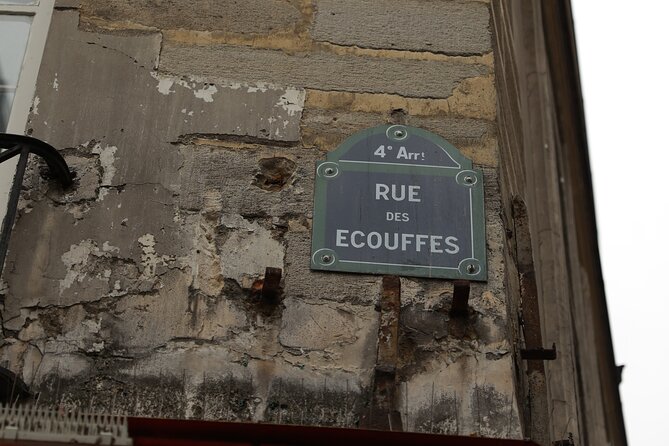
Then you head to Rue François Miron (about 20 minutes). This stop zooms into the 14th century and looks at the Jewish community’s position in Paris—especially through the lens of the Black Plague.
Even without a long lecture, this stop matters because it shows how crisis years change social standing and civic treatment. It also gives you a way to connect medieval Jewish presence with the physical geography of the city. You’re not learning in theory; you’re learning beside street names that still exist.
One thing I recommend: try to tune your attention to what the guide emphasizes—who had access to what spaces, how communities were viewed, and how fear and disease turned into social blame. That kind of pattern recognition is exactly the point.
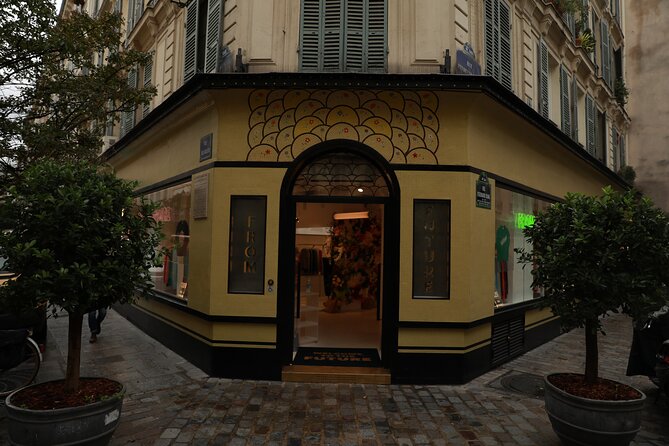
Stop 5: La Rue des Rosiers in the Marais
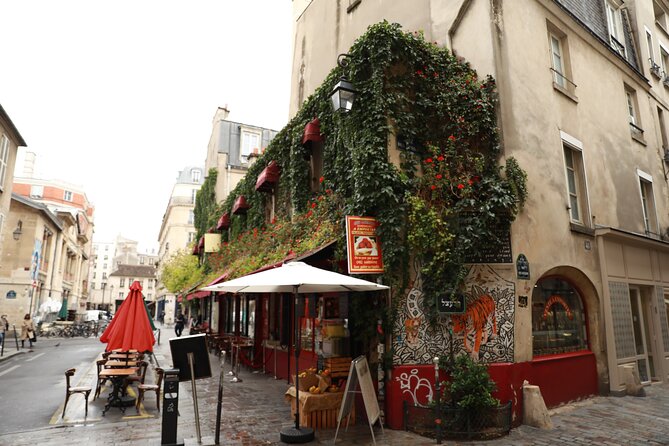
You finish with La Rue des Rosiers, about 20 minutes. This street is described as the epicenter of the Parisian Jewish community, and it’s hard to argue with that once you’re there. It’s the kind of place where the present feels connected to the layers of the past.
Why this ending works: you don’t end the tour in a purely somber mode. You end in the neighborhood where life continues. The tour framing helps you understand why Rue des Rosiers matters beyond being a destination—because it’s a living reference point for a community that has repeatedly been forced to adapt and survive.
If you want to do more after the walk, this is the time to do it. Just remember the tour ends at Place de la Bastille, so decide whether you’ll stay nearby for food or start moving toward your next stop.
The big story you walk through: from early communities to Dreyfus, Vichy, and the occupation
What ties the whole route together is the timeline the guide builds. You’ll hear about:
- The existence of a Hebrew community in Paris before France existed
- The medieval-era community and its shifting place in the city
- The Dreyfus affair
- The Vichy government
- The Nazi occupation during World War II
- And how the present day connects back to these events
I like that the tour doesn’t treat the Jewish story as a straight line of tragedy. It shows changing circumstances—sometimes rooted in civic life, sometimes turning brutal. That balance keeps the experience honest.
And when your guide uses personal family stories (as Anja was noted for doing), it makes the events feel less like a distant textbook and more like something rooted in real human lives.
Price and value: $361.23 per group up to 6
At $361.23 per group (up to 6) for about 2 hours, you’re paying for a private, guided, art-historian-led walking experience. The value jumps fast if you have a small group traveling together.
Simple math: if you have the full group size, it works out to about $60 per person for a private guide. That’s often comparable to paying for multiple public tickets plus separate research time, and you get the benefit of a structured narrative and the freedom to ask questions.
Also, several stops list free admission, which keeps the day from turning into add-on costs.
If you’re traveling solo, you’ll still get a private experience, but the per-person value depends on whether you share the cost with a group.
What to bring, how to dress, and small choices that improve the day
This is a walking tour, so the basics matter:
- Wear comfortable shoes with decent grip. Paris streets can be slippery after rain.
- Bring a light rain layer. One guide handled a downpour by helping the group switch to ponchos, which is exactly the kind of problem-solving that keeps your momentum.
- Bring a phone charger or battery. You’ll use the mobile ticket.
If you plan to add other major sites the same day, give yourself a buffer. One guide-related note from past experiences: people felt time could be tight if they tried to stack too many big attractions in the same window, especially if they needed to coordinate entry and meeting expectations for other places. Keep it calm and you’ll enjoy the history more.
Who should book this tour?
This is a great fit if:
- You want a private walk with Q&A and a calm pace.
- You care about Jewish history in Paris beyond the usual highlights.
- You like guided interpretation of buildings, streets, and memorial design—not just museum facts.
- You’re okay with a serious tone at the memorial stops and want context that connects medieval life to WWII and beyond.
It’s also a strong option if you’re traveling with people who disagree on what to do. The guide’s structure gives something for everyone: street-level history, landmark connections, and careful handling of difficult topics.
Should you book the Jewish History Private Tour?
Yes, if you want a focused, human-scale history walk through Paris’s Jewish story. The private setup, strong English explanations, and art-historian approach make the experience feel intentional rather than rushed.
Book it especially if you’re intrigued by how Jewish life intersected with major Paris landmarks like Notre-Dame and why memorials like the Deportation Memorial and the Memorial de la Shoah are not just stops, but messages. If Notre-Dame access inside is your top priority, plan around the fact that you’ll be viewing from the nearest possible distance right now.
FAQ
How long is the Jewish History Private Tour in Paris?
The tour lasts about 2 hours.
How much does it cost, and how many people can join?
It costs $361.23 per group and can host up to 6 people.
Is the tour private?
Yes. It is a private tour/activity, and only your group participates.
Where does the tour start and end?
The tour starts at Shakespeare and Company, 37 Rue de la Bûcherie, 75005 Paris, and ends at Place de la Bastille.
What language is the tour offered in?
The tour is offered in English. It may also be operated by a multi-lingual guide.
Are there any admission fees for the stops?
The stops listed on the tour are free to enter, including Notre-Dame’s nearby viewing commentary, the Deportation Memorial, the Memorial de la Shoah, and the street-based stops.
Is food included?
No. Food and drinks are not included.
Is there free cancellation?
Yes. You can cancel for a full refund up to 24 hours before the experience starts.
More Private in Paris
- Louvre Museum Paris Essential Guided Tour Semi-Private 6ppl Max
★ 5.0 · 3,807 reviews - SUV Private Transfer: Paris to Charles de Gaulle Airport (CDG)
★ 4.0 · 3,091 reviews - Paris: Private Photoshoot at the Eiffel Tower
★ 4.7 · 2,636 reviews - Top Private Cruises in Paris with French Champagne and surprises
★ 5.0 · 1,553 reviews - Golf Cart in Paris – Private Guided City Tour – Pickup Included
★ 5.0 · 1,164 reviews
More Tours in Paris
- Paris: Louvre Guided Tour with Reserved Access & Boat Cruise
★ 4.3 · 16,353 reviews - Paris: Big Bus Hop-On Hop-Off Tour with Optional Cruise
★ 4.4 · 13,279 reviews - Louvre Museum Masterpieces Guided Tour with Access
★ 4.5 · 12,023 reviews - Versailles: Skip-the-Line Tour of Palace and Gardens Access
★ 4.7 · 10,429 reviews - Paris: Louvre Overview, Exploration tour and Reserved Entry
★ 4.1 · 10,145 reviews
More Tour Reviews in Paris
- Paris: 1-Hour Seine Cruise departing from the Eiffel Tower
★ 4.4 · 77,472 reviews - Paris: Louvre Museum Timed-Entrance Ticket
★ 4.6 · 71,977 reviews - Disneyland® Paris 1-Day Ticket
★ 4.6 · 49,412 reviews - Paris: Versailles Palace and Gardens Full Access Ticket
★ 4.6 · 41,579 reviews - Paris: Arc de Triomphe Rooftop Tickets
★ 4.6 · 34,264 reviews
Fresh off the review desk in Paris
- Secrets of Paris Bike Tour in English or Dutch★ 5.0 · 5 reviews
- Paris: Mont Saint-Michel Day Tour with Chinese Tour Guide★ 5.0 · 5 reviews
- Private Street Art 2-Hour Guided Tour in Paris★ 4.5 · 5 reviews
- Orsay Museum Tour: 2h Highlights (Private & Small Group)★ 5.0 · 5 reviews
- Discover Paris in electric golf carts★ 4.0 · 5 reviews
- Paris Private Boat Tour with your own Captain Guide★ 5.0 · 5 reviews
Historical Tours, compared.
 ★ 4.7Dark History and Ghostly Guided Walking TourFrom $351,000 reviews
 ★ 5.0Le Marais/Paris – The Historic, Trendy, Jewish, LGBT districtFrom $48341 reviews
 ★ 5.0Paris City of Fashion History Private Guided Walking TourFrom $107221 reviews
 ★ 5.0History of Paris City Center w/ Notre Dame Semi-Private 12ppl MaxFrom $59194 reviews
 ★ 4.8Le Marais & Montmartre Jewish History Walking TourFrom $80170 reviews
 ★ 5.0Paris Walking Tour , Historical Sites .From $96150 reviews
 ★ 5.0Paris – Historic City Center Walking TourFrom $156134 reviews
 ★ 4.6Explore the Marais: History, Art & Local CultureFrom $49105 reviews
Browse the lists this tour appears in