
Reviewed · WALKING TOURS
Paris Walking Tour , Historical Sites .
Paris has a way of rewarding a slow stroll. This tour strings together five distinct neighborhoods in about 3 hours, mixing big monuments with street-level Paris. I love how it keeps the group small, max 7 travelers, so questions actually get answered instead of lost in the crowd. And I especially liked the way Neda (the guide name you’ll hear over and over in praise) brings lively, human stories that connect places like Saint-Germain, the Seine, and Le Marais.
Two parts I’d call out right away are the Saint-Sulpice stop, with its fountain of the four cardinal directions, and the Le Marais section that connects Jewish traditions and fashion as you walk the cobblestone lanes. The one drawback to plan for is that several stops are short (some are listed around 5 minutes), so if you want long hangs for photos or deep museum time, you’ll need extra time on your own after the tour.
In This Review
- Key things I’d pin to your map
- A 3-hour route that starts with Saint-Sulpice and ends at Place des Vosges
- Why the max-7 group (and Neda’s style) matters in Paris
- Stop 1: Eglise Saint-Sulpice and the four cardinal directions fountain
- Stop 2: Saint-Germain-des-Prés for art, shops, and food streets
- Pont Neuf: the oldest standing bridge and why it shows up in the story
- The Seine walk and Île de la Cité landmarks: Notre-Dame to Sainte-Chapelle
- Le Marais: cobblestones, independent fashion, and Jewish life
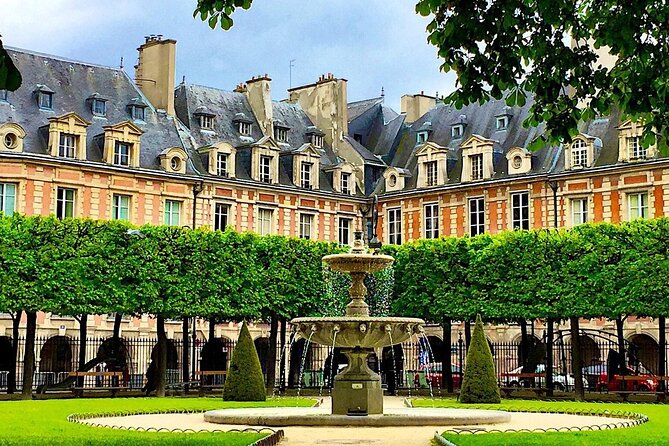
- Place des Vosges: the symmetrical square and Victor Hugo’s home
- Price and value: what you’re really paying for at $96.79
- Practical fit: who should book this, and who might want something else
- Should you book this Paris Historical Sites walking tour?
- FAQ
- FAQ
- What is the duration of the Paris walking tour?
- How much does the tour cost?
- What language is the tour offered in?
- How large is the group?
- Where does the tour start and end?
- Do I need a physical ticket?
- Is cancellation free?
Key things I’d pin to your map

- Max 7 travelers: small enough for real dialogue with Neda, not just a lecture.
- A half-day sampler of central Paris: Left Bank to Île de la Cité to Le Marais, all in one run.
- Church-and-bridge classics: Saint-Sulpice and Pont Neuf give you major landmarks fast.
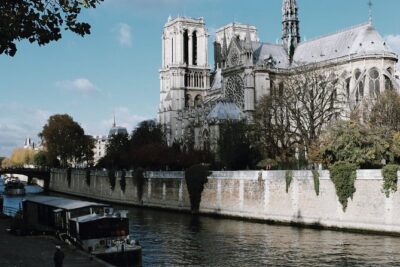
- The Seine walk includes big names you’ll pass: Notre-Dame de Paris and Sainte-Chapelle show up on the route.
- Le Marais through a cultural lens: focus on Jewish life, delis and bagel shops, synagogues, plus modern fashion streets.
- Place des Vosges hits hard on beauty and literature: symmetrical 36-building square and the Victor Hugo House.
A 3-hour route that starts with Saint-Sulpice and ends at Place des Vosges
This is a 3-hour walking tour through central Paris, with a start at 1 Pl. Saint-Sulpice (75006) and an end at Place des Vosges (75004). The pacing works best if you go in with the mindset of orientation and pattern-spotting. You’re not trying to see everything. You’re learning how these districts connect.
What makes this route feel efficient is the mix of “big Paris” and “local Paris.” Saint-Sulpice anchors the morning on the Left Bank. Then you move toward the Seine and the river-crossing story via Pont Neuf and the city island area. After that, you land in Le Marais for an older, tighter-feeling Paris, and you finish at Place des Vosges, one of the city’s most orderly, photogenic squares.
And yes, it’s a walking tour, so your feet get involved. Plan for about three hours of steady movement, including a few short stops where you’ll only get quick looks before the next neighborhood starts calling your name.
Worth weighing up next to this Paris pick
- Paris Top Sights Half Day Walking Tour with a Fun Guide
★ 5.0 · 2,893 reviews - Montmartre Hidden Gems and Scenic Highlights Walking Tour
★ 5.0 · 2,684 reviews - Montmartre Hill French Gourmet Food and Wine Tasting Walking Tour
★ 5.0 · 2,588 reviews - Paris: Montmartre Highlights Walking Tour with a Local Guide
★ 4.9 · 2,318 reviews
Why the max-7 group (and Neda’s style) matters in Paris

Paris guides can range from “here’s your history homework” to “here’s how the city really works.” This tour lands closer to the second style, and the max of 7 travelers is a big reason why.
With a smaller group, you get time to ask questions about what you’re seeing: why buildings look the way they do, how certain neighborhoods evolved, and what’s worth seeing next. Neda’s repeated praise isn’t just about facts. It’s about delivery: energetic, funny in a natural way, and generous with answers and follow-up ideas. One review even pointed out that Neda helped with practical orientation by showing how the city pieces fit together, including metro guidance. That kind of added usefulness is exactly what makes a walking tour feel like it’s doing more than moving you from A to B.
If you hate standing behind a crowd waiting for a guide to finish one long paragraph, this group size is a quiet win.
Stop 1: Eglise Saint-Sulpice and the four cardinal directions fountain
You start at Eglise Saint-Sulpice, and it’s a smart first choice. The church is described as the second-largest church in Paris, and the main “look here” moment is the fountain of the four cardinal directions. That detail matters because it’s not just decoration. It gives you a way to read the space: you’ll feel like the church is pointing you through the city, not just sitting in one spot.
This stop is listed as about 5 minutes with free admission. That short time is perfect for setting the tone. You get one major landmark, a concrete visual to remember, and you’re placed near St. Germain des Prés, close to Luxembourg Gardens. Even if you don’t stop in the gardens themselves during the tour, you’re starting in a part of Paris that’s easy to explore before or after.
If you’re the type who loves lingering, you’ll probably want to return later. But for a first anchor in a 3-hour route, Saint-Sulpice is a strong start.
Stop 2: Saint-Germain-des-Prés for art, shops, and food streets
Next comes Saint Germain des Pres Quarter, described as one of Paris’s most charming areas. This isn’t just “cute streets” as a marketing line. The tour points to the combination that makes the neighborhood fun: fine shops, museums, and food markets.
The stop is listed as about 35 minutes, and that’s the longest block after Saint-Sulpice. That longer window gives you breathing room to look at storefronts and street life, not only monuments. You can also use this time to figure out what you like. Do you lean toward bookish Paris? Museum energy? Or do you want to hunt out a snack while you’re walking?
A quick practical note: because the tour is compact and small, it can feel like a guided neighborhood walk rather than a “checklist tour.” You’ll get more out of the time if you keep an eye out for what the guide points toward.
Pont Neuf: the oldest standing bridge and why it shows up in the story

After Saint-Germain, you cross into the “Paris from across the Seine” mindset with Pont Neuf. It’s billed as the oldest standing bridge, with a timeline that starts in 1577 under Henri’s decree and a project resumption in 1599 during the reign of Henri IV.
This is another about 5 minutes stop with free viewing/admission, so you won’t get a long bridge-stare session. But Pont Neuf is worth a quick hit because it’s a structural piece of how Paris learned to connect itself. It helps explain why the river became such an important corridor, not a barrier.
If your goal is to understand Paris at street level, Pont Neuf does that job well. You’ll feel the shift from Left Bank neighborhoods into the river-island zone that comes next.
The Seine walk and Île de la Cité landmarks: Notre-Dame to Sainte-Chapelle
From the bridge area, the route becomes a river-and-island loop. You’ll walk by the river and around the city island, with stops and sights tied to the flower market and the fact that the city island was the site of a fortress of the Roman governor.
Two major landmark names you’ll pass are Notre-Dame de Paris and Sainte-Chapelle. That matters because this is a smart way to experience the area even if you’re not doing a full cathedral day. You get the visual and location context without turning the tour into a huge ticketed-bundle schedule.
The description also notes a side benefit that you’ll likely feel in your bones: lots of restaurants along the way, plus plenty of ice cream energy. That sounds like a throwaway detail, but it’s actually useful. The Île de la Cité area is popular and easy to snack in, so you’re not trapped with only one option if you want a quick break.
Because this segment is a walking pass-through, the main “value” is orientation. You’ll understand where those landmarks sit relative to the river and the surrounding streets, and that makes it easier to plan what to revisit later.
Worth weighing up next to this Paris pick


Le Marais: cobblestones, independent fashion, and Jewish life
Then you shift into Le Marais, and this is where the tour’s theme really becomes clear. The neighborhood is described as full of small cobblestone streets, with cozy restaurants, independent fashion boutiques, contemporary art galleries, and museums.
But the tour doesn’t treat Le Marais as only a shopping district. One of the highlights is learning how Jewish traditions meet fashion here. That theme is more than a clever phrase if you pay attention as you walk.
You’ll see references to Jewish life through practical street cues like delis, bagel shops, and synagogues. At the same time, Le Marais is also framed as a Paris of today: fashion-forward storefronts, places for Sunday brunch, and the kind of weekend energy that makes neighborhoods feel lived-in rather than frozen in postcards.
This stop is listed as about 1 hour with free admission. That hour is long enough to do two things:
1) look around without rushing, and
2) let the neighborhood’s mixed identity sink in, street by street.
If you’re deciding between skipping Le Marais or doing it at all during your trip, I’d lean toward doing it with a guide like this. The cultural lens helps you notice what you might otherwise walk right past.
Place des Vosges: the symmetrical square and Victor Hugo’s home

The tour ends at Place des Vosges, one of the oldest and most beautiful squares in Paris. The standout detail is its perfect symmetry, bordered by 36 buildings. That sounds like architecture trivia until you stand there. The geometry makes the place feel calm and composed, even when the square is full of people.
This final stop is listed as about 1 hour with free admission. It’s also lined with art galleries, so you’re not just ending at a pretty view. You’re finishing in an area designed for wandering.
The tour specifically calls out the Victor Hugo House, a museum dedicated to the writer. It notes that Hugo lived on the second floor from 1832 to 1848, connected to his major work Les Miserables. Even if you don’t go inside during the tour window, knowing where and why the residence fits into the square makes the location hit differently.
Ending at Place des Vosges is also practical. It’s a clean “landing zone” for planning the rest of your day: grab a meal nearby, continue walking the Marais streets, or pivot to a museum or café that matches your style.
Price and value: what you’re really paying for at $96.79
At $96.79 per person, this tour sits in the “you’re paying for the guide and the route design” category, not the “ticket bundle” category. That’s important, because the stops are listed with free admission for the church and the neighborhood areas. So the cost is mostly about someone steering you through Paris thoughtfully for about 3 hours.
Where the value becomes noticeable is in the number of different zones you cover: Saint-Sulpice (big monument), Saint-Germain (shops and markets), Pont Neuf (river connection), the Seine and city island area (major landmarks you pass), Le Marais (cobblestones and cultural theme), and Place des Vosges (symmetry and literature).
Also, the max 7 group size is part of the “price justification.” When you pay for smaller groups, you’re usually paying for better conversation and fewer logistical headaches. The strong review scores (a 5 rating across 150 reviews) point to that being true here.
So if your budget is tight, don’t think of this as “a replacement for a major museum day.” Think of it as a high-efficiency way to set your Paris map correctly in one afternoon.
Practical fit: who should book this, and who might want something else
This tour is a great fit if you want:
- Orientation fast, especially for first afternoons in Paris
- A route that mixes major sights with real neighborhood walking
- A guide who can answer questions and connect the dots between districts
- A small-group experience where conversation is possible
It may be less ideal if you’re the type who wants:
- Long, unhurried time inside multiple major interiors
- Extended time at each landmark without moving on
- A strict focus only on inside-the-building sights
The tour includes several quick stops (some listed at about 5 minutes), so you’ll see a lot, but not every location becomes a long sit-down.
Should you book this Paris Historical Sites walking tour?
If you’re trying to understand Paris as a living city, not just a list of monuments, I’d book it. The route is built for variety: church and bridge, river and island, Le Marais culture, then the orderly beauty of Place des Vosges. You’ll come away with a stronger sense of how neighborhoods connect, and that makes the rest of your trip easier to plan.
I’d skip it only if your top priority is extended museum time or you want a tour that lingers for long photos at every stop. For a first pass through central Paris that feels organized but still human, this one hits the sweet spot.
FAQ
FAQ
What is the duration of the Paris walking tour?
The tour is about 3 hours.
How much does the tour cost?
It costs $96.79 per person.
What language is the tour offered in?
The tour is offered in English.
How large is the group?
The tour has a maximum of 7 travelers.
Where does the tour start and end?
It starts at 1 Pl. Saint-Sulpice, 75006 Paris and ends at Place des Vosges, 75004 Paris.
Do I need a physical ticket?
You’ll receive a mobile ticket.
Is cancellation free?
Yes. You can cancel up to 24 hours in advance for a full refund.
More Walking Tours in Paris
- Paris Top Sights Half Day Walking Tour with a Fun Guide
★ 5.0 · 2,893 reviews - Montmartre Hidden Gems and Scenic Highlights Walking Tour
★ 5.0 · 2,684 reviews - Montmartre Hill French Gourmet Food and Wine Tasting Walking Tour
★ 5.0 · 2,588 reviews - Paris: Montmartre Highlights Walking Tour with a Local Guide
★ 4.9 · 2,318 reviews - Paris Île de la Cité and Notre-Dame Walking Tour With Crypt
★ 5.0 · 2,272 reviews
More Tours in Paris
- Paris: Louvre Guided Tour with Reserved Access & Boat Cruise
★ 4.3 · 16,353 reviews - Paris: Big Bus Hop-On Hop-Off Tour with Optional Cruise
★ 4.4 · 13,279 reviews - Louvre Museum Masterpieces Guided Tour with Access
★ 4.5 · 12,023 reviews - Versailles: Skip-the-Line Tour of Palace and Gardens Access
★ 4.7 · 10,429 reviews - Paris: Louvre Overview, Exploration tour and Reserved Entry
★ 4.1 · 10,145 reviews
More Tour Reviews in Paris
- Paris: 1-Hour Seine Cruise departing from the Eiffel Tower
★ 4.4 · 77,472 reviews - Paris: Louvre Museum Timed-Entrance Ticket
★ 4.6 · 71,977 reviews - Disneyland® Paris 1-Day Ticket
★ 4.6 · 49,412 reviews - Paris: Versailles Palace and Gardens Full Access Ticket
★ 4.6 · 41,579 reviews - Paris: Arc de Triomphe Rooftop Tickets
★ 4.6 · 34,264 reviews
Fresh off the review desk in Paris
- Secrets of Paris Bike Tour in English or Dutch★ 5.0 · 5 reviews
- Paris: Mont Saint-Michel Day Tour with Chinese Tour Guide★ 5.0 · 5 reviews
- Private Street Art 2-Hour Guided Tour in Paris★ 4.5 · 5 reviews
- Orsay Museum Tour: 2h Highlights (Private & Small Group)★ 5.0 · 5 reviews
- Discover Paris in electric golf carts★ 4.0 · 5 reviews
- Paris Private Boat Tour with your own Captain Guide★ 5.0 · 5 reviews
Walking Tours, compared.
 ★ 5.0Paris Top Sights Half Day Walking Tour with a Fun GuideFrom $762,893 reviews
 ★ 5.0Montmartre Hidden Gems and Scenic Highlights Walking TourFrom $382,684 reviews
 ★ 5.0Montmartre Hill French Gourmet Food and Wine Tasting Walking TourFrom $1452,588 reviews
 ★ 4.9Montmartre Highlights Walking Tour with a Local GuideFrom $232,318 reviews
 ★ 5.0Paris Île de la Cité and Notre-Dame Walking Tour With CryptFrom $482,272 reviews
 ★ 4.8Montmartre Cheese, Wine & Pastry Guided Walking TourFrom $1272,255 reviews
 ★ 5.0Paris in a Day: Louvre or Orsay, Eiffel Tower, City Walk & CruiseFrom $1571,956 reviews
 ★ 5.0Paris City Center Free Walking Tour (Tip-Based)From $31,340 reviews
Browse the lists this tour appears in