
Reviewed · WALKING TOURS
Le Grand Tour – Half Day Walking Tour: all the main sites!
One walk, and Paris feels like a story you can follow. This half-day tour strings together Montmartre and the key sights toward Île de la Cité, with a guide who keeps things moving at a pace that works for real people. Two big things I like: you get a tight orientation of the city’s “greatest hits,” and the stops hit variety, from viewpoints and art history to iconic buildings. One thing to keep in mind: you’ll see most major sites from the outside only, and entrances aren’t included, so it’s not the tour for people who want long museum time.
The day runs about 5 hours 30 minutes, mostly on foot with some metro travel (you’ll need a Mobelis ticket). With a maximum of 20 people and a moderate walking level, it’s a smart choice if you want to reduce the chaos of planning and still get street-level context for neighborhoods that matter.
In This Review
- Key highlights you’ll feel on the ground
- Price and what you actually get for $72.18
- Meeting at Anvers and getting around by metro like a local
- Montmartre’s opening act: Sacré-Cœur, Place du Tertre, and the last vineyard
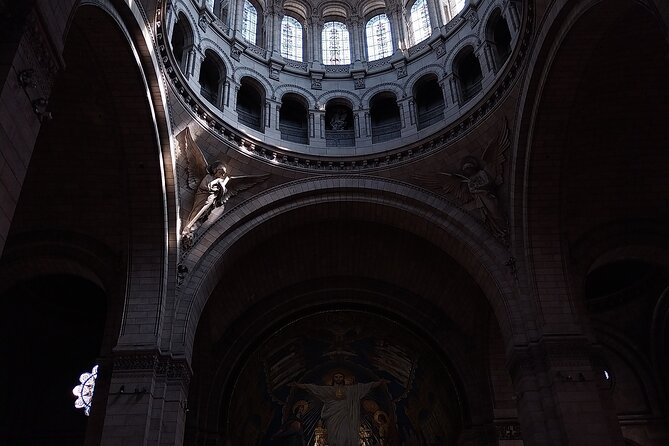
- Sacré-Cœur (the big cathedral stop)
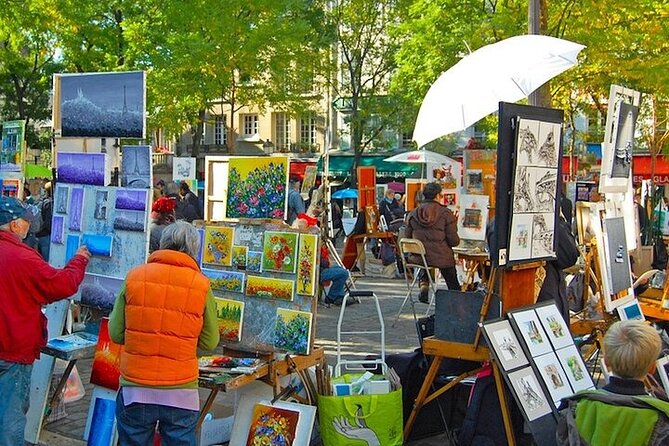
- Place du Tertre (artists’ square)
- The last vineyard in Montmartre
- Au Lapin Agile and the Montmartre art trail you can actually finish
- Au Lapin Agile (old cabaret, exterior only)
- Dalida bust and Maison Rose (pop culture and art fame)
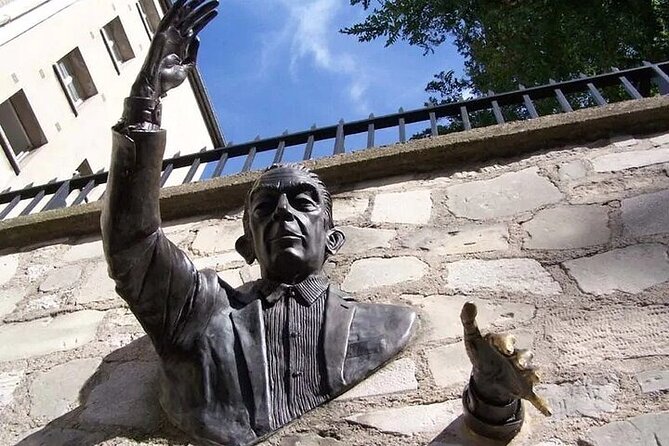
- Le Passe-Muraille (Marcel Aymé statue)
- Le Moulin de la Galette (Montmartre’s last windmill)
- Bateau-Lavoir and the Amélie film location stop
- Le Bateau-Lavoir (Picasso and Modigliani links)
- Filming location of Amélie
- From Moulin Rouge to the Tuileries: big Paris icons, kept to outside views
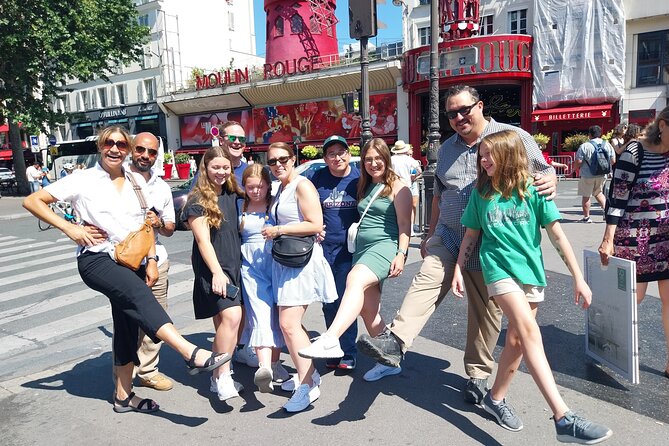
- Moulin Rouge (outside only)
- Jardins des Tuileries (a real pause)
- Louvre Museum (exterior only)
- Arc de Triomphe, the famous shopping street, and Eiffel Tower views from Trocadéro
- Arc de Triomphe (10 minutes)
- The famous shopping street (quick pass)
- Eiffel Tower (views, but no climb)
- Quartier Latin streets and ending at Notre-Dame (outside focus)
- Quartier Latin (40 minutes)
- Notre-Dame Cathedral (history plus outside viewing)
- Pace, group size, and how to make the most of a 5.5-hour walk
- Who should book this and who should skip it
- Should you book Le Grand Tour?
- FAQ
- How long is the tour?
- Where does it start and where do we end?
- Is this tour mostly walking or does it use public transport?
- Do we go inside major attractions like the Louvre or Notre-Dame?
- Do we go up the Eiffel Tower?
- Are entrance tickets included?
- What happens if the weather is bad?
Key highlights you’ll feel on the ground
- Montmartre first: Sacré-Cœur, Place du Tertre, and the last vineyard in the area
- Art and culture stops: Au Lapin Agile from the outside, plus Bateau-Lavoir linked to Picasso
- Photo-and-walk sightlines: Louvre building exterior, Arc de Triomphe, and Eiffel views from Trocadéro
- Seine-to-right-now energy: metro rides break up the walk, and you cross the river area on foot
- Quieter finish with major context: Quartier Latin streets before ending near Notre-Dame
Price and what you actually get for $72.18

At $72.18 per person, this tour is priced for one main thing: saving you time while you cover a lot of Paris in one go. You’re paying for someone to (1) pick the route, (2) connect the dots historically, and (3) keep you from wasting hours on “where should we go next?”
What’s included is the walking tour approach plus a mobile ticket and an English-speaking guide. What’s not included is where many first-timers get surprised: entrance tickets to attractions and access inside several major stops. In other words, you’re buying “where to stand, what to notice, and how to understand it,” not “front-row passes to everything.”
For value, this setup can be great if you:
- only have part of a day and want the broad picture
- like neighborhoods more than long museum sessions
- want a route you can build on later
It’s less ideal if your priority is ticketed interiors (Louvre rooms, Notre-Dame interior access, and going up the Eiffel Tower are not part of this format).
Worth weighing up next to this Paris pick
- Paris Top Sights Half Day Walking Tour with a Fun Guide
★ 5.0 · 2,893 reviews - Montmartre Hidden Gems and Scenic Highlights Walking Tour
★ 5.0 · 2,684 reviews - Montmartre Hill French Gourmet Food and Wine Tasting Walking Tour
★ 5.0 · 2,588 reviews - Paris: Montmartre Highlights Walking Tour with a Local Guide
★ 4.9 · 2,318 reviews
Meeting at Anvers and getting around by metro like a local
The tour starts at Anvers (75018) and ends at Notre-Dame on Île de la Cité. Meeting point details matter because this isn’t a “one bus, one straight line” day. You’ll do real walking, then metro hops, then more walking.
You’ll also need to plan for transit cost:
- Public transport isn’t included
- you need a Mobelis ticket (listed price: 8.40)
Why I think that’s important: you don’t want to arrive on empty and then spend your first hour hunting for a machine. If you already know where you’ll buy the ticket, the day feels smooth.
Another practical point: the tour is offered in English, allows service animals, and is near public transportation. If you’re trying to minimize friction in Paris, that last bit helps.
Montmartre’s opening act: Sacré-Cœur, Place du Tertre, and the last vineyard
Montmartre is a perfect place to start because it gives you Paris in miniature—hills, art, legends, and big visual payoff. You begin with context about the neighborhood’s history, which sets the tone for the rest of the walk.
Then you step into some classic stops:
Sacré-Cœur (the big cathedral stop)
You’ll visit Basilique du Sacré-Cœur for about 15 minutes. Since it’s listed as free, you’re not paying for this part of the day. Also, it’s short enough that you won’t feel trapped in a long line.
Even with limited time, Sacré-Cœur works well on a first visit because you immediately get the “why people come here” effect—its setting and its commanding view.
Place du Tertre (artists’ square)
Next is Place du Tertre, around 10 minutes. This is the area people picture when they think of Montmartre’s artist culture, and the point of your stop isn’t shopping—it’s noticing the character of the square and how it became part of the Montmartre identity.
If you hate stalls and forced photo ops, take a quick look, snap a photo if you want, and keep moving. You’ll have plenty of other stops to satisfy curiosity.
The last vineyard in Montmartre
You’ll also discover the last vineyard in Montmartre. This is one of those details that makes a guided walk feel worth it: Paris is usually all stone and scale, but this reminds you the city had working landscapes too. Even if you don’t linger, the story gives you a different way to read the neighborhood.




Au Lapin Agile and the Montmartre art trail you can actually finish
Montmartre has personality, and your route leans into it with places tied to artists and French pop culture.
Au Lapin Agile (old cabaret, exterior only)
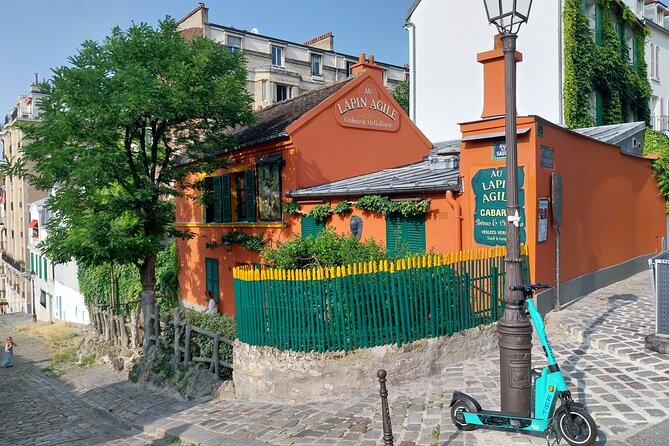
You’ll visit Au Lapin Agile, described as the oldest cabaret in Montmartre, connected to famous artists and still running after more than 150 years. Your stop is about 10 minutes, and importantly: you view it from the exterior only and don’t go inside or attend a show.
That’s a tradeoff. You don’t get the full experience of a cabaret night, but you do get the historic “anchor point” without blowing the schedule. If you want to turn it into an evening, you can use this stop as your lead later.
Dalida bust and Maison Rose (pop culture and art fame)
You’ll also see:
- the bust of Dalida, one of Montmartre’s most famous pop stars
- Maison Rose, associated with artist Maurice Utrillo and recently featured in Emily in Paris
These are quick stops, but they’re exactly the kind of thing that makes a guided walk feel like more than sightseeing. They connect the neighborhood’s artistic legacy with modern attention—so when you walk away, Montmartre feels current, not just museum-dust old.
Le Passe-Muraille (Marcel Aymé statue)
Next is Le Passe-Muraille, tied to Marcel Aymé’s celebrated story. A short stop here is surprisingly effective if you like literary nods in public spaces. It’s a reminder that Paris isn’t only famous for big monuments; it also preserves smaller stories in stone.
Le Moulin de la Galette (Montmartre’s last windmill)
You’ll pass by Le Moulin de la Galette, about 10 minutes. It’s described as Montmartre’s last remaining windmill and the setting of the famous Bal au Moulin de la Galette, now functioning as a restaurant.
Again: exterior viewing. But it’s worth it because the windmill is one of the visual symbols that lets you “read” Montmartre quickly. If you’ve seen paintings or prints, you’ll spot the connection in real space.
Bateau-Lavoir and the Amélie film location stop
This part of the walk shifts into art history with a cinematic wink.
Le Bateau-Lavoir (Picasso and Modigliani links)
You’ll spend about 15 minutes at Le Bateau-Lavoir, known as the studio location of Picasso, Modigliani, and Apollinaire. It’s listed as free, so no ticket surprise here.
Why I like this stop: it’s not just a name. It’s tied to how modern art formed in real rooms, not just on museum plaques. Even if you only see the exterior area, the guide’s framing helps you connect Paris neighborhoods to specific creative eras.
Filming location of Amélie
You’ll also stop at a filming location of the film Amélie in this stretch. This is one of those Paris touches that works well for all ages. If you love the movie, you’ll recognize the mood. If you haven’t seen it, you still get a sense of how the city shows up on screen.
From Moulin Rouge to the Tuileries: big Paris icons, kept to outside views
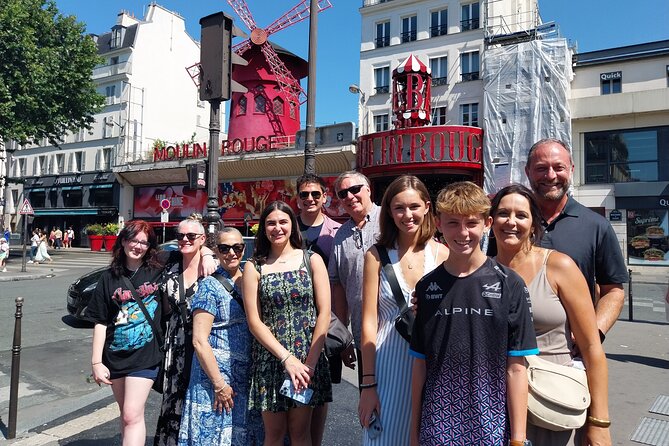
After Montmartre, you move into sights that most people picture from postcards. The tour keeps the energy up without trying to cram museum interiors into your day.
Moulin Rouge (outside only)
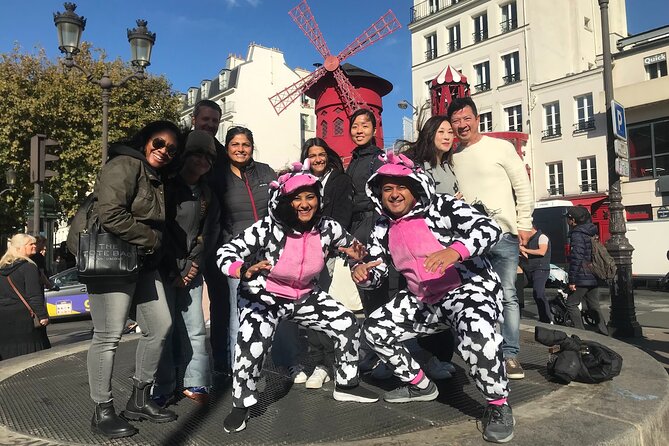
You’ll stop by Moulin Rouge for about 10 minutes, and you view the building from the outside only, with no entry.
The upside: you get the legendary façade photo moment with little time cost. The drawback: anyone hoping for the show or an inside look will need another plan.
Jardins des Tuileries (a real pause)
Then comes a breather: Tuileries Garden for about 20 minutes, free. This isn’t just a scenic walk. It’s also a practical reset for your legs, giving you a flat stretch after the hill-heavy Montmartre part of the day.
If you’re the kind of traveler who needs a moment to slow down, this is where you feel the tour balancing speed with sanity.
Louvre Museum (exterior only)
You’ll stop near the Louvre Museum for around 15 minutes, also listed as exterior-only. No entrance ticket is included.
From a value standpoint, this makes sense: the Louvre can swallow a day. Instead, this gives you a landmark reference point. You leave knowing where the museum sits, what it represents, and how to plan a more targeted visit later.
Arc de Triomphe, the famous shopping street, and Eiffel Tower views from Trocadéro
Your route then targets monuments that instantly change your sense of scale.
Arc de Triomphe (10 minutes)
You’ll see Arc de Triomphe in about 10 minutes, free. That time is short, but it’s enough to appreciate size and placement. For me, the key is standing where the monument feels like part of a system of roads, not just a standalone photo.
The famous shopping street (quick pass)
You’ll also cover the perhaps world’s most famous shopping street. The exact street name isn’t listed in the tour details you provided, so I’ll keep it general: expect a recognizable central Paris corridor where you can orient yourself for later shopping or strolling.
Eiffel Tower (views, but no climb)
You’ll spend about 20 minutes on the Eiffel Tower segment: you’ll uncover the history viewing it from the Trocadéro side and then walking across the river area. The important point: you won’t go up the tower on this occasion, and entry isn’t included.
This is a classic first-trip compromise that works for many people. You get the landmark moment without betting your afternoon on ticket timing. If climbing the tower is a must for you, this isn’t the day to count on it.
Quartier Latin streets and ending at Notre-Dame (outside focus)
Your final stretch leans into neighborhoods and a dramatic finish.
Quartier Latin (40 minutes)
You’ll stroll through Quartier Latin for about 40 minutes. That longer stop matters. It gives you time to notice street patterns, the feel of the area, and why it’s such a historic center of education and life.
If you’re the type who gets more from walking streets than from looking at buildings, this is likely to be one of your favorite parts of the day.
Notre-Dame Cathedral (history plus outside viewing)
Finally, you end at Notre-Dame, with about 15 minutes focused on its history. The tour ends in front of Notre-Dame on Île de la Cité, and you do not have access inside Notre-Dame Cathedral.
So you’ll be experiencing the cathedral as a towering presence and a landmark, not as a long interior visit. That fits the half-day structure. It also means you should plan a separate ticketed visit if interior access is on your “must see” list.
Pace, group size, and how to make the most of a 5.5-hour walk
A tour like this works or fails on pace. The good news: the format is built for a manageable run—moderate physical fitness level, maximum of 20 travelers, and a route that uses the metro to break up distances.
From what I’d look for in a great guide for a day like this:
- they help you move through busy areas without rushing your questions
- they explain what you’re seeing in plain language
- they can adjust if you need a quick pause
The tour is designed so you can ask questions and get helpful recommendations for what to do next. That last part is underrated. The best half-day tours don’t just inform you. They help you decide where to spend your remaining time.
Practical tip: wear shoes you trust. This is a walking tour with a neighborhood-hopping route. Even with metro segments, you’ll be on your feet for a good chunk of the day.
Who should book this and who should skip it
This tour is a strong match if you want:
- a fast orientation across Paris highlights
- a guided route that includes neighborhoods like Montmartre and Quartier Latin
- landmark “photo spots” plus context, mostly from the outside
- a small-group feel (up to 20 people) so it’s not chaotic
It’s not the best choice if you:
- want to spend lots of time inside major attractions
- consider the Eiffel Tower climb or Louvre inside time non-negotiable
- dislike walking and prefer strictly seated sightseeing
If you’re traveling for the first time and you’re trying to build a sensible plan for the rest of the trip, this kind of sweep can be the starting map.
Should you book Le Grand Tour?
I’d book it if you’re short on time and you want the “Paris greatest hits” plus neighborhood context in one outing. At $72.18, the value comes from the guided connections and the structured route, not from ticketed access. You’ll get a lot of landmark awareness—Sacré-Cœur, key Montmartre spots, Tuileries, Arc de Triomphe, Eiffel Tower views, Quartier Latin—and you’ll end in the right place to explore more.
Skip or plan differently if your top goal is inside access to major sights, because entrances aren’t included and several stops are exterior only (including Louvre, Moulin Rouge, and Notre-Dame interior access).
FAQ
How long is the tour?
The tour runs for about 5 hours 30 minutes.
Where does it start and where do we end?
It starts at Anvers (75018 Paris) and ends in front of Notre-Dame Cathedral on Île de la Cité.
Is this tour mostly walking or does it use public transport?
It’s a walking tour, but public transport is used during the day. You’ll take the metro and you’ll need a Mobelis ticket (cost listed as 8.40).
Do we go inside major attractions like the Louvre or Notre-Dame?
No. You’ll view the Louvre from the outside only, and you’ll view Notre-Dame as well but inside access is not included. You’ll also see Moulin Rouge from the outside only.
Do we go up the Eiffel Tower?
No. You’ll see the Eiffel Tower from Trocadéro and then walk across the river area, but you won’t go up the tower on this tour.
Are entrance tickets included?
No. Entrance tickets to attractions aren’t included, even though some stops are listed as free for that specific viewing.
What happens if the weather is bad?
The tour requires good weather. If it’s canceled due to poor weather, you’ll be offered a different date or a full refund.
More Walking Tours in Paris
- Paris Top Sights Half Day Walking Tour with a Fun Guide
★ 5.0 · 2,893 reviews - Montmartre Hidden Gems and Scenic Highlights Walking Tour
★ 5.0 · 2,684 reviews - Montmartre Hill French Gourmet Food and Wine Tasting Walking Tour
★ 5.0 · 2,588 reviews - Paris: Montmartre Highlights Walking Tour with a Local Guide
★ 4.9 · 2,318 reviews - Paris Île de la Cité and Notre-Dame Walking Tour With Crypt
★ 5.0 · 2,272 reviews
More Tours in Paris
- Paris: Louvre Guided Tour with Reserved Access & Boat Cruise
★ 4.3 · 16,353 reviews - Paris: Big Bus Hop-On Hop-Off Tour with Optional Cruise
★ 4.4 · 13,279 reviews - Louvre Museum Masterpieces Guided Tour with Access
★ 4.5 · 12,023 reviews - Versailles: Skip-the-Line Tour of Palace and Gardens Access
★ 4.7 · 10,429 reviews - Paris: Louvre Overview, Exploration tour and Reserved Entry
★ 4.1 · 10,145 reviews
More Tour Reviews in Paris
- Paris: 1-Hour Seine Cruise departing from the Eiffel Tower
★ 4.4 · 77,472 reviews - Paris: Louvre Museum Timed-Entrance Ticket
★ 4.6 · 71,977 reviews - Disneyland® Paris 1-Day Ticket
★ 4.6 · 49,412 reviews - Paris: Versailles Palace and Gardens Full Access Ticket
★ 4.6 · 41,579 reviews - Paris: Arc de Triomphe Rooftop Tickets
★ 4.6 · 34,264 reviews
Fresh off the review desk in Paris
- Secrets of Paris Bike Tour in English or Dutch★ 5.0 · 5 reviews
- Paris: Mont Saint-Michel Day Tour with Chinese Tour Guide★ 5.0 · 5 reviews
- Private Street Art 2-Hour Guided Tour in Paris★ 4.5 · 5 reviews
- Orsay Museum Tour: 2h Highlights (Private & Small Group)★ 5.0 · 5 reviews
- Discover Paris in electric golf carts★ 4.0 · 5 reviews
- Paris Private Boat Tour with your own Captain Guide★ 5.0 · 5 reviews
Walking Tours, compared.
 ★ 5.0Paris Top Sights Half Day Walking Tour with a Fun GuideFrom $762,893 reviews
 ★ 5.0Montmartre Hidden Gems and Scenic Highlights Walking TourFrom $382,684 reviews
 ★ 5.0Montmartre Hill French Gourmet Food and Wine Tasting Walking TourFrom $1452,588 reviews
 ★ 4.9Montmartre Highlights Walking Tour with a Local GuideFrom $232,318 reviews
 ★ 5.0Paris Île de la Cité and Notre-Dame Walking Tour With CryptFrom $482,272 reviews
 ★ 4.8Montmartre Cheese, Wine & Pastry Guided Walking TourFrom $1272,255 reviews
 ★ 5.0Paris in a Day: Louvre or Orsay, Eiffel Tower, City Walk & CruiseFrom $1571,956 reviews
 ★ 5.0Paris City Center Free Walking Tour (Tip-Based)From $31,340 reviews