
Reviewed · WALKING TOURS
Le Marais District & Jewish Quarter – Exclusive Guided Walking Tour
Paris gives you a time machine here. This exclusive guided walk moves through the Marais and the Jewish Quarter with clear, story-driven context—so the streets and buildings stop being just scenery. I especially liked how the tour connects grand squares and mansions with real community life, then zooms in on Jewish Paris around the Pletzl.
I loved the way the guide frames architecture as lived history, from Saint-Paul-Saint-Louis to the courtyards near the Hôtel de Sully. I also like the pace: about 2.5 hours, a small-group feel, and enough stops to understand the area without turning it into a museum marathon.
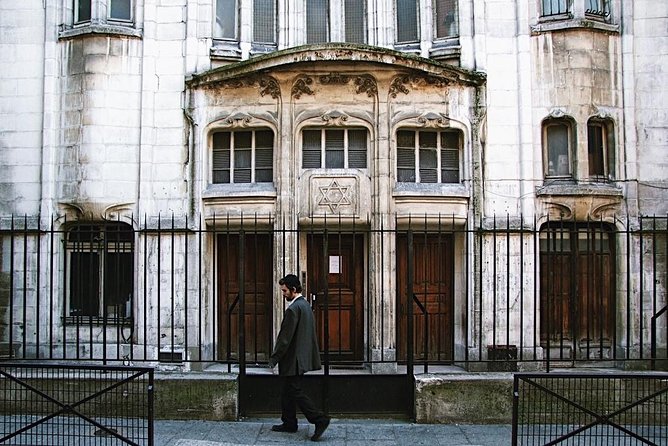
One thing to weigh: this tour does not include entry into synagogues, since access is restricted for security reasons. You’ll still learn a lot, but it’s more street-and-landmark focused than a faith-visit tour.
In This Review
- Key points to know before you go
- Marais and Jewish Quarter: the story you can walk through
- Price and value: what you’re really paying for
- From Saint-Paul to the Marais: how the route feels on your feet
- Saint-Paul-Saint-Louis: Jesuit design and a church you can spot for reasons
- Hôtel de Sully courtyard and Place des Vosges: royal Paris at human scale
- Rue des Francs Bourgeois and Musée Carnavalet: style, then the museum link
- Pletzl streets: the Jewish Quarter as a living map
- Jardin des Rosiers Joseph-Migneret: remembrance you can stand inside
- Centre Pompidou exterior and Hôtel de Ville: two eras, one route
- What the best guides do (and why reviews keep naming people)
- Who should book this Marais and Jewish Quarter walking tour
- Final call: should you book it?
- FAQ
- How long is the tour?
- Is the tour guided in English?
- Is this tour private?
- Does the tour run in bad weather?
- Does the tour include entry into synagogues?
- Are Musée Carnavalet and Centre Pompidou tickets included?
- Where does the tour start and end?
- Do I need hotel pickup or drop-off?
- Do I need to provide a mobile phone number?
- Can I cancel for a full refund?
Key points to know before you go
- Small-group feel (and upgrade options): You get real interaction time, not just a quick herd-through.
- Marais royal-to-Jewish timeline: You’ll connect the neighborhood’s shifts across centuries as you walk.
- Big Paris landmarks, short stops: Place des Vosges and Hôtel de Ville come with context, not long lines.
- Memorial garden with WWII meaning: Jardin des Rosiers Joseph-Migneret adds weight to the stroll.
- Two stops with tickets not included: Musée Carnavalet and Centre Pompidou are outside the package entry.
- Guides in the sweet spot: Reviews repeatedly highlight guides like Eden and Hugo for being organized, easy to follow, and funny when it fits.
Marais and Jewish Quarter: the story you can walk through
The Marais is one of those Paris neighborhoods where you can stare at the buildings all day and still miss the point. This tour helps you see the “why” behind the walls. You start with the Marais as a historic district that once sat beyond central Paris, then you move into the heart of the city where power, religion, and community life all left marks.
You also get a helpful frame for what you’re seeing. The tour doesn’t treat Jewish history as a side note. It treats it like a core thread, especially through the 18th and 19th centuries, when Jewish residents helped shape the Marais into the place it became. Then you move from neighborhood streets to major civic and cultural landmarks, so the area feels bigger than it looks on a map.
Another thing I liked from reviews: guides were praised for being organized and easy to hear and understand, even when weather or special days threw off normal routines. People specifically mentioned guides like Eden, Hugo, François (and variants like Francois V), Adrian, Agustina, and Christine. That matters, because with a walking tour, clarity is the difference between learning and just collecting photos.
Worth weighing up next to this Paris pick
- Paris Top Sights Half Day Walking Tour with a Fun Guide
★ 5.0 · 2,893 reviews - Montmartre Hidden Gems and Scenic Highlights Walking Tour
★ 5.0 · 2,684 reviews - Montmartre Hill French Gourmet Food and Wine Tasting Walking Tour
★ 5.0 · 2,588 reviews - Paris: Montmartre Highlights Walking Tour with a Local Guide
★ 4.9 · 2,318 reviews
Price and value: what you’re really paying for
At about $59.69 per person for roughly 2.5 hours, this isn’t the kind of budget tour where you get 30 minutes of context and then free time. You’re paying for a focused route, a guide who stays on topic, and a structure that keeps you moving in the right order.
For value, here’s what you get:
- A single, coherent route across the Marais and Jewish Quarter (not a scattered grab-bag)
- Clear explanations tied to specific stops (churches, squares, mansions, and city buildings)
- A small-group style experience, with options that can shift how exclusive it feels
- Weather-ready planning: it runs rain or shine, which is rare in spirit and usually handled well in reviews
What you should budget mentally: two major stops involve tickets that are not included—Musée Carnavalet and Centre Pompidou. The rest are essentially built around seeing exteriors and key areas from the street. That keeps the tour moving, but it also means you won’t get a long museum visit unless you add it later on your own.
If you’re trying to choose between doing this on your own versus with a guide, think about what you want from the Marais. If you want a guided narrative you can actually remember, this price makes sense.
From Saint-Paul to the Marais: how the route feels on your feet
The tour begins near Saint-Paul (75004) and ends in the Marais area. There’s no hotel pickup, so plan to get there by public transit or taxi/Uber.
Expect moderate walking. The route is paced as a sequence of short stops (think quick orientations plus a story beat), not a slow amble where you can linger at every door. That’s good if you want value for time—but you’ll want comfortable shoes. The tour also has a practical rule: no large bags or suitcases, so keep your load light.
One subtle but helpful detail: the guide may have to adjust the route for national celebrations. In those cases, you’ll still see the highlights, but the exact path can change. That’s a normal Paris reality, and it’s nice that the tour anticipates it.
Saint-Paul-Saint-Louis: Jesuit design and a church you can spot for reasons
The first major stop is the 17th-century church Église Saint-Paul-Saint-Louis. This is the kind of building that looks impressive even before you understand it, and the tour gives you a clear reason to pay attention.
You learn that it was built by the Jesuits, with a design inspired by the Gesù church in Rome. That connection matters because it explains why Paris here feels linked to broader European religious architecture rather than just local style.
You’ll spend a short time here—about 10 minutes—so don’t expect a long inside visit. The value is the framing: once you know the Jesuit-to-Rome idea, the details make more sense as you walk away.
Hôtel de Sully courtyard and Place des Vosges: royal Paris at human scale
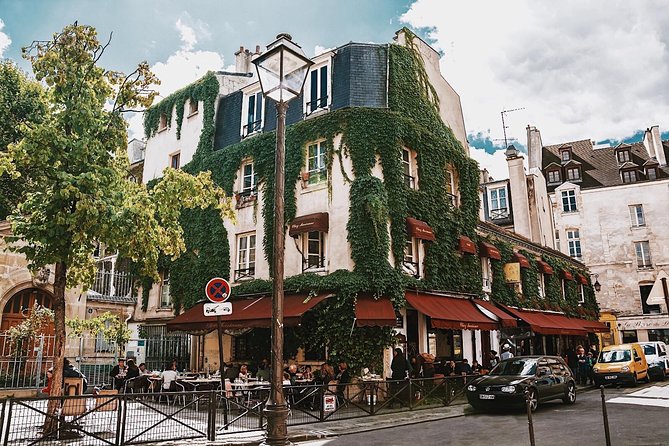
Next comes the area around the Cour et jardin de l’Hôtel de Sully, part of the Marais’s grand mansion world. The tour points out that the Hôtel de Sully was built between 1624 and 1630, with Renaissance style and Baroque elements. It’s also tied to named architects: Jean 1er Androuet du Cerceau and Yves Boiret.
Even with a quick stop, you’ll understand the bigger point: in this part of Paris, power expressed itself through layout—courtyards, monumental scale, and the way buildings hold space.
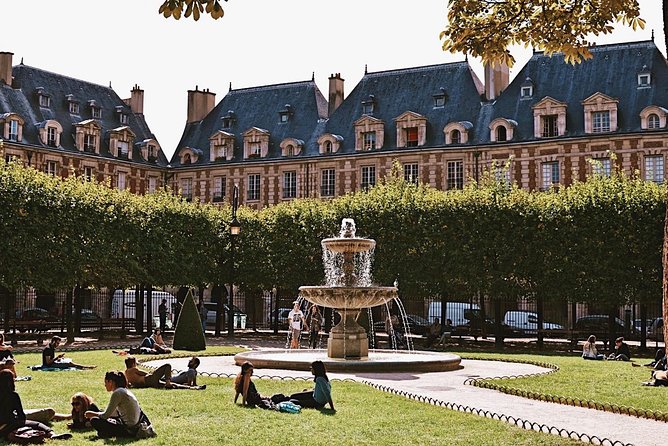
Then you reach Place des Vosges, one of the best-known squares in the Marais. The tour highlights that it’s the oldest planned square in Paris. Standing there with context changes your experience. You’re not just admiring pretty architecture; you’re seeing how intentional urban design shaped how people moved and gathered.
If you like photo stops, this is one of your main payoff moments. If you like history, this is where it starts to click.
Rue des Francs Bourgeois and Musée Carnavalet: style, then the museum link
From the square world, you head along Rue des Francs Bourgeois, known for trendy fashion boutiques. The key value isn’t shopping—it’s seeing how the Marais keeps reinventing itself. A street can shift from old neighborhoods and mansions to modern commerce without losing its identity.
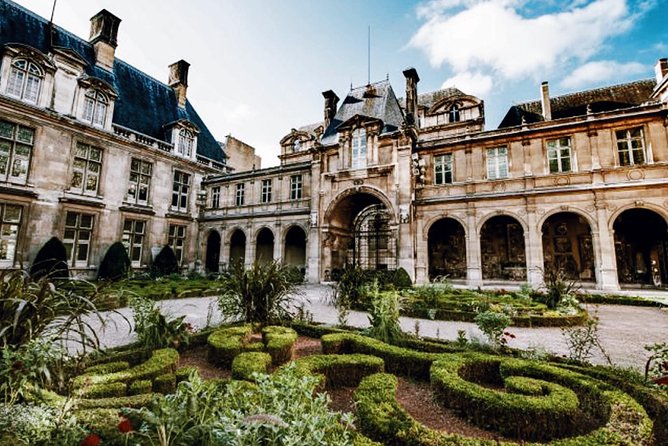
Then the tour connects you to Hôtel Carnavalet and the Musée Carnavalet area. You’ll see the Hôtel Carnavalet, described as one of the rare Renaissance architecture examples in Paris, tied to an area associated with the Louvre’s square courtyard. That gives you a quick sense of why this spot is important before you decide whether to add more time inside.
A practical note: Musée Carnavalet entry is not included. If you have the energy, you can treat this tour like a “smart preview.” You’ll understand what to look for and why, and you can decide later if you want the longer museum time.
Worth weighing up next to this Paris pick




Pletzl streets: the Jewish Quarter as a living map
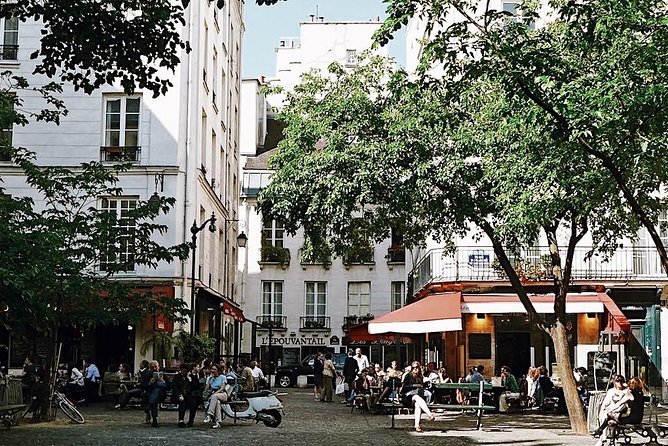
This is the heart of the tour for many people: the area around La Rue des Rosiers and the Pletzl. The tour explains how Jewish community presence in the 18th and 19th centuries put the Marais on the map in a new way—culturally, socially, and commercially.
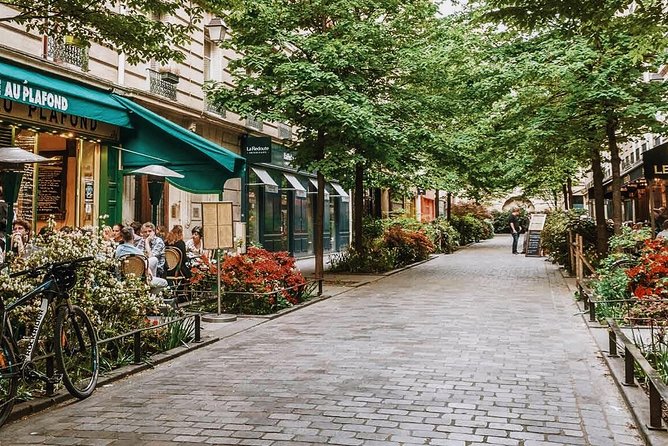
As you walk, you’ll pass bakeries and boutiques around the Pletzl. That matters because it keeps the history from turning into a distant lecture. You’re standing in a place where daily life still shapes what you see.
The best way to enjoy this part is to slow down slightly and watch the street patterns the guide points out—cross streets, corners, and how the neighborhood flows. Even if you don’t speak French, the guide’s commentary gives you anchors. And that’s consistent with what reviews praise: guides like Eden and Hugo were repeatedly described as clear, engaging, and organized.
Jardin des Rosiers Joseph-Migneret: remembrance you can stand inside
One of the most meaningful stops is the Jardin des Rosiers, tucked between hotels and hidden behind boutiques. This is exactly the kind of Paris contrast that makes the walk worthwhile: loud streets outside, quieter space inside.
The tour explains why the garden is named after Joseph Migneret, a school principal who helped dozens of students by hiding them in his home during World War II. He was eventually arrested and killed.
This stop shifts the tone. It’s not just architecture or neighborhood vibe anymore. It’s a moment of respect and a reminder that community life here included real danger and real courage.
This is also where your walking tour stops feeling like a “see it all” checklist and starts feeling like you understand the place. If you’re the kind of traveler who likes your history to have human weight, don’t rush this part.
Centre Pompidou exterior and Hôtel de Ville: two eras, one route
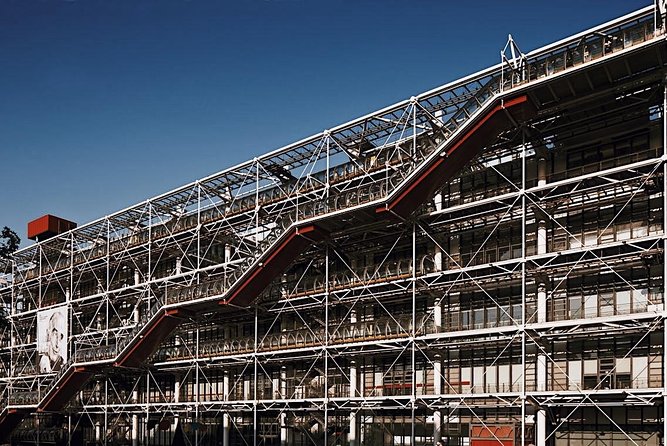
Near the end, you swing toward Centre Pompidou, known for contemporary architecture in the high-tech style. The tour frames it as part of a broader cultural idea from France’s first Minister of Cultural Affairs: bringing different forms of art and literature together in one place.
Important for planning: Centre Pompidou entry is not included. So think of the stop as a perspective moment. You’ll get the architectural and cultural context, plus exterior views, and then you can decide if you want more time later.
Then you finish at Hôtel de Ville, the building housing Paris city administration. The tour notes it has been the municipality’s headquarters since 1357. That date gives the area authority. You’re ending not at a random landmark, but at the administrative heart where decisions shaped daily life for centuries.
Just next to Hôtel de Ville, you get a glimpse of Église Saint-Gervais-Saint-Protais, described as the first example of French Baroque style in Paris. It used to be a parish church until 1975, and now it’s the headquarters of the Monastic Fraternities of Jerusalem. Again, it’s a short stop—but it adds another layer to how faith and public life overlap here.
What the best guides do (and why reviews keep naming people)
A walking tour lives or dies on the guide. I paid attention to the names and patterns in the feedback you shared, because it tells you what to expect.
Many reviews praised guides for:
- Specific history and architecture explanations that felt tied to what you were seeing
- Clear, easy-to-follow narration in English
- A sense of humor without turning the tour into a comedy show
- Good pacing and group management, including on busy days and in rain
People specifically called out guides such as Eden (for specificity and history), Hugo (for organized, easy-to-hear guiding), François/Francois V (for mixing Jewish, Parisian, and even Scottish history), and Adrian (for being amazing and very knowledgeable). Another review noted that some guides will message you the morning of the tour and show up early, which is exactly what you want on a tight schedule.
If you book, you can’t control which guide you get, but you can control what you’ll enjoy. This tour tends to reward curiosity. If you like asking questions and you enjoy stories that link buildings to people, it’s a strong match.
Who should book this Marais and Jewish Quarter walking tour
You’ll get the most out of this tour if you:
- Want a guided story that connects Marais architecture to the neighborhood’s social history
- Care about Jewish history in Paris, but prefer street-level landmarks since synagogues aren’t included
- Like structured stops rather than wandering without a plan
- Are happy to spend about 10 minutes per highlight and then keep walking
You might choose something else if you:
- Want full museum time or synagogue interior visits (this tour doesn’t provide that)
- Plan to carry large bags or suitcases (the tour doesn’t allow them)
- Expect a long, sit-down experience inside churches or museums
As for timing, this tour is often booked ahead (an average of 40 days). If your dates are firm, don’t wait too long.
Final call: should you book it?
My honest take: book it if you want the Marais and Jewish Quarter to make sense fast. The route hits the key landmarks, but the real value is the way the guide connects them into a timeline—from Jesuit-era architecture and royal Paris settings to the Jewish Quarter around the Pletzl, then on to WWII remembrance, and finally major civic and cultural landmarks.
Skip it or add other plans if you need synagogue entry or deeper museum time. You’ll still learn a lot, but you won’t be checking “inside visits” off your list.
If your goal is to walk away feeling like you understood the neighborhood—its layers, not just its looks—this is a very strong choice.
FAQ
How long is the tour?
The tour runs for about 2.5 hours (approximately 2 hours 30 minutes).
Is the tour guided in English?
Yes, the tour is offered in English.
Is this tour private?
It is a private tour/activity, meaning only your group participates. There is also an option labeled Save! Book Semi-Private where some parts like guide exclusivity may not apply.
Does the tour run in bad weather?
Yes. The tour will run rain or shine.
Does the tour include entry into synagogues?
No. The tour does not include entry into any synagogues because access is restricted for security reasons.
Are Musée Carnavalet and Centre Pompidou tickets included?
No. Musée Carnavalet and Centre Pompidou are listed as admission ticket not included.
Where does the tour start and end?
It starts near Saint-Paul (75004 Paris) and ends in Le Marais, Paris.
Do I need hotel pickup or drop-off?
No hotel pickup or drop-off is included. Uber or taxi is recommended.
Do I need to provide a mobile phone number?
Yes. It is imperative that you provide a mobile phone number (including country code).
Can I cancel for a full refund?
Yes. You can cancel up to 24 hours in advance for a full refund.
More Walking Tours in Paris
- Paris Top Sights Half Day Walking Tour with a Fun Guide
★ 5.0 · 2,893 reviews - Montmartre Hidden Gems and Scenic Highlights Walking Tour
★ 5.0 · 2,684 reviews - Montmartre Hill French Gourmet Food and Wine Tasting Walking Tour
★ 5.0 · 2,588 reviews - Paris: Montmartre Highlights Walking Tour with a Local Guide
★ 4.9 · 2,318 reviews - Paris Île de la Cité and Notre-Dame Walking Tour With Crypt
★ 5.0 · 2,272 reviews
More Tours in Paris
- Paris: Louvre Guided Tour with Reserved Access & Boat Cruise
★ 4.3 · 16,353 reviews - Paris: Big Bus Hop-On Hop-Off Tour with Optional Cruise
★ 4.4 · 13,279 reviews - Louvre Museum Masterpieces Guided Tour with Access
★ 4.5 · 12,023 reviews - Versailles: Skip-the-Line Tour of Palace and Gardens Access
★ 4.7 · 10,429 reviews - Paris: Louvre Overview, Exploration tour and Reserved Entry
★ 4.1 · 10,145 reviews
More Tour Reviews in Paris
- Paris: 1-Hour Seine Cruise departing from the Eiffel Tower
★ 4.4 · 77,472 reviews - Paris: Louvre Museum Timed-Entrance Ticket
★ 4.6 · 71,977 reviews - Disneyland® Paris 1-Day Ticket
★ 4.6 · 49,412 reviews - Paris: Versailles Palace and Gardens Full Access Ticket
★ 4.6 · 41,579 reviews - Paris: Arc de Triomphe Rooftop Tickets
★ 4.6 · 34,264 reviews
Fresh off the review desk in Paris
- Secrets of Paris Bike Tour in English or Dutch★ 5.0 · 5 reviews
- Paris: Mont Saint-Michel Day Tour with Chinese Tour Guide★ 5.0 · 5 reviews
- Private Street Art 2-Hour Guided Tour in Paris★ 4.5 · 5 reviews
- Orsay Museum Tour: 2h Highlights (Private & Small Group)★ 5.0 · 5 reviews
- Discover Paris in electric golf carts★ 4.0 · 5 reviews
- Paris Private Boat Tour with your own Captain Guide★ 5.0 · 5 reviews
Walking Tours, compared.
 ★ 5.0Paris Top Sights Half Day Walking Tour with a Fun GuideFrom $762,893 reviews
 ★ 5.0Montmartre Hidden Gems and Scenic Highlights Walking TourFrom $382,684 reviews
 ★ 5.0Montmartre Hill French Gourmet Food and Wine Tasting Walking TourFrom $1452,588 reviews
 ★ 4.9Montmartre Highlights Walking Tour with a Local GuideFrom $232,318 reviews
 ★ 5.0Paris Île de la Cité and Notre-Dame Walking Tour With CryptFrom $482,272 reviews
 ★ 4.8Montmartre Cheese, Wine & Pastry Guided Walking TourFrom $1272,255 reviews
 ★ 5.0Paris in a Day: Louvre or Orsay, Eiffel Tower, City Walk & CruiseFrom $1571,956 reviews
 ★ 5.0Paris City Center Free Walking Tour (Tip-Based)From $31,340 reviews