
Reviewed · LOUVRE MUSEUM TOURS
Louvre Guided Tour: Masterpieces
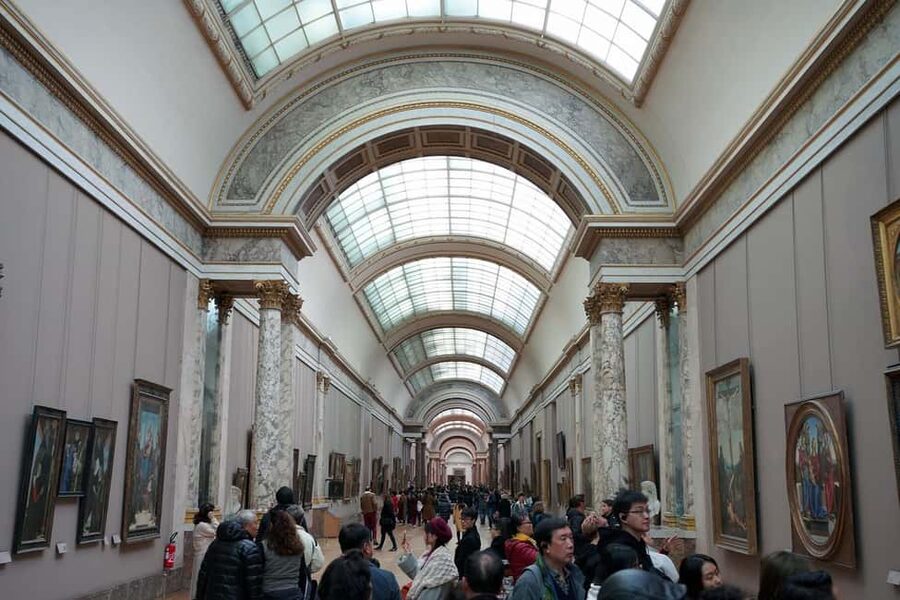
Seeing the Louvre without losing your bearings is the whole point. In 90 minutes, this guided “Masterpieces” tour is built to get you to the museum’s most famous works and key art periods fast, with an expert leading the way. I like that the focus stays on the big signals you need to understand the collection: major masterpieces, plus Egyptian and Renaissance sections that give you context instead of just isolated photos.
Two things I’d bet you’ll love most: the chance to see Mona Lisa in the middle of a guided story, and the way the tour connects works to the museum’s broader art evolution. One consideration: with a tight 90-minute format, you won’t have time to linger for a long, slow museum day.
In This Review
- Key points to know before you go
- 90 minutes in the Louvre: what you actually get for $106
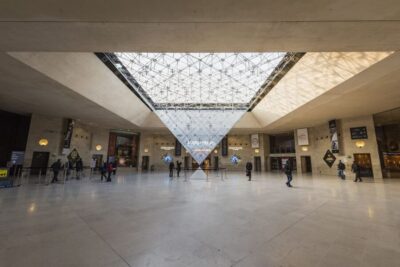
- Main entrance and glass-and-iron atmosphere: where the tour starts
- Mona Lisa with an expert: what to look for beyond the photo
- Sculpture power: Venus de Milo and Victoria de Samotracia
- Egyptian and Renaissance rooms: how the tour builds context fast
- How the guide’s languages and headphones keep you on track
- Who this tour is best for (and who should think twice)
- Practical tips for a smooth, rules-friendly visit
- Should you book this Louvre Guided Tour: Masterpieces?
- FAQ
- What is the duration of the Louvre Guided Tour: Masterpieces?
- Where do I meet the guide?
- What’s the price per person?
- What is included in the tour?
- Is the ticket line skipped?
- What languages are offered?
- What are the rules on what’s allowed and what you should bring?
Key points to know before you go
- Skip-the-ticket-line entry so you spend more time inside the galleries.
- Headphones included, which helps when you’re moving room to room.
- Live guide in English, Spanish, or Italian, so you’re not stuck reading wall text.
- Major hits like the Mona Lisa and Venus de Milo, plus a sculpture stop that can include Victoria de Samotracia.
- Egyptian and Renaissance art sections, so the tour gives you more than postcard moments.
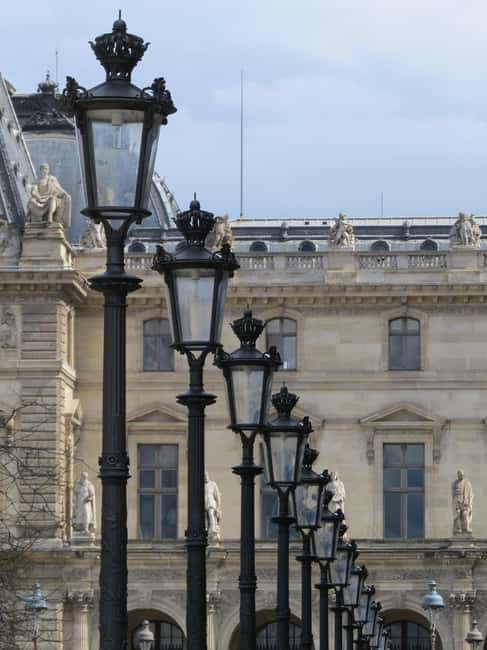
- A glass-and-iron architecture angle, because the Louvre experience isn’t only paintings and statues.
90 minutes in the Louvre: what you actually get for $106
For $106 per person, you’re paying for time-saving access plus interpretation. This includes your ticket, a live expert guide, and headphones, which matters in a museum where sound and crowds can make it hard to follow details on your own. In 90 minutes, the goal is efficiency: you leave with a mental map of what you saw and why it mattered.
You also get a tour structure. That sounds basic, but in a place as sprawling as the Louvre, structure is what stops the visit from turning into random wandering. The tour is designed as a guided walk through rooms and the museum’s main works of art, not a slow crawl where you might see one thing deeply and miss everything else.
The main trade-off is pace. You’ll move. You’ll see highlights. You won’t “study” every masterpiece the way a dedicated art trip might. If you want one painting and one statue only, you might prefer a longer, more flexible plan. If you want the best-known anchors and the story behind them, this format makes a lot of sense.
Still chasing the Mona Lisa? More Louvre visits
- Paris: Louvre Museum Timed-Entrance Ticket
★ 4.6 · 71,977 reviews - Paris: Louvre Guided Tour with Reserved Access & Boat Cruise
★ 4.3 · 16,353 reviews - Louvre Museum Masterpieces Guided Tour with Access
★ 4.5 · 12,023 reviews - Paris: Louvre Overview, Exploration tour and Reserved Entry
★ 4.1 · 10,145 reviews
Main entrance and glass-and-iron atmosphere: where the tour starts
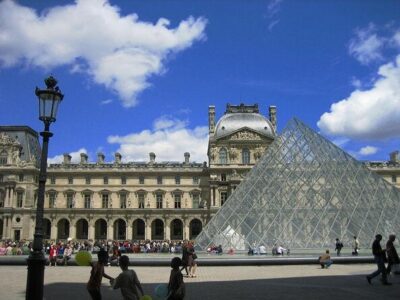
The meeting point is the main entrance of the Louvre. You’ll receive info the day before your visit explaining how to recognize your guide, so you’re not trying to guess who’s with what group. It’s a small detail, but it helps you start calm instead of stressed.
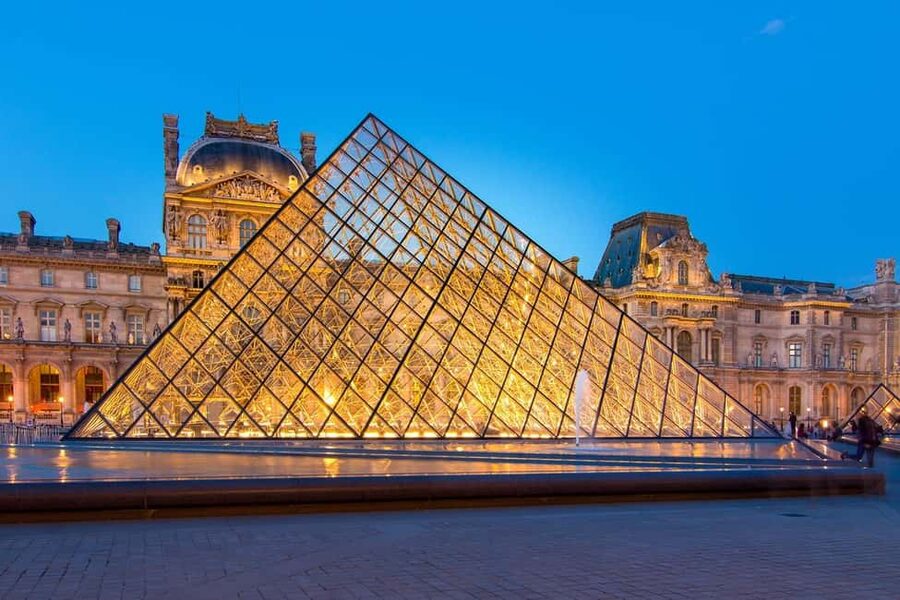
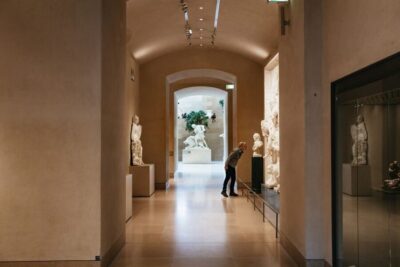
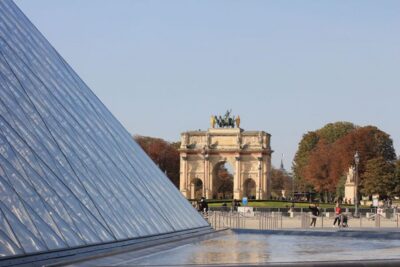
One theme of this tour is how the Louvre feels as a space. Along the way, you’ll get pointed toward the museum’s architecture in glass and iron. That matters because it changes how you experience the building: you’re not only looking at art you’re also inside a landmark that connects past and modern design choices.
Think of the start as orientation plus a warm-up. You’re training your eyes for what you’ll see next, and your guide gives the first layer of meaning so the famous works don’t feel like names you’ve already heard.
Mona Lisa with an expert: what to look for beyond the photo
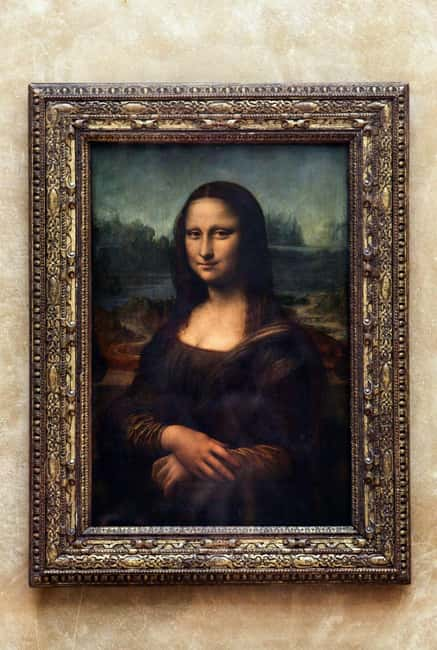
The Mona Lisa is the obvious headline, but a guided stop helps you notice what’s easy to miss when you’re just trying to get a picture. With an expert leading you, you get historical and artistic framing that turns the work from a “famous face” into a piece of art with specific choices behind it.
The tour highlights the painting’s mysterious smile, which is the kind of phrase people hear and move past. The guide’s value is translating that mystery into concrete observations you can actually take in while you’re standing there. You’ll get a guided explanation tied to the artwork and to the museum setting where it’s displayed.
This stop is also a good stress-test for the tour. The Louvre can be overwhelming, and the Mona Lisa area can be a magnet. Having headphones and a live guide means you can keep your attention on the explanation instead of getting pulled off course by noise and foot traffic.
Sculpture power: Venus de Milo and Victoria de Samotracia
Sculptures are where the Louvre can feel like a workout for your eyes. You’ll see Venus de Milo, one of the museum’s most recognizable classical statues. A guided approach helps you connect the sculpture to the broader story of art styles and tastes, instead of treating it as a single must-see object.
This tour also includes time for other major sculpture moments. One booking praised the inclusion of Victoria de Samotracia, which is a fantastic example of what makes the Louvre more than just paintings. If you catch that stop on your specific route, it’s the kind of sculpture that makes you pause because it looks like motion frozen in stone.
The benefit of having a guide here is interpretation. Sculptures can be intimidating because you don’t always know what questions to ask: form, pose, symbolism, historical context. Your guide gives you questions worth answering on the spot, so you come away with more than, That’s cool.
Egyptian and Renaissance rooms: how the tour builds context fast
Here’s where this tour quietly earns its value. It doesn’t treat the Louvre as a list of random famous pieces. You’ll also visit the Egyptian and Renaissance art sections, which helps you understand how different cultures and artistic periods shaped what ends up in the museum.
Egyptian art gives you a contrast: different rules, different priorities, and a different relationship between symbolism and representation. Renaissance art then pulls you toward technique, human-focused storytelling, and the way artists built worlds that felt more natural. Even in a short 90-minute window, touching these sections helps you connect the dots between styles.
So instead of leaving with a handful of names, you leave with a simple framework. You can tell yourself: the Louvre collected and organized art across time, and the “masterpieces” tour is using that structure to make the highlights readable.
How the guide’s languages and headphones keep you on track
This is a live tour in English, Spanish, or Italian. That matters because you’ll hear explanations in a language you can actually follow while walking, not just standing still to read. Some content may be shown in its original language, but the guide’s role is to translate and connect the dots for you.
Headphones are included, which is practical in a museum. You’re not always close enough to hear a guide over the crowd. With headphones, you can keep moving and still catch the details your guide is sharing. It’s a small perk that changes the whole experience, especially in famous rooms where people cluster.
I also like that you’re not stuck with audio recordings you have to manage. A live guide can adjust in real time—when a question pops up, when the group slows down, or when they need to redirect you quickly.
Worth weighing up next to this Paris pick

Who this tour is best for (and who should think twice)
This Masterpieces tour is a strong choice if you want the Louvre highlights with a plan. You’ll get the big anchors (like Mona Lisa and Venus de Milo), plus at least some of the museum’s bigger story through Egyptian and Renaissance sections. It’s also ideal if you want an expert to interpret what you’re seeing so you don’t just stare at famous works and hope it clicks.
It’s less ideal if you’re the type who needs hours alone in galleries. This is not built for deep, slow immersion. It’s built for understanding and seeing multiple key stops efficiently.
Also consider your expectations around timing. The tour depends on the guide’s availability, and the duration is a fixed 90 minutes. If you’re planning to pack it right into a tight schedule with other museum plans, build in buffer time so you’re not rushing at the start.
Practical tips for a smooth, rules-friendly visit
Bring a passport or ID card (and bring one for children too, if applicable). It’s simple, but forgetting ID is the kind of mistake that can derail a museum day.
Know the rules before you arrive. Baby strollers, baby carriages, and audio recording are not allowed. Alcohol and drugs are also not allowed. Electric wheelchairs and non-folding wheelchairs are listed as not allowed, so plan accordingly if you use mobility aids.
One more practical note: the meeting point is the main entrance, and you’ll get instructions the day before for how to recognize the guide. Read that message. Then go straight to the meeting area without guessing.
Should you book this Louvre Guided Tour: Masterpieces?
Book it if you want a guided hit list with context, not just a photo scavenger hunt. The value is in what’s included: skip-the-ticket-line access, an expert guide, and headphones during a tight 90-minute route. You’ll leave knowing the museum’s major masterpieces and how they connect to broader art periods like Egyptian and Renaissance.
Skip it if you’re after long, quiet time in one section or you already have a detailed plan for what you want to study. In that case, you might prefer a longer format so you can linger.
My rule of thumb: if you want the Louvre’s best-known works with the least stress and the most guidance per minute, this is a smart, efficient way to start.
FAQ
What is the duration of the Louvre Guided Tour: Masterpieces?
The tour lasts 90 minutes.
Where do I meet the guide?
You meet at the main entrance of the museum. You’ll receive information the day before your visit on how to recognize the guide.
What’s the price per person?
The price is $106 per person.
What is included in the tour?
It includes your ticket, an expert guide, a guided tour, and headphones.
Is the ticket line skipped?
Yes. The tour includes skip the ticket line.
What languages are offered?
The live guide is available in English, Spanish, and Italian.
What are the rules on what’s allowed and what you should bring?
You should bring a passport or ID card (and for children, an ID as well). Baby strollers and baby carriages are not allowed, audio recording is not allowed, and alcohol and drugs are not allowed.
More Tours in Paris
- Paris: Louvre Guided Tour with Reserved Access & Boat Cruise
★ 4.3 · 16,353 reviews - Paris: Big Bus Hop-On Hop-Off Tour with Optional Cruise
★ 4.4 · 13,279 reviews - Louvre Museum Masterpieces Guided Tour with Access
★ 4.5 · 12,023 reviews - Versailles: Skip-the-Line Tour of Palace and Gardens Access
★ 4.7 · 10,429 reviews - Paris: Louvre Overview, Exploration tour and Reserved Entry
★ 4.1 · 10,145 reviews
More Tour Reviews in Paris
- Paris: 1-Hour Seine Cruise departing from the Eiffel Tower
★ 4.4 · 77,472 reviews - Paris: Louvre Museum Timed-Entrance Ticket
★ 4.6 · 71,977 reviews - Disneyland® Paris 1-Day Ticket
★ 4.6 · 49,412 reviews - Paris: Versailles Palace and Gardens Full Access Ticket
★ 4.6 · 41,579 reviews - Paris: Arc de Triomphe Rooftop Tickets
★ 4.6 · 34,264 reviews
Back to the Louvre: More Ways In
- Paris: Louvre Museum Timed-Entrance Ticket
★ 4.6 · 71,977 reviews - Paris: Louvre Guided Tour with Reserved Access & Boat Cruise
★ 4.3 · 16,353 reviews - Louvre Museum Masterpieces Guided Tour with Access
★ 4.5 · 12,023 reviews - Paris: Louvre Overview, Exploration tour and Reserved Entry
★ 4.1 · 10,145 reviews - Paris: Louvre Museum Entry Ticket With Host and River Cruise
★ 4.6 · 9,926 reviews
Fresh off the review desk in Paris
- Paris: Pastry Course with a French Grandma★ 5.0 · 4 reviews
- Louvre Guided Tour: Masterpieces★ 5.0 · 4 reviews
- Versailles Palace Family Tour with Private Transfers and Lunch★ 4.0 · 4 reviews
- Private Sculptures and Stories Tour in Rodin Museum★ 5.0 · 4 reviews
- Half-Day Private Guided Walking Historic WW2 Tour of Paris★ 5.0 · 4 reviews
- Loire Castles Chenonceau, Chambord & 2 Wineries Private Trip★ 4.5 · 4 reviews
Louvre Museum Tours, compared.
 ★ 4.6Louvre Museum Timed-Entrance TicketFrom $2671,977 reviews
 ★ 4.3Louvre Guided Tour with Reserved Access & Boat CruiseFrom $8116,353 reviews
 ★ 4.5Louvre Museum Masterpieces Guided Tour with AccessFrom $8612,023 reviews
 ★ 4.1Louvre Overview, Exploration tour and Reserved EntryFrom $6010,145 reviews
 ★ 4.6Louvre Museum Entry Ticket With Host and River CruiseFrom $1009,926 reviews
 ★ 4.6Mona Lisa & Louvre Masterpieces Tour with Reserved AccessFrom $806,812 reviews
 ★ 5.0Louvre Museum – Exclusive Guided Tour (Entry Included)From $1816,296 reviews
 ★ 4.0Louvre Reserved Ticket and River Cruise ComboFrom $376,054 reviews
Browse the lists this tour appears in