
WW2 stories walk with you. A private 3-hour guided walk through occupied Paris links major streets like the Champs-Élysées to the people and decisions that shaped 1940–1944, including Gestapo-linked locations and liberation-era bullet marks. I love how the guide turns famous names into real street corners, and you’ll get that one-on-one feel you just don’t get on bigger group tours. The main drawback is that the subject matter is grim, and you’ll need a moderate walking level to keep up.
You start at Porte Dauphine (9:30 am) and finish at Place de la Concorde, with the route staying close to public transit. I also like that this is English-only and built around landmarks you’ll actually see up close, not a lecture in a classroom. If you’re hoping for a purely light sightseeing loop, you might find the tone heavier than expected—bring a curious mind, and some patience.
In This Review
- Key highlights worth planning around
- First step: what kind of WWII tour this really is
- Walking route basics: Porte Dauphine to Concorde in about 3 hours
- Stop focus: Champs-Élysées under occupation and the propaganda street
- What to watch for as you walk
- Arc de Triomphe area: the western end of the WWII story
- Names you’ll hear: Brossolette, Stulpnagel, and Operation Walkyria
- Where Germans went: cafés, cinemas, and a city under pressure
- The walk ends at Place de la Concorde, where liberation leaves marks
- Le Meurice and the question Is Paris burning?
- Why the private format is good value for this topic
- Who this tour suits best (and who might not love it)
- Practical notes that affect your comfort
- Should you book this WWII walking tour of Paris?
- FAQ
- How long is the Half-Day Private Guided Walking Historic WW2 Tour of Paris?
- Where does the tour start and end?
- What time does the tour begin?
- Is the tour private?
- What language is the tour offered in?
- What does the itinerary focus on?
- Are there any entry tickets included?
- Is the walking level moderate?
- Are service animals allowed?
- What if I need to cancel?
Key highlights worth planning around
- Porte Dauphine to Place de la Concorde: a focused route that connects the story end-to-end in about three hours
- Champs-Élysées under occupation: learn why locals called it avenue des Boches and how propaganda shaped everyday life
- Real WWII-linked stops: Gestapo offices on the avenue and sites tied to Resistance arrests and reprisals
- Liberation details you can spot: bullet holes at Place de la Concorde help make the timeline feel real
- WWII connections beyond the boulevard: Arc de Triomphe area and the Le Meurice moment of refusal (Is Paris burning?)
- Guide matters here: with an expert English-speaking guide like Vincent Lauferon, the stories stay clear and specific
First step: what kind of WWII tour this really is
This isn’t a broad “Paris history” stroll. It’s a tight, walking-only WWII-focused route that uses major addresses to explain how Paris worked under Nazi occupation, then how liberation showed up in plain sight.
What I like most is the way the guide builds cause and effect. You don’t just hear that something happened—you connect it to a place. That makes the Champs-Élysées, Place de la Concorde, and the surrounding landmarks feel like documents you can walk through.
The tone is serious. You’ll hear about arrests of Resistance members and the tragic outcomes that followed. So if you want your vacation to stay upbeat, set expectations now and decide accordingly.
Worth weighing up next to this Paris pick
- Paris Top Sights Half Day Walking Tour with a Fun Guide
★ 5.0 · 2,893 reviews - Montmartre Hidden Gems and Scenic Highlights Walking Tour
★ 5.0 · 2,684 reviews - Montmartre Hill French Gourmet Food and Wine Tasting Walking Tour
★ 5.0 · 2,588 reviews - Paris: Montmartre Highlights Walking Tour with a Local Guide
★ 4.9 · 2,318 reviews
Walking route basics: Porte Dauphine to Concorde in about 3 hours
The meeting point is Porte Dauphine, in Paris 16, and the tour runs for roughly three hours, ending at Place de la Concorde (Paris 8). It’s offered in English and is a private experience, meaning only your group participates.
This matters more than it sounds. When you’re dealing with locations that can be easy to miss or misread—like a political office corridor or the visual clues left by events—the ability to ask questions and get immediate context makes a big difference. A private format also keeps the pace from turning into stop-and-go herding.
Timing-wise, the start is 9:30 am. That’s helpful for two reasons: you get some daylight before the city fully ramps up, and you can avoid the worst crush around the biggest central sights. Also, it’s a walking tour, so plan on being on your feet for the full length at a steady rhythm.
Stop focus: Champs-Élysées under occupation and the propaganda street
Your first major area is the Champs-Élysées, and the walk starts by setting the scene for occupied Paris (1940–1944). The guide brings you into what life felt like on the ground, not just the political timeline.
One strong detail: during the occupation, Parisians reportedly called the avenue Foch the avenue des Boches. That nickname is one of those small bits of language that tells you how people processed fear and resentment in real time.
You’ll hear about the Gestapo offices being located along this stretch. It’s one thing to read “occupation terror” in a book; it’s another to stand near the places where that terror was administered. The guide also connects specific Resistance arrests to the broader story, including the arrest of Pierre Brossolette and what followed.
What to watch for as you walk
Keep your eyes open for how the guide uses contrasts. You’ll move along a famous Paris boulevard that, in WWII, was tied to Reich propaganda purposes. The same street that later reads as glamorous becomes a tool of control when you understand what the Nazis used it for.
This section is also where you’ll likely feel the “street-level” power of a walking format. The route links the psychological impact of propaganda with the physical reality of offices and enforcement points.
Arc de Triomphe area: the western end of the WWII story
On the Champs-Élysées approach, the walk also includes the Arc de Triomphe area in the overall sweep of the avenue. Even if you’ve seen the monument before, this is a different way to look at it: as part of the same corridor that mattered for propaganda and military messaging during occupation.
That connection is the point. The tour treats the whole avenue as a timeline in space. You’re not just looking at iconic objects; you’re seeing how power traveled through the city’s most recognizable lines.
If you care about how symbols get repurposed in wartime, you’ll probably find this portion especially engaging.
Names you’ll hear: Brossolette, Stulpnagel, and Operation Walkyria
A WWII tour lives or dies by the specificity of the names. This one gives you several, and it explains why they matter where they lived and acted.
You’ll learn about Carl Heinrich von Stulpnagel living in the area and understand his involvement in Operation Walkyria and the consequences that came after. Even if those terms feel dense at first, the guide’s job is to connect the dots between a plot line and a street address.
You’ll also hear about the arrest of Pierre Brossolette and his tragic ending. This isn’t presented as trivia. It’s framed as part of the wider system of repression, the kind that hunts down Resistance networks and then punishes with brutal finality.
If you’re the type who likes your history grounded in real individuals—rather than vague “the occupiers”—this is one of the tour’s biggest strengths.
Worth weighing up next to this Paris pick

Where Germans went: cafés, cinemas, and a city under pressure
Another memorable part of this route is the focus on what Germans frequented while occupying Paris. The guide points out examples like Fouquets and Maxim’s, and also references cinemas that were part of the scene for German visitors.
This kind of stop-in-your-head detail is useful because it changes how you picture occupation life. It’s not only raids and arrests. It’s also the everyday intrusion of occupying forces into leisure, dining, and entertainment.
Just remember: the point isn’t to turn suffering into sightseeing trivia. The guide uses these examples to explain how the occupation showed up in ordinary routines—and why locals felt alienated, threatened, and angry.
The walk ends at Place de la Concorde, where liberation leaves marks
From the Champs-Élysées corridor, you continue toward Place de la Concorde. This is where the tour’s “you can literally see it” moment happens.
You’ll notice bullet holes dating from the liberation. That’s a striking detail because it’s not a plaque or a dramatized reenactment. It’s a physical trace on a major Paris square, tied directly to the moment the city swung away from occupation control.
This stop works best if you slow down instead of rushing for photos. Let the guide frame what you’re seeing, then take your time with the visual evidence.
Le Meurice and the question Is Paris burning?
A little further on, the tour also connects to the Le Meurice area, using the famous question Is Paris burning? as the lens. The guide covers the moment when Governor Von Choltitz refused Hitler’s orders to destroy Paris.
It’s a powerful thread because it isn’t just “things went badly” or “the Resistance fought back.” It’s also about a pivotal refusal by someone in a position to carry out destruction. That adds a different kind of tension to the story: the kind that makes you wonder how close Paris came to catastrophe.
If WWII history is your thing, you’ll probably appreciate that this tour doesn’t stop at occupation mechanics. It follows the consequences through to the liberation question—and uses a recognizable central landmark area to keep it concrete.
Why the private format is good value for this topic
The price is $366.88 per person for about three hours. That’s not cheap, and it won’t feel like a bargain if you’re comparing it to a generic big-bus or group-walk deal.
But for a WWII-focused private walking tour, there’s real value in three areas:
First, the guide can tailor the pacing and answer questions without turning you into a number. Second, the route is dense with meaning, so context matters more than usual. Third, the tour keeps you moving between major landmarks, while still explaining details that would be easy to miss if you were just walking on your own.
Also, it’s set up with a mobile ticket and offers group discounts. So if you’re traveling with friends or want to share the private experience within your group, the per-person sting can ease.
Finally, admission is ticket-free for the experience itself, which helps keep the total cost from creeping up once you’re already in Paris. You’re paying for the guided interpretation, not for entry fees.
Who this tour suits best (and who might not love it)
I think this is a great match for WWII history fans, people who want to understand occupation Paris in a grounded way, and travelers who enjoy learning from expert guides with specific names and locations.
You’ll likely enjoy it most if you:
- like street-level history rather than museum-only experiences
- want a clear English explanation of complex events
- don’t mind a heavier topic in exchange for stronger context
You might think twice if you’re looking for a casual stroll with light storytelling, or if heavy wartime material will feel too intense for your travel day. And because it’s a walking tour with moderate fitness requirements, you should consider your comfort level before committing.
Practical notes that affect your comfort
This tour starts near public transportation, and the meeting point is Porte Dauphine. That makes it easier to arrive smoothly, without complicated local transit planning.
The tour also allows service animals. And the subject matter can feel emotional, so consider whether you want to schedule this earlier in the day rather than at the end when you’re already tired.
If the weather turns, you’ll still be walking. One of the solid advantages of a route built around streets and major landmarks is that it’s not dependent on perfect conditions. A light rain shouldn’t stop you from seeing the key places—though you’ll want normal walking footwear and a jacket.
Should you book this WWII walking tour of Paris?
Book it if you want a focused, English-speaking private walk that turns famous Paris addresses into WWII reality, with concrete moments like Gestapo-linked locations and bullet holes at Place de la Concorde. It’s the kind of tour where the guide’s storytelling quality really matters, and strong reviews highlight that expert effect—especially with guides like Vincent Lauferon.
Skip or compare alternatives if your priority is upbeat sightseeing, or if you’re not comfortable with steady walking and the emotional weight of occupation and Resistance stories.
If you’re on the fence, here’s the quick test: if you’d rather understand what happened in the spaces you’re walking through, and you don’t mind the heavier tone, this one is worth your time.
FAQ
How long is the Half-Day Private Guided Walking Historic WW2 Tour of Paris?
It lasts about 3 hours.
Where does the tour start and end?
It starts at Porte Dauphine (75016) and ends at Place de la Concorde (75008).
What time does the tour begin?
The start time is 9:30 am.
Is the tour private?
Yes. Only your group will participate.
What language is the tour offered in?
The tour is offered in English.
What does the itinerary focus on?
It focuses on occupied Paris during WWII (1940–1944), including the Champs-Élysées area, Gestapo-linked locations, Resistance stories, and liberation-era details.
Are there any entry tickets included?
The experience lists admission ticket free, so you’re not paying entry fees as part of the tour.
Is the walking level moderate?
Yes, it notes a moderate physical fitness level.
Are service animals allowed?
Yes, service animals are allowed.
What if I need to cancel?
You can cancel for a full refund up to 24 hours in advance.
More Walking Tours in Paris
- Paris Top Sights Half Day Walking Tour with a Fun Guide
★ 5.0 · 2,893 reviews - Montmartre Hidden Gems and Scenic Highlights Walking Tour
★ 5.0 · 2,684 reviews - Montmartre Hill French Gourmet Food and Wine Tasting Walking Tour
★ 5.0 · 2,588 reviews - Paris: Montmartre Highlights Walking Tour with a Local Guide
★ 4.9 · 2,318 reviews - Paris Île de la Cité and Notre-Dame Walking Tour With Crypt
★ 5.0 · 2,272 reviews
More Tours in Paris
- Paris: Louvre Guided Tour with Reserved Access & Boat Cruise
★ 4.3 · 16,353 reviews - Paris: Big Bus Hop-On Hop-Off Tour with Optional Cruise
★ 4.4 · 13,279 reviews - Louvre Museum Masterpieces Guided Tour with Access
★ 4.5 · 12,023 reviews - Versailles: Skip-the-Line Tour of Palace and Gardens Access
★ 4.7 · 10,429 reviews - Paris: Louvre Overview, Exploration tour and Reserved Entry
★ 4.1 · 10,145 reviews
More Tour Reviews in Paris
- Paris: 1-Hour Seine Cruise departing from the Eiffel Tower
★ 4.4 · 77,472 reviews - Paris: Louvre Museum Timed-Entrance Ticket
★ 4.6 · 71,977 reviews - Disneyland® Paris 1-Day Ticket
★ 4.6 · 49,412 reviews - Paris: Versailles Palace and Gardens Full Access Ticket
★ 4.6 · 41,579 reviews - Paris: Arc de Triomphe Rooftop Tickets
★ 4.6 · 34,264 reviews
Fresh off the review desk in Paris
- Paris: Pastry Course with a French Grandma★ 5.0 · 4 reviews
- Louvre Guided Tour: Masterpieces★ 5.0 · 4 reviews
- Versailles Palace Family Tour with Private Transfers and Lunch★ 4.0 · 4 reviews
- Private Sculptures and Stories Tour in Rodin Museum★ 5.0 · 4 reviews
- Half-Day Private Guided Walking Historic WW2 Tour of Paris★ 5.0 · 4 reviews
- Loire Castles Chenonceau, Chambord & 2 Wineries Private Trip★ 4.5 · 4 reviews
Walking Tours, compared.
 ★ 5.0Paris Top Sights Half Day Walking Tour with a Fun GuideFrom $762,893 reviews
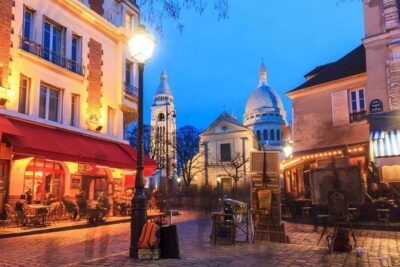 ★ 5.0Montmartre Hidden Gems and Scenic Highlights Walking TourFrom $382,684 reviews
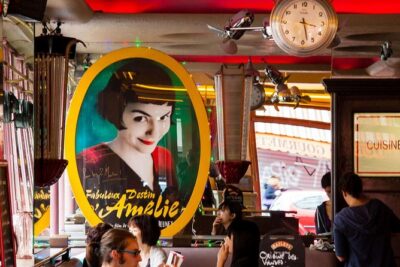 ★ 5.0Montmartre Hill French Gourmet Food and Wine Tasting Walking TourFrom $1452,588 reviews
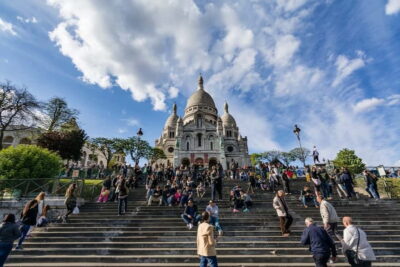 ★ 4.9Montmartre Highlights Walking Tour with a Local GuideFrom $232,318 reviews
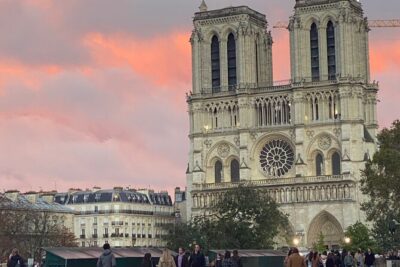 ★ 5.0Paris Île de la Cité and Notre-Dame Walking Tour With CryptFrom $482,272 reviews
 ★ 4.8Montmartre Cheese, Wine & Pastry Guided Walking TourFrom $1272,255 reviews
 ★ 5.0Paris in a Day: Louvre or Orsay, Eiffel Tower, City Walk & CruiseFrom $1571,956 reviews
 ★ 5.0Paris City Center Free Walking Tour (Tip-Based)From $31,340 reviews
Browse the lists this tour appears in