
Reviewed · WALKING TOURS
Marais semi private walking tour
Marais streets become stories on foot. This 2-hour semi private walking tour gives you the neighborhood feel fast, with stops that connect landmarks like the Centre Pompidou and Place des Vosges to what came before. I love the max-10 group size (you actually hear and ask questions), and I love that your guide is a professional art historian who brings context most first-timers miss. The one catch: you look at major sites like the Pompidou and City Hall from the outside, since there’s no museum or building entry.
I also like the pacing. You get short, focused stops—think 10 to 15 minutes each—so you’re not stuck standing still too long, even if you’re hunting for photos in Paris’s narrow streets. Plus, it runs from Café Étienne to Bastille, which is handy because it drops you right where you can keep exploring on foot or by Metro.
If rain shows up, it can make listening a bit harder on the street. Bring a light rain layer so you can enjoy the atmosphere without constantly wiping the lens or hunching over the guide.
In This Review
- Key takeaways
- Marais on Foot: Why this 2-hour route makes sense
- Price and value for a small-group art historian walk
- Les Halles and Fontaine des Innocents: market history and the oldest fountain
- Centre Pompidou and Hôtel de Ville: big moments, viewed from the street
- Rue des Rosiers and the Historical Library street: identity you can walk through
- Jardin de l’Hôtel de Sully and Place des Vosges: garden calm and a perfect square
- Place de la Bastille: how the story turns at the end
- What to know before you go: duration, meeting points, and comfort
- Tour guide quality: what really makes it feel personal
- Should you book this Marais semi-private tour?
- FAQ
- How long is the Marais semi private walking tour?
- How big is the group?
- Where does the tour start and where does it end?
- Are tickets to the Centre Pompidou museum included?
- Will we enter Hôtel de Ville?
- Is admission included at the stops?
- Is a professional guide included?
- Are snacks provided?
- Are service animals allowed?
- What physical level is required?
Key takeaways

- Max 10 people keeps the tour personal and question-friendly
- Art historian guide ties architecture and art to real neighborhood change
- Outside-only for Pompidou and Hôtel de Ville means you’ll get the big-picture story without ticket lines
- Route ends at Bastille, a great jumping-off point for more time in the 11th
- Short stops (mostly 10–15 minutes) help you see more without feeling rushed
- Mobile ticket makes last-minute days easier when plans shift
Marais on Foot: Why this 2-hour route makes sense
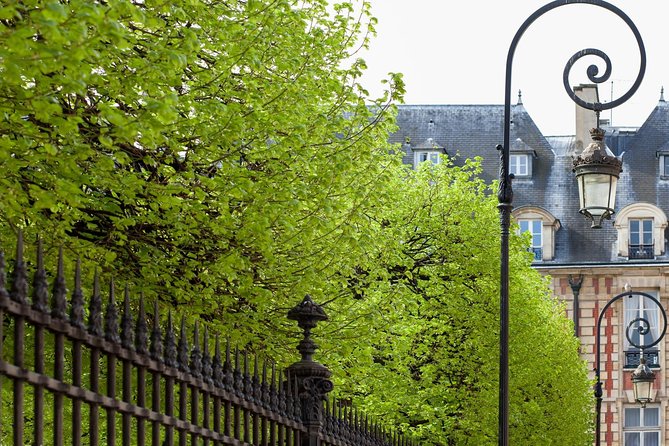
The Marais can feel like a maze until you get a human map. This tour is designed to give you that first mental layout: where the old market life happened, where the Jewish community core grew, and why certain squares and streets became “must-see” in the first place. In two hours, you’ll leave with a clearer sense of what’s old, what’s changed, and what has stayed stubbornly itself.
The small group size matters more than you’d think. With a cap of 10, you can actually hear your guide on narrow sidewalks, and you’re not watching the back of someone else’s coat for two hours straight. It also makes the walk feel less like a lecture and more like a story tour, which is exactly what you want in Paris.
Also, you’ll be moving at a “moderate fitness” pace. That’s not a marathon, but it does mean you should be comfortable with typical city walking and standing during the brief stop-and-look moments.
Worth weighing up next to this Paris pick
- Paris Top Sights Half Day Walking Tour with a Fun Guide
★ 5.0 · 2,893 reviews - Montmartre Hidden Gems and Scenic Highlights Walking Tour
★ 5.0 · 2,684 reviews - Montmartre Hill French Gourmet Food and Wine Tasting Walking Tour
★ 5.0 · 2,588 reviews - Paris: Montmartre Highlights Walking Tour with a Local Guide
★ 4.9 · 2,318 reviews
Price and value for a small-group art historian walk
At about $171.96 per person, this isn’t a cheap “wandering with a guide” add-on. What makes it feel more worth it is that you’re not just getting someone who points; you’re getting a professional art historian who can connect the visual details to the why behind them.
In practice, that means you’ll spend your time on the parts that usually get skipped: the oldest paved street story, the meaning behind public spaces, and the impact of major cultural institutions on this neighborhood. You’re also paying for structure—short stops with clear themes—so you don’t burn energy figuring out what to look at on your own.
If you’re traveling in peak season or during the busiest weeks, it helps to book ahead. This tour is typically booked around 27 days in advance, so planning early will increase your chances of the date and time that fits your schedule.
Les Halles and Fontaine des Innocents: market history and the oldest fountain

You start around Les Halles, the quarter once known as the belly of Paris. Even without entering anywhere, you’ll get a sense of how a place like this becomes the city’s daily engine—where food, people, and money circulated so intensely that it shaped the neighborhood identity. It’s one of those stops where the buildings don’t shout, but the story does.
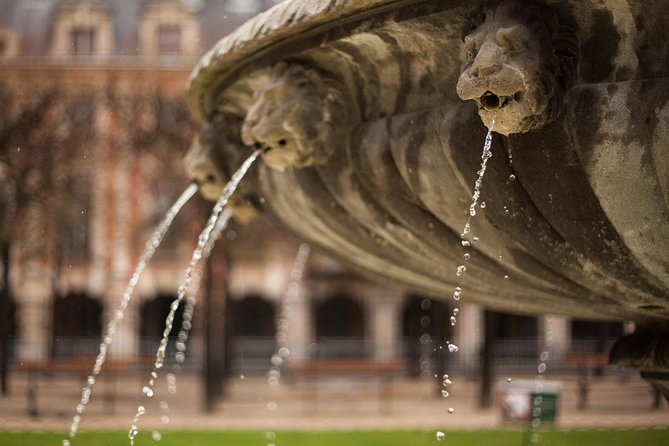
Then you move to the Fontaine des Innocents, the oldest fountain in Paris. The charm here is that it’s not just an object—it’s a clue to how long Paris has been rebuilding itself while keeping certain landmarks in view. A short stop is plenty if you know what to notice: the way the fountain anchors the scene and signals the importance of this corner over centuries.
If you like your Paris grounded in everyday life—markets, water, streets that matter to real routines—these two openings do a good job of setting that tone early.
Centre Pompidou and Hôtel de Ville: big moments, viewed from the street
Next comes the Centre Pompidou, the museum of contemporary art. Since you don’t go inside, the goal isn’t to review exhibits. It’s to understand why placing contemporary art here mattered, and how it changed the feel of the area around it. Watching a major cultural project from the sidewalk is surprisingly effective if your guide gives you the historical context first, because the building’s presence becomes the point.
The tour then shifts to the Hôtel de Ville (City Hall). You won’t enter—City Hall entry is extremely limited, essentially one day a year, and the tour keeps this as an outside-focused visit. That said, you still get the meaning: it’s treated as one of the most important civic institutions in the city, so you’re learning why this spot counts even when you’re standing outside its doors.
This approach is good value if you want to understand the neighborhood’s evolution without committing to museum time. If you’re the type who wants interiors, plan Pompidou or City Hall separately. But if you want the Marais story stitched together, seeing these from the outside keeps the walk moving and the focus sharp.
Rue des Rosiers and the Historical Library street: identity you can walk through
When you hit La Rue des Rosiers, you’re walking into the center of the Jewish community of Paris. This stop works because it’s not abstract. The street itself helps you feel how neighborhoods organize around culture, food, commerce, and community life. Even with only about 10 minutes here, you’ll come away with a sense of why this road is a focal point, not just another picturesque street.
After that, you reach the Historical Library of the City of Paris area, where you can get a look at the oldest paved street in Paris. That’s one of the most fun “wait, seriously?” facts to learn while your feet are actually on the ground. You also get a peek into a uniquely beautiful 16th-century aristocratic city villa, which is a reminder that the Marais isn’t only old church-and-palace scenery. It’s also private space, wealth, and design.
The watch-out here is that villa views and similar glimpses can be brief. So keep your phone ready, but don’t spend the whole stop trying to photograph everything. Listen for the details your guide points out, because that’s what turns a quick look into real understanding.
Jardin de l’Hôtel de Sully and Place des Vosges: garden calm and a perfect square
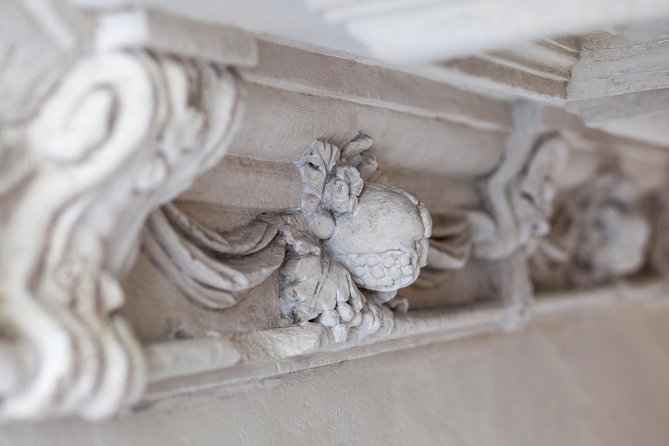
Then you get a shift in mood at Jardin de l’Hôtel de Sully, a 17th-century aristocratic city villa and its garden. Gardens in Paris are never just pretty—they’re planning. This stop helps you see how elite residential life used green space as part of the architecture and the social world, not as random decoration.
A little later, you reach Place des Vosges, often described by the French (and many others) as the most beautiful square in the world. I like this stop because it’s one of the easiest places to “read” the neighborhood. The geometry and symmetry help you understand why squares matter: they’re social rooms for the city, places where people gather and where the streets feed into a shared center.
If you’re the kind of traveler who does better when you get a calm moment, this is your section. Let yourself slow down, look around, and take a breather before you head to the heavier political landmark near the end.
Worth weighing up next to this Paris pick




Place de la Bastille: how the story turns at the end
The tour closes at Place de la Bastille, one of Paris’s most important historic sites in France—and beyond. Even if you don’t know the full timeline yet, this stop is built to give you the gist of why it matters: it’s a turning point in the way people understand power, revolt, and change in the city.
It’s also a smart way to end. Bastille is a lively area with transit options, so finishing here makes it easy to tack on dinner, a casual drink, or an extra walk without wasting time backtracking.
What to know before you go: duration, meeting points, and comfort
This is a 2-hour walking tour with a compact route and short stops. You’ll start at Café Étienne, 14 R. de Turbigo, 75001 Paris, and finish at Bastille, 75012 Paris. Having a different start and end point is great for getting around, but it does mean you should plan your day so you don’t need to rush back to the starting area.
It also uses a mobile ticket, which is convenient in Paris when you’re bouncing between Metro lines and keeping track of multiple reservations. Your tour includes a live professional art historian guide, but snacks aren’t included, so if you tend to run hungry, plan a quick bite before you meet.
Good to know: the tour is near public transportation, and service animals are allowed. If you’re booking for someone who’s sensitive to uneven sidewalks or long standing periods, remember the “moderate physical fitness” note and plan for typical outdoor city walking.
And yes, the Marais can be tight and windy. If it’s raining, bring a hooded layer or small umbrella. Street noise and wet weather can make hearing details a bit harder, so keeping comfortable will help you get more out of every stop.
Tour guide quality: what really makes it feel personal
The difference between a standard walking tour and a genuinely satisfying one is how well the guide connects the dots. Past groups have highlighted guides like Tina for clear English and solid explanations, and Boris for insights that link past and present in a way that makes the neighborhood feel logical rather than random. Another guide name you may see in bookings is Isadora, who’s been praised for being on time and meeting right near the Metro.
While you’ll still want to listen to the content even on a light day, a good guide also shapes the mood: when they’re sharp and friendly, you’ll feel comfortable asking questions instead of just absorbing information.
That small-group format keeps it from turning into a one-way talk. You’re not just touring the Marais; you’re building a mental map you can use later in the day.
Should you book this Marais semi-private tour?
Book it if you want the Marais without the confusion. This is ideal when you have limited time and you’d rather understand what you’re seeing—Les Halles market roots, the oldest paved street, the meaning behind Place des Vosges, and the weight of Bastille—than just chase photos.
Skip it if your main goal is indoor museum time. Since you only discuss big interiors from the outside for places like the Pompidou and Hôtel de Ville, you’ll need separate tickets if you want galleries, rooms, and exhibits.
If you’re willing to walk, stay flexible with weather, and enjoy a story-focused route, this tour is a strong way to get your bearings quickly and start exploring the Marais like you actually live there.
FAQ
How long is the Marais semi private walking tour?
The tour lasts about 2 hours.
How big is the group?
The tour has a maximum of 10 travelers.
Where does the tour start and where does it end?
It starts at Café Étienne, 14 R. de Turbigo, 75001 Paris, and ends at Bastille, 75012 Paris.
Are tickets to the Centre Pompidou museum included?
No. The tour does not include a visit to the museum. The Centre Pompidou is discussed from the outside.
Will we enter Hôtel de Ville?
No. You do not enter City Hall. The tour focuses on it from the outside, and entry is not part of this experience.
Is admission included at the stops?
The stops listed show admission ticket free for each stop.
Is a professional guide included?
Yes. The tour includes a live professional art historian guide.
Are snacks provided?
No snacks are included.
Are service animals allowed?
Yes, service animals are allowed.
What physical level is required?
The tour requires a moderate physical fitness level.
More Walking Tours in Paris
- Paris Top Sights Half Day Walking Tour with a Fun Guide
★ 5.0 · 2,893 reviews - Montmartre Hidden Gems and Scenic Highlights Walking Tour
★ 5.0 · 2,684 reviews - Montmartre Hill French Gourmet Food and Wine Tasting Walking Tour
★ 5.0 · 2,588 reviews - Paris: Montmartre Highlights Walking Tour with a Local Guide
★ 4.9 · 2,318 reviews - Paris Île de la Cité and Notre-Dame Walking Tour With Crypt
★ 5.0 · 2,272 reviews
More Tours in Paris
- Paris: Louvre Guided Tour with Reserved Access & Boat Cruise
★ 4.3 · 16,353 reviews - Paris: Big Bus Hop-On Hop-Off Tour with Optional Cruise
★ 4.4 · 13,279 reviews - Louvre Museum Masterpieces Guided Tour with Access
★ 4.5 · 12,023 reviews - Versailles: Skip-the-Line Tour of Palace and Gardens Access
★ 4.7 · 10,429 reviews - Paris: Louvre Overview, Exploration tour and Reserved Entry
★ 4.1 · 10,145 reviews
More Tour Reviews in Paris
- Paris: 1-Hour Seine Cruise departing from the Eiffel Tower
★ 4.4 · 77,472 reviews - Paris: Louvre Museum Timed-Entrance Ticket
★ 4.6 · 71,977 reviews - Disneyland® Paris 1-Day Ticket
★ 4.6 · 49,412 reviews - Paris: Versailles Palace and Gardens Full Access Ticket
★ 4.6 · 41,579 reviews - Paris: Arc de Triomphe Rooftop Tickets
★ 4.6 · 34,264 reviews
Fresh off the review desk in Paris
- Secrets of Paris Bike Tour in English or Dutch★ 5.0 · 5 reviews
- Paris: Mont Saint-Michel Day Tour with Chinese Tour Guide★ 5.0 · 5 reviews
- Private Street Art 2-Hour Guided Tour in Paris★ 4.5 · 5 reviews
- Orsay Museum Tour: 2h Highlights (Private & Small Group)★ 5.0 · 5 reviews
- Discover Paris in electric golf carts★ 4.0 · 5 reviews
- Paris Private Boat Tour with your own Captain Guide★ 5.0 · 5 reviews
Walking Tours, compared.
 ★ 5.0Paris Top Sights Half Day Walking Tour with a Fun GuideFrom $762,893 reviews
 ★ 5.0Montmartre Hidden Gems and Scenic Highlights Walking TourFrom $382,684 reviews
 ★ 5.0Montmartre Hill French Gourmet Food and Wine Tasting Walking TourFrom $1452,588 reviews
 ★ 4.9Montmartre Highlights Walking Tour with a Local GuideFrom $232,318 reviews
 ★ 5.0Paris Île de la Cité and Notre-Dame Walking Tour With CryptFrom $482,272 reviews
 ★ 4.8Montmartre Cheese, Wine & Pastry Guided Walking TourFrom $1272,255 reviews
 ★ 5.0Paris in a Day: Louvre or Orsay, Eiffel Tower, City Walk & CruiseFrom $1571,956 reviews
 ★ 5.0Paris City Center Free Walking Tour (Tip-Based)From $31,340 reviews