
Reviewed · MONTMARTRE TOURS
Montmartre Self-Guided Audio Tour: More Than Meets the Eye
Montmartre has a way of surprising you at every corner. This self-guided audio route strings together the Wall of Love, centuries-old church traces, and artist haunts, all with turn-by-turn GPS help and offline audio. I especially like how the narration feels like real street-company, with humor that keeps you moving, and how the app helps you stay on course without forcing you into a group pace. One thing to plan for: Montmartre is hilly, with stairs, so this is best if you’re comfortable walking up and taking breaks.
Because it’s self-paced, you can stop for a photo or a café break and simply resume when you’re ready. The audio is in English, and you get lifetime access to the app and tour, with offline access to audio, maps, and geodata—handy when signal fades in tight streets. The duration is listed as about 1 to 2 hours, but in real life you might stretch it longer if you linger at viewpoints, churches, or street corners.
In This Review
- Key Highlights at a Glance
- How This Montmartre Audio Walk Really Feels on the Ground
- Price and What You’re Really Paying For
- Before You Start: Phone Prep for Offline Audio and GPS
- Starting at 22 Rue des Abbesses: Get Your Bearings Fast
- The Wall of Love: Mur des je t’aime Stops You Mid-Street
- A Church With Written Records Dating Back to 885
- Picasso’s Workshop Years: Studios and Artistic Neighbors
- Place Émile-Goudeau and the Streets Between Studios
- Moulin de la Galette: Windmill Views and Painted Parties
- Le Passe-Muraille and the Statue of Saint-Denis
- Rue de l’Abreuvoir: Downhill Street Energy
- Maison Rose: The Pink House Story (and the Famous Names)
- A Tiny Vineyard: One Person, Lots of Care
- Lapin Agile: Cabaret History Starting in 1795
- Place du Tertre and a “Simple and Without Ceremony” Classic
- The Chevalier de la Barre Statues and the Final Climb to Sacré-Cœur
- What I’d Watch Out For: Walking, Battery, and Occasional App Glitches
- Who This Tour Suits Best (and Who Might Skip It)
- Should You Book the Montmartre Self-Guided Audio Tour?
- FAQ
- How long does the Montmartre audio tour take?
- How much does the tour cost?
- What language is the audio available in?
- Does it work offline?
- What do I need to bring?
- Where do I start and where does it end?
- Are tickets or museum entrances included?
- What if I want to do it more than once?
- Is there a good time window to plan around?
Key Highlights at a Glance
- GPS that tracks your position so you don’t feel stuck hunting for the next stop
- Offline audio, maps, and geodata, which is a big deal in Montmartre’s spotty reception
- Lifetime access to the same route in English, so you can repeat parts on future trips
- A story-led path through major Montmartre landmarks and the artist sites between them
- On-the-fly control (pause and start when you want), plus the option to speed up the narration
How This Montmartre Audio Walk Really Feels on the Ground
This isn’t the kind of tour where you march behind a stranger with a flag. It’s more like borrowing a smart local friend who shows you where to look, then explains what you’re seeing—without stopping you from enjoying the neighborhood rhythm.
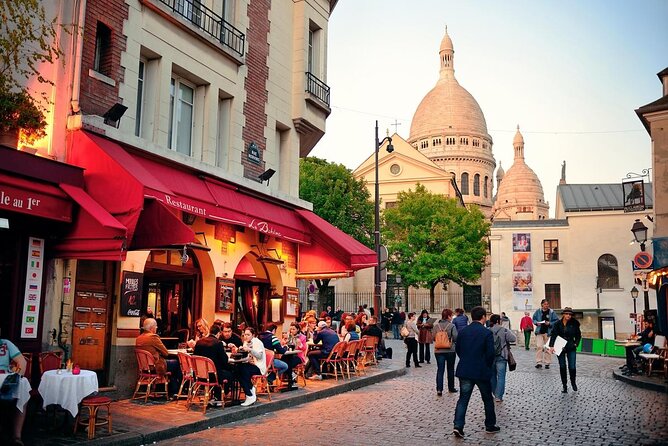
The route is designed to cover a classic Montmartre spine: you’ll move between iconic points like the Wall of Love and Basilique du Sacré-Cœur, while also hitting artist-linked streets and stops that many people skate past. The “private tour/activity” format also matters in practice: it’s just you and your group, not a big crowd to manage.
At $14.99 per person, the value comes less from “hours of content” and more from flexibility. You get a structured walk plus the ability to replay as many times as you want (lifetime access), which is perfect if Paris overwhelms you and you want a second pass later.
Keep climbing: more of the Montmartre hill
- Montmartre Hidden Gems and Scenic Highlights Walking Tour
★ 5.0 · 2,684 reviews - Montmartre Hill French Gourmet Food and Wine Tasting Walking Tour
★ 5.0 · 2,588 reviews - Paris: Montmartre Highlights Walking Tour with a Local Guide
★ 4.9 · 2,318 reviews - Paris: Montmartre Cheese, Wine & Pastry Guided Walking Tour
★ 4.8 · 2,255 reviews
Price and What You’re Really Paying For
You’re paying for convenience and clarity: an audio guide in English, delivered through VoiceMap on your phone with offline materials. That matters in Montmartre because you’re constantly making micro-decisions—where to turn, when to climb, how long to linger by a viewpoint.
If you don’t want to spend time in a group queue, or you prefer exploring at your own speed, this price usually makes sense. But if you’re the type who needs a human guide constantly answering questions—or you know your phone battery is always at risk—think about your setup before you buy. A few people ran into app or GPS issues, so it’s smart to arrive ready (more on that below).
Before You Start: Phone Prep for Offline Audio and GPS
This tour is “smartphone-based,” so you’ll need your phone and headphones. The included part is what the app provides: offline access to audio, maps, and geodata, plus GPS guidance.
Here’s how I’d prep:
- Start with a fully charged phone.
- If you have one, bring a portable charger—Montmartre is a long walk and GPS can quietly drain batteries.
- Download or confirm offline access before you begin. Offline audio is great insurance if cell service drops in narrow streets.
You’ll also want to keep your brightness reasonable. The app is doing location work while you’re outside, and that’s another reason battery planning matters on a hilly route with lots of stops.
Starting at 22 Rue des Abbesses: Get Your Bearings Fast
You begin at 22 Rue des Abbesses in Paris’ 18th arrondissement. From this point, the tour gently guides you into Montmartre’s layers—busy at the edges, quieter in pockets, and always uphill.
A common win with this format is that you can pause the narration whenever you want—so if you stop to read a plaque, take a photo, or check the street vibe, you’re not “late” like you would be on a timed group tour. Several users liked that the directions and navigation felt accurate enough that they didn’t spend the whole walk asking, Where’s the next spot?
The Wall of Love: Mur des je t’aime Stops You Mid-Street
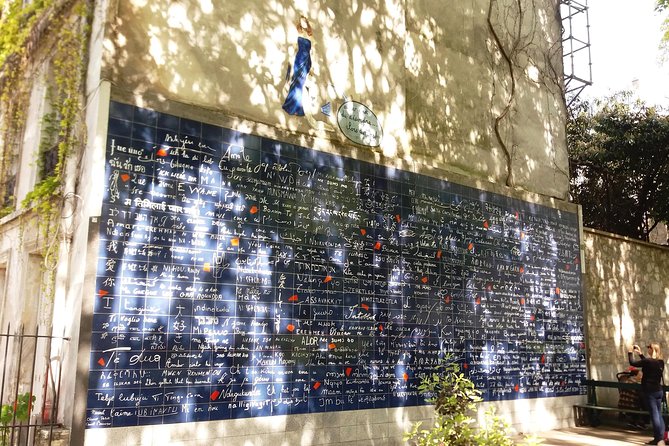
One of the first visual hits is the Mur des je t’aime, often translated as the Wall of Love. It was created in 2000 by Frederic Baron and Claire Kito, and it features 311 ways to say I love you in 250 languages.
Why it works as an early stop: it’s a quick, colorful reset. Even if you think you already know Montmartre clichés, this wall gives you a concrete, human detail you can point to while the surrounding streets change around you. It also helps orient you visually—so the rest of the walk feels like it’s unfolding from something real.
A Church With Written Records Dating Back to 885
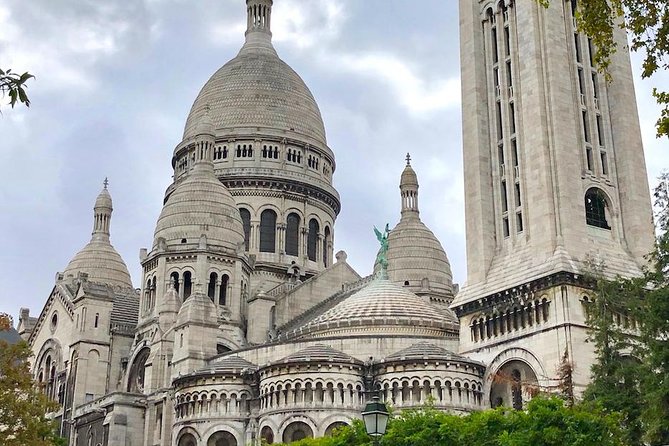
Next, you’ll encounter written records dating back to the year 885, making this one of the oldest Christian sites in Paris.
The practical value here is that the narration doesn’t treat Montmartre like a postcard-only zone. It roots the neighborhood in deep time. You’ll likely feel it even if you’re not chasing “oldest” credentials: the vibe changes when you realize you’re standing near a place that has had meaning for more than a thousand years.
The only caution is that churches can be busy and rules can vary. If the app tells you to go inside and you step out later, keep an eye on where it thinks you are so you don’t accidentally lose your place.
Worth weighing up next to this Paris pick




Picasso’s Workshop Years: Studios and Artistic Neighbors
As the route continues, you pass through the area connected to artist life around the early 1900s. You’ll visit the workshop where Picasso lived between 1904 and 1909. It’s also described as a space where Modigliani lived and worked.
The narration also points out other artists associated with the area—Renoir, Juan Gris, Max Jacob, le Douanier Rousseau, and more, including names that won’t be familiar to everyone.
What I like about this section is that it turns Montmartre from “famous names” into an actual neighborhood ecosystem. You’re not just collecting big names; you’re seeing how multiple careers clustered and overlapped. If you’re a fan of art history, you’ll probably enjoy how the route strings those connections together while you walk through ordinary streets.
Place Émile-Goudeau and the Streets Between Studios
The tour then tracks through place Émile-Goudeau and passes by Picasso First Studio. It also goes by La maison de Dalida.
These are the kinds of stops that separate a basic Montmartre stroll from something more rewarding: they remind you that Montmartre’s story isn’t only about museums or grand views. It’s also about small spaces where creative life happened, plus the later layers that famous French pop culture added.
If you’ve ever felt overwhelmed by Paris and its layers, this is a good way to cut through. The app gives you a reason to look at what you might otherwise ignore.
Moulin de la Galette: Windmill Views and Painted Parties
One of the most iconic Montmartre passages is the stop by the windmill that’s described as one of only two left in Montmartre. This one specialized in grinding wheat, has long served as a restaurant, and became a Montmartre symbol because artists like Renoir, Van Gogh, and Pissaro frequented it and painted it.
The route’s story helps you understand why art fans care. Renoir’s Bal au Moulin de la Galette doesn’t show the windmill itself, only the party scene behind the famous facade. And Van Gogh painted several versions of this windmill because his brother Theo lived nearby and he knew the area well.
Even if you don’t nerd out on paintings, this part is worth your attention because it explains the visual connection. You’re not just staring at a landmark; you’re learning why it became one.
Le Passe-Muraille and the Statue of Saint-Denis
From there, you pass by Le Passe-Muraille and the Statue of Saint-Denis.
These stops are smaller than the basilica, but they add personality. They also keep the walk from feeling like a straight checklist. This is the sort of detail that makes Montmartre feel like a living place rather than an art lecture delivered through your phone.
Rue de l’Abreuvoir: Downhill Street Energy
The tour goes down Rue de l’Abreuvoir. This is the kind of street segment where the walking pace can feel different, because you’re transitioning between viewpoints and denser tourist pockets.
If you’re worried about getting “lost,” this is one of the strengths of the app approach: you’re guided step-by-step, and the GPS can help keep you from spiraling into parallel streets.
Maison Rose: The Pink House Story (and the Famous Names)
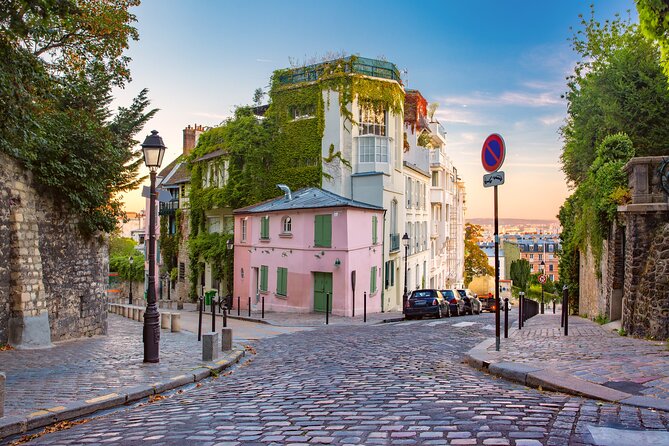
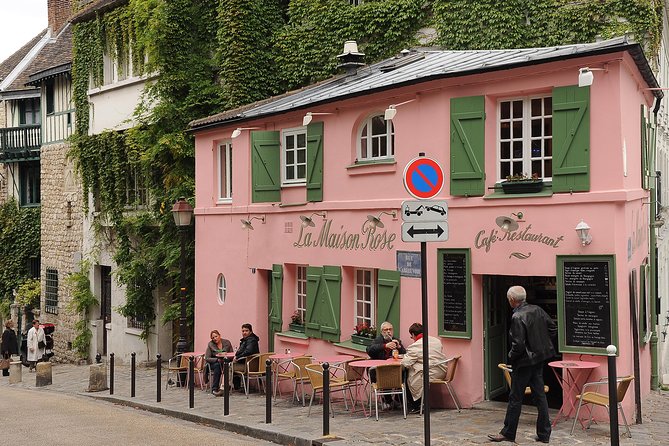
Then comes the route’s big color moment: the second pink house, labeled Maison Rose, described as iconic partly because it was made famous by a local painter named Utrillo.
It was later bought by someone who was friends with famous singers, who often patronized it. The narration mentions Edith Piaf, Aznavour, and Jacques Brel. Before them, Albert Camus was also a fan.
That combination is exactly why you’ll probably like this stop. Montmartre isn’t only about who painted it first. It’s also about who later turned the neighborhood into a stage for storytelling, music, and literature.
A Tiny Vineyard: One Person, Lots of Care
The route includes a small surviving vineyard—described as one of the few left, and so small that one person can take care of it, keeping it pretty for visitors, tour guides, the mayor, TV crews, and more.
This is a quiet, practical stop. It slows you down for a moment and gives you a sense of how much Paris has changed, and how much is still managed by real people doing hands-on work.
Lapin Agile: Cabaret History Starting in 1795
Another standout is Lapin Agile, described as first opening in 1795 as a cabaret and drinking establishment. It shifted names over time—from Rendez-vous of Thieves to Cabaret of the Assassins—and in 1880 caricaturist André Gill was commissioned to create a new look, including the famous rabbit drawing.
If you’ve ever wondered why Montmartre feels theatrical, this explains it. It wasn’t just painters and poets; it was nightlife, rumor, and performance—long before tourists arrived with cameras.
Place du Tertre and a “Simple and Without Ceremony” Classic
The tour passes by Place du Tertre and features a classic Montmartre restaurant whose name is explained as meaning simple and without ceremony.
The narration notes that a restaurant has been here since the 1500s, with rebuilds and renames over time. It also connects major painters and writers—Degas, Renoir, Monet, Cézanne, Sisley, Toulouse-Lautrec—plus a specific art connection: Van Gogh painted La Guinguette à Montmartre here in 1886.
This stop is a good example of what the audio tour does well: it gives you context so you understand why an area is still talked about. Even if you don’t eat there, you’ll see the square and think differently.
The Chevalier de la Barre Statues and the Final Climb to Sacré-Cœur
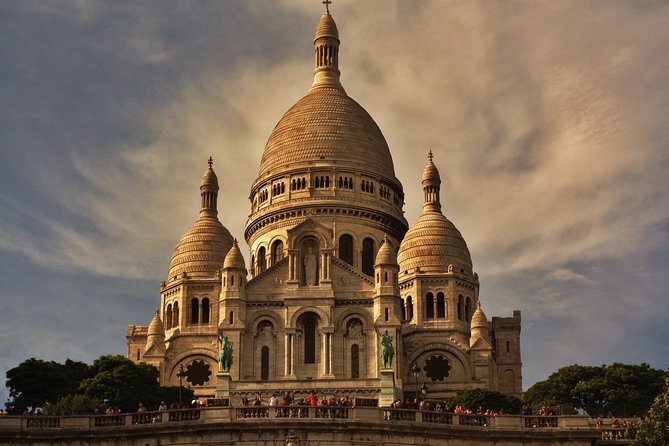
Near the end, you pass by the 2nd Statue du Chevalier de la Barre, then you finish by going to the Basilique du Sacré-Cœur.
The tour ends with a peep inside the basilica, and the listed hours run from 12:00 AM to 11:59 PM daily. If you’re visiting late or if it’s near closing during your timing, plan to arrive with enough slack—this is a spot where crowds and schedules can affect what you get to see.
This finale works because it’s the payoff: Montmartre’s famous skyline and religious grandeur, with the route’s artist layers fresh in your mind as you arrive.
What I’d Watch Out For: Walking, Battery, and Occasional App Glitches
Let’s keep it real. Even with great audio guidance, this is still a walking tour in a steep neighborhood. There are stairs and inclines, and there’s no magic way around that. If you’re traveling with kids, have mobility limits, or simply don’t do uphill well, this might be more effort than you want.
On top of the physical side, a few people reported app problems like:
- GPS being off, leading to confusion about where to go next
- Audio resuming at odd moments (like when you’re inside a church and the app thinks you left)
- Technical crashes that stop the narration
You can reduce the risk with preparation: headphones ready, phone charged, and offline audio confirmed before you start. And if something does go sideways, you’ll want the ability to pause, restart, and use your map sense to get back on track.
Who This Tour Suits Best (and Who Might Skip It)
This tour is ideal if:
- You want self-guided Montmartre without coordinating with a group
- You like stories tied to streets, not just big monuments
- You’re comfortable doing a lot of walking in a hilly area
- You enjoy repeating parts later, since you get lifetime access
You might think twice if:
- You’re sensitive to uphill climbs and stair-heavy routes
- You know your phone battery struggles outdoors
- You need a guaranteed, no-fail audio experience and can’t handle the chance of a GPS mismatch
Should You Book the Montmartre Self-Guided Audio Tour?
Yes, I’d book it if you want an efficient way to understand Montmartre while walking it at your own pace. For $14.99, you get English narration, offline support, and a route that takes you through both the obvious sights and the artist-connected stops that make the neighborhood feel human.
I’d hesitate if you’re expecting an easy walk or if you’re relying on perfect phone performance with no backup. But if you can handle hills and you prep your phone, this is a smart, flexible way to see Montmartre like you’re touring with a local storyteller who keeps the pace gentle.
FAQ
How long does the Montmartre audio tour take?
It’s listed as about 1 to 2 hours.
How much does the tour cost?
The price is $14.99 per person.
What language is the audio available in?
The tour is offered in English.
Does it work offline?
Yes. It includes offline access to audio, maps, and geodata.
What do I need to bring?
You’ll need your smartphone and headphones.
Where do I start and where does it end?
Start at 22 Rue des Abbesses, 75018 Paris, and it ends in front of Basilique du Sacré-Cœur de Montmartre at 35 Rue du Chevalier de la Barre.
Are tickets or museum entrances included?
No. Tickets or entrance fees to museums or attractions are not included.
What if I want to do it more than once?
You get lifetime access to the app and the audio tour, so you can revisit the route later.
Is there a good time window to plan around?
The tour can run at any time since the listed hours for the route end point show 12:00 AM to 11:59 PM daily.
More Tours in Paris
- Paris: Louvre Guided Tour with Reserved Access & Boat Cruise
★ 4.3 · 16,353 reviews - Paris: Big Bus Hop-On Hop-Off Tour with Optional Cruise
★ 4.4 · 13,279 reviews - Louvre Museum Masterpieces Guided Tour with Access
★ 4.5 · 12,023 reviews - Versailles: Skip-the-Line Tour of Palace and Gardens Access
★ 4.7 · 10,429 reviews - Paris: Louvre Overview, Exploration tour and Reserved Entry
★ 4.1 · 10,145 reviews
More Tour Reviews in Paris
- Paris: 1-Hour Seine Cruise departing from the Eiffel Tower
★ 4.4 · 77,472 reviews - Paris: Louvre Museum Timed-Entrance Ticket
★ 4.6 · 71,977 reviews - Disneyland® Paris 1-Day Ticket
★ 4.6 · 49,412 reviews - Paris: Versailles Palace and Gardens Full Access Ticket
★ 4.6 · 41,579 reviews - Paris: Arc de Triomphe Rooftop Tickets
★ 4.6 · 34,264 reviews
More of the Montmartre Hill
- Montmartre Hidden Gems and Scenic Highlights Walking Tour
★ 5.0 · 2,684 reviews - Montmartre Hill French Gourmet Food and Wine Tasting Walking Tour
★ 5.0 · 2,588 reviews - Paris: Montmartre Highlights Walking Tour with a Local Guide
★ 4.9 · 2,318 reviews - Paris: Montmartre Cheese, Wine & Pastry Guided Walking Tour
★ 4.8 · 2,255 reviews - The Secrets of Montmartre Walking Tour
★ 4.8 · 1,258 reviews
Fresh off the review desk in Paris
- Secrets of Paris Bike Tour in English or Dutch★ 5.0 · 5 reviews
- Paris: Mont Saint-Michel Day Tour with Chinese Tour Guide★ 5.0 · 5 reviews
- Private Street Art 2-Hour Guided Tour in Paris★ 4.5 · 5 reviews
- Orsay Museum Tour: 2h Highlights (Private & Small Group)★ 5.0 · 5 reviews
- Discover Paris in electric golf carts★ 4.0 · 5 reviews
- Paris Private Boat Tour with your own Captain Guide★ 5.0 · 5 reviews
Montmartre Tours, compared.
 ★ 5.0Montmartre Hidden Gems and Scenic Highlights Walking TourFrom $382,684 reviews
 ★ 5.0Montmartre Hill French Gourmet Food and Wine Tasting Walking TourFrom $1452,588 reviews
 ★ 4.9Montmartre Highlights Walking Tour with a Local GuideFrom $232,318 reviews
 ★ 4.8Montmartre Cheese, Wine & Pastry Guided Walking TourFrom $1272,255 reviews
The Secrets of Montmartre Walking TourFrom $331,258 reviews
★ 4.8Montmartre Cheese, Wine & Pastry Guided Walking TourFrom $1272,255 reviews
The Secrets of Montmartre Walking TourFrom $331,258 reviews
 ★ 4.1Sacré-Coeur and Montmartre Tour with Expert GuideFrom $281,027 reviews
 ★ 5.0Private Montmartre Food Tour with Wine, Cheese & PastriesFrom $3021,027 reviews
 ★ 5.0Paris Montmartre Food Tour – A Full French Meal by Do Eat BetterFrom $95877 reviews
Browse the lists this tour appears in