
Reviewed · WALKING TOURS
Napoleon in Paris: Revolution to Empire Walking Tour
Paris turns into a timeline in two hours. On the Napoleon in Paris walk, you connect the French Revolution to Napoleon’s rise with stories that make the city feel like it has a heartbeat. I love the way the guide keeps the big swings of history understandable, then points you toward the spots that helped shape them.
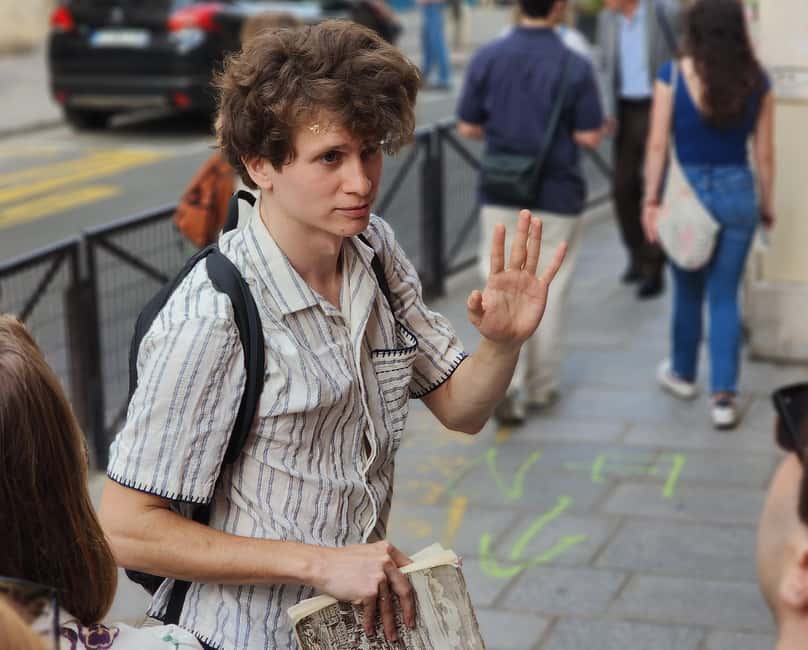
I also like the human side of the tour. With small groups (sometimes very small), my guide, Vladimir, could adapt to my pace and level, and answer questions as we walked rather than saving everything for the end. Even when the weather wasn’t perfect, the route stayed focused and the conversation kept going.
One thing to consider: this is built for movement and standing in public spaces. If you want long indoor museum time, or a built-in meal stop, you’ll need to plan on your own since it’s a guided walk that runs about 2 hours and doesn’t include food.
In This Review
- Key things I’d bank on before you go
- A Footpath Through 1789 to Napoleon’s Takeover
- Who the guide is and how the format helps you learn
- Starting points: choose the route that fits your first 30 minutes
- Option 1: Roger Vivier, 29 Rue du Faubourg Saint-Honoré
- Option 2: Place de la Concorde
- Option 3: Louvre Museum
- Place de la Concorde: where the Revolution story turns serious
- Louvre Museum area: Napoleon-era context without the museum fatigue
- Place Vendôme: quick photo time, big story energy
- Palais-Royal Quarter: when politics feels personal
- One more photo stop (location varies by route)
- Finishing at Place des Victoires: where the story lands
- Napoleon in Paris price and value: why $58 can make sense
- What to bring, so the walk stays enjoyable
- Who should book this tour
- Should you book Napoleon in Paris: Revolution to Empire Walking Tour?
- FAQ
- FAQ
- How long is the Napoleon in Paris walking tour?
- Where can I meet the guide?
- What are the main stops on the route?
- Is the tour available in more than one language?
- What group size is the tour?
- What’s included in the price?
- What is not included?
- What should I bring?
- Is the tour suitable for wheelchair users or people with mobility impairments?
- Is cancellation free?
- Can I reserve without paying immediately?
Key things I’d bank on before you go
- A Revolution-to-Empire story arc on foot: You’ll trace how events and personalities reshaped Paris, without feeling lost in dates.
- Revolution squares and street-level “secret stories”: Expect explanations tied to the kind of places you’d normally just pass by.
- Napoleon’s rise explained in plain language: You’ll work through the question of how he became Emperor as the walk progresses.
- American influence, including Gilbert Lafayette: It’s not a one-note Revolution tour; the perspective expands.
- Josephine and the empire’s inside politics: The Empress Josephine angle adds spice and motive, not just military facts.
- Photo stops and a tidy finish at Place des Victoires: You’ll leave with pictures and a clearer sense of the map.
A Footpath Through 1789 to Napoleon’s Takeover
This walking tour is built around one big idea: Paris didn’t just witness the French Revolution and the empire of Napoleon Bonaparte—it lived inside them. Instead of treating history like a list of names, the guide frames it like cause and effect. That matters, because once you understand what people were reacting to, the streets feel less random.
You also get a strong “people’s Paris” thread. The tour’s promise is about how Parisians lived during this period. That doesn’t mean you’ll hear every daily detail, but you will get a sense of pressure, public mood, and how power showed up in ordinary places. One of the best parts is that the stories tend to connect back to real questions people still ask: how leaders rise, how propaganda works, and why crowds care.
Worth weighing up next to this Paris pick
- Paris Top Sights Half Day Walking Tour with a Fun Guide
★ 5.0 · 2,893 reviews - Montmartre Hidden Gems and Scenic Highlights Walking Tour
★ 5.0 · 2,684 reviews - Montmartre Hill French Gourmet Food and Wine Tasting Walking Tour
★ 5.0 · 2,588 reviews - Paris: Montmartre Highlights Walking Tour with a Local Guide
★ 4.9 · 2,318 reviews
Who the guide is and how the format helps you learn
The tour is led by a professional local guide. The provider name you’ll see is Vlad Paris Guide, and one guide you may get is Vladimir. That name matters only because it signals the style you can expect: friendly, direct, and comfortable answering what you want to know.
The format is practical. A 2-hour walk doesn’t allow for long lectures. Instead, the guide uses short, story-driven segments as you move between stops. If you come with at least some background on Parisian history, you’ll likely connect the dots faster. If you don’t, you can still follow—you just may want to be a little curious and ask questions.
Small-group or private options are another plus. When it’s just a couple of people, the guide has more room to match your interests—like focusing more on Josephine and court intrigue or on the mechanics of Revolutionary justice.
Starting points: choose the route that fits your first 30 minutes
You’ll have multiple meeting options, and which one you pick can change your experience right from the first block.
Option 1: Roger Vivier, 29 Rue du Faubourg Saint-Honoré
This start places you on a more classic central Paris street vibe. It’s a good choice if you want to begin near the heart of the city and ease into the Revolution-and-empire storyline as you head toward major squares.
Practical note: plan for a bit of walking right away. Even before the “big landmark” moments, the guide uses the first stretches to set context.
Option 2: Place de la Concorde
If you like your history tied to major public spaces, start here. Place de la Concorde is the kind of square that naturally fits Revolutionary and early-Napoleon themes because it gives you open sightlines and dramatic atmosphere.
This route option is also a strong fit if you like “story first, details second.” You’ll hear the tour’s key topics early, then the walk will feel like a guided link-up to what you’re seeing.
Option 3: Louvre Museum
Starting near the Louvre area is ideal if you already like standing in the middle of big Paris landmarks and want your walk to feel connected to major cultural geography. You’ll still be outdoors and moving, but the “start point energy” will be different.
If you’re spending time in museums that day, you might prefer this start so you’re not crossing town twice.




Place de la Concorde: where the Revolution story turns serious
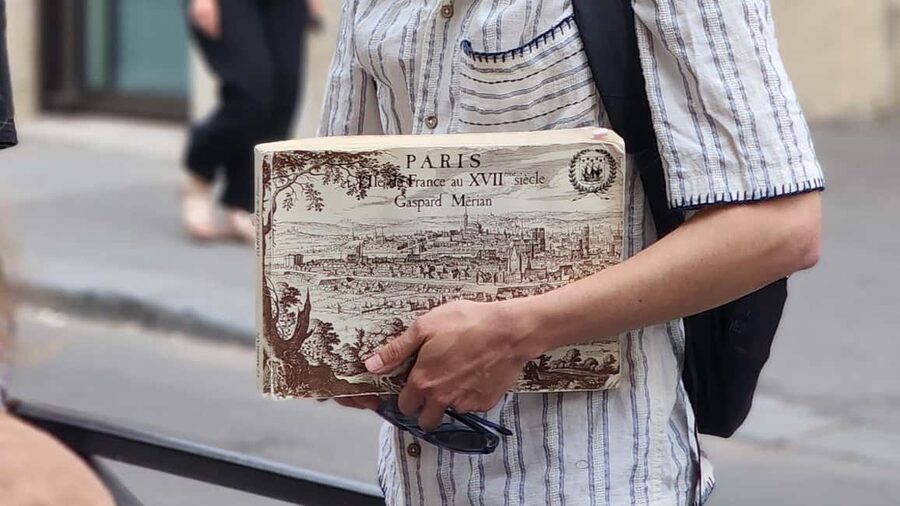
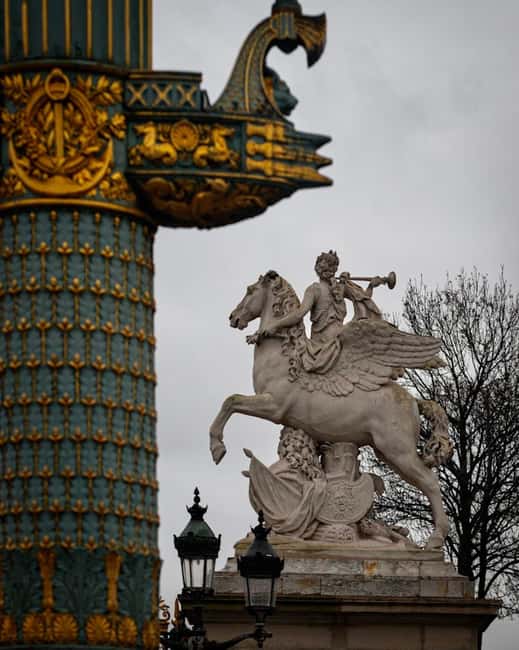
As a stop, Place de la Concorde anchors the tour’s Revolutionary arc. This is where the guide brings up the heavy-hitter topics—like the execution of the king—and explains how Revolutionary punishment and public spectacle worked.
You’ll also hear the question of the guillotine inventor, which is one of those details that sounds small until you realize how technological changes can become political symbols. The value here is not trivia for trivia’s sake. It’s the way the guide connects tools, ideas, and public fear into one story.
What to watch for: open spaces can be windy, and you’ll likely pause for context. I’d treat this as a moment to listen closely, not just take in the view.
Louvre Museum area: Napoleon-era context without the museum fatigue
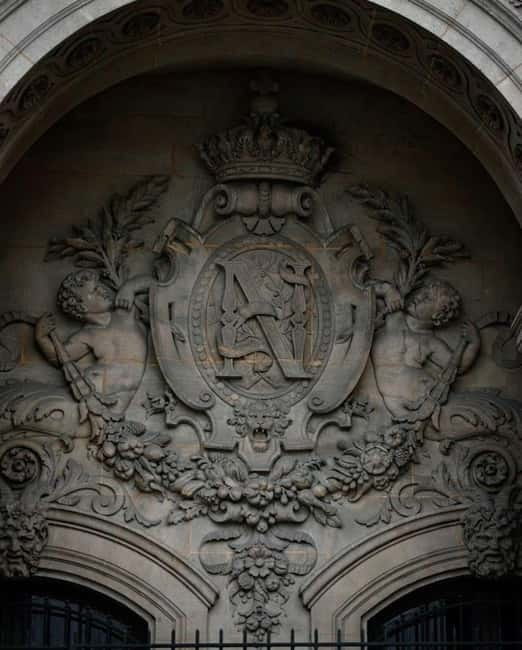
When the walk starts at the Louvre Museum, the experience tends to feel like you’re stepping into a bigger timeline early. Even though the tour is primarily a walk, the guide uses this part of the route to help you understand the transition from Revolution pressure into Napoleon’s rise.
Key topics you’ll hear include how Napoleon Bonaparte became Emperor. The way the guide frames it matters: you’re not just memorizing outcomes. You’re learning what enabled the shift—political momentum, public mood, and the way power got reorganized.
A drawback for some people: if you’re expecting inside access or long museum explanations, this isn’t that. The payoff is in the walking rhythm and the street-level storytelling.
Place Vendôme: quick photo time, big story energy
Place Vendôme shows up as a stop where you get a photo moment plus guided context. That combination is smart. It lets you capture the visual reference point, then immediately learn what the guide wants you to notice about the era’s mood and power dynamics.
This is also a good place for your questions. If you’ve been tracking the guide’s main thread—Revolution to Empire—this is where you can sanity-check your understanding. A couple of stops into a compact tour, it’s normal to want clarification. The guide style here supports that.
Palais-Royal Quarter: when politics feels personal
The Palais-Royal Quarter stop is where the tour’s “people and motives” side starts to feel more grounded. This is one of the places on the route that fits the tour’s emphasis on how Parisians lived through the period.
This is also where the guide’s Josephine Bonaparte angle tends to make the most sense. You’ll hear about Empress Josephine Bonaparte—Napoleon’s wife—and the idea of her as the empire’s chief intriguer. The goal isn’t to paint characters as cartoon villains. It’s to show how influence worked when official power and private networks overlapped.
If you care about court politics, crowd psychology, or how rumor became strategy, this is a strong segment of the walk.
One more photo stop (location varies by route)
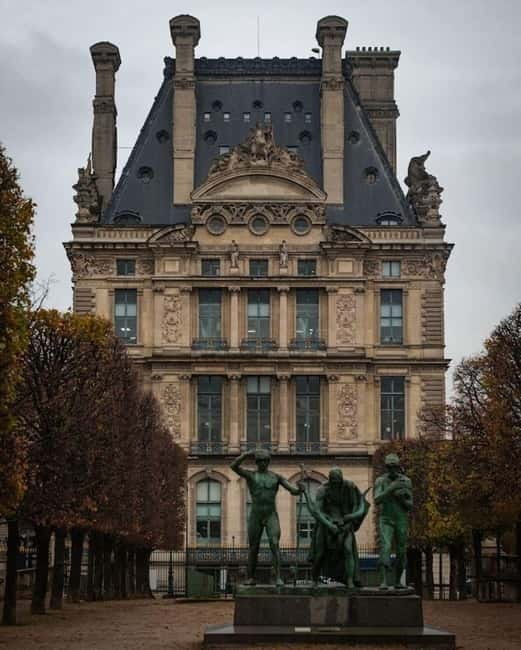
There’s an additional photo stop on the route. The exact spot can vary depending on which starting option you selected. Treat it like a breather with a purpose: you’ll get a final visual anchor, and the guide can wrap up an idea before you head toward the finish.
This matters more than it sounds. On a short, 2-hour tour, the best experiences leave you oriented. A photo pause can do that—if you use it to look around, not just snap and run.
Finishing at Place des Victoires: where the story lands
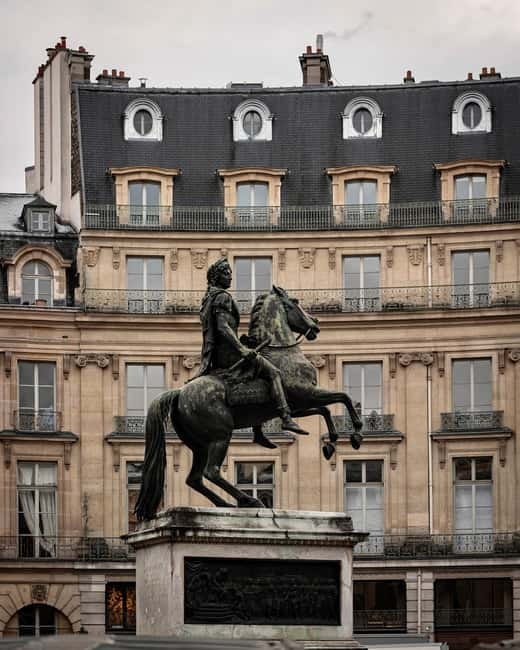
The walk ends at Place des Victoires. Ending on a recognizable public square gives you a clean stop and a chance to regroup mentally. It’s also a good moment to reflect on the tour’s big framing questions: how Napoleon took control, what Revolutionary violence changed in everyday life, and how famous figures (like Marie Antoinette) fit into the arc of the empire.
The tour’s included topics include Queen Marie Antoinette—who was the last Queen of France. Even if you know her name already, the value is in how the guide ties that label to the actual fall-and-change atmosphere of the time.
Place des Victoires is also useful as a logistics win. Finishing here keeps you central, which makes it easier to continue your day on foot.
Napoleon in Paris price and value: why $58 can make sense
At $58 per person for about a 2-hour guided walking tour, you’re paying for three things:
First, you’re paying for a professional local guide who can explain cause and effect, not just point at buildings. That’s the core value of any themed walking tour.
Second, you’re paying for time saved. Trying to map the Revolution-to-Napoleon story on your own is possible, but it’s slow. A guide compresses the story into a route you can actually follow.
Third, you’re buying structure. With multiple starting options and photo pauses, you’ll get a path with stops that match the tour’s themes. The fact that it can be 2–3 hours also matters—you’re not stuck in an ultra-short experience that barely scratches the surface.
Is it worth it if you’re very new to Paris history? For many people, yes—but your best results will come if you’re willing to listen and ask questions.
Is it worth it if you already know a lot? Even then, it can still pay off because the guide aims at the “forgotten legends and hidden details most tourists miss.” Small corrections and sharper framing can turn what you already know into something that sticks.
What to bring, so the walk stays enjoyable
You’ll be outside for the duration, moving between stops. I’d come ready with:
- Comfortable shoes (you’ll thank yourself later)
- Water
- Weather-appropriate clothing
If it’s raining, don’t assume you’ll get a slow, awkward experience. The guide can keep the tour working even then, as long as you bring the right layers.
Who should book this tour
This tour is a great fit if you like:
- Walking tours with a clear storyline
- Revolution and Napoleonic themes tied to real Paris streets
- Guides who answer questions as you go
- A short time commitment that still gives you plenty to think about
It’s less ideal if you:
- Want long indoor museum time
- Need a tour designed around mobility limitations (it’s not suitable for people with mobility impairments or wheelchair users)
If you’re traveling with a friend, this is also a nice option because two people can keep up the pace and still discuss the guide’s story thread.
Should you book Napoleon in Paris: Revolution to Empire Walking Tour?
If your goal is a focused, story-driven walk that helps you connect the French Revolution to Napoleon’s rise, this is a smart use of a half-day. The price is reasonable for a guided, timed route, and the guide’s ability to answer questions—and adapt in small groups—makes the experience feel less like a script and more like a conversation.
If you’re the type who likes to understand the city beyond postcards, book it. If you’re hoping for museum access or a fully seated tour, adjust your expectations and plan other activities on your own.
FAQ
FAQ
How long is the Napoleon in Paris walking tour?
It lasts about 2 hours, and you can check availability to see starting times. Some versions may run closer to 2–3 hours.
Where can I meet the guide?
You can start from different meeting points depending on the option booked, including Roger Vivier on Rue du Faubourg Saint-Honoré, Place de la Concorde, or near the Louvre Museum. The exact meeting point may vary.
What are the main stops on the route?
The walk includes major Paris stops such as Place de la Concorde, the Louvre Museum area, Place Vendôme, the Palais-Royal Quarter, and it finishes at Place des Victoires. There is also an additional photo stop where the specific location can vary by route.
Is the tour available in more than one language?
Yes. It’s available in English and Russian.
What group size is the tour?
It can be private or small groups, depending on what you book.
What’s included in the price?
The price includes a 2–3 hour guided walking tour with a professional local guide, plus insights into the history of the French Revolution and Napoleon’s empire and photo-friendly locations.
What is not included?
Food and drinks are not included, and transportation is also not included.
What should I bring?
Bring comfortable shoes, water, and weather-appropriate clothing.
Is the tour suitable for wheelchair users or people with mobility impairments?
No. It is not suitable for people with mobility impairments or wheelchair users.
Is cancellation free?
There is free cancellation up to 24 hours in advance for a full refund.
Can I reserve without paying immediately?
Yes. You can reserve now and pay later.
More Walking Tours in Paris
- Paris Top Sights Half Day Walking Tour with a Fun Guide
★ 5.0 · 2,893 reviews - Montmartre Hidden Gems and Scenic Highlights Walking Tour
★ 5.0 · 2,684 reviews - Montmartre Hill French Gourmet Food and Wine Tasting Walking Tour
★ 5.0 · 2,588 reviews - Paris: Montmartre Highlights Walking Tour with a Local Guide
★ 4.9 · 2,318 reviews - Paris Île de la Cité and Notre-Dame Walking Tour With Crypt
★ 5.0 · 2,272 reviews
More Tours in Paris
- Paris: Louvre Guided Tour with Reserved Access & Boat Cruise
★ 4.3 · 16,353 reviews - Paris: Big Bus Hop-On Hop-Off Tour with Optional Cruise
★ 4.4 · 13,279 reviews - Louvre Museum Masterpieces Guided Tour with Access
★ 4.5 · 12,023 reviews - Versailles: Skip-the-Line Tour of Palace and Gardens Access
★ 4.7 · 10,429 reviews - Paris: Louvre Overview, Exploration tour and Reserved Entry
★ 4.1 · 10,145 reviews
More Tour Reviews in Paris
- Paris: 1-Hour Seine Cruise departing from the Eiffel Tower
★ 4.4 · 77,472 reviews - Paris: Louvre Museum Timed-Entrance Ticket
★ 4.6 · 71,977 reviews - Disneyland® Paris 1-Day Ticket
★ 4.6 · 49,412 reviews - Paris: Versailles Palace and Gardens Full Access Ticket
★ 4.6 · 41,579 reviews - Paris: Arc de Triomphe Rooftop Tickets
★ 4.6 · 34,264 reviews
Fresh off the review desk in Paris
- Secrets of Paris Bike Tour in English or Dutch★ 5.0 · 5 reviews
- Paris: Mont Saint-Michel Day Tour with Chinese Tour Guide★ 5.0 · 5 reviews
- Private Street Art 2-Hour Guided Tour in Paris★ 4.5 · 5 reviews
- Orsay Museum Tour: 2h Highlights (Private & Small Group)★ 5.0 · 5 reviews
- Discover Paris in electric golf carts★ 4.0 · 5 reviews
- Paris Private Boat Tour with your own Captain Guide★ 5.0 · 5 reviews
Walking Tours, compared.
 ★ 5.0Paris Top Sights Half Day Walking Tour with a Fun GuideFrom $762,893 reviews
 ★ 5.0Montmartre Hidden Gems and Scenic Highlights Walking TourFrom $382,684 reviews
 ★ 5.0Montmartre Hill French Gourmet Food and Wine Tasting Walking TourFrom $1452,588 reviews
 ★ 4.9Montmartre Highlights Walking Tour with a Local GuideFrom $232,318 reviews
 ★ 5.0Paris Île de la Cité and Notre-Dame Walking Tour With CryptFrom $482,272 reviews
 ★ 4.8Montmartre Cheese, Wine & Pastry Guided Walking TourFrom $1272,255 reviews
 ★ 5.0Paris in a Day: Louvre or Orsay, Eiffel Tower, City Walk & CruiseFrom $1571,956 reviews
 ★ 5.0Paris City Center Free Walking Tour (Tip-Based)From $31,340 reviews