
Reviewed · WORKSHOPS
Paris: Crêpe and Galette Making Workshop with Cider
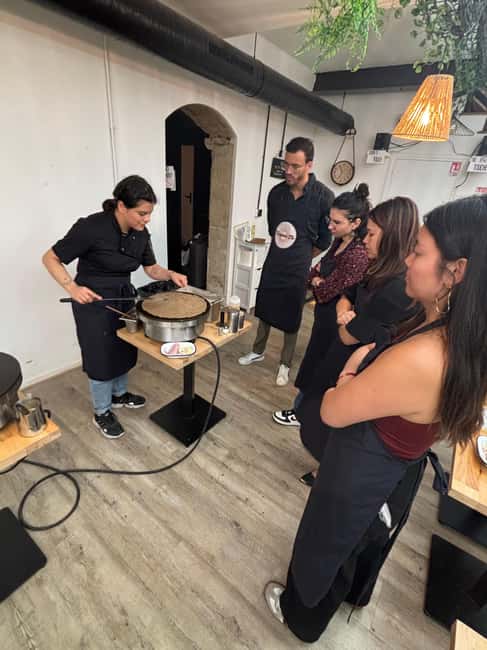
Two hours, one skillet, and French comfort food you can actually make. I love that you’ll cook one sweet crêpe and one savory buckwheat galette from scratch, guided by an English-speaking pastry chef. I also love the mix of hands-on technique with cultural storytelling before you taste, plus a glass of Breton apple cider with your creations. One thing to consider: it’s a practical cooking session, so you’ll want to arrive on time and be ready to get a little messy.
You meet at Crêperie Elo in the Saint-Michel area (49 Boulevard Saint-Michel, 75005 Paris). You’ll enter the crêperie, then staff lead you to the classroom, where a small group setting (max 8) makes it easier to get real feedback while you learn how to use a proper crêpe maker.
In This Review
- Key things to know before you go
- Crêperie Elo on Boulevard Saint-Michel: how the class fits into a Paris day
- The chef’s intro: legends, history, and what you’re actually doing next
- Making batter from scratch with organic ingredients
- Cooking the sweet crêpe: thin, fast, and forgiving if you follow the steps
- Turning to the buckwheat galette: savoriness with a different texture game
- Tasting your crêpes and galettes with Breton apple cider
- Price and value: why $93 for 2 hours can be fair here
- Who should book this workshop in Paris
- Practical tips to get better crêpes on your first try
- Should you book? The quick decision guide
- FAQ
- Where is the meeting point?
- How long is the class?
- Is the class taught in English?
- How many people are in a group?
- What will I cook during the workshop?
- Is cider included?
- Are ingredients and equipment included?
- Is this workshop suitable for young children?
- What’s the price?
Key things to know before you go
- Central Paris meeting point at Crêperie Elo (enter the crêperie first, then you’ll be guided upstairs/inside to class)
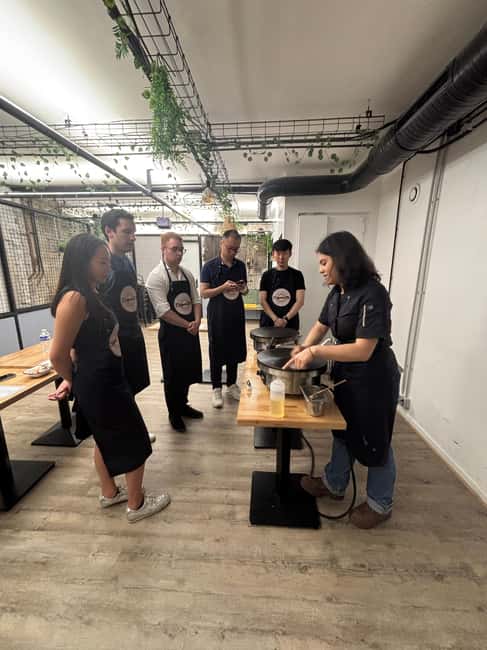
- Small group size (max 8), so you’re not standing on the sidelines
- Real technique time with a crêpe maker, not just watching and hoping
- You’ll make both dishes: a sweet crêpe and a savory buckwheat galette
- Organic, higher-quality ingredients for the batter you mix yourself
- Cider tasting with options, served alongside what you cook
Crêperie Elo on Boulevard Saint-Michel: how the class fits into a Paris day
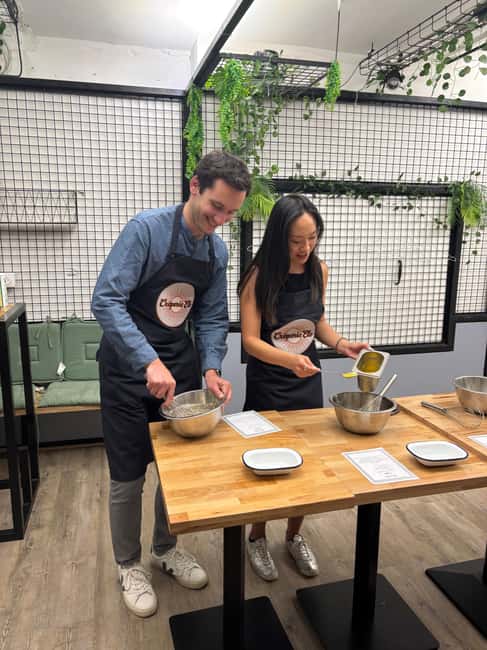
The workshop’s location is easy to tack onto a day of walking: Saint-Michel (75005) puts you in the thick of central Paris without forcing you onto a long commute. The practical part is that you don’t “find a separate studio.” You go into Crêperie Elo, then the staff point you to the class room.
This matters because cooking classes run on timing. If you arrive late, you’ll miss the chef’s intro and the batter prep window. The good news: the meeting point is fixed and clear, and the class is short—just 2 hours—so you’re not burning an entire afternoon.
If you’re doing this alongside other nearby stops, plan for a relaxed buffer. You want time to get your bearings, use the restroom if needed, and settle in before flour and batter start flying.
Worth weighing up next to this Paris pick
- Fragonard Paris: Mini Perfume Workshop
★ 4.5 · 1,924 reviews - Paris: Macaron Class at Galeries Lafayette
★ 4.2 · 1,196 reviews - Paris Cooking Class and Lunch with Wine plus Market Visit Option
★ 5.0 · 1,024 reviews - Paris Croissant Small-Group Baking Class with a Chef
★ 5.0 · 910 reviews
The chef’s intro: legends, history, and what you’re actually doing next
Before your hands touch batter, the chef gives you the story side: the history and legends behind crêpes and galettes. This isn’t just trivia. It helps you understand why people care about technique, not just flavor—why a thin crêpe matters, why buckwheat has its own role, and why traditional steps keep showing up across generations.
Expect an English-led session with basic French cues supported. That’s a smart setup for visitors who don’t speak French fluently. You’ll still hear familiar food terms you can carry home, and you’ll be able to follow directions without guessing.
And yes, you’ll feel the energy shift once you move from stories to action. Reviews mention instructors like Fatima bringing patience and humor, which is a big deal when you’re learning a finicky skill. Crêpes look simple until you try them. A calm teacher keeps the stress low and your results high.
Making batter from scratch with organic ingredients
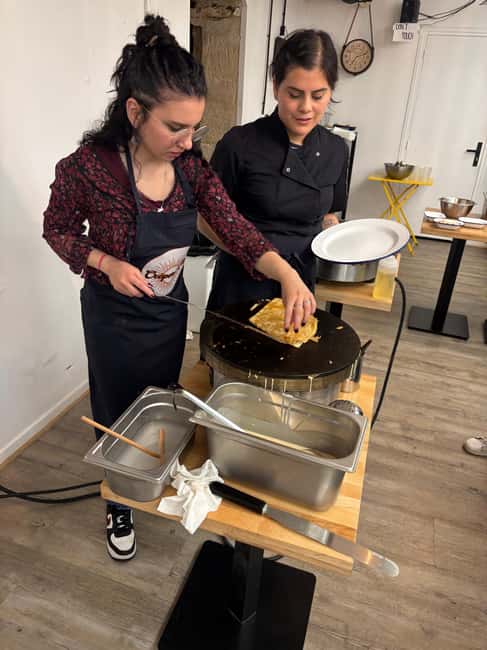
Here’s where the experience earns its ticket price: you don’t just assemble food. You create your own batter. The workshop emphasizes organic, high-quality ingredients, and that choice shows up in the taste more than you’d expect for something as basic as flour + liquid.
You’ll be shown how to use the equipment properly, and you’ll learn how to treat the batter as something you can adjust and refine. This is the part that helps you at home later. If you only learn the recipe but never learn what the texture should look like, crêpes can turn into a frustrating experiment. This class focuses on the practical signals—what to do when it feels off, and how to move forward rather than giving up.
Also, the session is built for small-group teaching (up to 8 participants). That means the chef can check what you’re doing in real time. You’re not waiting for a crowd to thin out.
Cooking the sweet crêpe: thin, fast, and forgiving if you follow the steps
You’ll cook at least one sweet crêpe using a real crêpe maker. Sweet crêpes are the classic test: thin enough to fold easily, cooked enough to avoid a doughy center, and light enough that it doesn’t taste heavy.
What I like about learning sweet first (and what you’ll likely experience here) is that it builds confidence. You get one win early, then you switch to something more savory and textured.
In a well-paced class, you’ll probably get more than one chance to practice your timing. Some people report having the freedom to try again if the first attempt isn’t perfect. Either way, your goal isn’t to churn out restaurant-level crêpes on the first try—it’s to understand the workflow so future crêpes don’t feel like a mystery.
Turning to the buckwheat galette: savoriness with a different texture game
Then you shift gears to the savory buckwheat galette. Buckwheat has a different personality from wheat flour, so the cooking cues can feel different. The galette is thicker and sturdier than a typical sweet crêpe, which can actually help beginners. When you’re learning, you want at least one dish that rewards you with structure.
The workshop design often splits you into small working groups so people aren’t waiting in a long line. That small-team setup makes it easier to get hands-on guidance while you cook. The payoff is that you don’t just eat one version of French food—you come away with two skills that match how real French people actually build meals.
And because you cook both items yourself, you’ll taste the difference between the batter choices. That’s where the learning sticks.
Tasting your crêpes and galettes with Breton apple cider
After cooking, you taste what you made. The class includes 1 sweet crêpe and 1 savory galette, plus a glass of French apple cider (with a non-alcoholic option available).
I like how cider fits this kind of lesson. It’s a simple pairing that feels traditional without being fussy, and it also helps you evaluate the food. When you take a bite of a crêpe you made, you can compare texture and seasoning immediately. When you sip cider, the sweetness and acidity help you notice whether you cooked the batter thin enough or whether it needs a little more time next try.
This is also where you get the “chef story” closure. You’ve been learning technique, then you get to taste the result in a casual, real-food way—not a staged tasting with no context.




Price and value: why $93 for 2 hours can be fair here
At $93 per person for 2 hours, this isn’t a cheap snack-and-chat activity. The value comes from four things that most low-priced food experiences don’t include at the same level:
- Instruction plus hands-on cooking
You’re mixing batter, using the equipment, and cooking both a sweet crêpe and a savory galette.
- Ingredients and equipment are included
The batter ingredients and the tools are part of the class, not something you figure out later.
- Tasting is part of the outcome
You don’t just leave with a photo and a vague memory. You eat what you make.
- Cultural storytelling is built into the time
The chef doesn’t only teach technique; you also learn why the dishes matter, with history and legends woven in.
If you’re someone who likes to take home skills (not just souvenirs), the cost makes sense. If you want a purely observational cooking show, you might decide it’s pricier than it needs to be. But for a small group with real coaching, it’s a strong deal for central Paris.
Who should book this workshop in Paris
This workshop works well if you want a practical “French cooking skill” you can repeat.
It’s a good fit for:
- Solo travelers who want structure, interaction, and a clear endpoint (you leave with two foods you made)
- Couples who want an activity that’s fun without being exhausting
- Families, especially teens and older kids. One class experience included kids aged 16, 14, and 12 with an instructor who guided them patiently
- Culture lovers who enjoy the story side of food traditions, not just the recipe
It’s not suitable for children under 6. So if you’re traveling with very young kids, you’ll need a different plan.
Also, it’s taught in English, which is a plus. You’ll get basic French cues, but you won’t be left behind if your French is limited.
Practical tips to get better crêpes on your first try
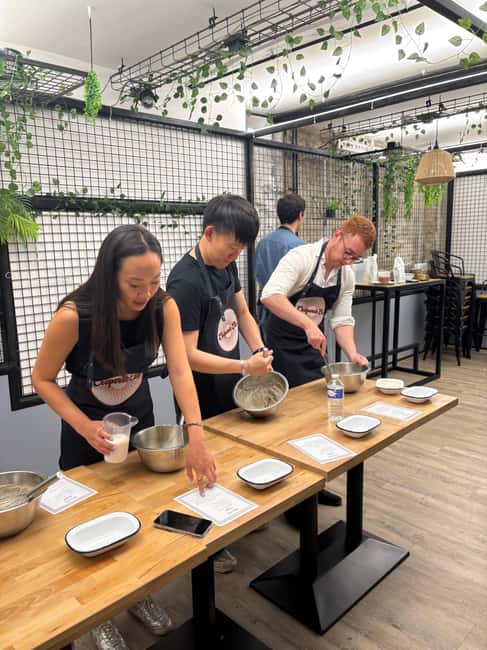
You can’t control everything, but you can stack the odds.
- Arrive a few minutes early so you don’t rush into the batter stage.
- Expect to learn by doing, not by watching. Crêpes are technique-heavy, even when they look simple.
- Pay attention to batter consistency. The goal is texture you can cook evenly.
- Don’t worry about the first attempt. The session is structured for you to practice and build muscle memory.
- Plan for an appetite. You’re tasting what you make, and cider is included, so go easy beforehand.
Should you book? The quick decision guide
Book this workshop if you want:
- A small-group, hands-on cooking session in central Paris
- The chance to make both a sweet crêpe and a savory buckwheat galette
- Real coaching with included ingredients, equipment, and tasting
- A fun story-driven food experience led by an instructor who brings patience (like Fatima, when she’s hosting)
Skip it if you:
- Prefer eating out over learning technique
- Don’t want to touch food or work with cooking steps
- Need a totally hands-off activity, since this one is built around participation
If you fall anywhere in the middle, I’d lean yes. Two hours is the right length. You leave with food in your stomach and a skill you can repeat.
FAQ
Where is the meeting point?
The workshop meets at Crêperie Elo, located at 49 Boulevard Saint-Michel, 75005 Paris. You enter the crêperie and the staff will lead you to the class room.
How long is the class?
The duration is 2 hours.
Is the class taught in English?
Yes. The instructor teaches in English, with basic French cues supported.
How many people are in a group?
The class has a maximum group size of 8.
What will I cook during the workshop?
You’ll cook one sweet crêpe and one savory buckwheat galette, using the crêpe maker.
Is cider included?
Yes. You’ll receive a glass of French apple cider, and there is a non-alcoholic option.
Are ingredients and equipment included?
Yes. The experience includes ingredients, equipment, instruction, and tasting.
Is this workshop suitable for young children?
It’s not suitable for children under 6.
What’s the price?
The price is $93 per person.
More Workshops in Paris
- Fragonard Paris: Mini Perfume Workshop
★ 4.5 · 1,924 reviews - Paris: Macaron Class at Galeries Lafayette
★ 4.2 · 1,196 reviews - Paris Cooking Class and Lunch with Wine plus Market Visit Option
★ 5.0 · 1,024 reviews - Paris Croissant Small-Group Baking Class with a Chef
★ 5.0 · 910 reviews - Paris: 2-Hour Perfume Creation Workshop
★ 4.8 · 731 reviews
More Tour Reviews in Paris
- Paris: 1-Hour Seine Cruise departing from the Eiffel Tower
★ 4.4 · 77,472 reviews - Paris: Louvre Museum Timed-Entrance Ticket
★ 4.6 · 71,977 reviews - Disneyland® Paris 1-Day Ticket
★ 4.6 · 49,412 reviews - Paris: Versailles Palace and Gardens Full Access Ticket
★ 4.6 · 41,579 reviews - Paris: Arc de Triomphe Rooftop Tickets
★ 4.6 · 34,264 reviews
Fresh off the review desk in Paris
- Secrets of Paris Bike Tour in English or Dutch★ 5.0 · 5 reviews
- Paris: Mont Saint-Michel Day Tour with Chinese Tour Guide★ 5.0 · 5 reviews
- Private Street Art 2-Hour Guided Tour in Paris★ 4.5 · 5 reviews
- Orsay Museum Tour: 2h Highlights (Private & Small Group)★ 5.0 · 5 reviews
- Discover Paris in electric golf carts★ 4.0 · 5 reviews
- Paris Private Boat Tour with your own Captain Guide★ 5.0 · 5 reviews
Workshops, compared.
 ★ 4.5Fragonard Paris: Mini Perfume WorkshopFrom $361,924 reviews
 ★ 4.2Macaron Class at Galeries LafayetteFrom $691,196 reviews
 ★ 5.0Paris Cooking Class and Lunch with Wine plus Market Visit OptionFrom $2401,024 reviews
 ★ 5.0Paris Croissant Small-Group Baking Class with a ChefFrom $157910 reviews
 ★ 4.82-Hour Perfume Creation WorkshopFrom $115731 reviews
 ★ 4.9French Croissant Baking Class with a ChefFrom $159712 reviews
 ★ 5.0Paris Cooking Class: Learn How to Make MacaronsFrom $156634 reviews
 ★ 4.9French Macaron Culinary Class with a Chef591 reviews
Browse the lists this tour appears in