
Croissants start in a real home kitchen. I love how this 90-minute class keeps things personal, not factory-style, and teaches the technique in an actual small group setting. It’s French baking you can feel in your hands, with guidance throughout the whole process.
What I like most: you learn the core steps, including lamination (folding butter layers into dough) and shaping classic crescents by hand, not by machine. And you end with a practical reward: you sit down for fresh croissants with coffee or tea while everything is still warm.
One possible drawback to consider: because it’s a guided family kitchen, the pace may mean you do some steps more than others. One guest even wished they could do more of the ingredient mixing themselves, so if you want to do absolutely every motion, plan to stay flexible and learn the method, not just the steps.
In This Review
- Key Things I’d Prioritize
- Arriving in Paris: The Simple Meeting Point and Real-Home Feel
- Meet Your Instructor and Get Oriented in English
- Dough Preparation: Learning the Texture Check, Not a Shortcut
- Lamination in a Home Kitchen: The Butter-Fold Rhythm
- Hand-Rolling and Shaping Crescents: Where the Class Gets Fun
- Baking Without a Lab: Tips for a Golden Crunch at Home
- The Best Part: Fresh Croissants, Coffee or Tea, and French Family Conversation
- Price and Value: Is $104 Worth 90 Minutes?
- Who This Croissant Class Fits Best
- Quick FAQ
- FAQ
- How long is the croissant baking class?
- What’s the group size?
- Do I need any professional baking experience?
- Is the instructor fluent in English?
- Where do we meet?
- What do I eat at the end?
- Is there free cancellation?
- Should You Book This Paris Croissant Class?
Key Things I’d Prioritize
- Small group (up to 4) means you get more attention while your dough is on the counter
- English instruction keeps the why of each step clear, not just the what
- Hands-on lamination and hand-rolling teach the touch you need for real croissant texture
- Bake-and-eat at the end so you learn what home ovens do to dough and timing
- Tips for golden crunch in a home oven translate into what you can repeat later
Arriving in Paris: The Simple Meeting Point and Real-Home Feel
You meet in front of the building. That’s it. No complicated shuttle, no scramble through a huge landmark area. The whole point of this experience is that it happens where French baking actually lives: in a home kitchen.
Once you’re there, the vibe is calm and domestic. You’re not watching from a distance. You’re working at a counter, rolling and shaping alongside your instructor, and that matters. Croissants are finicky, and the class is built around doing the moves so you can copy them later.
Also, because the group is limited to just four participants, you’re not fighting for elbow room. In a craft like this, space is part of learning.
More aprons-on macaron and pastry classes
- Paris: Macaron Class at Galeries Lafayette
★ 4.2 · 1,196 reviews - Paris Croissant Small-Group Baking Class with a Chef
★ 5.0 · 910 reviews - Paris: French Croissant Baking Class with a Chef
★ 4.9 · 712 reviews - Paris Cooking Class: Learn How to Make Macarons
★ 5.0 · 634 reviews
Meet Your Instructor and Get Oriented in English
The instructor is English-speaking, which makes a big difference for something as touch-based as pastry dough. You’re not just getting a translation of a recipe. You’re learning what to watch for while you work: texture cues, handling, and timing decisions.
In the reviews, Iveta comes across as warm and communicative. One guest noted she gave lots of information on why each step is happening, not only how to do it. That coaching style is exactly what you want here, because croissants don’t become good through memorizing one schedule. They improve when your hands learn what the dough should feel like at each stage.
One more practical note: since this is a family setting, you’ll probably hear stories about French daily life while you work. That isn’t filler. It helps the experience feel like part of being in France, not just doing a cooking activity.
Dough Preparation: Learning the Texture Check, Not a Shortcut
The class walks you through dough preparation before you touch the lamination. This is the foundation. If your dough is too tight, too warm, or handled in a way that breaks structure, you’ll struggle later when you try to roll and shape.
What you’re really learning is how to judge the dough by feel. You won’t be relying on industrial machinery or a “lab” environment. The instruction focuses on the touch and the look together: how the dough behaves under your hands and how it responds when you move from mixing into handling.
No professional baking experience is required. That’s important, because many cooking classes quietly assume you already know what yeast dough should feel like. Here, you’re learning the basics of technique within the croissant method itself.
Lamination in a Home Kitchen: The Butter-Fold Rhythm
This is the heart of the croissant story. Lamination means carefully folding layers of rich butter into the dough so you get those crisp, flaky strata after baking.
In a professional pastry shop, lamination often feels automated and controlled. In a home kitchen, it’s all about attention. And that’s exactly why the class is valuable. You learn the rhythmic folding process that families pass down, the kind of method that depends on maintaining structure instead of rushing.
A key takeaway: lamination isn’t just about stacking butter. It’s also about managing the dough temperature and handling it so the layers stay distinct. Since the class is hands-on, you’ll feel when your dough is cooperating and when it needs a slower, gentler approach.
If you want to repeat this at home, this is the section that will do the most work for you later. Even with a great recipe, you’ll need that mental picture of how the layers should behave before you roll.
Hand-Rolling and Shaping Crescents: Where the Class Gets Fun
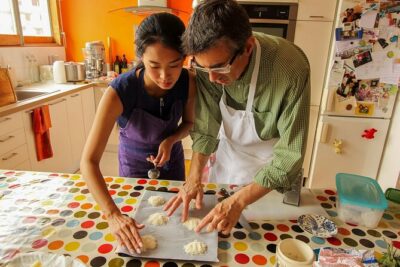
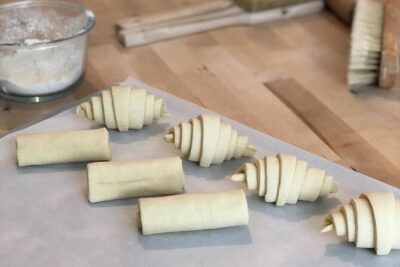
Once your dough has gone through lamination, you move into shaping. This is where your hands turn technique into that classic crescent form.
The class specifically teaches hand-rolling and shaping the croissants. No special cutters required, no fancy tooling. Just guided form and practical coaching so the crescents look right and the layers are positioned to separate during baking.
This is also where small-group learning pays off. If your roll is too thick in one spot, or the shaping compresses layers, you can see and correct it with help right away. With only four participants, you’re not waiting for the instructor’s attention while your dough sits.
And yes, shaping can be fiddly. That’s normal. The goal is to learn the method so your next batch improves. A good class doesn’t expect perfection on day one. It expects growth.
Baking Without a Lab: Tips for a Golden Crunch at Home
You learn how to get a golden crunch in a home oven, which is the part most classes skip. A croissant from a bakery doesn’t just taste buttery. It has a specific crust and bake behavior.
Here, the instructor shares tips you can actually apply in your kitchen. The focus is on what your oven does to dough and how to get that crisp surface you want, not just a pale roll that tastes fine but lacks that classic texture.
Because this is a bake-and-eat experience, you see your result quickly. That makes the learning stick. When you pull a tray and you can compare the surface color and texture to what you were told to aim for, you start understanding the real variables: heat distribution, timing, and how the shaped croissants behave as they bake.
If your oven runs hot or cool, that matters. While exact settings aren’t stated in the info you have, the underlying lesson is clear: you’re not guessing in the dark. You’ll leave with home-oven guidance so you can adjust next time.
Worth weighing up next to this Paris pick
The Best Part: Fresh Croissants, Coffee or Tea, and French Family Conversation
The finale is straightforward and satisfying. At the end, you sit down together and enjoy the croissants straight from the baking tray, paired with coffee or tea.
This is more than a snack. It’s a built-in feedback moment. You’re eating the outcome of everything you practiced: dough prep, lamination, shaping, and baking technique. That means you can connect taste and texture directly to what you did with your hands.
It also becomes a social experience. The class is in a family setting, so conversation naturally turns toward everyday French life. That’s the difference between a generic cooking demo and a workshop that feels like you were invited into someone’s routine.
From the reviews, the welcome and communication are a real strength here. One guest even mentioned the class felt like it was on Iveta’s houseboat, which signals how personal the setting can be. If you’re the kind of person who likes food experiences tied to real lives (not just scenic backdrops), you’ll likely enjoy this style.
Price and Value: Is $104 Worth 90 Minutes?
At $104 per person for 90 minutes, you’re paying for three things that matter:
- Hands-on coaching through the hardest steps (lamination and shaping)
- Small-group learning capped at four participants, which reduces wait time and boosts feedback
- An end payoff: warm croissants plus coffee or tea, eaten right after baking
If you were only buying a croissant, $104 would be shocking. But this isn’t a food purchase. It’s instruction that helps you recreate a French breakfast at home with better results.
The “value” question often comes down to whether you want technique or just a meal. This class is heavy on technique. If you care about learning the touch, the structure, and the baking outcome, the price starts to make sense. If you mainly want a quick pastry tasting with little practice, you may feel it’s priced on instruction—because it is.
Who This Croissant Class Fits Best
This works especially well if you:
- Want a beginner-friendly way to learn croissant method without needing prior baking skills
- Enjoy hands-on cooking where you can ask questions in the moment
- Prefer an intimate, home-based experience over large group tours
- Love the idea of bringing French baking skills back with you
It may not be ideal if you:
- Want a full production line, industrial tools, or a “step-by-step, bake a massive batch” experience
- Need to do every single ingredient-mixing task yourself (the class is guided, and the pace may vary)
Quick FAQ
FAQ
How long is the croissant baking class?
It lasts 90 minutes.
What’s the group size?
It’s a small group limited to 4 participants.
Do I need any professional baking experience?
No. The activity is designed so you don’t need professional baking experience.
Is the instructor fluent in English?
Yes, the instructor teaches in English.
Where do we meet?
You meet in front of the building.
What do I eat at the end?
You enjoy the freshly baked croissants with coffee or tea.
Is there free cancellation?
Yes, you can cancel up to 24 hours in advance for a full refund.
Should You Book This Paris Croissant Class?
Yes, if your goal is to learn technique you can actually repeat. The best part isn’t just the warm pastry at the end. It’s the way you practice lamination, shape crescents by hand, and then get home-oven tips so your next attempt improves instead of guessing.
Book it if you like food experiences that feel human—family-kitchen energy, English explanations, and small-group attention. If you’re mainly chasing a quick tasting with minimal effort, you might want a different kind of food stop. But for anyone who wants to take French baking seriously (and enjoy it while learning), this one is worth your time in Paris.
More Cooking Classes in Paris
- Paris Cooking Class and Lunch with Wine plus Market Visit Option
★ 5.0 · 1,024 reviews - Paris Croissant Small-Group Baking Class with a Chef
★ 5.0 · 910 reviews - Paris: French Croissant Baking Class with a Chef
★ 4.9 · 712 reviews - Paris Cooking Class: Learn How to Make Macarons
★ 5.0 · 634 reviews - Paris Evening Cooking Class French Dinner and Market Visit Option
★ 5.0 · 430 reviews
More Tour Reviews in Paris
- Paris: 1-Hour Seine Cruise departing from the Eiffel Tower
★ 4.4 · 77,472 reviews - Paris: Louvre Museum Timed-Entrance Ticket
★ 4.6 · 71,977 reviews - Disneyland® Paris 1-Day Ticket
★ 4.6 · 49,412 reviews - Paris: Versailles Palace and Gardens Full Access Ticket
★ 4.6 · 41,579 reviews - Paris: Arc de Triomphe Rooftop Tickets
★ 4.6 · 34,264 reviews
More Macaron and Pastry Classes
- Paris: Macaron Class at Galeries Lafayette
★ 4.2 · 1,196 reviews - Paris Croissant Small-Group Baking Class with a Chef
★ 5.0 · 910 reviews - Paris: French Croissant Baking Class with a Chef
★ 4.9 · 712 reviews - Paris Cooking Class: Learn How to Make Macarons
★ 5.0 · 634 reviews - Paris: French Macaron Culinary Class with a Chef
★ 4.9 · 591 reviews
Fresh off the review desk in Paris
- Secrets of Paris Bike Tour in English or Dutch★ 5.0 · 5 reviews
- Paris: Mont Saint-Michel Day Tour with Chinese Tour Guide★ 5.0 · 5 reviews
- Private Street Art 2-Hour Guided Tour in Paris★ 4.5 · 5 reviews
- Orsay Museum Tour: 2h Highlights (Private & Small Group)★ 5.0 · 5 reviews
- Discover Paris in electric golf carts★ 4.0 · 5 reviews
- Paris Private Boat Tour with your own Captain Guide★ 5.0 · 5 reviews
Paris Pastry & Macaron Classes, compared.
 ★ 4.2Macaron Class at Galeries LafayetteFrom $691,196 reviews
 ★ 5.0Paris Croissant Small-Group Baking Class with a ChefFrom $157910 reviews
 ★ 4.9French Croissant Baking Class with a ChefFrom $159712 reviews
 ★ 5.0Paris Cooking Class: Learn How to Make MacaronsFrom $156634 reviews
 ★ 4.9French Macaron Culinary Class with a Chef591 reviews
 ★ 5.0A Morning in Paris Food Tour: Croissants, Baguettes & ChocolateFrom $125556 reviews
 ★ 5.0Paris Chocolate, Macaron & Pastry Food Tour: 10 Gourmet TastingsFrom $118339 reviews
 ★ 5.0Paris Macarons Small-Group Baking Class with a ChefFrom $157316 reviews
Browse the lists this tour appears in