
Reviewed · WALKING TOURS
Paris: French Fashion History Walking Tour
Fashion history is surprisingly walkable. On this Paris French Fashion History Walking Tour, I like how it turns brand myths into street-level stories, especially with Coco Chanel and the behind-the-scenes logic of Hermès. One heads-up: it’s mostly an outdoor stroll, so you’ll want real walking shoes and an umbrella.
I also appreciate that the guide ties what happened in the 19th and 20th centuries to what you see in luxury stores today, including why certain houses feel exclusive. With a live guide (English or French) and a private group setup (up to 6), you can ask questions and get direct answers without feeling rushed.
The tour runs 90 minutes and it keeps going rain or shine, starting near La Cure Gourmande. If you’re the type who stops to read a plaque and then looks for the rest of the story, this format is a great fit.
In This Review
- Key Things I’d Plan For
- Rue Saint-Honoré: the street where luxury became a system
- Place Vendôme and why the address matters
- La Madeleine’s Greek design and the shopping streets around it
- Hermès explained: from saddler roots to Birkin and Kelly rules
- Coco Chanel: modern style, survival, and complicated connections
- Louis Vuitton and the atelier-to-identity story
- Dior after the war: superstition, failures, then reinvention
- Yves Saint Laurent: the modernity turn you can still feel today
- What you learn by stepping into a few shops
- Price and who this 90-minute private walk is best for
- Should you book this Paris fashion history walk?
- FAQ
- How long is the Paris French Fashion History Walking Tour?
- What is the price for this tour?
- Is the tour private?
- What languages is the live guide available in?
- Where is the meeting point?
- Does the tour include food or drinks?
- Is pick-up provided?
- Is the tour wheelchair accessible?
- What should I bring?
- What’s the weather plan for the tour?
- FAQ
- Can I cancel for a full refund?
- Do I need to pay right away?
Key Things I’d Plan For
- Rue Saint-Honoré luxury district, plus the first ateliers idea that explains how fashion became a business
- Place Vendôme context, including references to Chanel and Hemingway spending time there
- La Madeleine’s Greek-inspired look, paired with tips on surrounding shopping streets
- Hermès from saddler roots to Birkin and Kelly exclusivity, explained in plain terms
- Chanel, Dior, and Yves Saint Laurent as a timeline, not just a list of names
- Small in-store moments so you understand how luxury houses present their legacy
Rue Saint-Honoré: the street where luxury became a system
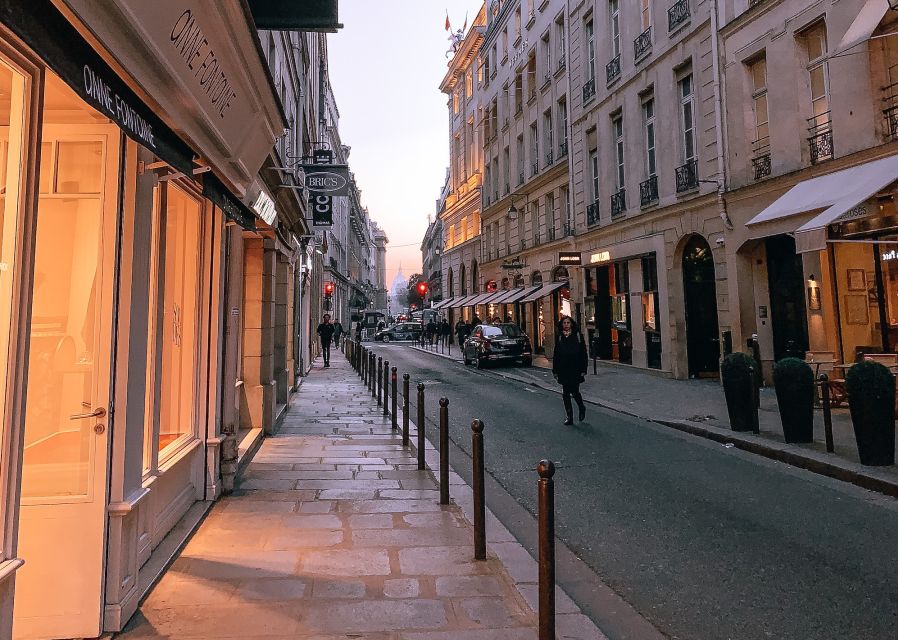
Most fashion history walks in Paris end up being “look, fancy buildings.” This one gets more practical. You start in the rue Saint-Honoré area, where designer shops aren’t just decoration—they’re the modern face of a long-running industry.
The guide frames the street as a kind of marketplace that grew up over time. You hear how early ateliers helped shape what would become brand identity, and how that identity later turned into a selling tool. Even if you don’t care about bags or couture, it helps you understand why luxury feels structured here: it’s built on location, craft, and reputation.
And yes, you get plenty of “real Paris” during the walk. You’ll be looking at storefronts, doorways, and the rhythm of the neighborhood rather than standing in one spot waiting for the next photo.
Worth weighing up next to this Paris pick
- Paris Top Sights Half Day Walking Tour with a Fun Guide
★ 5.0 · 2,893 reviews - Montmartre Hidden Gems and Scenic Highlights Walking Tour
★ 5.0 · 2,684 reviews - Montmartre Hill French Gourmet Food and Wine Tasting Walking Tour
★ 5.0 · 2,588 reviews - Paris: Montmartre Highlights Walking Tour with a Local Guide
★ 4.9 · 2,318 reviews
Place Vendôme and why the address matters
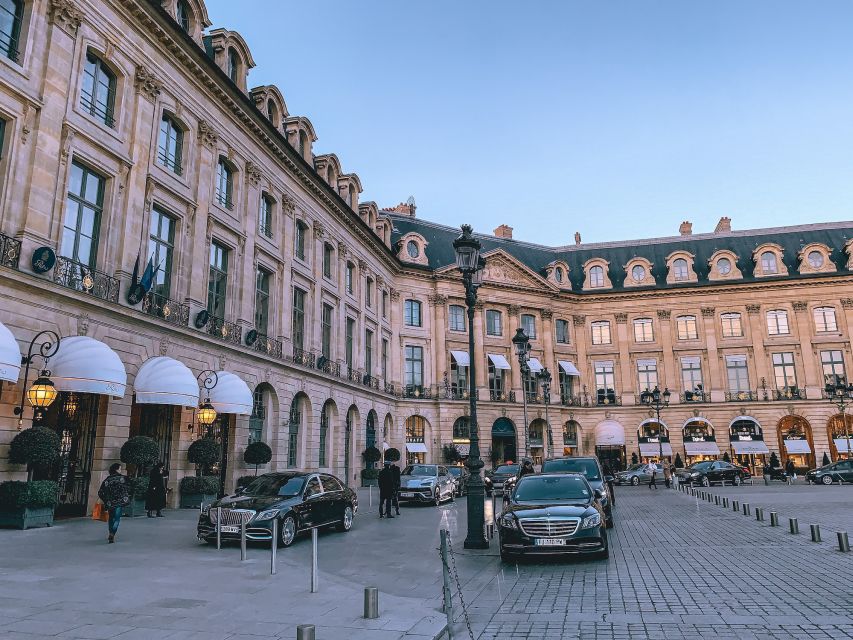
Place Vendôme is one of those locations where the buildings feel like they’re keeping secrets. Here, you’re not just appreciating architecture—you’re getting names placed into context. The tour points you toward why places like this became gathering points for high society and creative people.
Chanel and Hemingway are brought up as examples of people who spent significant time around the area. That detail matters because it shows how fashion culture didn’t grow in a vacuum. Writers, artists, patrons, and brands all fed off the same Paris energy, and luxury didn’t only mean clothing—it meant status, media, and conversation.
If you’re the kind of person who enjoys connecting dots, this stop does exactly that. You’ll finish the square with a better sense of where fashion moved in the social world, not just on the sewing table.
La Madeleine’s Greek design and the shopping streets around it
Then comes La Madeleine—one of the most striking church exteriors in central Paris, with that Greek-style vibe that makes people stare before they even realize they’re doing it. The guide uses the stop as a bridge: architecture, then neighborhood, then shopping.
What I like about this approach is that it stops fashion history from turning into a museum lecture. Around La Madeleine, you see small streets and shopping flow, and the guide helps you notice the micro-decisions that shoppers make—what kind of streets you’re in, what “luxury” looks like at street level, and how location influences price, crowd, and brand behavior.
If you’ve never “shop-walked” Paris before, this part is useful. You’ll get a sense for why certain blocks attract luxury brands in the first place, and why people treat browsing here like an activity of its own.
Hermès explained: from saddler roots to Birkin and Kelly rules
Hermès is the star of exclusivity in many people’s minds. Here’s what you get: an explanation of how the brand developed from saddler beginnings into one of the most iconic names in modern luxury, with a specific focus on the bags that dominate the conversation.
The walk includes seeing the first Hermès shop, which adds weight to the story. Instead of hearing “they’re famous for quality,” you’re shown the geography behind the brand’s growth and the long game behind its reputation.
Then the tour tackles the Birkin and Kelly question in a way that helps you understand the brand’s mystique. The key idea isn’t just that the bags are expensive—it’s how Hermès sells them and why that sales approach creates scarcity and demand. You’ll leave with clearer mental models for what you’re seeing in stores and why those displays feel different from many other luxury houses.
This is one of the most “worth-it” sections for first-timers. If you’ve ever wondered why you can walk into some luxury stores and browse freely, but Hermès feels like a different world, this tour gives you the why.
Coco Chanel: modern style, survival, and complicated connections
Coco Chanel sits at the center of the tour like a character in a drama—because, in the guide’s framing, it is. You learn how Chanel saved her brand and why her story matters to the modern idea of women’s fashion having freedom of movement and self-definition.
What I found especially valuable is that the tour doesn’t treat Chanel as only a designer. It talks about the personal relationships and the life events that helped shape her trajectory. The guide explains her connection with the German army and how her lovers influenced her life and helped her save her brand.
Now, a quick fairness note: this is presented as historical context within the tour’s storyline. If you prefer fashion history that stays strictly in the “sewing and silhouettes” lane, some of the political and personal background may feel heavy. But it’s also exactly why Chanel is such a powerful case study. Fashion doesn’t only reflect taste. It reflects power, choices, and the era’s mess.
You’ll also get a clearer sense of how Chanel changed the industry’s attitude toward women—especially the idea that women’s clothing could be practical without giving up elegance. That theme carries through the walk and becomes part of your takeaway, long after you stop hearing brand names.
Louis Vuitton and the atelier-to-identity story
You also spend time on Louis Vuitton and the broader shift from craftsmanship to identity. The tour touches the first ateliers concept—how early production spaces and maker culture helped build the foundation for brands to become recognizable.
This matters because luxury can look like a logo game from the outside. The Louis Vuitton portion gives you a framework for how brands turned their methods, materials, and design codes into something customers could recognize instantly.
Even if you’re not a “travel bag person,” you’ll understand why certain houses win loyalty. It’s not just the product. It’s the sense of lineage—where the style comes from, how it evolved, and why that evolution still sells.
Worth weighing up next to this Paris pick
Dior after the war: superstition, failures, then reinvention
Christian Dior is presented as someone driven by fate and personal belief, with a backstory that includes setbacks before the famous success. The tour leans into the “post-war fashion” angle, because Dior’s big shift didn’t happen in a calm world. It happened after disruption, when the industry and customers both wanted reassurance and new direction.
You learn why Dior’s approach landed when it did and how his brand became a symbol of a new era. What I liked here is the honesty of the narrative: it wasn’t a straight line from idea to empire. There were failures first, then adjustments, then the moment when the world said yes.
For you, that makes the takeaway practical. When you look at modern fashion houses today, you can start seeing them as systems that respond to social conditions—not just artists reacting in a vacuum.
Yves Saint Laurent: the modernity turn you can still feel today
Then the tour lands on Yves Saint Laurent, described as a founding figure for modernity in fashion. Here, you’re not just learning what he created; you’re getting a sense for the shift in attitude—toward a more contemporary way of dressing, and a different relationship between fashion and culture.
This part works well because it connects the old to the new. You’ll understand why YSL still feels current when you see the shapes, references, and confidence in modern styling. It’s the kind of story that helps you look at contemporary fashion with better context instead of treating it like random trend cycles.
If you’ve ever thought fashion seems to recycle itself, this stop gives you a better reason. It’s not just recycling. It’s evolution.
What you learn by stepping into a few shops
A big plus of this tour is that you don’t only stand on sidewalks reading the city. You enter a few shops to get a better understanding of luxury brands and their legacy.
I like this method because it grounds the history in how luxury operates now. You’ll notice how presentation works, how brands control pace and space, and how the store itself reinforces the story you just heard outside.
You also get a sense of the customer experience differences between houses—some feel like you’re entering a museum, others feel like you’re walking into a showroom. That contrast makes the earlier discussion about exclusivity (especially with Hermès) easier to understand.
This is where the 90 minutes start to feel efficient. You go from story to observation without needing another activity to “make it real.”
Price and who this 90-minute private walk is best for
Let’s talk value without the hand-waving. The price is $294 per group (up to 6) for 90 minutes with a live guide. That structure is ideal if you’re traveling with friends or family and you don’t want to pay per person for an experience that’s mostly guided storytelling.
For solo travelers, it can still be worth it if you care about the specific brands and you like the private-group vibe. But if you’re purely price-shopping, you may want to compare it to standard group tours in your travel window.
In terms of effort, you should expect a real walk. It’s not a sit-and-sip tour, and you’ll want to bring comfortable shoes and plan for rain or shine. The route is in central Paris, so you’ll likely enjoy seeing the neighborhood feel as you move—more “walkable Paris” than “transit to one stop after another.”
Who should book?
- Fashion lovers who want names plus context, not just brand facts
- First-time Paris visitors who want to understand how luxury grew around specific streets
- Couples or small groups who can share the cost and enjoy asking questions
- People who like modern fashion more when they know where it came from
Who might pause?
- If you hate standing/walking and prefer indoors only, the outdoor nature could be annoying
- If you want strictly neutral, politics-free fashion history, Chanel’s story may include topics you’d rather avoid
Should you book this Paris fashion history walk?
I think you should book it if you want Paris luxury explained in a way that sticks: street context, brand evolution, and the kind of connections that make today’s shopping feel less random.
The strongest reason to choose this one is the mix of big names—Chanel, Hermès, Dior, and Yves Saint Laurent—with practical explanations like why Hermès feels exclusive and how post-war fashion changed everything. Add in the private-group feel and a guide like Hannah (who’s repeatedly praised for making the stories land and answering questions), and it’s an easy “yes” for people who like fashion history that actually helps you see Paris.
If you’re on the fence, ask yourself one simple question: do you want to understand luxury as a system, or do you just want a quick photo stop? If it’s the first one, this tour fits.
FAQ
How long is the Paris French Fashion History Walking Tour?
It lasts 90 minutes.
What is the price for this tour?
It is $294 per group for up to 6 people.
Is the tour private?
Yes, it is a private group experience.
What languages is the live guide available in?
The guide is available in English and French.
Where is the meeting point?
Meet near the La Cure Gourmande shop. Plan to arrive 5 minutes before the tour starts.
Does the tour include food or drinks?
No. Food and drinks are not included.
Is pick-up provided?
No pick-up is included.
Is the tour wheelchair accessible?
Yes, the tour is wheelchair accessible.
What should I bring?
Bring comfortable shoes and an umbrella.
What’s the weather plan for the tour?
It runs rain or shine.
FAQ
Can I cancel for a full refund?
Yes. You can cancel up to 24 hours in advance for a full refund.
Do I need to pay right away?
You can reserve now and pay later, keeping travel plans flexible.
More Walking Tours in Paris
- Paris Top Sights Half Day Walking Tour with a Fun Guide
★ 5.0 · 2,893 reviews - Montmartre Hidden Gems and Scenic Highlights Walking Tour
★ 5.0 · 2,684 reviews - Montmartre Hill French Gourmet Food and Wine Tasting Walking Tour
★ 5.0 · 2,588 reviews - Paris: Montmartre Highlights Walking Tour with a Local Guide
★ 4.9 · 2,318 reviews - Paris Île de la Cité and Notre-Dame Walking Tour With Crypt
★ 5.0 · 2,272 reviews
More Tours in Paris
- Paris: Louvre Guided Tour with Reserved Access & Boat Cruise
★ 4.3 · 16,353 reviews - Paris: Big Bus Hop-On Hop-Off Tour with Optional Cruise
★ 4.4 · 13,279 reviews - Louvre Museum Masterpieces Guided Tour with Access
★ 4.5 · 12,023 reviews - Versailles: Skip-the-Line Tour of Palace and Gardens Access
★ 4.7 · 10,429 reviews - Paris: Louvre Overview, Exploration tour and Reserved Entry
★ 4.1 · 10,145 reviews
More Tour Reviews in Paris
- Paris: 1-Hour Seine Cruise departing from the Eiffel Tower
★ 4.4 · 77,472 reviews - Paris: Louvre Museum Timed-Entrance Ticket
★ 4.6 · 71,977 reviews - Disneyland® Paris 1-Day Ticket
★ 4.6 · 49,412 reviews - Paris: Versailles Palace and Gardens Full Access Ticket
★ 4.6 · 41,579 reviews - Paris: Arc de Triomphe Rooftop Tickets
★ 4.6 · 34,264 reviews
Fresh off the review desk in Paris
- Secrets of Paris Bike Tour in English or Dutch★ 5.0 · 5 reviews
- Paris: Mont Saint-Michel Day Tour with Chinese Tour Guide★ 5.0 · 5 reviews
- Private Street Art 2-Hour Guided Tour in Paris★ 4.5 · 5 reviews
- Orsay Museum Tour: 2h Highlights (Private & Small Group)★ 5.0 · 5 reviews
- Discover Paris in electric golf carts★ 4.0 · 5 reviews
- Paris Private Boat Tour with your own Captain Guide★ 5.0 · 5 reviews
Walking Tours, compared.
 ★ 5.0Paris Top Sights Half Day Walking Tour with a Fun GuideFrom $762,893 reviews
 ★ 5.0Montmartre Hidden Gems and Scenic Highlights Walking TourFrom $382,684 reviews
 ★ 5.0Montmartre Hill French Gourmet Food and Wine Tasting Walking TourFrom $1452,588 reviews
 ★ 4.9Montmartre Highlights Walking Tour with a Local GuideFrom $232,318 reviews
 ★ 5.0Paris Île de la Cité and Notre-Dame Walking Tour With CryptFrom $482,272 reviews
 ★ 4.8Montmartre Cheese, Wine & Pastry Guided Walking TourFrom $1272,255 reviews
 ★ 5.0Paris in a Day: Louvre or Orsay, Eiffel Tower, City Walk & CruiseFrom $1571,956 reviews
 ★ 5.0Paris City Center Free Walking Tour (Tip-Based)From $31,340 reviews
Browse the lists this tour appears in