
Reviewed · WALKING TOURS
Paris: French Revolution Walking Tour
Revolution has a street-level soundtrack. This 2-hour walk turns central Paris into a living timeline of conspiracy and upheaval, with a guide who brings the story down to street corners instead of textbook pages. I like the way the tour works like a treasure hunt, using small clues and objects to keep the momentum moving, and I like how the guides keep the tone both dramatic and grounded. One thing to note: it’s packed, so if you want strict date-by-date chronology or extra time in a few big areas, you’ll have to accept the short format.
You’ll meet your guide at the Fontaine au Sphinx on Place du Châtelet, then move through historic neighborhoods and public-space viewpoints that help you picture crowds, panic, and ideology in motion. Based on what I’ve seen from different guides, the narration stays engaging without losing context, and the pace is usually easy enough that you’re not just rushing from one stop to the next. The main drawback isn’t the history—it’s that a couple of places may get less attention than you’d like because the walk is designed to fit a full story arc into a short window.
In This Review
- Key things I’d clock before you go
- Starting at Fontaine au Sphinx: Châtelet as your Revolution launchpad
- A 2-hour story hunt: how the walk stays lively without getting sloppy
- How conspiracy and public fear show up on Paris streets
- Louis XVI and Marie Antoinette: why the guillotine section matters
- Churches, squares, and the changing meaning of everyday buildings
- Building toward July 14 and the storming of the Bastille
- Guides make or break this kind of walk: the names that kept showing up
- Pace, comfort breaks, and how to get the most from 2 hours
- Price and value: is $46 for a 2-hour Revolution walk fair?
- Who should book this French Revolution walking tour (and who might not love it)
- Should you book this Paris Revolution tour?
- FAQ
- Where does the tour start?
- How long is the French Revolution walking tour?
- Is the tour in English?
- Is hotel pickup or drop-off included?
- What’s the price per person?
- Is the tour wheelchair accessible?
- Can I cancel for a refund?
- Can I book without paying right away?
- Is there a break during the tour?
Key things I’d clock before you go

- Start point with instant context: Place du Châtelet sets a strong “this is the center” mood from step one.
- Story-hunt format: You’re not just listening; you’re noticing and following the narrative thread.
- A July 14 build-up: The walk aims for a finale that lines up with the storming of the Bastille.
- Guillotine-era perspective: Louis XVI and Marie Antoinette are covered, not as trivia but as turning points.
- Guides who answer questions: Many guides are praised for clarity in English and for engaging with what you ask.
- Short but varied stops: The 2 hours are kept moving, with some breaks built in during the route.
Starting at Fontaine au Sphinx: Châtelet as your Revolution launchpad
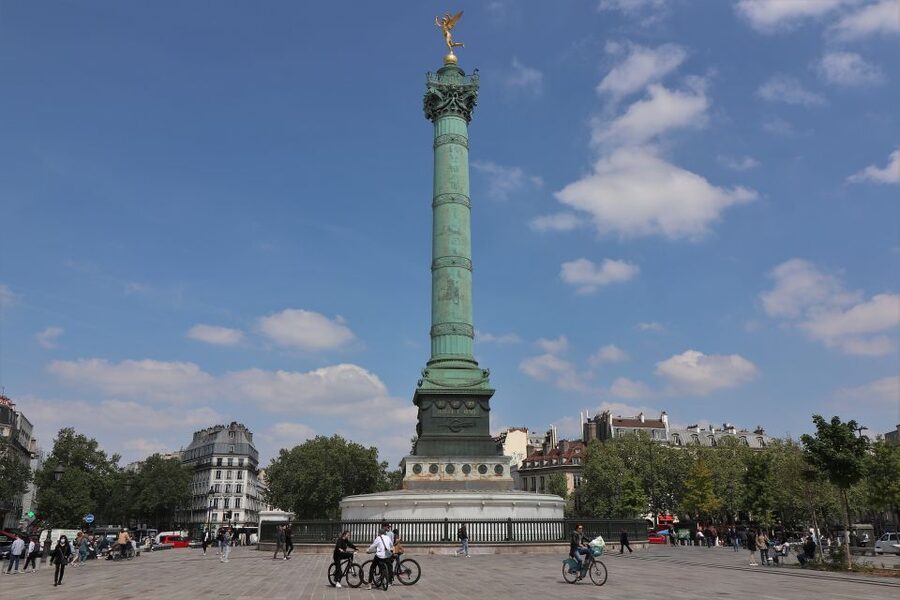
Your tour begins at the Fontaine au Sphinx on Place du Châtelet. That matters more than you might think. Châtelet is one of those central Paris crossroads where the city feels connected—major routes meet, people flow, and it’s easier to understand why public events and political shocks spread fast.
From the first moments, the guide frames the Revolution as something that happens in public space: streets, crowds, rumor, and power plays. You’re not starting with kings and queens in a palace somewhere far away. You’re starting in the kind of Paris that people could actually access, walk through, and argue about.
If you’ve only seen Revolution history as a sequence of famous images—flags, heads, dates—this start helps you rewire the story. You begin to see how fear and hope moved through a city where everyone was within reach of everyone else.
Worth weighing up next to this Paris pick
- Paris Top Sights Half Day Walking Tour with a Fun Guide
★ 5.0 · 2,893 reviews - Montmartre Hidden Gems and Scenic Highlights Walking Tour
★ 5.0 · 2,684 reviews - Montmartre Hill French Gourmet Food and Wine Tasting Walking Tour
★ 5.0 · 2,588 reviews - Paris: Montmartre Highlights Walking Tour with a Local Guide
★ 4.9 · 2,318 reviews
A 2-hour story hunt: how the walk stays lively without getting sloppy
This is a walking tour built for momentum. It lasts about 2 hours, and that timing shapes everything: the tour doesn’t try to cover every faction, every pamphlet, every trial document. Instead, it chooses key moments and uses the street setting to make them feel immediate.
A recurring compliment is the pacing. People describe the tour as nicely paced with varied stops, meaning you don’t end up stuck in one spot waiting for the next lecture moment. Several guides also earn praise for communicating in clear English even with the noise of Paris streets, which is a big deal on a city-walk where you may already be distracted by traffic and passersby.
One design detail I really like for first-timers is that the experience is more like a guided hunt than a slideshow. You’ll be prompted to look at objects and details that help the story land. That turns the walk into something you can actually remember later: not just a list of events, but images and cues tied to places.
How conspiracy and public fear show up on Paris streets
The Revolution didn’t arrive as one clean “event.” It grew through a messy mix of conspiracy, intrigue, and mistrust, then escalated into violence that felt both sudden and inevitable.
That’s the tone you’ll feel as the guide connects shifting power with what ordinary people would have noticed: sudden changes in the city’s mood, public gatherings, and the way fear can spread when language, authority, and loyalty all get questioned.
The tour also leans into the idea of mystery—long-forgotten tales and lesser-known angles. That’s useful because a lot of Revolution knowledge is simplified into a handful of well-known scenes. Here, you get more of the in-between: how people sensed danger before the final acts, and how rumor and strategy turned streets into stages.
You’ll also hear the story presented in a way that tries to be both dramatic and careful. Several reviews highlight guides who keep nuance and accuracy, including more recent interpretations alongside older ideas. That approach tends to work best in a short tour like this: you get a coherent narrative, but you also avoid the “one-size-fits-all” version.
Louis XVI and Marie Antoinette: why the guillotine section matters
One of the tour’s specific promises is to cover when Louis XVI and Marie Antoinette met the blade of the guillotine. In a walking tour format, that’s powerful for a simple reason: it forces you to think about the Revolution as real governance plus real punishment, not just symbolic theater.
What you should take from this portion isn’t only the shock value. The better guides use these moments to explain the logic the Revolution claimed to be following, and the consequences that followed. The guillotine becomes a tool that shows how quickly a movement can turn into a system—and how public spectacle can harden into policy.
The tour also references the idea of a “dark prophecy” tied to the demise of a key revolutionary. That detail signals the overall storytelling style: not just dates, but the drama of people making choices under pressure and interpreting signs as history speeds up.
If you’re worried the tone will become all gloom, don’t be. Guides are praised for being engaging and even a bit humorous at times, while staying respectful of the subject.
Churches, squares, and the changing meaning of everyday buildings
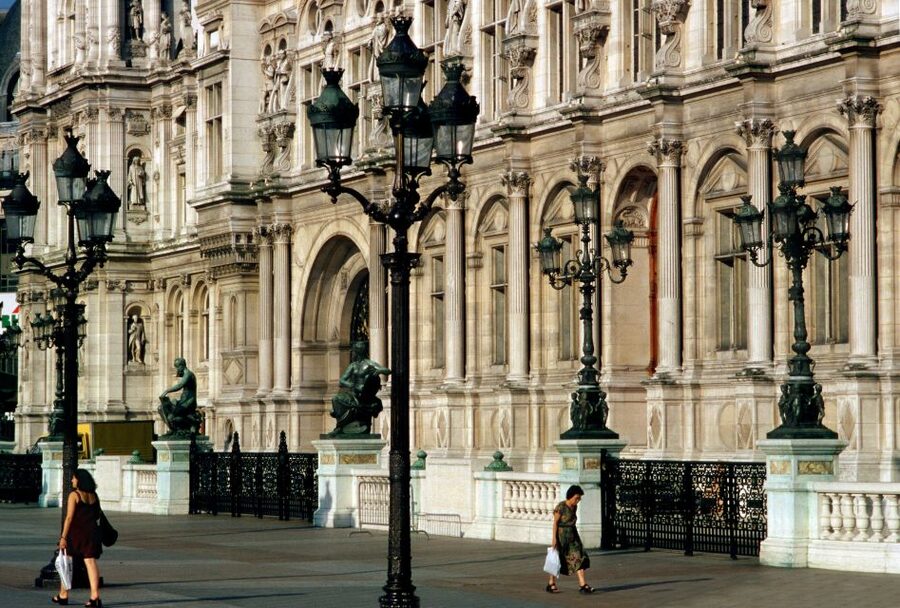
As you move through central districts, you’ll spend time around major-looking architectural moments—often churches—because the Revolution changed how people saw religion, authority, and public legitimacy. In other words, it wasn’t only about new politics. It was also about what kinds of institutions deserved trust.
Some guides are praised for bringing local context and scene-setting into the story. That means you’re more likely to understand why a building mattered to people at the time, instead of treating it like a background photo location.
You should also know that the walk is not always strictly chronological. One comment specifically notes that the order isn’t date-perfect, but the reasoning is that it’s easier to track the story’s thread than to force an exact calendar route across the city in just two hours. For most people, that’s a fair trade-off. If you’re the type who needs every step in order to feel oriented, you may want a different format or to add a self-guided museum stop for extra timelines.
Building toward July 14 and the storming of the Bastille
The finale you’ll likely care about most is the walk’s build-up toward storming of the Bastille. Multiple reviews mention a day-by-day feel leading up to July 14, and that pacing can make the climax hit harder.
Here’s what this structure does well: it turns the Bastille from a single famous event into the culmination of rising pressure. You don’t just hear about the moment. You understand why people were ready to act, and why the outcome mattered beyond the walls.
This section tends to be the emotional peak for two reasons. First, it connects the Revolution’s ideas to public action. Second, it gives your brain a clean narrative “landing” after all the earlier conspiracy and tension. In a two-hour tour, that matters. Otherwise, history can feel like a swirl of facts without a satisfying arc.
One review notes that the tour can gloss over a few of the more fun or dramatic side episodes of the Revolution. I’d interpret that as: the guide chooses the core route of the story. If your top goal is nonstop dramatic set pieces, you might want to pair this with a longer or more specialized tour afterward.




Guides make or break this kind of walk: the names that kept showing up
This tour’s consistency doesn’t come from script alone. It comes from guides who can translate a complicated period into street-level moments, without flattening it.
From the feedback you provided, several guide names stand out: Louis, Francois (and François), Fran, Sam, Amber, Guillaume, Ilan, and others. Common praise points include:
- strong enthusiasm and energy
- clear English you can hear through noisy streets
- an ability to answer questions and adjust direction
- storytelling that uses first-person perspective at times to help you visualize what it might have felt like
You’ll also see praise for condensing the Revolution into the 2-hour format without turning it into a rushed summary. People describe the guide as distilling complex events into something engaging—and in one case, explicitly calling out that the tour fits the history to the time rather than forcing the time to fit the history.
If you get one of these guides, the tour likely feels like a conversation with Paris, not a lecture about it.
Pace, comfort breaks, and how to get the most from 2 hours
A short walking tour lives or dies on pacing. The good news here: the feedback repeatedly points to a pace that feels comfortable, with varied stops and time to ask questions. One person specifically mentioned a comfort break mid-tour, which is a smart touch in summer or for anyone who doesn’t want to feel “stuck” for the full two hours.
I’d also suggest you go in ready to ask things. This type of tour works best when you treat it like a guide-led Q&A plus story, not like a one-way history class. Several reviews mention guides patiently answering questions and even handling unrelated questions about history in general.
What to bring:
- comfortable shoes (Paris streets are not always gentle)
- water if the day is warm
- a quick mental checklist: are you here to understand causes, key events, or aftermath? The guide can lean toward what you need.
Price and value: is $46 for a 2-hour Revolution walk fair?
At $46 per person for a 2-hour live English walking tour, this sits in the “value if the guide clicks” category. You’re paying for three things you can’t easily DIY with the same payoff:
- a curated story arc that keeps you oriented
- context that turns landmarks into meaning
- a real-time chance to ask questions and get nuance in plain language
If you try to self-guide this on your own, you may find yourself with either too many dates (overwhelm) or too many photos (no story). Here, the guide does the sorting, and the city provides the “evidence” you can see.
For first-timers to the Revolution, that’s where the money tends to pay off most. You leave with an organized mental map. For people who already know the basics, you still get value if you like updated interpretations and street-level perspective, especially the July 14 build-up and the guillotine context.
Who should book this French Revolution walking tour (and who might not love it)
This tour is a strong fit if:
- you want a guided introduction to the French Revolution without a dry lecture
- you’re traveling with teens or mixed interests and want a route that stays engaging (there’s at least one family group mentioned with two teens)
- you prefer nuance over oversimplified slogans
- you like to ask questions and get answers in real time
It might be less ideal if:
- you need a strict chronological route with every major site emphasized, because the tour is still a tight 2 hours
- you want extended time in a few specific big-name areas like Champs de Mars or the Palace de Concorde (one comment suggests those can get less attention due to time constraints)
- you expect nonstop dramatic side stories, because the narration focuses on the core arc
Should you book this Paris Revolution tour?
I’d book it if your main goal is to leave Paris with a clearer, more human sense of how the Revolution changed daily life—and how quickly it escalated. The strongest reason is the storytelling approach: it’s designed to make the period feel connected, not just memorized.
I’d skip it if you’re mainly after a museum-style deep dive or a perfectly date-ordered route across every major site. This walk is about momentum, clarity, and a satisfying finish that leads toward July 14.
If you do book, arrive a few minutes early at Place du Châtelet, wear shoes you don’t mind on cobbles or busy sidewalks, and come with at least one question. Guides on this tour seem ready for back-and-forth, and that’s when the experience turns from interesting into truly memorable.
FAQ
Where does the tour start?
Meet your guide in front of the Fontaine au Sphinx on Place du Châtelet before the start time.
How long is the French Revolution walking tour?
The tour runs for 2 hours.
Is the tour in English?
Yes, the live tour guide speaks English.
Is hotel pickup or drop-off included?
No. Hotel pickup and drop-off are not included.
What’s the price per person?
The price is $46 per person.
Is the tour wheelchair accessible?
Yes, the tour is wheelchair accessible.
Can I cancel for a refund?
Yes. Free cancellation is available up to 24 hours in advance for a full refund.
Can I book without paying right away?
Yes. The tour offers a Reserve now & pay later option, so you can reserve and pay nothing today.
Is there a break during the tour?
Some reviews mention a comfort break in the middle of the tour.
More Walking Tours in Paris
- Paris Top Sights Half Day Walking Tour with a Fun Guide
★ 5.0 · 2,893 reviews - Montmartre Hidden Gems and Scenic Highlights Walking Tour
★ 5.0 · 2,684 reviews - Montmartre Hill French Gourmet Food and Wine Tasting Walking Tour
★ 5.0 · 2,588 reviews - Paris: Montmartre Highlights Walking Tour with a Local Guide
★ 4.9 · 2,318 reviews - Paris Île de la Cité and Notre-Dame Walking Tour With Crypt
★ 5.0 · 2,272 reviews
More Tours in Paris
- Paris: Louvre Guided Tour with Reserved Access & Boat Cruise
★ 4.3 · 16,353 reviews - Paris: Big Bus Hop-On Hop-Off Tour with Optional Cruise
★ 4.4 · 13,279 reviews - Louvre Museum Masterpieces Guided Tour with Access
★ 4.5 · 12,023 reviews - Versailles: Skip-the-Line Tour of Palace and Gardens Access
★ 4.7 · 10,429 reviews - Paris: Louvre Overview, Exploration tour and Reserved Entry
★ 4.1 · 10,145 reviews
More Tour Reviews in Paris
- Paris: 1-Hour Seine Cruise departing from the Eiffel Tower
★ 4.4 · 77,472 reviews - Paris: Louvre Museum Timed-Entrance Ticket
★ 4.6 · 71,977 reviews - Disneyland® Paris 1-Day Ticket
★ 4.6 · 49,412 reviews - Paris: Versailles Palace and Gardens Full Access Ticket
★ 4.6 · 41,579 reviews - Paris: Arc de Triomphe Rooftop Tickets
★ 4.6 · 34,264 reviews
Fresh off the review desk in Paris
- Secrets of Paris Bike Tour in English or Dutch★ 5.0 · 5 reviews
- Paris: Mont Saint-Michel Day Tour with Chinese Tour Guide★ 5.0 · 5 reviews
- Private Street Art 2-Hour Guided Tour in Paris★ 4.5 · 5 reviews
- Orsay Museum Tour: 2h Highlights (Private & Small Group)★ 5.0 · 5 reviews
- Discover Paris in electric golf carts★ 4.0 · 5 reviews
- Paris Private Boat Tour with your own Captain Guide★ 5.0 · 5 reviews
Walking Tours, compared.
 ★ 5.0Paris Top Sights Half Day Walking Tour with a Fun GuideFrom $762,893 reviews
 ★ 5.0Montmartre Hidden Gems and Scenic Highlights Walking TourFrom $382,684 reviews
 ★ 5.0Montmartre Hill French Gourmet Food and Wine Tasting Walking TourFrom $1452,588 reviews
 ★ 4.9Montmartre Highlights Walking Tour with a Local GuideFrom $232,318 reviews
 ★ 5.0Paris Île de la Cité and Notre-Dame Walking Tour With CryptFrom $482,272 reviews
 ★ 4.8Montmartre Cheese, Wine & Pastry Guided Walking TourFrom $1272,255 reviews
 ★ 5.0Paris in a Day: Louvre or Orsay, Eiffel Tower, City Walk & CruiseFrom $1571,956 reviews
 ★ 5.0Paris City Center Free Walking Tour (Tip-Based)From $31,340 reviews