
Reviewed · WALKING TOURS
Paris History Walking Tour
Notre-Dame is the launchpad for everything. This 1.5-hour walk strings together Paris from early roots through medieval faith, monarchy, revolution-era streets, WWII, and the modern city—fast. I really like how it gives you major-sight orientation without wasting time, and I also like that the route keeps themes tied to what you’re seeing.
The only real drawback: several stops have admission not included, so you may need to plan extra tickets if you want to go inside.
Expect short stops, clear context, and an end that drops you right near the Tuileries. The pacing works well for first-timers and for anyone who only has a small window in Paris, but if you love deep museum time, this isn’t that kind of tour.
In This Review
- Key things to know before you go
- Why this 90-minute Paris history walk is such good value
- Start at Parvis Notre-Dame: the perfect place to orient your first day
- Notre-Dame de Paris: the story behind the famous façade
- Eglise Saint Julien Le Pauvre: Roman and early Christian Paris, right under your feet
- Sainte-Chapelle: saints, kings, and relics in Île de la Cité
- Pont Saint-Michel: WWII and the Latin Quarter story told from a bridge
- Pont Neuf: the geography lesson that makes the city make sense
- Eglise St-Germain l’Auxerrois: dark Wars of Religion, near the Louvre
- Louvre courtyards and hidden iconography: seeing the palace without the full museum day
- Arc de Triomphe du Carrousel and the Napoleon thread
- Jardin des Tuileries finish: culture and the lives around famous kings
- The guide matters: what the best tours in this category do
- Who should book this tour
- A quick reality check on tickets and admissions
- Practical details that affect your comfort
- Should you book the Paris History Walking Tour?
- FAQ
- How long is the Paris History Walking Tour?
- Where does the tour start and end?
- Is the tour in English?
- How many people are in the group?
- Do I need an admission ticket for the stops?
- Is a mobile ticket provided?
- How close is the end point to public transportation?
- What physical fitness level is required?
- Are service animals allowed?
- What is the cancellation policy?
Key things to know before you go
- Tight route, big payoff: major landmarks packed into about 90 minutes.
- A story-driven walk: history links to the exact place you’re standing.
- Small group limit (15): easier questions and a calmer pace than big bus tours.
- Notre-Dame to the Latin Quarter area: you get a fast mental map of the city center.
- Two free bridge stops: Pont Saint-Michel and Pont Neuf are sightseeing-friendly even without tickets.
- Finish at the Tuileries Gardens: great “turn-off-the-wires” landing spot for your next plan.
Why this 90-minute Paris history walk is such good value
Paris is famous for long days and long lines. This tour does the opposite: it gives you a guided spine for your first hours in the city, so you stop wandering in circles and start recognizing patterns.
The price—$36.12 per person—isn’t just for showing up and pointing. You’re paying for the shape of the story and for smart sequencing: you start at Notre-Dame, then move across the Île de la Cité area, reach the Latin Quarter vibe, and finish with the Tuileries. If your goal is to understand what you’re looking at (and where to go next), this is a solid use of time.
One caution that helps you get value: admission tickets are often not included. The tour format is more about walking, looking, and learning than about a full sit-down museum day. If you want to go inside every major site, budget extra and pick priorities.
Worth weighing up next to this Paris pick
- Paris Top Sights Half Day Walking Tour with a Fun Guide
★ 5.0 · 2,893 reviews - Montmartre Hidden Gems and Scenic Highlights Walking Tour
★ 5.0 · 2,684 reviews - Montmartre Hill French Gourmet Food and Wine Tasting Walking Tour
★ 5.0 · 2,588 reviews - Paris: Montmartre Highlights Walking Tour with a Local Guide
★ 4.9 · 2,318 reviews
Start at Parvis Notre-Dame: the perfect place to orient your first day
The meeting point is Parvis Notre-Dame – Place Jean-Paul II, 75004 Paris. Even if you’ve never been here before, this start point does the work for you. Notre-Dame sits in the center of the story—spiritual power, political change, and the scars of conflict all folded into one location.
From the jump, the tour sets expectations for how the walk will feel: short segments, frequent context, and a guide who helps you connect past events to modern street geography. Also, because the group is capped at 15 travelers, you’re not constantly shuffling around strangers just to keep up.
Practical note: the tour ends in the Tuileries Garden (75001), and the info says there are two Metro stations within about 3 minutes’ walk of the finish. That makes it easy to tack this onto a bigger sightseeing plan.
Notre-Dame de Paris: the story behind the famous façade
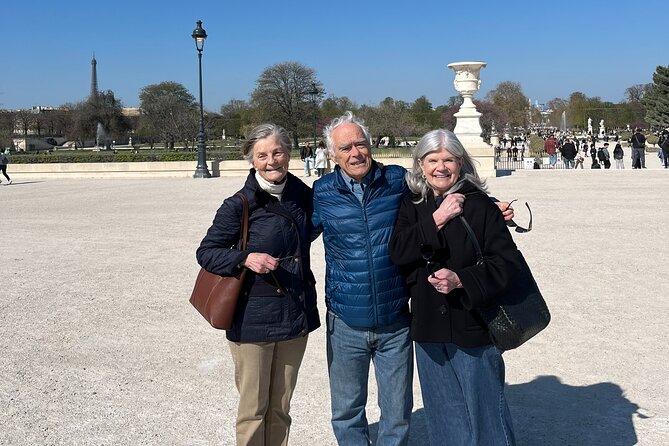
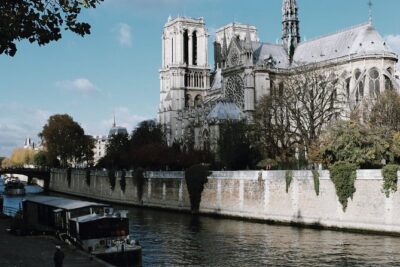
Stop 1 is right at Cathedrale Notre-Dame de Paris. The point here isn’t just the iconic look. You’ll get background on its conception and the periods of controversy and war it has lived through.
That matters because Notre-Dame can look like a single frozen image when you only see it from the outside. With the framing you get on this walk, you start noticing layers: why certain details exist, why the cathedral matters politically as well as spiritually, and why repairs and arguments show up across centuries. You also learn how this landmark connects to larger shifts in Parisian life.
Admission ticket note: the cathedral admission ticket is not included. You can still appreciate the learning from outside and in the surrounding areas, but if you want to enter, you’ll need to handle tickets separately.
Eglise Saint Julien Le Pauvre: Roman and early Christian Paris, right under your feet
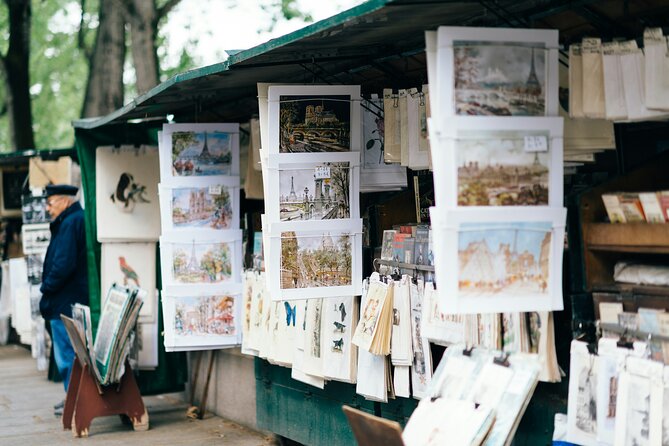
Next up is Eglise Saint Julien Le Pauvre. This stop is valuable because it interrupts the “all of Paris is medieval” storyline you’ll hear from plenty of tourists. Here you get evidence of Roman and early Christian Paris, and you’ll notice how the nearby streets can feel like reminders of Paris before the 19th-century changes associated with Haussmann.
Why I like this kind of stop: it teaches you how to read the city. If you only focus on the big names, you miss the quieter layers. This area helps you understand that Paris didn’t just get famous buildings—it accumulated them, sometimes over earlier ones.
Admission ticket note: admission is not included. The charm is in the street-level experience and the context the guide gives.
Sainte-Chapelle: saints, kings, and relics in Île de la Cité
Stop 3 is Sainte-Chapelle, and the tour’s angle is clear: saints, kings, and relics. It’s in the heart of the Île de la Cité, so you’re also in the geographic center of old Paris’s power.
This is a stop that helps you understand why people once treated certain places like political and spiritual magnets. When the story is explained, the chapel becomes more than a pretty building. You start to see how royal authority and religious belief were tied together—and how those choices shaped what you see today.
Admission ticket note: Sainte-Chapelle admission is not included. If your schedule allows, you’ll likely want to decide in advance whether you want the inside experience or if you prefer to keep moving and absorb the history from outside and nearby views.
Pont Saint-Michel: WWII and the Latin Quarter story told from a bridge
Then comes Pont Saint-Michel, one of the stops marked with admission ticket free. You’ll use this crossing to understand how 20th-century Paris fits into the bigger timeline—WWII, the Lost Generation, and what the Latin Quarter represents.
A bridge is a smart place for history. You look left and right; you remember you’re moving through space; and the guide can point out how districts connect. This stop also helps you mentally link the older core of Paris to the neighborhoods that became known for study, ideas, and cultural life.
If you want photos, this is a good moment to get them without stress. And if you’re planning where to eat afterward, this area is a natural starting point.
Worth weighing up next to this Paris pick



Pont Neuf: the geography lesson that makes the city make sense

Stop 5 is Pont Neuf, another free sightseeing stop. The guide uses it to teach Paris geography and its ancient beginnings, plus it connects to one of France’s famous kings.
This is one of those “small detail, big payoff” moments. Paris is a city of rivers and bridges, and once you understand how the crossings shape movement, you stop feeling lost. You’ll start recognizing where you are relative to major landmarks and why routes feel the way they do.
If you’re the type who likes to walk and figure things out, you’ll appreciate this stop. It turns the walk into a map lesson.
Eglise St-Germain l’Auxerrois: dark Wars of Religion, near the Louvre
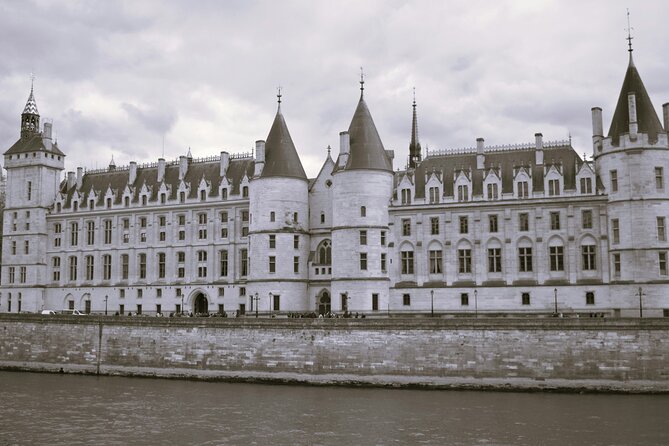
Stop 6 is Eglise St-Germain l’Auxerrois, perched on the edge of the Louvre complex. The topic here is the French Wars of Religion, including the church’s roots in some of the darkest moments of that period.
It’s also described as somewhat of a less obvious stop, and that’s part of the value. You get a different angle than the one most visitors default to. You’re learning about conflict and consequence close to one of the most famous museum zones in Europe.
Admission ticket note: admission is not included. Even so, the context the guide gives can change how you interpret what you see around the Louvre area.
Louvre courtyards and hidden iconography: seeing the palace without the full museum day
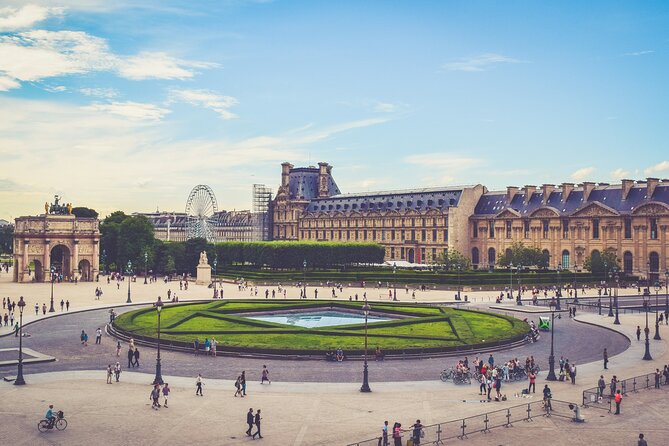
Stop 7 is Louvre Museum, but the time is spent walking through the courtyards of the Louvre complex. The goal is history plus a chance to notice some iconography along the way.
This approach is practical. The Louvre can swallow an entire day if you let it. Here, you get a sense of why the building matters—its role, its status, and how art and authority show up in design choices—without committing to a full indoor plan.
Admission ticket note: Louvre admission is not included. So think of this stop as orientation and storytelling, not a replacement for a full museum visit.
Arc de Triomphe du Carrousel and the Napoleon thread
Stop 8 is Arc de Triomphe du Carrousel. You’ll learn about Napoleon Bonaparte before heading into the Tuileries Gardens.
This is a useful link because it shows how leadership styles and political messaging left physical marks across Paris. Instead of treating arcs like decorative extras, you’ll understand them as history written in stone.
Admission ticket note: admission is not included at this stop, so expect mainly views and explanation rather than a long ticketed interior plan.
Jardin des Tuileries finish: culture and the lives around famous kings
The tour wraps in the Jardin des Tuileries. The finish isn’t random. It’s a strong final scene because it lets you switch from hard architecture and conflict to how daily culture and power played out in public space.
You’ll hear stories of Parisian culture and life during the times of the most famous kings. Even if you don’t go into any buildings afterward, ending here gives you a clear breathing space and a logical next move—coffee, wandering, or a museum stop of your choice.
Also, since the tour ends near Metro, you won’t feel stranded after 90 minutes. You can either keep exploring on foot or hop to your next target.
The guide matters: what the best tours in this category do
The biggest praise from the experience is the guide-led storytelling. In particular, Dana and Peter show up in the feedback with a similar strength: they connect the historical dots, not just the landmark names.
One review notes a discussion starting from the prehistoric inhabitants of the region near Notre-Dame, then marching through social, cultural, political, and religious changes up to the modern era. Another specifically praises great Latin Quarter orientation, plus a restaurant recommendation: La Petit Chatelet.
That restaurant tip is a nice example of what you want from a good walking tour. The guide doesn’t just teach the past—they help you handle the present. If you come in with zero plans, this kind of guidance makes the walk feel like the start of a real day, not just a scheduled stop.
Who should book this tour
This is a great match if:
- You’re time-pressed and want a guided spine through the central sights.
- You want to understand Paris beyond the postcards—especially how religion, monarchy, and war changed what you see.
- You like walking in small groups and asking questions without competing with a crowd.
It might be less ideal if:
- You’re hunting for a heavy-duty museum day. This is about street-level context and courtyards, not full ticketed time everywhere.
- You prefer to linger at one site for a long time. The format is structured and paced.
Given the route and timing, it also fits first-time visitors who want a mental map fast. After this, your own wandering tends to feel easier.
A quick reality check on tickets and admissions
Because admission isn’t included for several of the biggest stops, you should think ahead about your priorities:
- If you want the inside experience of major buildings like Notre-Dame or Sainte-Chapelle, plan extra time and tickets.
- If you’re fine with outside views and courtyards, you’ll get a strong overview without extra spending.
- The bridge stops are ticket-free, so those moments are low-friction and great for photos or just relaxing.
The tour’s value is in the story arc, not in purchasing entry to every building.
Practical details that affect your comfort
This experience is designed for moderate physical fitness and lasts about 1 hour 30 minutes. With a route like this, that usually means steady walking plus short stops. Wear shoes you’re comfortable in for a busy central Paris route.
Language is English, and the tour uses a mobile ticket. The service animals note is also included, and the tour is near public transportation—so you can get there and get away with minimal fuss.
Finally, the group size max is 15 travelers. That’s not huge. It usually means the guide can keep control of the pace and still answer questions.
Should you book the Paris History Walking Tour?
If your goal is to understand Paris quickly and walk away with a usable mental map, I think you should book it. For the money, you get a concentrated run across major landmarks and the story threads that connect them—religion, power, conflict, and the city’s modern identity.
I’d especially recommend it if:
- You want a strong start to your trip on a day when your energy is limited.
- You like history that explains what you see, not history that lives only in books.
- You want a guide who can help with next-step ideas, like where to eat afterward.
Just go in with one expectation set: this is not a full museum marathon. If you want interiors, plan for separate admissions. If you’re okay with that trade, this tour is one of the most efficient ways to get your bearings fast in central Paris.
FAQ
How long is the Paris History Walking Tour?
It runs for about 1 hour 30 minutes.
Where does the tour start and end?
It starts at Parvis Notre-Dame – Place Jean-Paul II (75004 Paris) and ends in the Tuileries Garden (75001 Paris).
Is the tour in English?
Yes, the tour is offered in English.
How many people are in the group?
The tour has a maximum of 15 travelers.
Do I need an admission ticket for the stops?
For several major sights, admission tickets are not included. The Pont Saint-Michel and Pont Neuf stops are listed as admission free.
Is a mobile ticket provided?
Yes, it uses a mobile ticket.
How close is the end point to public transportation?
The end point in the Tuileries Gardens is near two Metro stations, each within about 3 minutes’ walk.
What physical fitness level is required?
It’s marked as suitable for travelers with a moderate physical fitness level.
Are service animals allowed?
Yes, service animals are allowed.
What is the cancellation policy?
Free cancellation is available up to 24 hours in advance for a full refund.
More Walking Tours in Paris
- Paris Top Sights Half Day Walking Tour with a Fun Guide
★ 5.0 · 2,893 reviews - Montmartre Hidden Gems and Scenic Highlights Walking Tour
★ 5.0 · 2,684 reviews - Montmartre Hill French Gourmet Food and Wine Tasting Walking Tour
★ 5.0 · 2,588 reviews - Paris: Montmartre Highlights Walking Tour with a Local Guide
★ 4.9 · 2,318 reviews - Paris Île de la Cité and Notre-Dame Walking Tour With Crypt
★ 5.0 · 2,272 reviews
More Tours in Paris
- Paris: Louvre Guided Tour with Reserved Access & Boat Cruise
★ 4.3 · 16,353 reviews - Paris: Big Bus Hop-On Hop-Off Tour with Optional Cruise
★ 4.4 · 13,279 reviews - Louvre Museum Masterpieces Guided Tour with Access
★ 4.5 · 12,023 reviews - Versailles: Skip-the-Line Tour of Palace and Gardens Access
★ 4.7 · 10,429 reviews - Paris: Louvre Overview, Exploration tour and Reserved Entry
★ 4.1 · 10,145 reviews
More Tour Reviews in Paris
- Paris: 1-Hour Seine Cruise departing from the Eiffel Tower
★ 4.4 · 77,472 reviews - Paris: Louvre Museum Timed-Entrance Ticket
★ 4.6 · 71,977 reviews - Disneyland® Paris 1-Day Ticket
★ 4.6 · 49,412 reviews - Paris: Versailles Palace and Gardens Full Access Ticket
★ 4.6 · 41,579 reviews - Paris: Arc de Triomphe Rooftop Tickets
★ 4.6 · 34,264 reviews
Fresh off the review desk in Paris
- Secrets of Paris Bike Tour in English or Dutch★ 5.0 · 5 reviews
- Paris: Mont Saint-Michel Day Tour with Chinese Tour Guide★ 5.0 · 5 reviews
- Private Street Art 2-Hour Guided Tour in Paris★ 4.5 · 5 reviews
- Orsay Museum Tour: 2h Highlights (Private & Small Group)★ 5.0 · 5 reviews
- Discover Paris in electric golf carts★ 4.0 · 5 reviews
- Paris Private Boat Tour with your own Captain Guide★ 5.0 · 5 reviews
Walking Tours, compared.
 ★ 5.0Paris Top Sights Half Day Walking Tour with a Fun GuideFrom $762,893 reviews
 ★ 5.0Montmartre Hidden Gems and Scenic Highlights Walking TourFrom $382,684 reviews
 ★ 5.0Montmartre Hill French Gourmet Food and Wine Tasting Walking TourFrom $1452,588 reviews
 ★ 4.9Montmartre Highlights Walking Tour with a Local GuideFrom $232,318 reviews
 ★ 5.0Paris Île de la Cité and Notre-Dame Walking Tour With CryptFrom $482,272 reviews
 ★ 4.8Montmartre Cheese, Wine & Pastry Guided Walking TourFrom $1272,255 reviews
 ★ 5.0Paris in a Day: Louvre or Orsay, Eiffel Tower, City Walk & CruiseFrom $1571,956 reviews
 ★ 5.0Paris City Center Free Walking Tour (Tip-Based)From $31,340 reviews
Browse the lists this tour appears in