
Reviewed · WALKING TOURS
Paris Latin Quarter & Left Bank – History Walk (Small Group Tour)
A Left Bank history walk in small time. You’ll get a true sense of how this part of Paris layers church, revolution, and Roman remains into one walk. Two things I especially like: the historian-style guide who adapts to your interests, and the guide’s use of a tablet/iPad to make hard-to-see details click fast. A practical note: some stops are easier in the shade than others, so hot weather (or a sudden rain) can affect comfort.
This is a private-feeling small group tour (max 10) that keeps moving but doesn’t rush you. When Ellen led one run, her iPad added extra detail in a way that made the stories easier to follow. The possible drawback is that a few big-name sights (like the Pantheon and some Roman-bath areas) may require separate tickets, so you’ll want a little flexibility in your plan.
In This Review
- Key highlights worth your attention
- Left Bank in 2.5 hours: a focused walk with a historian guide
- Meeting point: Saint-Germain-des-Prés and how to get your bearings
- Stop 1: Saint-Germain-des-Prés, the church that starts the story
- Stop 2: Cour du Commerce Saint-André and the Revolution stories that feel personal
- Stop 3: Les Thermes de Lutece at Cluny, where Roman ruins need help to make sense
- Stop 4: Luxembourg Gardens with 110 statues and the Senate Palace nearby
- Stop 5: The Pantheon and Foucault’s pendulum (plus a cemetery of ideas)
- Stop 6: St-Étienne-du-Mont, baroque church drama and the huge rood screen
- Stop 7: Arenes de Lutece to finish with a Roman echo
- Small-group value and why the guide’s tablet matters
- Logistics you should plan for (weather, shoes, and tickets)
- Who should book this Left Bank history walk?
- Should you book this tour?
- FAQ
- What does the tour cost?
- How long is the Paris Latin Quarter and Left Bank history walk?
- Is this tour private?
- Do I need tickets for the sights?
- What’s included in the price?
- What time and where does the tour start and end?
Key highlights worth your attention
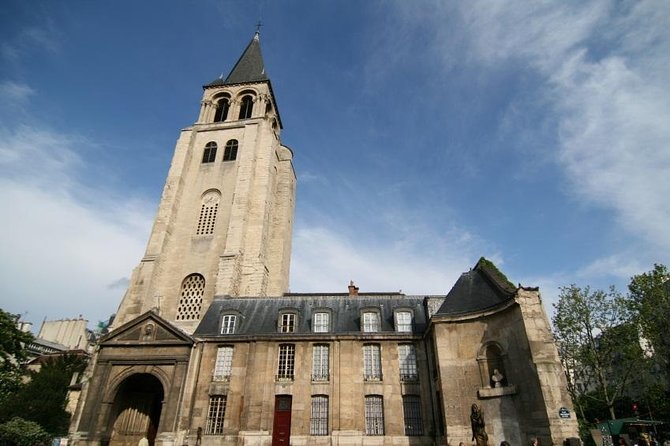
- Saint-Germain-des-Prés parts date to around 990 AD, plus a neighborhood square and a local food market
- Cour du Commerce Saint-André connects major Revolution figures like Danton, Marat, and Robespierre with Franklin, Jefferson, and Voltaire
- Roman bath remains at Cluny (Thermes de Lutece) are explained with video and visual/3D models
- Luxembourg Gardens features 110 statues, including a working model of the Statue of Liberty
- Pantheon stop ties together famous tombs and the story of Foucault’s pendulum
- St-Étienne-du-Mont is known for its huge carved stone rood screen, about 30 feet wide
Left Bank in 2.5 hours: a focused walk with a historian guide

The Left Bank can feel like a buffet: too many names, too many streets, and not enough time. This tour gives you a clean route through the Latin Quarter, St-Germain-des-Prés, and key monuments, with a guide who explains what you’re looking at instead of just naming it.
You’ll start near Saint-Germain-des-Prés, then move through a mix of church, city passages, Roman remains, gardens, and classic Paris monuments. The timing is built for a “walk with meaning” day—about 2 to 2.5 hours—so you’re not stuck with a long museum plan when you’d rather be outside.
I also like that you control the pace. The format is small-group and private for your party, and the guide can steer commentary toward what you care about—revolution drama, Roman Paris, or art/architecture.
Worth weighing up next to this Paris pick
- Paris Top Sights Half Day Walking Tour with a Fun Guide
★ 5.0 · 2,893 reviews - Montmartre Hidden Gems and Scenic Highlights Walking Tour
★ 5.0 · 2,684 reviews - Montmartre Hill French Gourmet Food and Wine Tasting Walking Tour
★ 5.0 · 2,588 reviews - Paris: Montmartre Highlights Walking Tour with a Local Guide
★ 4.9 · 2,318 reviews
Meeting point: Saint-Germain-des-Prés and how to get your bearings
You’ll meet at the Benedictine Abbey of Saint-Germain-des-Prés (Eglise de St Germain des Prés, 3 Pl. Saint-Germain des Prés, 75006). The start time is 11:00 am, and the ending point is place de la Contrescarpe (75005). That end point is useful because it drops you on the Left Bank side where you can keep exploring without having to backtrack.
What I like about starting here is the contrast. Saint-Germain-des-Prés isn’t just a pretty church stop—it’s a time anchor. You’re starting in an area where parts of the church go back around 990 AD, so your guide can set the stage for centuries of change.
If you want to make this day smoother, show up a few minutes early, scan the area around the square and church entrance, and get comfortable with the flow of pedestrians. A history walk works best when you’re not constantly stopping to locate the next corner.
Stop 1: Saint-Germain-des-Prés, the church that starts the story
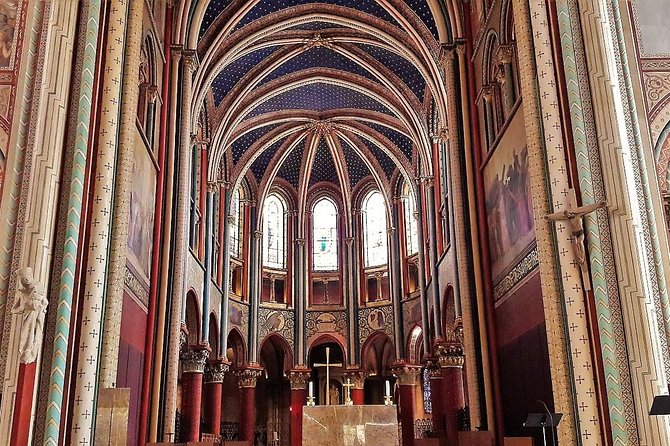
This first stop is a real foundation. You’ll tour the church itself, including the fact that it includes some of Paris’s oldest fabric—parts dating to about 990 AD—then step out into the neighborhood.
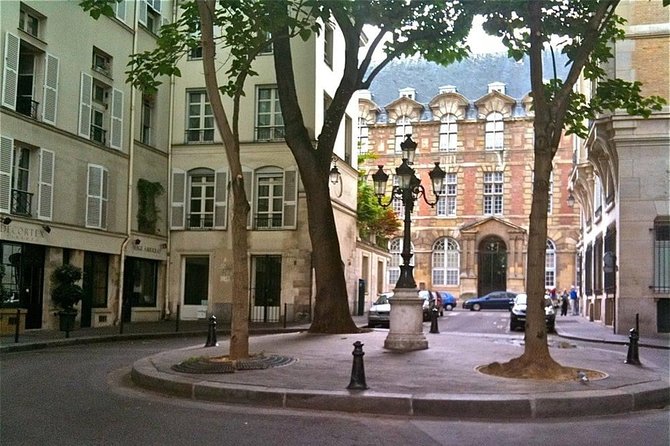
After the church, you’ll see a charming square and also a local food market. That matters more than it sounds. It’s one thing to learn a date or a name; it’s another to see the local texture around it. The market and square help you understand this area as a living neighborhood, not just a museum district.
Practical tip: wear shoes you can stay comfortable in. Churches and nearby streets often have uneven paving and small crowds. Also, if you’re visiting in heat, this opening stretch can be sunny depending on the day—bring water, as you’ll be walking steadily after.
Stop 2: Cour du Commerce Saint-André and the Revolution stories that feel personal
Next you’ll step into Cour du Commerce Saint-André, one of the city’s oldest passages. Passages are cool because they’re time capsules: narrow, half-hidden routes where the “Paris you imagined” meets the Paris that actually functioned.
Here’s where the guide’s storytelling earns its keep. You’ll connect the passage with major Revolution-era figures—Danton, Marat, and Robespierre—and you’ll see the site of the city’s oldest café, now operating as a restaurant.
The details get delightfully specific:
- You’ll hear how Franklin and Jefferson rubbed shoulders with Revolutionaries.
- You’ll also hear philosophers like Voltaire mentioned in the same area of context.
- There’s a popular anecdote that Napoleon left his hat when he couldn’t pay his bar tab.
Even if you don’t remember every name, the value is the “why it matters.” This stop helps you understand how political ideas weren’t floating in theory—they were tied to places where people drank, argued, met, and planned.
Consideration: this stop is short (about 10 minutes). If you love passages, you may want to linger afterward on your own when the tour ends, because the guide will be moving on.
Stop 3: Les Thermes de Lutece at Cluny, where Roman ruins need help to make sense
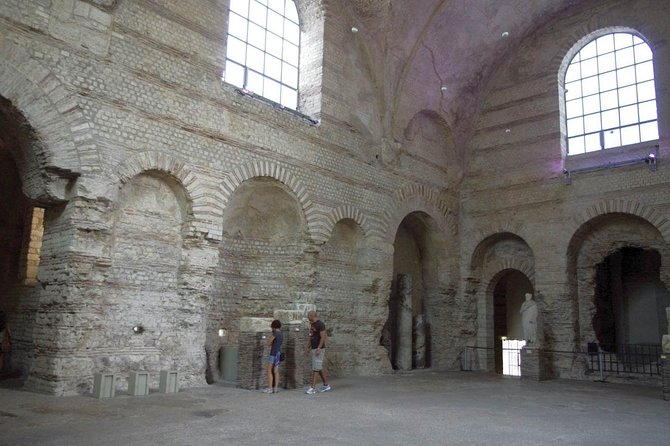
After the Revolution passage, the tour pivots to something physically different: Les Thermes de Lutece, Roman baths at Cluny. Roman remains can be frustrating on a first visit. You’re looking at fragments and trying to picture a full complex.
That’s why I like that the guide uses video and visual material, including 3D models, to explain the layout and construction. It’s an efficient way to turn “I see stones” into “I understand what this place used to do.”
Ticket note: the Roman-bath stop lists an admission component as not included. So plan for a possible separate entry fee depending on what portion you access.
Practical tip: this is a good moment to pay attention to sightlines. Even when the full structure isn’t there, the guide’s visual overlays can help you mentally reconstruct the building. If you’re the type who likes diagrams, this is the stop you’ll enjoy most.
Stop 4: Luxembourg Gardens with 110 statues and the Senate Palace nearby
Then it’s a breather: Luxembourg Gardens. These gardens don’t just work as a scenic pause; they also bring in political and cultural context.
You’ll get the highlights:
- 110 statues, including a working model of the Statue of Liberty
- Luxembourg Palace (built 1612), now home to the French Senate
- The Medici Fountain (built 1630)
This is one of those stops where the guide can help you look past the postcard views. The statues and palace aren’t random decoration. They’re part of how France presents culture, diplomacy, and power in the public space.
Ticket note: this stop is free for admission.
Weather note: gardens can be glorious in mild weather, but they also expose you to sun. If you’re going during a hot spell, do yourself a favor—schedule water breaks, and don’t treat this like a sit-down picnic unless you’re prepared for it.
Worth weighing up next to this Paris pick


Stop 5: The Pantheon and Foucault’s pendulum (plus a cemetery of ideas)
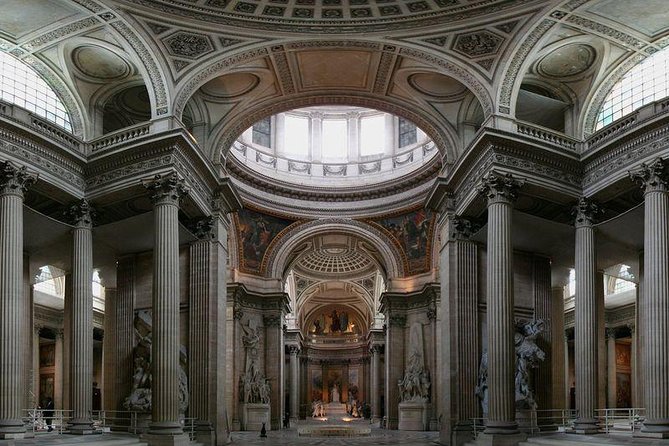
The tour next reaches the Pantheon. The Pantheon is a mausoleum to major figures—philosophers, authors, scientists—so it’s a place where France literally memorializes ideas.
You’ll learn about tombs and stories tied to:
- Thinkers like Voltaire, Diderot, and Rousseau
- Authors such as Hugo, Dumas, and St. Exupéry
- Scientists including Pierre and Marie Curie
- And the fascinating story of Foucault’s pendulum
Even if you’re not a physics person, the pendulum story is the kind of detail that makes a monument feel more alive. It’s also an easy way to connect science to national pride.
Ticket note: the Pantheon admission is not included, so you may choose to pay separately if you want extra time inside. The tour time here is short (around 5 minutes), which makes it a great “orientation hit,” not a long Pantheon deep dive.
Consideration: if you’re strongly interested in the Pantheon interior, you’ll probably want to plan extra time after the tour.
Stop 6: St-Étienne-du-Mont, baroque church drama and the huge rood screen
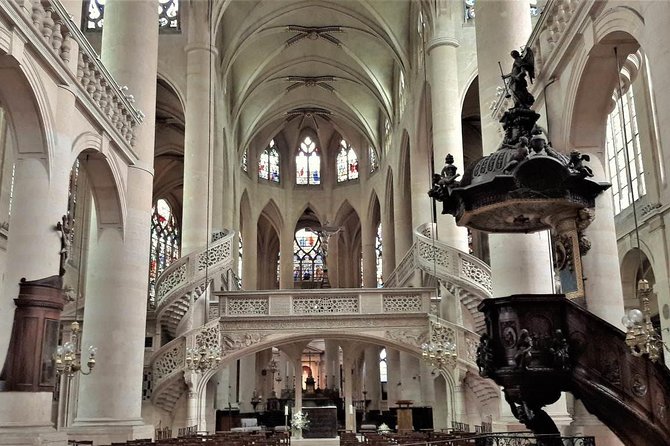
Next you’ll visit St. Etienne du Mont, a baroque church that’s famous for one standout feature: it has the nation’s largest rood screen, a carved 30-foot wide stone screen. It’s the kind of thing you can’t fully appreciate from a quick glance—height and scale matter.
Because the tour is structured as short stops (this one is about 10 minutes), the guide’s job is to point your attention in the right place: what to look for, what the design is doing, and why it’s here.
Ticket note: this stop is listed as free for admission.
What to expect: baroque churches often have lots of visual noise—figures, carvings, layered details. If you tend to get overwhelmed, this is still a great stop because the guide tells you where to focus first so it doesn’t turn into visual chaos.
Stop 7: Arenes de Lutece to finish with a Roman echo
You’ll end at Arenes de Lutece, another Roman vestige. This closing stop is useful because it returns you to the Roman theme after the garden and Pantheon stops.
Roman arenas are historically important, but what makes this kind of stop special is the contrast. You’re finishing in an area where ancient architecture is still shaping the experience of walking streets today.
Ticket note: this stop is free for admission.
At this point, you’re also nicely positioned at place de la Contrescarpe, which makes it easy to continue exploring on the Left Bank rather than forcing a return to the starting area.
Small-group value and why the guide’s tablet matters
This tour costs $85.98 per person, and for that you get more than sightseeing. You’re paying for interpretation—someone to connect the dots between Roman Paris, medieval-religious architecture, and Revolution-era politics.
The tour is operated by a bi-lingual guide, and it uses a tablet to provide photo and video documentation. On the run guided by Ellen, that iPad support added extraordinary detail and helped everything feel easier to follow. That’s the practical difference between a casual walk and a guided history tour: the guide doesn’t only tell you what happened; they help you see what remains.
Group size is capped at 10 travelers, and it’s described as private for your party. In plain terms: you won’t feel lost in a big crowd, and you’re more likely to ask questions that actually get answered.
About timing: plan on solid walking time between stops. You’ll be on your feet most of the tour, not hopping in and out of vehicles.
Logistics you should plan for (weather, shoes, and tickets)
This experience runs in all weather conditions. Bring an umbrella if rain is possible, and wear warm clothing if you’re traveling in cooler months. In hot weather, bring bottled water and take your breaks seriously.
Also: it’s a history walk, so wear solid walking shoes. Cobblestones and Paris stone sidewalks can punish soft sneakers fast.
Ticket reality check: several key places are marked as not included—Les Thermes de Lutece (Roman-baths ticket not included), the Pantheon (not included), and likely any entry required for whichever interior access the guide uses that day. The tour can still be worth it without going fully inside everything, but you’ll get the best value if you’re open to paying for one or two add-on entries.
Who should book this Left Bank history walk?
This tour makes sense if you want:
- A tight route through the Latin Quarter and Left Bank without planning six separate visits
- A guide who can explain the meaning behind what you see, not just dates
- Roman history plus French Revolution stories in the same walk
- A pace that lets you stop, ask, and re-orient
If you’re the type who loves monuments but hates spending half your day reading placards, the tablet-supported explanations will help.
It’s also a good option if you’re visiting for the first time and you want a sense of how this neighborhood evolved—church authority, political upheaval, and ancient ruins all stacked on top of each other.
Should you book this tour?
Yes, if your ideal Paris day looks like guided walking, smart context, and a route that connects big themes—Roman remains, Revolution figures, and major Paris institutions—without turning into a long museum marathon.
I’d skip it only if you want long time inside the major monuments and hate the idea of separate tickets at places like the Pantheon or Roman-bath areas. Otherwise, this is good value for the price: you’re buying clarity, not just stops.
FAQ
What does the tour cost?
The price is $85.98 per person.
How long is the Paris Latin Quarter and Left Bank history walk?
It runs about 2 hours to 2 hours 30 minutes.
Is this tour private?
It’s described as a private tour for just you and your party, and it has a maximum group size of 10.
Do I need tickets for the sights?
Entrance fees to museums and monuments are not included. Some stops specifically note admission not included.
What’s included in the price?
You get a local guide, a private tour, and use of a tablet for photo and video documentation.
What time and where does the tour start and end?
It starts at 11:00 am at the Benedictine Abbey of Saint-Germain-des-Prés (Eglise de St Germain des Prés, 3 Pl. Saint-Germain des Prés, 75006 Paris) and ends at place de la Contrescarpe (Pl. de la Contrescarpe, 75005 Paris).
More Walking Tours in Paris
- Paris Top Sights Half Day Walking Tour with a Fun Guide
★ 5.0 · 2,893 reviews - Montmartre Hidden Gems and Scenic Highlights Walking Tour
★ 5.0 · 2,684 reviews - Montmartre Hill French Gourmet Food and Wine Tasting Walking Tour
★ 5.0 · 2,588 reviews - Paris: Montmartre Highlights Walking Tour with a Local Guide
★ 4.9 · 2,318 reviews - Paris Île de la Cité and Notre-Dame Walking Tour With Crypt
★ 5.0 · 2,272 reviews
More Tours in Paris
- Paris: Louvre Guided Tour with Reserved Access & Boat Cruise
★ 4.3 · 16,353 reviews - Paris: Big Bus Hop-On Hop-Off Tour with Optional Cruise
★ 4.4 · 13,279 reviews - Louvre Museum Masterpieces Guided Tour with Access
★ 4.5 · 12,023 reviews - Versailles: Skip-the-Line Tour of Palace and Gardens Access
★ 4.7 · 10,429 reviews - Paris: Louvre Overview, Exploration tour and Reserved Entry
★ 4.1 · 10,145 reviews
More Tour Reviews in Paris
- Paris: 1-Hour Seine Cruise departing from the Eiffel Tower
★ 4.4 · 77,472 reviews - Paris: Louvre Museum Timed-Entrance Ticket
★ 4.6 · 71,977 reviews - Disneyland® Paris 1-Day Ticket
★ 4.6 · 49,412 reviews - Paris: Versailles Palace and Gardens Full Access Ticket
★ 4.6 · 41,579 reviews - Paris: Arc de Triomphe Rooftop Tickets
★ 4.6 · 34,264 reviews
Fresh off the review desk in Paris
- Secrets of Paris Bike Tour in English or Dutch★ 5.0 · 5 reviews
- Paris: Mont Saint-Michel Day Tour with Chinese Tour Guide★ 5.0 · 5 reviews
- Private Street Art 2-Hour Guided Tour in Paris★ 4.5 · 5 reviews
- Orsay Museum Tour: 2h Highlights (Private & Small Group)★ 5.0 · 5 reviews
- Discover Paris in electric golf carts★ 4.0 · 5 reviews
- Paris Private Boat Tour with your own Captain Guide★ 5.0 · 5 reviews
Walking Tours, compared.
 ★ 5.0Paris Top Sights Half Day Walking Tour with a Fun GuideFrom $762,893 reviews
 ★ 5.0Montmartre Hidden Gems and Scenic Highlights Walking TourFrom $382,684 reviews
 ★ 5.0Montmartre Hill French Gourmet Food and Wine Tasting Walking TourFrom $1452,588 reviews
 ★ 4.9Montmartre Highlights Walking Tour with a Local GuideFrom $232,318 reviews
 ★ 5.0Paris Île de la Cité and Notre-Dame Walking Tour With CryptFrom $482,272 reviews
 ★ 4.8Montmartre Cheese, Wine & Pastry Guided Walking TourFrom $1272,255 reviews
 ★ 5.0Paris in a Day: Louvre or Orsay, Eiffel Tower, City Walk & CruiseFrom $1571,956 reviews
 ★ 5.0Paris City Center Free Walking Tour (Tip-Based)From $31,340 reviews
Browse the lists this tour appears in